




Susanna Kearsley – Mariana
Posted 10th October 2016
Category: Reviews Genres: 1990s, Angst, Historical, Paranormal, Romance, Spiritual
7 Comments

Making amends for the past.
Publisher: Allison & Busby
Pages: 387
Type: Fiction
Age: Adult
ISBN: 978-0-749-00706-5
First Published: 1994
Date Reviewed: 17th April 2016
Rating: 4.5/5
Julia moves into a little house in a lovely village that she had always admired. Very soon she’s experiencing very realistic daydreams wherein she’s herself but not quite, a historical person rather like her. It happens everywhere – the big old house, her own house, and outside. It’s worrying – one day she’s spotted pottering around oblivious to the road traffic – but also too mysterious not to follow. Someone many many years in the past experienced much sadness and Julia feels the need to work it out. And whilst her brother may have his reservations – her safety is at stake, after all – it seems others in the village might have played a role back then, too, including the rather handsome lord of the manor.
Mariana adheres to that particularly special set of mixed genres so many love: it’s a historical time-slip romance. And it’s an excellent one.
The story goes a bit further than your usual haunting or time-slip shadows idea, presenting you with a character who is both the modern day time ‘slipee’ and the ghost; Julia is ‘Julia’ during her waking and non-daydream hours and ‘Mariana’ in the opposite. It’s an excellent concept that plays right into the idea of reincarnation, karma, and unfinished business, and it’s not just Julia in the mix – there’s a suitor or two and a friend or three there, as well.
It really is very special and as it was written in the 90s there are no phones or computers to divert attention. It harkens back to days of yore when people spent more time outside – for many readers it’ll be as much a nostalgic trip as a historical time-slip, and it’s topped off by Julia’s career as a book illustrator; she’s all about drawing.
If you like nature and villages, this one’s for you. Rather than the totally stereotypical accent-full northern Cotswold village, or the Cornish seaside, Kearsley opts for Exbury in Wiltshire which is less romantic than some but makes sure you don’t get too carried away with the present. With this book you want to stay in the past until Aunt Freda says it’s time to move on.
The writing is fair. There are a few errors, understandable considering the author’s nationality, but nothing to stop you reading. Indeed it may surprise you that it’s Kearsley’s first book – there are niggles and perhaps hints that she’s following a well trodden path but it’s a very competent piece of work. It’s hard to put down even when you know where it’s headed. The ending may leave the question of ‘what about so and so…?’ unanswered but it’s not frustrating or ambiguous.
And when it’s predictable? It doesn’t matter – this book is all about the journey, the ride. As one of the characters says, Julia is on a journey and it will come to an end – we begin at the start and finish where she leaves off. There’s no superfluity here and only minimal, planned, convenience.
Mariana is a historical dream, a romantic’s wish, a reader’s demands satisfied. It is quite something.
Related Books


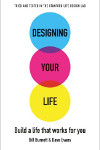
Bill Burnett And Dave Evans – Designing Your Life
Posted 7th October 2016
Category: Reviews Genres: 2010s, Business, Philosophy, Spiritual
Comments Off on Bill Burnett And Dave Evans – Designing Your Life
Getting the most out of it.
Publisher: Chatto & Windus (Random House)
Pages: 254
Type: Non-Fiction
Age: Adult
ISBN: 978-1-784-74024-5
First Published: 15th September 2016
Date Reviewed: 2nd October 2016
Rating: 4/5
Bill Burnett and Dave Evans created a course for students at Stanford University to help them ready their futures. Drawing from the methods designers use to create and prototype, the authors constructed a course with a difference, one that went against the grain to be of particular lifelong value. After much success, they’ve decided to turn the course into a book in order to help a greater number of people.
Designing Your Life is the kind of book that sports lots of common sense of the sort we tend to forget. It sports a lot of things that lead to ‘ah ha!’ moments. And it’s the literary version of those times when someone says ‘now bear with me…’ and you think ‘oh god, here it goes’ and then after a while of talking that you still think suspect, ends with a lot of very good ideas and value.
To be sure it reads as very American but the suggestions and topics in focus should, this reviewer believes (as a Brit), be relevant to most people. Burnett and Evans – who address themselves in the third person, which makes you wonder who was writing when and becomes something to really appreciate because of the complete collaborative atmosphere it projects – write in simple, easy to understand terms, giving full credit to other ideas which they detail for you in case you haven’t come across them previously. The authors seem to favour the idea of ‘done rather than perfect’ – the writing is plain but it does the job and the book’s complete lack of any filler content (student stories are detailed in order to provide context and examples) just goes to further the overall feeling that the authors know what they are doing. This is to say the book has been designed as much as the lives have been designed.
It turns out that the part of the brain that is working to help us make our best choices is in the basal ganglia. It’s part of the ancient base brain, and as such does not have connections to our verbal centers, so it does not communicate in words. It communicates in feelings and via connections to the intestines – those good old gut feelings. The memories that inform this choice-guiding function in our brains Goleman refers to as the “wisdom of the emotions”; by this he means the collected experiences of what has and hasn’t worked for us in life, and what we draw upon in evaluating a decision. Our own wisdom is then made available to us emotionally (as feelings) and intestinally (as a bodily, gut response). Therefore, in order to make a good decision, we need access to our feelings and gut reactions to the alternatives.
It’s a book to read quickly – we are talking lives after all and one of the authors’ thoughts, so often running in the background, is that we spend a lot of time thinking about and considering the present, agonising over the past and our choices, time that can be put to better use working on propelling ourselves towards our futures. Among the topics and concepts are jobs (don’t waste time on applications that get put into a keyword database, rather try and set up interviews with people who are doing what you want to do – do not think of these as interviews), ‘failure immunity’ (accepting that failure happens but not letting it get to you; categorising failures so you can dismiss minor one-offs and focus only on strengthening your weaknesses), and a ‘life dashboard’ that may seem a bit gimmicky but has a great idea behind it, that of working out your health/work/play/love balance and adjusting accordingly. The chapters on getting a job are particularly good and, like all the other topics included, sport both things you’ll inevitably already know and lots of things you kind of know but not in the way the authors are talking about them.
On that note, a key concept of the book is ‘reframing’ – dotted throughout are sentences that we’ve been taught to believe, accompanied by Burnett and Evans’ suggestions for different angles to view them through. The authors ask: when you try to solve a problem, are you solving the right one?
An example: dysfunctional thought – ‘I should know where I’m going’; reframed – ‘I can’t know where I’m going until I know where I am now’.
The only caveat with this book is that it’s not going to help everyone. This is something the authors address when they say that sometimes you might have to take the job to pay the bills or feed the family and do that until you’re in a place where you’ve space to look at your life in the way this book explains, but it’s not quite as simple as that. You’ll notice that by and large the stories in this book are of people who are relatively privileged in life when compared to others and have had the opportunity to learn skills that they can go back to and think about. Whilst the book may indeed work for a broader section of society than that looked at, it does come from a certain situation and place in life, and the angle the subjects are viewed from may suggest to some readers that this isn’t a book for them. It also isn’t a cure all; while the ideas in general are great, some are likely not to work, for example the idea of having a life design team to support what you’re trying to do – such a thing, as outlined in the book, would take a lot of time and while that suggested 3-6 people are spending time working on your future with you, they’re using time they could be working on themselves. You would need a number of extremely supportive and dedicated people in order to make such a thing work unless, perhaps, you happen to still be in education where everyone is doing the same thing. The firm suggestion that everyone involved get a copy of the book is a little too obvious in its hopes.
Designing Your Life is a very good book with some excellent ideas that do work – there are examples in day-to-day life aplenty, never mind in this book. The reframing idea is important because it gets you to think outside of the box and outside of the normal social thinking that whilst well-intended (or sometimes not!) can indeed hamper a person’s progress. But it’s best to keep yourself objective when reading it, and some may find it better placed as a guide rather than a project.
I received this book for review from FMCM Associates.
Related Books
None yet
Linda Stift – The Empress And The Cake
Posted 30th September 2016
Category: Reviews Genres: 2000s, Historical, Psychological, Thriller, Translation
Comments Off on Linda Stift – The Empress And The Cake

There’s no way out. There’s every way out.
Publisher: Peirene Press
Pages: 172
Type: Fiction
Age: Adult
ISBN: 978-1-908-67030-4
First Published: 2007; 30th September 2016 in English
Date Reviewed: 20th September 2016
Rating: 5/5
Original language: German
Original title: Stierhunger (Bulimia)
Translated by: Jamie Bulloch
A young woman is approached by an older woman, asked if she’d share a cake because the cake is too large for one person. The older woman’s clothes are very old fashioned, from the 1800s, and her companion is similarly dressed. Though she avoids rich foods, the young woman agrees to take half the cake; after the purchase the older woman suggests sharing first her own half. The young woman finds she cannot say ‘no’, and whilst she believes it was her choice, it sets a precedent for the future.
The Empress And The Cake is an Austrian novella about three women of different generations who are connected. It’s got a bizarre, strange, atmosphere, a lot of history, looks at mental and physical health, and sports a brilliant uniqueness.
There are four major characters in this book, three in the present and one in the past. The present-day characters are our unnamed narrator, Frau Hohenembs, and the latter’s friend/servant, Ida. The fourth is the Empress Elisabeth of Austria, of the mid to late 1800s. Elisabeth is included via descriptions written by a friend – we view these scenes as reflections – and her presence in the novella is to show the basic ideas behind Stift’s drawing of Frau Hohenembs and Ida and thus the connection she has created between the factual Empress and the fictional characters.
This reviewer would recommend doing a bit of research into the personality and life of the Empress prior to starting the book. The book’s meaning won’t be lost without it but some knowledge of her will really enhance your reading experience and allow you to figure out what might happen, which when you consider the fact the Empress is likely well-known in Austria and this is an Austrian book, just makes sense. Elisabeth’s story is quite fascinating; she was reluctantly married to an Emperor who adored her and spent her time away from the court she disliked, often travelling incognito. Her mother-in-law practically removed her from her children’s lives and she was assassinated by a man who wanted to assassinate a royal and hadn’t been able to get close to his first choice, nor his second.
Part of the connection between the characters and something that is a major theme is an obsession with slimness, which in the unnamed heroine’s case is a disorder, bulimia. The book gets into very graphic detail at times so that Stift can show the way bulimia affects a person. It is a very frank portrayal, Stift’s character telling herself, or us, how this will be her last vomiting session, how she’s going to stop weighing herself so much – she’ll weigh herself several times a day instead of a dozen, for example (a difference the reader sees as inconsequential) – how she’ll start eating more again, only for her to revert almost instantly. The heroine is bound by her disorder but does not see it – she views herself as in control of it. And her increased contact with Frau Hohenembs furthers her it. (What’s interesting here is that the way the passage of time is shown in the book, the rough slowness that can be attributed to Stift’s detailing and repetition of the regular makes it seem as though more time passes between decisions than it truly does.)
Similarly she views herself as in control of her visitations to Frau Hohenembs’ apartment, and in control of the choice to go out, which happens often, with said lady and her servant; the truth is different. Not quite so different is her lack of control of her eating disorder, but a big part of the psycho-thriller aspect of the novella is the dwindling nature of personal agency. This is where the plot thread of cocaine comes in; the drug is not referenced directly for some time and we do not know whether the heroine and Ida take the drug, but there’s a vagueness, an ambiguity, in the story, that lets you imagine what is most likely. What, for example, was in that cake? Stift does not say either way – just sugar, or something more addictive? – that’s up to you to decide. (Does sugar itself perhaps reflect the addiction?)
Empress Elisabeth wanted to be very slim, and favoured being stitched into her clothes. Whilst the present-day fictional part of the story does not go this far, the factual forms a sort of backbone. Frau Hohenembs’s obsession with Elisabeth (does she think she is her or want to emulate her?) never wavers, and as such the heroine falls into line behind her. This thread is not resolved neatly, but then it doesn’t need to be. It’s the connection that Stift wants to show rather than any reason d’etre.
On the gruesome front it should be noted there are visits to a ‘specimen’ museum. These, as well as the vomiting scenes, if the reader finds them difficult, can be skipped because the importance in them lies in the sentiment rather than the scenes themselves – so long as you’ve the cause in mind, flicking past shouldn’t be a problem.
In regards to the translation, it reads well. Jamie Bulloch seems to have opted for a balance between literal word meaning and flow; there are some German words you may want to look up but the rough meaning is there in the text.
It’s hard to say exactly why The Empress And The Cake is so good. It has something to do with the complexity, the number of ideas in it, and the amount of thought that’s gone into it, but enough to say it’s excellent. It’s bizarre, random, and totally unique, and it makes you think, so much.
I received this book for review from the publisher.
Related Books
None yet
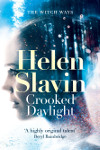
Helen Slavin – Crooked Daylight
Posted 23rd September 2016
Category: Reviews Genres: 2010s, Angst, Domestic, Drama, Paranormal
3 Comments
The definition of magic?
Publisher: Ipso Books
Pages: 204
Type: Fiction
Age: Adult
ISBN: 978-1-911-29567-9
First Published: 24th August 2016
Date Reviewed: 20th September 2016
Rating: 3/5
When their grandmother dies, Anna, Charlie, and Emz inherit her cottage and the woods that surround it, but, already having homes of their own (well, Emz lives with Mum) they decide to let it as a holiday rental. One of these rentals is to a mysterious young woman who likes to bathe in the lake they’d always been told to avoid, and when they spot a man in the woods the sisters are worried. And it seems their grandmother is still around, helping them. Amidst this are the sister’s own stories of relationships, deaths, and young adulthood.
Crooked Daylight is the first book in a planned series focusing on three modern sisters who may have a little magic about them.
This is an interesting take on the idea of magic. It’s the sort of thing that’s been done many times before but not quite in this way which sounds like a paradox and therefore requires explaining. The three sisters – Anna, Charlie, and Emz (whose full name is Emma but as that isn’t revealed until near the end there’s plenty of space to speculate whether, perhaps, Slavin had thoughts of the Brontë sisters in mind) – are people living in our present day with our mobile phones and conveniences. This time period isn’t so much explained as it is shown through slang and the sisters’ often abbreviated language. (Sometimes it can seem as though they are a lot younger than their ages which may be a turn-off for some.) The various housing involves terraces, town houses, and their mother’s new state-of-the-art home… but then there’s also their late grandmother’s cottage in the woods that Slavin’s descriptions infer to be your fantastical wooden thatched cottage. So it’s a meeting of modern reality and slightly older fantasy, but it’s still not that simple. Slavin doesn’t explicitly address the magical elements until near the end which has the effect of pulling you deeper into the narrative as you try to work it out. Is there any magic, really? What sort? Is it just something supernatural?
So Slavin has aimed for something between reality and fantasy that skews more towards reality. It’s the sort of usage that brings to life those times when we wonder how something no one could have had a hand in could be so coincidental. It all works very well.
However, to go back to those characters and their ages that are hard to believe, it can be difficult to relate to them. It’s not that they are dislikeable per se, but they do at times get into drama and other people’s business when they should mind their own, for example one time they have a quite valid worry about a person’s safety but instead of approaching them – a tenant – to mention it, they use their privilege as the holiday home owners to enter the cottage and look around without asking whilst the woman hides in another room, uncomfortable. Another occasion sees one of them becoming quite snotty with some women who so far have done nothing to her (barring trying to stop her and her sisters when they run off with their grandmother’s body to cremmate it in the way they, the sisters, feel it should be done). There’s a disconnection between action and reason.
A seemingly minor element but a compelling one – the sisters’ mother, Vanessa. Vanessa is very different to her daughters and her own mother alike; whereas Hettie (the sisters’ grandmother – Vanessa’s mother) had something magical going on about her and so, it seems, do Anna, Charlie, and Emz, Vanessa is a scientist who lives in an incredibly modern home. Her home is so modern her daughters can’t work out how to use it and whilst this factor may bring about an extra few centimetres in the gulf between mother and daughters, there’s the slight suggestion in it that Vanessa is trying to forge her own path. Whilst the daughters are modern but affected by this magic of their grandmother’s, Vanessa is left out. Her daughters may feel neglected, and that may be true, but it’s an interesting thing to ponder on – why is Vanessa so different? Is it simply that Slavin wants to bring to the fore the difference between traditional magic, superstition, and up-to-the-minute scientific findings, or is it a look at how a person left out will try to forge their own path, their own identity? It may be something, it may be nothing – this reviewer may be over-thinking it – but it’s interesting to contemplate and the difference between mother and daughters will doubtless be further explored as the series continues.
There is no major plot-line in this book which can make it difficult to keep up with the goings on. Various threads and a large number of secondary characters make it feel like a soap opera at times but when the narrative focuses it’s pretty good. It takes a while for that particular thread to become less blurred, to show what it actually is, but the pace gets swifter once it’s settled into. It’s a case of having a lot of information at once, presumably to set up the scene for the series, but it would’ve been better for it to be unwound slowly.
The writing is generally good. Slavin often uses unconventional words – onomatopoeias, for example – that are distinct because we tend to use other words, but this becomes a quirk you look forward to and the meaning of these words is always obvious. But there is a shortage of commas – sometimes clauses that are meant to mean one thing read as something else.
Crooked Daylight is a nice read but quite disjointed. It ends well, suggesting the next book will be very good (and a lot higher in magical content) so if you like the general idea you may want to read it or at least keep the series in mind for when the next one is out.
I received this book for review from the publisher.
Related Books
None yet
Tahmima Anam – The Bones Of Grace
Posted 19th September 2016
Category: Reviews Genres: 2010s, Angst, Domestic, Political, Romance, Science, Social, Spiritual
Comments Off on Tahmima Anam – The Bones Of Grace

One epic love letter.
Publisher: Canongate
Pages: 407
Type: Fiction
Age: Adult
ISBN: 978-1-847-67977-2
First Published: 19th May 2016
Date Reviewed: 14th June 2016
Rating: 4/5
Zubaida was studying in America when she met him: Elijah, a man she came to know for just a few days; she had to leave for Pakistan when her university department’s hopes of uncovering an ancient fossil were realised. But when the project came to an abrupt halt, Zubaida went back to her native Bangladesh and married her childhood friend, effectively bringing an end to her acquaintance with Elijah. Years later, after meeting and splitting from him again, she has chosen to tell him everything in a letter.
The Bones Of Grace is a somewhat epic story that also includes another story within the story. It’s the sort of book you’ll likely either love or hate (very difficult to rate!) but either way appreciate the background detailing.
What first strikes you is Anam’s writing – it’s sublime. There are no two ways about it. It’s the sort of writing that is so wonderful, so well put together, so constant, that it has a very real affect on the novel’s flaws. You won’t dismiss the flaws, but you will feel as though you want to dismiss them. But what’s interesting is that this isn’t necessarily Anam’s natural writing style, it’s all Zubaida – during the story within a story, where we hear directly from Anwar (and it’s just that Zubaida has included his words in her letter) the writing is very different. More… male, appropriately. (Anwar is a man looking for his past love who puts his search on hold when he runs out of money.) Zubaida’s words, the flow of her writing, does make up somewhat for what could be called a frustrating narrative.
And I could imagine almost every day of your childhood, because it would have been documented in films or on television – in that way, you had probably lived a deeply unremarkable life, had experiences without specificity, and that had bothered you, the way my own past grated at me. All the things that irrritated you were things that I longed for, and all the things you longed for were things I took for granted.
I want to tackle this narrative before moving forward (hopefully the above extract exudes the quality and how the narrative can be both beautiful in what it says and, to use a word from the extract, grating). Whether Zubaida is annoying is really up to you, your personality, and, likely, down to your own experience of love and heartbreak. That Anam has captured her particular tale in a very honest way is hard to dispute – I think we’ve all had times when we’ve realised we’re dwelling too much on something and need to stop discussing it, and that that doesn’t always mean we stop thinking about it – it’s just a case of whether you’re happy to spend 400 pages on it and, indeed, whether you believe in this woman, Zubaida, writing a 400 page letter of excuse and apology.
Of course without the number of pages, we wouldn’t have a novel, we’d have a pamphlet, a novella at most, so this is where the background and ship-breaking comes in.
“It’s a cruel industry. For years we’ve been working slowly, patiently with the owners. Suddenly she comes and tells us how terrible things are. A film isn’t going to change anything.”
Anam uses Zubaida to look at the end-of-life of ships, in this case a cruise ship. There is the time when the ship is created – overseas – and sets sail, multiple times – overseas – and then, when it’s deemed too old, it comes to Bangladesh where men work for little pay, breaking it into pieces to be sold on. Zubaida comes to the beach as a translator for a western reporter who is looking to make a film (and possibly press charges against the management). Through Zubaida, Anam shows the horrors of the situation – the lack of safety, the deaths, and the exposure to chemicals and other toxic ingredients the workers face. It’s a uniquely-realised story. The inclusion of Anwar’s story, in which he comes to work at a ship-breaking beach, adds to the level of detail involved.
Then there is the palaeontology. Zubaida’s passion is the study of the fossil of a walking whale – a creature that slowly evolved to live under water whilst other creatures evolved to live out of it. Her journey is set around her attempts to get access to the fossil, first overseas then through the removal and sending of the bones to America. The journey shows the conflict between work (the will to, in this case) and relationships. Anam is an anthropologist which means you get a lot of detailing, but her writer self stops it becoming too much.
Amidst this is Zubaida’s lifelong mental conflict – she was adopted, lives in a well-off family and her fiancé is rich, but she doesn’t know anything about her birth mother and starts to feel a need to know where she came from. This is where privilege and class enters, where the underlining of Zubaida’s poorer beginnings limits what there is for her to know. It’s there in the background when she begins to question, no matter what category the question comes under; her thoughts of love, duty, and Elijah are informed by her adoption. In meeting Elijah she finds herself thinking of things she’d never thought about before and quite possibly never would have otherwise, and family duty and a general lack of mental strength hold her back from taking it further. She has all this luxury in consequence of being with Rashid, she’s lucky, she shouldn’t be thinking of Elijah. But she is thinking of him.
And amidst this turmoil is a minor story – minor in how much time it takes up (it’s big in terms of real-world impact) – of war, of the effects of it and of war crimes coming to light. Zubaida’s mother has spent her years working towards justice. Her father’s work and business has been ethical. You see glimpses of the Bangladesh war.
Now the ‘twist’, if it can be called so, that you start to see when Anwar makes his entrance (because if a stranger becomes involved you know there’s got to be a connection somewhere), isn’t as predictable as you might first think. It’s quite likely you’ll guess correctly, and, yes, of course this part of the narrative could be considered a device because how likely is it that it’d all happen in real life and so on, but it’s a novel after all. The reveal is pretty satisfying – it won’t blow your socks off but it may well make up for any frustration you had been feeling due to the way Anam goes about it. Make no mistake – don’t go assuming the twist the main reason for the book. It’s not – the book is all about the journey, the writing, the history, the palaeontology, and the ship-breaking – but it does give it an extra lift.
The Bones Of Grace is a slow-paced book. There’s not really any action in it; certainly that it’s one long letter should suggest this as a possibility. It’s very much a literary book, an issues book, wherein the pleasure is in its bookish sensuality.
If you like the sound of that and if what’s heralded as good about it hits the right notes for you, it’s likely you’ll fall completely in love with it. If it doesn’t hit the right note, you’ll likely still appreciate it but it may take you a while to get through.
Related Books
None yet


