




Madeleine Thien – Certainty
Posted 13th April 2012
Category: Reviews Genres: 2000s, Domestic, Historical, Political, Romance, Social
Comments Off on Madeleine Thien – Certainty

If you love someone, stay with them.
Publisher: Faber & Faber
Pages: 304
Type: Fiction
Age: Adult
ISBN: 978-0-571-23419-6
First Published: 2006
Date Reviewed: 20th December 2011
Rating: 2/5
This book’s plot is best summed up by giving a true (as in not what the back cover says) insight. Ansel was married to Gail but she recently died. Matthew was in love with Ani but ended up marrying Clara. Both men continue to live in the past – for one of them it’s sort of reasonable, for the other it’s really not right.
Certainty is a book that promises much but fails to deliver on all accounts. It details the day-to-day as well as the past, and while the information on war is interesting and worth reading, the rest is forgettable. The book brings all the characters together to celebrate Gail’s life before moving on to discuss Ansel’s present situation and then Matthew’s past. Gail, although dead, lives through both their memories and Thien’s inclusion of a short piece told about her actions before death. The issue is that the male characters are depressed and neither of them have a true reason to be since they set themselves up for upset; nor do they recommend themselves as good husband material.
This reviewer felt sorry for Ansel as Thien presented him as someone very much in love with his wife. Then a little further into the book she, Thien, tells us how Ansel went behind Gail’s back. This reviewer put the book down, and only returned to it over two months later because she likes to finish what she starts. She felt as betrayed as Gail had. Thien had been making me feel for Ansel and then suddenly told me how he cheated. Instead of feeling sorry for his loss I now found irony in the fact that Gail had died a short while after it all. Neither was I satisfied by Ansel’s admittance or the way he acted towards Gail in future – it all seemed false.
Then there’s Matthew. Clara gets with him and he tells her about the hard life he had, and about Ani, and Clara has to deal with his continuing depression over his father’s death. If it were that simple, okay, but the fact that Matthew is obviously also moping about Ani (who didn’t die) is just stupid. It sets Clara up as a weak follower who does Matthew’s bidding for nothing in return. Matthew should have stayed with Ani, should have waited until he finished university and gone back to her.
Thien’s characters have nothing redeemable about them, except Gail who is unfortunately already dead. The author obviously wanted to write a literary novel that would win awards, and it’s obvious, the writing is too flouncy and pretty and every sentence is short.
Thien goes into irrelevant details, telling us how things are made or prepared that have no bearing on the story whatsoever. And the use of flashbacks is ridiculous. Not only are they used far too much but also there are flashbacks within the flashbacks with no attempt to specify where one ends and another begins.
There is no story to this book – it’s as if the flowery language is supposed to be enough – the characters are pointless and unpleasant, and the women need to stop looking after men who love others instead of them.
The idea behind the book may be about not trusting that things are guaranteed, but all this reader took away from it was the feeling she’d wasted her time. Perhaps this has value as an art form, but barring that there are plenty of other books in the world that should be read and reading this means that one of the valuable ones won’t get a look in.
Related Books

Asko Sahlberg – The Brothers
Posted 6th March 2012
Category: Reviews Genres: 2010s, Angst, Domestic, Drama, Historical, Political, Translation
1 Comment

A lot of surprises and shocks in a very short amount of time.
Publisher: Peirene Press
Pages: 116
Type: Fiction
Age: Adult
ISBN: 978-0-9562840-6-8
First Published: 2010 in Finnish; 2012 in English
Date Reviewed: 2nd March 2012
Rating: 5/5
Original language: Finnish
Original title: He (They)
Translated by: Emily and Fleur Jeremiah
Henrik and Erik are back from the war between Sweden and Russia, where they were fighting on opposite sides. But this isn’t the only issue between them as they arrive home at different times. There has been animosity between them, and between Henrik and his family since childhood, and yet there is something else lingering in the darkness, ready to pounce.
Once again Peirene Press has delivered a stunning novella from the minds of continental Europe. However where previous publications have brought a few particular issues to the forefront of the mind, it is more the structure of this book that stands out. Entirely different in every way, it really does feel as though you are being introduced to Sahlberg, and perhaps Finnish writing in general, in a way that suggests that like the Nordic countries’ most internationally recognised musicians, their writings are in a wonderful realm all of their own.
What is perhaps most striking about the book is the way that it has been told and structured. The sectioning off of the story into short pieces, into the different points of view of the several characters, reads like a script from theatre. While Sahlberg (for although the book has been translated one can assume that Emily and Fleur Jeremiah have been as accurate as possible) does not break the fourth wall, the way that his characters tend to speak in the present tense, as a monologue, comes very close to it. And the very way in which each monologue begins is reminiscent of the strong introductions from the sorts of productions that critics of drama herald as magnificent. One cannot help but imagine how the book might be performed on stage, the monologues being strong enough in themselves that a group could simply sit on the stage with a spotlight to highlight the one speaking and the effect would be powerful enough to warrant use of props or set design as absolutely unnecessary.
The monologues are of varying lengths, indeed some are so short you would imagine that the structure would render those characters minor, and yet the separate elements of both the differing points of view offered, and the inclusion of the “quieter” characters in the speeches of others, means that almost every character is given full description and development by the end of the book. Ironically, it could be said that The Brothers manages to make a better attempt at fleshing out characters than many a longer and more linear novel. Here it is impossible not to imagine a director in future seeing it as perfect for the stage, Peirene Press’s description of it as a Shakespearean drama is surely most apt. And it would be noteworthy to include the fact that while you read each person’s point of view, the story never repeats old ground. The book continues to flow forward (accept for the odd flashback), as though the characters had got together beforehand to decide who would narrate each scene.
Moving on to the content itself, there is an interesting thing in the way that Henrik is the person everybody hates, yet he is the only one who can see how the house is falling apart. The way he speaks of it suggests that it is more than simply the house. And indeed there are tensions which it seems no one picks up on besides the individual themselves. Everyone hides everything from everyone else.
Should everyone direct their thoughts to Henrik? There are many times when Sahlberg implies that the reader ought to look at other people more critically, and remember that while Henrik is disliked widely, there are biases at work.
For such a short book, there really are a lot of twists, and you may find yourself wanting to adopt Anna’s period-centric response of putting hands to face in shock. A couple of the twists are more or less obvious from the outset, but it’s almost as if Sahlberg has made them obvious as a sort of compensation for the utter surprise that comes with the out-of-the-blue moments. The family is both closer and more estranged than you think. And the manifestation of their pain can be difficult to read.
Hate and love are two sides of the same coin, and where one party may think they are providing from one side, the other party may think the reverse is true. Such is the case often here. And those who have caused us pain may actually be the ones wanting a relationship where others have given up. Sahlberg’s story may be historical, but there is a great deal that is relevant on an eternal level. Intriguing, mesmerising, upsetting in so many ways, and always surprising, The Brothers proves that length and time are not necessary ingredients in order to take a person on an immense journey.
I received this book for review from Peirene Press.
Related Books

Duane W Roller – Cleopatra
Posted 26th January 2012
Category: Reviews Genres: 2010s, Biography, Domestic, History, Political
1 Comment
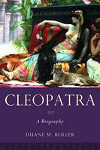
The propaganda presenting her as a seductress spread during her downfall, so are we in the 21st century victim of ancient history’s machinations?
Publisher: Oxford University Press
Pages: 156
Type: Non-Fiction
Age: Adult
ISBN: 978-0-1953-65535
First Published: 2010
Date Reviewed: 21st January 2012
Rating: 4/5
Roller gives us a biography of Cleopatra formed solely of information gathered from primary sources, in an attempt to give a true picture of the queen.
This is a very academic text, the sort that is useful for quoting in essays. As Roller presents only the information available to us from primary sources there isn’t all that much to record (indeed the page count is a reflection of this – don’t assume it’s a case of little effort), but the upshot is that you know the vast majority of the book is factual. What speculation there is is based on different interpretations by historians, and problematic passages in the ancient sources. Roller discusses why and how sources are likely to be biased or unbiased.
She was said to take an almost sensuous pleasure in learning and scholarship, an intriguing variant on her best-known alleged attribute.
Roller’s goal is, in fact, twofold. One is to present the story of Cleopatra as shown through the ancient sources available. The second is to debunk the “myth” of Cleopatra as a seductress, by showing what she was really like. The first he does brilliantly, in fact an element of the book that might otherwise be considered an issue – the lack of information for some parts of the queen’s life – is accounted for simply by Roller’s admission that there is no information to be had. It is very sobering and rather refreshing to read a book dedicated to providing the facts. Indeed the only speculation Roller provides is speculation based on biased sources, which is interesting, and sometimes quite fun, to read.
However the second goal is, ironically, not as well met. Roller’s goal is to dispel the myth of the seductress, but through the content he examines, both those written by her admirers and those biased against her, one can’t help but see a queen who was, yes, very intelligent and a good politician, but who also knew how to use the charms available to her as a female to get what she wanted.
And, in the case of the legendary carpet episode, Roller says quite firmly that Cleopatra did not enter Caesar’s presence in a bed sack, yet later on speaks of it as a great possibility, including precedents of its having happened before.
From page 7:
She did not approach Caesar wrapped in a carpet.
From page 61:
There is a certain credibility… because a name is provided… On the other hand, it is almost a demeaning way for the queen of Egypt to appear before the consul of the Roman Republic… Yet the bedsack device may have been common at the time…
While Roller’s determination to portray the truth is admirable, saying one thing without leniency and then saying something later that makes it possible, however great or small a possibility, isn’t very good.
There is a lot of information that isn’t about Cleopatra so much as her court, but considering the scant source material available to Roller, this is excusable, and it aids Roller in showing us who she was when the source material is silent.
Anyone interested in reading this book, which would form a very good basis for further study, should note that the appendices after the last chapter are well worth the read. One wonders why they were not included in the main text, especially as the last chapter ends without a proper conclusion.
There are flaws in this biography, and you are likely to feel slightly under whelmed by the lack of knowledge, but as factual history books go, Cleopatra isn’t bad at all.
Related Books
None yet.
Elizabeth Chadwick – The Wild Hunt
Posted 13th January 2012
Category: Reviews Genres: 1990s, Domestic, Historical, Political, Romance, Social
Comments Off on Elizabeth Chadwick – The Wild Hunt
Two Normans may be able to work out their relationship given time, but add Wales to the mix along with a lot of angry kin and life is unlikely to go smoothly.
Publisher: Sphere (Little Brown)
Pages: 341
Type: Fiction
Age: Adult
ISBN: 978-0-7515-4026-0
First Published: 1990
Date Reviewed: 12th December 2011
Rating: 5/5
Please note that this is a review of the updated version of the book, which, it seems, was published in 2008.
When Guyon attempts to gain his uncle’s lands through supplication to the king, he is granted them – on the condition that he marries a particular girl. Judith is the sole heir to her father’s domain and the king wants to be sure that there will not be a war over it. In marrying Judith, Guy gives up his mistress for a fifteen-year-old girl. Judith is terrified of marriage, having witnessed the violence of her father towards her mother and the slap of his hand to herself. But that isn’t the only issue Guyon will have to deal with – the king may have ordered the marriage to aid relations, but Judith’s extended family aren’t about to let the lands pass to another.
In this, Chadwick’s very first novel, we see all the talent that she has continued to wield to this day, only here it is targeted towards absolute fiction. Whereas in her later novels Chadwick focuses on real people in history, here she creates the main characters from scratch and makes use of history for secondary characters. And her weavings in and out between the factual and fictional are flawless. She references many real events and has Guyon and Judith join them, and looks too to legends, such as that concerning William II’s sexuality.
The book is drenched in the issues that arose from the Norman conquest of the British Isles, there are insults between the Welsh and the Normans – and Chadwick makes the story of Guyon’s ex-mistress a part of this by having her and her family mock his Norman wife – as well as touching on the murder of William II and the rise to power of his son Henry. In the latter case she puts forward a comical version of why the eldest son was unable to inherit the throne, which aligns, in its treatment, with fact.
Something that is important to mention is that although Chadwick creates her own characters from their historical bases, for example she creates the character of Henry I, one never feels that she is turning history on its head. A quick bit of research on the reader’s part proves that Chadwick has thought through her book and written it in accordance with real life.
Although the book is character-driven, the world building is, to use an old word given new life in our modern age, epic. It is so easy to be engrossed in it all that you can forget where you are in the present day. Neither does it take long to get into the story. As the story is based in battles and family feuds there is little time to get to know the common people but there is enough on the workings of settlements to keep the budding historian interested.
And while Chadwick is a modern author and often uses elements that are more acceptable to a modern audience, there is never a case of changing history to suit today’s principles and political correctness. An example of this would be Chadwick’s description of her heroine as a fast learner and able fighter – while not by any means reflective of medieval society at large it is nonetheless easy to believe that some women would have been, and evidence backs this up.
Talking of the heroine, both the main characters are winners. They have chemistry enough to explode any science lab and are not perfect while being totally likeable. As said, Chadwick does not step back from looking at things from the medieval mind set, the marriage is important to both Judith and Guyon, but as Guyon waits for Judith to mature and be ready to accept him in the bedroom, things become difficult. In regards to this issue of Judith’s acceptance, Chadwick spends time detailing effects that are still relevant.
And, as in any Chadwick novel, when they end up in bed there are no holds barred. There are racy scenes, there are curtains drawn in front of the reader, and the innuendo is well written. Chadwick masters all of these scenes brilliantly and even when there isn’t a pressing reason for one, for example when both characters are completely comfortable with each other, they serve to inch the relationship further.
The Wild Hunt is a feast for anyone interested in this period of history. Chadwick’s writing is just something else and her passion emanates from the pages. Whether you are new to her work or a returning admirer, The Wild Hunt is as good a place as any to start.
Related Books


Priya Basil – The Obscure Logic Of The Heart
Posted 14th November 2011
Category: Reviews Genres: 2010s, Domestic, Political, Romance, Social
2 Comments
Sometimes you have to make a solid choice, but you don’t.
Publisher: Black Swan (Random House)
Pages: 496
Type: Fiction
Age: Adult
ISBN: 978-0-552-77385-0
First Published: 2010
Date Reviewed: 30th September 2011
Rating: 1/5
Anil loves Lina, and Lina loves Anil – but she’s held back a little by their differing religious views, and a lot by her own indecisiveness. She also has dreams of working for a charity while Anil favours architecture. The differences between them mean that they are constantly at odds over their relationship.
It’s very hard to write a proper summary of this book because there isn’t a true plot to it. Although cited as another Romeo And Juliet, The Obscure Logic Of The Heart is not like the great work of Shakespeare at all, in truth it doesn’t really know what it wants to be. Lina’s indecisiveness is reflected in Basil’s inability to decide just what her book is about.
There’s nothing much this reviewer has to say that is positive about the novel because there are just too many issues with it. One is the issue of time. When is the book supposed to take place? If the book begins by recounting the future, and thus the present is the future, it doesn’t much sound like it. If the present is our current present, then their years at university are too advanced. Lina arrived at her first job two months after 9/11. This would mean she was about 21 or 22 years old in 2001. If the author has set the reunion in the present day – around 2009/2010 when she wrote it – that would make Lina only 30. Therefore the decades that have reputedly gone past could never have happened. This is why some proper timing is required because Lina and Anil should be reuniting in the 2020s or 2030s and yet Basil has made no attempt to make the world any more developed, as it surely will be.
The characters aren’t at all memorable nor, like the world, are they developed. Anil is given more space to grow than Lina – who is silly and hesitant throughout, although she needn’t be – and the rest of the characters, though they have more life in them, aren’t particularly good. The purpose of the book is to highlight social, cultural, and religious issues but the youthful relationship between the protagonists isn’t given any time. The author tells you they are a good match but does not show it. It’s impossible to be convinced that they are – indeed it’s difficult not to feel that Anil has been wasting his time from the word ‘go’.
It’s as though all the characters are acting. The romance is supposed to be mired by religious conflict yet neither Anil or Lina are particularly religious – the former is not religious at all. The hero’s parents aren’t religious. The heroine’s mother is, but could be won over, while her father broke with tradition himself (as shown very early on via some letters that make the recipient obvious). So the relationship is not believable and neither is their trouble.
It’s also quite sad that Basil has formed the basis of Lina’s problems around the fact that Anil isn’t Muslim because this isn’t actually the real issue. From the way Basil has drawn the characters, even Lina’s virtuous mother, it’s difficult to see that a little more effort wouldn’t have overcome these complications. The fact the book tries to present a real issue current in our world today, and presents it so poorly, is worrying. The religious conflict is rather throwaway. What actually keeps the characters apart, even though Basil might not admit it, is Lina’s selfishness. Lina doesn’t particularly suffer when away from Anil, in fact she forgets him most of the time.
And this is where the biggest problem of the book lies. Basil is clearly torn between wanting to write about a forbidden romance and wanting to write about the issues in Africa. Lina leaves Anil and then suddenly all emphasis is on the UN and Basil is dedicating pages upon pages to describing conflict and why things must change. Obviously she’s an advocate, and there is nothing wrong with that, but instead of being compelling as it would be if she had written a book that left out the romance, she just leaves the reader confused. If Lina doesn’t seem to care about leaving Anil, the reader can’t be expected to either.
The characters that work for the UN go on about their expensive products being ruined by sand and have lots of parties and a great amount of sex. The way Basil portrays it really doesn’t give the reader a good impression of a group of people who are meant to be aiding the poorest people of the world.
There is a scene in which Lina is with an American colleague. One – the American does not sound as though she ought to be anyone’s boss, in fact she sounds like a silly teenager. Two – Lina says she loves these kind of conversations – a conversation about rape being used as a weapon in war-torn countries, that is being spoken by a man and the American woman, while the latter is trying her best to display as much cleavage as possible. As mentioned prior to the conversation, Lina doesn’t like this flirty behaviour of her colleague’s – if so, wouldn’t she be wondering about the distaste of a conversation about the plight of African women being spoken by someone who is currently trying to get her breasts out? If in writing this scene Basil was trying to show irony, then she surely would have commented on it.
And whenever things get difficult? Basil dons her Victorian clothes and turns to melodrama, causing accidents in convenient places and getting rid of characters that could have caused interesting moments to happen.
There are some errors that are truly terrible, such as the London Underground signs being written in red (an author who has lived for a while in London ought to know that the signs are written in white against a blue background); and human beings do not have green pupils.
And it’s unfortunate really, because the pace of the book is good and it’s an easy read.
Having religious conflict as a theme requires depth. Having social relations as a theme requires depth. And as this book sadly shows, Basil is not a person who can do it.
I received this book for review from Transworld Publishers, Random House.
Related Books
None yet


