Posted 4th October 2011
Category: Reviews Genres: 2000s, Biography, Domestic, History, Political, Social
2 Comments

‘Defender of the Faith’ was more than just a motto given by the Pope. You also had to have faith in your successor’s ability (or willingness) to have children.
Publisher: Amberley Publishing
Pages: 203
Type: Non-Fiction
Age: Adult
ISBN: 978-1-4456-0280-6
First Published: 2002
Date Reviewed: 26th September 2011
Rating: 4/5
The Tudors were an intriguing bunch of people. Strong-minded and self-righteous often, they caused much joy and much sorrow. Obstinate when it came to the succession, they tended to leave their counsel with plenty of work to do in wondering who should be next up for the crown and whether or not so-and-so was a good choice. Yet there is little doubt that what they did is still worthy of being so famous, or rather infamous, today. Rex gives a quite broad and detailed account of those five people, from the man who wasn’t really in a position to be king, to the woman who refused to provide for the future of the dynasty.
Rex sets out with a couple of goals. He says his mission is to write from the royal perspective, and that his book is for readers rather than academics. The first he succeeds in doing completely – what social information there is in the book is there because it needs to be there to set the rest in context, and it truly is a book about the dynasty rather than anything else. The second is more difficult to rate. The book is humorous – Rex presents the facts while allowing himself and his readers to have a good laugh in places where people were a bit silly. But this humour is quite okay considering that Rex is clearly passionate about his subject; knowing all that he does it’s fine to have a laugh now and again. The humour is what makes it a book for readers, along with the obvious influence of David Starkey, who is a historian Rex admires. However there are a lot of extra details on aspects such as taxation, war, and money in general, and while this is interesting it does move the book more into the realm of academia. There are times when the book is like those you read for study purposes, and indeed the information included is written in a way that makes it perfect for university essays.
Henry Parker… an old-fashioned aristocrat who often bestowed upon his sovereign the fruits of his limited literacy skills…
Like all historians, Rex has his opinions, but he is very good at presenting several arguments and telling you why they could be possible and why not. Obviously he tends to lean towards his own thoughts, so for example after he has covered the possibility of Elizabeth’s having a sexual affair with Robert Dudley, it is mentioned no further. Something that is also intriguing is that he tells you where different theories have stemmed from, and why they have been discounted in modern times, or why they are continually believed. He refers to a range of different types of primary sources and the book itself, at least this edition, is full of pictures of these written and artistic sources. This visualisation of the sources, however, could have been better handled by whoever decided where they should be placed. There are a lot of them in the chapter on Elizabeth and although it makes you feel like you’re reading very fast (because the sources often take up most of the page) it breaks up the text in a way that disrupts the reading experience. This reviewer must also mention the pages of colour images in the book as she found them rather strange – they are copies of originals, however whether they are the originals or not she cannot say as in many places the colours of people’s eyes have been changed.
In the preface Rex says that he hasn’t worried too much about references, and he hasn’t, preferring to simply leave the vast majority to the further reading section. While this does help the flow of the book, it means that if you want to find out exactly whom he has referenced you may need to do a bit of research. What this lack of references does mean, though, is that Rex escapes the trap that many others fall into of unintentionally (or intentionally, if we consider G W Bernard) moaning about his fellow historians. In fact Rex tends to lump groups of people together in a loose way rather than point anyone out, except of course people of the past, which is the starting point of his polite disinclination to favour opinions that do not match his own.
The act included a declaration that it was treason for a woman to marry the [aging] king if she had had premarital sex. As the Imperial ambassador caustically observed, this rather narrowed the field.
There is a chapter for each of the monarchs, though anyone seeking to learn about Henry VIII’s wives in detail, or the ‘reign’ of Lady Jane Grey should understandably not expect to gather much information from this book. Rex has defined his book as one of rulers, so there is little about, for example, Henry VIII’s brother Arthur.
On first glance, The Tudors appears to be a quick introduction into each of the monarchs between 1485 and 1603, but when you read it you discover that it is in fact rather in depth and a sometimes hefty read. True, as Rex says himself, most of the content is general Tudor knowledge, but it is the way that it is presented and the afore mentioned depth that make it worth a read no matter how much you already know.
It is definitely written by an academic, and it is definitely written by someone with a sense of humour. The Tudors is a very good starting or continuing place for anyone interested in the dynasty.




Posted 19th September 2011
Category: Reviews Genres: 2000s, Biography, History, Political, Social
1 Comment
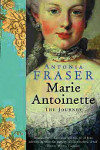
The phrase ‘let them eat cake’ has created a false impression.
Publisher: Phoenix (Orion Books)
Pages: 546
Type: Non-Fiction
Age: Adult
ISBN: 978-0-7538-1305-8
First Published: 2001
Date Reviewed: 18th August 2011
Rating: 4/5
Marie Antoinette was the ill-fated Austrian bride of her cousin, Louis XVI of France. Fraser documents her life from the cradle to the grave and the legacy she left.
The book is very well written and the narrative runs quicker than many fiction releases. If this were fiction it would be magnificent. Fraser describes events with good detail, uses plenty of primary sources for quotations, and when she comes to the executions of the family she succeeds in showing how horrific and unjust the situation was.
Fraser presents Marie Antoinette as the unlucky victim of political manoeuvrings by Europe’s dynasties and a scapegoat of the French Revolution. But she does it whilst remaining objective, no matter the fact that her writing positively impresses upon the reader her overall opinion of the Queen as a good woman. She never speaks negatively of Marie Antoinette, but she does allow for those stereotypes that are grounded in truth to stay; for example the idea that Marie Antoinette was uneducated – Fraser presents not a woman unwilling, rather a woman disadvantaged by a male-orientated society. So you have a queen who had wit and was a great entertainer, but was uneducated and an obvious mismatch for her academic husband. Yet she was a lady of common sense who was strong in her own right.
That Marie Antoinette struggled to balance her responsibilities is examined on various occasions. Being told that she was an ambassador for Austria by her mother, she had to also remember that she ought to allow French society to change her. Such instruction would be difficult for anyone, and certainly in our present day much smaller things are hard enough, but as Fraser illustrates it would have been all the more so for Antoinette given her lack of education and her love of her family.
Fraser provides the evidence that was given at Antoinette’s trial, having already examined each piece to destroy any idea of its being true. She does this well, leaving no reason why the reader should think otherwise. The reason why it’s believable is that the author has already described Antoinette’s personality and life, and indeed the book ends with a look back at what was said before. Fraser doesn’t deny that Marie Antoinette didn’t help herself by spending lots of money on friends and on entertainment, but she also reminds you that money was also spent on trying to live more frugally, or at least as frugally as the Queen of France could.
And it is this desire to live more like the common person that gets lost under the burdens of the revolution and thus needs to be remembered. Fraser recounts many occasions where not only did Marie Antoinette wish to dress simply or act the role of a common servant in theatre, but she was truly concerned for the everyday man, especially when it came to children. What she lacked in education and political opinion, she made up for in domesticity, wanting nothing more than to look after her children herself and caring when the offspring of peasants were in a bad situation.
This adds up, successfully for Fraser, to a woman who made the best of what she could with the disadvantages afforded to her. A person lacking in a mother’s love but not lacking in a mother’s criticism, feeling guilt at not being pregnant when it was not her fault, and used to the company of her siblings and an aristocratic way of life was never going to be perfect Queen material.
The big downfall of the book is Fraser’s fixation on her idea that the Swiss Count Fersen and Marie Antoinette must have had a sexual relationship. So relentlessly pursued is this idea that one could say that the most pressing reason Fraser had for her book was to write a story of some-what forbidden love. What makes Fraser’s determination so peculiar is that for the first third or so of the book she continually expresses how content Marie Antoinette and Louis were, that even if they weren’t in love, there was a strong devotion there. The transition between her saying this and speaking of affairs is sudden. From the sources Fraser has provided there is simply not enough evidence to say for certain that this affair happened and that Fersen’s admiration for Marie Antoinette and vice versa ever transformed into fornication. It is possible, yes, but as it is not definite, and as it is quite obvious Fraser is having dreamy thoughts that she should have used in a piece of fiction rather than historical biography, her constant claims are, as Henry VIII would say of his marriages, null and void.
Fraser is well read, that is obvious, and in the main her words are easily acceptable. For the most part she is objective, and where she is not she is at least transparent. Marie Antoinette is a compelling book that deserves a read by anyone interested in the period or the queen herself, just be aware that it was written by a romanticist.


Posted 14th April 2011
Category: Reviews Genres: 2000s, Historical, Political, Romance, Social
1 Comment

The lovers are married in a ceremony lasting minutes and then flee from the king. It’s the stuff fairytales are made of.
Publisher: Sphere (Little Brown)
Pages: 673
Type: Fiction
Age: Adult
ISBN: 978-0-7515-3939-4
First Published: 2000
Date Reviewed: 21st March 2011
Rating: 4.5/5
The Fitzwarin family seat was at Whittington until it was taken from them. For years Fulke’s father strove to regain it but when he died it was still in the hands of another and thus Fulke and his brothers took over the fight. Yet Whittington doesn’t remain the only thing in the young man’s mind and once he meets Maude, who he’d first come across when she was a headstrong girl of twelve, his loyalty will be split.
Something that may interest you to know, and to give you a general sense of the book, is that the man this book is based on, Fulke Fitzwarin III, is one of the possibilities for the inspiration of the legend of Robin Hood.
For the longest time I lingered on the fence between wanting to review this novel to let you know how good it is, and not wanting to review it because the idea of reviewing Chadwick’s work seems to me blasphemous. It is just so difficult to explain how amazing her creations are, and indeed the first book I read of hers, Shadows And Strongholds, has still not seen a review from me since two autumns ago when I read it.
The success of the book, above anything else, above the themes, even above the story, is the way that Chadwick makes the history accessible. The style of writing doesn’t so much invite you as envelope you without warning into the world in the book, Chadwick’s style is very much show rather than tell and the details she goes into about the domestic life mean that imaging everything is delightfully simple. Unlike many books where you can be hard pressed to create a whole picture of the scene in your mind, Chadwick’s work fills you in on everything; you hear about the different weapons, the way clothes were made, the cultural traditions such as the bedding ceremony. And as you can no doubt tell from the way I have written it, this paragraph applies just as much to her other books as it does to Lords Of The White Castle.
Because there is not much factual information to go on, and what information there is about the Fitzwarin’s cannot always be trusted, it was inevitable that Chadwick would adopt a more fictional outlook than authors who write of later periods. As someone who thrives on historical fiction that is more or less factual I have to say that it really doesn’t matter here, and dates are included which makes it easier if you later wish to research the factual elements.
The book takes a while to come into it’s own but the lead up to the romance is far from boring, the reader is provided with all the necessary background details and then some, and the characters are strong and well developed. When the romance does enter fully the narrative speeds along because of everything else that is going on. It’s thrilling. Perhaps the best aspects are the times the characters know they are assuming a stereotype and exploit it magnificently.
Fulke smiled at the apprehension in Ivo’s voice. Put his brother in the midst of a melee or ask him to charge across open ground at opposing cavalry and he would not balk. But give him the massive greenery of the Welsh mountain forests and the possibility of wild Welshmen lurking in ambush and he became as anxious as a nun in a brothel.
Humour places a substantial role, although you wouldn’t call the book a comedy. There are some great lines in the story and the metaphors tend to enlist the time period.
“You may seduce me as much as I like,” she declared with a wrinkle of her nose, “but not until we are wed.”
The sex scenes in the book often take place “behind the curtain” so to speak, but when they don’t they are hot and sensual. This doesn’t mean it is erotic fiction, and the words used are not crass, but Chadwick goes further than many romances.
The characters are strong, and Maude, the leading lady, strives to be on a par with her husband – apart from societal constraints, they are equals. There is a brilliant scene where Maude pulls out her crossbow and, after seeing her husband’s hesitation, reminds him that she is better than most men. If you’re looking for a kick-arse chick, you’ll find one here. Fulke is just as good, his dialogue is often priceless and his manner admirable, at least usually. And to bring in the Robin Hood reference I spoke of at the start, Chadwick’s story does include things that relate well to the legend. The rest of the characters are no less developed and the Fitzwarin household and their allies are a joy to read about.
Unsurprisingly Lords Of The White Castle deals with social issues, including the differences in gender. Chadwick generally lets the laws of the period hold sway but often points to times when men were happy to have their women be knowledgeable in politics. The two elements balance well and from her 20th century position she illustrates how some people were ahead of their time. Poignant is the retort made by a man to his father-in-law that if a woman can marry and run her household then she should be able to own land. It strikes as similar to many of the debates we have today regarding the placement of age restrictions, such being able to drive and be married before having the right to vote.
The only problem I had with the book was its length. It carries on for a long while after the threads are tied and although you can understand why it does, because Chadwick is wanting to present you with her version of the relationships, after the afore mentioned threads are tied there is nothing particularly interesting to keep reading for.
Lords Of The White Castle brings a piece of history that is often forgotten to life and fills in the gaps with fiction that is interesting, fun, and believable. If you are at all interested in swords and shields or if you have ever wanted to travel back in time and live in the medieval period then this book for you. And if you’re anything like me then the idea of bread and cheese becomes an incredibly viable option for dinner when hunger strikes and you have to put the book down.
Marketplaces, kings, tournaments, traditional cooking methods, and knights in shining armour coming to rescue their lovers. It’s all here.


Posted 8th April 2011
Category: Reviews Genres: 2010s, Domestic, Historical, LGBT, Political, Romance, Social
1 Comment
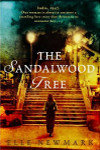
History is always changing because we are always finding out about new aspects of it.
Publisher: Atria Books (Simon & Schuster)
Pages: 357
Type: Fiction
Age: Adult
ISBN: 978-1-4165-9059-0
First Published: 17th February 2011
Date Reviewed: 31st March 2011
Rating: 5/5
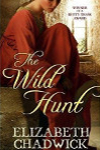
It’s 1947 and American Evie has come to India with her husband and son while her husband documents the fall of British rule. Martin has changed since the Second World War and though Evie hoped the move to India would re-ignite their marriage it seems unlikely to happen. In heartache she turns to cleaning in order to gain control where it was lost and it’s here that she discovers a loose brick in their hundred-year-old house. Hidden inside the gap is a bunch of letters dated 1850’s – suddenly Evie has a purpose of her own.
Although I’ve read a lot of books recently that I enjoyed perhaps even more than The Sandalwood Tree, on no occasion have I been able to read without checking every now and then on my progress – until this book. I finished it without really noticing. The book is full to bursting with delightful contents.
Admittedly it probably helps that I’m interested in India and its many cultures and can speak a bit of Hindi (the book contains a smattering of the language) but I’d hope that the immense richness of detail is undeniable to anyone. Newmark may to a certain point exoticise the country, this makes sense considering the time periods she writes of, but it’s the overall research and the way she describes the places that make the book what it is. The colours of the cover match the story perfectly.
The Sandalwood Tree flips back and forth between 1947 – the time of Partition – and the 1850s, when relations between the British and Indians were understandably bad. It details the events that happened during those times (although the book ends before Partition happens so it’s the lead-up that is examined) but the emphasis is on the lives of the characters and the particular social issues relevant to them. Evie, as an American, finds herself more open-minded than the Brits in her circle and so you get to see a few different points of view. Her own story becomes very much effected by the letters she reads, leading her to find India more homely and enabling her to really consider the impact her husband’s years in service have had on their marriage. Her son, Billy, is a joy in himself, being rather bold and knowledgeable and, being five years old in 1940s India, his own development as a character is particularly interesting.
The letters Evie finds become a second plot in their own right. Even though it is Evie who reads the letters and finds out about the women in them, so much time is given to the letters themselves that it’s easy to forget that. This sort of story has been done before, but because of Newmark’s writing style and the connection she makes between the women and Evie, it is fascinating. I should probably say that Evie’s story is told in the first-person, the 1850’s via the letters and a diary. The various social issues covered due to the two characters love interests make the book very compelling.
I would observe and understand India without India actually touching me.
One of the most interesting elements of the book is the way the domestic squeezes its way into the social, and vice versa.
A second conflict of cultures happens as the back-story to Martin’s plight in the form of the Germans and anyone against them. Consider the following:
He said it bothered him that German sounded so much like the Yiddish of his grandparents; then he shook his head as if he was trying to understand something.
Newmark’s point is poignant, that there was no real difference between Jews and Germans other than religions. Martin’s experiences, when put against the issues surrounding partition add another layer of thought to the book, show in both cases how society can change so quickly when a line is drawn in the middle.
The only thing I took issue with was the phrase “buttoning the curtains down” within the letters written in the 1850’s by British people. I have come to recognise the phrase “button down” through reading American literature, but it’s not something we say in Britain and thus is out of place in an old English letter. But I feel I have demonstrated my feelings overall: this book is pretty near perfect.
The Sandalwood Tree brings many different generations, cultures, religions, nationalities, domestic situations and opinions to its relatively modest 357 pages, and deals with all effectively. Whether the research is spot-on I can only say as much as I know personally, but it definitely comes across as a triumph all round.
The answer to would I recommend this book is a resounding “yes”.
I received this book for review from the author thanks to Pump Up Your Book.
None yet
Posted 14th October 2010
Category: Reviews Genres: 2000s, Historical, Political
2 Comments
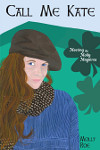
A young girl secretly takes on the rebellion before the war.
Publisher: Tribute Books
Pages: 148
Type: Fiction
Age: Young Adult
ISBN: 978-0-9814619-5-3
First Published: 2008
Date Reviewed: 24th September 2010
Rating: 3/5
When I was asked to join the blog tour for Call Me Kate, saying “yes” was easy. Having read recently about the creation of the United States, but knowing nothing about the issues faced by the Irish, the idea of adding to my knowledge interested me greatly.
Katie McCafferty lives with her family in the newly created United States, but their Irish heritage does not permit them the same freedoms granted other Americans, and they are forced to live in a community with other Irish families, mining for coal. The mines are dangerous places – the owners not caring if they lose workers to avalanches – and slowly the Irish people have come to form unions. Those in power want them to join the war but why should they when they are treated as second-class citizens?
The first thing that struck me about Call Me Kate was the chapter list – yes, something before the story! Roe has made a big effort to title all chapters with words beginning with “C”. There are only three that don’t begin this way but they do have a word beginning with the letter somewhere in their title. For a book with twenty-two chapters I reckon that’s pretty damn awesome.
The book is very short and unfortunately this means that a lot of detail is invariably missed out. Dialogue is preferred in favour of description and scenes move from one to the other without time to get your bearings, the chapters themselves don’t feature the subtle gaps that most books do. All this means that the story moves far too quickly, never staying in one place long enough, it’s as though author only had a couple of days in which to write it. The narrative is at times melodramatic, caused in part by the plenty dialogue. Because of Katie’s age the scene where a few tragedies happen at once seems unrealistic and more akin to a soap-opera storyline, no matter how realistic it actually is.
But despite this the novel manages to pack some great issues into its slim width. It brings to mind issues that were at the forefront of Lisa See’s On Gold Mountain, where the reader can’t but find the whole set up of infant America ridiculous. The Irish were treated as nasty immigrants, but wasn’t the majority of the population made up of immigrants? And there was a lot of awful prejudice against the native people but it’s absurd how the white Americans, a great number not being many generations from born and bred British themselves, thought that the Irish shouldn’t be allowed. Many of them probably had Irish ancestors.
Something that really makes you think is the opinion of the Irish, and this links in to the way the Americans treated them. In many respects you have to concede that the Americans had a point in wanting to keep the Irish out – because the Americans had got there first and you can understand that they might have been worried about resources being taken from them (consider the current issues of immigration in Britain). However, the Americans treated the Irish like dirt and had no intention of giving citizenship to those who fought for the country – so it is with that said that the situation was wrong. And you can’t forget that previously the Americans had taken the land from the natives anyway.
Roe’s character, and the narrator of the book, is a fourteen-year-old female. Katie is a strong character and Roe has portrayed her brilliantly. You must approach this book remembering her age because it atones for a lot of the simplistic style of writing in the book. Having a female as the main character also makes the story more fictional and thus less open to dispute about historical accuracy because of the point of view allowed by society for Katie to see. The problem with a female lead in this situation refers to that point of view – you don’t get to read about as much of the action and atrocities that went on. Of course you do read about them because Katie sees the wounded, hears the news, but it feels as though Roe’s research hasn’t been able to flourish. While Katie is a great character, Roe appears to have a lot more information to impart, and I for one would love to read a book by her written about the same era and from a character possessing more first-hand experience, a character like Con, for instance.
I couldn’t help but compare Call Me Kate to Celia Ree’s Sovay. In both the main characters are strong but Katie definitely shines over Sovay for her more realistic qualities.
Something that I hope Roe will continue to focus on, because she can be very inventive, is the use of similes. As an example, here is a quote that stands out:
I was as jumpy as a rasher of bacon on a hot griddle.
The book improves in the last several pages, including more descriptions, but the end is too sudden. As a debut Call Me Kate is good, but Roe needs to work further on the difference between compiling fact and being a novelist because while it’s in recounting historical fact that her talent lies chiefly, there’s no reason why her creations in future should not be first-rate.
I received this book for review from Tribute Books.

Older Entries Newer Entries