


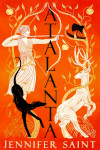


Katie McGarry – Dare You To
Posted 7th June 2013
Category: Reviews Genres: 2010s, Angst, Domestic, LGBT, Romance, Social
2 Comments
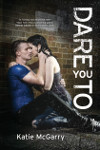
She was a punk, and he did ballet (or rather, played baseball), but there’s far more to say1.
Publisher: Harlequin
Pages: 462
Type: Fiction
Age: Young Adult
ISBN: 978-0-373-21063-3
First Published: 28th May 2013
Date Reviewed: 31st May 2013
Rating: 4.5/5
To win the current round of dares, Ryan has to get the phone number of the girl at the drive-thru counter, and it would have been a lot easier if she wasn’t a ‘skater’. Beth tries her best to protect her mother, whose boyfriend beats both of them up, and when she [Beth] takes the blame for Trent’s injuries, uncle Scott suddenly swoops in and takes her to Groveton. Beth hates Scott for abandoning her as a child, but the biggest issue she’ll have is when Scott introduces her to the boy who’ll help her find her way in school – and that person is Ryan, the jock from the taco bar. Baseball and grunge don’t tend to make a good match, but if Ryan’s to win the resurrected bet he’ll have to get past Beth’s curses. He’s likely to fall in love in the process.
She stares at my wrist, then at my jeans. “I see your tastes haven’t changed.”
“No,” I say. “But Ryan’s have.”
Dare You To is a book that will appeal to many readers, even those who would typically pass up on YA. McGarry’s story and writing style fit an older time – Dare You To is unlike the current crop of books out there and has an old school feel to it. The best way to describe it would be to say it’s akin to a darker, gritty, non-musical Grease, or 10 Things I Hate About You, where the hero and heroine are from completely different backgrounds and no one can see the relationship working. That said, the usage of the word ‘dark’ and the reference to these two films does not describe the book correctly. This book is similar at its foundations, but it is full of angst, domestic violence, drugs and alcohol. It could be said to straddle the border between YA and New Adult, and whilst Ryan may be innocent in his so-called perfect world, McGarry holds nothing back when detailing Beth’s life.
Given the above it may come as no surprise to hear that there is little weakness to the characters (of that annoying kind) and no silly choices. The characters are strong and although they both have issues, when they are upset, it remains realistic. There is so much detail and reality to these characters it’s evident that McGarry has put her heart and soul into the storytelling. There is a lot of angst and sadness, but none of it is excessive or there for little reason. The book never wanders away from its subject, and whilst the inevitable budding relationship between Ryan and Beth obviously changes things, invites love and romance, the characters do not change beyond loving looks and the odd understandable blushing and weak knees. They never lose sight of their dreams.
So to the darkness. This is not a book for teens at the beginning years of the life stage. Beth is 17, a drug user and a drinker. She has had one heck of a terrible life with her mother, a woman who will not protect her child (rather Beth protects her), and when Ryan meets Beth’s group of friends he provides the outsider perspective on what the group is (although in that last point, there is not so much worry for younger readers). And Beth is no stranger to sex. Her friends are supportive of her, rather than bringing her down, which one might have assumed from the first descriptions of their living conditions, Isaiah and Noah work to help Beth see that the life Scott has gifted her is the better one, that it would ruin her future to stay with her mother. Ryan’s own family has problems, though here it’s a case of perfection on the surface, and estrangement underneath. His town is religious, anything that bucks the trend and doesn’t conform is shunned. Everything blended together, it has to be said that McGarry has structured and written her book brilliantly, and without leaning on the support of extreme drama and the confrontation of multiple families.
As for the writing, as previously accounted for it is good. McGarry has a firm hand on the dialogue. Everyone gets to the point with little waiting involved, and characters say what you would expect them to. The book is told from the perspectives of Ryan and Beth, going back and forth between them. There are rarely any gaps in time; as soon as Ryan’s chapter ends Beth’s takes over in a heartbeat. This means that you get to see every shared moment from both points of view, and means that no curtains are drawn over uncomfortable situations.
There are but a couple of aspects that could have used a little more work. Firstly, there are several pages devoted to the plight of a bird that is clearly a metaphor for Beth. It’s not bad, but it continues for too long and the point is made repeatedly. Secondly, and this may not be a problem depending on the reader’s location and the media they consume, although Ryan and Beth are a ‘jock’ and ‘skater’, from the perspective of a reader not well acquainted with these terms and styles (for example a non-American) it may be the case that the wrong conclusion is reached about who the characters are. More description at the beginning would have worked well here, although it does become obvious later on. Considering that these two issues are not of paramount importance, it would be difficult to pursue them further, and in the case of the metaphor it is easy to see why McGarry used it, even if it is unnecessary.
Dare You To achieves something that Young Adult novels have not, recently, and that is a demonstration that one can write a romance into a book without glossing over the strength and common-sense of the characters. It offers knowledge of difficult subjects unapologetically and brings to the forefront the strife that is the social situation for many people, not just teens.
The decision for how to end this review is perhaps the most uncomplicated for a long time. Dare You To is an exceptional and different Young Adult novel that may be just what you’ve been looking for.
I received this book for review from Harlequin.
1 A play on Avril Lavigne’s “Sk8ter Boi”.
Related Books
None yet
Beatrice Colin – The Luminous Life Of Lilly Aphrodite
Posted 23rd January 2013
Category: Reviews Genres: 2000s, Domestic, Historical, LGBT, Political, Romance, Social
3 Comments

Because the cinema is always an escape, no matter how bad the world outside.
Publisher: John Murray (Hodder & Stoughton)
Pages: 400
Type: Fiction
Age: Adult
ISBN: 978-1-848-54031-6
First Published: 24th July 2008
Date Reviewed: 16th January 2013
Rating: 4/5
Lilly Nelly Aphrodite was sent to an orphanage after a failed adoption, and in the first years of the 20th century, living in such a place is bleak. She loves the nun who runs the orphanage, however, and makes friends with Hanne, who brought her (Hanne’s) siblings to the door following the suicide of their mother. But the orphanage will not always be around and life is destined to lose its peacefulness. And in war-torn Germany, it’s hard to get by when you have no relations to help you.
The Luminous Life Of Lilly Aphrodite (titled The Glimmer Palace in America) is the story of a girl’s struggle to live a good life and break free of the stigma of her background. Not quite the luminous life you might expect (more on this in a moment) it manages to not only show how awful the First and Second World Wars were but also puts them in the context of life in Germany. Some of the main characters are Jewish, which gives Colin the opportunity to explore the strife of Jews in a first-hand manner. The inclusion of the film industry allows her to show how life went on despite major social problems, and how the government exploited the media for their own gain.
To be sure this book isn’t, for the most part, about film, despite what the summary and title (both British and American) suggest. Lilly does become an actress but she must make it through several hardships first. Indeed one could consider the title to be ironic, looking at the realities of the backgrounds of film stars who have not come from wealthy families, and the way that Lilly’s early life is the very opposite of happy and luminous. What Lilly’s life is, however, is incredibly interesting, both as a work of fiction and for the factual content it offers the reader. In a world where the villain is not given a voice, Colin’s focus on Germany, and on its citizens, is poignant.
There is a lot of sexual content in the book; there are affairs and the odd sex scene, but what is put in the spotlight is the way adults reacted to children. Colin never implies that paedophilia was widespread, but she does imply that it happened a lot – in other words she never glosses over it. The author tells of street corners and girls dressed as women. Lilly’s friend, Hanne, enables Colin to look further, as Hanne becomes a prostitute and performer at a seedy bar. Where Lilly demonstrates liberation and bettering oneself, Hanne demonstrates what happens when people are neglected and left to fend for themselves. Colin deals with this well and never casts any character as bad unless necessary. It should be noted that there is also a lot of love, both platonic and romantic, and not all of it is mutual or appreciated. Yet behind all this is the fact of the war and the way it made sex more prominent, taboo preferences no longer hidden, and meetings for payment rife.
Given that the book focuses on Lilly’s early life, there is in fact little overall about the German film industry. For the most part, the industry is confined to the first page of each chapter and Colin accounts film premieres, the relationships between stars, and the reaction of people to the extras on screen that they recognise and denigrate for appearing in propaganda. Whilst these events relate to Lilly few times, they provide plenty of new voices to aid Colin in the description of war-torn and then Nazi Germany.
And war-torn Germany was as awful if not worse than other countries. Colin describes the starving, the effect of disease on an already weakened population, and the lengths desperate people go to obtain food. All this is contrasted with wealth, as Colin not only details the lives of those who had no reason to worry about inflation or hunger, but has some of her characters be part of that set also to the effect that the reader, who has just witnessed utter poverty, is thrown with Lilly into a world of expensive toiletries and plentiful amenities. Not only does it give you something to think about, it exposes the corruption and has the ability to truly impact the reader on the average person’s behalf.
The book may be about Lilly in name, premise, and angle, but really it is the story of a nation. It could have used more detailing about the film industry and not been quite so convenient at times, but it cannot be said that it fails to make an impact. The Luminous Life Of Lilly Aphrodite is not so much about Lilly but about anyone of the time. And it is that that makes it a winner.
Related Books


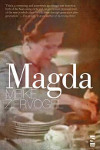

Cheryl Rainfield – Parallel Visions
Posted 9th January 2013
Category: Reviews Genres: 2010s, Angst, Domestic, LGBT, Paranormal
3 Comments
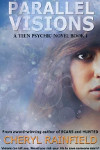
Seeing danger during dangerous episodes themselves.
Publisher: (self-published)
Pages: 56
Type: Fiction
Age: Young Adult
ISBN: 978-0-9878460-1-3
First Published: 20th November 2012
Date Reviewed: 11th December 2012
Rating: 5/5
Kate suffers from asthma, yet whilst her attacks are frightening and sometimes life threatening they enable her to have visions of the past, present, and future. Despite these visions having proved true to life on certain critical occasions, her family still do not take her seriously, but when she begins to witness domestic violence in her sister’s marriage, and the death of her new friend’s depressed sibling, Kate finds she can no longer remain a passive spectator.
Parallel Visions is a short and easy read (in terms of the writing itself) that manages, partly because of those two aspects, to present and highlight vastly important issues with the aim of helping those who struggle in similar ways.
The words and plot are simple, and the novella is very much a YA book, with all the trappings of stories for that age group – love and school problems and the like. In fact if the subject was different it would be a bad thing, but because of the message it works extremely well. People need to read and be assisted by guidance they will understand and relate to and thus the book succeeds in its implied aim. However the book isn’t just for those who have issues in their life and the approach is such that it serves as an introduction, too.
Interesting is the way the paranormal aspect, of seeing oft-prophetic visions whilst suffering an asthma attack, is used. On the face of it, such an aspect is hideous, a girl only being able to see visions when in a critical state, but it could be said that, whether intentional or not, Kate’s suffering amplifies the suffering of those she sees. And the way Kate responds, in her chosen need to see the visions, demonstrates the way people put others before themselves despite danger. And at a basic level the way the necessary situation for the visions to happen echoes, to extent, such phenomenon as the recently dead coming back to life proclaiming to have seen Heaven – the way the miraculous attends sadness.
That Kate’s parents do not believe in her visions sounds unrealistic until you remember that most people tend to be suspicious of the paranormal. The reader may wonder why they didn’t believe her after she was right the first time, however, and how they weren’t receptive of the idea that Jenna was being beaten. This is an interesting, nay, important issue to consider, even if it is different than many statements for the visions, highlighting the worries that attend a situation that may or may not exist, and the underlying problems that appear to support suggestions, and perhaps also the extent to which people are afraid to cause a fuss. Rainfield does a brilliant job at reminding her readers that issues and people are rarely black and white, that things may not be what they seem. Yet she doesn’t simply demonise those in the wrong – in addition to explaining appearances she also takes a look into how people believe they are behaving as well as why they might become that way. And in the case of Gil’s sister she shows that a person can heal but unless they have the necessary support that healing may not last or be strong enough.
In a very short time Rainfield manages to offer a lot of support to those of an age group (in fact more than one group, really) that often does not get such support from elsewhere. The work of a writer of clear prose, bearer of a lot of love and understanding, and a good storyteller, Parallel Visions is far more than just a book you read and finish and with various lessons and messages to hear for different readers.
I received this book for review from the author.
Related Books
None yet.
Jesse Blackadder – The Raven’s Heart
Posted 12th December 2012
Category: Reviews Genres: 2010s, Domestic, Historical, LGBT, Political, Romance, Social
5 Comments

Nothing but the castle.
Publisher: Bywater Books
Pages: 454
Type: Fiction
Age: Adult
ISBN: 978-1-61294-027-4
First Published: September 2012
Date Reviewed: 10th December 2012
Rating: 4.5/5
Please note that this book is the fictionalised story of the author’s family and therefore there are a lot of references to “Blackadder” that will not necessarily refer to the author herself.
Alison Blackadder, instructed by her father to become invaluable to Mary Queen of Scots with the aim of retaining Blackadder castle, begins a life of deception. Having been brought up as a boy in order to mask her from the family’s enemies, Alison finds it easy to be Mary’s eyes and ears in the city, as well as the sovereign’s guard when Mary wants to see the city for herself. Whilst Mary is unattainable, Alison finds herself attracted to other people, however for all her desires one remains the most important – to stay in the Queen’s favour until the castle is regained.
The Raven’s Heart is a grand epic that combines history, politics, and romance, accompanied throughout by a lot of suspense. Indeed the suspense rarely lets go of the narrative; the story speeds along in no time. And considering that almost the entirety of Mary Queen of Scot’s time in her homeland is included, that is a very fine thing.
The epic nature is very much apparent in the storytelling. The beginning of the book focuses on love – Alison’s feelings for the Queen, and the later relationship with one of the maids – creating a sweeping romance, mini plot points arising where Alison’s sexuality causes religion and taboo subjects to enter the fray. But as the book moves on and decisive blows are struck (literally, if you consider the use of execution in those times), romance takes a step back to allow politics, domestic situations, and social history to stake a claim. In other words, the events that do not relate to Blackadder Castle are from popular record and therefore the author lets the dynastic history take over. This in itself is rather wonderful when you consider that the author set out to tell the tale of her ancestors (albeit somewhat fictionalised to fill in the gaps) and means that both the Blackadder tale and the story of Mary Queen of Scots are given ample time; thereby creating a book that is very broad in appeal. The author wants to tell her family’s story, but she never forgets the period of which she is writing and the interest her contemporaries have in it.
Nevertheless, for all the book moves swiftly, it must be said that at times it can seem a bit like a bullet-pointed list. Whilst there is nothing that feels overly quick or lacking in detail, the reader may wonder why the narrative moves quite so fast, even if it’s obvious that Blackadder has made a conscious effort to strip away any text that is unnecessary. Yet the author does look at some events, both fictional and factual, in great detail, and it should be said that the speed and change of scenes and time are a big part of why the book keeps its suspense. Whether the written structure is complimentary or not will likely depend on the reader.
Regardless of the fact the book incorporates romance, attention should be brought to the way sexuality has been approached. Looking at the surface, so to speak – the reference to same-gender relationships on the book’s cover – it must be said that Blackadder’s use of a cross-dressing bisexual woman provides a fantastic contrast to the violent aspects of male perversion present in the novel. The author shows to good effect the difference between harmless same-sex relationships, and perversion. Given that same-sex relationships and bisexuality are often still linked with perversion today, Blackadder demonstrates the marked difference that surely makes the cause for acceptance easy to see. And most interestingly, in choosing these subjects as well as the references to the liberal court of France, the author openly displays the fact that such ways of living have always been a part of humanity. In so doing Blackadder makes use of the opportunity presented to comment on the way different people responded.
The character of Alison, a woman more aligned with manhood, also allows Blackadder the chance to comment somewhat on gender as a whole, and to study the way in which society’s restrictions on what makes a man or woman creates expectations of how people should act. For example, Alison, having lived as a boy all her life, finds talking in a lower register and walking with a wider gait comes more naturally than the dainty traits of the stereotypical woman, and is able to make a decision as to which traits she would like to adopt from her days as a lady-in-waiting.
Unfortunately, with all the events that have been included, the book does start to loosen its grip on suspense before the end. Depending on how invested the reader is in the story of the castle, this may happen when that thread is tied, partly because it can be a surprise, otherwise the natural winding down of the narrative whilst aiming to detail the rest of the reign inevitably slows everything down. In the case of the castle, the story has finished, and thus the continuation of the narrative, albeit necessary to the dynastic tale, shines less brightly. There is also a short period of personification that whilst aligning with the thoughts of the main character, can feel a little convenient and forced.
However the few negatives are relatively minor. Finding anything really off-putting is rather difficult and it has to be said that Blackadder has done a fabulous job of not only introducing her family to the world, but in providing an accessible account of Mary’s reign. There are times when artistic liberties have been taken with the history, but it is easy enough to discover the reality.
The Raven’s Heart is an extraordinary tale of society, politics, love, and one woman’s aim to get back the heritage that ought to have been hers. It will delight the literary interests of a myriad of readers, and perhaps most of all it warrants that the name Blackadder should no longer be confined to a British television series.
I received this book for review from Historical Fiction Virtual Book Tours.
Related Books


Malinda Lo – Ash
Posted 13th August 2012
Category: Reviews Genres: 2010s, Fantasy, LGBT, Romance
2 Comments

It’s not always the prince you want to go to the ball to meet.
Publisher: Hodder
Pages: 291
Type: Fiction
Age: Young Adult
ISBN: 978-0-340-98837-4
First Published: 2010
Date Reviewed: 4th July 2012
Rating: 4/5
Ash lived with her parents in Rook Hill until her mother died and her father passed away having remarried. Now Ash has been condemned to slave away for her stepmother and stepsisters for the “debt” her father caused the family. Ash has always believed in fairies, and when she meets one she is entranced. But not as much as she is when the King’s Huntress enters her life.
Ash uses the traditional tale of Cinderella as a base, but Lo moves far away from it most of the time, it’s almost as if the tale is there for when she strays too far. But this isn’t necessarily a bad thing, indeed Lo creates enough of her own story that when the reader is introduced to the traditional scenes it can be a shock in that it is easy to forget that Cinderella was incorporated at all.
The book is mature enough that it requires the Young Adult rating, but the writing is rather simple in that mystical, intriguing way of fairy tales. The book doesn’t require much time, however it does require full attention if the reader is to truly appreciate the way in which Lo tells her tale. Throughout the story there are hints of what is to come, the sections that may seem like world building are included to provide a lesson for Ash, and their inclusion makes the dark nature of the tale all the more apparent.
The story feels rather short, but this is in keeping with traditional tales – the book spans a good length of time, several years, but only a few aspects are focused on. Lo knows what is important and what is not and doesn’t spend time on superfluous details. And she manages to do this whilst simultaneously providing her reader with a thorough knowledge of the world she has made.
Ash is quite the strong heroine. She knows when keeping quiet will save her hassle, and she knows when speaking her mind will release her frustrations. Through her Lo demonstrates the difference between a small crush and real love, and whilst a lot of the lessons may not be so relative to real life, for their fairy basis, the overall idea is relevant.
Where tradition is included, Lo still pushes the boundaries of the tale and rarely leaves the elements unaltered, for example one of the stepsisters is rather likeable and a friend to Ash. Where there is stereotypically a good fairy godmother, there is darkness. The fae in Ash consists of a whole other world and there are a lot more mentions of them than just the one appearance. Indeed anyone looking to be totally wrapped in the magical realm will find what they are looking for here. One subject covered is how fast belief is fading, Ash is one of few who appear to still believe in fairies despite the way the two races were integrated in years gone by.
It is well known that the main way the story strays is in the romance department, and truly it would be difficult to review this book effectively without considering it. The bride-finding ball is included, but perhaps Ash isn’t concerned with the reason for it. There is no big literal emphasis on same-sex relationships; loving the same gender in Ash’s land is so natural that such a thing is never addressed, the reader simply witnesses women going off together without any comments from the characters or author. While this obviously brings the story right into the present day, it fits the set up of fairy land well, as often in fairy tales women are entranced by women and the same of men. The relationship itself is chaste, making it ideal for readers who are only just at the age for Young Adult books.
Where Ash fails to hit the mark is in its pace and description. It is true that such issues blend perfectly with the way that traditional tales are told, but because the book is longer than, say, a Christian Andersen story, the requirement for a fast pace is greater. And whilst there is more than enough information on fairies, sometimes the story does feel lacking in appropriate detail. This is where the difficulty in categorising it rears its head – on the one hand Ash feels like a children’s book and in that sense everything works, but the content places it firmly in the realm of Young Adult, causing detail to be important.
Ash is not for the reader who wants a straight retelling of Cinderella. The main character’s name may be a clever substitute, but her life does not mirror the mythical girl’s closely enough to please such a reader. For those not so concerned, especially readers interested in the modern nature of the book, success is likely to be found, if not celebrated.
Some girls do not wish for a prince, and as Lo explains, that’s completely fine.
Related Books


