




Samantha Sotto – Before Ever After
Posted 27th June 2012
Category: Reviews Genres: 2010s, Adventure, Angst, Comedy, Fantasy, Historical, LGBT, Romance
Comments Off on Samantha Sotto – Before Ever After

When “forever” doesn’t mean “forever” for reasons that no one’s considered.
Publisher: Broadway (Random House)
Pages: 294
Type: Fiction
Age: Adult
ISBN: 978-0-307-71988-1
First Published: 2011
Date Reviewed: 18th June 2012
Rating: 4.5/5
Shelley’s husband died from a bomb in a backpack on the subway in Madrid, a few years after they had met. Two years afterwards Shelley is still grieving, and when she answers the door to a man who looks like her husband and says he is Max’s grandson, she wonders if the bruise to her head she gained when she fainted on the doorstep is the reason why she is seeing the impossible. But Paulo isn’t Max. Indeed Paulo has issues of his own, he wants to know who his grandfather is because he knows the man is still alive. And for Paulo to find out who Max is, he must ask Shelley, even if this will be the first she has heard of it too.
Before Ever After is the debut novel of an author who shows much promise. It successfully combines a range of ideas and genres to create something not merely magical but also extremely romantic, up-to-date, and informing. At once a travel log, a historical fantasy, a comedy, and a tragedy, the book presents itself as something incredible.
The story is told through a compilation of flashbacks and present-time reflections. As the basic idea is for the characters to discover who Max is, the flashbacks are used in order to show how Max had hinted at things all along, and the present-time is used for Paulo and Shelley to work out what was going in. Indeed the flashbacks are stories within a story within a story, the book is three layers thick, but the structure and format means that you will never be at a loss for what time period you are currently reading about. The setting of the present day is mostly a plane, which gives the characters plenty of time to chew things over, and while you may find yourself wanting it to be over already so that you can meet Max, the fast pace of the novel means that the satisfaction of reading it and taking in all of the information is much more exciting. Indeed you never know if you actually will get to meet Max in the present time, and that in itself spurs you on because he’s such a great character that you really hope you will. All of the suggestions and especially the very first page of the book, tell you that he is very likely paranormal in some way, but Sotto does a good job of letting you wait to find out if it is true or not. And you will be wondering until the end.
“Now listen campers,” Max said. “Take note of this place in case you get lost during our field trip and need to find your way back home. If you don’t think you can remember where we started from, you can purchase a baguette and leave a trail of bread crumbs. Oh, and before we head off, there are three things you must remember. First, don’t talk to strangers. Second, you need to be aware that your travel insurance does not cover acts of stupidity or alien abduction. Please do your best to avoid them. And third, hold on to your mates.”
[…]
Shelley raised a brow. “Mating?”
“Mating,” Max said, “from the word mate, a word derived from the Old Dutch word maet or companion, which shares the same root as mete, which means ‘to measure’.”
“I see,” Shelley said. “So what you are in fact offering me is a measure of companionship, correct?”
“Indeed.” Max stuck out the crook of his arm. “The length of my arm to be exact. All in accordance with the guidelines of the Poultry Club, I assure you. You won’t get lost, I have a place to rest my arm, and the chickens are secure in my fidelity.”
Max is one of those characters who comes along very rarely. This reviewer would liken him to Mr Rochester of Jane Eyre and Max de Winter of Rebecca for his difference – whilst he is not like them he shares with them this certain uniqueness in quality. Max is surely a great romantic hero, yet on the face of it, for his dialogue, he is anything but. Shelley may be a strong heroine in herself, but Max is the winner here.
The inclusion of Shelley allows Sotto to show her reader a widely known issue, that of being afraid of relationships because of prior hurt. Shelley is almost paranoid about being a relationship, keeping a list on her at all times that tells her when to jump ship from dating a man – to ensure she doesn’t end up like her widowed mother, who in turn showed her how much depression could come with loss. Max too is worried about losing people, and this is apparent throughout the book; it is the way the couple figure out their relationship in a way that works for them that is so compelling.
Another factor in the book is the number of everyday issues and taboos Sotto fills her story with, and the way that she includes them like any other element. This is done through the secondary characters. Max and Shelley met when Shelley decided to sign up to join the tour group Max was taking to the continent, and it is the people on the tour with them that make the novel so valuable. The tour group consists of a young American called Dex – Shelley’s cultural male counterpart, Rose and Jonathan – an elderly couple in the prime of their sexual lives, and camera-wielding Brad and his partner Simon. Rose is very open about her sex life, and Brad and Simon are just a gay couple – there is no reasoning behind anything, Sotto has included subjects to be as normal as anything else, and this lack of pointed political correctness in a book that otherwise oozes it is particularly refreshing. With the historical content and present-day happens race is also included, and Max’s nature as a possibly paranormal person is drenched in issues of morality.
She sank her teeth into melted cheese and summer, unleashing a silk stream of eggs and cream in her mouth. A buttery earthiness lingered on her tongue. She gulped orange juice to keep from moaning from the world’s first egg orgasm.
Rose gave Shelley a knowing look. “I came as well, dear. Twice.”
Jonathan sputtered, turning a shade brighter than the raspberry preserves on his baguette. “Ah… um… yes, yes, wonderful eggs, Max. Très magnifique.”
Shelley did not recover quite as elegantly, and was still choking on the juice that had spurted out of her nose and onto Max’s shirt. Max came to her rescue with a couple of solid pats to her back, a napkin, and a grin.
Considering Rose’s frankness about her sex life, it should not surprise you that at times the book is hilarious. Whilst it is not graphic, Sotto lets the jokes run wild and there are numerous references to loud noises and length as much as there is travelling around the continent.
And travel makes up a huge section of this book, providing the basis for the character’s meeting, the reason for the history, and what Sotto wanted to talk about as a keen traveller herself. There is a great deal of information on the places visited, which are diverse in location and culture. What is interesting is that Sotto is relentless in her goal of introducing her characters, and thus her readers, to lesser-known gems in Europe. Through these lesser-known places, Sotto is able to create the world she wishes for Max to explain to his tourists, and it gives her free reign in the historical fiction department. Quick research will show you what is factual and what is not, and this is another part of what makes the book so appealing, that you are reading a blend of travel log and history and learning so much all at once. The historical rewrites are something in themselves, with Sotto often referencing well-known figures in order to provide background context, and twisting both facts and possibilities, such as the idea that Marie Antoinette’s Petit Trianon was a place of debauchery, in order to produce the result she wants. Stretching from the 1970s all the way back to Ancient Rome, across different religions and cultures, with a variety of fantasy characters and just plain interesting ones, there is bound to be something to interest you in the history chapters.
“I told you it was nothing,” Adrien said. “Although the duchess did appear to be the tiniest bit cross with me. But then again, I could be mistaken.”
“Mistaken? How so?”
“Well, I was rather busy dodging the various heavy brass objects she was throwing my way to really pay attention to what she was saying.”
There are a couple of less positive factors to the book and these concern the way Sotto uses description. There is an excess use of similes where what is really happening is sacrificed for descriptive and poetic metaphors. The issue with the similes is that they create melodrama in places where melodrama is not needed and can sometimes cause confusion as to what is happening. And there are short bursts of info-dumping and a few clunky dialogues. However these negative parts are rather like the excessive use of humour in a Terry Pratchett Discworld novel – it is easy to accept because the good vastly outweighs it and it is understandable that Sotto is still coming into her own as a writer, still working out her style and voice. The plot and characters are what’s important, and they are enough to keep you reading when the written word falls down a bit.
Before Ever After is a very apt name, giving you everything you need to know about the book without really giving you anything at all. If this is what happened before, then what happens after? Is there an after? Was there ever really a “before”?
The scent of strawberries, or rather what strawberries might smell like if they were made from melted plastic and disinfectant, filled the white-tiled room.
It is impossible to do justice to this story. Let that statement be the conclusion.
I received this book for review from Crown Publishing Group, Random House.
Related Books



Speaking to Samantha Sotto about Before Ever After, Love & Gravity, and A Dream Of Trees (spoilers included)
Tune in as Charlie Place and Samantha Sotto discuss characters that join you in your car in the midst of a traffic jam, time travelling with Issac Newton, switching from your fully researched work in progress to a story that needs to be told, and… chickens?
If you’re unable to use the media player above, this page has various other options for listening.
Lian Hearn – Across The Nightingale Floor
Posted 11th June 2012
Category: Reviews Genres: 2000s, Angst, Domestic, Fantasy, Historical, LGBT, Paranormal, Romance, Social
2 Comments
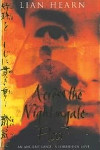
A rather epic historical flavoured with fantasy.
Publisher: Picador
Pages: 292
Type: Fiction
Age: Young Adult
ISBN: 0-330-49334-5
First Published: 2002
Date Reviewed: 9th February 2011
Rating: 4/5
Please note that I wrote most of this review over a year ago and that the tone is different due both to the shift in my writing style and the fact that I wanted to make reference to the book being a re-read. I suppose you could call it the ultimate reflective review.
On the day his village was burned to the ground, Tomasu was found by a Lord who named him Takeo and took him under his wing. Now Takeo joins Lord Otori in wanting revenge, and it appears Lord Otori chose well, for when Takeo stops speaking through shock, magical talents begin to show themselves. Takeo’s not sure what’s happening but he knows that with these talents he may be able to defeat the tyrant.
I first read this book around its publication date and absolutely loved it, I remember staying up all night to finish it; through this I came to discover how fantastic February mornings are as the sun rises, something I try to be awake to experience at least once a year to this day. Because of my reading speed at the time, the climax took me 45 minutes to get through and along with the historic subject I was in heaven. But reading it again I can see the flaws I didn’t see then.
The book is a brilliant example of Young Adult Asian historical fiction (albeit written by a white westerner), and it takes the reader to various different locations without any big changes in plot. The main characters are strong, the heroine especially, and the reader is able to get to know them well in a reasonably short period of time. The talents are supernatural, but they aren’t over the top, they are in the main the sorts of talents that we often think might be possible to develop, such as acute hearing.
But something that I didn’t notice the first time I read the book, due to my age, was the main character’s sexual promiscuity. The character actually appears to be a closet bisexual, but this isn’t the point, rather the point is that the romantic storyline revolves around an intensely passionate love and then a moment later the hero will go and sleep with someone else. For this reason I had a lot of trouble accepting the romance in the book whereas the first time I read it I thought it was amazingly romantic. All I felt was that he was disrespecting Kaede and their supposed love.
However apart from this the characters are exceptional. They are very much a product of their writing time, written before Young Adult books became what they are today, and are all the better for it. The plot switches between them, Takeo’s chapters being written in the first person, and Kaede’s in the third.
The book is not for the faint hearted. Hearn never shies away from descriptions of torture and death, and scenes of a sexual nature are relayed in their historical truthfulness. For fantasy this may be, but the Japanese historical aspects are rather factual.
The story has it all, the keen warrior, mystery and magic, adventure, political issues concerning leadership, and a sweeping romance. It shows why political alliances were important, but family more so, and how devastating the wrong choice could be. It displays the extreme prejudice towards women, the strong Kaede struggling to be accepted as her father’s heir and having to pass up being known as the heroine of a part of the plot that cannot be told here if the plot isn’t to be spoiled.
This is not your contemporary Young Adult novel, and should be recommended to young people with care. However that said, for its realism it is nothing more than true to historical life.
Across The Nightingale Floor is fiction for anyone who has seen a wuxia film and fallen in love, for the historian who wants to know more, and for the dreamer who believes. It is not flawless, even if the hero’s movements are, but it is a book that will hopefully stand the test of time.
Related Books
Charlaine Harris – Living Dead In Dallas
Posted 30th January 2012
Category: Reviews Genres: 2000s, Comedy, LGBT, Paranormal, Romance, Social
Comments Off on Charlaine Harris – Living Dead In Dallas
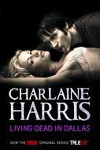
Attempting to make those who live in darkness see the light.
Publisher: Gollancz (Orion Books)
Pages: 279
Type: Fiction
Age: Adult
ISBN: 978-0-575-08938-9
First Published: 2002
Date Reviewed: 26th January 2012
Rating: 4/5
Considering she had agreed to work for Eric, it was unlikely that the vampires were going to leave her alone with her 19th Century boyfriend, living life as before. First Sookie discovers her co-worker’s dead body in Andy Bellefleur’s car, and then Eric calls her up about a mystery he’s signed her up for. Sookie’s telepathic power is the one needed in order to find out where the missing person is. It may also help her find out what happened to LaFayette.
If the first book in the series, Dead Until Dark, was a funny but gruesome and truly adult novel that was a good read, Living Dead In Dallas takes it up a level. There is perhaps more sexual content in this one, and more blood and guts, and it’s not always an attractive read, but Harris is now in the prime position to introduce her readers to what she really wants to say.
It’s rather interesting in fact that a comical book about vampires could have such a message, but it works, and Harris comes up trumps, able to not only deliver the message but to illustrate how seemingly contrasting lifestyles can be blended into one. This wouldn’t make sense in any other situation.
“Andy let a black queer sleep in his car?” This was Holly, who was the blunt straightforward one.
“What happened to him?” This was Danielle, who was the smarter of the two.
Harris portrays quite a lot of sexual orientation differences and gender bending, and in her world it is the norm because what has now taken over as the big taboo is the recognition of the undead being on earth. Instead of picking on sexuality, people have turned their distaste to vampires. This doesn’t mean of course that everything else has been defined as natural, but in this world, vampires are the brunt of prejudice. To use the simplest case of this change in society, one minor character tells how her parents would’ve preferred her to date an African American rather than a vampire.
But of course unlike groups generally prescribed discrimination, there is at least a true danger in the vampires. While they have been accepted into mainstream society, the vampires do not always behave well and this is a constant issue between the heroine and her boyfriend. While their relationship certainly pertains to Harris’s fantasy world, she does touch on things that relate to connections in the real world. And while Harris’s goal does seem to be to revel in her paranormal genre, and to provide black humour as well as lighter laughs, there is the sense that she wants to get her teeth into our actual world. Yes, that pun was definitely intended.
To be sure, as with Dead Until Dark and undoubtedly every other book in this series, Living Dead In Dallas may require a suspension of a lot of principles. These characters will have sex, a lot, and it’s not always vanilla.
Sookie is proving to be a very strong character. Whilst not fitting the mould of your standard strong heroine, she proves that one can be different and still be just as effective. And she remains strong through tough situations, when characters in other books would be given a sudden personality changes and made into weaklings.
Albeit at different speeds, the major characters are being developed. Sookie, as narrator, has already told the reader a lot about herself, so in most cases her development is in learning how to use her power. But her relationship with Bill, as discussed, provides times for new thoughts to enter her always-busy head. Bill himself is developed in drips and dabs (intended again) but it is given a lot of time when it happens. In regards to Sam’s ability, there are some revelations there too.
Living Dead In Dallas is proof that there can be balance found in the world of paranormal fiction, between books with flimsy females and books with out and out horror. And Harris demonstrates that if done right, there can be a place for humour too.
Related Books

Elle Newmark – The Sandalwood Tree
Posted 8th April 2011
Category: Reviews Genres: 2010s, Domestic, Historical, LGBT, Political, Romance, Social
1 Comment
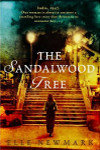
History is always changing because we are always finding out about new aspects of it.
Publisher: Atria Books (Simon & Schuster)
Pages: 357
Type: Fiction
Age: Adult
ISBN: 978-1-4165-9059-0
First Published: 17th February 2011
Date Reviewed: 31st March 2011
Rating: 5/5
It’s 1947 and American Evie has come to India with her husband and son while her husband documents the fall of British rule. Martin has changed since the Second World War and though Evie hoped the move to India would re-ignite their marriage it seems unlikely to happen. In heartache she turns to cleaning in order to gain control where it was lost and it’s here that she discovers a loose brick in their hundred-year-old house. Hidden inside the gap is a bunch of letters dated 1850’s – suddenly Evie has a purpose of her own.
Although I’ve read a lot of books recently that I enjoyed perhaps even more than The Sandalwood Tree, on no occasion have I been able to read without checking every now and then on my progress – until this book. I finished it without really noticing. The book is full to bursting with delightful contents.
Admittedly it probably helps that I’m interested in India and its many cultures and can speak a bit of Hindi (the book contains a smattering of the language) but I’d hope that the immense richness of detail is undeniable to anyone. Newmark may to a certain point exoticise the country, this makes sense considering the time periods she writes of, but it’s the overall research and the way she describes the places that make the book what it is. The colours of the cover match the story perfectly.
The Sandalwood Tree flips back and forth between 1947 – the time of Partition – and the 1850s, when relations between the British and Indians were understandably bad. It details the events that happened during those times (although the book ends before Partition happens so it’s the lead-up that is examined) but the emphasis is on the lives of the characters and the particular social issues relevant to them. Evie, as an American, finds herself more open-minded than the Brits in her circle and so you get to see a few different points of view. Her own story becomes very much effected by the letters she reads, leading her to find India more homely and enabling her to really consider the impact her husband’s years in service have had on their marriage. Her son, Billy, is a joy in himself, being rather bold and knowledgeable and, being five years old in 1940s India, his own development as a character is particularly interesting.
The letters Evie finds become a second plot in their own right. Even though it is Evie who reads the letters and finds out about the women in them, so much time is given to the letters themselves that it’s easy to forget that. This sort of story has been done before, but because of Newmark’s writing style and the connection she makes between the women and Evie, it is fascinating. I should probably say that Evie’s story is told in the first-person, the 1850’s via the letters and a diary. The various social issues covered due to the two characters love interests make the book very compelling.
I would observe and understand India without India actually touching me.
One of the most interesting elements of the book is the way the domestic squeezes its way into the social, and vice versa.
A second conflict of cultures happens as the back-story to Martin’s plight in the form of the Germans and anyone against them. Consider the following:
He said it bothered him that German sounded so much like the Yiddish of his grandparents; then he shook his head as if he was trying to understand something.
Newmark’s point is poignant, that there was no real difference between Jews and Germans other than religions. Martin’s experiences, when put against the issues surrounding partition add another layer of thought to the book, show in both cases how society can change so quickly when a line is drawn in the middle.
The only thing I took issue with was the phrase “buttoning the curtains down” within the letters written in the 1850’s by British people. I have come to recognise the phrase “button down” through reading American literature, but it’s not something we say in Britain and thus is out of place in an old English letter. But I feel I have demonstrated my feelings overall: this book is pretty near perfect.
The Sandalwood Tree brings many different generations, cultures, religions, nationalities, domestic situations and opinions to its relatively modest 357 pages, and deals with all effectively. Whether the research is spot-on I can only say as much as I know personally, but it definitely comes across as a triumph all round.
The answer to would I recommend this book is a resounding “yes”.
I received this book for review from the author thanks to Pump Up Your Book.
Related Books
None yet
Pamela Samuels Young – Murder On The Down Low
Posted 10th January 2011
Category: Reviews Genres: 2000s, Crime, Law, LGBT, Social
Comments Off on Pamela Samuels Young – Murder On The Down Low

If you aim high while staying low, there may be someone in the middle waiting for you to fall.
Publisher: Goldman House
Pages: 369
Type: Fiction
Age: Adult
ISBN: 978-0-9815627-0-4
First Published: 2008
Date Reviewed: 10th November 2010
Rating: 4/5
Successful African-American men are being killed in the city and at first it seems that they are linked only by their wealth and status; but as lawyer Vernetta and her friends begin to discover there may be a well-kept secret that binds the men together. And for the women living with the men, the cost can sometimes be immense.
I’ve no qualms about saying that except for a brief foray, at age twelve and of only a few pages, I’m clueless when it comes to crime fiction. The furthest I’ve ever come is Philip Pullman’s Sally Lockhart Quartet, and those are more about the mystery and suspense than the crime. So in the case of this book I’ve little to compare it to and thus my opinions may not be sound, but they are true, and this book has confirmed something I already knew – reading about law firms can be incredibly interesting.
Samuels Young is extremely bold to have broached the subject she does because if you become angry at what seems to be the message at any given time, and stop reading it, you could possibly go away with a bad impression that isn’t warranted. It takes some time for all of the moral teachings to be discussed and I don’t think it would be spoiling the book to say that Samuels Young is not condemning homosexuality. The subject is viewed from many different angles and she allows each their own say, effectively providing an unbiased account of not just sexuality but modern lifestyle as a whole.
If you flick through this book before reading you may be shocked by the number of chapters, which runs over 100. But this is just part of the overall good structure of the book. Rarely are chapters more than three pages long and this means that the story is constantly moving back and forth between different characters and situations. The narrative is easy to fly through because although it may not be a thriller, the business of crime solving has been written to be fascinating and the constant changes in scenery mean there is never a dull moment. The shortness of chapters adds to this. The book may be as long as your average favourite, but the writing style makes it a much quicker read, even if you’re not devoting many hours per sitting.
Samuels Young has brought her own working knowledge of the world of the attorney to the table, and it shows. There is so much detail here that it is easy to become engrossed, but she always includes enough information about the life of her characters away from their jobs so that the book never becomes bogged down. In addition she relies little on law jargon making this an ideal candidate for someone wanting to read a law novel while knowing nothing about the subject.
“You think gynaecologists ever get tired of staring between a woman’s legs?” He inspected J.C.’s exposed thigh through the slit in her skirt.
“I don’t know, Gerald. You ever get tired of being such an asshole?”
There are quite a few characters in the book, and while the reader is given a bit of their background, again Samuels Young doesn’t overdo it, while it must be said that this is the third book to feature Vernetta and her friends so maybe that’s why (I’ve not read the others). The plot is in the driver’s seat so that although the characters are interesting they aren’t the reason you turn the pages. The only thing that is perhaps dispiriting here is Samuels Young’s approach to explaining a character’s personality by detailing their food and drink choices. Reading it, it feels as though you should be gaining something from it, but there isn’t anything to be had.
The other characters are great, and I’d put a spotlight on all of them, but it’s Special who runs the show for being the catalyst for so many reasons. She isn’t actually given more space in the book than the rest, but her dealings are so completely different to them and her manner too that it’s likely her you’ll remember most. The boyfriends are also great and easy to imagine. While they might not intentionally be humorous their place in the story, firmly outside lawyer proceedings, means that they bring a certain element of enjoyment to the book that wouldn’t have existed otherwise. Where the women are naturally busy and uptight because of the lawsuits, the men are laid back and the reason you get to see the other sides of the ladies. They are a very good plot device.
In lure of the accessibility of the book regarding law, it might also be useful to note that this book is fully accessible as a whole. People unfamiliar with African-American slang should find no problems when reading this book.
Having read Murder On The Down Low I can see why Samuels Young wished to tap into a community that isn’t being included in the genre she loves. You see so many movies where solving a crime involves the black community but very rarely does the plot allow for the characters to be more than two-dimensional except for the occasional main character who is the one to lead the investigation into the neighbourhood. Samuels Young presents the community as an interesting backdrop to a story, the people fully included. And she shows that when it comes down to it the differences that come from culture aren’t big and thus it’s a pity that there isn’t more fiction like the work she produces.
He tried to smile, but she could tell his lips weren’t used to moving in that direction.
If you can solve the mystery I congratulate you, because it’s been well hidden. Samuels Young never invites you to guess and interestingly, although you may want to, there is never the feeling that you should. These people are more than capable of solving it while you make your way through the pages.
Murder On The Down Low makes a field of shells from a single bullet and weaves a mile from a few yards. It may not be worth the time Special puts into it, but it’s worth yours.
I received this book for review from the author thanks to Pump Up Your Book.
Related Books
None yet


