





Philippa Gregory – The Other Boleyn Girl
Posted 2nd May 2010
Category: Reviews Genres: 2000s, Historical
1 Comment
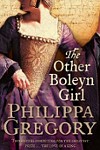
Gregory has always been rather popular but never more so than when her best-loved book, The Other Boleyn Girl, was picked up by Hollywood.
Publisher: Harper Collins
Pages: 529
Type: Fiction
Age: Adult
ISBN: 978-0-006-51400-8
First Published: 2001
Date Reviewed: 19th January 2010
Rating: 1.5/5
Nowadays it seems anyone who’s anyone has read this book or is planning to read it. Its second time in the spotlight triggered a new set of fans. But the problems in the book vastly outweigh the successes and leave one feeling unsatisfied.
Before Anne there was Mary. When Mary is set up at fourteen years old to draw King Henry VIII to her affections she is little more than a naive girl, a pawn in the game her family have designed. The trap works and soon she is having an affair with the king and siring his children, estranged from the husband she was forced to cheat on. But it’s not good enough for the Boleyn family’s goal and she has to yield to her sister who employs a different tactic and gains the king as a husband. Though Mary is seen as just another girl to be used to effect it may be that she has the last laugh.
Within moments of starting the book it’s painfully obvious that Gregory’s work is akin to that of a fan following the demise of their favourite show, and it’s clear that the book was born of dreams pertaining to “what if…” situations. By using Mary as her narrator (the story is told in the first person) Gregory is able to get around events that she doesn’t want to discuss, and has moulded Mary into her own creation as she deems fit. The problems here are that Gregory’s Mary isn’t compelling enough a storyteller and leaves out important details, tending to describe instead her daily routines. The uproar over Anne’s succession is given copious time and Gregory should be commended for giving the reasons for it – but she fails to approach the major factor of the reformation. The only information provided is the Pope’s reluctance to make a decision over the proposed annulment and excommunication of Henry from the Roman Catholic Church. Anyone reading the book without good knowledge of the history of Christianity would assume it was a minor problem. Gregory has her rights as a novelist, but she also has her duties to the history she is using for her own gain. Henry’s pursuing of the church is hardly mentioned and it doesn’t matter who had been chosen to narrate the story – the reformation had such an impact that no one would have failed to mention it, especially not one in such a position as Mary’s.
Katherine of Aragon’s plight comes secondary – as is to be expected in a book focused on the Boleyns – but the way in which Mary constantly thinks back to her after she is dethroned is shameful. In the book Mary does as she is bid by her family, and feels sorry for Katherine. It’s good that she feels bad for having wronged Katherine, it’s a pity she didn’t realise it properly and give it its fair dues sooner.
The feelings of guilt serve in turn as another of the books drawbacks: repetition. Much like Lesley Downer for The Last Concubine, Gregory constantly has her narrator thinking of the very same things she thought about only chapters ago. This happens in reality but as part of a book it has no place. You learn that Mary reminisces over Katherine when her sister performs the same actions as the former queen did but you don’t need it said all the time and especially not in the exact same words.
Gregory’s writing style is adequate at best. This would be fine if she had a good story to tell and it was simply a case of not being good with words. One thing that is interesting however is the lack of spelling and grammatical errors in the book – a rarity today. Pity then that we must attribute that to the publishers rather than Gregory.
Gregory has a right, as a novelist, to change facts (or tempt further discussion by raising issues that have never been proved one way or another), but she goes too far. She clearly sees no redeeming qualities in Anne Boleyn whatsoever and sets out to demonise her. When reading, it is hard not to dislike Anne for her actions but that doesn’t speak for the bigger picture. Historically, Anne was unlikely as poisonous a person as detailed and as such Gregory comes across as having a mighty chip on her shoulder. She is happy when able (by one of her few historical accuracies no less) to condemn Anne to death and put Jane Seymour on the throne. She delights in making George Boleyn incestuous and homosexual and in incest a partner in the creation of a “monster” baby. It’s unnecessary and comes across as a rant against something she had no hand in rather than a good read. Anyone looking to study the period having read this book is wholly unprepared.
So to the book’s positive points – there are only two. Since the book is set mostly at court and has been stripped of most compelling events it drones on and on like the terms and conditions of a poorly produced product. Thus when the story moves to the countryside the sun almost literally shines and the 529 pages of small print seem a lot shorter. It would be even better if Gregory was adept at describing locations but we can let that pass. Unfortunately these moments don’t last long, just as you’re settling yourself down for a more leisurely read Mary is recalled back to court. The second positive point is the end of the book where there is finally some real action and a reason to speed-read.
A tribute to history and the lives of those caught up in a narrow-minded and selfish society this is not. There are so many books out there on Tudor history and even the dull ones are a darn sight better than this.
Related Books

Stephenie Meyer – Breaking Dawn
Posted 29th April 2010
Category: Reviews Genres: 2000s, Fantasy, Romance
1 Comment

Stephenie Meyer is still everywhere and it looks like that will be the case for some time yet.
Publisher: Atom
Pages: 699
Type: Fiction
Age: Young Adult
ISBN: 978-1-905-65428-4
First Published: 2008
Date Reviewed: 14th December 2009
Rating: 4.5/5
Breaking Dawn is the massive final chapter of the saga. It saw quite a change from the previous books.
So Bella agreed to marry Edward, and marry they did, a lovely if over-the-top (for Bella’s sensitivities) ceremony in the Cullen house attended by the usual everyday mix of humans, werewolves, and vampires. The honeymoon was lovely too, courtesy of Esme, but things aren’t destined to stay perfect when a human is in love with a vampire, no matter how many trials they’ve got through. Bella thinks she pregnant, and this little creature is going to shake everyone’s life, whether they be immortal or not.
The book is divided into three smaller “books”; the first and last are from Bella’s point of view and therefore read the same as the previous three in the saga. The second takes up the story from Bella’s pregnancy and continues it from Jacob’s point of view whereupon we get some interesting plot turns.
Breaking Dawn is a complete turnaround from the others. Whereas New Moon and Eclipse were undoubtedly fillers, sub plots written to keep the saga in the charts and in the minds of fans (as well as provide more income for the movie makers), Breaking Dawn reads like the follow-on of Twilight. It certainly seems as though Meyer has had more power and say in what she writes and most definitely she knows what’s she’s doing and what makes a good story. For the most part, Breaking Dawn is utterly fantastic, a real page-turner.
The other major differences with Breaking Dawn are the viewpoints and storytelling. Though at first it may seem a pity that Meyer has chosen not to honour Bella seamlessly it doesn’t take long to feel comfortable with Jacob. Meyer writes from his viewpoint well, there’s that extreme difference in the style from the chapters themselves and the chapter titles. Whereas Bella’s chapters are all titled abstractly though in accordance to the main theme of each, Jacob’s are a very simple summary of what is happening at that point in time. Ever blunt, they are great in themselves.
It’s in the storytelling that a debate may arise. Meyer has taken the fantasy to a whole new level. It’s brilliant and so much more mature and detailed than before – but there it is, “mature”. The “problem” with Breaking Dawn is that it’s too graphic and at times lingers on the fence between fantasy and horror. Bella’s pregnancy is full of blood but as it’s not the human birth we accept in the real world it becomes a point to ponder upon – is this content appropriate for young readers? Do they need to read about a huge strong vampire foetus that might just bite through it’s human mother in order to get out of the womb, killing the mother in the process? In Meyer’s defence, those theories do turn out to be simply theories as the Cullen’s manage to deliver the baby without it turning into such carnage, but the thoughts are still there on the page and actually, when it comes to the birth there is a lot of gore included. The way Bella becomes a vampire is also relatively horrific. It may not be, as Carlisle observes, as bad as the usual way of converting, but that’s only in the context of the story. So while the book itself is a fantastic departure from the other three, for parents it may prove worrying and for their children the stuff of nightmares. The older reader will find the book to be far superior. Even those who have previously shunned the saga may enjoy it to some extent.
In lure of young readers there is a lot of sex in the first quarter of the book. It’s not graphically detailed but there are a lot of references and some not-so-subtle innuendo. Even as an older reader the sentence about knowing a better way to lose calories reads badly. Make no mistake: yes, Bella and Edward are married now, and yes, they are enjoying themselves immensely.
As mentioned, the plot this time runs smoothly with every sentence having a reason. One wonders if the saga would be more credible to critics if it hadn’t been at the mercy of the promotion team so early on in it’s journey.
Although in general the plot is exciting there are a few times where proceedings run at a sluggish pace. Of note is the end, which is predictable. The problem with Meyer is that she has an obvious disliking for killing off major characters and while this may be admirable it’s not realistic nor does it make for a good story. Throughout the saga whenever there has been a confrontation of some size the planning that the characters do picks up the pace. But it’s always the same: there’s mention of a battle, there’s planning, and then… oh, all it needs is discussion, or just a five minute fight between a couple of people in an otherwise large army. Victoria was too easy, the Volturi sound menacing but are ultimately too easy, and every confrontation is predictable and miss-able because you already know from all the other times that nothing will happen. If this was Meyer’s decision in light of the age of her target readers then it’s laughable because of the horror elsewhere. And as much as it’s a good idea to promote talking instead of fighting, and that bullies are really cowards, there are better places for it.
All in all, Breaking Dawn is a brilliant read and the number of pages doesn’t matter in the least. But one hopes Meyer’s grasp of what works will improve in her adult fiction because really, it’s there that she shows most promise for lack of boundaries.
Related Books



Stephenie Meyer – Twilight
Posted 27th April 2010
Category: Reviews Genres: 2000s, Fantasy, Romance
1 Comment
Disclaimer: this review was posted with caution, even though my overall view is favourable I hope I’ve outlined enough faults for it not to be too biased a recollection. I realise that this topic may make or break my reputation.
Who, by now, has not heard of the author Stephenie Meyer? Her debut was woven around a dream she had and now she’s earning millions in both currency and fandom. Meyer hit the big time quickly and the long hours spent away from family have paid off.
Publisher: Atom
Pages: 434
Type: Fiction
Age: Young Adult
ISBN: 978-1-904-23365-7
First Published: 2005
Date Reviewed: 27th November 2009
Rating: 4/5
I can’t say I remember the releases of any of the books in the saga as I do those of Harry Potter. The first I knew of Twilight was when my cousin asked if I’d like to go and watch the movie. Suffice to say however that they are everywhere and continually at a knocked-down price. Not that I mind either for the covers are exquisite.
Isabella Swan, or rather just “Bella”, decides to move back to the town of her birth and her father after her mother marries a sportsman. Forks is a town she hates but she goes regardless. There she comes across the youths of the Cullen family, a group of five who keep to themselves and are often absent from school. Bella’s presence changes that, she stirs Edward’s senses in a way he really wishes she wouldn’t, for he is dangerous, a vampire, and until then had successfully remained able to live alongside humans with little worry. He and Bella fall in love. But it doesn’t matter if he can keep himself at bay – there’s a whole host of them out there just waiting for him to turn his back.
Being as I was a viewer before a reader I can advise with confidence that yes, it is worth reading the book afterwards. True to the format of book-to-film a lot was missed out and significant scenes altered. Of note is the scene where Bella tells Edward she knows he’s a vampire. In the book she casually mentions it in the car, whereas the movie goes all out on dramatics and has Bella afraid to speak while the backdrop of a dark forest becomes ever more suffocating. The movie also handles Edward’s temperament in a way more suitable for young people, the written version of which I will discuss in time.
For all that’s been said about Meyer’s poor ability as a writer, I found her style and structure surprisingly good. In fact I would go as far as to say that out of the 20 or so books I have read this year Twilight has been the most satisfying literature-wise. Some of her paragraphs read like poetry and unlike many other authors who have studied English, Meyer is certainly at one with the subject. She uses a vast array of words generally forgotten in today’s world, never hesitating over the idea that her readers might not understand.
The story itself I would split into three parts, using the nature of the parts as my reasoning for doing so. At first everything is easy to read and honestly a joy, even if the setting of a high school is unappealing to the older reader. Bella is a savvy, sassy young woman who favours independence and will not give in to other’s requests. Edward is the typical heartthrob, maybe a little arrogant, but likeable nonetheless. Then things change, Bella becomes needy, helpless and paranoid while Edward in turn hikes up the arrogance and anger and displays the kind of traits generally accepted as the beginnings of a domestic abuser. It was on reading this part that I wrote to my boyfriend “these two characters certainly aren’t good role models for either gender and the idea that there are millions of teenage girls now looking for an Edward Cullen is worrying”. My theory about the dramatics of the film came from there too. This part is difficult to read, especially if you’ve already heard the cries of others that Edward is far too aggressive.
The story reaches it’s third part when Meyer finally provides subtle reasons why Edward is the way he is. But by subtle I mean subtle, they should have been expanded upon and given more time. Edward’s life as a vampire has been hard and as he constantly tries to balance his human feelings for Bella with his need for blood he inevitably falters at times. When he saves Bella from possible rapists he explains how he could have killed them in a raging frenzy, his explanation hinting to mental instability. It makes for worrying reading, but as said, finally the characters regain more (unfortunately not all) composure and become equals, helpless damsel periods aside. A surprise comes in the form of Alice whom Meyer teaches you to be wary of before showing us that Alice is actually pretty darn cool.
Something that has oft been debated is the excessive use of sexual references in the book and it is indeed the case that for a story promoted as teenage fiction the explicitness of the references are too much. If they were simply innocent emotions it would be a different matter but Meyer does tend to go all out in explaining that Bella and Edward have feelings of a sexual nature towards each other and, whether deliberately or by accident, she is labelling the physical exploration of these feelings acceptable – which given the age of the target audience is perhaps not. While they aren’t the most mature things a teenager could engage in there’s enough to raise your brows at and enough to suggest that there will be more in the later books. It’s worth noting that the film leaves out a lot of these references.
Another thing that has been debated is the fantasy – vampires. Does the story feature them a lot, yes. But does it hold the stereotype up high, no. Edward and his family do not kill humans and it really is the case, as told by many, that he just happens to be a vampire. Essentially, Meyer has used the idea of forbidden love but to different effect.
For all it’s hype and fandom, Twilight proves itself a particularly decent and well written read for both teenagers and adults alike. Even if the subject matter is beyond the realm of what we as a society are used to, in those many ways talked about, Meyer’s skill more than makes up for it. In a time where good literacy skills are falling and children are becoming cocooned in text speak her books will ensure that they at least know better, and her vocabulary will create a need for a dictionary. For this alone we should make sure she is in our libraries.
Related Books


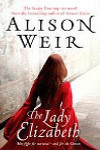
Alison Weir – The Lady Elizabeth
Posted 23rd April 2010
Category: Reviews Genres: 2000s, Historical
1 Comment
Alison Weir is an English historian who has been writing for a couple of decades. Most of her books are focused on the Tudor period of England and the eras just before it. She has done ample research into the life of Lady Jane Grey, Henry VIII’s niece and based her first novel on her. The Lady Elizabeth is her second work of fiction.
Publisher: Arrow Books
Pages: 481
Type: Fiction
Age: Adult
ISBN: 978-0-099-49382-2
First Published: 2008
Date Reviewed: 24th September 2009
Rating: 3/5
The Lady Elizabeth reached the chart list and received a lot of praise from the critics. It was released in hardback a year before the paperback edition hit the shelves.
For the story, Weir has kept to the basic facts of Queen Elizabeth’s youth but padded it out and exaggerated some parts where little is known. She’s also taken the rather bold step of having Elizabeth pregnant and miscarry, using the information about Elizabeth’s time at Chelsea with Catherine Parr and Thomas Seymour as her springboard. As she points out herself in the notes at the back of the book, she is being bold in her suggestion but there is a possibility that such a thing happened. Using the idea has also lent itself to making the book more fiction than fact.
Weir is a brilliant historian and her factual books beautifully written. Her biographies read like novels, omitting footnotes and discussing all sources used in the introduction. Thus her books are not bogged down in references like most authors and are a good choice for people who struggle with multitudes of dates and places. The problem here is that she has taken too much of her factual writing style to use in The Lady Elizabeth. It’s inappropriate and causes the book to be rather choppy. In addition Weir demonstrates a difficultly in handling this new genre as her afore excellence in articulation has been lost, much like Elizabeth’s proclaimed innocence. A reoccurring flaw in Weir’s books is her obvious love of the word “hitherto” which she uses as much as possible. It’s seen in this book too, and just as much as in her previous publications. Of similar note is Weir’s lack of descriptive language, the needed element for full immersion.
The story is fascinating but the telling is poor. On and on it goes back and forth which while an echo of what really happened does not make for good writing. Weir also repeats herself as if with no confidence of her reader’s memory. What should rightly be a thrilling tale full of frustration turns out to be a bore.
This is a good book for history-lovers looking to glean more information on Elizabeth but other than that I’d advise looking elsewhere for historical fiction on Anne Boleyn’s daughter.
Related Books



Paulo Coelho – Eleven Minutes
Posted 22nd April 2010
Category: Reviews Genres: 2000s, Spiritual, Translation
1 Comment
Paulo Coelho’s books, as the book covers declare, have changed lives. He writes about spirituality in a very fresh and modern way without being biased religiously or morally – though he has tales of morality to tell. It’s perhaps ironic then that his stories are so short.
Publisher: Thorsons
Pages: 288
Type: Fiction
Age: Adult
ISBN: 978-0-007-16604-6
First Published: 2003 in Portuguese; 2004 in English
Date Reviewed: 3rd September 2009
Rating: 3.5/5
Original language: Portuguese
Original title: Onze Minutos (Eleven Minutes)
Translated by: Margaret Jull Costa
I don’t know much about the success of Eleven Minutes but I’d hazard a guess that it hasn’t been as well-received.
Maria lives in a small Brazilian town but knows that there is more to the world and wants to experience life to the full. For her this means travelling and living abroad. She journeys to Rio de Janiro where she signs up as a dancer and is whisked to Switzerland, dreams of happiness, money, and a husband leading her by the hand. But the dancing is boring and after an agency unintentionally set her up with a man willing to part with a thousand francs for a night with her she makes a decision that will set her on a path entirely different to the one she was on. Down the Rue De Berne, where the nights are scented with sex and the days are reserved for slumber she begins to discover the truth of intercourse and how the world has come to rely so heavily on it.
Let’s get down to business. Is there a lot of sex in this book – yes. But although quite graphic in places Coelho has managed to keep the story tasteful and one feels that whenever he does write graphically it’s with a specific purpose, he has a message to get across each time. Nor does Coelho stick with one type of sex, covering a good number and subtly weighing them up. Interesting here is how he will come to one conclusion and then later on change it in the way one does when they make a further discovery about something for which they’d previously had a strong opinion. He does this without apologising for as discussed above he remains for the most part neutral and non-judgemental.
Apart from Maria, or maybe even including Maria, the characters aren’t very important in themselves. They are there as props to get the message across. None of them are hateful though neither are they particularly fabulous. Maria is a personification of Coelho’s thought process and moves back and forth through opinions with him. You can’t sink your teeth into these characters and you won’t miss them after finishing the book but in this man’s publications that is neither here nor there.
It’s hard to talk about the language used in the book because unless you are reading the Brazilian version the words will have been translated from the original Portuguese. I can’t remember finding any errors in the print.
Eleven Minutes promotes the view that sex can be sacred; the world has just forgotten this. It explains convincingly how we’ve come to use sex as a method of healing when really what we need lies within us, and that using sex as an excuse only serves to keep the cycle going. This is done by weighing up elements such as asexuality and pain for pleasure and detailing the cause and effects. It won’t have the impact on you that The Alchemist had but there’s enough here to make you reconsider what you’ve learned and been taught and perhaps even apply parts of it to your own life.
Eleven Minutes was originally written in Portuguese, and was translated into English by Margaret Jull Costa.
Related Books


