





Markus Zusak – The Book Thief
Posted 20th April 2010
Category: Reviews Genres: 2000s, Historical, Political
1 Comment

We are taught that Nazi Germany was a hateful place and full of hateful people, but in reality the citizens were just as badly off.
Publisher: Black Swan (Random House)
Pages: 542
Type: Fiction
Age: Adult
ISBN: 978-0-552-77389
First Published: 2005
Date Reviewed: 19th April 2010
Rating: 5/5
I was introduced to The Book Thief by an old friend. It stayed on my to-be-read pile for some time while I got over the demise of the friendship, in actual fact I almost packed it away, unread. That would have been a mistake.
The story is narrated by Death who explains the basic end before launching into the beginnings. Liesel, a nine-year-old girl, is sent to live with foster parents, presumably because her family is on the wrong side of a hijacked law (the blurb says concentration camp but the topic is never explained in detail). With them she lives for a time in relative happiness, finding friendship and learning to read, the latter being the cause for her initial interest in stealing. But this is Nazi Germany and her family become involved in things they shouldn’t; and there is always the threat of the enemy.
It’s difficult to explain the plot of the book without giving everything away. Part of this difficulty stems from Zusak’s writing – it’s absolutely exceptional. It’s not that he’s just good with words, he uses them like a talented artist sweeps paint across canvas – you never once sense that he might have had trouble completing a sentence. This artist and paint metaphor is apt really because one of the characters is a decorator. Zusak doesn’t use “big” words, he never thrills you with academia, rather he moulds words and creates metaphors the like of which I, and I would guess you also, have never come across. A poet is someone who is clever with words but Zusak transcends that. It’s almost as though he is made of words and his physical body is but a mask to pacify humans. Consider the following quotations:
Pimples were gathered in peer groups on his face.
His thoughts criss-crossed the table.
His uniform was shiny brown. The iron was practically still on it.
Zusak’s style is one of colloquial phrases and bullet points. He surprises you in the way that he narrates often because it can be as if he doesn’t understand literary English, but what you realise is that he is saying there’s more to writing than being grammatically correct.
There are many characters in the book, and while they may not be detailed quite in the way you expect in a good novel, the descriptions are enough. Zusak ensures you feel a bond with them – it’s easy to imagine yourself there, to imagine the locations, and it’s the kind of intimacy that would make you want to stroll straight up to one of the characters and say “hi” as if you’ve known them forever.
The backdrop of the book is the Second World War but while it is the cause of a lot of plot elements the story is never weighed down by it like you might expect. As mentioned at the beginning of the review the people of Germany were in much the same situation as the rest of the world, innocent people, but this fact is not given as much airplay. Zusak puts these people in the spotlight, he provides the forgotten information and he ensures that if you read this before writing an exam your account will be broader than it would be otherwise. A book like this will scare history teachers, not because they don’t want their pupils to know the other side of the story in detail, but because this book could potentially cause people to want to go off on a tangent and explore ideas the examiners haven’t asked for. Make no mistake, this book will cause you to want to discuss.
Perhaps Zusak has thought about this issue and written accordingly, because he makes his characters affable to the outsider. Most people in The Book Thief have no animosity towards Jews and do not support the war at all. Again, there’s that bond. Zusak hasn’t thrown you in at the deep end or affirmed stereotypes and even someone who has never allowed themselves to so much as consider the other side of the story may be moved by it. Zusak is very clear in this – Hitler was the enemy, not Germany. In relation to this he makes the poignant supposition of the Jews. A Jew goes into hiding, but when he comes out he’s still German. He is and was German, that he is Jewish could never change his nationality.
You may look at the size of this book, notice the little space between lines in the text and put it back on the shelf. Don’t. One of the book’s biggest appeals is the spin off from the writing style: there are rarely long chunks of text. Most chapters are short – a few pages long – and there are many gaps where small pieces of information are supplied in the afore-mentioned bullet points. Zusak has made his story a work of art. Instead of writing everything in the usual way he’s enlisted an illustrator to draw pages of his imaginary books and bolded the important information. The Book Thief is more of an experience than a novel and although it may be off-putting at first (yes, I admit this in regards to myself) you soon get used to it.
When you think about it, a book like this is a hefty task for any author and a daunting task for any reader. In presenting it, Zusak strove to deliver a story that needed to be delivered in a way he knew would reach the hearts of the reader.
You may have bought it, borrowed it, or even stolen it. Read it, it’s what it’s there for and you don’t want to miss out.
Related Books



Lorna Byrne – Angels In My Hair
Posted 18th April 2010
Category: Reviews Genres: 2000s, Autobiography, Spiritual
Comments Off on Lorna Byrne – Angels In My Hair
Lorna Byrne is what many people would call a modern day mystic. She claims that she can see and talk to angels, spirits, and on a few occasions, God. She waited years before writing her book, not wishing for any publicity or fame and only decided to write when instructed to by her angels. The price of promoting angelic presence has come at a cost, she’s no longer able to meet those who want her help.
Publisher: Arrow Books (Random House)
Pages: 325
Type: Non-Fiction
Age: Adult
ISBN: 978-0-099-50574-7
First Published: 2008
Date Reviewed: 31st August 2009
Rating: 3.5/5
Angels In My Hair has received most of it’s coverage in print and through television interviews (the usual ones where the presenters subtly interrogate their guest), little has been done to promote the book in the shops themselves. Its little publicity matches Byrne’s wishes for her not to be fawned over as she has said herself that she’s simply a person, a normal human who just happens to see angels.
The book is autobiographical with the focus being on Byrne’s first-hand experiences of angels. Everything she mentions is related back to them or what they have taught her and is evaluated against what religion teaches us. Beginning with a few experiences as a baby and ending just after the death of her husband, Byrne concludes with the statement that we are all angels. Byrne has been seeing angels since she was a baby and says that everyone can see angels at that age, it’s just that as we get older we are told that what we see isn’t real, much like the idea that babies don’t drown so easily as after they’ve been taught to be afraid of deep water.
Something evident within the first few pages is that Byrne isn’t a gifted storyteller, her sentence structure isn’t the best and she isn’t at all eloquent – but whether or not you’ll find this distracting depends on your outlook. If you’re reading the book with the aim of criticising and dismissing the possibility of angels then you’ll most likely be taking the book back to the shop. If you’re open-minded or share Byrne’s belief in angels then you’re more likely to see Byrne’s inability as something that gives further evidence of their existence. If you think about other books of the same genre and the multitude of self-help publications one thing that binds them all is the idea that they’ve all been edited to perfection. The fact that Byrne’s book isn’t promotes the thought that, as she says, she doesn’t want money, she simply wants the message out there. Her book is written in her own words and her lack of education is prominent throughout.
Difficult to comprehend is Byrne’s seeming lack of religious information. It’s not until the end of the book that she learns that the angel Michael is Archangel Michael and nor does she seem to understand many of the aspects she talks about that the average reader, assuming they know at least a little about religion, will acknowledge instantly. That Byrne also states she has no interest in politics is very off-putting as one would hope that someone such as herself would keep up to date with the news. Therein must lie proof of her statement that she is just an ordinary person and that it’s only because of other’s lack of faith that she needs to bring the message of God to the world.
What does become a real problem is the overall structure of the book. It reads how no book should, in a way that is easiest described as “and then… and then… and then…” Practically every paragraph holds the story of another angelic event so that no matter how miraculous the stories the reader can feel bogged down and the events become not only muddled but sadly boring. Byrne makes use of the same introductions and although her repetition of certain moral concepts is admirable (you can see that she means to introduce and then back up her claims) it generally means that her conclusions are underwhelming. The ending of the book is lovely but the last sentence sites the start of a conclusion that needed to be further explained whether through reiteration or a new concept.
Naturally Angels In My Hair will appeal to the believers who’ll find in it more reason to keep hold of their faith. It is unlikely to appeal to others however will be suitable for someone after the information for general interest purposes. The most negative point is sadly the real-life spin off: Byrne will now be at the hands of her agents and unable to carry on her task away from the spotlight.
Related Books
None yet
Celia Rees – Pirates!
Posted 15th April 2010
Category: Reviews Genres: 2000s, Adventure, Historical
Comments Off on Celia Rees – Pirates!

Celia Rees is a popular writer of young adult fiction. Her focus is on history and magic.
Publisher: Bloomsbury
Pages: 367
Type: Fiction
Age: Young Adult
ISBN: 0-7475-6469-8
First Published: 2003
Date Reviewed: 6th August 2009
Rating: 3/5
Pirates! isn’t as well known as it’s predecessor, Witch Child, in fact it’s likely that unless one is a dedicated fan of Rees they won’t know of it at all. As for myself I found it at random in a bookstore.
Nancy Kington lives in England in the time that Africans were taken as slaves and whites took over the Caribbean for their own selfish interests. When her father dies she is shipped to Jamaica where her brothers plan to marry her off in order to make money from a good alliance. When Nancy meets the man whom she is to marry she takes an immediate disliking to him, his villainous ways and middle age causing her to fear for her life. Help comes in the form of her befriended slave Minerva who, along with others, ensures Nancy’s safe passage to the outlaw camp. There she and Minerva make the decision to join the pirate ship that is on its way to the harbour. But in her dreams Nancy can see her betrothed on her trail. She must continue onwards while ever widening the gap between her and the young man whose ring she wears about her neck.
The story is told in the first person with Nancy narrating her and Minerva’s lives. This is akin to the method used in Witch Child that Rees is very adept at. Nancy begins by informing us, her readers, that she is writing her memoirs for an author of piratical books and then goes on to give us a history of how she came to be a pirate. This prologue, if you will, is rather long, stretching to about a third of the book, which is a disappointing surprise for a book named “Pirates!” In itself it means that an otherwise interesting story of the life of two women in the new world is a drag to get through as you wade through the pages hoping she’ll hurry up and board a ship.
The romantic sub plot is endearing and one of the major reasons to keep reading when the main narrative runs dry. Nancy promised herself to her childhood sweetheart, William, before her father died, but although they meet again a couple of times in the book it seems their lives will drive ever more apart. The book makes no promises of it’s own, you will not witness their marriage at the end and nor will their story tie up in the way that you’d like it to, but this becomes unimportant; the telling of the story is such that to give it a climatic ending would have cast any previous success out to walk the plank.
In some ways the mundaneness of the story is ripe. It echoes the boredom of endless days at sea. The problem is that you don’t really want that in a story, and in a pirate tale especially you want adventure. The character Rees created has a story to tell, no doubt about it, but it’s in the same category as those who wouldn’t make it into the history books for lack of interesting accounts. The idea of her betrothed pirate following her isn’t given nearly enough excitement and backing as it should and thus becomes just another addition. This means that when the man finally does catch Nancy one could care less, even if it is her fear realised.
The major flaw in this book is Nancy. She’s above most other girls of her status in that she condemns the treatment of the Africans and is more intelligent than most but still she is a weakling when compared to Minerva – who is far more interesting. In truth Minerva is the real heroine and Nancy simply serves as her biographer as without her Nancy would lose her readers within the first quarter of the book. This being her purpose it’s a pity Minerva isn’t given more time and is too often relegated to being Nancy’s saviour.
This brings us to the final flaw. Nancy gets captured, Minerva saves her, Minerva gets captured, Nancy saves her. It’s a poignant display of sisterhood but overkill, to make use of an accidental pun. They live for each other, we know that, it doesn’t need to be repeated in everything that happens. Nor do the situations the girls find themselves in need to be so obviously explained. If sex is too adult to be included then so too should the possibilities of rape be excluded.
Youth fiction should be adventurous, full of excitement, and heavy with adrenalin. Children need to make good use of their imagination; a dull book will count for nothing. This in consideration I cannot recommend Pirates! for young readers but only to those old enough to be prepared to lend their time in finishing it. It’s nice, but truly no match for Rees’s previous efforts.
Related Books

Freya North – Secrets
Posted 14th April 2010
Category: Reviews Genres: 2000s, Chick-Lit
Comments Off on Freya North – Secrets

Freya North has numerous publications under her belt and often makes use of characters for more than one book without creating a saga. Her individuality within the chick-lit genre has earned her many fans and a literary presence nationwide.
Publisher: Harper Collins
Pages: 478
Type: Fiction
Age: Adult
ISBN: 978-0-00-724594-9
First Published: 2009
Date Reviewed: 30th June 2009
Rating: 3/5
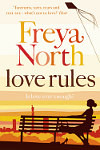
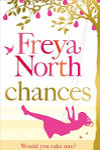
Secrets is currently one of the recommendations that comes up if you view chick-lit on Amazon – which is how I came across it, having never heard of North before. The cover is radiant in its shades of pink and it seems from the last few releases that the publishers aim to continue this unique style. It’s certainly eye-catching, something obviously worked on to achieve that effect. North herself has said that she judges books by their cover, and first impressions count.
Tess lives in London with her daughter Em. Her landlord wants his rent and there’s a knock on the door every day. But Tess has read an advertisement for a house-sitter in Saltburn and acts on impulse, setting up an interview and rushing north the very next day. Joe doesn’t take to her too well, her slightly over-powering nature over decisions for his big old house apparent before he’s even given her the job – in fact, did he give her the job? Didn’t she just turn up and end up staying? Neither Tess nor Joe particularly favour each other but as time goes on they inevitably find the things that irritated them turn to appreciation. Joe has many women on the go and a libido to equal the number. Tess also has her secrets. So how will they both fair when together?
The first thing that may strike you as a reader is the way North writes. She makes use of all tenses and refers to her characters herself (North plays narrator) as well as from their own viewpoint and in the third person. She jumps back and forth between tenses as though she’s set paragraphs to a formula. This will either be a welcomed change to most authors’ work or something you come to dread as you pick up your copy for another sitting.
Initially the story is vague, Tess is just someone, Em could possibly be her friend, and the knocks on the door might be her violent husband. All are explained in due course, though the latter much later in the book, though at first the reader is thrown directly into the present situation with no real knowledge of Tess’s background or character. It becomes quite confusing to learn that Tess is more cultured than you’d imagined from the descriptions given.
Yet North creates an even greater problem for our relationship with Tess. To being with, Tess is headstrong, intelligent, and ill-fitting of her humble London surroundings. As her story draws ever nearer the end she’s portrayed as weak, ditzy, and much more suited to her rented flat in the capital. Fortunately similar cannot be said of Joe who remains about the same. In fact the best aspect of the book has to be the way North has included Joe. He is given just as much time as Tess and is as detailed as her too. His inclusion makes North one of the only chick-lit authors men could be unashamed to read.
The story is solid – in its stoic way. There are no moments of excitement or really anything to keep you reading other than the descriptions of the characters which, to be fair, are top-notch, but unless you hit it off with the characters within the first few chapters there’s no reason to continue. The story, without revealing anything that couldn’t be predicted, is this: a penniless single mother runs away to look after a house where she falls in love with the owner and they live together. The only thing that isn’t predictable revolves around the house. Don’t get too attached to it, North causes quite the unnecessary upset.
Apparently there are secrets in this book, as the title suggests. But what’s “revealed” is nothing more than you’d already been introduced to or teased about and are simply things you knew but the characters didn’t share with one another. The book hangs on the premise of these so-called secrets – ultimately meaning that the book is a flop.
However all of the above pale in comparison to this, the last point I will make. As the characters get together and struggle through what life throws at them – which really isn’t much over the course of the book – Tess gets soppier and soppier. The narrative gets gushier and it becomes an incredibly cheesy romance book, the kind of thoughts and dialogue you’d expect from a Disney movie. If Tess dressed in a ball-gown and broke into song you’d either stomp back to the bookstore and demand your money back, or you wouldn’t bat an eyelid for all the surprising it’d provide.
With a little more thought, Secrets could have been a winner as it’s obvious North has the skill to be the best. As it is however, beyond the illustrious first chapters it’s no more interesting than your own summer holiday on the coast of a county near you and there is nothing to remember afterwards. You might as well just keep living your own regular life and borrow your other half’s books – it’s what Tess is doing.
Related Books
Victoria Hislop – The Return
Posted 8th April 2010
Category: Reviews Genres: 2000s, Historical, Political, Romance
Comments Off on Victoria Hislop – The Return
Just before the Second World War came the Spanish civil war. Its impact reached the deepest depths of the lives of the people.
Publisher: Headline Review
Pages: 574
Type: Fiction
Age: Adult
ISBN: 978-0-00-718036-3
First Published: 2008
Date Reviewed: 5th April 2010
Rating: 4/5
Sonia likes to dance, but she didn’t realise this until she started Salsa lessons on impulse after finding a shabby-looking studio. It stood beside the boring old cinema she visited with her boring old and ever-so-slightly alcoholic husband. When she invites her friend Maggie to join her lessons Maggie becomes even more passionate than she and books them plane tickets to Spain for an authentic experience. But what awaits Sonia in Spain is more than dance lessons. Woven into the fabric of cheery, tourist-attracting Granada is a whole history seeped in conflict, one that draws Sonia into the heart of a world she never thought to explore and which seems to relate to her rather personally.
The Return begins as though a modern woman’s novel, a Chick-Lit if you will. Both Sonia and Maggie are likeable and the temptation to put your feet up and prepare yourself for a journey with them is hard to resist. What stops you is the blurb and it’s just as well because Sonia’s story is but one part in a saga of love and loss.
For a long time dancing is the focus. It offers a firm grounding in the traditional culture of Spain, and more authentically than any tourist package holidays. Rather than learn the steps you’re taught about the reasons for them and the history behind it. Accompanying this is a brief introduction into the discipline required in the bullring and the stages from assistant to matador. These stereotypes of Spain are engaged to help you submerse yourself in the setting while being valid as common occupations of the era.
The narrative of the friends learning Salsa comes to a pause when Sonia meets Miguel. From this encounter comes page upon page of information about the war told through the lives of the Ramirez family. Their function is exquisite – rather than tell the story of the war through the usage of a famous person or one with a unique account, Hislop has opted to manage her own creations. She has constructed a family akin to millions of others in Spain at the time, people with little claim to fame and with no influence, to illustrate the plight of the ordinary person in the street. It is very easy to become indifferent to something when you hear it from a second-hand source, a summary of lots of things put together, so by means of putting a bog-standard group of people in the spotlight Hislop forces the reader to take note and experience the feelings and fears of the people who suffered most. While it’s likely she interviewed many survivors and compiled their accounts into one it never comes across as forced or weighed down with different elements.
Laced into Mercedes Ramirez’s journey is a tale of love torn apart. While the cover of the book makes much of this romantic aspect the element is mostly confined to requited but unrealised love. It doesn’t lie at the heart of the book but rather to the side, as it’s not as important perhaps as the factual information but a defining part of the latter of the story. The character of Sonia is merely a vehicle until the end, where she holds the power to tie up the loose threads, more involved in this facet than your average character.
The book is very long and because of its nature one can at times sense a slowing down in the storytelling on the horizon. This does happen, but it’s not a burden on the reader because there are so many things you want to find out about that you’ll keep reading regardless – and sure enough, within the subsequent few pages you see the focus of the story change to another character. The different characters’ stories are provided for fairly and sections are split up allowing the book to move back and forth between them. The characters are as ordinary in themselves as the collective family, they each have varying interests and dreams but in war they are nothing special. Because of this you hear from the opposing side, the soldier, the traveller into exile, and the prisoner.
Hislop’s disclosure of the events that took place has been watered down enough for the disposition of readers easily affected by distressing descriptions, but only to an extent. Aeroplanes from both sides of the conflict rained down bombs, indiscriminate of the support of their victims for their parties. The aftermath of this was catastrophic but their further pursuit of the innocent when they fled their homes is incomprehensible. Hislop describes the gaping holes in massive crowds of exiled people as the planes followed their slow progress away from their native lands: the women burying their children and the suicides of those who could go no further. Being on the front line with the soldiers is only easier because of the greater publicity given to warfare. The novel also deals with the part religion played in the war. When the Nationalists took over they did so with the blessings of the Church, despite that fact that by taking over they had killed and continued to kill afterwards so many innocent people and ironically people of faith.
Without a doubt Hislop’s endeavour was to provide details of the Spanish civil war to a readership little informed, and a reminder for those who may have let it fade away. The Return will give you an insight into a long-spanning event left out of most basic curriculum. It will encourage you to see the atrocities committed, however for that you will also be welcomed into the world of Flamenco and be lead towards the beat of the music where the here and now are unwittingly left outside the confines of the bound and printed wad of paper in your hand.
Let yourself be entranced and educated, no matter how much you already know. The Return won’t let you down and yes, you will be rewarded with a happy ending. It may just be the one you’re guessing.
Related Books


