





Diana Gabaldon – Outlander
Posted 11th January 2019
Category: Reviews Genres: 1990s, Adventure, Angst, Domestic, Erotic Romance, Fantasy, Historical, Psychological, Social, Spiritual
1 Comment

Make certain the period you are researching was peaceful…
Publisher: Arrow (Random House)
Pages: 851
Type: Fiction
Age: Adult
ISBN: 978-1-784-75137-1
First Published: 1st June 1991
Date Reviewed: 8th January 2019
Rating: 3.5/5
Reunited after WWII, Claire and Frank travel from Oxfordshire to the Scottish Highlands. It’s part second honeymoon, part research trip to find out more about Frank’s six-times great-grandfather who was a British officer for the army in the 1740s. Early one morning, the couple visit an ancient stone circle to witness a pagan ritual and it’s an interesting enough event, but when Claire decides to spend more time at the circle and touches the centre stone, she is whisked inside it; upon waking she is once more in the stone circle but there’s a battle going on outside between a band of kilted men and a small English patrol of Red Coats.
Outlander is an epic historical fantasy romance1 that takes a 1940s nurse back in time to the period her husband is researching. Creating for Claire a new life, including a second marriage, and written from her perspective, it stays exclusively in the 1740s.
The first in what is currently a series of eight books with another in the works, Outlander is a lengthy work, and mostly focused on the relationship Claire has with Highlander Jamie. This is to say that while it is a time travel and includes a lot of historical information, the romantic element is paramount and thus the aspect of fantasy far less used.
The history here is very good; whilst not always completely accurate, and not always developed where you might expect it to have been, Gabaldon’s research is evident. Often the reason any one section is slow – there are a fair few of these sections in the first half of the book – is due to the author’s focus on either information or the wish to detail the day-to-day of Claire’s new life as she settles in (or, rather, settles in whilst still planning to escape back to the stones). There is little info-dumping in the book – Gabaldon includes information well – and apart from the few issues with language the history in the book is enjoyable.
In terms of the language it’s 50/50 between highly believable conversation (word choice and phrasing for the time periods) and not so well written in terms of grammar and general phrasing. There are some sentences that use modern phrasing from across the pond that likely skipped through unnoticed, but overall Claire’s descriptions read well. There are a few Gaelic words and Scots words included, the former not necessarily meant to be understood, the latter easy enough to pick up in a short amount of time.
Looking at descriptions, it could well be said that the book would have been better had it been written in the third person. Claire isn’t particularly compelling – in fact she’s often downright irritating – and because Gabaldon sticks to her perspective, lots of elements you might have expected to be included are very short on the ground. Claire doesn’t often compare her new life to her old one or find any difficulties with it; apart from the times when she decides she wants to escape what is otherwise being developed by the author as a comfortable, romantic, new life, and apart from the handful of times when she knows the medical treatment she is giving to a patient won’t actually help, she doesn’t think of Frank, the 1940s, or modernity anywhere near as much as you would expect.
Due to all this, you never once hear about how Frank is doing back in the 1940s – once Claire time travels, he drops out of the story, to be referred to only in thought. This means that the development of Claire’s relationship with Jamie is a lot easier. Another literary device comes in the form of Jamie’s lack of sexual experience, which neatly side-steps the requirement to discuss STIs, which would surely have otherwise entered Claire’s medical mind.
Romance, but mainly the sexual aspect, is a huge part of the book and generally included ‘just because’ rather than to advance the story. The book is essentially an erotic romance, extremely explicit in places, rarely leaving anything to the imagination. As the book continues, it goes further than consensual sex, with scenes of dubious consent, and graphic, violent, rape (the non-sexual violence is also extreme, and there comes a point near the end when it could be called intolerable2 (and means that something minor in terms of story but crucial to the historical context is left out3).
For this then, then, it is difficult to say that Outlander is a general romance, and it’s not only the concentration on lust at the expense of love but the fact of perspective to blame here. Is there romance in the book? Yes, and a fair amount, but given Claire’s indecision, the romance is mostly in Jamie’s court where development and content is concerned. With no time for Jamie’s perspective, this all has to be filtered through dialogue. (Jamie’s perspective, and more historical context, would have helped explain the clash of cultures that forms one of the common criticisms of the book, which cites a man’s punishment of his wife.) The chemistry between the characters is evident, but not portrayed as well as it could have been, especially as Jamie has no real competition due to Frank’s exit stage right.
Outlander definitely has its good – excellent, in fact – moments, and there are patches of terrific humour to be found as well as a steady sense of duty, family, and kin, but it does spend a lot of time on moments that do not move the narrative forward and on things that don’t inform the premise of the story (there are well over 40 sex scenes in the book, both fully consensual and not) and would have been better edited down by a few hundred pages; suffice to say that when Gabaldon returns from the bedroom to the narrative, the effect on proceedings is immediate, and the story continues well. And the positives do out-way the negatives.
Footnotes
1 The author has noted both that as she was writing the book for herself she didn’t limit what she included (Gabaldon, n.d) and that the book has been shelved in shops under a vast variety of genres (Gabaldon, 2016).
2 On page 735 of the novel, Gabaldon does say the following, through Claire, which goes a fair way towards explaining the reason for the inclusion:
One never stops to think what underlies romance. Tragedy and terror, transmuted by time. Add a little art in the telling and voilà! a stirring romance, to make the blood run fast and maidens sigh.
3 Due to the focus on violence, Christmas comes and goes, indeed the days are spent at a Catholic monastery, with absolutely no mention of it by anyone.
Online References
Gabaldon, Diana (n.d.) The Outlander Series, Diana Gabaldon.com, accessed 9th January 2019
Gabaldon, Diana (2016) Outlander, Diana Gabaldon.com, accessed 9th January 2019
Related Books
Second Half Of 2018 Film Round Up
Posted 9th January 2019
Category: Film Genres: N/A
4 Comments
In the last six months, I have seen more films than ever. When, in August, I realised I’d not watched anything since April, I started making it a priority, and as the months went on I looked for Indian films I’d wanted to see (thank you, Amazon!) and films from industries I’d not yet encountered. Here are the films I watched for the first time in the latter half of 2018, with my thoughts added in italics:
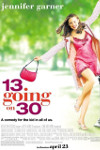




13 Going On 30 (USA, 2004) – Her wish to be 30 immediately fulfilled, 1980s teenager Jenna finds herself in the new century – a magazine editor and best friend to the leader of the ‘cool’ girls pack from high school. But this adult life is missing childhood friend, Matt, the person who was always there for her. A lot of fun and Thriller.
Christmas With A Prince (Canada, 2018) – A pediatrician on a tight budget is offered the chance of funding if she will accept an injured royal onto her ward – a prince she used to know. Very much a TV movie but also an unintentional bookish watch; I was pleasantly surprised to see ‘based on A Harlequin novel’ in the opening credits – it’s an adaptation of a Sarah Morgan book.
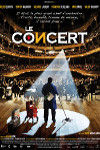
Le Concert (France, 2009) – Andreï, a Russian conductor who failed to save the Jews in his orchestra, intercepts an invitation for a conductor to perform in Paris. Andreï searches with his friends for various past members who may or may not hold up their end of the bargain once in France, which isn’t going to go down well with the famous soloist who agrees to join them. A comedy drama in French and Russian, this film is a lot of fun but also very poignant. The full Tchaikovsky piece is included.
Despicable Me (USA, 2010) – A man who has been cruel since childhood hatches a plan to steal the moon but ends up stealing it back from someone who gets there first. Part of Grue’s plan involves adopting children to serve as a ruse and instead of distance he finds himself becoming a father. Very funny. I liked the Annie context, even more when they credited it in the film.
Despicable Me 2 (USA, 2013) – Grue is invited to join an anti-villain operation and gains a partner, who often makes things worse. As good as the previous film.
Despicable Me 3 (USA, 2017) – Grue, Lucy, and the children travel to meet Grue’s twin brother who desperately wants to do something villainous. Good. Loved the screaming goat reference.
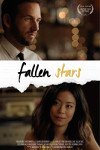
Fallen Stars (USA, 2017) – A man with a mundane life meets a girl who seems equally fed up. Excellent, bookish, film. I reviewed it here.
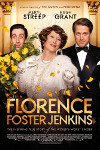
Florence Foster Jenkins (UK, 2016) – Based on a true story, an American woman with a terrible singing voice nevertheless finds fame. Very average. Would’ve been better if they’d started a little earlier in her life and if they hadn’t fictionalised Hugh Grant’s character in regards to relationships (the real man was Florence’s loyal partner).




Happiness Is A Four-Letter Word (South Africa, 2016) – Lawyer Nandi is mostly happy with her fiancé, she’d just like a bit more say in where they go in life, but when her ex hires her to help his business she’s tempted; Zaza leads a wealthy life but her husband travels a lot and, missing him, she has an affair; artist Princess meets a photographer and while there’s an artistic culture clash, she believes it will work. This is an adaptation of the novel by Cynthia Jele. The acting and execution here is pretty great and it all comes together to make a really good film.
The Incredibles (USA, 2004) – With super heroes made illegal, a family full of powers try to live normal lives until the father can’t take it any more and starts moonlighting as a saviour. Very good.
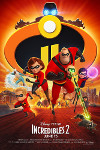
The Incredibles 2 (USA, 2018) – Still ruled illegal, Helen/Mum/Elastigirl takes a secret hero job while Bob/Dad/Mr Incredible looks after the children until they are inevitably all required to be there. My favourite part of the first film was the subtext that the baby was going to be the most powerful of them all, and so I loved this film much more for the development of the idea.
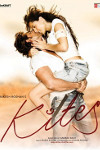
Kites (India, 2010) – Told in a mix of Hindi, English, and Mexican Spanish: Jay, an American immigrant who has married many women so that they can get green cards and he can get money, finally gets to where he wants to be when the daughter of a wealthy casino owner falls in love with him. But the family have vast connections and criminal backgrounds and when Jay discovers that his future brother-in-law’s girlfriend is the one woman he liked – his last wife he’s not yet divorced – and that she is being abused, he is forced to go on the run with her. Strictly okay – the action is understandably unrealistic, but the ending is a big disappointment.
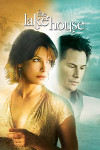
The Lake House (USA, 2006) – Upon moving out of her beloved home, Kate leaves a letter for the next resident; when Alex finds the letter and replies to her, the pair discover that their time line is reversed. The Hollywood adaptation of a South Korean film, the changes made – few – work well to make this its own product.
A Little Chaos (UK, 2014) – Half based on a true story, the architect of the Sun King’s gardens employs a budding female botanist who has visionary ideas. Nothing breathtaking but well worth seeing. Sadly, Kate Winslet’s character is completely fictional.
Love And Friendship (UK/Ireland, 2016) – This is actually an adaptation of Austen’s Lady Susan rather than Love And Freindship; a less-well-off-than-before society lady moves from house to house, creating gossip, helping people in their infidelities, and causing misery for her daughter whom she regards as a problem. The acting and script are superb – they’re both very funny and show off well Austen’s cleverness. The rest of the production isn’t as good.
Minions (USA, 2016) – The story of the Despicable Me Minions from the prehistoric period to the present day. Not sure why this went so wrong but the villain really needed to bow out a lot sooner, and the jokes were far and few between.
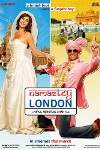





Namastey London (India, 2007) – Jazz, a young British Indian woman, agrees to date Indian men, but messes it up on purpose because she likes her British boss. After a few rounds of this, her parents take her to India to see if they can arrange a marriage because whilst the boss is wealthy, he’s already been married 3 times in 2 years and even his own parents are dissuading Jazz from marrying him. A potential match comes in the form of a family friend, who is willing to wait. Features every Bollywood stereotype to fun, 90s effect. It’s a good story and the acting is okay but whoever added the audio track did a terrible job.
New Year’s Eve (USA, 2011) – The story of several people’s lives as the clock ticks towards midnight. There’s nothing new here that other films of the same type haven’t already done, but it’s a fair choice if you want easy viewing.
One Small Hitch (USA, 2012) – His father in failing health, a man asks the sister of his best friend to pretend to be his fiancée, to make his family happier in the days ahead. This is an independent film and so aspects of it aren’t particularly polished, but the humour and acting are very good. (It’s available on Amazon.)
Paddington 2 (UK, 2017) – Paddington tries to catch a criminal but is arrested himself and the family have to clear his name. Not as good as the first, but still fun.
The Royal Hibicus Hotel (Nigeria, 2017) – Quitting her job as a chef in London, Ope returns to Nigeria to take on her parents’ hotel’s kitchen. What she doesn’t realise is that her father is planning to sell the hotel and the rather handsome man she bumped into at the airport is the prospective buyer. It’s pretty slow which means less character development, but the acting, and the plot, are good.
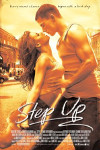
Step Up (USA, 2016) – A young man who helps to wreck a stage set-up in a prodigious arts school is sent back there for community service, and there he meets a girl who needs a rehearsal partner for her final project. The dancing isn’t as slick as in other dance films but there’s more to it than most films of this genre.
This Beautiful Fantastic (UK, 2016) – An aspiring writer with OCD who hates her garden is told she must tidy it up or leave her rented flat. Superb. A little bit of The Secret Garden, and a hint of Alan Bennett. I reviewed it here.
West Is West (UK, 2010) – George becomes concerned that youngest son, Sajid, is too British, so he takes him to Pakistan to learn about his heritage, moving back into the home of the first wife he left 30 years ago. There are fewer members of the original East Is East cast here, so it’s not the same, but it’s still very funny.
Given my lackluster book statistics, I won’t be placing such an emphasis on films this new year, but I am going to continue to look for those I’ve wanted to see for a long time as well as recent literary adaptations, repeating the idea if not the same thoughts as to quantity.
What films did you see over the last few months that you would recommend?
2019 Goals And The Previous Year
Posted 7th January 2019
Category: Chit-Chat Genres: N/A
2 Comments

At the beginning of what is now the previous year, I set out one ‘main’ goal as well as a few other ideas that were more wishy-washy. The main goal was ‘read as much as I comfortably can’.
‘As much as’ is technically an easy goal, because there are a lot of notions that can be applied to it, but with what was a busy several months in 2018, I almost feel I achieved this goal far better by reading less but perhaps more widely and for enjoyment, than in other years when the same goal was reached but with a bigger number of books.
It’s incredibly true, somewhat unfortunately I feel, that I didn’t get to as many new books last year, particularly as I do now have a small stack of review copies that I didn’t cover in any way at all, but there was a benefit in terms of getting through books I already owned, getting to books or authors I’d wanted to read for a while, and reading more books than usual in my preferred genres.
This year, I’m setting the ‘comfortably’ goal again, just with a few more caveats:
- Keep reading favourite genres but also put a priority on review copies I let linger. At first I thought to name specific books here, but I think that’d be more hindrance than help.
- Keep reading classics, with an emphasis on re-starting and completing Vanity Fair. Having now read Mitchell, Gabaldon, and Dickens, I really shouldn’t be having so much trouble with the idea of just getting it done.
- Read a novel or two by Charlotte Mary Yonge.
The last goal is two-fold – for one, it will aid my classics statistic, but more importantly, it will complete the goal I set in 2017 to read the five literary Charlottes I had identified. In 2018 I read two Charlottes: Smith (Emmeline, 1788), and Lennox (The Female Quixote, 1752 – June, according to a contemporary literary journal I found during my research).
In terms of 2018’s statistics, I didn’t do as well as I hoped but did do better than usual. I would like to up my diversity, classics, and (hopefully) translation numbers. I’m still reading far more women than men, which I’d like to do something about. The big difference to my statistics compared to other years was my use of the library. Eight out of the 39 listed books were from the library and I came to really appreciate how borrowing enabled me to read new, and slightly older, popular, books.
As it currently stands, I’ve carried over Monica Ali’s Brick Lane from where I left it on page 81 at the start of November, together with the eternal Thackeray. I’ve made a firm decision not to return to Ali until I’ve completed one new entry to the list so that everything feels fresh; my current read is Susanna Kearsley’s Season Of Storms.
Do you have reading goals for this year?
2018 Year Of Reading Round Up
Posted 4th January 2019
Category: Round-Ups Genres: N/A
2 Comments
This year I read a total of 40 books, though I’m considering it 39 as one was a re-read of a novelette, and I’m not sure I read all of it. 39/40 isn’t a good number for me really, but the year saw a few changes, not least the addition of two rabbits to my home and time. (I’m happy to report that rabbit time is now at a more normal level.)
I had a lot less trouble choosing my 5 ‘best of’ books this year. Granted, I read fewer books so there was less competition, but I also just found it easier – I wouldn’t be surprised if it continues to get easier – the more one reads and all that.
As always, books that have been reviewed include a link in the text. From here until my personal favourites list, all books are rated as objectively as possible. If you want to skip the objective list, click here to view my personal favourites.
The Best Of The Best



Chimamanda Ngozi Adichie: Americanah – A Nigerian student leaves behind the love of her life to study in America, where she discovers that she is now ‘black’. This book is fairly complex, summing it up difficult, but it’s incredible, albeit that the heroine isn’t particularly great (the hero’s fine).
Claire Fuller: Swimming Lessons – Gil sees his long-lost wife outside the bookshop and injures himself trying to catch up with her; alongside the narrative of the family coming together to help him are the letters Ingrid wrote to Gil about the lie of their marriage, that she slips in between the pages of relevant novels. This is an utterly fantastic book – very well written, well plotted, and the literature aspect is incredibly compelling.
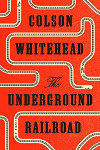
Colson Whitehead: The Underground Railroad – Two slaves run away from the plantation and board an underground train to a less southerly state where life is likely better. Fantastic.
Weike Wang: Chemistry – The unnamed narrator has been proposed to by her boyfriend twice and can’t find it within herself to say yes; there’s a lot of confusion – she’s struggling with her PhD and is unconsciously still suffering from parental neglect. A search for identity where the reader is more privy than the character, this is an excellent book full of vignettes, humour, and it boasts an interesting writing style.
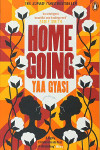
Yaa Gyasi: Homegoing – As the slave trade continues in Ghana, one sister is ushered into marriage with a white man at the ‘castle’ whilst her unknown half-sister is taken into slavery to be shipped to America; we follow both women’s decedents as they tackle their pasts. A wonderfully written book that succeeds in writing short pieces about various characters without you ever feeling lost.
5


- Edith Wharton: The Age Of Innocence
- Eloisa James: A Duke Of Her Own
- Jessie Greengrass: Sight
- Patrick Gale: A Place Called Winter
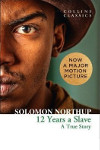
- Solomon Northup: Twelve Years A Slave
4.5



- Claire Fuller: Our Endless Numbered Days
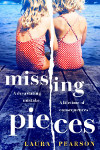
- Laura Pearson: Missing Pieces
- Nicola Cornick: The Lady And The Laird
- Nicolai Houm: The Gradual Disappearance Of Jane Ashland
4





- Charlotte Lennox: The Female Quixote
- Claire Fuller: Bitter Orange
- Dorthe Nors: Karate Chop
- Jenny Colgan: Christmas At Rosie Hopkins’ Sweetshop
- Kirsty Ferry: Watch For Me By Candlelight
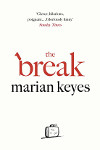
- Marian Keyes: The Break
- Philip Pullman: La Belle Sauvage
- Rosie Travers: The Theatre Of Dreams
- Shannon Stacey: What It Takes
- Sherry Thomas: The Luckiest Lady In London
- Sylvia Plath: The Bell Jar
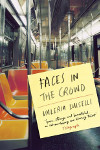
- Valeria Luiselli: Faces In The Crowd
3.5
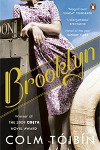


- Colm Tóibín: Brooklyn
- Diana Gabaldon: Outlander
- J Courtney Sullivan: The Engagements
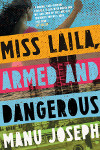
- Manu Joseph: Miss Laila, Armed And Dangerous
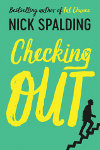
- Nick Spalding: Checking Out
- Shannon Stacey: Mistletoe & Margaritas
3


- Charlotte Smith: Emmeline
- Eloisa James: This Duchess Of Mine
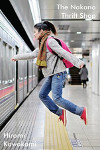
- Hiromi Kawakami: The Nakano Thrift Shop
2.5

- Glenda Young: Belle Of The Back Streets
- Özgür Mumcu: The Peace Machine
- Sarah MacLean: A Rogue By Any Other Name
2

- Ben Okri: The Famished Road
My Personal Favourites
I finished the books I’d carried over from the previous December – the Northup and Sullivan. The only real target I’d set was to add to my diversity stats, and this I achieved. Otherwise, I read a fair number of classics and newer popular books – I’m counting Outlander somewhere in between those times – and finally read books by Ben Okri, Hiromi Kawakami, Colm Tóibín, and Sylvia Plath.
I also read from a slighter wider variety of sources, incorporating the library in a more concrete fashion than the drips and drabs of previous years. Approximately eight books were from the library, which is over double what I’d thought before looking at my reading notes.
Quotation Report
In The Age Of Innocence a man of great means but lack of general awareness as according to his station in the novel, laments the absence of independent thought of his beloved and looks forward to the opportunity he will have to educate her… to a certain point… she shouldn’t be too knowledgeable after all. Whilst in the same book, a few chapters later, the author of it all produces this fun line:
She sang, of course, “M’ama!” and not “he loves me,” since an unalterable and unquestioned law of the musical world required that the German text of French operas sung by Swedish artists should be translated into Italian for the clearer understanding of English-speaking audiences.
In Swimming Lessons, Claire Fuller posits that ‘writing does not exist unless there is someone to read it, and each reader will take something different from a novel, from a chapter, from a line. A book becomes a living thing only when it interacts with a reader’.
Hilarity and heartbreak in Chemistry:
At the gate, he goes through his repertoire of tricks – sit, lie down, crawl, play dead, roll over, high-five, sit, lie down, crawl, play dead, roll over, high-five. I ask him to please be dignified about this, but I have not yet taught him that command.
In The Female Quixote, Arabella’s cousin and suitor agrees to read her favourite books at his peril – it just so happens her favourites include the (still) longest fiction book published, all 13,000 pages of it.
A thought from The Nakano Thrift Shop worth mulling over:
When it comes to old things, whether buying or selling, why is it that people act so cautious?… With something brand new, they have no problem just ordering it from a catalogue, no matter how expensive.
This is another occasion wherein paraphrasing the quotation just won’t work. Here it is in full, from The Underground Railroad:
Yet when his classmates put their blades to a colored cadaver, they did more for the cause of colored advancement than the most high-minded abolitionist. In death the negro became a human being. Only then was he the white man’s equal.
And lastly, as I mentioned on Wednesday, if you travel to 1740s Scotland, as one does, remember that disinfectant doesn’t yet exist. Failure to remember may result in a humorous exchange not unlike that experienced by one Claire Randall, an Outlander, whose requests for various disinfectants resulted in blank stares until she asked the clansmen for alcohol and received a jovial response.
In the next few days I’ll be setting out my reading goals for the year. I’m looking forward to more historical fantasy – I might currently be eyeing up the George R R Martin box set that’s on the desk beside me.
What was on your best of list for 2018?
December 2018 Reading Round Up
Posted 2nd January 2019
Category: Round-Ups Genres: N/A
7 Comments
Christmas flew by so quickly that it’s all a bit confusing here at the moment. It was a lovely time in general, but there was a lot of coming and going. There were several families to consider, which I expect many of you can relate to!
The Book
Diana Gabaldon: Outlander – A woman from 1940s London visits Scotland and is whisked two hundred years in the past, a time when the Highlands was a dangerous place to be, especially if you had an English accent. A historical fantasy romance, leaning heavily on the side of the third genre.
One book is a 100% improvement on November, and I’m considering it a fair feat in other ways: 1) Outlander is 851 pages, and thus equal to a couple of regular novels in length; 2) although I didn’t love it, it was the right choice for the time. Once finished I immediately started the TV adaptation, which I’m enjoying a lot more. I’ve not yet decided whether to continue reading the books or to just keep watching the adaptation – finding out about the way the second book begins has given me pause in terms of the text. (It’s a huge spoiler so I won’t include it here – it’s on the Wikipedia page for Dragonfly In Amber.
Quotation Report
If you travel to 1740s Scotland, as one does, remember that disinfectant doesn’t yet exist. Failure to remember may result in a humorous exchange not unlike that experienced by one Claire Randall, an Outlander, whose requests for various disinfectants to clansmen resulted in blank stares until she asked for alcohol and received a jovial response.
At the time of writing this I’m not sure exactly what I’ll be reading next, but the Gabaldon has made me want to return to Du Maurier’s The House On The Strand. I may well proceed along the lines of the Long-Awaited Reads Month concept of a few years ago; the Du Maurier would meet the conditions.
I missed Christmas, but I wish you a very happy New Year! Let me know what you’re reading!
Off topic, for those asking about What’s In A Name: I’m unable to host the challenge this year and haven’t yet found someone to take it over. If you are interested please get in touch with me via email (on the Contact page). Hosting the challenge requires an initial block of time to set up one post, a second block of time to set up eight more, and all but one post require a linking system (Mr Linky is recommended and costs US $5 per year). You’ll then want a bit of time each week/fortnight to comment on posts and you may, every now and then, need to add people’s reviews to the lists yourself. The challenge sees up to 150 people signing up, so do bear that in mind if you pay for website hosting – you’ll want to either disable hotlinking or upload your challenge logo to a separate image site.


