




Eloisa James – A Duke Of Her Own
Posted 19th December 2018
Category: Reviews Genres: 2000s, Comedy, Historical, Romance
1 Comment

Searching for a lady worthy of receiving the Spice Girls’ ‘Mama’ on compact disc.
Publisher: Avon (HarperCollins)
Pages:
Type: Fiction
Age: Adult
ISBN: 978-0-061-62683-8
First Published: 28th July 2009
Date Reviewed: 18th December 2018
Rating: 5/5
The Duke of Villiers needs to find a wife and mother for five of his six illegitimate children. Most women are either already married or want nothing to do with the whole thing, particularly as the Duke is not the average person. There are but two women left on the list: Eleanor, who he is incredibly attracted to but doesn’t strike Villiers as the motherly sort, and Lisette, who is considered mad but loves children. He’ll have to spend time with them both… but if it’s anything to do with Eleanor, she’ll have him herself.
A Duke Of Her Own is the sixth and final story of the Desperate Duchesses series and ends the set spectacularly.
This book is no longer than any of the others, but it uses its time better than the rest; the other books aren’t lacking in story, but the sheer amount of things covered and the number of characters involved make it a more ‘complete’ story and with much more going for it than simply the romance.
The character development in the book in general is good, with Villiers and Eleanor, and Lisette, though to a lesser extent simply because she’s in-between main and secondary on the character list, understandably well-drawn. (Admittedly, Villiers has had a good few books’ worth of development but until the introduction to this book – included in the previous – he had been mostly relegated to ‘chess player’ status only. That said, he was also more intelligent in the previous books.) The chemistry is thus very good, too, with James creating a very believable romance. Villiers does sometimes get a bit too caught up in wondering whether he should instead marry the woman who he thinks would make the better mother (Lisette) but it doesn’t become overbearing.
This – the fact it doesn’t become overbearing – is due in part to James’ deft plotting. As the novel continues, Lisette’s supposed ‘madness’ is slowly shown to the reader for what it truly is, which means that Villiers’ umming and ahhing becomes more a question of ‘when is he going to see what others can see?’ rather than simple angst. The other reason it’s not overbearing is because it just doesn’t happen too much – once he starts to like Eleanor chunks of the book go by without question.
(And when James explains Lisette openly, it’s the satisfying conclusion to that subplot that you were hoping for.)
The addition of Villiers’ children in the book is fantastic. This isn’t to say that the previous books, which rarely featured children, didn’t work – it’s that the children themselves have inherited Villiers’ better traits, at least in terms of bookish interest. They are most often devious and clever, matching and generally trumping Villiers’ personality in terms of reader interest, and they help speed up his realisations of what is best for him, bringing in extra comedy and a different, lovely, feel to the book. The children are cunning thieves, strong youngsters in the face of the horrid adversity they’ve lived with, and James dedicates time to their settling into what is a completely different world for them. (All were abandoned by both parents and Villiers had previously left any upkeep to a person who effectively pocketed the money.)
There are of course moments that aren’t quite in keeping with the history – mostly due to James’ desire to bring in a bit of present-day thinking into her stories – and also a few silly moments, but these are both fleeting.
A Duke Of Her Own begins well, ends on a triumph, and manages to seem as though it’s from a completely different series whilst still adhering to the general atmosphere and mood of its companions. It is a superb finale to the set, and a fabulous book in itself.
Related Books


Alice In Wonderland: What Is The Appropriate Age?
Posted 12th December 2018
Category: Further Thoughts Genres: N/A
4 Comments
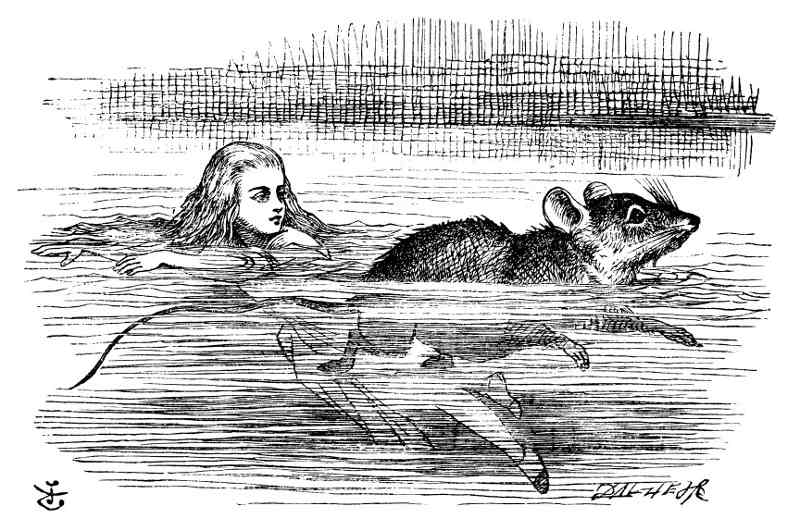
In a previous post on this book, I made a brief reference to having given a copy of Carroll’s book to my nephew. The decision over just when I should have presented the novel to him was fairly long in the making – not nearly as long as the waiting period for the time when he would be old enough for Narnia (I made that all by myself by having a copy ready when he was only one year old, and finally gave it to him aged eight) but enough that I spent a number of hours on it all told.
It was this decision and the contents of the book in general – obviously related – that made me question at what age it would be appropriate to give a child, any child, this book. And this is because I think it should be a little later than the age it might have been given in years gone by, namely the Victorian period during which it was written.
Whilst Alice’s Adventures In Wonderland, the first of the two about Wonderland, does not state Alice’s age – though we can make an informed estimate due to John Tenniel’s illustrations – the sequel, Through The Looking-Glass, gives Alice’s age as 7. That book takes place in November, and the first takes place in May, which means we can say for certain that Alice is 6 and a half to 7 years of age over all.
The two books were published in 1865 and 1871, and a lot has changed since then. The literary context and wider culture was different enough that a book that sports quite a bit of violence was okay then but not now – in fact I think it’s interesting that the word that comes to mind now is indeed ‘violence’, as it’s obviously a strong word, and there has likely been a change over the years where that word would not have been used to describe the book1. The violence in the book, such as the well known ‘off with her head!’ which Disney managed to rework into something a lot more palatable despite not altering the phrase at all, or the chapter featuring the baby and ‘highly strung’ guardians, isn’t really the sort of thing we tend to present to children. As Gardner says in his lauded annotation of the novel:
The fact is that Carroll’s nonsense is not nearly as random and pointless as it seems to a modern American child [Gardner was writing with his compatriots in mind] who tries to read the Alice books. One says “tries” because the time is past when a child under fifteen, even in England, can read Alice with the same delight as gained from, say, The Wind in the Willows or The Wizard of Oz. Children today are bewildered and sometimes frightened by the nightmarish atmosphere of Alice’s dreams. (p. XIV)
And that was said in 1960.
We could also bring in the ‘madness’ (“We’re all mad here,” the Cheshire Cat says), which is sometimes seen along with the violence, but I’d say it’s fair to assume that aspect is part of the bizarre wonderland, and due to the way children tend to interpret things in similar terms, isn’t anywhere near as problematic2.
As Alice is seven years old in the book we can assume that this is roughly the age Carroll imagined his readers to be. Seven could perhaps be the ‘right’ age for a modern reader, but I think we can say that nowadays it would depend on the reader’s personality and upbringing a lot more than it would have in Victorian times given societal and cultural changes. In a world where capital punishment was still acceptable and known about by all, for example, a queen running about shouting for people’s heads to be removed wouldn’t be anything out of the ordinary. On the first book’s release, reviewers disliked it, but the first book sold quickly and has never been out of print (Wikipedia, n.d.). It’s also remained with the same publishing house, Macmillan. In 1991, Donald Rackin said of the novel:
Victorian readers generally enjoyed the Alice books as light-hearted entertainment that omitted the stiff morals which other books for children frequently included. (p. 20)
As we know, books in the centuries prior had been mostly about religion and instruction, and although ‘fun’ books had been conceptualised by John Locke in the 1600s, it wasn’t until the mid 1700s that what we would now call children’s books were published3. By this measure, Carroll’s work would have been something to celebrate over and above the simple fact of the fantasy it offered.
But there is of course a whole world in between strict Victorian morals for children and the education we provide today. Alice doesn’t take away from Wonderland any lasting knowledge, meaning that her brief stays are purely adventures and she remains mischievous – or, ‘bother’, as I said for lack of a better word a couple of years ago – which isn’t as much as a selling point now as it might have been years ago. There are lessons for the reader to learn, namely, in my opinion, that of being considerate, but they are for the reader, and affect Alice only for that moment. (See the chapters wherein Alice offends a mouse by talking about the loveliness of her cat.) These lessons are easy to understand and well-constructed, but the onus is entirely on the reader to see where Alice is wrong, and there is no provision of reward for the reader in terms of acknowledgement by Alice apart from that momentary self-awareness in one scene.
It’s interesting to note that the recent live-action adaptation, partly produced by Disney, sticks to the original idea of bizarre to the effect that it’s fairly scary. This is solidified by the UK rating of Parental Guidance (‘should not unsettle a child aged around eight or older’), a marked difference to the 1950s cartoon version which is a U (‘should be suitable for audiences aged four years and over’).
It wouldn’t be wrong to say that, in conjunction with the second novel, seven is a fair age, but there is enough to consider to make eight, or even nine, perhaps, a good option. Six and a half, whilst only months away from seven, might be pushing it.
What’s your opinion on the reading age, and have you had to decide about what age to read/give a child a book that due to its era poses potential questions?
Footnotes
1 In 1936, one Paul Schilder wrote an entire essay in the context of psychoanalysis and the potential detrimental affect on young readers. The essay is unfortunately behind a paywall so I couldn’t cite it here, but if you have a subscription to the Journal of Nervous and Mental Diseases, you’ll find it here.
2 This said, there are comments that can be made in regards to eating disorders, mental illnesses, and Carroll’s life and intentions that Molly Stroud (2018) has summed up well in her essay, Mental Illness in Alice in Wonderland.
3 I wrote about western children’s literature here.
References
Online
Wikipedia (n.d.) Alice’s Adventures In Wonderland, Wikipedia, accessed 12th December 2018
Books
Gardner, Martin (ed.) The Annotated Alice: The Definitive Edition by Lewis Carroll (1999), W W Norton & Company, New York.
Rackin, Donald (1991) Alice’s Adventures In Wonderland And Through The Looking-Glass, Twayne Publishers, New York.
Jenny Colgan – Christmas At Rosie Hopkins’ Sweetshop
Posted 11th December 2018
Category: Reviews Genres: 2010s, Chick-Lit, Holiday
2 Comments

Couldn’t miss this one this year.
Publisher: Little Brown (Hachette)
Pages: 389
Type: Fiction
Age: Adult
ISBN: 978-0-751-55180-8
First Published: 7th November 2013
Date Reviewed: 17th October 2018
Rating: 4/5
Rosie is looking forward to Christmas. Having moved from London to a small rural town (having broken up with her non-committal boyfriend and finding someone better), she’s ready to experience the season in her little house and community. But Stephen’s mother, the lady of the manor, is still frosty towards her, and, now adding to the stress, Rosie’s family want to visit from Australia. It’ll be a trial fitting her family into the house and ensuring her shop stays afloat with the prospect of snow on the way.
Christmas At Rosie Hopkins’ Sweetshop is a cute story that, given its advent setting, makes a great book for the weeks prior to Christmas.
Colgan exploits all the stereotypes to good effect: snow; little town; big cold houses; a bustling community. She even throws in the idea of Australians experiencing snow. This she does well, using easy language that’s nevertheless not nonliterary, and getting the balance between conflict and good company just right. It’s all very cosy, down to the traditionalism of the big glass jars in the sweet shop and the joviality of most characters. Development happens but suffice to say that whilst the plot works and the characters are the main aspect, you don’t mind not being blown away by either. The plot devices bring people together and are well solved; one device works as it does precisely because it’s in a Christmas book.
There are but a couple of low points. Firstly, the arrival of Rosie’s family means the arrival of some difficult characters, smarmy people with smarmy children who it’s hard to reconcile with the rest of the novel. And secondly, there is the use of the derogatory term ‘mong’ (‘a person with Downs Syndrome’; Oxford Dictionaries defines it as ‘a person who is stupid or who has learning difficulties’). This word is used by Stephen when he’s recovering from an accident and is in hospital, high on pain reliever – what we’d now call ‘out of it’. This obviously brings in prejudice where it was not needed and does not gel with Stephen’s personality (otherwise incredibly emphatic).
Besides this, and in general, the book is a really good seasonal read, and exactly the kind of chick-lit you want at Christmas; it’s the second in a series but stands fully alone – you may want to read the first (either before or after would work equally well) but you certainly don’t have to.
Related Books
None yet
November 2018 Reading Round Up (Sort Of)
Posted 7th December 2018
Category: Round-Ups Genres: N/A
7 Comments
The reason my blogging has been so patchy: I got myself two furry friends of the rabbit persuasion. And rabbits, especially during the lengthy teenage months when they are chewing, thumping, and making other moves for which the politest translation is ‘voulez-vous coucher avec moi’, take up a lot of time. We’re now out the other side, and it is wonderful to be able to pick up a book again for more than a short period.
In November I didn’t finish any books but I did read a couple more chapters of Brick Lane. And I started Outlander, which I’m 200 pages into and enjoying. I may have lost the edge of Brick Lane‘s jacket to the discovery stage of A Practical Study into the Composition and Taste of Paper, a project thankfully since abandoned.

My plan for December includes finishing Outlander and watching the first TV season so long as only the first book is covered, reading at least one more Christmas book to accompany my nonseasonal (October) reading of the Jenny Colgan I’ll be reviewing in a few days, and making an hour or two to re-read a childhood favourite – Babysitter’s Club #21, which I discussed in 2016 as a book I’d like to re-read if I could find the box I’d packed it into. The box has since migrated to a spot in front of my shelves.
If there is time after the above I have an as yet unwrapped set of A Song Of Ice And Fire.

In related news, I attended the Young Writer of the Year Award ceremony yesterday evening. The prize was given to Adam Weymouth for Kings Of The Yukon. This is the first year since the relaunch that I’ve not read any of the shortlisted books, however I took home with me a copy of Fiona Mozley’s Elmet which I hope to read by February.
I’m going to use these next weeks before Christmas to get back into the swing of things. Expect a few reviews and, hopefully, a discussion post or two.
What are you planning to read during the rest of this month, and have you ever lost part (or all) of a book to a pet?
October 2018 Reading Round Up
Posted 2nd November 2018
Category: Round-Ups Genres: N/A
4 Comments
I didn’t do badly in October. Looking at this list has made me realise how long the month was, and in a good way; whilst the last week of October was very cold – in relative terms – the majority was sunny and warm and I think the number of summery days, with the change following, afforded the effect of more time. This month was also about library usage – I’ve reviewed books I’ve borrowed from the library in recent times but this time it made up almost half of my reading, and I gave the books back with the idea in mind to purchase at least one of them at some point. (It’s likely the Whitehead will be on my ‘best of’ list, and I think not having my own copy when there’s a big chance I’ll want to re-read it or think on it further would be difficult.)
All books are works of fiction.
The Books
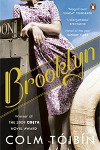
Colm Tóibín: Brooklyn – A young Irish girl is sent by her family to a growing America in the hope she’ll find a better life there. Lacks a real plot and characterisation.
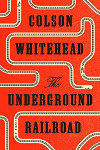
Colson Whitehead: The Underground Railroad – Two slaves run away from the plantation and board an underground train to a less southerly state where life is likely better. Fantastic.
Eloisa James: A Duke Of Her Own – Villiers needs a mother for his six illegitimate children and thinks to choose between enticing Eleanor and ‘mad’ Lisette; if Eleanor has anything to do with it it’ll be she he chooses. The best of the entire series – awesome characterisation and often very funny.
Eloisa James: This Duchess Of Mine – Jemma knows it’s high time she and Elijah had an heir to the dukedom, and both husband and wife secretly hope love will blossom. Not as good as the rest of the series.
Jenny Colgan: Christmas At Rosie Hopkins’ Sweetshop – Despite decreasing sales at her shop, Rosie is looking forward to Christmas in a snowy village and spending it with her reluctant-to-be-a-Lord boyfriend, but her family want to come over from Australia and there’s a problem ahead for the community to deal with. Pretty fun and festive.
No contest, the Whitehead won it this month. A Duke Of Her Own was a very close second, and certainly if I hadn’t read The Underground Railroad at the 11th hour, it would have won, but Whitehead’s commentary and ending was just something else. The Colgan was a lot of fun to read.
Quotation Report
This is another occasion wherein paraphrasing the quotation just won’t work. Here it is in full, from The Underground Railroad:
Yet when his classmates put their blades to a colored cadaver, they did more for the cause of colored advancement than the most high-minded abolitionist. In death the negro became a human being. Only then was he the white man’s equal.
Finally the end of my busy period is in sight, even if it’ll soon be replaced by Christmas planning. I’m looking forward to reading (I believe the vernacular is ‘well, duh!’), evenings on the sofa listening to Eva Cassidy, and looking for gifts.
How was your October, and how is the weather where you are?


