





Latest Acquisitions (December 2019 – January 2020)
Posted 20th January 2020
Category: Acquisitions Genres: N/A
2 Comments
This Christmas I asked for books; first time in a while. And this current month has been fairly busy; I’m reading review copies a few months ahead of their publication, and it’s been a lot of fun. (I’m also managing to put that ‘read by month’ goal to good use; it’s only January, still, but I’m happy to have started the year this way.) I should have an early review this week. I’m excited about the below books in general, and plan to get them all read within a short time.
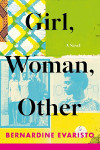


Bernadine Evaristo: Girl, Woman, Other – This was on my Christmas wishlist. I’ve never wanted to read a Man Booker win as much as this one. I am purposefully not finding out what it’s about, though the title does give you an idea.
Camilla Bruce: You Let Me In – From the publisher; to be published on the 5th March. This is a Gothic thriller by a Norwegian writer. A novelist has got away twice with murder, so when she disappears, leaving only a letter, her family suspect her conscience has got to her. But the letters tell two stories that make them question it all.
E C Fremantle: The Poison Bed – I had read Fremantle’s previous four books (under Elizabeth Fremantle) and had had this on my list; bought it this month so that we could talk about it on the podcast, which is out next Monday. The book is about the factual case of Frances Howard and Robert Carr who are arrested for a murder.
Imogen Hermes Gowar: The Mermaid And Mrs Hancock – I’ve wanted this one ever since it was published and then, later, it was on the Young Writer of the Year shortlist. Received for Christmas. Like the Evaristo, I only know so much and am keeping away from the specifics, but it looks at antiques, museums, and the murky past.
Nicola Cornick: The Forgotten Sister – This will be published in April and I plan to review it later this week. It’s a dual plot novel revolving around the death of the wife of Elizabeth I’s favourite – Amy Robsart, who was married to Robert Dudley – an event that is still a mystery today.
Did you receive or buy any books over the holiday period?
Susmita Bhattacharya – Table Manners
Posted 17th January 2020
Category: Reviews Genres: 2010s, Commentary, Domestic, Short Story Collections, Social, Spiritual
1 Comment

It’s ready.
Publisher: Dahlia Publishing
Pages: 168
Type: Fiction
Age: Adult
ISBN: 978-0-995-63446-6
First Published: 28th September 2018
Date Reviewed: 16th January 2020
Rating: 5/5
A woman is irritated by the lady who keeps taking her brother’s wife’s time up with her tales of her abusive husband; a man becomes disturbed by the change in the public’s thoughts as to those of his religion; a couple goes on a trip to Venice before one of them is moved to a hospice.
Table Manners is a collection of short stories connected by the theme of food and meals. But as you might expect it’s not quite as simple as that; the food, a theme of varying degrees in each story, relates directly to human relationships and connections.
Bhattacharya’s collection is super. The writer’s basic concept is to take a person’s interest in food, or the fruit tree that is in a person’s life, or a single dinner, and relate it to an event of long-term happening in the character or characters’ lives where the presence, or lack, of other people has made or is making a mark. The collection is deceptive; after the first few stories you’d be forgiven for thinking that the work is brilliant, but on a small, quiet scale. Make no mistake – you’re simply consuming the appertiser. Once you’re a few stories in, the concepts do effectively leap out of the frying pan and into the fire, becoming shockingly excellent, and this continues for a good while enough that you realise the necessity of the quieter beginning. There are pauses to get your breath back, but the mainstay of the collection is the hard-hitting stuff, with some superb characterisation leading the way. There are a number of errors in the book but whilst they are noticeable, they do not detract from the whole.
The collection is international, with stories spanning a number of continents, showing the feelings and aspects of life as worldwide, as well as those more specific to a few places and the present day.
As to the standouts, three of them are noted above; a special mention must be made for the very first story, The Right Thing To Do, which is told by the sister-in-law of the person whose house the story takes place in, and begins with this:
I push the cup towards Mrs Dalal. As usual, she is crying, caressing her bruised arm. She barely looks up at me but takes a deep sip of the tea. My Bhabhi tilts her head slightly, indicating me to leave. I go back to the kitchen, already worrying about the rice that needs to be cooked before Dolly and Rana come home from school. Then there’s the fish to be cleaned and fried. And the clothes to be brought back freshly ironed from the istriwallah. The chapattis to be cooked. Why does Mrs Dalal turn up with her bruises at the most inconvenient of times?
Others include Comfort Food, in which a wife in Singapore is happily making her favourite meal as she does every Friday whilst her husband is out entertaining business associates, only this evening he rings her to ask that she join him. It is an uncomfortable meeting for her. Letters Home shows the emotional journey of a man who emigrates from Bangladesh to Cardiff in our current political climate. And then there is Buon Anniversario Amore Mio, the story of a couple taking an end-of-life holiday during which they discuss difficult moments in their relationship.
Table Manners is beautifully written; careful language, a lot of heart. You’re likely old enough to decide for yourself when you get down from the table, and in this case, you’re going to want to wait until long after the conversation is over.
2020 Goals
Posted 15th January 2020
Category: Chit-Chat Genres: N/A
4 Comments

We’re in the second full week of January, I’m writing my goals, and I haven’t that many specifics. I think at this point, because I don’t want to leave it any longer, it’d be best to look at the general ideas I have and stitch them together. I achieved about half my reading goals for last year – I wanted to go back to some review copies I’d missed, which I did, and read more classics. But I didn’t get to the books I’d noted.
I know that I want and need to re-read more; this is simply a continuation of the latter months of last year. I also know that at present, I’ve a plan to finish that ever-present Thackeray and to read a good few more books, if possible, by the end of this month. I’m liking the idea of repeating that in February.
It strikes me that it might be best to concentrate on reading more in general, hesitantly moving a step further than my oft-stated ‘read as much as I comfortably can’. (Although that in itself isn’t cancelled out by trying to read more.)
I also know I want to carry on increasing my reading of classics; I didn’t manage to complete my Classics Club list – a lot did change in five years’ reading – but emphasising the idea that ‘classics’ doesn’t necessarily mean ‘old’ definitely helps. In the last year I’ve noticed an increase in the number of times I’ve picked up on references to classics in other books and articles.
On the first few evenings my Christmas decorations were up, I found myself wanting to watch Outlander series 2 (I watched the first series at that time so there’s a weird feeling of Christmas to it) and following a couple of weeks’ worth of internal debate over the ‘appropriateness’ of watching it when I hadn’t read the second book, I did so. Inevitably I have now decided that yes, I should read the second book, so that’s one more specific thing to add to my list.
So, in 2020 I will aim to:
- Read more by the month, looking at shorter periods of time rather than the longer period of a year, in the hopes that that lessens any thoughts of ‘oh but it doesn’t matter that I’ve not read much in these first two, three, five months, there’s so much of the year left’. (Because I do do that.)
- Read more classics of all kinds (and if one of them happens to be the Charlotte Mary Yonge I planned for last year, great).
- Get to that Thackeray and get it done.
- Read Dragonfly In Amber
Yes, that’ll do.
Do you have any reading goals for 2020? And if you read by year, so to speak, do you ever feel complacent in the first months?
Nancy Bilyeau – Dreamland
Posted 13th January 2020
Category: Reviews Genres: 2020s, Crime, Domestic, Historical, Mystery, Social, Thriller
2 Comments

Ice cream, cotton candy, and crime.
Publisher: Endeavour Quill
Pages: 373
Type: Fiction
Age: Adult
ISBN: 978-1-911-44577-7
First Published: 16th January 2020
Date Reviewed: 11th January 2020
Rating: 5/5
Reluctant heiress Peggy is summoned away from the regular bookstore job she loves to attend her family’s holiday, staying in a luxury hotel not far from the amusement parks of early 1900s Coney Island. The Battenbergs have received a sudden invitation to join the mother and son with whom they hope to make an alliance via marriage, and with their own wealth in decline there’s no way they can refuse the offer. They go. But Peggy can’t resist the amusement parks her social class are supposed to stay away from, and when a girl’s body is found and she is amongst a crowd of onlookers, the distance between her circle and the families at the parks shortens considerably, even more so because Peggy’s interest in the other part of Coney Island leads her to meet a working class immigrant and park employee, forming a connection that is unthinkable.
Dreamland is Bilyeau’s fantastic fifth book (third story over all). The setting is incredibly immersive, with the sights and sounds so well described and created that the features stay with you throughout your reading, keeping you in that feeling of somewhat being there yourself as the plot elements keep going on around you.
Of course it is helped by Bilyeau’s choice of setting – this summery location with so many different elements and the grandness of its historical context is incredibly welcoming, albeit that the story is a thriller and thus the situation discomforting.
No surprises then that the research is as thorough as always. The luxurious hotels and amusement parks of Coney Island as detailed by Bilyeau – that are each separate entities as demanded by the class structure no longer stand1, but Bilyeau’s studies and descriptions enable you to get a great idea of what they would have been like. And the character placements mean that you get a pretty good look at both; the number of characters and Peggy’s place in society means that you see more of the hotels – hers in particular – but the descriptions of the parks allow for a built-up picture there, too.
In Peggy, Bilyeau has created a worthy heroine, a good symbol of her time but very relatable today. More curious and desirable of a different life, Peggy moves between the worlds that are otherwise strictly separate, taking a few others along with her; this is naturally where the delineation is most apparent. The wealthy are… wealthy, and privileged, but in Peggy’s choices we see a barrier that has been placed in front of her – it may be positioned as safety guidance, but she isn’t really allowed in the parks.
Peggy’s part in the book shows well the views about women at that time. Peggy is in the highest echelons of society but still she’s essentially just a woman; she goes where the men of the family dictate, and they do dictate. She in fact has less agency, in some ways, than those below her, or at least it seems; Bilyeau shows well how the same values carried over very differently depending on who you were, for example, the regular women can bath in the sea more freely; if Peggy wants to go in the sea she’s required to cover up almost entirely.
The mystery is solid. Interestingly there are only a few options provided for you to really consider however this is in itself as much of a red herring as any other. In providing a very limited number of people who could have ‘dunnit’, the author pushes your focus towards Peggy’s own journey of discovery, and with all the aspects in place there, it’s a ride and a half. The mystery brings into question the changing times of the period, this 1911 year that was on the cusp of a war that would change everyone. It includes the differences between the classes, and the various affects extreme privilege can have. It also, unsurprisingly, shows the favour given to men – of the right class, of course – when it came to investigations.
Once again Bilyeau brings immigration into her stories; here the subject is used quite differently compared to The Blue (where the main character looked at the concept of religious refuge); it studies some of the problems that came with people moving to the States from Europe where they were fairly persons non grata depending on where they were from, not entitled to being believed when there was blame to be found.
Related to this is the romantic subplot; Bilyeau has woven her tale here into the rest of the story and provides it a very satisfying conclusion well in keeping with the time. To be sure the book is a thriller, but the romance is a good addition that further expands on all the topics discussed by the rest of the story.
Dreamland is a very good book; the mystery very well written. The frustration you’ll feel for Peggy keeps you reading as do the sights and sounds of the location, the mix so deliciously at odds with the concept of the area. The fun of the parks will draw you in and the twists of the mystery will hold you there. Find yourself some candy floss and a deck chair or, given the release date – and just as well suited – a warm sweater and hot chocolate – whatever the weather outside your window, this book will pull you into its heatwave summer and a mystery that is very well paced.
Footnotes
1 The area has recently been redeveloped to include one park, which bears the name of one of the originals: Luna (the original three were Luna, Steeplechase Park, and Dreamland). Information can be found at Trip Savvy. You can view photographs of the parks and old hotels here.
I received this book for review.
Related Books


Speaking to Nancy Bilyeau about the Joanna Stafford trilogy, The Blue, and Dreamland (spoilers included)
Charlie Place and Nancy Bilyeau discuss the lifestyle of Dissolution-era nuns, using a website’s ‘contact me’ form to great success, there being more relics than there were items, using your family’s name in your work, and the grand amusement parks and luxury hotels of New York’s past.
If you’re unable to use the media player above, this page has various other options for listening.
Second Half Of 2019 Film Round Up
Posted 10th January 2020
Category: Film Genres: N/A
2 Comments
Lots of classics here. I’ve listed the Hallmark made-for-TV Christmas movies at the bottom; whilst some are really good I can’t deny that they are guilty pleasures.



Aladdin (USA, 2019) – This mostly follows the same storyline as that used in Disney’s 1992 cartoon version. It’s awesome. It was evident that they acknowledged Will Smith is very different to Robin Williams so instead they aligned the genie to Smith and it worked incredibly well. Loved the changed lyrics. Didn’t think giving Jasmine a new plot thread worked as well but understand why they did it.
Charlie’s Angels (USA, 2000) – Three women employed by a mysterious man they have never met look to stop a killer. Maybe it’s the age of the original showing through, but I wasn’t keen.
Enchanted April (UK, 1992) – Four women of differing personalities and backgrounds club together in order to rent a castle for a month’s holiday. This has all the atmosphere of the book and is quite wonderful. I found myself appreciating Scrap much more (though her nickname is left out in the film) and it brought to my attention the way that Briggs and Scrap being together would mean the seven of them would be able to return. The only drawback from the film was the way everything seemed to happen over a matter of days but that’s just the nature of a film trying to show a month – the script did include plenty of references to the passing of time.
His Girl Friday (USA, 1940) – A newspaper editor tries to sabotage the new relationship of his ex-wife, a reporter, getting her to cover a story only two hours before she’s due to catch a train. This was fulfilling in a technical way – it’s a dialogue-heavy play on screen and very funny. Unfortunately it also uses a word we consider racist – it’s used once but does make a mark. The film is in the public domain.
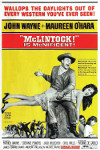
McLintock! (USA, 1963) – Based on The Taming Of The Shrew, a landowner’s estranged wife returns from the city and he tries to get her back. I’d never seen a John Wayne film and as one of his films that’s in the public domain it’s easy to find this one in good quality (Amazon has at least two). Best viewed in its full context, in which it’s enjoyable enough.
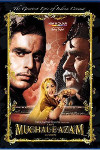



Mughal-E-Azam (The Great Mughal) (India, 1960) – A prince falls in love with a court dancer and his father becomes enraged. I’d wanted to see this classic and I’m glad I did, but in this case I’m also glad it’s behind me as whilst the story itself is okay the father’s wrath just gets worse and worse. I watched the colourised version, which has been done very well.
Sholay (Embers) (India, 1975) – Two thieves are summoned to the aid of a policeman who once arrested them; he needs their help to catch a murderer. Like the previous film, I’d been wanting to see this one for years but in this case I’m truly glad I did; its blockbuster factors are in evidence. Essentially an Indian wild west film with lots of good humour and many pairs of flares, nowadays just beware the violence.
Top Hat (USA, 1935) – A man wakes a woman up tap dancing in the apartment above hers and decides to pursue a relationship with her; all the while she mistakes him for the husband of her friend. Other than the pursuing, this is a great film, and I say that as someone who isn’t into tap dancing in musicals. The humour works incredibly well still today.
Wonder Woman (USA, 2017) – The daughter of a god chooses to leave her people’s island sanctuary to help the allies in World War Two fight against the Germans, who she believes are led by an enemy god. For me, that it was about a real event didn’t work, much better if it had been pure fantasy.




Christmas With A Prince: Becoming Royal (USA, 2019) – The continuing story of a paediatrician and her romance with her childhood acquaintance who happens to be a prince. Watched purely because it was a sequel and thus a very easy option on a sick day; I wouldn’t recommend it otherwise, it’s very contrived.
Christmas At Pemberley Manor (USA, 2018) – An event planner helps a town reestablish their Christmas festival, aiming to use an old house owned by a famous billionaire that is due to be demolished. There is only a slight resemblance to Jane Austen here in the main characters’ names and the house, but the film itself is nice enough.
A Christmas Movie Christmas (USA, 2019) – A woman who loves Christmas films, together with her sister who couldn’t care less, wake up on Christmas Day to find themselves in a perfect Christmas village, complete with the Christmas-loving sister’s favourite actor already set up as her boyfriend. This film is essentially a parody of Christmas films and it’s a lot of fun for what it is, the sisters foreshadowing events that take place. The ending is pretty great, too, almost parodying the parody.
Christmas Around the Corner (USA, 2018) – A workaholic decides to spend Christmas in a small town working at a bookshop that can be hired by tourists. Whilst still definitely made for TV, this film is pretty good – it obviously helps that it’s about a bookshop and that the character wants to bring in more custom – but it’s a fair film objectively, too.
BBC iplayer now has a dedicated category for classic films so needless to say I’ve already watched one film this year and plan on another few before they’ve been taken down from the application. Other than that I have a long list on Amazon that I need to sort through, and I’m looking forward to it.
Which films have you enjoyed recently?


