

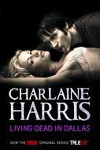
Charlaine Harris – Living Dead In Dallas
Posted 30th January 2012
Category: Reviews Genres: 2000s, Comedy, LGBT, Paranormal, Romance, Social
Comments Off on Charlaine Harris – Living Dead In Dallas
Attempting to make those who live in darkness see the light.
Publisher: Gollancz (Orion Books)
Pages: 279
Type: Fiction
Age: Adult
ISBN: 978-0-575-08938-9
First Published: 2002
Date Reviewed: 26th January 2012
Rating: 4/5
Considering she had agreed to work for Eric, it was unlikely that the vampires were going to leave her alone with her 19th Century boyfriend, living life as before. First Sookie discovers her co-worker’s dead body in Andy Bellefleur’s car, and then Eric calls her up about a mystery he’s signed her up for. Sookie’s telepathic power is the one needed in order to find out where the missing person is. It may also help her find out what happened to LaFayette.
If the first book in the series, Dead Until Dark, was a funny but gruesome and truly adult novel that was a good read, Living Dead In Dallas takes it up a level. There is perhaps more sexual content in this one, and more blood and guts, and it’s not always an attractive read, but Harris is now in the prime position to introduce her readers to what she really wants to say.
It’s rather interesting in fact that a comical book about vampires could have such a message, but it works, and Harris comes up trumps, able to not only deliver the message but to illustrate how seemingly contrasting lifestyles can be blended into one. This wouldn’t make sense in any other situation.
“Andy let a black queer sleep in his car?” This was Holly, who was the blunt straightforward one.
“What happened to him?” This was Danielle, who was the smarter of the two.
Harris portrays quite a lot of sexual orientation differences and gender bending, and in her world it is the norm because what has now taken over as the big taboo is the recognition of the undead being on earth. Instead of picking on sexuality, people have turned their distaste to vampires. This doesn’t mean of course that everything else has been defined as natural, but in this world, vampires are the brunt of prejudice. To use the simplest case of this change in society, one minor character tells how her parents would’ve preferred her to date an African American rather than a vampire.
But of course unlike groups generally prescribed discrimination, there is at least a true danger in the vampires. While they have been accepted into mainstream society, the vampires do not always behave well and this is a constant issue between the heroine and her boyfriend. While their relationship certainly pertains to Harris’s fantasy world, she does touch on things that relate to connections in the real world. And while Harris’s goal does seem to be to revel in her paranormal genre, and to provide black humour as well as lighter laughs, there is the sense that she wants to get her teeth into our actual world. Yes, that pun was definitely intended.
To be sure, as with Dead Until Dark and undoubtedly every other book in this series, Living Dead In Dallas may require a suspension of a lot of principles. These characters will have sex, a lot, and it’s not always vanilla.
Sookie is proving to be a very strong character. Whilst not fitting the mould of your standard strong heroine, she proves that one can be different and still be just as effective. And she remains strong through tough situations, when characters in other books would be given a sudden personality changes and made into weaklings.
Albeit at different speeds, the major characters are being developed. Sookie, as narrator, has already told the reader a lot about herself, so in most cases her development is in learning how to use her power. But her relationship with Bill, as discussed, provides times for new thoughts to enter her always-busy head. Bill himself is developed in drips and dabs (intended again) but it is given a lot of time when it happens. In regards to Sam’s ability, there are some revelations there too.
Living Dead In Dallas is proof that there can be balance found in the world of paranormal fiction, between books with flimsy females and books with out and out horror. And Harris demonstrates that if done right, there can be a place for humour too.
Related Books

Elizabeth Chadwick – The Wild Hunt
Posted 13th January 2012
Category: Reviews Genres: 1990s, Domestic, Historical, Political, Romance, Social
Comments Off on Elizabeth Chadwick – The Wild Hunt
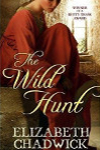
Two Normans may be able to work out their relationship given time, but add Wales to the mix along with a lot of angry kin and life is unlikely to go smoothly.
Publisher: Sphere (Little Brown)
Pages: 341
Type: Fiction
Age: Adult
ISBN: 978-0-7515-4026-0
First Published: 1990
Date Reviewed: 12th December 2011
Rating: 5/5
Please note that this is a review of the updated version of the book, which, it seems, was published in 2008.
When Guyon attempts to gain his uncle’s lands through supplication to the king, he is granted them – on the condition that he marries a particular girl. Judith is the sole heir to her father’s domain and the king wants to be sure that there will not be a war over it. In marrying Judith, Guy gives up his mistress for a fifteen-year-old girl. Judith is terrified of marriage, having witnessed the violence of her father towards her mother and the slap of his hand to herself. But that isn’t the only issue Guyon will have to deal with – the king may have ordered the marriage to aid relations, but Judith’s extended family aren’t about to let the lands pass to another.
In this, Chadwick’s very first novel, we see all the talent that she has continued to wield to this day, only here it is targeted towards absolute fiction. Whereas in her later novels Chadwick focuses on real people in history, here she creates the main characters from scratch and makes use of history for secondary characters. And her weavings in and out between the factual and fictional are flawless. She references many real events and has Guyon and Judith join them, and looks too to legends, such as that concerning William II’s sexuality.
The book is drenched in the issues that arose from the Norman conquest of the British Isles, there are insults between the Welsh and the Normans – and Chadwick makes the story of Guyon’s ex-mistress a part of this by having her and her family mock his Norman wife – as well as touching on the murder of William II and the rise to power of his son Henry. In the latter case she puts forward a comical version of why the eldest son was unable to inherit the throne, which aligns, in its treatment, with fact.
Something that is important to mention is that although Chadwick creates her own characters from their historical bases, for example she creates the character of Henry I, one never feels that she is turning history on its head. A quick bit of research on the reader’s part proves that Chadwick has thought through her book and written it in accordance with real life.
Although the book is character-driven, the world building is, to use an old word given new life in our modern age, epic. It is so easy to be engrossed in it all that you can forget where you are in the present day. Neither does it take long to get into the story. As the story is based in battles and family feuds there is little time to get to know the common people but there is enough on the workings of settlements to keep the budding historian interested.
And while Chadwick is a modern author and often uses elements that are more acceptable to a modern audience, there is never a case of changing history to suit today’s principles and political correctness. An example of this would be Chadwick’s description of her heroine as a fast learner and able fighter – while not by any means reflective of medieval society at large it is nonetheless easy to believe that some women would have been, and evidence backs this up.
Talking of the heroine, both the main characters are winners. They have chemistry enough to explode any science lab and are not perfect while being totally likeable. As said, Chadwick does not step back from looking at things from the medieval mind set, the marriage is important to both Judith and Guyon, but as Guyon waits for Judith to mature and be ready to accept him in the bedroom, things become difficult. In regards to this issue of Judith’s acceptance, Chadwick spends time detailing effects that are still relevant.
And, as in any Chadwick novel, when they end up in bed there are no holds barred. There are racy scenes, there are curtains drawn in front of the reader, and the innuendo is well written. Chadwick masters all of these scenes brilliantly and even when there isn’t a pressing reason for one, for example when both characters are completely comfortable with each other, they serve to inch the relationship further.
The Wild Hunt is a feast for anyone interested in this period of history. Chadwick’s writing is just something else and her passion emanates from the pages. Whether you are new to her work or a returning admirer, The Wild Hunt is as good a place as any to start.
Related Books


Claire Robyns – Second-Guessing Fate
Posted 26th November 2011
Category: Reviews Genres: 2010s, Romance
Comments Off on Claire Robyns – Second-Guessing Fate

Putting your entire trust in a fortune teller rather than your man doesn’t tend to be the best thing.
Publisher: Carina Press (Harlequin)
Pages: 142
Type: Fiction
Age: Adult
ISBN: 978-1-4268-9232-5
First Published: 26th September 2011
Date Reviewed: 26th November 2011
Rating: 3/5
Gemma has been unlucky in love. Her previous long relationship ended when the man left her a day from the aisle and it took her some time to get over it. Being anxious that her friend should move on properly, Helen takes her to have her fortune told; Gemma is to suffer heartbreak again before meeting her soul mate, and while she finds nothing credible in the old woman’s tarot cards – indeed the woman didn’t even finish the story – Helen will be there promoting the mystic’s words, every step of the way.
Second-Guessing Fate is, in summary, the Hollywood film How To Lose A Guy In 10 Days. The only major difference between the two tales is that Robyns replaces the writing gig with a fortune teller. But that doesn’t mean that it’s automatically bad for being a duplicate, and in many ways Second-Guessing Fate is better than the film, being that there is more time for character development and that the hero, Nick, is simply sublime.
Gemma is, for the most part, a good character. She doesn’t fall for the fortune teller’s words and laughs at Helen’s thoughts. Depending on the reader’s own beliefs on relationships one may find it difficult to understand why Gemma is so adamant that her time with Nick is going nowhere simply because they haven’t had sex, and her ideas for her business are peculiar, but it’s hard not to like her. Nick is, as said, sublime. He has just been dumped by a woman who told him how bad a boyfriend he was, and is on a mission to change. His development is very apparent, because it is his subplot. Although Gemma throws some awful things at him he takes it in his stride and continues to love her.
So it would be best right now to say what does not work in this book. Unfortunately it is predictable that as the book continues, Gemma suddenly changes her tune and starts to believe in the fortune. It occurs when Helen remarks that Gemma looks exactly like her grandmother, and is just too unrealistic – Gemma would’ve seen the photograph of her grandmother before and should therefore know that she looks like her. The strong woman suddenly changing and becoming silly is off-putting.
However silly it can be, though, it is still rather funny. In fact if Gemma’s story is trying not to love a man she “knows” will dump her, then Nick’s is trying to love a girl despite the sudden changes that come over her when she seemingly becomes a parasite – he clings on right back while she is trying to get him to hate her. The scenes between Nick and his married friends are both funny and endearing, and the way the men come across makes one quite sad that their conversations were written by a woman and not a man.
Gemma is a cook, the owner of a tiny catering company, and Robyns uses this when she’s writing about body parts and sex scenes, and also, sometimes, miscellaneous things. This reviewer doubts that any more description is needed here for the reader to imagine the sorts of things that get included. Besides from the cooking metaphors the sex scenes are comfortable enough to read. There are just as many fades to black as there are full descriptions and there is no awkward terminology.
But the subplot of the burgeoning company is another negative. Gemma wants a contract with a big name supplier and in order to be in with a chance she has to attend a blueberry pie fair. Her blueberry pies get ruined so instead she fills bowls with liquor and puts blueberries in them. A cute idea perhaps, but hardly a show of talent.
Second-Guessing Fate could have done without the sudden yet all too predictable changes in thinking, but it’s not past the use by date (sorry, I couldn’t help myself). And it’s worth the read just to meet Nick.
I received this book for review from Carina Press.
Related Books

Priya Basil – The Obscure Logic Of The Heart
Posted 14th November 2011
Category: Reviews Genres: 2010s, Domestic, Political, Romance, Social
2 Comments
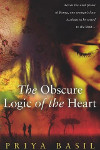
Sometimes you have to make a solid choice, but you don’t.
Publisher: Black Swan (Random House)
Pages: 496
Type: Fiction
Age: Adult
ISBN: 978-0-552-77385-0
First Published: 2010
Date Reviewed: 30th September 2011
Rating: 1/5
Anil loves Lina, and Lina loves Anil – but she’s held back a little by their differing religious views, and a lot by her own indecisiveness. She also has dreams of working for a charity while Anil favours architecture. The differences between them mean that they are constantly at odds over their relationship.
It’s very hard to write a proper summary of this book because there isn’t a true plot to it. Although cited as another Romeo And Juliet, The Obscure Logic Of The Heart is not like the great work of Shakespeare at all, in truth it doesn’t really know what it wants to be. Lina’s indecisiveness is reflected in Basil’s inability to decide just what her book is about.
There’s nothing much this reviewer has to say that is positive about the novel because there are just too many issues with it. One is the issue of time. When is the book supposed to take place? If the book begins by recounting the future, and thus the present is the future, it doesn’t much sound like it. If the present is our current present, then their years at university are too advanced. Lina arrived at her first job two months after 9/11. This would mean she was about 21 or 22 years old in 2001. If the author has set the reunion in the present day – around 2009/2010 when she wrote it – that would make Lina only 30. Therefore the decades that have reputedly gone past could never have happened. This is why some proper timing is required because Lina and Anil should be reuniting in the 2020s or 2030s and yet Basil has made no attempt to make the world any more developed, as it surely will be.
The characters aren’t at all memorable nor, like the world, are they developed. Anil is given more space to grow than Lina – who is silly and hesitant throughout, although she needn’t be – and the rest of the characters, though they have more life in them, aren’t particularly good. The purpose of the book is to highlight social, cultural, and religious issues but the youthful relationship between the protagonists isn’t given any time. The author tells you they are a good match but does not show it. It’s impossible to be convinced that they are – indeed it’s difficult not to feel that Anil has been wasting his time from the word ‘go’.
It’s as though all the characters are acting. The romance is supposed to be mired by religious conflict yet neither Anil or Lina are particularly religious – the former is not religious at all. The hero’s parents aren’t religious. The heroine’s mother is, but could be won over, while her father broke with tradition himself (as shown very early on via some letters that make the recipient obvious). So the relationship is not believable and neither is their trouble.
It’s also quite sad that Basil has formed the basis of Lina’s problems around the fact that Anil isn’t Muslim because this isn’t actually the real issue. From the way Basil has drawn the characters, even Lina’s virtuous mother, it’s difficult to see that a little more effort wouldn’t have overcome these complications. The fact the book tries to present a real issue current in our world today, and presents it so poorly, is worrying. The religious conflict is rather throwaway. What actually keeps the characters apart, even though Basil might not admit it, is Lina’s selfishness. Lina doesn’t particularly suffer when away from Anil, in fact she forgets him most of the time.
And this is where the biggest problem of the book lies. Basil is clearly torn between wanting to write about a forbidden romance and wanting to write about the issues in Africa. Lina leaves Anil and then suddenly all emphasis is on the UN and Basil is dedicating pages upon pages to describing conflict and why things must change. Obviously she’s an advocate, and there is nothing wrong with that, but instead of being compelling as it would be if she had written a book that left out the romance, she just leaves the reader confused. If Lina doesn’t seem to care about leaving Anil, the reader can’t be expected to either.
The characters that work for the UN go on about their expensive products being ruined by sand and have lots of parties and a great amount of sex. The way Basil portrays it really doesn’t give the reader a good impression of a group of people who are meant to be aiding the poorest people of the world.
There is a scene in which Lina is with an American colleague. One – the American does not sound as though she ought to be anyone’s boss, in fact she sounds like a silly teenager. Two – Lina says she loves these kind of conversations – a conversation about rape being used as a weapon in war-torn countries, that is being spoken by a man and the American woman, while the latter is trying her best to display as much cleavage as possible. As mentioned prior to the conversation, Lina doesn’t like this flirty behaviour of her colleague’s – if so, wouldn’t she be wondering about the distaste of a conversation about the plight of African women being spoken by someone who is currently trying to get her breasts out? If in writing this scene Basil was trying to show irony, then she surely would have commented on it.
And whenever things get difficult? Basil dons her Victorian clothes and turns to melodrama, causing accidents in convenient places and getting rid of characters that could have caused interesting moments to happen.
There are some errors that are truly terrible, such as the London Underground signs being written in red (an author who has lived for a while in London ought to know that the signs are written in white against a blue background); and human beings do not have green pupils.
And it’s unfortunate really, because the pace of the book is good and it’s an easy read.
Having religious conflict as a theme requires depth. Having social relations as a theme requires depth. And as this book sadly shows, Basil is not a person who can do it.
I received this book for review from Transworld Publishers, Random House.
Related Books
None yet
Barbara Longley – Heart Of The Druid Laird
Posted 9th November 2011
Category: Reviews Genres: 2010s, Fantasy, Historical, Paranormal, Romance
Comments Off on Barbara Longley – Heart Of The Druid Laird
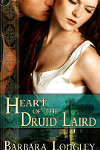
Where love doesn’t just get your average definition of a second chance.
Publisher: Carina Press (Harlequin)
Pages: 235
Type: Fiction
Age: Adult
ISBN: 978-1-4268-9227-1
First Published: 19th September 2011
Date Reviewed: 16th October 2011
Rating: 3.5/5
Sidney and her friend Zoe work and live together, but neither of them would ever have guessed that they had done similarly before. That’s until Dermot MacKay and his men turn up at their shop. Dermot is immortal, born in the fifth century, and trying to break out of his eternal existence. He knows that the key to doing this is finding the reincarnated soul of his wife. But even if Sidney’s shop holds fantastical items, it’s going to be difficult to get her to believe him and even more difficult to leave the long life he had previously wanted to get away from.
Heart Of The Druid Laird is a book that encompasses many genres, some better than others, to deliver a well-written romantic novel. However, it does start rather quickly, and the reader looking primarily for historical content should know that it’s the fantasy element that is the focus.
It can be a little weird how quickly Sidney’s friend, Zoe, accepts everything, indeed it takes less than a couple of days for her to be spouting information as though she has known it forever, and while that is in part true for the nature of her soul’s journey, a quick reminder of the contents of the women’s shop, largely presented as New Age, shows that she would be quite open to it, even invite it. Of course this leads into the whole idea of reincarnation – the reader who believes only in what can be explained may have to suspend belief in order to enjoy it.
The first half of the book is very enjoyable. The genres weave in together well, the imagery is good, the dialogues too. Sidney isn’t easily swayed by Dermot, even when she finally accepts his story. She doesn’t miraculously fall suddenly in love with him: when she has sex with him it is from pure lust, which the reader can easily recognise. For love to work the reader needs her to transition slowly, but for lust nothing needs work except chemistry, which the characters have in bounds. And even when Sidney starts to acknowledge her feelings, she doesn’t suddenly lose the plot – she remains strong, stubborn, and independent throughout. But this last clause is where the book rapidly begins to fall apart as the chapters continue on – although it is understandable that Sidney would become afraid at what might lie ahead she becomes incredibly soppy. Maybe the reader can accept some of that due to the repetition of the idea that she’s been looking for The One, but because the change happens so swiftly, and she was so strong before, it does affect the satisfaction you find in the novel. And as much as the first episodes with the fae can be acknowledged, when the entire story becomes wrapped up in fantasy and everything comes down to something so easily upturned, no matter whether or not you always knew that it came down to the fae, it becomes lacking.
However the characters are in the main very good and the story well plotted. Longley seems to have had a solid idea of where she was headed from the start, everything is tied up nicely and all the questions that you could ask that are directly related to the text are answered. Longley makes a stellar effort with the accents, even if at times some words don’t fit in, and she clearly knows her stuff.
The world-building is excellent, and even though this reviewer is more attuned to the Tudor period, what she knows of the early AD years ran alongside Longley’s creations. And Longley isn’t happy with just her two chosen time periods, she includes in her interior design Elizabethan furniture too. Longley is certainly a fan of history and this positively exudes from her work.
The sex scenes are brilliant – they are not crass, the word choice is regular, and because of this they are hotter than your standard fare. It’s easy to believe in both the couples in this book. However when Sidney worries about contraception and then lets Dermot off, and he, after they’ve had sex, says he couldn’t have kids anyway, there may be eyebrows raised. Sidney didn’t know he couldn’t have children until after the act, so she shouldn’t have let him get on with it after an almost frivolous suggestion for protection on her part. And if this man came from the fifth century… well even people with no knowledge of the period know that those who lived before, often especially those in power, tended to favour fornication and had no idea about sexual health. Maybe a disease would die a swift death in an immortal body, but the idea would surely have crossed Sidney’s mind. Or at least it should have.
While Heart Of The Druid Laird may not quite meet expectations is isn’t far from the mark and is certainly worth the time it takes. People after a bit of mystery will find it here, there’s a drop of angst for those who wish it, and those wanting some history will be pleased that Longley goes back to the past to provide the full story. If Dermot has been waiting over sixteen hundred years for his life to get somewhere he ought to be proud of his narrator’s presentation.
I received this book for review from Carina Press.
Related Books