

Dodie Smith – I Capture The Castle
Posted 24th August 2012
Category: Reviews Genres: 1940s, Books About Books, Comedy, Domestic, Romance, Social
3 Comments

The continuation of 1800s novels.
Publisher: N/A (but I’d wager Vintage’s a good one)
Pages: N/A
Type: Fiction
Age: Young Adult
ISBN: N/A (Vintage’s is 978-0-099-46087-9)
First Published: 1949
Date Reviewed: 16th August 2012
Rating: 5/5
Cassandra lives with her family in a house adjoining a ruinous castle. From having a fair amount of money they have become poor, and it doesn’t look like Mr Mortmain will start writing again anytime soon – despite his wife spending time outside in the nude in order to commune with nature. But then the Cottons arrive, American brothers who have just inherited the estate the castle stands on. And far from being angry about the unpaid rent they’re positively entranced by what they’ve found.
I Capture The Castle is a rather quirky novel about relationships and the power of money. It presents itself initially as relaxing and intriguing, but as soon as it gets a hold of you it branches off, showing deeper colours, just like the women’s dresses after they decide to dye them into new life. What’s particularly appealing about the book is that it is heavily influenced by Victorian literature, both obviously and subtly. There are worded references to Jane Austen and the Brontës, but further than that the book’s story itself feels like it could have been written by, say Austen. Indeed it can be so easy at times to snuggle down, knowing that you’re reading the work of an admirer, that when Smith diverts from the era of chasteness it’s rather a shock. It would not be wrong to say that I Capture The Castle is Austen without the limitation of Victorian etiquette.
I am not so sure I should like the facts of life, but I have got over the bitter disappointment I felt when I first heard about them, and one obviously has to try them sooner or later.
And the book truly strikes a chord. Told from Cassandra’s point of view, via her diary, often she will say something that is so compelling and always considered by ourselves, but rarely shared, such as her ruminations over the idea of her sister wanting a wedding rather than a marriage.
“As we’ll never be able to stop her turning on the Early Victorian charm, we ought to accentuate it.”
Referring back to the Victorian influence, it is apt to discuss the characters. Rose, for example, is paramount in Smith’s dedication of her work to Victorian literature; the character has gathered her knowledge of how to conduct a courtship via the processes in place a century before her own, and the reactions her “victim” experiences due to her theatrics are duly recorded by Cassandra. Rose feels it is time she had money after having lived in near poverty for so long, and if the opportunity arises she will take it. Cassandra is less passionate than Rose, and tends to keep her feelings to her journals, but her potential to love is huge. The Father, Mortmain is rather random in his actions and one never knows if he is working or not, and Topaz, his wife, is completely bohemian. The family is completed by a brother, Thomas, and Stephen, an unpaid servant who is devoted to Cassandra. The Cotton family are colourful too, if less so. The collection of such a set of characters means that whenever the narrative slows down – which it does a lot because the plot as a whole is slow and rather simple – it’s not long before you’re laughing, and as such it’s difficult to want to put it down.
Of course a big draw for the reader, considering that the novel has a simple, fairly predictable plot, is surely the factor of the house/castle in addition to the cast of characters. Though difficult to imagine at times, it is an interesting and individual setting that permits the exploration of history without the burden of superfluous or detailed information.
The romance may be a love square, or perhaps even a love hexagonal – Smith, although agreeing to honour the well-established trope, takes a while to release her hold on the information, so that whilst certain parts are predictable, she might attempt to lead you down the garden path, protesting against readers who have worked it out already.
I asked him if he liked Rose’s dress – mostly to change the conversation.
He said: “Not very much, if you want the honest truth – it’s too fussy for me. But she looks very pretty in it. Knows it too, doesn’t she?”
There was a twinkle in his eye which took off the rudeness. And I must admit that Rose was knowing it all over the place.
I Capture The Castle attempts and succeeds in being the very sort of book a lover of both classics and contemporary work wishes to read – it combines all the trappings of the 1800s novel with the boldness of the early 20th Century, and such boldness enables there to be a further blend of the 1930s and our current 21st Century present. Indeed so wrapped up in the past can Smith become, that mentions of technology, for example a gramophone, may cause you to pause for a moment so that you can adjust your visions of women in Victorian dresses to women of later fashions.
And in addition to all of the above, I Capture The Castle is surely a novel of the arts. Cassandra likes writing, the text is structured as her diary, and the family is forever trying to get Mr Mortmain to author another book. Topaz is an artist and model, and the Cottons are bathed in the world of literature.
“Look, Mortmain, look! Oh, don’t you long to be an old, old man in a lamp-lit inn?”
“Yes, particularly one with rheumatism,” said Father. “My dear, you’re an ass.”
Smith’s work is an absolute triumph.
Related Books
None yet.
Sarah Pekkanen – Skipping A Beat
Posted 17th August 2012
Category: Reviews Genres: 2010s, Domestic
2 Comments

Love and money – two sides of the same coin?
Publisher: Washington Square Press (Simon & Schuster)
Pages: 321
Type: Fiction
Age: Adult
ISBN: 978-1-4516-0982-0
First Published: 2011
Date Reviewed: 7th August 2012
Rating: 4/5
Michael and Julia have been strangers living in a marriage that’s not been much of a marriage for a long time. Julia is somewhat used to it now, but even more used to the riches that Michael’s self-made company has created for them; so when Michael dies and is resuscitated, wanting to give everything up and live a simple life, Julia has some thinking to do and decisions to make.
Skipping A Beat explores an area of life that is little experienced but widely discussed – after death experiences – and couples it with a more grounded issue. What makes the riches to poverty aspect in the book so unique is that those involved were not born into luxury and have not, especially in Julia’s case, found the years long enough to get fully used to it. Enjoy it, yes, at least somewhat, but it’s rather ironic that Julia has never felt completely “there”, that her situation strikes her as temporary. This was an intriguing idea from Pekkanen.
Julia is the character most detailed, and Pekkanen pays a lot of attention to explaining why Julia feels the way she does; although it isn’t until very late in the book that the reader hears anything less than positive about her. This makes sense in a way, as Julia is the narrator, but not knowing the information leaves you more in the dark than Michael. Considering that Michael knows nothing of what the reader knows – otherwise – this isn’t good. This may have been Pekkanen’s plan, whilst she presents a pretty person in Julia, we are never given the sense that she is wonderful, yet we don’t get to see just how effected Julia has been by Michael’s lack of care. And really, we should have seen this a lot earlier.
But other than this, there is a lot of good, solid, discussion about Julia’s issues. It’s interesting, and rather telling, that although she does have some major problems with Michael, the one that Julia chooses to focus on is money. Whilst she may have always felt uncomfortable and a little lost in the wealthy world Michael’s success threw her into, the sudden jolt out of it gives Julia a lot more anger towards Michael than, for example, the time he never made for her. It’s very telling and very honest, because we can say that money isn’t everything all we want, but how many people would seriously be completely happy to give up wealth after having had a modest life previously? Julia’s plight of whether or not to stay with Michael through this change affects her friend, Isabel. Born with a silver spoon in her month, Isabel is used to wealth, but suffered her own problems when she gave up her daughter for adoption. The two friends boost each other’s confidence and help to bring clarity when the way forward is blurry.
Julia must make her decision based on love – is her love for Michael enough that she would be prepared to give up their wealth? It is this that she must realise the truth of, and Pekkanen shows how invisible objects can stand in the way of love. The only issue is that a lot of the thinking done by Julia isn’t particularly hard hitting.
The ending is rather quick, sudden, and unfortunately an overused plot point. It fits the story, and when one looks back hints can be found throughout, but it still remains incredibly convenient. The book suits a nicely tied ending, threads neatly knotted in bows, but this ending just makes the whole issue almost irrelevant. Irrelevant isn’t a good word to use, considering what happens, but it is apt. It’s almost as if all that thinking was for nothing. It wasn’t – the crux of the story is that Julia had to realise which path to take, and that she did – and perhaps the issue was to provide a life lesson, which is important; but in a book it doesn’t work. In real life it does, heck it does, I can tell you that one, but in literature it’s just too much.
Skipping A Beat makes you think, makes you question, and it will shock you. Hopefully it will make you delve deep too. The issues raised are important and handled rather well. But as a whole package it could have done with a little more thought. Go into it ready for a ride, but be aware of the drawbacks.
Related Books
None yet.
Nichole Bernier – The Unfinished Work Of Elizabeth D.
Posted 6th August 2012
Category: Reviews Genres: 2010s, Domestic, Social
2 Comments

Healing the self in an age of unrest.
Publisher: Crown (Random House)
Pages: 305
Type: Fiction
Age: Adult
ISBN: 978-0-307-88780-1
First Published: 2012
Date Reviewed: 1st July 2012
Rating: 3.5/5
Elizabeth died in a plane crash shortly before 9/11, and Kate has found it easier to grieve for longer without people criticising because of the devastation that came afterwards. But did Kate really know Elizabeth? When she’s given Elizabeth’s diaries she finds that their friendship may have only touched the surface of who Elizabeth really was. And in learning about Elizabeth, Kate must reassess the person she has herself become.
It should be noted straight away that while official summaries of the book suggest that Elizabeth died on 9/11, she did not, and thus the story does not refer to the event much except to explain Kate’s state of mind.
The Unfinished Work Of Elizabeth D. revolves around a friend reading the diaries of a recently deceased woman against the backdrop of the woman’s grieving husband, the friend’s strained marriage, and the friend’s issues, which seem to have formed because of the death.
How many things in life are like this, near misses? … Every move you make and a million ones you don’t all have ramifications that mean life or death or love or bankruptcy or whatever. It could paralyse you if you let it. But you have to live your life. What’s the alternative?
Kate is a worrier, and since Elizabeth’s death she has worried about attacks happening in her city and in the places her husband goes to on his business trips, and also about diseases that could claim the lives of her children. As the book continues the reader finds that her worrying is at risk of becoming an OCD and that if she doesn’t get her head around the fact that one has to live with the future unknown, her marriage could reach breaking point and her life become even more of a mess than it is now. Kate is also struggling with balancing her need for a career with bringing up her children.
If Elizabeth’s death was somewhat of a catalyst for the extreme changes in Kate, then it also plays a part in getting Kate back to normality. The diaries of a woman who Kate finds she didn’t really know open her up to the situations she’s put herself in and how she’s let other things in life take over from doing what she wants to do. Elizabeth’s role is to teach Kate how to be, how to do things the right way. Although it may not seem it, especially considering the title, Kate is the main character, not Elizabeth.
Another theme is a lack of communication – between Chris and Kate, between Dave and Elizabeth, between Kate and Elizabeth. Elizabeth’s issues may have stemmed from a particular event, but the way she never let anyone see the real her was the reason for her continued issues and indeed for misunderstandings after her death. That she didn’t discuss important issues with Dave, and this is apparent very early on, caused the equilibrium she was trying to keep to simply just result in more pain. The communication issues between Chris and Kate have obviously been there a long time, but the arrival of the diaries and Kate’s reading of them to the expense of couple time with Chris, brings matters to a head. It is almost as if Kate has brought a third person into the marriage and in discussing the content of the diaries with Chris, Kate is effectively describing a lot of the problems in her own marriage.
But something feels missing in this book. It feels unfinished due to Kate’s feelings about Chris not being confronted – they may have been thoughts but to the reader they are presented as real possibilities and thus needed to be dealt with. And whilst we come full circle with Elizabeth’s diaries there are still a few things that could have been included. The story is good, but not as compelling as others that dwell on the same psychological themes. There are subplots that are left open, such as Max’s bakery and the looming fear that he will have to close it, as well as a wondering of why such subplots were included in the first place.
The ending is very much opened-ended. Will they stay where they are, will there be a separation, how will Kate respond to her discoveries – all the questions that the reader asked the book at the start remain questions at the end. And while it is okay that not every thread is tied, there needed to be at least some sort of resolution so that the reader had more of an idea how things might turn out.
The Unfinished Work Of Elizabeth D. is a nice, somewhat laid-back look at how awful events can effect us in less typical ways, but whether planned or not, the second word of its title is an apt description of the book. The messages and lessons are solid, but the execution could have been better.
I received this book for review from Crown Publishing Group, Random House.
Related Books

Pia Juul – The Murder Of Halland
Posted 18th June 2012
Category: Reviews Genres: 2000s, Angst, Crime, Domestic, Translation
3 Comments

Death awakens life.
Publisher: Peirene Press
Pages: 157
Type: Fiction
Age: Adult
ISBN: 978-0-9562840-7-5
First Published: 2009 in Danish; 2012 in English
Date Reviewed: 14th June 2012
Rating: 5/5
Original language: Danish
Original title: Mordet på Halland (The Murder of Halland)
Translated by: Martin Aitken
Bess is woken by the sound of someone being shot – her husband. She had fallen asleep in another room when he’d want to go to bed and she’d wanted to keep working. Who murdered Halland? The neighbours think it was Bess, but it soon becomes obvious that that idea is wrong. Bess tells the reader of her life with Halland, and how they had grown apart. She loved him, and she is grieving, but is she grieving for him?
If there’s one thing reading Peirene Press’s translations for the last year or so has taught this reviewer, it’s that she needs to time her readings with when she is most mentally awake. The Murder Of Halland, like Tomorrow Pamplona before it, is an incredibly complex novella that runs to the rooftops screaming a need to be discussed before full understanding can be reached. You can imagine how difficult this book is to think about by oneself.
Central to the story is the seemingly misplaced sadness of Bess. The woman appears to be suffering from depression, and from what she says at first you’d be forgiven for thinking she is upset with the hazy nature of her relationship. But what develops is a situation where the reader understands, better than the character, how she, Bess, feels, and why she is feeling that way. You might wonder if there was, storyline wise, another purpose for Halland’s death. Juul’s plotting is magnificent for the way she brings it all together.
Apart from this, from all the complex domestic-social-psychological discussion, there is a crime story. Who killed Halland and why did they do it? This part of the book is relatively easy to unravel and the motivations usual enough. What is interesting about it is that is shows a parallel way that people deal with a situation, and this of course links back to Bess’s misplaced sadness. Yet amongst all the complexities there was surely real love behind Bess’s decision to be with Halland.
Every character in this book is there to help Bess find herself, even if at first they just seem to be there as a friend or in the background as scenery. The secondary plot shows itself as a potential affair, for example, and the reader must work out if there really was one, or if the character is being truthful in the story they provide. And what does the sub-plot do to alter Bess’s state of mind? – in every case read the included quotations carefully to fully explore every issue and consequence.
The Murder Of Halland is confusing, intricate, and appears to be a whole lot of mixed up storylines pulled together. And it can take thinking about it afterwards to realise it, indeed this review has reached its conclusion precisely because it was written.
This is so much more than a murder mystery, and for that it should satisfy the delights of many a reader. It may be a short book, but don’t let that fool you any more than the suggestion that Bess was the killer.
The Murder Of Halland was originally written in Danish, and was translated into English by Martin Aitken.
I received this book for review from Peirene Press.
Related Books
None yet.
Lian Hearn – Grass For His Pillow
Posted 13th June 2012
Category: Reviews Genres: 2000s, Angst, Domestic, Fantasy, Historical, Paranormal, Romance, Social
Comments Off on Lian Hearn – Grass For His Pillow
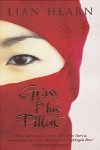
The issue is that the right path is considered the wrong one by many.
Publisher: Picador
Pages: 305
Type: Fiction
Age: Young Adult
ISBN: 0-3304-1526-3
First Published: 2003
Date Reviewed: 31st October 2011
Rating: 4.5/5
Please note that I wrote most of this review over a year ago and that the tone is different due both to the shift in my writing style and the fact that I wanted to make reference to the book being a re-read. I suppose you could call it the ultimate reflective review.
Please note that as this is the second book in the series, there are likely to be a few spoilers of the first book in this review.
So Takeo chose the Tribe and forsook Kaede, but it’s not over yet. The Tribe are demanding things of him that he does not like and feels he cannot do, but how can he leave? For Kaede, the heartbreak is too much yet she knows she must remain strong and take what is hers.
You may remember me saying that I first read Across The Nightingale Floor, the debut of the series, when I was young, and that my recent re-reading led to revelations that I found uncomfortable. In my maturity I could now understand that Takeo was bisexual and that he had slept with the monk, but it wasn’t this that led me to lose some of my love for the book, it was rather that Takeo was so quick to sleep with someone else after having chosen a different path, no matter the gender of the person he slept with.
However sex was simply not viewed as it is today and thus anyone expecting Takeo to wait for Kaede should know that although his heart does, his body does not. In Grass For His Pillow he sets himself up for issues later on by the actions he takes. Though I agree with the book being true to history in such a way, I still cannot comprehend this man with an all-consuming love going and sleeping with others so easily. And while the book may reflect life back then, it jars with modern morality and does make Takeo difficult to accept. (I’m aware that I’m saying this even as someone who disagrees with projecting the present day onto history.)
Kaede is the complete opposite and a good comparison. For she is just as strong as Takeo, perhaps more so, and does very well despite the man-orientated society she lives in. It would be easy enough for Kaede in her growing power to have a fling with anyone she wants, yet she doesn’t.
Aside from this moral aspect however, the book is very good. There is some upset and Kaede is on occasion prone to fall ill when she recalls her passion for Takeo, which is a little over the top, but Hearn is setting up both of them for some amazing battles in the later books.
Many of the chapters are novellas in themselves, indeed if you’re a person who likes to read a chapter before bed you’ll have to abandon that idea here and go by page numbers. Hearn has her story well planned and does not let length hold her back. Despite this the book is an easy read and not particularly long. There are few dull patches. Where either of the characters are waiting for something to happen the author gives a reason and follows it through well and there is always Takeo’s narrative in his sections to keep the story interesting.
The reader learns a lot more about the Tribe in this book as well as some exciting genetic news, and Hearn pads out her world with information about the temples and the afterlife. The blend of history and fantasy becomes natural, so that when Takeo becomes invisible to escape an enemy it doesn’t wreak of convenience as it would in many other books. This reviewer was rather surprised when Kaede was visited by a goddess, as it is so easy to forget just how much fantasy plays a part.
The narrative is quick owing to Hearn’s equal division of the book between the two characters, and it all ends rather suddenly meaning that it’s good to have the next book to hand.
Although billed as a young adult book, the series will be better understood by those approaching the end of their teens. The adult content is at times shocking even to the older reader.
Grass For His Pillow is a book to set up the next one, yet it does not feel like a filler for the amount of effort Hearn has obviously given to it. The latter third more than makes up for the uncomfortable start, and many old characters return so that it feels very much like a book from the series rather than something new. Highly recommended.
Related Books