




Sherry Thomas – His At Night
Posted 27th August 2014
Category: Reviews Genres: 2010s, Domestic, Historical, Thriller
4 Comments
His In Abstinence.
Publisher: Bantam (Random House)
Pages: 415
Type: Fiction
Age: Adult
ISBN: 978-0-553-59244-3
First Published: 15th May 2010
Date Reviewed: 22nd February 2013
Rating: 3/5
Lord Vere is considered an idiot by society, and that’s the way it needs to be. Working as a secret agent, being oblivious is a good cover for times when he is caught in the wrong place at the wrong time (or, rather, the right place and right time). Elissande lives with her aunt and uncle, and the latter is a tyrant and unstable. When Vere arrives at her house, under a sort of pretence so that he can spy on her uncle’s actions, Elissande realises that her guest could be her ticket out. But with issues between them and a set up to make marriage inevitable, from the word ‘go’ it was never going to be a happy ever after.
His At Night is a wonderfully written but somewhat lacking tale that manages to capture Thomas’s unique storytelling whilst missing what could have been a good book. The major issue is that there is in fact very little romance – the characters misunderstand and hate each other for almost the entire book and these misunderstandings can become rather irritating.
As an example, one can look to Vere’s pretend stupidity. Whilst it made sense to keep Elissande unaware of his education for a while, the pretence lasts far too long and this is a pity because it is a lot of the reason for the lack of romance. A quick divulging of secrets would have sufficed, and Vere could have kept pretending to others. A few of the things Thomas says Vere has achieved, due to his impression on people, are unbelievable, especially considering the extent of this pretence.
What romance there is is rather strange. Vere has had an ongoing fantasy of his ideal woman and when he first sees Elissande, whose physicality matches perfectly that of his make-believe lover, he is happy, but when her personality doesn’t match up he gives up on her. Vere lives so much in his head in this way that he wonders whether he ought not just keep doing so rather than be with a real person. It does illustrate the differences between imagined perfection and reality, but it makes Vere difficult to feel for.
There is a great deal of time given to the mystery plot and what Elissande is afraid of regarding her uncle. It is interesting and well-plotted, but with the addition in the book of a secondary romance thread (a proper romance thread one might add) it detracts from the main storyline.
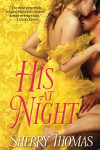
Given the book’s title and cover, you’d be forgiven for thinking that this would be a steamy romance. But Elissande is neither His At Night, his in the day, or his at the weekend after lunch. However despite the fact the contents do not match the cover or title, Thomas’s wielding of language is as stunning as always and the actual development of the characters is not bad at all.
His At Night is a spy story driven by a particular difference – it’s hiding from itself and thus you, too.
Related Books
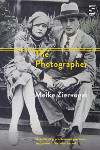
Meike Ziervogel – Clara’s Daughter
Posted 25th August 2014
Category: Reviews Genres: 2010s, Domestic
6 Comments

The cycle will continue until it’s broken, and it’s still going strong.
Publisher: Salt
Pages: 131
Type: Fiction
Age: Adult
ISBN: 978-1-907-77379-2
First Published: 15th September 2014
Date Reviewed: 18th August 2014
Rating: 5/5
Michele and Jim’s marriage is on the rocks, and Jim is against Michele’s mother moving in. Clara doesn’t want to live in a nursing home, nor does she particularly want to live in Michele’s basement, but Hilary has no space and no one will let her live alone. Michele has little time and a lot of responsibility – she’s not making enough effort in her marriage and she’s certainly not a model daughter… It’s never that easy.
Clara’s Daughter is an excellent follow up to Ziervogel’s Magda and, like its predecessor packs a lot of punch in a very short space of time.
The book creeps up on you. It starts out well enough – the writing good, the initial themes easy to identify – but it still takes a fair few chapters to really get into the story. This is to its merit. Although clear from the start, it can take a while for the structure of the novel to truly seep its way into your reading, and so there comes a point, likely slightly different for each reader, at which you’ve suddenly a deluge of questions you want answered as you notice a myriad of elements all at once.
The book doesn’t read from start to finish, as far as events go. Neither is it really structured into dual plot lines. The chapters are roughly sorted into ‘then’ and ‘now’ but you have to keep your wits about you, not only to remember (or realise in some places) what time ‘period’ you’re reading about, but also to work out just what is going on.
This may sound complex, but it’s a necessary complexity. Ziervogel effectively ends the story in the middle of the book, meaning that the remainder of the time is geared to showing the reader the ‘how’ rather than the ‘what’. Depending on your particular reading you may deem some of what follows the end not so relevant – it’s worth noting that this is a book that begs a re-read (and it’s short enough to do so soon) – and it all comes down to which character or which element you are most drawn to, which you have chosen to focus on. The whole idea of the ‘how’ being far more important than the ‘what’ is by itself a fine reason to decide to read the book.
The story details both Michele and her mother, Clara. It may be called Clara’s Daughter, but the title isn’t to suggest that Michele is the only person you’ve to think about. She is the main person, yes, and everything that happens leads to her life changing, or a reaction, or a forced decision. And yes, she is often ‘Clara’s daughter’ rather than ‘Michele’ (more on that in a moment). But in order to understand Michele, you must meet Clara. It is the old, acknowledged cycle – in many cases you’re likely to make the same choices and live similarly to your parents unless you actively break the mould. In seeing things from Clara’s perspective, and from knowing her own hopes, worries, life, you get a better insight into Michele. You get a better insight into how the cycle ‘works’ in general. And there is much to take away, enough that you might recognise something that’s the same or at least similar in your own life – reading the book lets you see it from another perspective.
Who, then, is Michele? Michele is torn between who she wants to be, who she is, and who others want her to be. Each of the three Micheles differ. Likewise Michele has a responsibility to herself but is caught up in her responsibilities to her mother and husband. Yes, her husband, too – the seemingly lacking amount of time she spends on the relationship, at least if we believe Jim and take Michele’s turning him away in favour of her mother as evidence, is actually balanced by her constant thoughts about the marriage. Ultimately the time she doesn’t spend on herself comes back to haunt her. Michele is Jim’s Wife, Hilary’s Sister, Clara’s Daughter. Given the way Clara often speaks of her, the reader can assume she is not always ‘Michele’.
A few chapters imply a foisting of responsibility from Hilary to Michele. Hilary wants her mother near, but she has no time and can’t take Clara in. Yet Clara, for a while, speaks more highly of her than Michele. You’ll want to know more about whether what Clara says about Hilary is true, but Ziervogel stays silent. You have to work out whether that’s even important.
Ziervogel’s second novel reminds us that whilst we have and should have responsibilities to others, we have to make time for ourselves. It reminds us that we have to communicate effectively and that it’s vital to work out which option is most important. And it reminds us that our parents’ relationship can affect us without us realising.
Clara’s Daughter is superb. Plan double the amount of time you need to read it, because you’re going to want to read it twice in quick succession.
I received this book for review from the author.
Related Books

Kristy Cambron – The Butterfly And The Violin
Posted 20th August 2014
Category: Reviews Genres: 2010s, Domestic, Historical, Inspirational fiction, Political, Romance, Spiritual
3 Comments

This is the first time I’ve read Christian fiction (besides C S Lewis and Tolkien) and I’ll be reviewing this book as I do any other so it may be the case that this review differs in its main focus than it ‘ought’.
Finding a painting, discovering history, and perhaps (hesitantly) falling in love.
Publisher: Thomas Nelson
Pages: 323
Type: Fiction
Age: Adult
ISBN: 978-1-401-69059-5
First Published: 8th July 2014
Date Reviewed: 19th August 2014
Rating: 3.5/5
Gallery owner Sera has been searching for a painting, seen once as a child and instantly loved, for several years. When her assistant tells her another is looking for it and wants the gallery’s help, she jumps at the chance and flies to the other side of the country. The family looking for the painting is wealthy but that wealth is in jeopardy and the painting is the key. In 1940s Austria, the subject of the artwork and the daughter of a general of the Third Reich is branded a traitor and sent to Auschwitz after it is discovered she aided an attempt to provide safe passage to a Jewish family. Both Adele and Sera search for security and happiness, hoping that God will provide.
The Butterfly And The Violin is a Christian dual plot line historical that looks at art, the Holocaust, and the plight and faith of two young women.
It’s often the case that a reader will prefer one plot line over another when there are two of them, however The Butterfly And The Violin is a book less likely to pull you one way. This is because although very different, both stories are of equal strength, the characters somewhat similar, and the stories well balanced. Though of course nowhere near as significant as Adele’s, Sera’s life has that present-day regularity that is compelling simply because of the emotions included in it. Whilst the time periods are fairly standard for dual plot stories, the fact of the Holocaust and Adele’s ‘role’ in it make the book stand out from others. Although Adele may be in a place of privilege, even in Auschwitz, Cambron never shies from showing you what was going on.
The biggest similarity between the women is their faith. We know more about Sera’s, descriptively, than we do Adele’s, but still it is not simply that both women are Christians. In The Butterfly And The Violin the emphasis is on the way faith is playing its part at that very moment, and for both Sera and Adele, at the time we join them, falling in love and being happy in love are two of the most important aspects of their lives. Both look to God for help, Adele prays she will see Vladimir again, and Sera prays that she will trust another after having had her heart broken. Indeed Sera’s faith is a little shaky – she still believes, and would never not believe, but the disappointments and losses have taken their toll and she hasn’t made much time for her faith since.
Obviously there are quite a number of references to God, faith, and Christianity (also Judaism, but as that isn’t a ‘subject’ so to speak, Christianity is what I’ll be focusing on). More often, at least for the first two thirds or so of the book, God is present in Adele’s story. On the surface it can seem that the references are too many and placed at inappropriate times. However if you step back from your reading and put yourself in the situation of the characters, in this case Adele, it seems perfectly natural. It is really more the case that where faith happens so much more in the mind than in conversation (generally) it’s simply that it can seem odd being actually stated, the things most often thought but not said are here, being voiced. This said, there is a sudden increase in references towards the end in both stories that do not work as well for different reasons. In Adele’s case it’s inevitable that in a crisis, a group of faithful people will look to God – it’s simply that the constant references slow down the pace and pull the focus away from the tragedy of the situation at hand. In Sera’s case it’s that it becomes a bit confusing, although it’s well placed as part of her self-discovery and improvement.
The confusion is part of a larger aspect that needs discussing. There are a few sections of the story that don’t quite add up and occasions where there is too much detailing. People tap their feet a lot, for example, and we have many descriptions of hair. Some of the phrasing doesn’t work. And there are also frustrating occasions wherein questions – literal, spoken questions – are not answered for a while and it seems the case that it’s so Cambron can keep the story going longer. There is one place where answers are ignored so that the author can detail a room, and by this time the reader just wants to know what’s going on. It’s not that the characters ignore the questions, it’s that they are left out completely until detail has been included.
Where Sera and the confusion come in is in the numerous references to faith. The problem is that the issues get lost behind the references so that you realise Sera’s faith has been tested and that she wants to trust and get back to God more fully, but you’re not always sure what’s happening to cause this transition. As it’s not a transition from faithless to faithful (Sera never speaks of going to church but one can assume she does sometimes) it is a problem. Simply put, sometimes narrative is not clearly explained.
Unclear is the way the inheritance issue is concluded. That William and everyone else is happy is not believable and the grandfather’s plans come across as thoughtless, having emphasised William’s role and not really considered the rest of his family. Yes, it allows William to be able to choose the life he has always wanted, but it leaves his family in the lurch and we’re not given all that much information about it. It may work for William, but are his family going to be happy with what is effectively a loss for them? It’s also not clear exactly why the grandfather decided to change his will and leave the fortune previously left to his family to someone else.
Yet still on the whole, The Butterfly And The Violin works. There is a lot of information about the Holocaust, including much that isn’t covered by your usual school education, and Cambron has taken a path rarely if ever used, applying a specific sort of artwork and using that as the basis for one of the stories.
The romance, too, works very well. Whilst we don’t read all that much about Sera and William, appropriate time passes off stage to suggest they make a good couple and the somewhat inevitable discovery of a shared faith is included to very good effect. Adele’s relationship with Vladimir successfully details both the horrors of WWII and your everyday social prejudice. And both the painter and the owner of the painting may prove to be unexpected (but welcome).
And finally the characters are believable and people you’ll find yourself rooting for. Adele’s impulsive choices are maddening sometimes, but exactly the choices you’d expect a naïve, hopeful person in her situation to make, and whilst Sera becomes cross and can’t always see what’s staring her in the face, again, in her situation it makes perfect sense.
Definitely, obviously, this book will be appreciated most by those who share the characters’ faith, but there is enough here for a general historical romance reader or dual plot line lover to enjoy as well.
The Butterfly And The Violin isn’t perfect, but nevertheless you may find yourself racing through it.
I received this book for review from the publisher.
Related Books
None yet
Philip Pullman – The Broken Bridge
Posted 15th August 2014
Category: Reviews Genres: 1990s, Angst, Commentary, Domestic, Drama, LGBT, Social, Spiritual
2 Comments

Who am I? Who are you? Do we care?
Publisher: Macmillan
Pages: 295
Type: Fiction
Age: Young Adult
ISBN: 978-0-330-39797-1
First Published: 1990
Date Reviewed: 14th August 2014
Rating: 4.5/5
Ginny’s not really sure whether or not she fits in. At sixteen, she’s happy in Wales, has a great relationship with her devoted father, and a fair few friends. But being one of only two black people in her town, she doesn’t feel quite… right. Okay, so she’s not completely black, unlike Andy, because her father is white, but when her skin colour is added to her artistic nature the question of who she is starts to become more prevalent. Yet suddenly this isn’t so important. Her father’s about to bring an unknown brother home. If he’s never told her she has a brother, what else is he hiding, and if she was wondering where she fit in before, where does this leave her now?
The Broken Bridge is a fantastic little novel that, although a YA book, has just as much if not more to offer the adult reader. I’ve read it three times now – as a child, as a teenager, and just yesterday, and each experience has been very different, but this last time had the most impact on me.
Perhaps it’s to do with the book’s age – as in all Pullman’s books, the content is not censored and real issues are confronted, and in the 90s when subjects such as homosexuality and racial diversity weren’t discussed quite so openly, and given that The Broken Bridge was written for teenagers, it is somewhat ahead of its time, or at least it feels as though it is. This is a major reason why I say it offers a lot to adult readers.
The story revolves around the theme of identity. Racial identity, familial identity, identity in the world in the long term. Pullman effectively pits one after the other, showing that everything is just as important – Ginny feeling happy in herself is important, but here’s her brother and her identity in this new set-up is just as important, and hey, look, here are a bunch of questions about her mother and where all her memories of her childhood stem from and what impact do these have on her?
There is the furthering of the theme beyond Ginny, and it touches on her brother, father, and in a rather compelling way her mother, too, but the main focus of course remains on Ginny as she makes mistakes, makes rash but good decisions, and works out who and what she is.
Pullman asks us to consider what makes a family and what is and isn’t ‘right’ in this context. He sets some difficult challenges for the reader – reunions that do not go the way you would expect them to and for their subject are very hard to read, relationships that are full of angst. He challenges the status quo almost to excess when you consider the book as a whole. But it’s a good excess. And, anyway, what is family and what is important? Almost everyone in the book lies somewhat or keeps the truth hidden, but Pullman does let go at the end, explaining everything. It’s particularly unsavoury but a good look at how people view independence differently, and how others can view dependence and routine as important.
And, somewhat obviously, the author takes time to look at racism. He shows how it isn’t always in your face, so to speak, how it can be quiet, how it can be worse depending on the situation, and how sometimes it can be part of a bigger burst of anger.
Lastly, if you are an artist or lover of art, of any kind – not just painting or drawing – you will love the detailing in this book. Pullman doesn’t just inform you about the great artists and about good paintings, he brings to mind the utter pleasure and passion that comes with working out what another is saying through their art, and the sparks, the love, that creators and enthusiasts feel.
The Broken Bridge is one you don’t want to miss. My copy, at least, looks to be very much a children’s book, and as Pullman’s writing is at times quite literary and of that earlier decade, you would be forgiven for starting it and wondering if it’s going to be a satisfying read. But it is, so much.
Mend this bridge – read this book.
Related Books


Andra Watkins – To Live Forever
Posted 30th July 2014
Category: Reviews Genres: 2010s, Domestic, Fantasy, Historical, Social
2 Comments

Missions, when successful, lead from purgatory to the afterlife.
Publisher: Word Hermit Press
Pages: 253
Type: Fiction
Age: Adult
ISBN: 978-0-615-93747-2
First Published: 3rd February 2014
Date Reviewed: 29th July 2014
Rating: 3/5
Meriweather Lewis (a real-life explorer) is stuck in the bar of Nowhere, world between the worlds of life and death. This is his last chance to pass over – a child in 1977 is in need of help. The girl’s mother was granted custody but her lifestyle is seedy and Emmaline wishes to escape to her father.
To Live Forever is a fair offering that blends genres as well as mixing fact with fiction, but could have done with more work.
What’s good and interesting is the blending – history (social and your bog standard), fantasy, fact, fiction, and the road trip theme. Whilst it feels strange to be reading about the afterlife of a real person from history, you can see why Watkins chose to write Lewis into it as his time as an explorer and the mystery surrounding his death fit what she wanted to say. On a related note it’s recommended that you prepare yourself for the unrealistic as besides the fantasy the book rests somewhat on dei ex machina.
And it’s nice to see a book focus on a person you don’t read about every day. To an degree, Watkins keeps his story mysterious – an intriguing balance of supposition and silence means that you will read what Watkins thinks but then wonder later if you did actually read it. Watkins may have a fully-fledged opinion, but the book is more an introduction, an invitation for you to find out more and decide for yourself.
In addition to all this the book is successful at showing rather than telling. You do get a bit of backstory now and again but Watkins has kept it to an acceptable amount and the vast majority of what you learn is through dialogue that is bereft of info-dumps.
However the book could do with another round of edits. The language the characters use does not always fit their situation – it’s easy to forget that Lewis is from history because he uses language from our modern time, indeed often the language is straight from our present day rather than the ’70s, rendering it out of place entirely. The characters who come and go are all stereotypes and leave little to recommend them, most notably a pair of conjoined twins who are always ‘dragging’ each other across the room. It is sometimes hard to remember if the story is set in the 70s or if it is set a number of years earlier, and Em doesn’t always act her age, seeming to be a lot younger or older at any given time.
There are ellipses that go on to the extent that you would think the key got stuck on the keyboard, and there are many, many commas in the wrong places. Characters ‘cut their eyes’, which turns out to be bloodless. A couple of plot holes, not so bad by themselves, are unfortunately magnified by the rest of the issues.
Perhaps most problematic, though this does depend on the individual’s view, is the Judge, the bad guy. He is the bad guy, so it makes sense that he’s cruel, but given that he thinks young Em is his wife, his remarks are particularly creepy. He surely should be a lot nicer to the host of his wife’s spirit, especially as he’s willing Em/Ann to remember him. On this note of inappropriateness, however, it should be noted that although Em’s mother’s particular win in court seems unbelievable, it’s meant to be and Watkins will explain all in due course.
The very end invokes a particular Indian folk tale. I won’t tell you which one because for some of you that would spoil the ending, but I will say that if you do know which it is, your knowledge of it may make the ending even better. There is nothing to suggest that Watkins was inspired by the tale (indeed I only know of it thanks to a Bollywood film) but it does add a layer to the ending that is interesting to consider.
To Live Forever has a good premise and will teach you a fair amount. It also sports a nice dual narration that really adds to the tale. But, pun unintended, it could have used more time.
I received this book for review from the author for Historical Fiction Virtual Book Tours.
Related Books
None yet


