

The Hippie – Snowflake Obsidian
Posted 25th May 2011
Category: Reviews Genres: 2010s, Angst, Memoir
Comments Off on The Hippie – Snowflake Obsidian

Learning to love yourself and others can sometimes be a difficult process.
Publisher: iUniverse (self-published)
Pages: 252
Type: Non-Fiction
Age: Young Adult
ISBN: 978-1-4502-6554-6
First Published: 2010
Date Reviewed: 20th May 2011
Rating: 3/5
Willow, aged 19, has always been a bit different but she has a good group of friends. Not so good is her relationship with her father and her life with her family in general. When she meets River she sees in him someone she can truly love but River has his own issues. As Willow starts to see the flaws in her world she becomes bogged down by it and must find a way out.
Written like a novel, Snowflake Obsidian, provides an important message. But it is not narrated in the way you might expect from a book that one would describe as important. It is not a literary masterpiece, but then it isn’t supposed to be. The writing style is such that sometimes there is extreme colloquialism, and there are times when you feel yourself questioning the grammar. However the grammar does illustrate the mindset of the person in question; although the memoir is a story of the past, and of self-harm, The Hippie tells her story with as much feeling as though she were going through it at the time of writing. The writing style would appeal to the target audience, and considering The Hippie is looking to help young people rather than win over a bunch of critics (I realise that my writing this review is thereby somewhat funny, but this book will go nowhere without being spoken about) it is okay.
Unfortunately, style aside, there are a lot of errors that detract from the writing because at times one must read over a sentence a few times to work out what it should really say. This can make reading it frustrating in a way it should not be.
Because so much of The Hippie’s focus is on her love life, quite understandably given her age and how awful heartache is in general, it can be easy at times to overlook the other problems and wonder why she let herself become depressed. Personal experience of her issues would definitely help – again the targeted reader of the book would likely share at least one of her issues – but reminding yourself of the nature of them would suffice. The way in which the author describes her relationship with her father might make a reader wonder what the problem is until you put yourself in her shoes. That the decent into depression seems rather sudden is actually incredibly understandable.
The Hippie makes good use of the advice given to her. While one of the elements, a monkey being obsessed with trying to get a peanut, can become repetitive, after a while you can see why it is appropriate and indeed you might be able to apply it to your own life.
One thing that I would say most people would struggle with is why The Hippie stays with her destructive boyfriend. It seems obvious that she should leave him, but in time she does address this. Indeed a lot of her thoughts could be applied to many people’s opinions of their partners, the most prominent being that you can’t change someone and that wanting to change them reflects the unhappiness you have in yourself.
Due to the subject one can’t really comment on whether it is a good book in the usual sense, but rather if it fulfills it’s purpose. On that this reviewer would say that it does but it could use some editing in order to fulfill it’s purpose to perfection.
I received this book for review from the author thanks to Pump Up Your Book.
Related Books

Véronique Olmi – Beside The Sea
Posted 23rd March 2011
Category: Reviews Genres: 2000s, Angst, Domestic, Psychological, Translation
3 Comments

When obsession takes over everything else.
Publisher: Peirene Press
Pages: 103
Type: Fiction
Age: Adult
ISBN: 978-0-9562840-2-0
First Published: 2001 in French; 2010 in English
Date Reviewed: 9th March 2011
Rating: 5/5
Original language: French
Original title: Bord de Mer (By The Sea)
Translated by: Adriana Hunter
A mother takes her children out of school to go on a trip to the seaside. She wants to take them and herself away from everything and thinks that they should see the sea. They spend the time in a grotty hotel and have little money to spend. It will be the last journey they take.
All that I’d heard about this book could never have prepared me for what I was going to experience. Beside The Sea deals with depression, obsession, and mental illness, although the only one of these issues actually confronted by the mother in words is depression, and then only swiftly. A big part of the problem is that the mother is having a hard time accepting that she has a problem, rather than everything that affects her being caused by society and the world in general. Practically every sentence uttered is to do with a certain issue.
The way the book is written aptly projects the mother’s mindset. Short sentences, the sudden inclusion of swear words and other harsh statements indicate she’s become extremely irrational, as does the way she recounts the conversations of others. This means that the book is, to use a metaphor, one punch after another, repeatedly, beginning in a way that you feel you can understand her reasoning and ending in a way so incomprehensible to anyone but the mother.
It’s been the same sailor for thirty years, what I mean is the way I see him’s still the same, he’s still got his torn clothes and holes in his boots because it’s the bit about “boots all worn” that really matters, it’s terrible having sore feet, and shoes are the ruination of many a mother.
Olmi also shows us how troubled the woman has become by allowing us to see how others have responded. We are told about visits from the social worker and about things that other people have commented on, all described from the mother’s point of view. This means that the reader can understand what other people have done to try and help, and we see the reasons why the woman is against it. Unfortunately it also means that the reader is the one in the middle, wishing the social workers had made more inquiries in order to know what they, the reader, do.
The sad thing is that although the woman is staunchly against her children mixing in the world and she’s afraid of it for herself, you can tell that a part of her is desperate to be included and that perhaps if she was accepted by people, no matter how many (for it seems she has no friends) she might be alright. But then she is her own worse enemy in that respect, making a point of only leaving her home when others aren’t around outside.
One of the biggest issues is a spin-off of the woman’s personal problems – neglect. Because the woman thinks mostly of herself, even when she believes she is thinking of her children, we see, through what she says, that the children, especially the eldest, are not coping. The youngest is still at an age where he doesn’t understand but Stan is nine and has ultimately become the adult in the family. The mother sees what Stan does as being against her, and at times she’s right, but when he is against her it is because he is becoming both frustrated and depressed himself. Stan’s actions, such as the episode at the seashore where the mother describes how he runs into make-believe walls, show the boy’s torment. Stan clearly understands what has happened to his mother and understands that he has to look after both her and his younger brother, but at the same time he sees that the world isn’t as bad as his mother makes out. The wall incident provides the metaphor for the times when he is trying to get through to his mother and fails, and the later dream his mother has of his walking into the sea but not drowning shows her misunderstanding of the other situation. Stan walks into the sea. The sea represents the world, but unlike what the mother is expecting, the sea doesn’t swallow him up, rather he walks through it boldly. Although we are shown that Stan is bullied we are also shown his strength and when he hits his mother all the hurt and burdens he carries with him are presented.
The above is summed up by the following statement:
…he looked so alone… how could he cope so well without me?
Unfortunately because of the difference in age and understanding of the two boys, Kevin and Stan are not always happy together, but the reader can see where Stan is trying to pull Kevin to “safety” as his mother holds onto the child’s unconditional love.
…it’s like he’s laughing to hear himself laugh, that he’s making the most of that laughter, having fun with it, and I know that a laugh like that runs away the minute you grow up.
To refer back to Stan’s strength I would like to comment that the metaphors and usage of imagery to demonstrate the other character’s emotions is absolutely fantastic. It’s rare to find a book so powerful in so many respects.
Why did the mother tell this tale? We are not given an explanation – was it just because she was thinking of it as one might as they write a diary, are we seeing it as it plays out, or is she giving a statement to the authorities? The last is a possibility purely because of what occurs – the book ends without the reader knowing what happens afterwards. But it gives you a glimpse as to how a mind can be thus affected, even if we do not know how long she has been like this or if there was a specific event or thought that triggered it.
The book has a truly haunting quality in that the issues at hand are never resolved and because they are supplied in such detail they are more difficult to accept than the unresolved issues in many other books.
The writing, and dare I say this English translation, for we must give Adriana Hunter her good due, is exquisite, the structure is superb, and what is at once a simple book and a complex one is just incredible.
Beside The Sea is a difficult read but is of great importance for the frank reality it shows of the workings of a mind in such turmoil.
Beside The Sea was originally written in French, and, as previously said, was translated into English by Adriana Hunter.
Related Books
None yet
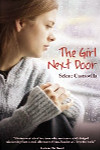
Selene Castrovilla – The Girl Next Door
Posted 22nd January 2011
Category: Reviews Genres: 2010s, Angst, Spiritual
1 Comment
Creating a lifetime in little time.
Publisher: Westside Books
Pages: 231
Type: Fiction
Age: Young Adult
ISBN: 978-1-934813-15-7
First Published: 2010
Date Reviewed: 3rd January 2011
Rating: 2.5/5
Sam’s best friend Jesse only has a few months to live and Sam is only just starting to realise that she’s always been in love with him. Jesse doesn’t want to die a virgin and Sam wants to be with him in the remaining time as much as possible.
The story is full of angst, revolving around Sam’s mental state and how she is unable to cope. It takes a while for the other characters to comprehend just how far she’s falling, while the reader gets the full force of it from the start. At first it’s quite confusing how Sam conducts herself and indeed throughout she can come across as selfish until you remind yourself why she has turned to this kind of behaviour. She often asks rhetorical questions or answers others’ questions silently, in her head, providing the reader with a good account of how such a situation can affect a person.
The story is mostly based in one room, and while it’s realistic the setting combined with the inner dialogue make it a slow read. But perhaps that’s the point. When you hear about the lives of those with cancer, say on the television, you rarely get an adequate account of it as the producers are hindered by wanting to make a big impact and not having that impact fade through too much exposure. In our society today too much repetitive information is seen as boring and so the mundane existence of someone dying, the mundane being caused by the fading of the body, and the requirement to be near medical centres all the time, is only truly known to those who experience it first hand. With this in mind I have to say that the book is only slow and dull because of conditioning and that actually for this reason you could say that Castrovilla’s story is of great importance.
The problem comes, then, with Castrovilla’s choice of secondary subject. Sex. It’s not that sex is included – it’s the way in which it comes to pass. It’s understandable that dying a virgin would seem a repellent idea and it’s also understandable that a person would like to have a lot of sex before they die. What’s difficult is how quickly the initial decision is made. It leads the reader to question how the relationship would have continued had the illness not entered the characters’ lives and I’m afraid that it does make you question whether Castrovilla is promoting the right values. And yes, I’m aware that one could question what exactly the right values to have are.
On one hand you have a book that looks into a very difficult situation and does it extremely well, but on the other you have an example of what the book would’ve been without the illness – and it’s not a good stance.
While I think that the inclusion of sex was a good one I believe that the overall handling was poor and it is this that brings the possible success down. The Girl Next Door is far from terrible and there is a lot to be had from it, but I’m really not sure whether I would recommend it.
Related Books

Cat Clarke – Entangled
Posted 19th January 2011
Category: Reviews Genres: 2010s, Angst, Psychological, Spiritual
2 Comments
When things don’t add up they may not be what they seem.
Publisher: Quercus
Pages: 372
Type: Fiction
Age: Young Adult
ISBN: 978-1-84916-394-1
First Published: 6th January 2011
Date Reviewed: 11th January 2011
Rating: 4/5
For some reason, Grace is being held in a white room. In fact even the sparse furnishings are white. Grace doesn’t know how she got there or why she is there, but she knows who her captor is. She knows literally: his name is Ethan and he’s gorgeous, and it looks like he wants her to write, but there’s something else about him that is intriguing. Why Ethan wants her to write and what about, Grace doesn’t know. But the paper is there and right now the only thing Grace can think to chronicle is her lousy existence.
Gritty – that’s the best way I can think of to sum up this novel. To be honest I was expecting it to be more psychological but actually it contains just the right amount of everything. Clarke gives you the basics of the difficult issues but doesn’t go into too much detail, therefore making it a little easier for people who might’ve shied away otherwise. There are a few issues covered in the book, not so many as to make it confusing, and each subplot and character has been given a lot of thought.
Clarke has crafted a very different story, but it’s not different so much for it’s contents as for it’s style and overall presentation. There is a uniqueness that enables the typically mundane to be worthy of reading, for example I’ve been on lots of buses in the rain and Grace’s journeys tend to sound just like them, yet I’m compelled to read about it. Maybe it helps that I’m a Brit like Grace and not that far out of school, but there is something about the day-to-day that drew me. Other times it took me a while to realise that I was reading about a regular event because of the way it was written.
You’d be forgiven for thinking at first that the writing style is clumsy. It becomes apparent very quickly just how tormented Grace is. As she begins to get used to what has become her life, if “used to” is an appropriate phrase, she becomes less anxious over her present situation, saving her upset for the story of her life.
Grace is a strong character but like everyone she has her faults. It’s in these faults that she shines because even if you can’t relate to everything you will undoubtedly be able to relate to something. The other characters aren’t as important and are thus not as detailed, but they are given ample time for you to understand how they have affected Grace.
Part of the plot is easy to figure out but that in itself appears to be a device. We know things before Grace does so that we can appreciate just how long it takes her to start understanding them herself.
I did entertain the thought that maybe he is a vampire. Until I remembered that my life isn’t actually Twilight.
If you are wondering how much like the current crop of young adult novels Entangled is, there is part of your answer. The other part I’m afraid to say would spoil the story to mention here.
I had various ideas in mind as to what the answer would be, as to why Grace was confined, and I admit to being a bit underwhelmed by the answer because of my previous reads. This doesn’t mean that it makes Clarke’s book any less readable however; I attribute the sudden onslaught of books of this nature to coincidence. Each author who has written a book in this vein has put their own spin on it.
In Entangled, Clarke takes a number of well-known situations and problems and discusses them through the use of a story. Quite likely to have a better impact than any reference material, she hits the reader with it hard while being delicate enough so that it’s not overwhelming. And she shows that there is a way out, even when you’re at the very bitter end.
Related Books




Emily Brontë – Wuthering Heights
Posted 8th December 2010
Category: Reviews Genres: 1840s, Angst, Domestic
2 Comments

Has fiction ever seen such a wretched anti-hero?
Publisher: (Numerous, but I’d wager Vintage would be a good one)
Pages: N/A
Type: Fiction
Age: Adult
ISBN: N/A
First Published: 1847
Date Reviewed: 3rd December 2010
Rating: 4/5
The general idea is that Wuthering Heights is a fantastic romance, but dig a little deeper and you’ll find that it’s a terrible story of hate and obsession. This was my discovery upon opting to read Emily’s work, having remembered how much the Laurence Oliver movie adaptation focused on romance. To say I had no clue would be an understatement.
The Earnshaws lived a good life until the father brought Heathcliff home. Cathy Earnshaw and Heathcliff become incredibly close, but Cathy’s violent nature and Heathcliff’s hate of her brother provoke revenge when Mr Earnshaw dies. Power will shift back and forth and when Cathy chooses wealth over love Heathcliff’s nature degrades itself further. It won’t just be the Earnshaws who suffer his bitterness.
The story is in a narration of two layers, you have the reason for the story being narrated, Mr Lockwood who recently rented the old Linton property (Linton being the wealthy family Cathy married into), and Ellen, or Nelly, his housekeeper who is the one to tell the tale. In a way this set-up is odd, as Lockwood has nothing to do with the family, and is a rather rude person himself – at times it seems he wouldn’t make such a bad companion for Heathcliff – but it does allow for the story to move beyond the lives of the couple.
This is where defining the novel becomes difficult. Emily’s writing is good and generally easy to read. The technical side is alluring and for this reason it’s a brilliant piece of work. But then comes the story, which is painful to the extent of making you wonder what was going on in the author’s head. How do you rate a novel containing such extremes? In giving the book the rating I have, I’ve examined more factors than I usually do on other occasions because lauding the book as literary critics do is impossible, but shunning it is also equally impossible. The only thing I can really say is that this is a classic for the writing’s sake but there is nothing else to give it the clout.
I suppose I should list “romance” as one of the genres of this book, but I’m afraid I don’t see any romance in it. Not even violent love relationships. I don’t believe Heathcliff has a romantic bone in his body and any other relationships aren’t explored enough to warrant it.
To refer to the “generally” good writing of Emily, it becomes most intolerable when Joseph is speaking. Yes it can be helpful to have the dialogue of a person with an accent written in that accent, but when the person becomes incoherent due to the inability of letters to successfully dictate their words it’s surely more a hindrance. Perhaps more so than Heathcliff, the bane of this book is the amount of space given to Joseph, whole paragraphs in what is essentially a severe case of broken English. The structure of it means that after a few words you might be starting to gain an understanding of how Joseph speaks, but then you’re thrown by words appearing to be in an entirely different accent. For the most part I guessed Joseph was from Yorkshire, but sometimes he sounded like a Londoner.
Cathy and Heathcliff are made for each other, even if Heathcliff is truly violent and Cathy’s violence more childish. There are no words to describe just how awful Heathcliff is, and, as I wrote in my diary, even if he isn’t literally a devil, he is surely more evil than Lord Voldermort of Harry Potter, than Sauron of The Lord Of The Rings, and so on. The reason I say this is because Emily has detailed him so meticulously and we are given no motives for why he is like he is, Cathy’s rejection aside. Suffice to say all the other characters, with perhaps the exception of Joseph and Linton (don’t get me started on him), are good to read about. Although Emily does attempt to make you feel for Heathcliff, when Hindley is treating him badly, you never can because, to use a childish phrase, Heathcliff started it. As a reader you hope the other characters would have a bit more courage and emotional strength, the constant thought is why don’t they just leave? The only answer I can come to is that their helplessness stems from their culture and time period.
There are some particularly horrid scenes in which Emily pushes the emotional boundaries a little too far, but one thing that can be said is that it’s difficult to get used to the violence no matter how many of Heathcliff’s “episodes” you witness.
“Tell your master … I’ve sometimes relented, from pure lack of invention, in my experiments on what she could endure, and still creep shamefully cringing back! But tell him also, to set his fraternal and magisterial heart at ease, that I keep strictly within the limits of the law…”
The location of the story is apt, a dark and often dreary moor that Emily uses liberally in place of standard pathetic fallacy. The setting does of course make reading the story more difficult as the characters not only spend most of their time at home – and what time they do spend away you only hear reports of – but they spend it in the same few rooms.
When I approached Wuthering Heights, I brought, along with all my incorrect assumptions, the hope that Emily would bring me a joy similar to that of her sister Charlotte. But as much as I loved Emily’s writing style I’m not sure I’ll want to read Wuthering Heights again because of Heathcliff. An anti-hero with no legitimate reasons for acting so poorly is not someone I want to read about twice.
Wuthering Heights is a hideous creation created spectacularly. It is definitely worth the read to experience Emily’s writing but the story pales in comparison to Jane Eyre. Never hold any hope for the story turning positive, because baring a small redemption it’s content is nothing but malicious.
Related Books