Maile Meloy – Both Ways Is The Only Way I Want It
Posted 26th October 2010
Category: Reviews Genres: 2010s, Angst, Short Story Collections
1 Comment

A thin volume of short stories based on desire.
Publisher: Cannon & Gate
Pages: 219
Type: Fiction
Age: Adult
ISBN: 978-1-84767-416-6
First Published: 2010
Date Reviewed: 8th October 2010
Rating: 3.5/5
There are several stories in this book, each taken from various newspaper and magazine publications where Meloy has had her work showcased.
Ever since her fantastic debut, Liars And Saints, Meloy has favoured the publication of short stories over novels. Her second novel, which was a different version of Liars And Saints and set said book as a dream, was poorly received by her readers, and is out of print. It seems the short story is the way to go, however I can’t help but think that Meloy’s light is an artificial one because these short story collections are based on work already published.
It’s no secret that I love Meloy’s writing, she has a truly unique style: at once both simple and very detailed. She is so unique that selecting her work from a box of many papers would be easy. But something that she doesn’t do very well is the climax. Meloy’s style is breezy and she favours short dips into someone’s life, leaving them before she’s fully made her mark. Because of the writing style you can find yourself engrossed quickly so it’s a shock when each story ends. Although her novels are more involved still there is that element in them.
I do take issue with one of the elements she always employs, and that is sex. I can’t say I’ve read anything by Meloy where there is a good solid relationship and healthy sex; she is fascinated by infidelity, relationships bordering on incest (by “bordering” I mean cousin with cousin, although when it happens those involved believe they are uncle and niece), and the idea of orgies. While I understand that may be her preference it doesn’t give me a very good impression of her as a person; and furthering that there is something she always omits – Meloy doesn’t like to have people apologising and admitting what they’ve done when they’ve hurt people. And the whole infidelity idea is used in pretty much every story here.
This becomes a more general problem when you realise that most of the stories are actually the same. There are one or two that don’t expressly deal with sex (in fact one is about a grandmother and very funny) and these become the two that stand out. Unfortunately Meloy is in a rut where she’s using the same formulas and the same structures repeatedly, just changing minor details to make them appear different.
You may be wondering why I’ve given the book a good rating after all this. Because she is so adept at storytelling in the way she uses words, although the content may be uncomfortable one can’t help but still be enthralled. Meloy is a second novel genius waiting to happen. Now she just has to find her subject.
Both Ways Is The Only Way I Want It is the perfect title for this collection. I’m not sure I’d recommend reading it all in one sitting but it is a good example of literary fiction that will delight the reader in you and cause the rest of you to think.
Related Books

Curtis Sittenfeld – Prep
Posted 13th July 2010
Category: Reviews Genres: 2000s, Angst, Romance, Social
3 Comments

A dedicated coming-of-age story more detailed than most and set against the backdrop of a boarding school.
Publisher: Black Swan (Random House)
Pages: 478
Type: Fiction
Age: YA
ISBN: 978-0-552-77684-4
First Published: 2005
Date Reviewed: 12th July 2010
Rating: 4.5/5
Prep is being been re-published by Transworld on 22nd July 2010 and features a stunning cover that conveys the atmosphere of the story well.
Lee went to boarding school at fourteen after doing all the research into schools herself and being drawn in by dreamy-looking prospectuses. But on formally joining the school she realises that all those images of happy-looking students aren’t quite true to life, at least not in the way she expected them to be. Perhaps being a scholarship student makes it difficult when everyone around you seems to have a money tree in their room, but as Lee comes to understand herself better she finds that most of her issues are solely to do with herself. Prep is set some time in the late 1980s or early 1990’s – around the time mobile phones first came into use, when cassette tapes outdid compact discs, and young people listened mostly to their parent’s music collection.
I came to choose Prep as my first Transworld challenge read due a similarity in situation between Lee and myself, and to my pleasant surprise I found that not only could I relate to Lee in that afore-mentioned way but in many others; a great deal of what she experiences are things that young people face as a whole so I will discuss these in detail.
Firstly however, I’m going to talk about the setting. Sittenfeld presents us with Ault boarding school and it’s as picture perfect as Lee’s preconceptions suggested. Reviewers have likened the book to Sweet Valley High and Sittenfeld’s writing to Salinger and Plath – I myself think of Mallory Towers, The Templeton Twins, and St. Trinians, the books I knew of as a child thanks to the older generation, which I enjoyed myself. Although there is a lot of time given to Lee’s personality there is enough here to enjoy the book for the school’s sake, in other words if you’re wanting to read something akin to any of the books I’ve just mentioned you won’t be disappointed. A great deal of the first third or so of Prep is dedicated to student life as Lee settles herself in the secluded world she’s entered.
“What am I writing?”
All of us fell silent, a loaded, electric silence. “I know where you live,” Alexis suggested.
“I see you when you’re sleeping,” Heidi said.
“I smell your blood,” Amy said. “And it smells” – she glanced at Madame – “tres delicieus.”
“We will not bring the French into this,” Madame said.
The catalyst for everything Lee experiences is her nervousness, her inability to accept the fact that she is as good as everyone else and that really no one’s out to get her, she’s just overly paranoid. It’s said that if you want something bad enough you’ll get it and that applies to negative things too – Lee is a normal person but her personal worries and issues sometimes lead her to open up cans of worms that hadn’t previously existed. Of course as soon as this happens she revels in her false belief that she was right all along, which is sad. You feel you want to root for Lee, especially when she finally gets a boyfriend, but you can’t help feeling frustrated at the way she handles things.
Nevertheless this frustration is good – because it’s the frustration that our parents quite likely felt for us, so now of course we, as readers, through Lee, can pick up on times when we chose the wrong path in our own childhood – and it’s also good for readers around Lee’s age (while she is at Ault – the story is told as a first-person recollection years later) because they might be able to pin-point where their own lives are the same at this present moment and do something about it before they have time to look back with regret.
Sittenfeld deals with loneliness in a way that is subtle but completely effective. Clearly she remembers her own school life well and has applied plenty of her own knowledge in order for her readers to relate to this fictional character seamlessly. Lee thinks she’s lonely and that she has no friends but in fact there are many people she meets and gets to interact with, including one of her class’s most-sought-after boys. Most people feel alone at some point but what Sittenfeld has done is to hint that all that loneliness put together, as in everyone’s loneliness, makes for a happy and full life. You have to be willing to accept invitations when you get them rather than be put off by the person’s own loneliness. We all get lonely but somehow we’ve developed this mindset that if a social activity is proposed to us by another person, and that person is themselves lonely, then our taking up of their offer is shameful and embarrassing. In these moments of possibility, of not being alone, we are unwittingly scared by something that has already consumed us – we are, in effect, scared upon seeing a reflection of ourselves in another. But it always looks worse when you see it in someone else.
A lot of the lesser-acknowledged issues observed in the book are conquered via short dialogues and quotations. Consider the following:
Little’s blackness made her exist outside of Ault’s social strata. Not automatically, though, not in a negative way. More like, it gave her the choice of opting out without seeming like a loser.
This is true for many different social groups, but it hasn’t been fully realised yet. When you’re on the outside looking in, and even sometimes when you’re on the inside, you don’t always see the advantages to being uncool when it’s related to something that’s difficult, nay impossible, to change.
In such proximity to Cross, I stared at the floor, feeling clammy and unattractive from having been outside with Conchita.
This quotation backs up the idea of us being lonely and put off by other’s loneliness as well as explaining where exactly Lee’s place is at Ault. Lee actually straddles both “cool” and “weird” social groups but she doesn’t understand that. As in Little’s case, Lee is in a position of advantage but her mentality towards being seen as uncool means that this isn’t realised. The quotation also explains that as soon as people make it higher in society (Lee was talking to a popular student) they like to pretend that their less high acquaintances (usually the ones who got them there in the first place) don’t exist to them.
This leads into:
There are people we treat wrong, and later, we’re prepared to treat other people right.
We hurt people, dump our friends, but these relationships give us practise for next time – and we’re probably practise for other people ourselves anyway.
And lastly, in relation to the wider-world:
“Why do you think so few students receive financial aid?”
“We don’t add diversity to the school”
Be sure that race is another issue featured heavy in Prep and that again, Sittenfeld knows how to tackle it efficiently.
Something negative I would like to point out, in relation to Sittenfeld’s writing, is her reference to “spazzing out”. It’s the kind of thing many authors say but in Prep it is particularly bad because not only is Sittenfeld using the term but she’s saying that if you spaz out you can’t have boyfriends. Considering all her other political commentary, this is very poor.
Aside from the disability awareness issue however there is little else to find fault in. Sittenfeld’s writing style is on the whole beautiful and the words slide across the page effortlessly, though she should have considered more her word order at times. I’m not sure if it’s a new American convention but sometimes her sentences are clunky and read like gravelled driveways rather than smooth ones. Lastly, many of the names she uses are… not names. Horton is a surname, not a first name; Gates is the term for the doors that separate a person’s home from the road, and Cross is the mood you’re in when your sister yanks your hair out.
Speaking of Cross and who he is to Lee, I should talk about the romance in the book. There’s not much of it, but it’s in keeping with the rest of the story and with Lee’s personality. The finer points are explored in keeping with Lee, so that although the period of intense focus on it is specific to a situation others may not have experienced, it suits the book well.
It often seemed to me that boys preferred to be by themselves, talking about girls in the hungry way that, I suspected, they found more gratifying than the presence of an actual girl.
In addition to Lee’s crush, sexuality as a whole is explored, the damning consequences of taboo lifestyles and stress brought out into the open. While they may be less of a taboo today and widely accepted an explanation is apt and warranted here and it reminds you how different we are as a society now.
Something that isn’t nice about Lee is when she feels unable to be there for her friend who’s just been elected prefect. Lee doesn’t want to be there for her because she’s worried about having to reassure her. Her jealousy at finding out that her friend is popular and the fact that she (the friend) has been given something that would’ve changed Lee’s own life makes her unable to be happy for her. This is the extreme result of Lee’s nervousness and it puts everything else into perspective. In truth Martha is the same as Lee herself and in having her present Sittenfeld shows us the other side of the equation, what you can do if you’re aloof from others to gain respect, what Lee could have done. Martha is Lee’s opposite in the ways that it matters to this story.
In essence, Lee is a regular teenager who doesn’t take opportunities and then wallows in her self-pity. In essence she’s not simply a misunderstood character at all, but what she is is a reflection of real life for many people and an illustration in how we should conduct ourselves. She is a good main character because we can relate to her either all the way through the book (and see her flaws) or some way through and then react with distaste to how she handles situations and be able to use this distaste to set ourselves on the right path.
Prep is a fantastic look into life as a teenager, focusing in depth on issues that many other books cover only as a subplot or general part of a character. In writing it Sittenfeld has provided the reader with something not unlike a manual on how to get yourself out of unwanted situations and how to deal with social interactions when you’re just finding your feet amongst your peers. It doesn’t really matter how old you are, there’s something here for everyone and everyone could benefit from reading it whether they actively apply it’s “teachings” to their life or not.
I received this book for review from Transworld Publishing, Random House.
Related Books
None yet
Lauren Oliver – Before I Fall
Posted 9th June 2010
Category: Reviews Genres: 2010s, Angst, Paranormal, Romance, Social, Spiritual
1 Comment

What happens when you’re dead, but you’re alive, and the world keeps spinning over and over in the same circle?
Publisher: Hodder & Stroughton
Pages: 341
Type: Fiction
Age: Young Adult
ISBN: 978-0-340-98089-7
First Published: 2nd March 2010
Date Reviewed: 4th June 2010
Rating: 4.5/5
Lauren Oliver’s debut made the rounds of US book blogs at its release. But it was somewhat more difficult to find in the UK where perhaps we categorise books differently. Never the less there are numerous copies to be found – as long as you know where they are.
Sam Kingston died in a car crash on a cold night in February. She’d spent the day at school: joking with friends, skipping classes, and at a party where she’d joined with everyone in soaking the social outcast with alcohol. She was in the passenger seat when the car crashed, but somehow she never experienced the reported flashbacks on her life, instead waking again in bed the next morning only to find it’s actually the morning of yesterday, the day she died.
The first thing that’s striking is how average the day that Sam lives over and over is. Nothing big happens except for, of course, the accident. But you come to realise that this was good thinking because it allows Oliver to explore different avenues of “what ifs…” and “maybes” in more detail than she could have had she packed out the day with activity. What Oliver does is reveal that initial day – the day of death – in bits and pieces throughout the course of the book so that you learn new things about it as each repetition rumbles on. This means that, in addition to the changes Sam makes, there is plenty to read on for besides the obvious desire to know what will happen at the end.
At the start Sam isn’t the most attractive character, in fact she and her friends are somewhat loathe-worthy. A transformation does happen, but not quite as much as you might have been expecting – Oliver never proposes the idea that Sam should be forgiven for everything nor become a saint. This is a breath of fresh air. So many stories have the character turn 180 degrees and while that may be interesting it’s far too clichéd and overused. Oliver is, actually, quite hard on the character, but it’s subtle, she doesn’t condemn outright but skirts around it issuing ways in which Sam could improve.
As anticipated, with every “new” day Sam aims to conclude differently. She goes through days of happiness, days of giving up, and, interestingly, she knows on the last day that this is the last time she’ll have to relive it, describing how she wants to see and savour things for the last time. Now this is cause for thought – Sam simply knows. But how does she know? Certainly she has come to understand what it is she has to do to get out of the cycle but everything she says confirms the idea that it is definitely her last day, and not just in hindsight but in the way she acts at the time. This would be a good place to stop and consider the spiritual aspect of the book. It may be just that a week is seven days, seven days is a standard, and seven is also the number of days it took God to make the world in the creation stories. And, to ponder on something separate from this, there is the concept of “knowing” when things are going to happen which many people experience. Of “knowing” that if you do something in a certain way something will happen.
The proceedings of the day are important (including all the events that would have gone unnoticed by Sam had she not been given her chance) but it’s the interaction that is paramount. They are pretty regular proceedings for a school but Oliver illustrates how sometimes these seemingly average occurrences can make huge differences to a person’s mental well-being. Bullying is a topic covered in the novel, but again as in the case of Sam’s change of heart, Oliver hasn’t gone overboard. Yes, she shows that the behaviour of one person towards another can cause damage but she also shows that it doesn’t have to be the end of the world and that a lot of it should be taken with a pinch of salt. Sam doesn’t reject her friends even when she realises the huge flaws in their personal qualities – in doing this Oliver reminds us that it’s ok to view things in different ways without changing who you are as drastically as you’d think you’d have to. In addition she looks at the other side of the story to point out that sometimes what is said isn’t meant in the way it’s taken, that people don’t think before they say what they do – but that of course they should.
The relationships are brilliantly handled. Oliver offers all the intimate details of friendship, the secrets, and the lies; and crafts a beautiful story around Sam and the man she loves. Romantic affairs are given a good amount of coverage. This fulfils the basic young adult novel idea of young love but more importantly provides Oliver a place to explore relationships with her audience, the majority of whom will be nearing the time when sex is about to enter their minds constantly.
Oliver delves into the concept of waiting until you are in love before having sex. Had Sam chosen a slightly different path of that first run of her last day she could have lost her virginity. One thinks she might have escaped death but would she have been happy with her sexual outcome? It’s upsetting perhaps, but if Sam hadn’t died and had the experience she did she would never have learned what she did about herself, about others.
The most important theme is personal hardship, living in spite of problems, living with the problems, overcoming them. It ties in with the bullying issue and is on a big scale. It may surprise you to hear that the main character isn’t the subject here.
Something that’s worth mentioning is the language, because unless you’re American, and even if you’re American, odds are you’re going to be stumped by some of the abbreviations and references. In the main brands are easy enough to “get” but culture-specific ones may cause the need for Internet research or, if you can get by without it, a brush past.
A choice quotation:
The sun has just risen, weak and watery-looking, like it has just spilled itself over the horizon and is too lazy to clean itself up.
There are many stand-out scenes and in fact the book as a whole is incredibly memorable, but I would like to highlight one between Sam and a younger student. Set in the old school toilets where no one goes, the location efficiently provides the correct atmosphere of loneliness laced with quirkiness and the metaphorical dirt that comes with slurs on a person’s character.
This reader welcomed the choice made for the ending – you find yourself prepared for all possibilities – but the way it was executed has left her uneasy, she’s still thinking it over a week later. There’s nothing bad about it but it takes some getting used to; at the heart of it is a good message.
Before I Fall is a book that offers a unique challenge: we often shun books that repeat themselves, naturally, but this book is based on repetition. It uses this repetition to aid not only it’s main character but it’s readers in looking at life differently. It offers guidance without guilt, wrapped in a coat of beautiful romance, developing maturity, and bog standard US school life tinted with a slick of coloured lip gloss. You are allowed to feel moved by it, you are allowed to become engrossed in it but you are also allowed to be opposed to it, and you are allowed to take a break from it from time to time. I don’t know about you but to this reader that’s the perfect package.
Related Books




Sadie Jones – The Outcast
Posted 5th April 2010
Category: Reviews Genres: 2000s, Angst, Historical
Comments Off on Sadie Jones – The Outcast
Sadie Jones is a new novelist from London. Before she turned her hands to books she was a screenwriter.
Publisher: Vintage
Pages: 441
Type: Fiction
Age: Adult
ISBN: 978-0-099-51342-1
First Published: 2007
Date Reviewed: 2nd June 2009
Rating: 5/5
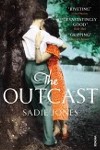
The Outcast has done very well. It garnered rave reviews and Jones herself a lot of respect and an expected glittering future as a successful novelist. Signalled as a great summer read (often one to be wary of) and with a cover that, although attractive, glazes the eye with low expectations, the book is a shocking tale of domestic violence and unnecessary discipline hidden behind a veil of flowers, forests, and the beautiful English countryside.
Lewis has been in jail the last two years for reasons unexplained. He is neither joyful nor unhappy to be back; to him life is exactly how he left it. When he was ten years old his mother drowned and he was the only one there. There was little comfort to be found amongst family and friends, everyone expected him to pull his socks up and be a man. Kit has lived for years in love with Lewis and in hate of her family. She has been broken down just like him. The book takes the reader through their past in order to discover the reason for their turmoil and continues until a couple of months after Lewis’s arrival back home from prison where the two finally find their solace.
The book begins quite abstractly, as Lewis comes home, and we don’t know anything about him. But just when you’ve started to accept the idea that you’ve been thrown into his life at random, Jones takes us back on the journey where we meet Kit and, as much as one can through a book, live their childhood alongside them. We learn a lot about them, their family, and their surroundings – every detail that is needed in order to feel a part of their world is included.
Detail is something that Jones does to perfection. It may be in part due to her choice of period and setting and the pure bliss that radiates often when readers in this modern society encounter them, but mostly it’s down to her passion. She doesn’t use “big words” yet promotes a picture so strong that creating the backdrop in your mind of her story is easy and not the difficult and time consuming task it can often be with other authors’ work. Everything you need to paint your landscape has been put out already on the palette ahead of your arrival; all you need to do as a reader is fill the canvas with the colours provided. My own creation was very clear and I basked in it; the little things I did create from scratch matched Jones’s text completely as she had given me enough of a foundation to work with – and that’s a mark of a good writer.
Still in the realms of detail, the information Jones presents regarding day-to-day life can be quite subtle but again it assists greatly in helping to get the story moving. The more detail, the more one is pulled in, the quicker they read the book, and the more satisfied they feel.
For the first several chapters the reader may find themselves wondering where all the darkness referred to on the back cover of the book is. The story is for sometime dreamy and idyllic, dull even, and it’s hard to see why it’s so loved. But when the darkness comes, while it certainly isn’t the most horrific darkness out there, it never lets up, always hanging over the characters like a strong black cloud about to release it’s wears. Jones never makes excuses for the pain and violence and thrusts everything out in the open, like her main character does at the end of the book. We read about the self-harming in all its bloody pain, and the scars, and the bruises from domestic violence, and it makes for difficult reading – but it makes you think.
The ending is exceptional and has all the makings of a high-grossing film. One aspect of the book that Jones makes obvious is the way Lewis sits on the train and while reading it can seem an irritation. At the end she explains herself by having Lewis sit the opposite way. It’s fantastic imagery; where once he watched the train pull away from the station, leaving him separated and alone, now at last he watches it move along it faster and faster, towards happiness.
Perhaps the real reason why this book is so difficult to read, again something subtle that takes until after you’ve finished it to realise, is the lack of parental care towards the children. One reviewer remarked that Jones had shown the careless nature of a typical middle-class fifties parent flawlessly, and a quick browse through the book reveals this to be true. It’s difficult to read because Lewis needs love and love only to get over his pain, he can’t simply pull his socks up, and we know this from the beginning and that’s what’s so frustrating because in our world today parents are much more in tune with their children.
The one and only kink in this otherwise smoothly written novel is the language. There are times when Jones displays a distinct lack of the articulation generally expected from one such storyteller as herself. Phrases like “he played that there were lions” rather than the usual “he pretended that there were lions” and “speeded up” instead of “sped up” grate against the otherwise finely-tuned composition. Fortunately these occasions are few and far between.
The Outcast is a beautiful yet haunting novel of two broken lives that has at its heart long-lasting love and redemption. It would appeal to anyone seeking something historical and engrossing yet lighter than most. Not quite the regular summer read advertised it is a book that will remain with you long after reading without leaving you wanting. Sheer excellence.
Related Books