




Taylor Stevens – The Doll
Posted 24th July 2013
Category: Reviews Genres: 2010s, Angst, Crime, Social, Thriller
2 Comments
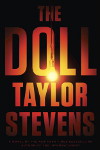
A race against time and death.
Publisher: Crown (Random House)
Pages: 335
Type: Fiction
Age: Adult
ISBN: 978-0-307-88878-5
First Published: 4th June 2013
Date Reviewed: 15th July 2013
Rating: 5/5
Please note that this reviewer has read the first book in the series but not the second, so any confusion discussed may or may not be the result of not having read the second book.
Vanessa Michael Munroe was enjoying a respite with Miles Bradford when she was whisked to hospital following a blackout. Bradford saw it happen but it’s not obvious at first what truly happened. Together with this a rising star of the screen has disappeared, and no one knows where she is either. Are they connected, and if so why would the same group wanting a young girl want Munroe as well?
The Doll is the fantastic third book in Stevens’s Munroe series. A book with no slowing of pace, no fillers, and a constant awareness of reader intelligence, The Doll is a triumphant example of the thriller genre at its best.
Munroe is the same tortured soul as before, but Stevens has again created a good balance, allowing the darkness to make its mark but never letting Munroe really succumb to weakness. Munroe can be harsh at times but her strength and belief makes her easy to love as a character, especially in a time when so many books have weak heroes; and the word ‘heroes’ is not a spelling mistake. Here again we have Munroe posing as both genders and the affects such a lifestyle has had on her is portrayed, subtlety in her words and movements. She has the respect of a man and never needs to do anything to prove herself in that vein.
Stevens has also put a lot of work into the book’s particular other main character, the celebrity. You would expect that (assumable if you consider each book has its own criminal storyline) Neeva wouldn’t be fleshed out as much, but Stevens has created in her the most memorable character.
The ongoing relationship between Bradford and Munroe follows the same pattern. The love is obvious, but you could never assign the label ‘romance’ as a theme. Even the strong love Munroe has for others have their limits on her character.
The awareness of intelligence is one of the most intriguing aspects of the book, because Stevens never makes concepts or plot points unnecessarily obvious. She gives you the basics – all you need to work it out – and then the rest is up to you. This means that sometimes the book is confusing, but it also adds longevity to the plot. In addition, the book is not predictable and barring Munroe’s almost reluctant humanity, which ‘had’ to occur sometime, anything could happen. And it does. Stevens never promises a smooth ride, beginning, middle, or end.
The pacing is just something else. From start to finish you’re speeding 100 miles per hour and even the chapter breaks leave no time to catch your breath.
A book with such a poignant subject had to be treated carefully and Stevens has done that. She gives you as much as is needed to feel entertained by a novel and then goes all out to show how awful it is. She doesn’t just use the situation and create a happy ever after, she brings the reality of the situation into it. Of course there is a measure of apology from the criminals but it’s clearly definable as something to help the story and not suggested as realistic. The horror is never glossed over.
Stevens has bypassed the description of ‘promising’. It would be impossible to say that this book holds promise for the future because Stevens is already beyond promise. The Doll is a masterpiece and one of the best books of this year.
I received this book for review from Crown Publishers.
Related Books

Kate Atkinson – Life After Life
Posted 19th June 2013
Category: Reviews Genres: 2010s, Angst, Domestic, Fantasy, Historical, Political, Social
6 Comments

Over and over again.
Publisher: Doubleday (Random House)
Pages: 465
Type: Fiction
Age: Adult
ISBN: 978-0-385-61867-0
First Published: 14th March 2013
Date Reviewed: 30th May 2013
Rating: 4/5
Dying just after her birth, Ursula gets the chance to live again, and when she dies a little later in this second life, she is reincarnated a third time. Living many variations, covering many possibilities, Ursula slowly learns from the mistakes previously made.
Life After Life is a book that goes round in literal circles and has no end. Unlike similar though more specific stories – that of the film Groundhog Day and the Young Adult novel Before I Fall – Life After Life makes little note of the actual process, leading readers to work out the majority for themselves. This is both a positive and negative.
The only way, for most of the book, that the reader can know for certain why what happens happens, is through the book’s blurb. The book is structured so that Ursula constantly goes back in time, leaving out the sections she got ‘right’. It therefore does become difficult, on occasion, to know which version of events you’re reading at a particular time when there are multiple possibilities.
Atkinson deals with the deaths and rebirths in a swift manner, sometimes so swift the occasion doesn’t even get a full sentence. It is darkness and then birth, with very little wondering on what is happening and exactly why. If one considers other books that deal with a similar idea then one can assume Ursula has to get her life perfect in order to move on. Ursula makes a great many of the same mistakes each time, which adds to the confusion, and due to the way that the supposed goal is not reached, it does become difficult not to wonder whether Atkinson had any big plan for Ursula other than as a tool to present different periods and issues.
It may be, of course, that the structure of the book suggests that Ursula may never get it ‘right’ and that there are many more aspects to her life than the reader is privy to.
The book is understandably repetitious, and perhaps most interesting during times when Ursula experiences her so-thought deja vu. There is a lot of repetition about Ursula’s role as a warden during the blitz – it feels particularly repetitious but given that that was life, it is a fair shock about the reality of war, the gruesome details rarely displayed so much in other works.
This brings us on to the grittiness of the book. As well as the obvious idea, present from the start, that Atkinson wants to explore what might have happened had Hitler not existed or had been killed early on, there is also a great deal of feminism and sexism to be studied. There is one life in particular where Atkinson exposes the reader’s possible bias – you’ve been presented with a certain view of the family, got to know them, and then Atkinson provides a very different tale. This tale will likely colour the rest of your reading, quite rightly, and it packs quite a punch.
Because Atkinson highlights the way sexual education, when kept hidden from girls (her focus of course being early 20th century) can have dire effects. She shows how even after such effects girls still were not informed, and she displays the awful hatred of a parent who hasn’t bothered to teach her child anything but will curse them when a terrible event happens. This is perhaps far worse, in the context of the book, than the blitz. Atkinson successfully makes you love, makes you hate, and then she provides that necessary triumph of adversary in the next life that is so sorely needed. Her handling of every issue in the book is masterful, and due to Ursula’s constant reincarnation it allows for a particular modernity to grace the book. Being given many chances enables Ursula to be, if not a feminist, then pretty near one, and similarly she becomes a supporter or dissenter of other ideas, too. Having the hindsight everyone craves makes her, obviously, knowledgeable.
So then to the characters. Ursula is of course difficult to write about as her development is very different to your average person. She is likeable most of the time, and the rest of the time hard to understand. Given her vast experience, and the way it seems she needs to live correctly, it would be hard for her to be bad, though she does often make the same bad choices again and again. A lot of the other characters change depending on the life Ursula is currently living. There is a general focus on Teddy and Ursula’s other siblings, as well as many different versions of Izzie, who is another focus for issues.
In a book like this it’s difficult to find plot holes besides the end of the book, but given the way Atkinson rarely refers to the other lives a few things do feel amiss, for example at one time Ursula has a baby – assuming Ursula has a goal to work towards and there is thus some kind of Heaven or Nirvana in the future, where would the baby be every other time? All the other major and secondary characters are accounted for. And what exactly is the reasoning behind Ursula’s reincarnation? The blurb may suggest it, but considering that one ought to be able to read a book without the blurb, the book feels unfinished. Of course, again, that may be the point.
Life After Life is good, but it is repetitious in a way it needn’t have been, there is a great deal left unsaid, and the suggestion of intrigue at the beginning is nowhere to be found. Not explaining everything may work aesthetically, but it can leave you with a lot to think about and no way of being able to suppose correctly. At the same time the details are compelling and given the sheer number of lives, you do not end the book feeling dismayed that you’ll no longer know about the characters, because you’ve read so much about them already and truly do know them inside out, having had the opportunity to witness every part of their natures.
Ursula likely won’t mind if you like it or not. She’s already on to the next life.
Related Books


Debbie Dee – The Underground Witch
Posted 12th June 2013
Category: Reviews Genres: 2010s, Angst, Fantasy, Romance
4 Comments

So that others may live…
Publisher: (self-published)
Pages: 338
Type: Fiction
Age: Young Adult
ISBN: 978-0-615-78130-3
First Published: 2nd May 2013
Date Reviewed: 11th June 2013
Rating: 4.5/5
Incenaga witch, Emmeline, may have escaped Mahlon and Weldon and found happiness with the servant who turned out to be a prince, but as she always knew, that happiness would not last forever. As she and Erick prepare for their wedding another person seeks to claim her power…
The Underground Witch is the follow up to Dee’s début, The Last Witch, and whilst there are still issues with the text the book is leaps and bounds ahead of the first.
The book is plot-driven (at least in the main – Emmeline’s development is crucial). A fast pace runs throughout it and the detailing is good. Red herrings are used less this time around, but the somewhat predictable plot twists are not disappointing. Rather they might surprise you initially before you realise that in using them Dee has created more scope for future books.
The storyline, whilst inevitably sporting a ‘fight against evil’ thread as its base, is rather different otherwise to the last. Whereas there was a strong focus on romance before, here the romance is in the background, the love fuels Emmeline’s decisions but is less important than the action. And despite the fact that the chemistry is strong, Dee’s change in focus is one of the most successful aspects of this book, because she doesn’t spend any time letting the characters linger in angst longer than is necessary for the plot, which means that the story keeps moving.
This leads us swiftly on to Emmeline herself. The character was likeable before, but now she is a contender for strongest female character this year. Not once (again, unless absolutely necessary) does Emmeline give up her opinions, her will to fight, her sense of what should happen. She repeatedly stands tall in the face of evil adversity, but never so much as to overturn common sense. (This is of course partly because her power undermines anything her adversaries throw at her.) Emmeline is not simply a breath of fresh air, she is the entire gust of wind. When it’s necessary to give in she does so without losing hope, and never lets anything break her spirit for more than a few moments.
Erick is not as strong but then it aids the plot and the development of the relationship for him to see only what’s on the surface for a while. And Dee doesn’t draw it out for too long, practically piling the sense and other reasoning on him as soon as he comes to his nonsensical conclusions. The other characters are developed enough to make them interesting; given that the plot is the main event, it does not matter too much that they are not as detailed as Emmeline and Erick.
Whereas The Last Witch darted back and forth in time with little time spent where it should have been spent, The Underground Witch takes the literary equivalent of the scenic route, slowing down, detailing everything and generally seeking to create that which is now commonly termed ‘epic’. It’s true that the ending is quick, but given that this is the second book in a trilogy that was to be expected somewhat, especially given the obvious direction the third book will take (as intimated by the last paragraph).
Like before, the book is very violent. Emmeline is struck by her captor repeatedly and there are many murders. This is a series where the heroine is strong but ultimately lives in a world where men have the upper hand.
What unfortunately brings the book down is something that marked the last. There are many editorial errors – spelling, grammar, and there are times when the wrong punctuation is used (such as questions ending with full stops instead of question marks). If you enjoy the story enough they may not bother you too much, as this is a book where the plot is good enough to aid such a dismissal, but they are noticeable all the same. That said, there is good news in regards to the dialogue – the book lacks the proliferation of modern day expressions that mired the last, baring only a small number and all but one or two confined to description.
The Underground Witch may not be perfect but it is an incredible step up. Dee has advanced a great deal in the short time and it is a wonderful thing to witness. The book promises a strong end to the series and is a novel that one can recommend without hesitation.
Help Erick. Discover the princess. A very strong heroine awaits you.
I received this book for review from Sage’s Blog Tours.
Related Books

Katie McGarry – Dare You To
Posted 7th June 2013
Category: Reviews Genres: 2010s, Angst, Domestic, LGBT, Romance, Social
2 Comments
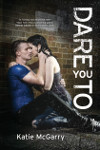
She was a punk, and he did ballet (or rather, played baseball), but there’s far more to say1.
Publisher: Harlequin
Pages: 462
Type: Fiction
Age: Young Adult
ISBN: 978-0-373-21063-3
First Published: 28th May 2013
Date Reviewed: 31st May 2013
Rating: 4.5/5
To win the current round of dares, Ryan has to get the phone number of the girl at the drive-thru counter, and it would have been a lot easier if she wasn’t a ‘skater’. Beth tries her best to protect her mother, whose boyfriend beats both of them up, and when she [Beth] takes the blame for Trent’s injuries, uncle Scott suddenly swoops in and takes her to Groveton. Beth hates Scott for abandoning her as a child, but the biggest issue she’ll have is when Scott introduces her to the boy who’ll help her find her way in school – and that person is Ryan, the jock from the taco bar. Baseball and grunge don’t tend to make a good match, but if Ryan’s to win the resurrected bet he’ll have to get past Beth’s curses. He’s likely to fall in love in the process.
She stares at my wrist, then at my jeans. “I see your tastes haven’t changed.”
“No,” I say. “But Ryan’s have.”
Dare You To is a book that will appeal to many readers, even those who would typically pass up on YA. McGarry’s story and writing style fit an older time – Dare You To is unlike the current crop of books out there and has an old school feel to it. The best way to describe it would be to say it’s akin to a darker, gritty, non-musical Grease, or 10 Things I Hate About You, where the hero and heroine are from completely different backgrounds and no one can see the relationship working. That said, the usage of the word ‘dark’ and the reference to these two films does not describe the book correctly. This book is similar at its foundations, but it is full of angst, domestic violence, drugs and alcohol. It could be said to straddle the border between YA and New Adult, and whilst Ryan may be innocent in his so-called perfect world, McGarry holds nothing back when detailing Beth’s life.
Given the above it may come as no surprise to hear that there is little weakness to the characters (of that annoying kind) and no silly choices. The characters are strong and although they both have issues, when they are upset, it remains realistic. There is so much detail and reality to these characters it’s evident that McGarry has put her heart and soul into the storytelling. There is a lot of angst and sadness, but none of it is excessive or there for little reason. The book never wanders away from its subject, and whilst the inevitable budding relationship between Ryan and Beth obviously changes things, invites love and romance, the characters do not change beyond loving looks and the odd understandable blushing and weak knees. They never lose sight of their dreams.
So to the darkness. This is not a book for teens at the beginning years of the life stage. Beth is 17, a drug user and a drinker. She has had one heck of a terrible life with her mother, a woman who will not protect her child (rather Beth protects her), and when Ryan meets Beth’s group of friends he provides the outsider perspective on what the group is (although in that last point, there is not so much worry for younger readers). And Beth is no stranger to sex. Her friends are supportive of her, rather than bringing her down, which one might have assumed from the first descriptions of their living conditions, Isaiah and Noah work to help Beth see that the life Scott has gifted her is the better one, that it would ruin her future to stay with her mother. Ryan’s own family has problems, though here it’s a case of perfection on the surface, and estrangement underneath. His town is religious, anything that bucks the trend and doesn’t conform is shunned. Everything blended together, it has to be said that McGarry has structured and written her book brilliantly, and without leaning on the support of extreme drama and the confrontation of multiple families.
As for the writing, as previously accounted for it is good. McGarry has a firm hand on the dialogue. Everyone gets to the point with little waiting involved, and characters say what you would expect them to. The book is told from the perspectives of Ryan and Beth, going back and forth between them. There are rarely any gaps in time; as soon as Ryan’s chapter ends Beth’s takes over in a heartbeat. This means that you get to see every shared moment from both points of view, and means that no curtains are drawn over uncomfortable situations.
There are but a couple of aspects that could have used a little more work. Firstly, there are several pages devoted to the plight of a bird that is clearly a metaphor for Beth. It’s not bad, but it continues for too long and the point is made repeatedly. Secondly, and this may not be a problem depending on the reader’s location and the media they consume, although Ryan and Beth are a ‘jock’ and ‘skater’, from the perspective of a reader not well acquainted with these terms and styles (for example a non-American) it may be the case that the wrong conclusion is reached about who the characters are. More description at the beginning would have worked well here, although it does become obvious later on. Considering that these two issues are not of paramount importance, it would be difficult to pursue them further, and in the case of the metaphor it is easy to see why McGarry used it, even if it is unnecessary.
Dare You To achieves something that Young Adult novels have not, recently, and that is a demonstration that one can write a romance into a book without glossing over the strength and common-sense of the characters. It offers knowledge of difficult subjects unapologetically and brings to the forefront the strife that is the social situation for many people, not just teens.
The decision for how to end this review is perhaps the most uncomplicated for a long time. Dare You To is an exceptional and different Young Adult novel that may be just what you’ve been looking for.
I received this book for review from Harlequin.
1 A play on Avril Lavigne’s “Sk8ter Boi”.
Related Books
None yet
Jeannie Lin – The Sword Dancer
Posted 31st May 2013
Category: Reviews Genres: 2010s, Angst, Historical, Political, Romance, Social
4 Comments
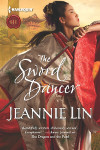
Capturing a thief, hunting down memories.
Publisher: Harlequin
Pages: 275
Type: Fiction
Age: Adult
ISBN: 978-0-373-29742-9
First Published: 21st May 2013
Date Reviewed: 30th April 2013
Rating: 4/5
Finally in a position to discover what happened to her family, Li Feng makes use of performance troops to develop her skills further. In the process she ends up with a group of thieves and therefore finds herself followed and caught by thief-catcher Han. Li Feng escapes and Han catches her again, but this won’t be a simple game of cat and mouse when love is involved.
The Sword Dancer is in part a wuxia novel; the book rests firmly in the suspense/action subcategory, giving the book an extra plot thread and meaning that the heroine is pretty strong both physically and mentally.
Li Feng had already been through a myriad of experiences before this particular crime and Han’s interest. Her background, the lost family, has led to a lot of her desire to learn how to protect herself as well as to be cautious and never exploited. This can be related to her non-belief in her relationship with Han, a more descriptive reason for how they work as a couple. Li Feng gives in against her nature only when it’s appropriate, never changing her mind simply because she likes Han. Han has his background too, but there is a little more in the book about Li Feng’s and the difference makes for a fine balance, allowing Lin to look into social and domestic issues without any distractions. The issues never take over the plot, nor the plot the issues. Everything fits together well. As for Han? He has had an easier life, certainly, but his feelings of inferiority have marked him as a person and his desire to do well could be said to form some of the basis for the book.
And so the only way Li Feng’s strength is hindered is by her constant belief that a relationship with Han is impossible. Whilst it makes sense – a law-abider and criminal being together would be difficult – as it’s inevitable the book is going to end happily, it does feel redundant, even if it’s understandable. Nevertheless the romantic scenes are well written, the crimes just as much a focus, and Lin has plotted her book to perfection. In addition, it cannot be said that Li Feng’s reluctance isn’t a good contrast to her strength, or that the reluctance doesn’t fit well with her trials as a person without a family.
Instead of having lots of dialogue or simply detailing a scene, Lin breaks up conversations with information about a character’s background, politics, or a character’s thoughts, rather than having the characters reveal it themselves. What you learn about the characters tends to come from the pen rather than their voices; it’s the sort of writing that might divide opinion. However Lin has spent a lot of the time developing everything – the story, the romance, the characters – and the elements are fascinating. Even plot points that seem convenient are not a negative here because of the way Lin deals with her setting. It is more a case that you feel the book would have not suffered if descriptions of backgrounds had been removed.
The book is a winner when it comes to accessibility. Chinese words are included without the constant translations (those that can make usage superfluous) that can be found in other books, and Lin has chosen a theme and made it her own. The scale of the crimes are perfect for the book – not too big, not too small, and detailed well. There is enough happiness and well-intentioned corruption to keep you reading.
If you’re looking for history, chemistry, and adventure, you’ll find it here by the bucketful, though some descriptions may prove to be less successful.
I received this book for review from the author.
Related Books
None yet


