





Rainbow Rowell – Eleanor & Park
Posted 18th November 2013
Category: Reviews Genres: 2010s, Angst, Domestic, Romance, Social
7 Comments

So take these broken wings, and learn to fly again, learn to live so free…1
Publisher: Orion Books
Pages: 325
Type: Fiction
Age: Adult
ISBN: 978-1-409-12054-4
First Published: 12th April 2012
Date Reviewed: 11th November 2013
Rating: 5/5
Everyone has their own seat on the bus, in fact Park has two as no one sits beside him. When the new girl – large and dressed in strange clothes – walks down the aisle, mockery is rife and the available seats are suddenly taken by backpacks. As the mockery continues, Park offers the girl the seat next to his and that is that. Only it isn’t. Eleanor isn’t quite as different to him as he first thought.
Eleanor & Park is a rather special book that deals with age-old school problems, domestic issues and self-worth, all woven into a beautifully-told love story. Set in the 1980s it offers the reader a chance to settle back into a life where keeping in touch wasn’t as simple as email and music was sold on cassette. There is some humour – there are Eleanor’s brilliant comebacks that would leave glittering princesses in an Austen-esque flutter, and there is some deep consideration.
The beauty is that the book itself doesn’t claim to be special. The plot sounds nice but usual; school romances have been done before. Even the themes aren’t particularly unique. Yet both as a whole and separated into parts, Rowell’s book is delightful. The storytelling is lovely – the emotion and subtext even better. The themes are studied to perfection. And the characterisation is out of this world.
Actually, the characters are completely in this world, and that is what is so brilliant about them. Rowell has access to the same dictionary as everyone else who writes in the English language yet her characters are more realistic than most. If Eleanor and Park showed up at your door, 1980s clothing aside you would not be shocked at all. The pair feel as though they belong in reality, that they are far more than the result of an author’s imagination.
Park is half-Korean just because and there is no massive history provided apart from the understandable dwelling on parents. Eleanor is fat, a description more likely to come from her rather than anyone else, just because. Their situations of course have reasoning to them, but baring that Rowell is content to let them just be.
Eleanor’s size is a subject frequently returned to. The reader will notice that she sounds large for a good while, and then once they are seeing her through Park’s eyes and his parents’ eyes rather than Eleanor’s, that perhaps she’s not as large as they had come to believe. Whether Eleanor is large or not is not the question – it is the character’s perspective of herself that is important. Eleanor isn’t worried about her style of dress (besides the fact her clothing is all from Goodwill), nor does she care about her hair – the two things that concern everyone else. Instead she portrays the many disbeliefs and lack of self worth that many young people face, those that are magnified when love is involved. Park’s life is a dream compared to Eleanor’s but it’s not all sunny days and happiness. He has his own inner turmoil to deal with, an identity issue and protective parents.
The book is told in the third person and it jumps back and forth from Park to Eleanor’s point of view. Rowell switches constantly during chapters, ensuring that you hear about each situation from both characters. This inevitably means that the narration is reliable in its own way and that no feelings are left behind. The switches become less prevalent during times when the couple are happily together, in a sort of textual imagery that shows how thoughts can be divided and people misunderstanding of each other when not together. A reinforcement of the idea of separation, of sorts, is in form of the necessary white-space that accompanies the switches.
Rowell’s style may not please everyone. There are many ellipses, emphasised words, and of course there are the references to the 1980s that younger readers may miss. There is also a lot about the then-present culture of the time, mainly in terms of music, that suits the reader who knows the era well. But the eternal stories of first love, of school, and the issues, means that these are not likely to cause major impediment to anyone.
There are some big domestic issues in the book that take a while to become obvious. Some may work the biggest out relatively quickly, others may require the answer. All the issues are difficult; Rowell has chosen to deal with them without delving into angst. This may mean that at times it doesn’t feel as true as it is, but that is surely a point in itself – when issues do not fit the socially-defined descriptions, they can be missed. What is actually the case is that Eleanor is simply used to it and has become a strong person.
Eleanor & Park is an extraordinary story of a love where the two people are similar but their situations very different. It will pull you in, spit you out, and churn you around with the rest of the washing in the machine that Eleanor’s family may or may not possess.
Whatever it will or won’t do it will definitely leave you a changed reader.
1 From Mr Mister’s Broken Wings.
Related Books
None yet.
Tom Kizzia – Pilgrim’s Wilderness
Posted 8th November 2013
Category: Reviews Genres: 2010s, Angst, Domestic, Law, Political, Psychological, Social, Theological
2 Comments
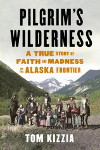
When God is no longer that man in the sky but the father of a family that has no choice but to follow him.
Publisher: Crown Publishing (Random House)
Pages: 296
Type: Non-Fiction
Age: Adult
ISBN: 978-0-307-58782-4
First Published: 16th July 2013
Date Reviewed: 30th October 2013
Rating: 4/5
Tom Kizzia recounts the story of the ‘Pilgrim’ family who appeared at first to be naïve wannabe pioneers in rural Alaska, but later proved to be problematic to the National Park Service, the local residents of McCarthy, and a group of people with a horrific secret.
Pilgrim’s Wilderness is the generally well-paced and well-written tale of a family that was not all what they seemed to be. Including tales of what came before McCarthy, and his own then-present reporting of the Pilgrims for the newspapers, Kizzia creates a strong and shocking story, reminding you that appearances can be deceptive.
Kizzia’s approach to the work is one of the biggest, if not the biggest, recommendations for it. Kizzia’s approach is both biased and highly objective. And whereas a bias can often detract from unpersonal non-fiction, here it is necessarily apt. The actions of Bob Hale (‘Papa Pilgrim’) warrant an incredible and understandable bias against him, and it is to Kizzia’s credit that he, the writer, stays away from slandering. Kizzia could not help but be biased, it would be intolerable any other way, and it is interesting that it may take the reader a while to realise why.
This is because for a long while the issues are all to do with land ownership and the way many dislike governmental take overs of land in the name of preservation. Kizzia is fair here, telling the reader why the Pilgrims had a good claim, and why the National Park Service had a right to feel irritated. He includes the various thoughts of the long-term residents of McCarthy. But the reader who is still on this section, if they haven’t realised where the Pilgrim’s tale is headed, may see Kizzia’s bias as unfair – it will all depend on which side of the debate (parkland or private property) they fall. Kizzia includes, one can assume, the whole debate, but he is bias towards the National Park Service whilst giving the Pilgrims’ opinions plenty of time.
Depending on how much prior information the reader has, it may only be after other details of the Pilgrims’ lives begin trickling into the narrative that Kizzia’s viewpoint can be truly appreciated. Providing all sides and quoting everyone when your story has a darkness to follow is admirable, and for all Papa Pilgrim and others’ thoughts on Kizzia’s reporting, he has strayed from the traditional picture of the entertainment-creating out-for-himself journalist.
Quotations are another element that should be noted. Kizzia’s book is full of the words of others; his sources are identified, his commentary backed up, and his views of people as objective as possible when possible. Crucially, he includes the words of the Pilgrim children, and rather than just telling the reader that they changed, he often writes in a way that almost hands the narrative over to them. It is obvious from the specifics of the writing style that Kizzia went straight to the primary sources whenever he could.
By now it will come as no surprise to say that the darkness in the tale is one of abuse. Whilst Papa Pilgrim based his life and rulings, in his mind, on a literal reading of the Bible, this was a man who acted in every way but the way his God wanted. Kizzia does not gloss over facts.
Referring once more to Kizzia’s style, the author has made a brilliant contrast, showing that whilst the Pilgrims did not live a truly Christian life (at least not so long as their father was controlling them) there are other families of similar appearance who do. When the Pilgrim children finally saw freedom it was in the form of a family who were not so different. The Buckinghams wore (and presumably still wear) the same sorts of clothes, share the same deference to gender roles, put God first, live in a cabin, and promote the virtuous way of life – but they are as different to Papa Pilgrim and his views as chalk and cheese. It is perhaps surprising to hear that the Pilgrim children did not escape their father to be introduced to the mainstream way of life but simply to a positive version of their own, and yet it feels very appropriate. These children were so far from twenty-first century life with its television, video gaming, sexual liberation, and shopping, that there is no saying how they would have faired, but the Buckinghams’ similar (but true) focus on God enabled them to stay true to who they had become. In any other book, the Buckinghams may have been regarded as a worry, given the Pilgrims’ background, but Kizzia shows that just because people do not meet expectations, that they share a visual similarity to problematic cases, it does not mean they are the same.
There are but a few places where Kizzia’s work is brought below masterpiece level. There is a lot of superfluous information in the book, of other people’s pasts and of Alaska, that could have been edited out to keep the pace of the narrative going – especially when those people play only a bit-part. There is a constant switch back and forth between eras of the Pilgrim family’s movements that becomes confusing to follow. And there is the unfortunate story of Kizzia’s wife who died from cancer. Sally’s life is of course important to discuss, but the tale of a law-abiding beloved wife who died of cancer included in the story of a lying, cheating, sexual and domestic abuser who raped his children and had no connection to Sally, is out of place. A memoir would be wonderful.
But, as suggested by this review, the work is, as a whole, an excellent one. Kizzia has given a long-lasting voice (as opposed to disposable daily news) to the children and wife of Bob Hale, as well as a voice to McCarthy. His handling of the subject matter and his approach to it are superb and it is safe to say that this book is one that won’t leave you any time soon.
Pilgrim’s Wilderness suggests reflection, asks for empathy, and relates triumph in the face of adversity. It is a difficult book to read, but it is a story that begs to be heard.
I received this book for review from Crown Publishers.
Related Books
None yet.
Meike Ziervogel – Magda
Posted 23rd October 2013
Category: Reviews Genres: 2010s, Angst, Domestic, Historical, Political
5 Comments
Behind the decision.
Publisher: Salt
Pages: 113
Type: Fiction
Age: Adult
ISBN: 978-1-907-77340-2
First Published: 1st March 2013
Date Reviewed: 22nd October 2013
Rating: 5/5
Ziervogel provides a fictionalised account of the last days of Magda Goebbels – wife of Joseph – and her family, giving a voice to those history left out and illustrating the sort of thoughts that could have led to the action Magda took.
Magda is a short and exceptional book that offers a bridge to the historical gap and a poignant look into the feelings of the Goebbels children. Blending well fiction and fact, Ziervogel’s book is an emotional ride with a swiftness that makes the story all the more difficult to read.
This swiftness is an interesting one and bares detailing. Whilst this is Ziervogel’s first book, her background as a publisher has brought a vast amount of specialised experience into the creation of it. Magda is short, but it is far from lacking. Indeed the book never once looses its focus; there is no superfluous content whatsoever. Of course the language can take a few words, as literary fiction is want to do, but the structure, plotting, and the execution (pardon the use of this word) of the story is top notch. What Ziervogel has done is remove everything but the one event she wishes to talk about, exploring other occasions only when an explanation of the characters is required. It is true that this means prior knowledge of Magda and her final days is needed for the reader to fully understand, but it is only the basics that are needed. The lack of historical information we have besides the fact of the end makes this a book that can be read with little context.
Ziervogel has given the children of the Goebbels a voice. She has altered the ages a little, in particular of the eldest child, Helga, but the reasoning for this is obvious. In making Helga older, Ziervogel has afforded the maturity needed of a minor to understand enough of what is going on to have an impact on the reader – without enough understanding for Helga to escape it. Of course the children did not escape, so a fictional escape would not do – and it is easy enough to believe that even at her true twelve years of age, Helga may have had some understanding regardless. Much of the book is told through Helga’s diary, and this brings us to the next point.
Ziervogel’s characterisation is excellent. The characters feel as true as they were and as much as we might say that the actual history would cause this story to be plot-driven, Ziervogel has made a case for the people themselves. Inevitably this all means that rather than thinking about Hitler, the Nazis, and their hatred, the reader is given an insight similar to that provoked by Markus Zusak’s The Book Thief – although Magda is about the very leaders of Germany rather than Zusak’s innocent citizens, Ziervogel reminds you that there were still true innocents involved even high up. Was Magda innocent? Perhaps. Perhaps not. Statements are made about her drive for wealthy happiness. But the children were far too young to be seen as anything other than innocent, unknowing victims of their parents’ choices. This is what the use of a diary for Helga creates; Ziervogel is not suggesting the reader should have a lot of sympathy for Magda – it is the children she weaves the emotions around.
However this acknowledgement of Magda is of course important. It is easy enough to see why Magda did what she did on a literal level, but otherwise we know nothing. Besides Helga’s diary, there are sections told by Magda’s mother to relate her childhood, and her childhood is also provided as a short of flashback by Magda herself. This is where the book is necessarily less concise.
Ziervogel doesn’t have answers – no one does. There were few witnesses and the event revolved around secrecy. But what the author does have is fair speculation for what might have gone on in the heads of those involved, and a feeling that we should consider the others who did not have a choice.
Magda is by its very nature a difficult read, but, as much as one can say so considering the subject, it is a stunning one.
Related Books




Pavarti K Tyler – White Chalk
Posted 9th August 2013
Category: Reviews Genres: 2010s, Angst, Domestic, Social
3 Comments

This is what happens when you don’t pay attention to what’s behind the change in someone.
Publisher: Evolved Publishing
Pages: 206
Type: Fiction
Age: Young Adult
ISBN: 978-1-622-53298-8
First Published: 7th July 2013
Date Reviewed: 29th July 2013
Rating: 5/5
Please note that due to the nature of this book it was inevitable that some spoilers would be included. These details were impossible not to explore but should, if anything, add to the review and the recommendation, rather than detract from it.
Chelle is thirteen, soon to be fourteen, and has a bad home life. Her parents are neglectful – her mother is a workaholic who doesn’t pay her much attention and her father is an alcoholic – and it’s had an affect on every other aspect of Chelle’s life. She has few friends (though the number includes the new guy, who she loves), smokes, couldn’t care less about school work, and takes full advantage of the only person who seems to care, her male history teacher – who cares just that bit too much.
White Chalk is a story of what happens to young people who are in bad situations, and shows just how oblivious everyone can be to the needs of those in their care. It shows that whilst, for example, school is incredibly important, teachers need to be attentive to what lies beneath a facade (or in Chelle’s case a not-so-hidden upset that is repeatedly missed) and provides a particular lesson of the kind that most books turn away from. It is hard-hitting, shocking, but needed.
What is poignant about the book in general is the relative calm in Chelle’s situation when compared to the stereotype, those favoured by the media and propaganda at large. Chelle is neglected, but not abused by her family (at least not as much as the stereotype), she is developing a poor school record but is not noted as a problem overall, and whilst she does smoke and hang out with older students there isn’t that air of angst to her that other characters in stories possess. To be sure there is a lot of angst in this book and Chelle turns to cutting herself to relieve pain, but it is the atmosphere as a whole that marks Tyler’s book as so important. Because on the surface Chelle seems less at-risk than many other people, but that doesn’t mean that’s actually the case. Tyler’s book speaks of the people who are overlooked, people whose situation does not align with the commonly-held idea of problematic.
And yet Chelle’s reality is incredibly bad and is indeed problematic. Her relationship with her teacher is wrong, but she views it as a good aspect of her life, never imagining how her teacher truly views her or what his motives are. This relationship, which started prior to the book’s beginning, looks at the complex situation from the mind of the teenager. There is no true appreciation of the age difference or the appropriateness of it, because to Chelle what matters is that she is wanted. And, because she is young and naïve (for all the smoking and her mature command of English) she sees little else. Chelle would likely defend Mr Harris (to some extent of course, dependant on latter knowledge) and say she made the decision to stay with him. But if it is a look at consent, then it is a look at how little consent a minor can truly give when they don’t understand what is really happening.
In addition to this there are relationships with other men that to Chelle, and maybe even to her friends, are easily forgotten, but even a slightly older reader will read the flaws in her plans. Yes, Chelle is fourteen, and that does indeed affect her decisions (or lack of). One will see a future for her that is bleak unless help arrives soon.
It is both Chelle’s silence and people’s lack of attention that results in the devastation that is the story. There is actually a section where Chelle returns to school after an accident that leaves her with large bruises to her face and the only people that notice are her mother (who leaves for work after Chelle tells her she’s fine) and Chelle’s friend. No teacher notices. Indeed Chelle ends up in the principal’s office due to her anger at another student and the woman behind the desk doesn’t even bat an eyelid about the bruises, nowhere is it mentioned. Interestingly it takes a while to work this one out – at first it appears as though Tyler has forgotten to include something paramount. But then it all comes together. In the silence of the adults Tyler is again showing how oblivious people can be, and albeit that in reality the teacher likely would’ve noticed, it demonstrates that agendas are still first and foremost. To the teacher, Chelle’s grades are most important, because Chelle needs to be able to get into college. To Chelle, of course, there are far more important things in life, but to the teacher who cannot see why, everything else is invisible and Chelle is but a bad kid.
At the end, the reader will turn the page for the next chapter and be shocked that there isn’t one. Other authors who write about this subject like to include particular lessons, to illustrate how people can avoid disasters, to educate their readers in this way. Tyler looks at the situation more realistically, she doesn’t end her book happily with the subtext of “remember to be nice”, she reminds you that being nice isn’t an option because in these situations, in reality, there is no more time to be nice. The beauty of the ending, if such a description can be used, is that Tyler doesn’t give in to all those who want to see redemption, happiness, an education to adults and younger readers. Instead she tells you very harshly that it’s too late for lessons, that hindsight is pointless, and action has to be taken now rather than later.
White Chalk demonstrates that age is just a number when it comes to self-harm, depression, anger, and so forth. Indeed the older students point out a few times the age of Chelle, which even the reader may forget on occasion. It demonstrates how little we should expect young people to be aware of their situation, and its silence during times when any reader will say ‘Tyler really needed to add such and such’ speaks volumes about what the author is trying to get across. Anything left out of this story is not by accident, and instead of the usual situation, where the book would be considered not yet ready for publication and the author perhaps in the wrong field, becomes the extreme opposite here.
Everyone needs taking care of and no matter that it looks like they’re making do in a bad situation, the truth may be that that is only surface dressing. In addition, people view situations differently and the context of the person living it makes the difference as to whether or not it’s something to watch out for.
With White Chalk, you don’t realise just how hard a book it is until you’ve finished it. But it is, and its importance is vast.
I received this book for review from PixelPr Tours.
Related Books
Kate Forsyth – The Wild Girl
Posted 7th August 2013
Category: Reviews Genres: 2010s, Angst, Domestic, Historical, Political, Romance, Social
8 Comments
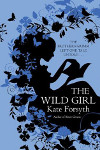
If they were the Brothers Grimm, then these were the Sisters Wild, and one in particular played a big role in the collecting of stories.
Publisher: Allison & Busby
Pages: 475
Type: Fiction
Age: Adult
ISBN: 978-0-7490-1328-8
First Published: March 2013
Date Reviewed: 26th July 2013
Rating: 5/5
Dortchen Wild fell in love with Wilhelm Grimm at first sight. Her love continues to grow over the years but the age gap between them and the difference in societal standing means that Dortchen already knows there’s no chance her father would allow her to marry him, he barely lets them socialise. Wilhelm and his brother are collecting folk tales for a book they wish to publish and Dortchen becomes one of their sources, but the Grimm family have only the faintest idea of what goes on behind the doors of the Wilds’ house, and about the anger of the father.
The Wild Girl is a necessarily slow but by no means quiet novel that takes as its premise the girl history forgot, her family, society at the time, and the possibilities brought forth by Forsyth’s research. In a similar vein but with major differences to Forsyth’s previous book, Bitter Greens, the story brings the concept of the dark fairy tale into reality whilst balancing that hard truth throughout on the other hand.
Forsyth has chosen as her subject the foundations of her previous story. Albeit that she told Bitter Greens, a retelling of Rapunzel, from the view of one of its earlier writers, it is widely known as the work of the Brothers Grimm and therefore The Wild Girl is a return home of sorts. The facts known about Dortchen can be found in Forsyth’s source information at the back of the book; she has followed the facts where possible and elaborated on the grey areas.
One of these grey areas is the possibility of violence, which is important to mention because of the nature of it. The domestic abuse is suggested very early in the book and it should be noted that this is in no way a story for young readers. Forsyth takes the route currently popular in retellings, showing the dark side of fairy tales, exposing their true routes, and this runs parallel to her interpretation of Dortchen’s family life. It is interesting the way Forsyth came to her conclusion of how Herr Wild acted, at least for the purposes of her book, and at the end of the book Forsyth makes a compelling case for what she has written whilst never saying that it is definite. For it is not, but her source information does support her tale.
Here we come to Dortchen’s later meetings with Wilhelm, and this bares responding to because it can be frustrating for the reader but is surely realistic of the situation. In writing what she has, Forsyth has turned the notion of ‘filler’ on its head because in any other context, Dortchen’s conduct would be considered dull. But Forsyth uses the time to remark upon the affects of violence and abuse on a person’s later view of relationships and shows that a fairytale ending is impossible, if not forever then at least for a very long time. And albeit that the backdrop is the 1800s and people respond, react, and keep quiet as they surely would have then, Forsyth’s commentary is relevant to our present day, too.
The book is steeped in French Revolutionary history, and here you get the point of view of the Germans. Forsyth brings the needed opinion of the common person into the picture and provides a lot of factual detail about the movement of the armies and the battles fought. You see the direct affects both the initial change and later reversal of changes had on the population of a country where religion was still important, society unequal, and the poor enslaved. Forsyth offers up the interesting detail of how Napoleon’s rules could be hated until society got used to them at which point, when the reversal happened, a lot of people saw the good in the Revolutionary rules – if not when it came to views about women. There is enough here to supplement the knowledge of anyone with an interest in the Revolution and how it affected Europe, with the foresight that only the inconsequential, such as individual one-scene characters, are fictional.
So The Wild Girl is a fairy tale of a different sort. The main plot isn’t based in fiction and there are no fairy godmothers, princes, or witches with towers. It is in the writing itself that the book makes a claim to the label and in the inclusion of the many stories told to the Grimm brothers. These inclusions are as much a source of knowledge as are the accounts of the wars. There is a very slight paranormal element used but it is more about the ideas Dortchen has, because it is never suggested that this paranormal element is real or that it has a true affect on the story. It is more a case of convenience for Dortchen’s imagination and to help her mental state (though in no way a convenience in terms of Forsyth wanting to hurry on with the story).
After all this, then, what about the characters? Dortchen is strong but understandably this nature is left in tatters as the story continues. The other Wild daughters are well-rounded and made easy to tell apart by Forsyth’s instant usage of stereotypes (stereotypes of a fashion used in fairy tales). The Grimm family, too, are developed, and Wilhelm is a worthy hero, all things considered. He was never going to be the knight in shining armour as real life rarely works that way, but instead he is believable and at times a fine example to use when Forsyth is discussing affects and reactions. Herr Wild shows the contradictions of religion and reality, and in Frau Wild you have at once the typical melodramatic mother you might expect from such a story, as well as a well-written example of both the hindsight of the present and the lack of knowledge – paired with discrimination – of the time. This is a hard book to read, there is no doubt about that, but it is both entertaining in its way and poignant and necessary in another.
The Wild Girl is about the women patriarchal history forgot, of the people who were crucial to the Grimms’ success. It is important, it is informative, and it is a compelling read. And it reminds you that there is always darkness to the sweetest tale and that even the hardest of times can include a little magic.
I received this book for review from Allison & Busby for Historical Fiction Virtual Author Tours.
Related Books


