





Selene Castrovilla – The Girl Next Door
Posted 22nd January 2011
Category: Reviews Genres: 2010s, Angst, Spiritual
1 Comment
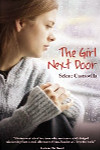
Creating a lifetime in little time.
Publisher: Westside Books
Pages: 231
Type: Fiction
Age: Young Adult
ISBN: 978-1-934813-15-7
First Published: 2010
Date Reviewed: 3rd January 2011
Rating: 2.5/5
Sam’s best friend Jesse only has a few months to live and Sam is only just starting to realise that she’s always been in love with him. Jesse doesn’t want to die a virgin and Sam wants to be with him in the remaining time as much as possible.
The story is full of angst, revolving around Sam’s mental state and how she is unable to cope. It takes a while for the other characters to comprehend just how far she’s falling, while the reader gets the full force of it from the start. At first it’s quite confusing how Sam conducts herself and indeed throughout she can come across as selfish until you remind yourself why she has turned to this kind of behaviour. She often asks rhetorical questions or answers others’ questions silently, in her head, providing the reader with a good account of how such a situation can affect a person.
The story is mostly based in one room, and while it’s realistic the setting combined with the inner dialogue make it a slow read. But perhaps that’s the point. When you hear about the lives of those with cancer, say on the television, you rarely get an adequate account of it as the producers are hindered by wanting to make a big impact and not having that impact fade through too much exposure. In our society today too much repetitive information is seen as boring and so the mundane existence of someone dying, the mundane being caused by the fading of the body, and the requirement to be near medical centres all the time, is only truly known to those who experience it first hand. With this in mind I have to say that the book is only slow and dull because of conditioning and that actually for this reason you could say that Castrovilla’s story is of great importance.
The problem comes, then, with Castrovilla’s choice of secondary subject. Sex. It’s not that sex is included – it’s the way in which it comes to pass. It’s understandable that dying a virgin would seem a repellent idea and it’s also understandable that a person would like to have a lot of sex before they die. What’s difficult is how quickly the initial decision is made. It leads the reader to question how the relationship would have continued had the illness not entered the characters’ lives and I’m afraid that it does make you question whether Castrovilla is promoting the right values. And yes, I’m aware that one could question what exactly the right values to have are.
On one hand you have a book that looks into a very difficult situation and does it extremely well, but on the other you have an example of what the book would’ve been without the illness – and it’s not a good stance.
While I think that the inclusion of sex was a good one I believe that the overall handling was poor and it is this that brings the possible success down. The Girl Next Door is far from terrible and there is a lot to be had from it, but I’m really not sure whether I would recommend it.
Related Books

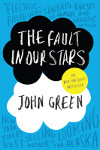
Cat Clarke – Entangled
Posted 19th January 2011
Category: Reviews Genres: 2010s, Angst, Psychological, Spiritual
2 Comments

When things don’t add up they may not be what they seem.
Publisher: Quercus
Pages: 372
Type: Fiction
Age: Young Adult
ISBN: 978-1-84916-394-1
First Published: 6th January 2011
Date Reviewed: 11th January 2011
Rating: 4/5
For some reason, Grace is being held in a white room. In fact even the sparse furnishings are white. Grace doesn’t know how she got there or why she is there, but she knows who her captor is. She knows literally: his name is Ethan and he’s gorgeous, and it looks like he wants her to write, but there’s something else about him that is intriguing. Why Ethan wants her to write and what about, Grace doesn’t know. But the paper is there and right now the only thing Grace can think to chronicle is her lousy existence.
Gritty – that’s the best way I can think of to sum up this novel. To be honest I was expecting it to be more psychological but actually it contains just the right amount of everything. Clarke gives you the basics of the difficult issues but doesn’t go into too much detail, therefore making it a little easier for people who might’ve shied away otherwise. There are a few issues covered in the book, not so many as to make it confusing, and each subplot and character has been given a lot of thought.
Clarke has crafted a very different story, but it’s not different so much for it’s contents as for it’s style and overall presentation. There is a uniqueness that enables the typically mundane to be worthy of reading, for example I’ve been on lots of buses in the rain and Grace’s journeys tend to sound just like them, yet I’m compelled to read about it. Maybe it helps that I’m a Brit like Grace and not that far out of school, but there is something about the day-to-day that drew me. Other times it took me a while to realise that I was reading about a regular event because of the way it was written.
You’d be forgiven for thinking at first that the writing style is clumsy. It becomes apparent very quickly just how tormented Grace is. As she begins to get used to what has become her life, if “used to” is an appropriate phrase, she becomes less anxious over her present situation, saving her upset for the story of her life.
Grace is a strong character but like everyone she has her faults. It’s in these faults that she shines because even if you can’t relate to everything you will undoubtedly be able to relate to something. The other characters aren’t as important and are thus not as detailed, but they are given ample time for you to understand how they have affected Grace.
Part of the plot is easy to figure out but that in itself appears to be a device. We know things before Grace does so that we can appreciate just how long it takes her to start understanding them herself.
I did entertain the thought that maybe he is a vampire. Until I remembered that my life isn’t actually Twilight.
If you are wondering how much like the current crop of young adult novels Entangled is, there is part of your answer. The other part I’m afraid to say would spoil the story to mention here.
I had various ideas in mind as to what the answer would be, as to why Grace was confined, and I admit to being a bit underwhelmed by the answer because of my previous reads. This doesn’t mean that it makes Clarke’s book any less readable however; I attribute the sudden onslaught of books of this nature to coincidence. Each author who has written a book in this vein has put their own spin on it.
In Entangled, Clarke takes a number of well-known situations and problems and discusses them through the use of a story. Quite likely to have a better impact than any reference material, she hits the reader with it hard while being delicate enough so that it’s not overwhelming. And she shows that there is a way out, even when you’re at the very bitter end.
Related Books



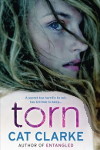

Kimberly Derting – The Body Finder
Posted 12th November 2010
Category: Reviews Genres: 2010s, Paranormal, Romance, Thriller
1 Comment

If she can find the dead, can she find the killer too?
Publisher: Headline
Pages: 327
Type: Fiction
Age: Young Adult
ISBN: 978-0-7553-7895-1
First Published: 16th March 2010
Date Reviewed: 3rd November 2010
Rating: 4/5
Violet Ambrose has an uncanny ability – she can sense the “echoes” from the dead bodies of people who’ve been killed. So when the disappearance of young women becomes a regular occurrence in her small hometown, Violet is the first one to know. But at the same time she’s struggling with her feelings for her best friend, feelings that have changed since the last school term. She’s changed, he’s changed, but has he changed in the same way she has?
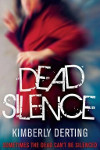
I’d had only fleeting contact with this book before I read it, seeing the cover a few times but feeling completely uninterested. Like many paranormal books for teenagers at present, the base colour is black, but rest assured, this isn’t Twilight, not in the least. Yes, it shares a few features: a prom, a gushy romance, and maybe Violet gets into some awkward situations, but in the main is it difficult to so much as guess where the author might have got her ideas from.
There is a real sense that Derting wants to impart advice to her readers, but she never goes overboard, instead speaking the same as any parent but going further by telling a detailed narrative about why one should listen to those warnings. What’s interesting is that while the book reads as a fictional account, and a lot of emphasis is placed on everything else unrelated, when it comes to the sections solely about the killer Derting doesn’t paint over it – while she doesn’t present the most harrowing story she works well within the parameters she’s set herself.
Surprisingly, although when generalised you would say this story focuses on death, there is a great amount of romance in the book. This is what makes it a story for younger readers, and certainly it’s an appropriate account of love for the target audience. Derting limits how far the couple go while straying a little past the usual borders, and although it can become soppy at times she always remembers to create mini conflicts in a way that pushes any bubble, that may have been forming over the couple, far away.
This leads to the characters in the book. Violet exudes confidence, and her lack of love for her appearance is but a realistic flaw. She only ever becomes helpless in understandable circumstances, and the times when she goes against common sense are explained – there is always a good reason for it. Romance-wise, when Violet starts to lean perilously close to drooling she tends to remember that feigned spite and disagreements are often fun. This girl walks into danger all the time, but she knows the risks, and when Jay comes to protect her she gets angry. I assure any would-be reader, in lure of the current batch of damsels, that like Jenny from The Forbidden Game, this is someone to really root for.
Jay is much the same as Violet, and he only appears as less daring because he’s not the major character. Jay can command, but he’ll also follow. His hero moments work because of Violet’s tendency to walk into jeopardy, and when he does get angry it’s logical.
The writing is very undemanding of the reader and the book quick to get through. The subplots always serve a purpose and the story is told without any particular drifting into unnecessary areas – which is more than can be said of Violet.
Although much of the ending is predictable, the climax itself isn’t, and if the loose threads are dealt with too quickly then it’s reasonable as a second book will be released shortly.
In The Body Finder, Derting puts a number of genres onto a plate and mixes and matches until she has ample quantities of each while sticking to the overall expectations that events of the past few years have created in young readers. She goes beyond what a lot of writers have been doing, unafraid to break the mould. It’s compelling without being too compelling, worrying without being too scary, and damn sexy whilst resisting sex.
The question now is will the echo from this book reach you?
Related Books


Maria McCann – The Wilding
Posted 4th November 2010
Category: Reviews Genres: 2010s, Domestic, Historical, Social
6 Comments
Most likely your unremarkable life is full of the remarkable.
Publisher: Faber
Pages: 333
Type: Fiction
Age: Adult
ISBN: 978-0-571-35187-2
First Published: 4th February 2010
Date Reviewed: 1st November 2010
Rating: 4.5/5
In 1672, Jonathan Dymond’s routine – living with his parents, making cider for the neighbours in autumn – comes to a halt upon the death of his uncle Robin. His father is upset that he didn’t make it to the deathbed in time and Jonathan is harrowed by a dream in which the ghost of his uncle accosts him along the road. Jonathan wants answers and it just so happens that, his aunt having an orchard herself, she might have a place for him; he goes under the guise of cider maker. There’s a strange servant at aunt Harriet’s, a girl who is very forward. And then one day she disappears. Something’s up, and it’s more than simply his father’s upset and his aunt’s formidability. Jonathan’s found a mystery to solve and by God will he solve it, no matter what happens to him.
When I picked up The Wilding I was expecting a story that would trundle along like a wooden cart, and for the most part this is indeed what happens. What is so unique about the book is that McCann involves a mystery to solve but doesn’t make it all that compelling until later on, instead she focuses more on life at the time and social issues. This may sound off-putting but it enables the story to rest gently over a number of genres and thus exhibit appeal to readers of many persuasions.
For the characters, The Wilding is unlike any other story I’ve ever read of this time period. There are differences in class and wealth but there are no extreme riches, or poverty without any sort of redemption. Everything happens within a radius of several miles and most journeys are made for cider.
“I marvelled at the shamelessness with which she turned thanks inside out. She was not a vagrant for nothing: here was one who could beg an apple peel and end by carrying away the tree.”
Tamar is a wonderful character. She has been so well created and written by McCann that she is real beyond any other character I have come across. For the first time in my life (that I can remember) I have been able to form a character head to toe in my imagination without resorting to an actress or someone from my own life. My Tamar is true flesh and blood, a real person with movable features, except that she resides solely in my head. And yet McCann’s writing doesn’t seem, when you’re reading it, to possess any special quality – but my inability to create a face has waned, at least for now. I may see Jonathan as a faceless narrator (which is the usual way I see characters) and Aunt Harriet as Pam Ferris (a result, I believe, of having watched the TV adaptation of Jane Eyre recently) But I’m glad to have one fully-fledged character in my head at last.
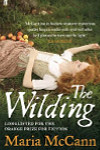
And the best bit of that? My Tamar has not in any way been influenced by the girl on the book’s cover. Except for the red hair, of course.
To move away from my cooing, Jonathan Dymond, the narrator, has been perfectly created – being not so much the subject but certainly the reason, he is provided with a lot of emotion and is always rethinking issues while allowing the focus to be on the other characters. He’s an average working class citizen of the day, with a very interesting family.
McCann deals with a number of issues that have eternal relevance; these she discusses quickly and skilfully. As an example, she touches on prostitution, saying that being with so many men for such a reason as money a woman can become deadened to emotions during sex and unconcerned about the man afterward. This may sound bad, but it’s something that the narrator must talk about during the book and you have remember that the woman in question is young and ignorant in ways.
The text is mainly modern but McCann sometimes writes in the way people of the time would’ve spoken. The modern language, made more realistic by the social standing of the characters makes the narrative easy to follow. One of the initial secrets is no hardship to work out dozens of pages before it’s revealed, but this was quite possibly something McCann meant to happen for reasons that you will understand when you read it.
As the book revolves around a family, the emphasis is on them and their daily lives rather than any key moments in history. A few events, and some fictional yet all too possible ideas, are looked into but briefly. This isn’t a book for learning about the period so much as a book for those who want to live it themselves.
Because on the face of it, McCann’s writing is nothing special, I’m wondering if she enlisted Joan’s help in making it come across as enthralling. If nothing else she definitely stole an amulet from the thorns at the front of the cave. The Wilding will let you breathe for a long time before it takes your breath away. But once it does, you might not get it back.
Related Books
None yet
Maile Meloy – Both Ways Is The Only Way I Want It
Posted 26th October 2010
Category: Reviews Genres: 2010s, Angst, Short Story Collections
1 Comment

A thin volume of short stories based on desire.
Publisher: Cannon & Gate
Pages: 219
Type: Fiction
Age: Adult
ISBN: 978-1-84767-416-6
First Published: 2010
Date Reviewed: 8th October 2010
Rating: 3.5/5
There are several stories in this book, each taken from various newspaper and magazine publications where Meloy has had her work showcased.
Ever since her fantastic debut, Liars And Saints, Meloy has favoured the publication of short stories over novels. Her second novel, which was a different version of Liars And Saints and set said book as a dream, was poorly received by her readers, and is out of print. It seems the short story is the way to go, however I can’t help but think that Meloy’s light is an artificial one because these short story collections are based on work already published.
It’s no secret that I love Meloy’s writing, she has a truly unique style: at once both simple and very detailed. She is so unique that selecting her work from a box of many papers would be easy. But something that she doesn’t do very well is the climax. Meloy’s style is breezy and she favours short dips into someone’s life, leaving them before she’s fully made her mark. Because of the writing style you can find yourself engrossed quickly so it’s a shock when each story ends. Although her novels are more involved still there is that element in them.
I do take issue with one of the elements she always employs, and that is sex. I can’t say I’ve read anything by Meloy where there is a good solid relationship and healthy sex; she is fascinated by infidelity, relationships bordering on incest (by “bordering” I mean cousin with cousin, although when it happens those involved believe they are uncle and niece), and the idea of orgies. While I understand that may be her preference it doesn’t give me a very good impression of her as a person; and furthering that there is something she always omits – Meloy doesn’t like to have people apologising and admitting what they’ve done when they’ve hurt people. And the whole infidelity idea is used in pretty much every story here.
This becomes a more general problem when you realise that most of the stories are actually the same. There are one or two that don’t expressly deal with sex (in fact one is about a grandmother and very funny) and these become the two that stand out. Unfortunately Meloy is in a rut where she’s using the same formulas and the same structures repeatedly, just changing minor details to make them appear different.
You may be wondering why I’ve given the book a good rating after all this. Because she is so adept at storytelling in the way she uses words, although the content may be uncomfortable one can’t help but still be enthralled. Meloy is a second novel genius waiting to happen. Now she just has to find her subject.
Both Ways Is The Only Way I Want It is the perfect title for this collection. I’m not sure I’d recommend reading it all in one sitting but it is a good example of literary fiction that will delight the reader in you and cause the rest of you to think.
Related Books


