

Colette Dartford – Learning To Speak American
Posted 8th August 2016
Category: Reviews Genres: 2010s, Domestic, Romance, Spiritual
Comments Off on Colette Dartford – Learning To Speak American

Sidewalks and pavements.
Publisher: Twenty7 (Bonnier)
Pages: 371
Type: Fiction
Age: Adult
ISBN: 978-1-785-77002-9
First Published: 1st October 2015
Date Reviewed: 7th August 2016
Rating: 3/5
Lola and Duncan lost their daughter two years ago. They’re still suffering as though it was yesterday; their marriage, once very happy, is a fragment of what it was before. Desperate to make her happy again, Duncan agrees to Lola’s idea of buying a holiday home in California – they are spending their anniversary across the pond – but doesn’t factor in his own issues. Duncan’s been unfaithful for a long time, though he’d never admit it, and there are problems at work.
Learning To Speak American is a quick, easy read, that has a nice premise – hope for healing – but doesn’t achieve its potential.
This is largely down to the writing – the level of telling over showing is very high and it means there is little room for imagination. Lola boils pasta and we’re told her face steams up, the dog brings back the ball and we’re told it’s soggy. On these occasions there is no space to feel for the characters – at times it can seem as though they are puppets, walking around so that things can be detailed.
When the narrative turns to dialogue, the book is a lot better. The first few chapters and the scenes in the book that are mostly dialogue are great examples of showing. The dialogue itself is generally very good. It isn’t always perfect grammatically as the phrasing doesn’t always ring true – the book could have done with more editing and proofreading – but as an overall element it works and the pages pass swiftly. The characters come into their own.
Unfortunately the editing issues involve repetitive statements that should have been noted and some of the plot elements are odd, for example the estate agents that sell Lola and Duncan the house know the neighbours, which makes sense on some level as the house had been on the market for a while, but they all seem bosom buddies and it’s not explained. The details of daughter Clarissa’s fatal accident are kept from you until the end. And it has to be noted that many will find Duncan’s infidelity, the nature of it and the way it carries on, difficult. When does the story take place? Bush and Blair are mentioned, but Lola’s forty-two years and no computer or phone knowledge don’t add up. Mobile phones that everyone has speaks more of our present time.
Learning To Speak American is an easy read and that’s due to the good parts but it really needed more time spent on the drafting and editing process.
I received this book for review from Midas PR.
Related Books
None yet
Olumide Popoola and Annie Holmes – breach
Posted 3rd August 2016
Category: Reviews Genres: 2010s, Commentary, Political, Short Story Collections, Social
Comments Off on Olumide Popoola and Annie Holmes – breach

The hole in the fence. The gap in the conversation.
Publisher: Peirene Press
Pages: 146
Type: Fiction
Age: Adult
ISBN: 978-1-908-67032-8
First Published: 1st August 2016
Date Reviewed: 18th July 2016
Rating: 4.5/5
breach – lower-case first letter intentional – is a collection of short stories about the current refugee camp in Calais. It is a specially commissioned project – Meike Ziervogel, publisher, sent the two authors to Calais to interview refugees so that they could write a collection inspired directly by the situation. Set almost exclusively in the camp and featuring stories about both refugees and volunteers, the book is a timely creation amidst the current political climate.
The stories deal with a variety of nationalities. The writing has been divided, each author contributing four stories. The stories can be slightly vague: those from the point of view of the refugees don’t always show you exactly what’s happening; but because the stories from the point of view of volunteers are a lot easier to understand on a literal level, it could be said there’s an intentional use of language barriers – the authors showing how the refugees haven’t mastered English. There’s also the language/situation barrier wherein the refugees don’t know exactly what will happen. And you could point to the authors’ commission as to a reason for the vagueness, the difficulty of it.
The vagueness makes for something of an emphatic vein – it might be frustrating not to know exactly what’s going on in some of the stories but it enables you to learn more about the uncertain situation from the important point of view of the people actually living it. Because this book is providing the first person point of view and every so often reminds us of worried residents of the longed-for countries, without bias, this book is more of a report but not selective – Popoola and Holmes have made a book that revolves around the discussion we need to have but aren’t having, the questions and answers that get set aside when big politics is at hand. The title itself invokes the breach in the UK’s security, that allows illegal immigration – stories of smuggling and the deaths we know are associated with it, alongside the reasons people feel the need to try it nonetheless – as well as many other definitions: breach of empathy; crossing the breach; healing it.
Then there are the stories of the volunteers. These are quite meta because the authors are, in effect, commentating not only on the work of the relatively privileged but also on their own visit. They may not have written a story about writing a story, the ultimate meta situation – though some dialogue comes close – but they comment from the refugees’ points of view of the people who come to help them. In the questions posed by volunteers, Popoola and Holmes are talking about themselves – what use are some of these people, what use are we other than in writing this book which is for the benefit of people back home? And refugees are wondering ‘who are these volunteers?’ when interaction is all on the surface. In this way, the authors comment on a ‘problem’ posed – the way, for example, the volunteers put on a smile but it can seem patronising and at the end of the day they are free to go back home. They can leave whenever they want. There’s also some fictional appropriation going on.
Stand outs include Popoola’s Extending A Hand, in which two refugees grapple with the expectations of a volunteer, Holmes’ aforementioned Paradise wherein a refugee and young volunteer connect with each other on a romantic level whilst the volunteer’s aunt looks forward to finishing up her time at the camp and getting away from it – a story of attraction in an awkward situation – and Holmes’ Ghosts, which shows the other side of the smuggling story, where payment is a necessity for the danger the various third parties are put in, where refugees are repeatedly sent back to the camp when caught but keep trying, again and again, because they see no other hope, and Popoola’s Lineage, a story that features the appropriation I’ve alluded to above, a Frenchman choosing to live in the camp.
This book isn’t out to cause a sudden change of mind in those who are worried about immigration, indeed it’s unlikely to do so – the authors haven’t written heroes or particular sob stories, the refugees are just average people who’ve found trouble. The authors have included stories of illegal activity, as discussed above. But it will likely sow a seed and make you think about that third side of the equation and that is in its favour more than anything sudden could be. The success isn’t in what is actually said but in the subtext, in what you take away.
breach gives a voice to those we so rarely hear from. It may well start a more comprehensive discussion.
I received this book for review from the publisher.
Related Books
None yet
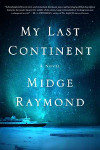
Midge Raymond – My Last Continent
Posted 27th July 2016
Category: Reviews Genres: 2010s, Adventure, Commentary, Drama, Nature, Romance, Science
2 Comments
Some have check-lists. Others just a particular passion.
Publisher: Text Publishing
Pages: 306
Type: Fiction
Age: Adult
ISBN: 978-1-925-35548-2
First Published: 21st June 2016
Date Reviewed: 4th July 2016
Rating: 4/5
Deb works as a naturalist. She’s rarely at home, instead spending most of her time studying penguins and teaching tourists, travelling to Antarctica and spending nights there. On one such trip she met Keller, an ex-lawyer who had signed up as a dishwasher in a bid to get to the coldest continent; he had persuaded her to let him tag along on explorations. Speaking now of the past, Deb interweaves these stories with the one in which a cruise ship has veered too close to the ice – a ship Keller happened to be on at the time.
My Last Continent is an oft-epic tale of Antarctic exploration, the damage of tourism to that environment and the effects of very real dangers, complimented by an at times very moving love story.
Dealing with the storytelling first, the story jumps this way and that way in time – the only constant is that you know you’ll be heading back to the story of the ship wreck and that that story will command the end section of the book. The structure means you know a disaster will happen – the ‘present day’ chapters, for want of a better term, are labelled in terms of days before the tragedy and the rest of the chapters move about on a very flexible time scale, any when from ‘six months until shipwreck’ to ‘twenty years before shipwreck’. This means that it’s difficult to get a sense of where exactly you are in time because the structure is so jumpy, but it’s not a loss overall. Yes, you may be confused by, for example, Deb mentioning Dennis in a particular chapter when you’d thought he’d not arrived in her life by that time, but as the main event is that shipwreck, it’s not much to worry about.
As you know how the book will end (you know what’s happened to Deb and Keller before Keller is introduced in person) this book’s romantic element is focused more on the journey than any result. This works in Raymond’s favour; whilst you as the reader may feel you can pull back somewhat from being enveloped, knowing how it will end and that you’re reading of Keller in the past also means that Raymond can throw caution to the wind. Would Deb and Keller’s story sound, yes, sad, but also too… mushy… in another book? Perhaps. But here it works. That’s not to say we’ve Titanic – Jack and Rose – levels of romance, because we haven’t. Raymond’s dedication to the research element of her story, and her non-tourist characters’ dedication to their work, has a very grounding affect on the romance.
Let’s look at Raymond’s dedication to the facts – in My Last Continent we have a book that sports a lot of info-dumping, but in this case the result can be considered a unicorn, that word now used as much to describe things that are miraculously unique as much as it describes a mythical animal. When you consider fiction normally, info-dumping is bad because it tells us things we could work out on our own – just tell us the basic details, we can add the dining room and picket fence all on our own. We know how people eat, sleep, bathe. But as Raymond is talking about Antarctica all bets are off – how many readers have been to Antarctica? It’s a case of knowing Raymond has info-dumped but truly being able to gloss over it because it’s interesting. We need the world building. (This said there are a couple of conversations that push it a bit too far, conversations that are obvious devices, that could have done with a rewrite.)
The information serves a second purpose. Beyond helping you form a not-so-stereotypical image in your head, Raymond is concerned about conservation and the impact human exploration has on the wildlife and climate of Antarctica. She doesn’t preach – what she does most is to show the effects. Her story, which effectively casts you, the reader, as a passenger on the journey along with the fictional tourists who will come to be aware of the problems. Sometimes you’ll know about the problems because Deb’s talked about them, other times your ever-expanding knowledge will clue you in itself. So this means that you are reading a work that sits on the fence between fact and fiction and is obviously heavily tuned towards teaching, but this lesson doesn’t over-burden. And that’s all down to Raymond’s crafting of the romance.
Raymond doesn’t draw too many lines. Whilst she points out that tourism is a problem, her tourist characters are mostly people who want to help, through their discovery of the problems en route. Many characters are there to show how dangerous the continent can be. As much as tourism is a problem, she says in subtext, these explorers are here and whilst they’re studying they aren’t immune from that label themselves.
In reading My Last Continent you’re signing up for a romance in snow that’s anything but a winter wonderland. You’re signing up to a book that’s not quite fiction. You’re signing up for a book that’s not a relaxing read. You’re here to learn. But for all that you get an excellent introduction to Antarctica, a fast-paced story, a good romance, and knowledge you can take with you beyond the last pages.
I received this book for review from FMCM Associates.
Related Books

Speaking to Midge Raymond about Forgetting English, and My Last Continent (spoilers included)
Charlie and Midge Raymond discuss the current situation in Antarctica and the balance of keeping it clean whilst allowing research and tourism, environmental and climate changes in the same location, and being followed to the toilet by a penguin.
If you’re unable to use the media player above, this page has various other options for listening.
Ayelet Gundar-Goshen – One Night, Markovitch
Posted 18th July 2016
Category: Reviews Genres: 2010s, Comedy, Commentary, Historical, Political, Translation
2 Comments
History, war… and humour?
Publisher: Pushkin Press
Pages: 365
Type: Fiction
Age: Adult
ISBN: 978-1-782-27163-5
First Published: 2012; 15th June 2015 in English
Date Reviewed: 27th May 2016
Rating: 5/5
Original language: Hebrew
Original title: לילה אחד, מרקוביץ (Markovitch, Layla Echad) (Markovitch, One Night)
Translated by: Sondra Silverston
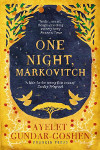
Yaacov Markovitch has an unremarkable face. No one really notices him. His friend, Zeev Feinberg has an amazing moustache that everyone knows about. The friends enlist in a programme designed to rescue Jewish women from Germany, to bring them back to the homeland and whilst Zeev has no issues with the idea of divorcing a wife – he has a girlfriend who smells of oranges – Yaacov finds himself married to the most beautiful woman he’s ever seen, a woman who wants nothing to do with him and will ignore him in the years that follow.
One Night, Markovitch is a funny yet poignant book (‘poignant’ is on the cover; it’s perfect) about all sorts of things related to the self as well as war and the effects of it on people’s lives. It’s one of those books that is solid throughout and very special.
The humour is mostly laugh out loud and very well timed – never too much, never something you forget. The book is peppered yet it would be difficult to label it a complete comedy because it’s anything but stereotypical. I’m going to have to share a quote:
“Are you excited about the journey to Palestine?”
That she would be excited about their marriage was something he dared not expect, but he hoped that the excitement she felt at the proximity of the Holy Land would project a bit onto the means of her reaching it, that is, onto him.
“Definitely. I’ve read a great deal about the oranges.”
Here Bella Zeigerman stopped speaking, and Yaacov Markovitch decided happily that his wife, like him, was a fan of agricultural literature. On the narrow, crowded bookshelf in his house in the village, next to the writings of Jabotinsky, stood all sorts of guides – the mother of wheat and how to improve species, how to plough and plant grain, how to graft a tree without causing pain. Bella Zeigerman knew how to recite Gothe, but it is doubtful that she would be able to memorize, with the same degree of success, the list of insects that threaten to destroy grapevines. When she mentioned oranges, it was because she recalled a line from the Hebrew poet’s poem [she is in love with his work] that had been published in the newspaper.
Humour is found in Sonya’s eyes, which are a couple of millimetres too far apart to be pleasing. It’s found in the way she stands on the shore yelling curses at the long-gone Zeev Feinberg who will return in time. It’s found in Zeev Feinberg’s moustache. And it’s found in some of the ‘lad-ish’ humour – this is in no way a women’s fiction book.
For a while it’s simply history and humour and then there comes a point where the mood is more sombre, the humour sensitive, almost, and whilst it’s not quite that because the story turns ‘sensitive’ on its head, whilst the war trickles in from the beginning, there is a turning point wherein it becomes the focus.
Gundar-Goshen mixes in some politics. The book deals with the beginnings of WWII, its situation for German Jews, whilst also dealing with the Arab-Israeli conflict, in which the Jews, their people persecuted in Germany, are in turn persecuting Arabs. Yes, it’s quite a bold statement. German Jews are fleeing Berlin before the major onslaught and in Israel, their ancestral land, they are in a good place. Gundar-Goshen does not say anything directly about the issues, the conflict betweens these conflicts, but there’s a flicker of an opinion.
This isn’t to say the wars are particularly detailed, however. For the most part they are in the background – Zeev Feinberg held an Arab by the throat today but now we’re seeing him at home with his children. The subtext is key. It spills out of the text – this conflict is everyday, a regular happening, and it’s in the ‘minor’ details like Zeev’s day that we see the horror of it.
Amongst this is the shock. It hits a few characters, informs their lives, but one in particular is commented on – Rachel Mandelblum. When in Germany – which she left for Israel, promptly ceasing to speak German, adopting Hebrew instead – Rachel experienced the horror of a murder, a skull being cracked. She can not escape the sound, it haunts her every day. Gundar-Goshen blends this specific horror into the humour of Rachel’s present situation, her pretending not to understand German, being not unhappy but no more than content living with the random butcher who proposed marriage when he saw her in the street. (She had no reason not to agree so she followed him home and had his child.)
The naming, whether cultural or not I’m not sure, is in a first-name-surname form every time. Rather than simply filling pages, it adds to the humour, though I can’t say why exactly.
The translation bares a strong sense of being true to the original. It’s an American translation, definite western words that are most certainly the choices of the translator rather than a choice based on how the text reads, but it’s by no means a bad text. It flows, it translates jokes into a western context for English speakers to understand… you know you’ve got a good translation when it doesn’t stand out.
The ending’s an interesting one for the way Gundar-Goshen refers to the audience, breaking the fourth wall (though there is, throughout, a feeling of that anyway) saying that, hey, she’s about to jump in time, but this is what happened in the interim she’s skipping, and it isn’t much, and this is why she’s had to do it, and so on. There are many books that jump in time for no reason – Gundar-Goshen’s explanation is a blessing.
One Night, Markovitch is superb. It’s fun, it’s serious with good reason and to good effect – it’s just a solid book all round.
Related Books
None yet
Holly Black – The Darkest Part Of The Forest
Posted 8th July 2016
Category: Reviews Genres: 2010s, Fantasy, LGBT
2 Comments

Down in the wood where nobody… everybody goes…
Publisher: Indigo (Hachette)
Pages: 324
Type: Fiction
Age: Young Adult
ISBN: 978-1-780-62174-6
First Published: 13th January 2015
Date Reviewed: 5th April 2016
Rating: 3/5
Hazel and her brother, Ben, have spent their childhoods visiting the glass casket in the forest that holds the sleeping boy with the horns – everyone has: he’s been there for generations. The teenagers love him with a passion, even whilst knowing he could be as dark as the rest of the faeries residing in Fairfold. One day the casket is found broken, the boy gone, and Hazel thinks she had something to do with it.
The Darkest Part Of The Forest is a young adult fantasy gathering together various bits and pieces from western folklore.
Unlike many books of its age range and genre, the book is set neither in our real world or faerie-land, instead straddling both. All the humans who live in Fairfold know about the fey and respect them – in order to remain at peace – and whilst there are some newcomers who don’t believe (how this can be so I’m not sure) there are plenty of tourists. Tourists who are found dead in ditches because they didn’t know the rules. It’s an interesting set-up and whilst the world-building isn’t too great it’s good enough.
Black favours the same approach to equality in faerie contexts as Malinda Lo did in 2012’s Ash. Her commentary on LGBT relationships stops on the first note that Ben likes boys. In this book, aided perhaps by faerie, love is love and needs no questioning.
It must be said the writing isn’t very good. In fact it’s quite substandard but for the most part that doesn’t matter and Black does ensure the characters sound different.
It’s the plot that matters most, and the only problem with that is that it’s a vague one. Black favours teasing out the story but goes a bit too far, neglecting to provide information when necessary for the reader to appreciate her point. I’m personally still not sure what the ending was about, who exactly Hazel was, and I haven’t a clue about the history she mentions in regards to changeling Jack. And it’s not that it’s an ambiguous ending, it’s that information just isn’t included.
This said, The Darkest Part Of The Forest has enough going for it for me to recommend you try it if it intrigues you. It’s a quick read and a good original idea, it’s just lacking in execution. A retelling of the concept of the faerie tale itself, a mash-up of ideas, and certainly not a bad way to spend an evening, there’s just nothing new in it and others have done it a lot better.
Related Books