




Brief Thoughts On The Original And Revised Endings Of Great Expectations
Posted 5th February 2018
Category: Further Thoughts Genres: N/A
2 Comments

I’ve often thought about the two endings of Great Expectations, but a lot more so since watching the 2012 version over Christmas (as expected as that might sound considering how recent it was).
My initial thoughts on reaching the end of my copy – the Vintage Classics edition that features both endings – was that the original ending far surpassed the revised one in terms of quality and overall sense. That Estella spurns Pip yet one more time matches the person she had been in all the time he knew her, whilst the second ending’s happily ever after stance seemed a prime example of something worked simply to please the crowds. Or at least, in this case, Dickens’ peer, the novelist and politician Edward Bulwer-Lytton, who said it was too sad1; I think we can safely say many readers would have liked the original. That said, the revised ending doesn’t specifically say that the characters got together.
Watching the film made me think a little more. The original ending has Estella effectively behaving as she always has, continuing to be the person Miss Havisham trained her or created her to be. In the second ending we could say that Estella eschews this training; perhaps her behaviour now is more a reflection of who she is without Miss Havisham – perhaps she’s now the person, or moving towards the person, she is without Miss Havisham’s input. She’s now herself.
Taking the endings as they are without their background literary context, they both work for different reasons.
Where the film influenced my thoughts was in what I considered Holliday Grainger’s very good performance – the Estella she and, also, Helena Barlow (as the younger Estella) portrayed, was not someone I saw changing. It seemed to me quite literally out of character for Grainger’s Estella to change as she did; I suppose you could say it highlighted for me why the original ending pips the second to the post. But it did still illustrate further than the simple dialogue and other text of the book, in regards to Miss Havisham’s teaching, how much nurture has to play in our lives.
Your thoughts?
Footnotes
1 In his 1874 biography of Dickens, John Forster wrote: “One other letter throws light upon an objection taken not unfairly to the too great speed with which the heroine, after being married, reclaimed, and widowed, is in a page or two again made love to, and remarried by the hero. This summary proceeding was not originally intended. But, over and above its popular acceptance, the book had interested some whose opinions Dickens specially valued (Carlyle among them, I remember); and upon Bulwer Lytton objecting to a close that should leave Pip a solitary man, Dickens substituted what now stands. “You will be surprised” he wrote “to hear that I have changed the end of Great Expectations from and after Pip’s return to Joe’s, and finding his little likeness there. Bulwer, who has been, as I think you know, extraordinarily taken by the book, so strongly urged it upon me, after reading the proofs, and supported his view with such good reasons, that I resolved to make the change. You shall have it when you come back to town. I have put in as pretty a little piece of writing as I could, and I have no doubt the story will be more acceptable through the alteration.” This turned out to be the case; but the first ending nevertheless seems to be more consistent with the drift, as well as natural working out, of the tale, and for this reason it is preserved in a note.”
Book References
Forster, John (1874), The Life Of Charles Dickens, James R Osgood & Company, Boston, Vol. 3, p. 360.
January 2018 Reading Round Up
Posted 2nd February 2018
Category: Round-Ups Genres: N/A
3 Comments
Well, that went by quickly. Despite the fact that when looking back, January was a long month, it nevertheless seems to have gone by swiftly. The weather may have had something to do with it – there has been rain but also a lot of sun and it’s not too cold – and the days are getting noticeably longer. I finally finished the jumper I’ve been making, with some help from Second Mum. When it came to sewing the seams I had to give up after five attempts – it’s one thing to watch a YouTube video and memorise the instructions and another when it comes to applying it to your own work. As it got to the point where I was avoiding knitting in general I realised it would be better to get help this time and use the knowledge I’d learned to change my next jumper’s pattern so my second attempt would be easier.
My reading went very well. Despite feeling rather foggy for a good portion of it I managed four books, which included two 500 page novels. Those I finished weren’t the best, but I am currently reading Chimamanda Ngozi Adichie’s Americanah and loving it.
All books are works of fiction.
The Books

J Courtney Sullivan: The Engagements – The copywriter who created ‘a diamond is forever’ sees sales hike; an older couple very reluctantly prepare for the visit of their not-yet-divorced son and his new girlfriend; a man ponders his job and the life he wished for; a Parisian takes a chance with a New Yorker; a happily unmarried cousin helps a couple prepare for their wedding. A nice idea but very long and not always well executed.

Philip Pullman: La Belle Sauvage – Malcolm’s life changes when a group of academics enter his parents’ pub, the convent takes in baby Lyra, and another group of men seem to want to cause harm. Allright on its own, unnecessary as an addition to the series.
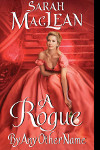
Sarah MacLean: A Rogue By Any Other Name – A man who lost his fortune decides to return and marry his childhood friend when word reaches him that the fortune is to be part of her dowry. Repetitive and overly angsty.

Shannon Stacey: Mistletoe & Margaritas – A widower and her husband’s best friend find themselves becoming more than just friends. This was a semi-carryover from last year; it’s a standalone novella that has since been added to a collection; Stacey is a hit and miss author for me and this one was more of a miss but the shortness of the tale works in its favour – Stacey’s narrative structures are always well thought out.
Out of the four, the Pullman was my favourite and I keen on the MacLean. That said, I’m glad I read the MacLean as I’d been wanting to for a while.
February should see a few review copies, including Jessie Greengrass’s Sight. And I’m hoping to get through the Ngozi Adiche but if not – it’s not a thick book but the print is small – a good portion of it.
How is your new year reading going?
J Courtney Sullivan – The Engagements
Posted 31st January 2018
Category: Reviews Genres: 2010s, Historical, LGBT, Social
Comments Off on J Courtney Sullivan – The Engagements
Diamonds are forever.
Publisher: Virago (Little, Brown)
Pages: 515
Type: Fiction
Age: Adult
ISBN: 978-1-844-08937-6
First Published: 11th June 2013
Date Reviewed: 31st January 2018
Rating: 3/5
Copywriter Frances Gerety creates the famous DeBeers slogan, ‘A diamond is forever’, and the company sees a massive hike in sales of engagement rings. A couple of decades later, Evelyn and Gerald are preparing for the unwanted visit of their son – Evelyn does not want him splitting up the family. Another decade and James laments his failed career as a musician as he works as an EMT (paramedic), saving lives. Later still, Delphine jumps ship when a younger man comes on the scene, leaving her husband and their antique shop. And in recent years, happily unmarried Kate tries to stay calm in the face of her dysfunctional family as they prepare for the wedding of cousin Jeff.
The Engagements is a multi-plotline novel with five narratives loosely based on the theme of rings.
Most of the stories in this book are pretty bog standard, nice enough to read but not compelling, however the story of Frances Gerety and the accompanying general information about DeBeers and diamond mining is fascinating. It’s not apparent until a little while into the book, but Sullivan takes time to explore every aspect of the industry; whilst most of this time is spent on the way diamonds have been advertised, the author also looks into the relations between the American company and the countries from which the diamonds are taken; she looks at the way the engagement ring is acquired – bought or passed down the generations; she looks at those who have decided not to marry or fall into any of the associated trappings. And whilst the narratives are average (though the stories are far more about relationships in general than engagements), the use of five stories over the course of several decades allows Sullivan to inform you of the way things have changed over the years.
This all sounds great, and it is, but after a while the stories take their toll. The problem here is that the book is simply too long. There is a great amount of info-dumping – after a couple of rounds of it you start to see the warning signs for when a block of irreverent text is on the way; Sullivan will introduce a minor character and give you a lengthy back story or provide a history of a main character you don’t need. The book is to a large extent a series of flashbacks. And it’s not at all aided by the writing. General sentence structure, grammar, older characters speaking as though they are much younger; often the writing is clunky enough that it’s difficult to work out in which country a character is living.
You’d be forgiven for wondering throughout the book why Sullivan has collected these particular narratives together. They bear no relation to each other apart from the loose engagement ring connection – in big part loose because of the sheer numbers of people who can relate to it. Towards the end, the reasoning for these tales becomes clear as Sullivan forms a circle of relation but it’s rather forced, almost a deus ex machina situation. Tying them all together has the effect of showing you what Sullivan may have been trying to do the entire time – spoilers ahead and for the rest of this paragraph because it needs to be said to be explained: show the passing of a single ring down the ages. This concept as used in the book is actually fascinating due to its execution – Sullivan shows the different ways people go about acquiring their rings and the way the diamond industry exploits people whether they have the money or not. It starts as an heirloom, becomes stolen by someone who hasn’t the money to buy a big ring, gets given to this person’s prospective daughter-in-law by his wife who never liked the big diamond, gets left in a taxi by the prospective daughter-in-law when she leaves her relationship, and is lastly bought from a collector/jeweler by a same-sex couple. Through the use of a single ring, Sullivan makes her way through socioeconomic issues and changes in culture. It’s great; it’s just that it’s a bit too late in the proceedings to be able to say that the prior 500 odd pages were all worth it.
The Engagements offers insight into the creation of a monopoly and the politics surrounding it – DeBeers is of course a real-life company and whilst we haven’t lots of information on Frances Gerety, she did indeed write the slogan; and the book offers a great look at the effects of the industry on reality. But it is a big investment for something with relatively little pay off. Rather like, some would say, engagement rings themselves.
Related Books
None yet
When An Author Returns To An Old Series
Posted 29th January 2018
Category: Chit-Chat Genres: N/A
1 Comment

As I was reading La Belle Sauvage, it struck me how relatively inaccessible it was to new readers. I say relatively because it is accessible; it’s a case of there being a lot left unsaid that relies on you having read His Dark Materials, but what’s left unsaid isn’t anything that would actively detract from the experience of a new reader, who would quite likely not notice. Pullman achieved a good balance.
Should a new book for a series that started (and ended) years ago – thinking, of course, of situations like older trilogies and new ones – be written for the original audience only – since grown up and thus creating the situation wherein you want an adult book for what was once a children’s series – or should the new book be written with an eye to the new generation?
What responsibility does the author have in the context of ages? If they were to call the new book an adult book then the intention would be clear but the result would be a book that may well not be appreciated because the original audience would be looking for more of the same – the same magic that was in the previous books.
In that way, writing in the same fashion – for children – works for both original and new readers. You want the magic of the original series; in many ways you’re actively looking for a children’s book. (With all the debates about adults reading Young Adult books, a point must surely be made about YA books in a series that started long ago. Certainly the buzz around La Belle Sauvage suggests that’s perfectly acceptable.)
There’s also a basic responsibility the author surely has – that previous fan base is most likely where sales will begin. And it’s the adults who have been waiting or, if not actively waiting in the case of a new book being a more sudden occurrence, the most appreciative.
Should we or can we expect new, younger, readers, to start with the older books? The young readers who will likely be most interested in the new books are those who have been introduced to the older books by parents, siblings, and so on, so they’re effectively in the same boat. If they haven’t read the original books yet but planned to/have had them put on their reading list by an enthusiastic adult, we can assume they’d not be ‘allowed’ to read the new book until they’d finished the originals.
This naturally moves on to content – should prior details be regurgitated? Pullman didn’t do this – if he had it may have been more of a filler book that it is – but how much is detail needed? Should the length of time between books be considered or is it safe to assume that fans who feel they’ve forgotten will have re-read the original series prior to the new release? I think it is.
Of course the lack of old details – in Pullman’s case there isn’t a long description of the ‘bad guys’ and not much world-building – may stop new readers starting with the new books. That could well be argued to be a good thing.
A lot of all this depends on the individual – what they remember, how much time and inclination they have to re-read, and whether they’re happy with any big changes. But considering the fact that there are lots of books that do include repetitive details in series – in my experience the worst is another old series, The Babysitter’s Club which effectively paraphrases or copies and pastes (I always skipped them so can’t say either way) the same first several pages of the first books continually, presumably to aid memory but actively making it look as though there’s more story – a book that doesn’t has the effect of trusting the reader to remember instead of creating the unfortunate other effect of making the reader feel the author doesn’t trust them to remember.
I think continuing for the original readers is a good thing. And it provides another book for them to introduce to the new generation (or provides the excited conversation that would intrigue a young reader to look for the older ones themselves… we can hope!)
Your thoughts?
April Munday – The Heir’s Tale
Posted 26th January 2018
Category: Reviews Genres: 2010s, Angst, Domestic, Historical, Romance, Spiritual
Comments Off on April Munday – The Heir’s Tale
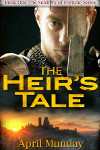
More to learn after the war.
Publisher: (self-published)
Pages: 150
Type: Fiction
Age: Adult
ISBN: B075KQ3HX4
First Published: 29th September 2017
Date Reviewed: 25th January 2018
Rating: 3/5
Ancelin returns home from the war he fought alongside his brothers. His betrothed, Emma, has been waiting a long time and is happy to see him, but so is his sister-in-law Alice, whose husband is now dead. Ancelin has always loved Alice and her sudden interest in him causes him to rethink his betrothal.
The Heir’s Tale is a coming-of-age romance set in the medieval period, and the start of a series of books about a set of brothers.
The research in this book is of a very high standard. Munday strikes the right balance of detailing and holding back to the extent that there are a good few times when it’s easy to get lost in the history. The amount of research is evident but only on consideration, leading to the best of reading experiences where you can relax into it without any worries of the author including too much or any errors. The writing backs it up; it’s solid. There are no anachronisms and the text reads smoothly.
It’s apt to talk about Ancelin’s growing maturity in terms of relationships. The character continually darts back and forth – one minute he knows he likes Emma, the next he’s tempted by his sister-in-law – and it’s a long-term thing, the main conflict in the book. On the surface, Ancelin is a frustrating person to read about however upon reflection it’s quite realistic – it’s all too easy to ascribe modern notions to this young-twenties man and think that he should be better, but when put in the context of his lack of experience and the sudden turnabout of his romantic situation, wherein he has loved Alice for years without her paying any attention and now she’s turned full circle, it makes a lot of sense. The continuation also has another role – it allows Munday to look at the character further.
Here the best example is probably in the character’s gender. Rather than look at Ancelin with an eye to the sort of romance that’s often included – where the male character will act in ways that’s romanticised and dreamed about but not often true to reality – Munday unashamedly puts sex before romance, so that there is more physical action (aside from sex itself which, true to history, doesn’t happen during the betrothal) in places where you might have been expecting roses. This said, there are also roses.
The characters as a whole are good – Emma is very patient with Ancelin but is by no means meek, in fact she’s the strongest character. Ancelin’s brothers get a lot of look in to set up the other books but it doesn’t actively detract; his father is a fair secondary character. Alice however does present a problem.
Alice has very good reason for suddenly showing romantic interest in the brother-in-law she’d previously not spent any thought on – she’s a widow in the medieval world and about to be sent off to a convent against her wishes. It’s obviously rather wretched that she’s trying to break up a prior betrothal, but she doesn’t have many options and as caring as her father-in-law is, society rules will go on ahead.
Where the issue lies is in the actions, the way Alice goes about trying to get Ancelin. You know from the moment Ancelin arrives home from war that Alice is the villain and she’s quite cardboard cut-out. In itself she is just one character but as this becomes part of the conflict of the book, the continuation makes it difficult. It comes to a head towards the end, where it’s obvious to the reader what’s happening but the characters don’t put two and two together. It means it’s a bit too angsty.
There is a lot to like about The Heir’s Tale but it can be overshadowed – the scenes in which Alice is absent, and there are many, are good and show Munday’s work well.
I received this book for review. The author is a friend.
Related Books
None yet


