




The Present Past: Lydiard Park
Posted 24th January 2018
Category: The Present Past Genres: N/A
3 Comments

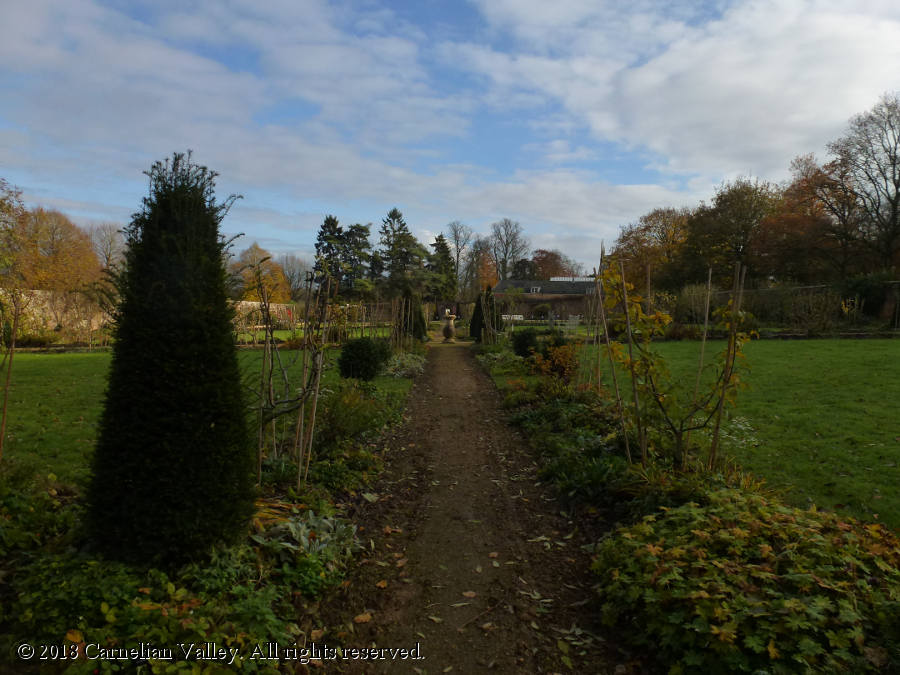
Lydiard Park is a large estate in Swindon. Now owned by the local council, only some of the building is accessible to the public as the first floor and some parts of the ground floor are used as meeting rooms and for other council purposes, but the medieval church and the grounds are free to roam, and there is a cafe and walled garden, so all in all it constitutes a good casual day out – a fair length of time if you want to see it all, and a couple of hours if it’s your local park and you want to take the dog for a walk.
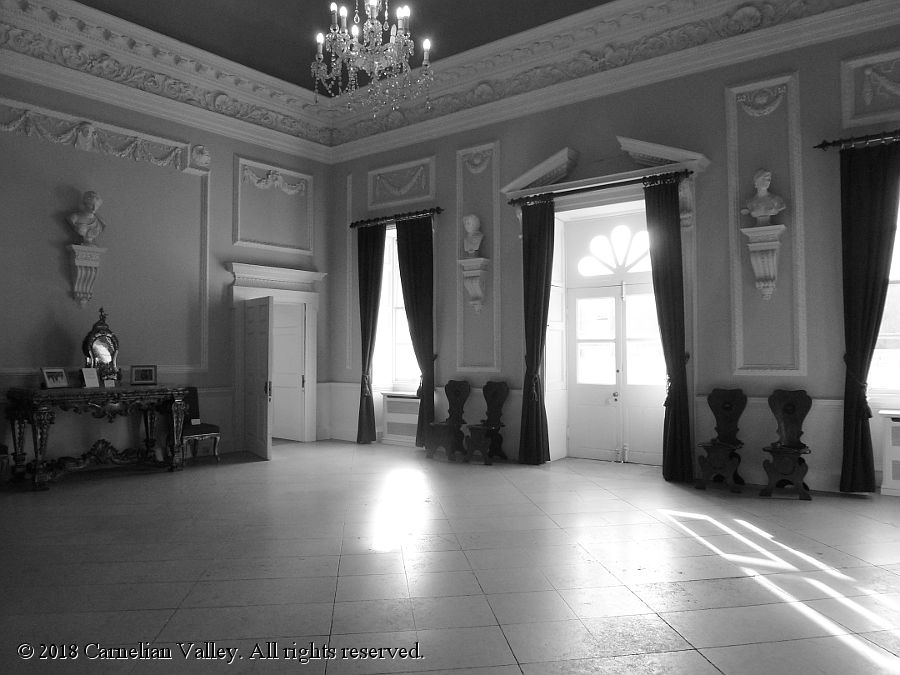
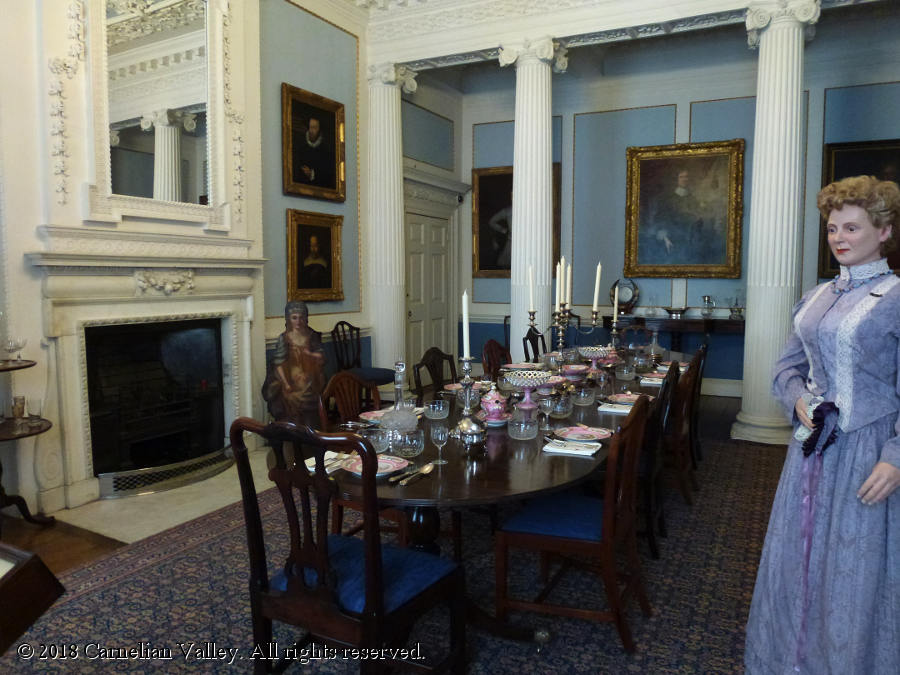
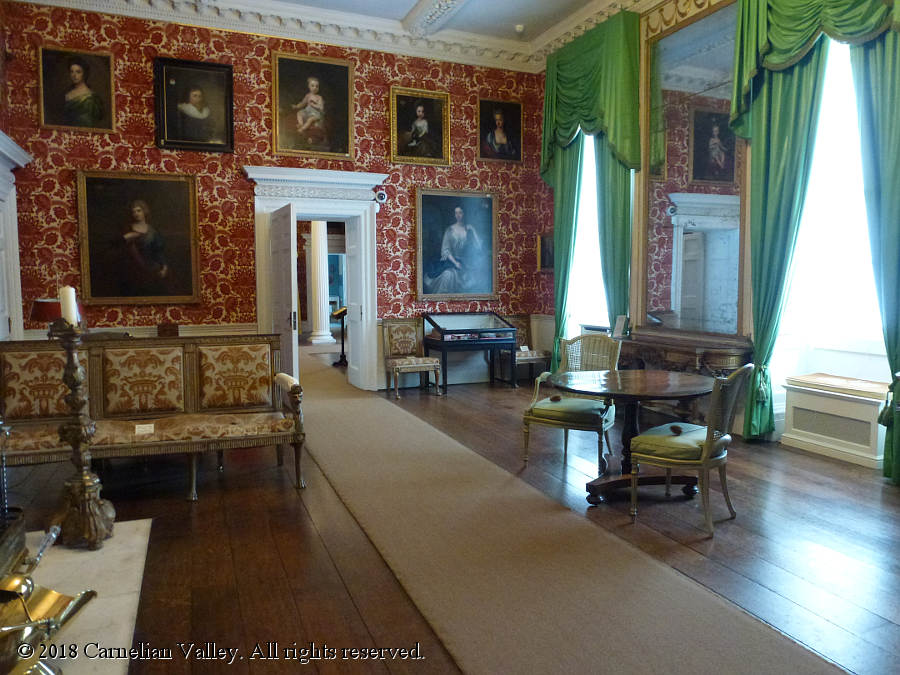
Presumably due to the house being mostly council space, the accessible ground floor sports all kinds of rooms. You start in the side corridor rather than at the front of the house, as you do in many others, pay for entry, and walk into a large hallway/receiving hall space. The house was sold by the original owners to the council unfurnished – it had been the in the same family since the medieval period – so the furniture has been collected. It’s been done very well; the rooms are well decorated and there are plenty of paintings on the walls.
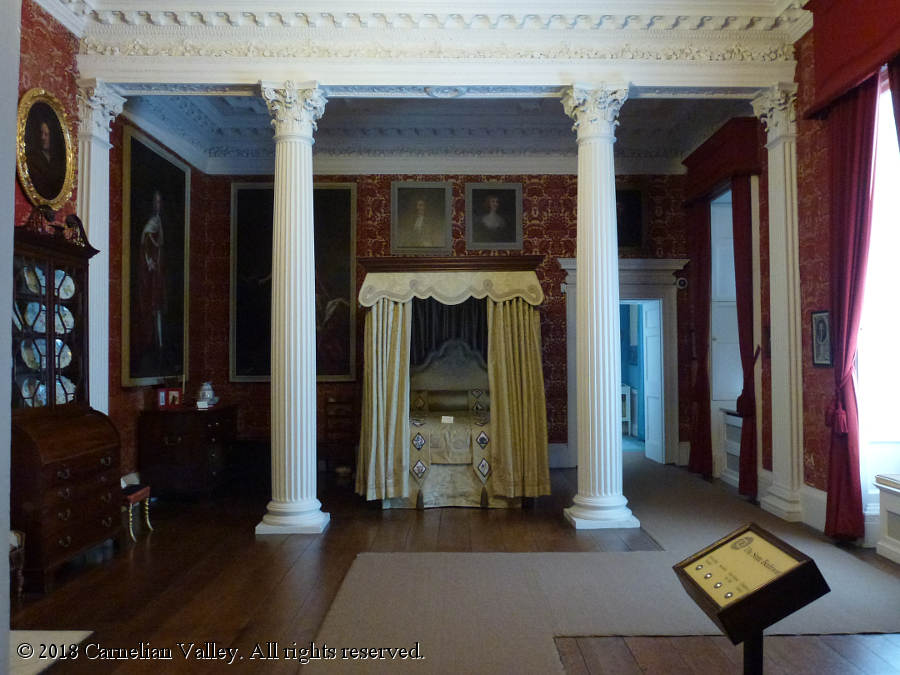
The dining room is small, but the living rooms are large and there is a lot to see if you like to look at old items close up. The ‘state bedroom’ is pretty special, so too the blue room at the end that was likely a chapel, and of course it’s always good to see a library. The house, believed to have been built in the medieval period, was restructured in the Georgian decades so behind the walls there are even older elements. It’s that catch 22 that befalls a lot of old buildings that were restructured in the days when people didn’t think of history – the restructure has value as a historic building as much as the Tudor, so decisions have to be made in terms of keeping it as it is or cutting back further in time.

To go back to the original family, briefly, they were called St John (or, rather, are called – one present-day relative writes about the house). There is a connection with the House of Tudor – Margaret Beauchamp, later grandmother of Henry VII, was related to the St Johns via her first marriage. They kept the house right up until the 1940s. It had been requisitioned for use as a war hospitals and training grounds whilst and at the same time this was happening the family were deciding to move on.
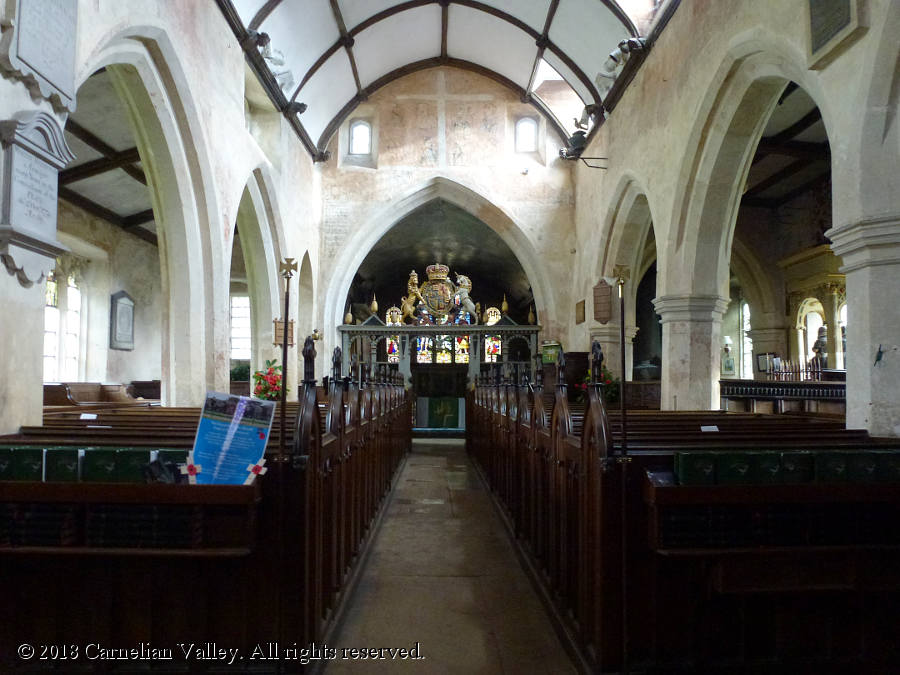
Back to the estate itself, whilst the house is a short trip in itself, the church and surrounding parkland make up for it. It’s best to visit the church before you go around the park.
Something that I think can be considered special is the way access to the church is allowed; whilst you understandably can’t visit it when a service is happening (unless you want to join in, I suppose), the key to the church is available to borrow from the staff at the house. This means you get the church to yourself, or mostly for yourself – as keyholder you’re responsible for ushering out anyone who happens to enter before you leave (not to turn them away but so the church can be locked again).

It’s really worth the visit. The church is very old and though you can’t see it from my photos – it was a little too dark near the altar – a lot of what could be assumed the original artwork remains. (At least I like to think it’s original – Catholic churches of old were very beautiful, colourful, and so it does follow that the starry ceiling of St Mary’s could date back to the pre-Reformation years.)

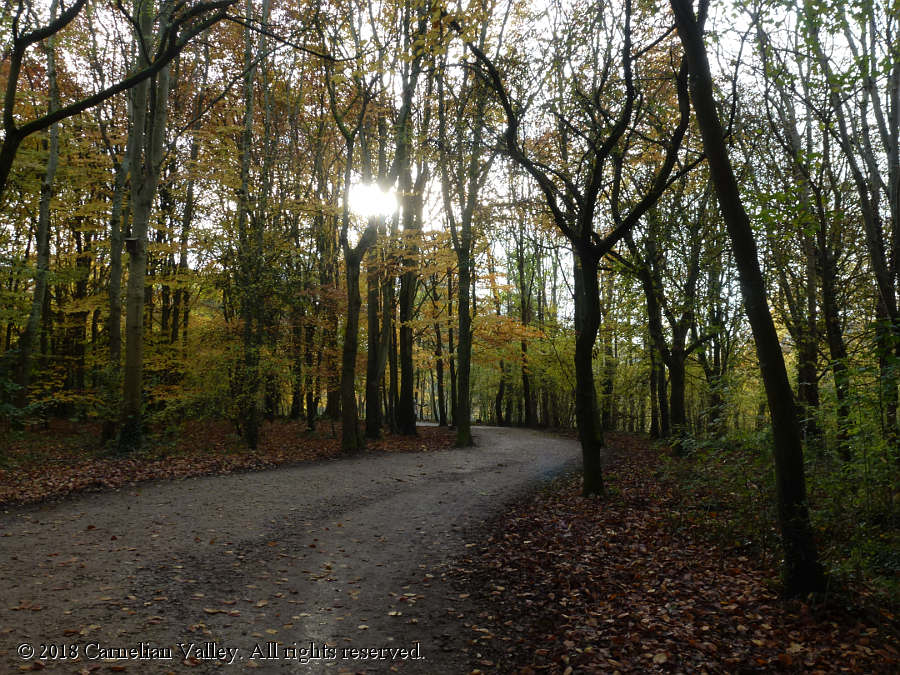
So to the grounds – they are vast, more vast than they first seem (you have to start exploring to see just how much there is to find). The Chinese bridge takes you over the lake to a patch of woodland which then winds round back across the lake where you can choose to tramp round the fields or go further out. The track back to the gates takes you past the ice house, or a slightly different route takes you to the walled garden and stables, where you’ll find the cafe.
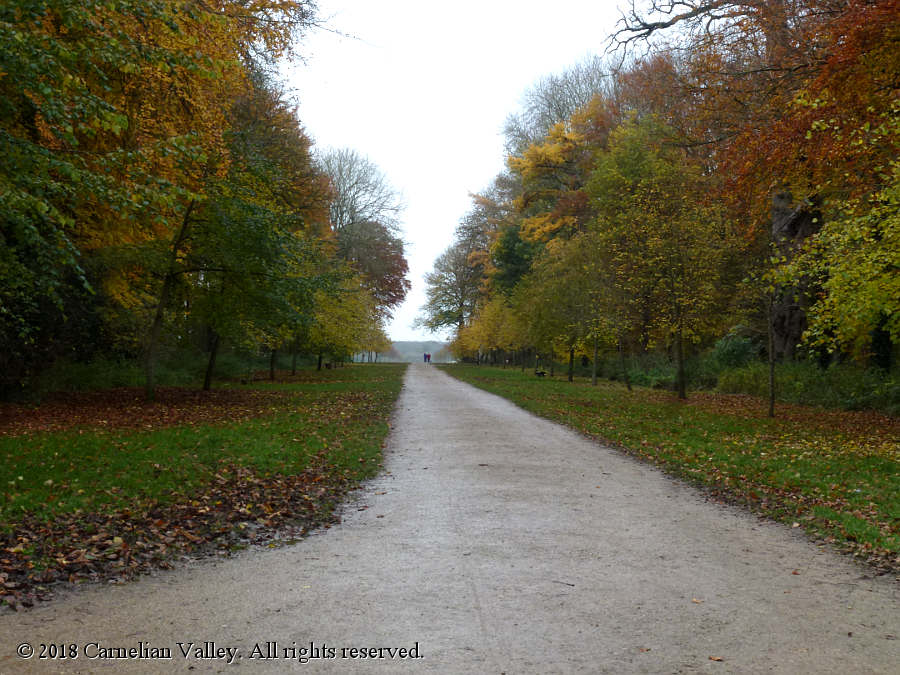
Like most house grounds, the items of particular interest outside are near the building, so if you’re coming from afar the opening hours offer more than enough time. A keen walker may want to return to see what lies in the distance. And as the grounds do serve as a local park, it’s a lovely casual experience.
The rest of my photos




Philip Pullman – La Belle Sauvage
Posted 22nd January 2018
Category: Reviews Genres: 2010s, Adventure, Commentary, Fantasy, Spiritual, Theological
2 Comments

Genesis.
Publisher: David Fickling (Penguin)
Pages: 544
Type: Fiction
Age: Young Adult
ISBN: 978-0-385-60441-3
First Published: 19th October 2017
Date Reviewed: 22nd January 2018
Rating: 3.5/5
The first months of Lyra Belacqua’s life: when not at school, Malcolm works at his parents’ pub, regularly visits the convent across the river, and paddles down the water in his canoe. One evening, the pub is visited by three men who politely decline the invitation to dine in the main room instead of the more private one they chose upon entering. Malcolm overhears snippets of conversation, and over the next few days it starts to come together. Baby. Prophecy. The Magisterium. Meanwhile Dr Hannah Relf is studying the Bodleian Library’s Alethiometer, using it to gain answers to questions that a secret group of people have hired her to find.
La Belle Sauvage is the first book of The Book Of Dust, the decades-awaited follow up trilogy to His Dark Materials. It serves as a prequel. Written in a way that’s similar to the Young Adult tone of the ’90s books but with enough nods to those readers who have since grown up, it’s (likely) accessible to new readers but certainly best read by those who’ve read the originals.
Looking at the book in isolation, it’s mostly solid. The writing is good, there’s some scary content, and whilst the second half is monotonous it remains a page turner. Possibly due to the fact that Pullman long ago established his aim, the use of religious fervour in this book is even stronger than before. Here Pullman constructs a system that mirrors many religious and political methods in history, his League of Saint Alexander creating snitches of children in order to flush out any hints of rebellion and scare people into submission. There’s a lot of background detail provided but it’s in order to further express how awful the rulers are rather than a case of infodump.
Malcolm’s a believable hero if not particularly compelling, and his counterpart – who I won’t name because it takes a while for them to be identified – is a fair match, even better, perhaps, despite having little to do. Hannah Relf is okay. One of the villains is only there to ramp up the horror and disappears with his own sets of unanswered questions. But in more important news, if you’re looking for Lyra, you’ll be disappointed, and this is where the long wait and the present come into conflict – Lyra remains a speechless baby throughout.
Is it a fair book? Yes, but when the set up of Lyra as a resident of Jordan College was established in Northern Lights, enough back story was provided. We know where Lyra’s going to end up so the worries in La Belle Sauvage aren’t of any import. And it’s difficult to say that the horrors in His Dark Materials are not somewhat damaged in impact by this new book – one can’t help but think that the people of Lyra’s world might have been on the look out for the Magisterium’s next move and thus not been quite so shocked by the happenings in the north ten years later.
There’s also the world-building. There’s not much of it – presumably because it’s expected that readers are well-versed in Lyra’s Oxford – but what is included doesn’t ring true. In the course of the book we see Malcolm collecting disposable nappies and baby formula, which is at odds with the old-fashioned steam-punk that defined Lyra’s world before.
In sum, this book, isolated from its literary context, is a good enough read. Even the monotony isn’t enough to hold it back. But in the context of history it’s an average and rather jarring addition that would’ve been better as a short story.
Related Books


2017 Year Of Reading Round Up
Posted 19th January 2018
Category: Round-Ups Genres: N/A
3 Comments
This year I read 59 books. Less than I’d hoped but when I looked at it again I realised I’d focused on that ‘5’ – 59 is one less than 60 and 60 is the average number for me. As stated previously, I wasn’t able to read as much in December as I had planned so I’m using some of January to make up for that albeit that I’ve chosen different books. The few times Ana and Iris hosted their Long-Awaited Reads month had a continuing impact on me and when a new year rolls around I find myself thinking of books I’ve had for a while or, in the case of Philip Pullman, books I’ve had for a short time but have been waiting for for years.
As with last year I had difficulty arriving at my previously usual 5 ‘best of’ books so again there are only 3. I believe it is indeed an issue of discernment and experience and I’m just going to go with the flow. There’s a subtle difference between an amazing book and an amazing book that blows you away and I’ll continue to use the differentiation to highlight particular books.
As always, books that have been reviewed have a line underneath them and the title links to the review. Up until my personal favourites list, all books are rated as objectively as possible. If you’d prefer to skip all that, click here to view my personal favourites.
The Best Of The Best


Kit De Waal: My Name Is Leon – Confused as to why he can’t stay with his mother as he is doing a good job looking after her, Leon is taken in by a foster carer whilst his white brother is adopted. A fantastic look at the British social services in the 1980s and the wider issues involved.
Phillip Lewis: The Barrowfields – Henry looks back on his childhood, his father who tried so hard to be a writer, his distant relationships with mother and sister, and his own attempts to be someone. Utterly fantastic.
Tom Connolly: Men Like Air – Three British and one American man in New York, living their lives, getting the flu, ending strange relationships, and working in art galleries. Difficult to summarise, I’ve opted to show the comedy element; this is a fab book.
5


- Charlotte Perkins Gilman: Herland
- Helen Oyeyemi: What Is Not Yours Is Not Yours
- Nicholas Royle: An English Guide To Birdwatching
- Orlando Ortega-Medina: Jerusalem Ablaze
4.5





- A J Waines: Lost In The Lake
- Amanda Craig: The Other Side Of You
- Anthony Cartwright: The Cut
- Caroline Lea: When The Sky Fell Apart
- Chitra Ramaswamy: Expecting
- Claire North: The End Of The Day
- Eric Beck Rubin: School Of Velocity
- Harper Lee: To Kill A Mockingbird
- Joanna Cannon: The Trouble With Goats And Sheep
- Louise Douglas: The Secret By The Lake
- Naomi Hamill: How To Be A Kosovan Bride
- Nicholas Royle: Ornithology
- Terri Fleming: Perception
- Zoë Duncan: The Shifting Pools
4







- A J Waines: Girl On A Train
- Josephine Johnson: Now In November
- Juan Carlos Márquez: Tangram
- Louise Douglas: The Love Of My Life
- Margaret Laurence: The Stone Angel
- Marie-Sabine Roger: Get Well Soon
- Nicola Cornick: The Phantom Tree
- Ricarda Huch: The Last Summer
- Samanta Schweblin: Fever Dream
- Susanna Kearsley: The Shadowy Horses
- Tom Malmquist: In Every Moment We Are Still Alive
- Tove Jansson: Letters From Klara
3.5



- Emma Cline: The Girls
- Fanny Blake: Our Summer Together
- Joanna Hickson: The Agincourt Bride
- Kate Chopin: Bayou Folk
- Lesley Glaister: The Squeeze
- Lewis Carroll: Through The Looking-Glass
- Sally O’Reilly: Dark Aemilia
3






- Adrian Mourby: Rooms Of One’s Own
- Alison Kent: This Time Next Year
- April Munday: The Heir’s Tale
- Barbara Erskine: Sleeper’s Castle
- Emma Henderson: The Valentine House
- HelenKay Dimon: It’s Not Christmas Without You
- Helen Irene Young: The May Queen
- Isabella Connor: Beneath An Irish Sky
- Julianne Pachico: The Lucky Ones
- Rory Gleeson: Rockadoon Shore
2.5


- Charlotte Perkins Gilman: With Her In Ourland
- Evie Wyld: All The Birds, Singing
- Hanif Kureishi: The Last Word
- Jaci Burton: A Rare Gift
- Jennifer Donnelly: Revolution
2

- Lindsey Hutchinson: The Workhouse Children
1.5

1

- Kitty Danton: Evie’s Victory
0.5
- Alison Sherlock: A House To Mend A Broken Heart
My Personal Favourites
At the start of 2017 I went back a few steps – where previously I’d got into the habit of saying ‘no goals’, in 2017 I said ‘no goals, but’. I’d considered making a vague plan for diversity in all senses of the word and I was compelled to make it formal, albeit that I didn’t set any numerical targets. Lo and behold, whilst I didn’t fail exactly, I definitely didn’t do as well as I’d hoped, so this year I’m purposefully not going to make any plan even though I want to. What I am going to do that I think (hope!) is okay to think of as a goal, is read more of my own books.
One area in which I did do well, at least in context, was older books. I added a count for books published before 1970 to my 2017 list and retrospectively, and found the number increasing without much thought. 1970 feels most right to me – a cut off is difficult and at times I feel 1970 is too young but when readers are calling Angela Thirkell’s 1960s works classics and you want to include Barbara Comyns 1950s and 1960s, that date seems the way to go.
Quotation Report
In Bayou Folk, a woman who seems 125 years old is respected, however, she is not 125 years old… she may be older.
In Get Well Soon an older man wishes people would just get on with the idea of accepting people as they are. And in The Cut, Cairo reminds us that whilst the media talks a lot about a divide and makes it seem all-pervading, most often people just get on with their lives.
In The Shifting Pools, Duncan puts forth the concept of getting over something, healing, and studies it, saying why time doesn’t heal, it merely allows you to scab over, to find new ways to live. Stasis rather than healing.
In School Of Velocity, Jan recommends a musician use the energy in the air as the house lights go down as a kind of armour. Then there’s this:
Accompaniment is a particular skill. You are the bridge between the audience and the soloist, a lens that magnifies the leading melody, a handler to the outsized personality next to you, one player who sometimes has to be two.
And in Rooms Of One’s Own, Mourby quotes from William Morris (“Have nothing in your houses that you do not know to be useful, or believe to be beautiful”) which makes one wonder whether Marie Kondo is a fan.
I missed Wednesday’s post but with good reason – I’m getting back into the swing of things and have 3 posts in the works, it’s just that they’re not finished yet. I may have to write more than one post on La Belle Sauvage because there’s the objective side of it and then the very personal part of my overall experience. We’ll see.
What was your favourite(s) book from last year?
Sarah MacLean – A Rogue By Any Other Name
Posted 15th January 2018
Category: Reviews Genres: 2010s, Angst, Domestic, Historical, Romance, Social
Comments Off on Sarah MacLean – A Rogue By Any Other Name
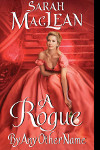
Or name(s) – he has two already.
Publisher: Avon (HarperCollins)
Pages: 386
Type: Fiction
Age: Adult
ISBN: 978-0-062-06852-1
First Published: 2012
Date Reviewed: 15th January 2016
Rating: 2.5/5
Michael, Lord Bourne, has been gone for a decade; he left after his guardian, Langford, lured him into gambling away his land and fortune. Michael’s childhood friend, Penelope, is swiftly aging away from eligibility in the marriage market; her father adds to her dowry Bourne’s old lands, which the family have since gained. Now part owner in a casino, Michael is a very different man, but he remains determined to get back his heritage. And if marrying Penelope is the way to do it then so be it.
A Rogue By Any Other Name is a book that begins very well. The set up works; the characterisation is good, the use of a casino different, the writing strong – everything holds a lot of promise. Penelope and Michael are great characters – Penelope’s wanting to have a different, more interesting, life than that which is usual means she’s adventurous and generally not afraid to say what she thinks and whilst Michael has changed a great deal since she knew him, the way they interact indicates a good book ahead.
At this stage the romantic element of the book is easy to read and enjoyable, and the inclusion of letters the younger Penelope sent to Michael is a nice touch. In terms of relationship content, it quickly becomes apparent that Michael will be taking the lead but it’s of a type that is supposed to be alluring and will be to some readers and just not alluring but likely readable for others. (Mostly – I should point out that there are a couple of things that could be called either way depending on personal preferences.)
However as the book continues, the promise of the beginning first flies out of the window, then comes back to not only shut it but lock it several times over. The story and development is ever more manipulated, the angst overdone to the point of becoming boring. The characters continue to believe things can never be good between them, which works whilst they are having problems but as the relationship takes a turn for the better – as you knew it would because this is a romance – still this ‘it won’t work’ carries on. It’s a constant refrain from both even when they’re in each others arms and giddy with love, an obvious device to keep the book going.
Change too does Michael’s nature – he becomes domineering to the extent you might wonder whether Christian Grey was the inspiration in terms of control, the problems here being similar in their effect, if not their content (though there are some minor similarities), to E L James’ series.
And the writing takes a turn. Anachronisms, historical errors, and the constant use of repetitive thoughts.
Had the angst been curtailed and literary devices limited, A Rogue By Any Other Name may have kept its promise, but by the end of the book, when the love is fully established and known by both, and yet the angst is still going on, you’ll be wondering if another name might indeed have made a difference.
Related Books
None yet
12th January 2018: Combining Goals, General Thoughts, And Reading Life
Posted 12th January 2018
Category: Chit-Chat Genres: N/A
1 Comment

I didn’t read as much in December as I’d planned, what with all the busyness of Christmas and other happenings. I’m hoping to make up for it later this month; I’ve many ‘easier’ books to read (I dislike that term but romance and fantasy is generally less mentally taxing, and I welcome it).
The yearly tradition of Thackeray being moved to the new year’s reading list has happened. This year he took with him Solomon Northup – he got lost amongst review copies some months ago – and J Courtney Sullivan’s The Engagements, which is a relative tome to start in late November with the festive season looming.
For the first time since I started reading avidly, I specifically asked that any Christmas presents not be books. I received one book and that was only because it was a present that had been meant for another occasion and hadn’t turned up in time. It was a strangely wonderful situation; as much as I have lots of books to get to regardless, not receiving more was freeing. And as much as receiving an awesome book can get you out of a funk, I can say that not receiving any books can do similarly. In fact I’m now raring to go, there’s just one thing I’m having to consider:
I’ve been spending a lot of time knitting. A few years ago, my Second Mum, as I’ll call her, started making me sweaters after she saw me wearing shop-bought knitwear. Having always been interested in knitting but only ever knowing enough to start but not finish a scarf (I’ve 3 of those lying around), I asked for instruction and now have enough knowledge to graduate to sweaters myself. I did the logical thing and decided to make my first project one for a small person rather than my adult self so there was less to lose if it went wrong… and then soon realised it wasn’t so logical a choice because children grow at an alarming rate. At best, my nephew will be able to wear the sweater for the rest of the cold season we’re currently in so it’s a bit of a race against the clock. I’ve decided I’ll make him a hoodie next but a couple of sizes bigger so I don’t feel the need to spend all my free time making it and can pick it up every now and then. The good thing is that the reading in the small moments idea has translated well to knitting – from what I’ve read, those who knit a lot have their projects ready for queues and public transport, just like readers their books.
So that’s taking more of my time at the moment but I’ll be finished soon and looking forward to giving time back to reading; I enjoy it but knitting is going to have to go a few steps back in the priority line.
…Because I am reading, albeit slowly. On a few present-giving occasions last year, I found myself with a selection of romance books – hence the note at the beginning of this post. I received the last two books in Eloisa James’ Desperate Duchesses series, a couple of books by Sherry Thomas, and a Sarah MacLean I’ve heard a lot about. I also received Eowyn Ivey’s To The Bright Edge Of The World, and in terms of review copies Jessie Greengrass’s Sight is high on the list. I won’t be getting to them all one after the other but most will be read fairly soon.
Once again I’ve decided not to set any particular reading goals – I’ll read as much as I can get to. Last year’s reading wasn’t as diverse as I’d hoped and I think keeping that in mind this new year may mean it’ll be better. Certainly it seems that when I make any sort of specific target in regards to anything related to books it doesn’t happen. Vague notions are best.
What are you hoping to achieve this year, in terms of reading or otherwise?


