





Helen Oyeyemi – Boy, Snow, Bird
Posted 11th January 2016
Category: Reviews Genres: 2010s, Angst, Domestic, Historical, Magical Realism, Social
8 Comments

Racial divide? What’s that?
Publisher: Picador (Pan Macmillan)
Pages: 306
Type: Fiction
Age: Adult
ISBN: 978-1-447-23713-6
First Published: 27th February 2014
Date Reviewed: 6th January 2016
Rating: 3/5
Boy, a girl, runs away from home, and the abuse from her father. She gets off the bus at the end of the line, moves through a few menial jobs, makes friends. The boy who loved her, who she loved, is forgotten as life takes her towards businessman Arturo and his reputedly perfect daughter, Snow.
Boy, Snow, Bird is based around three girls/women. There isn’t much plot – what little there is isn’t particularly compelling – this is a book written as a study. It’s not bad but beyond the study there’s little to cling to and the ending comes out of left field.
This study, then, forms the subtle backbone of the story. It’s great, full of the sorts of sentences that beg quotation for the meaning they provide because the handling is really very good. Oyeyemi hasn’t a unique viewpoint, but the way she’s written it is wonderful. To sum it up, the book is about race – divisions and broader social issues in the mid 20th century.
To speak of it in long form, the book is about the way this fictional group of black Americans – whose role in the story is to illustrate this particular angle – try to fit into the mostly white society. Strictly speaking, it’s about colour, for example you aren’t told until 1/3 of the way through that particular characters are black, showing the importance of the question, ‘does colour really matter?’ Now of course you may have viewed these characters as black anyway, the lack of detail at the beginning lets you imagine what you want to imagine – but being shown, suddenly, almost, that they are black is what Oyeyemi seems to have been aiming for, not in order to shock you (in case you’ve seen them as white people) but in a literary fiction shocking way, if that makes sense.
The family of Boy, Snow, Bird accomplish their desire to fit in by never acknowledging their colour. That the book is fictional, verging on magical realism, means that they are able to completely ignore their colour in a dismissive way (without actively being dismissive) that furthers the point without the need for the reader to suspend belief. A prime example of the way the family functions is in the scene wherein Boy is asked, by her black in-laws no less, if she slept with a coloured man to produce her mixed-raced daughter.
On the surface Boy, a white character, finds no shame in differences, and never mentions it beyond her discussions with her in-laws.
“Nice try, but I’m not going to stand here while a coloured woman tries to tell me that maybe I’m the one who’s coloured.”
Oyeyemi’s Boy is open, firm, no nonsense; rather than seeming at all superior, she causes Oyeyemi’s study to be more obvious. There is never any sense that Boy is higher or indeed lower because of her whiteness. Or is there? Why did Boy send away her beautiful step daughter?
The above said, you can likely see where ‘Snow’ comes in. Snow is not white but she’s the apple of her relatives’ eyes, a girl supposedly of lighter skin who everyone adores because of it. She fits into the white society, supposedly tricks white people into thinking she’s like them – of course that she’s like them is Oyeyemi’s whole point so the book is a little meta. As says Boy:
Snow’s beauty is precious because it’s a trick. When whites look at her, they don’t get whatever fleeting, ugly impressions so many of us get when we see a coloured girl – we don’t see a coloured girl. The joke’s on us.
In addition to this basic premise, Oyeyemi takes a glance further back to the days of plantations and the differences between ‘house negros’ and the people who worked in the field, the hierarchy there.
Moving on from this subject, it must be said that Boy, Snow, Bird is no fairytale re-telling. Yes there is a beautiful girl called Snow, and yes her stepmother sends her away, and there are mirrors, but beyond that there is nothing. If you want to read an exceptional dialogue of race relations and fitting in, give this book a try, but if you’re looking for a retelling go elsewhere.
Mirrors in this book suggest beauty, look at beauty and identity. What Boy sees in the mirrors she’s obsessed with point to many issues she has and it is primarily here that the book shows the distinction between fantasy and magical realism. It’s a fair subject and an interesting look at both the outer world and the inner world – what one sees in themselves, what others see, and what can cloud perception.
Where Boy, Snow, Bird fails, then, is in the way it’s written. It’s not the words – Oyeyemi writes beautifully – it’s the execution. The addition of characters that don’t aid the plot. Letters when prose and actually meeting the characters would’ve been better. An ending that seems thrown in for good measure. A lack of detail and a general confusion, different to the planned racial confusion, and distance between reader and characters, make it difficult to lose yourself in the text and work out where the characters are, what time they’re in, what’s going on, and what the book is about. Unfortunately the question ‘what does this book want to be?’ can be applied here.
It’s hard to say why the ending was written. In the last few pages Oyeyemi starts up on a completely new issue that is interesting in itself but has no baring on the rest of the book – or at least it shouldn’t; Oyeyemi sort of jams it in. If it is an attempt to provide a reasoning for abuse it fails miserably because it’s not a very nice thing to use in comparisons, at least not in the way it’s been written. If it’s to try and show that the author hasn’t forgotten the set up, it really wasn’t needed here. And if it’s some sort of girls in it together idea it just falls flat. (This issue warrants the use of an extra genre tag but I’m not going to use it because the book does not do that tag and its readership any favours.)
If Boy, Snow, Bird had been a novella or short story, more focused, it would’ve been excellent. As it is although there’s much to like about it on a historical and intellectual level there’s just as much that isn’t so good and as such it’s difficult to fully recommend it. If there was ever a chapter book to dip into, this one is it.
Related Books

2016 Goals
Posted 8th January 2016
Category: Chit-Chat Genres: N/A
5 Comments
I was ready, when I set out this post, for a potential upset when I realised how much I hadn’t achieved. It turns out I had one goal (pardon my use of the same photograph) and I accomplished it – I read as much as I comfortably could. Granted, it was a simple goal and I accidently took advantage of it – that 56 books is my second lowest number since blogging – but looking back at that post makes me feel better. It is nicer to not see a list of goals you didn’t complete.
That said, I want a bit more to work towards this year. Just a bit. (I’m aware the fact I forgot to check my goals last year means I may forget these…)
As I mentioned in my year round-up, my male to female ratio was awful; I want to improve it. I’m not going to aim for 50/50 because that’ll restrict my ability to choose based on the book itself, but I’d like a bit more balance. My reading was pretty skewed towards American and English literature; I want to ‘remind’ myself of my youthful reading this year, put into practise the idea I had a while ago to go back to Asian literature. This may include a couple of re-reads and I might just get to that biography of Ci Xi I’ve had for a while now. I want to read another Dickens, another Némirovsky, the Isherwood Alice recommends, some Murakami.
I’ve some blogging goals too, namely to get back into commenting and back into responding to your comments on my posts, but I’d also like to get back into using Twitter on a day-to-day basis.
What are your goals for the year?
Second Half Of 2015 Film Round-Up
Posted 6th January 2016
Category: Film Genres: N/A
4 Comments
In any given year I seem to forget about the screen somewhere between June and July and that’s it until the next January. This time around I have Christmas to thank – we watched four films and as is often the case, there were some interesting ones on catch-up television.
Here are the films I watched for the first time during the second half of 2015.
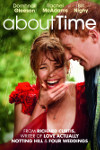
About Time (UK, 2013) – Funny, poignant, and, hey, it’s by Richard Curtis. You do need to suspend reality as the time travel has a lot of holes but the message rings true. And that title is pretty meta.

The Book Thief (USA/Germany, 2013) – It’s not the same (it was never going to be, so much of the book’s success is in the writing itself) but it’s a great film nonetheless. Best viewed as it’s own creation.

Jurassic World (USA, 2015) – You have to suspend reality for more than the obvious reason but this is a good film.
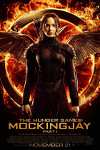
Mockingjay Part I (USA, 2014) – Like the book, this film isn’t as good as the others in the series, but it’s a fair addition and I liked that they went against the books and kept Effie.

Paddington (UK, 2014) – I had my doubts when we started, but this is a great film and, like Disney, there’s a lot of adult humour, too. I’d never liked Sally Hawkins before this film; everything I’ve seen her in she’s been upset or angry or wicked, but here, well, I really don’t know why more films don’t have her in happy roles; she’s a delight to watch.
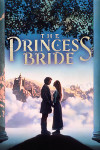
The Princess Bride (USA, 1987) – Finally saw this after hearing so many Americans talk about it. My expectations were a bit too high – take out those and I loved it. Yes, it’s dated, but if you’re expecting that it’s fine.

Romeo & Juliet (UK/Italy, 2013) – This was rated negatively, mostly due to the butchered dialogue, but I quite liked it. They made a point of showing it’s set in Verona and we actually got to see Rosaline.
So not bad in the end, though it could’ve done with more diversity in all senses of the word.
What films have you enjoyed recently?
2015 Year Of Reading Round-Up
Posted 4th January 2016
Category: Round-Ups Genres: N/A
5 Comments
So this year I read 56 books, carrying 3 over to 2016. I read a similarly paltry number of non-fiction as last year however I’m surprised and quite pleased to say that I read a fair amount of translated fiction – compared to previous years. It’s down to the publishers I work with, yes, but I’ve been inclined to choose translated fiction anyway. I’ve been reading the back of every Murakami I see, trying to see if I can change my initial and lasting thought that I’d like to start with Norwegian Wood. I’ve been looking longingly at Shan Sa – Chinese fiction written in French – and reminding myself that’s it’s all right to re-read a book.
As always, books that have been reviewed have a line underneath them and the title links to the review. Up until my personal favourites list, all books are rated objectively. If you’d prefer to skip all that, click here to view my personal favourites.
The Best Of The Best


- Adelle Waldman: The Love Affairs Of Nathaniel P – Detailing some of the many short relationships of a writer ensconced in the journalism and publishing industry, with a look at why things go wrong for him. This is a really, really, great book.
- Anna Hope: Wake – In the first few years after the First World War, three women struggle, though they don’t always realise it, with the realities of life as it now is. This book is really superb and the fourth thread in it, that of the (fictionalised) story of the Unknown Soldier’s homecoming is very moving; if this book is ever adapted for film I will be very happy.
- Bernhard Schlink: The Reader – At fifteen, Michael has an affair with an older woman and years later sees her once more, this time in a war trial. Fantastic.
- E Lockhart: We Were Liars – Cadence spends every summer on her family’s private island but the younger relations start questioning the perfection. Phenomenal.
- J K Rowling: The Casual Vacancy – The death of a parish councillor not only creates a rush to take his place, it also creates even more tension between those for and against the already-existing integration of a council estate. Loved it – as I said, a great book about awful people.
- Kate Chopin: The Awakening – A wife and mother in 1800s America pushes against the social traditions that restrict her life. Absolutely excellent.
- Nicola Cornick: House Of Shadows – A woman looking for her missing brother starts to unravel the mysteries her brother was working on at the time and finds out the house she’s always seen beyond the trees was destroyed years before she was born. Utterly superb.
5




- Barbara Comyns: Our Spoons Came From Woolworths
- Claire Watts: How Do You Say Gooseberry In French?
- Irène Némirovsky: The Misunderstanding
- James Rhodes: Instrumental
- Mary Ann Shaffer & Annie Barrows: The Guernsey Literary And Potato Peel Pie Society
- Meike Ziervogel: Kauthar
- Sara Taylor: The Shore
- Sarah Howe: Loop Of Jade
- Stephen Hawking: A Brief History Of Time
4.5


- Angela Thirkell: The Brandons
- Elizabeth Baines: Used To Be
- Eloisa James: Duchess By Night
- Emma Healey: Elizabeth Is Missing
- H G Wells: The Time Machine
- Helen Lederer: Losing It
- Laura Barnett: The Versions Of Us
- Raymond Jean: Reader For Hire
4


- Elizabeth Fremantle: Sisters Of Treason
- Gøhril Gabrielsen: The Looking-Glass Sisters
- Guy Ware: The Fat Of Fed Beasts
- Judy Chicurel: If I Knew You Were Going To Be This Beautiful, I Never Would Have Let You Go
- Leo Tolstoy: Anna Karenina
- Mikhail Elizarov: The Librarian
- Paula Lichtarowicz: The First Book Of Calamity Leek
- Tracy Rees: Amy Snow
3.5


- Aki Ollikainen: White Hunger
- Annie O’Neil: Doctor… To Duchess?
- Eloisa James: When The Duke Returns
- Intisar Khanani: Sunbolt
- Jo Walton: Among Others
- Lisa Hilton: Elizabeth – Renaissance Prince
- Nancy Bilyeau: The Tapestry
- R J Gould: A Street Café Named Desire
- Robert Merle: The Brethren
- Sarah Govett: The Territory
- Shannon Stacey: Taken With You
- Téa Obreht: The Tiger’s Wife
3



- Amy Stewart: Girl Waits With Gun
- Erica Vetsch: The Cactus Creek Challenge
- Georges Simenon: The Late Monsieur Gallet
- Helen Oyeyemi: Boy, Snow, Bird
- Horace Walpole: The Castle Of Otranto
- Sunjeev Sahota: The Year Of The Runaways
2.5


2

- Melanie Shawn: Let It Snow
My Personal Favourites
I fell into a half-planned, half-accidental rhythm some time within the first few months, starting with Adelle Waldman. I found myself inclined to read literary fiction and suitable review copies were arriving. It’s been a good thing because, as this website probably indicates, I enjoy literary fiction a lot even if I think the category itself odd. But there was still that lingering feeling of fear; where literary fiction involves much thought, I worried I wouldn’t be able to do it justice in my reviews. I know I sometimes miss elements when I get distracted by something that intrigues me a lot. That worry’s still there – it’s almost part and parcel with the genre I think, given the implied elitism – but it’s lessened. I suppose like anything, practise is key.
My reading was skewed towards women at 41 – I’m looking to balance it out a bit this year. Three books were non-fiction, 9 translated fiction. I read 5 bonafide classics, if you will (because I’d include Comyns and Thirkell myself), and the oldest book I read was the Walpole. Unsurprisingly there were a variety of new-to-me authors, 45 to be exact. It’s a fair number and, whilst I’m happy to be broadening my author horizon, it did indicate that I need to get back to the backlists of old favourites. Lastly, and I’m a bit embarrassed about this, it turns out I’ve been giving Mary Ann Shaffer an extra S in her surname ever since I reviewed her book in June…
Quotation Report
Striking somewhat of a chord is Nate from The Love Affairs Of Nathaniel P who comments on the way the numbers that may constitute a popular book would earn a television show the axe.
Aunt Sissie of The Brandons suggests staying in bed as a way to live longer, whilst Delia would likely not suggest anything due to her morbid fascination with death and disease. Being in the car with someone on their way to hospital for appendicitis is so brilliant after all, darling.
Mori of Among Others brings a smile when she says she’s going to keep Dodie Smith’s I Capture The Castle for a day she’s interested in a good siege. There is also this, showing double standards: ‘How interesting that what comes out as doing the best he could in a man looks like neglect in a woman’.
Gat from We Were Liars states that a novel should deliver a series of small astonishments, which is a lovely way to put it and surely what we often look for when we sit down with a book.
In Anna Karenina, Tolstoy makes a good point when he suggests that women lacked rights because of a lack of education and a lack of education led to a lack of rights. On a humorous note, he also points out that a man can sit uncomfortably in a chair but be happy enough as long as he knows he can move – if he knows he can’t move that same position will be impossible.
In the next few days I’ll be posting my goals for 2016 as well as my second film round up.
What were your favourite books of 2015?
December 2015 Reading Round-Up
Posted 1st January 2016
Category: Round-Ups Genres: N/A
4 Comments
Happy New Year! I expect when this is posted we may still be having turkey sandwiches for dinner. It’s strange to say now that I’m 2/3 of the way through the Oyeyemi because unless it’s far, far more busy than we’ve planned, the book should be on the list below. Is that meta? I’m writing from the future. I’ve also had one too many chocolates and it’s the 23rd of December…. Anyway, I hope you’re all having a lovely Christmas and New Year’s Day and I’ll see you in a few days. Here are the books I read in December.
All books are works of fiction.
The Books
Helen Oyeyemi: Boy, Snow, Bird – Boy runs away from her abusive father and marries a jeweller. Her new step-daughter is lovely but Boy has trouble coping and sends her away. Doesn’t know what it wants to be.
Melanie Shawn: Let It Snow – 13 years after leaving Jake without reason, Tessa returns to the town to take care of her grandmother’s estate. Awful on many levels; don’t bother.
Sunjeev Sahota: The Year Of The Runaways – A group of Indian men travel to Britain, mostly illegally, to get money for themselves and their families. There are some good studies in it, but it’s a bit long and the ending comes out from left field.
My favourite this month was… whoops, forgot to finish this part. I didn’t really have a favourite this month, no stands outs. I did have a least favourite, which should be obvious from the above. During the holiday I started Wild and continued The Spring Of Kasper Meier. I’m finding the former to be exactly as the reviews I read said it was.
Quotation Report
None this time.
I guess the only thing to say is, hello 2016!
What was your favourite read this month?


