




Further Thoughts On Boy, Snow, Bird
Posted 22nd January 2016
Category: Further Thoughts Genres: N/A
Comments Off on Further Thoughts On Boy, Snow, Bird

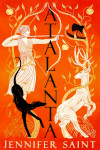
As you know, I didn’t rate Boy, Snow, Bird that highly, but as you also know, I absolutely loved Oyeyemi’s study of race. Her handling of it, the way she put into words what she wanted to say, thrilled me in that most literary way. I noted more quotes than I used and would like to use them here.
What I like about the study, something I didn’t discuss, is the way Oyeyemi speaks of worry after the fact. The way, for example, Arturo asks Boy:
[I]f I’d have married him if I’d seem him as coloured.
A kind of hindsight, the way the marriage has already happened so asking this question could just lead to an argument if she’d said ‘no’, but also the worry Arturo obviously had but didn’t talk about before, showing that he at least – if not his family – does actually ‘feel’ his race more than he might say. He’s bothered enough by it although he’s been successful ‘passing’ as a white man. Perhaps it’s the very not-acknowledging that causes his worry, keeping up appearances for his family.
But it also speaks of another issue – regardless of the passing, does colour still matter – in other words, in general terms rather than specific to Boy, does it matter that Arturo is coloured? What should colour mean – should it make a difference? Oyeyemi’s point is that it should be acknowledged, that passing is no way to live, but that colour is literally skin deep.
I liked this:
“Nice try, but I’m not going to stand here while a coloured woman tries to tell me that maybe I’m the one who’s coloured.”
The context is Boy’s seemingly not-bothered thoughts on race but we can delve into it and see something else – pointing out, in this regard, that Boy’s the ‘other’ here, that in terms of minorities and difference, Boy’s the anomaly. There’s also the factor that everyone’s skin is coloured in some way , that is to say again, skin deep, that a person’s skin should have no baring on their treatment.
This comes later in the book, from Bird I believe, but it follows on:
I’m slowly coming around to the view that you can’t feel nauseated by the Whitmans and the Millers without feeling nauseated by the kind of world that’s rewarded them for adapting to it like this.
Quite a sentence. It’s good for them, living-wise, that they can pass, but bad that they should have to. You can peel back the layers and see that whilst the relatives may not want to say a word about their colour, their race, they’ve conditioned themselves to it. They’ll not speak of that either – maybe they don’t even realise it’s a bit like the hierarchy of the ‘house negros’ and field workers of yore that Oyeyemi mentions, that they’re rewarded whilst being patronised and pushed back from society – but in this one sentence Oyeyemi exposes everything.
The Present Past: Old Wardour Castle
Posted 20th January 2016
Category: The Present Past Genres: N/A
4 Comments

Old Wardour Castle, near Salisbury, was the home of a few different families and was a casualty of the English Civil War, the owners at the time supporting the King and the land threatened as a result. A new castle was built when the family recovered power and the old ruins were left as they were.
The setting of Old Wardour, herein to be known as Wardour because the ‘new’ castle is not on the same site, is the most beautiful I’ve come across so far. It’s like a fairyland, a romantic setting of the sort that might have been used in old romance novels. High on a hill a few miles from Salisbury, the landscape is brimming with trees – forest – a stunning lake, and views for miles.

The castle, in its ruined state, rooms unrecognisable, echoes Rochester Castle’s set-up. If you recall my post on that easterly ruin you’ll remember I didn’t say as much as the size of the building required and that that was because in its present state you simply went round and round viewing the same scene. For similar reasons, I’ll be doing the same here.
You don’t go round Wardour as you do Rochester, but the way the towers spiral higher and higher makes everything rather repetitive in a way it obviously wouldn’t have been in years gone by when it was furnished. The towers open to bedrooms, that much is clear, but whose bedrooms would be anyone’s guess. I’ll be your tour guide to a point after which you’ll have to do some creative work.

When you drive up to Wardour you will have already had a bit of an experience. The literal upwards motion showing off the landscape. The trees are so abundant there’s no use looking out for the castle until you’re practically on top of it and the use is no more. You must drive – you could probably walk it but the roads are narrow and it would take a very long time. If you’re planning to walk you’re not planning a walk – you’re planning a hike.
There’s a lovely spot of green space for parking. On the day we went there seemed to be a rally of sorts going on, unaffiliated with the castle. It’s a popular place for families (though not too popular – children use the ruins to hide in but we’re not talking more than a few dozen people in total) so you can take a picnic but still bask in the atmosphere. Do check the day you plan to go – a couple of rooms are forever cordoned off as they serve as a wedding site which suggests weddings happen here often. Indeed there was a wedding on when we visited and we had to wait to view the banqueting house (like a summer house in appearance).

Wardour sports a little grotto made out of fallen stones from the castle and a couple of other places to find as well as that small banqueting house. The castle stands in the middle of a circular green that’s a bit of a hill itself and leads down to the lake and some very lucky person’s house. (Admittedly it can’t be nice living amongst constant noise.) The site is bordered by a wall where it counts – going to the lake is a deliberate action.
The great thing about ruins is that you can generally, safety pending, enter the building from whichever entrance you like. You can walk up those grand steps and walk through the main doorway to the envy of those gone before you who were relegated to the servant’s hall and experience the largesse as it was made to be experienced. All this to say, I entered through the main archway and it was grand. Because Wardour is grand, approximately seven storeys of past luxury.
A room on the right housed a guard. It would make a good hiding place for children (and I expect it may be used as such) – there’s a narrow gap, perhaps an old toilet, that the very short can go through, over a small wall, and stand in.

In the entrance area itself is a beer cellar. It looks a bit like a lobby, really, a fireplace and set of stairs at the back wall, but in a time when water was not pure I suppose you’d want a lot of storage space for alcohol. Perhaps in times gone by people wouldn’t have seen a space or an alcove and thought ‘walk-in wardrobe! Library!’, instead wondering if they could send a messenger to Dave to ask about the dimensions of his wine racks. If it’s raining when you visit, the entrance is where you want to be. Whilst the bedrooms have ceilings they also have windows and the cellar is, aptly, light and thus wind free.

Beyond the cellar is the courtyard. Even now it’s grand. There are quite a few paths to choose from here and it’s worth remembering exactly where you’ve detoured so that you can come back to the courtyard and press on with the other routes afterwards. The sweeping staircase is one of two ways up, the other rooms at ground level only requiring a few minutes. There’s the cordoned off rooms I mentioned to the right, and a few doors that lead to the other side of the green. One room is accessible only by walking outside first.

Taking the ground level rooms first we have a couple of dingy places partly held together by recent re-building. Whilst I did change my lighting setting when taking photographs to offset the lack of sunlight the greenish tinge reflects the reality. Lichen has made its home on the walls. The information boards say that this, or these, rather, are the ground floor kitchens. It can’t have been nice working here. It’s stuffy enough and that’s with a damaged ceiling and lots of air.

To the courtyard again, this time ascending that magnificent staircase (photo at the bottom of this post). I believe this large room was the hall and once again you’ve different doors to choose. The small rooms to the right. The roofless rooms beyond. The spiral staircases. The small rooms are nondescript but it is worth looking around for the bars that signal a drop beyond – you can get good views of the rooms below from them. You can walk up narrow, worn, stairs to other look outs and small rooms and there’s a second spiral, other than that to the bedrooms, that will take you back down and out a gap in the side of the building.
The rooms beyond the hall are the great chamber and kitchens; this place could hold quite a party.

Up the spiral staircase to a room that shouts ‘bedroom’ just for the smallish size and fireplace. Up again to another, and then again – there are about four of the exact same room. If we suppose the inaccessible parallel tower sported the same number we’re looking at an 8 bedroom detached mansion with large garden, complete with children’s hideaway grotto and summer house. The last part of the building to see is the roof, or at least what’s now the roof.
Choose your way back down and you’ve the banquet house, grotto, standing stones and bridge to see. The banquet house is composed of two rooms, nicely decorated, 1700s in style.

The grotto is small and looks more tumbledown than you might expect, the stones pitted all over and suggesting a fairyland in the making. You can walk through it and there are a couple of places to sit. The standing stones are more restful.
I didn’t find the bridge. I looked, because the guidebook said it has a wonderful view of the castle, but where it’s situated I don’t know.

Wardour makes a lovely day out. There’s more to see than photographs of the exterior suggest, so don’t plan too much else, but there’s also not all that much to do once you’ve been round it. You do have to be careful – we went up the spiral and there were a couple with dogs coming down (really not sure that’s allowed) but for the most part there are hand rails – the stable, metal kind – and you just have to tread carefully because us humans aren’t as small as we were when this castle was built. Even the kids’ feet were verging on too big for the steps.
And, actually, I’d recommend it just for the view, even just for the drive up there. Even if you’re not big on castles it’s somewhere you’ll appreciate having visited. Do remember what I said about weddings – seeing people dressed up is nice but paying out for limited access isn’t – take a picnic, keep the entrance in sight if it clouds over and enjoy the romance of this ruined ‘assall, as my nephew used to call them.
The rest of my photos (and afterwards a question for you).


Which historical place/museum/park do you most want to visit this year?
Do Book Awards Affect Your Reading Choices?
Posted 18th January 2016
Category: Chit-Chat Genres: N/A
8 Comments

Do awards affect your reading choices? This is a somewhat similar to the question of whether or not best-sellers affect your choices, but awards feel more compelling, somehow. There are limits to a longlist, to a shortlist, and it’s more dependant on opinion rather than both opinion and sales. The books have been curated, discussed, debated, and for all we try to get away from it, the thought that it’s a better signifier of quality is hard to shake off.
Awards affect my reading choices more than best-seller lists both due to the simple fact that there are fewer out there (thus easier to choose between) and because there is a lot more attention given to awards in general. There are more reviews to read, especially once the books are on the award radar, and the difference in coverage can and will have an affect on what you remember and keep in mind. It also seems to be the case that people find it easier to be honest, to speak out when they hate an award-winning book.

Best-seller lists are numerous and everywhere; award shortlists tend to be easier to find and the lesser quantity means you’ll remember them more. I’d also say the variety of books is broader due to genres being more involved.
And yet amongst all these opinions and general thoughts of excellence, the fact that awards are judged by a set small group of people is often all too apparent. Shortlisted books can be ones the public thought bad – what were the judges thinking? The book makes no sense – are the judges in on something no one else knows about, are they just too far removed from everyone else? Is it truly an objective decision? This is where reviews are important, particularly reviews by those you trust and share reading tastes with.
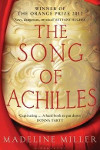
I’m currently (still, now) working my way through the Orange Prize shortlist for 2011. I’ve also one more book from the Young Writer Of The Year shortlist and some Man Bookers I hope to get to. These last few months mark a change for me – other than that Orange shortlist, when I’ve read shortlisted books it’s been accidental.
Awards definitely affect my thoughts and choices at the moment. I’m not sure how long that’ll last, if it’ll be a one time thing or a progression point, but I do like knowing I’m reading a book that many others have. I’ve found what works for me is a balance of popular books (in part so I understand what’s going on!), random choices, and books I’ve found by myself.
Do book awards affect your reading choices?
Paula Hawkins – The Girl On The Train
Posted 15th January 2016
Category: Reviews Genres: 2010s, Angst, Psychological, Social, Thriller
6 Comments

She may not see you when you’re sleeping, but she knows when you’re awake.
Publisher: Doubleday (Random House)
Pages: 310
Type: Fiction
Age: Adult
ISBN: 978-0-857-52231-3
First Published: 13th January 2015
Date Reviewed: 14th January 2016
Rating: 4.5/5
Every day Rachel takes the train to work and back home; she has a favourite house on the route whose occupants she’s made up life stories for. She gets used to their routine, seeing them in their garden most days that summer but one day the man stands alone and the news breaks that the woman has disappeared. Rachel had seen her with another man and it occurs to her that she might be able to help with the inquiries.
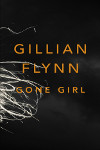
The Girl On The Train is a chilling psychological thriller with no reliable characters. Constantly compared to Gone Girl, there are some similarities but the atmosphere differs.
It’s the page-turner factor that stands out most in this respect. Whilst other thrillers make you want to speed through their pages, Hawkins’ book stays steady, a bit like a steadily moving train, ironically. You do want to keep reading because the execution is excellent, bar none, but there’s a subtlety to it, the feeling that you could put the book down, it’s just you don’t want to at present. You will finish the book quickly enough whilst feeling you were able to relax. Yes, for all grimness you’ll enjoy an even ride.
To this excellent execution then; this book is well-paced, well-plotted, and well-edited. In hindsight you can see that Hawkins gives the whodunnit away fairly early, in fact when you look back you can see the neon lights blazing above the person’s head. The reason you don’t see, straight away, who the criminal is is because of all the work Hawkins has put in to fleshing out the characters. She makes you sceptical of everyone – everyone is unreliable, in part because you come to feel they should be (that’s not to say they are in fact reliable, more that Hawkins messes your head up). The book feeds off a sort of reader prejudice, if you will, in which Hawkins plants an idea and lets you run with it. But of course you’re right to be sceptical – as much as this author-reader interaction is a game, it’s something that’s important. The nature of the situation requests that you learn how to identify who you’re looking for, to work out how to spot lies and manipulation.
Aside from their unreliability, none of the characters are particularly likeable. You’ll find yourself wondering if perhaps you should be sympathetic – and right at that time Hawkins comes in and messes with your head again. This is an author who is on the ball, who has thought of everything.
There obviously comes a time when you work it out but it’s not at the end. No, Hawkins keeps the book going for a good amount of time after this reveal, skirting the line between perfect length and too much, so you can get that bookish satisfaction. She keeps up a thin thread of mystery right until the end.
Rachel’s life is marred by her failed marriage. It’s marred by her childlessness, the depression this caused, the drinking it resulted in. The character’s unreliability is down in part to her inability to retain memories, due to drink and sometimes a sort of blanking out of the event. Is it convenient? Most certainly, but we wouldn’t have a book if she just knew everything. In this way, The Girl On The Train echoes Elizabeth Is Missing; both books feature heroines (anti-heroine in Hawkins’ case?) trying to solve puzzles they’ve forgotten the clues to. Rachel sports bruises she can’t remember getting, realising that’s par for the cause, but it makes her think nonetheless.
Through Rachel, because of her utter despair, Hawkins is able to delve into issues. She can have Rachel repeat things, which might be annoying but is understandable. Whilst unlikeable in a way you know is down to genre, Rachel comes across as real. Her issues are grounded in reality, and despite your uncertainty as to her role in the disappearance Hawkins urges you to empathise. This is a woman who needed help and didn’t get it, who has gone crazy from pain and instead of support has received scorn, at least from those she wants support from. She wears out those who care. Part of this whole thread, this subplot of sorts, relies on the ending and shows how easy it can be for someone to slip through the net. Whilst the emphasis is of course on the thriller aspect, Hawkins’ writing about what Rachel’s dealing with is important. The other characters, particularly the two other narrators are focused on, too, if for a lesser amount of time. In the case of issues this is largely a book about women but it’s not exclusive.
The writing itself is pleasant. It flows well, Hawkins makes good use of language and whilst it’s not going to be called literary fiction any time soon in terms of the text it’s not too far from it either.
The Girl On The Train isn’t going to wow everyone and it’s the sort of book that is ripe to disappoint if your expectations are too high. It’s best to go into it with a view to having a good reading time, to enjoy the journey an author can take you on. It isn’t Gone Girl and your feelings for that book won’t necessarily translate to this one whichever way you felt. Take this book as an individual and for what it is; hop aboard and take a seat.
Related Books

Cheryl Strayed – Wild
Posted 13th January 2016
Category: Reviews Genres: 2010s, Domestic, Memoir, Spiritual, Travel
5 Comments

Climb every mountain.
Publisher: Knopf (Random House)
Pages: 309
Type: Non-Fiction
Age: Adult
ISBN: 978-0-307-59273-6
First Published: 20th March 2012
Date Reviewed: 12th January 2016
Rating: 3.5/5
By 26, Cheryl Strayed had lost her mother, had multiple affairs as a result of the pain and confusion, and divorced her husband who she still loved, knowing that separating was the right thing to do. Looking back on a random shopping trip she’d taken, when she’d seen a guidebook about hiking the Pacific Crest Trail, Strayed decided to up sticks and take up the challenge of travelling a large portion of it (without any preparation), hoping it would help her get back to herself and work out how to move on.
Wild is a memoir, a hybrid of travel report and spiritual (not religious) journey that includes both the day to day of Strayed’s literal journey and flashbacks to the past. Written up around 18 years after the events it rests on memory and diary notes.
I’ve written that last sentence now so we can deal with this part first – it’s best to know before going into Strayed’s memoir that a lot of time has passed since her journey and thus when something doesn’t sound quite true or realistic, it’s not necessarily made up, though of course it could be. There are a lot of anecdotes and repeated information, a lot of detail that is difficult to believe considering Strayed never mentions writing in her journal (instead falling asleep exhausted many times) and some things sound a little too… cute. It’s fair, in this book’s case, to say that Strayed probably isn’t lying – she has most likely forgotten a lot of details and had to rely on sketchy memories and other people’s memories to form conversations. Because she’s detailed a lot of conversations in great, well, detail.
It’s obviously a pity from this perspective that the journey happened so long ago, but the dubious quality of the book is not, at least, a drawback. Strayed doesn’t exactly impress upon you the fact she’s writing so late, but it’s not been hidden either. Who knows, perhaps some of it was written up and no one wanted to publish it at the time. Suffice to say it’s worth keeping all this mind, accepting that your doubts may be warranted, and then getting on with the book.
Because it’s a good book. Strayed is open about the fact she’s no seasoned hiker (and you’re not going to find Bill Bryson or the like here) but that’s part of the journey. Strayed learns to hike as she goes along, detailing plainly her silly, rash, decisions, her embarrassing moments, the times she was worried and wanted to quit, and this lack of knowledge means that the book is accessible to anyone who is interested in hiking, whatever their own experience. (It’s worth noting that Strayed doesn’t hike all of the trail, and a few times she hitch-hikes to bypass certain sections which can be a bit disappointing as a reader.)
Less humble is Strayed’s discussion of her family. There is an element of self-absorption in the book that’s pretty tolerable during the hiking sections but less so in flashbacks. Strayed casts herself as the golden child, putting herself on a pedestal and detailing the lack of time her siblings put into the event of their mother’s illness and the aftermath of her death. It could well be true, and certainly Strayed talks more objectively about her siblings later on, but it doesn’t do Strayed any favours. Most other people are given more thrift. Strayed’s ex-husband is blameless, indeed Strayed makes it clear it was her fault without going into apologies – it’s a fact, it happened, and now she’s got to move on. Fellow travellers fare differently depending on how they appeared and how they treated Strayed, quite naturally. For all this book is about solo hiking, there are meetings with many other people, too.
It’s true that whilst open and humble about her lack of hiking ability, Strayed has a lot of good luck on her journey and writes a lot of me-me-me paragraphs. This is where you have to know that this isn’t simply a travel memoir – the whole point of Strayed’s journey, whilst, yes, she certainly wants to be able to say she managed to hike the trail and celebrate such an accomplishment, is to move on from her mother’s death. But yes, it can at times become a bit much.
Now the prose itself is far from perfect but as an overall product, Wild is a good, easy, read. Strayed succeeds in taking you along with her to the point that you’ll likely feel as daunted, yes daunted, once the end is nigh – physical exertion aside, you’ll feel you’ve joined Strayed on the trail. As much as she looks back on her life she describes the landscape and offers an image clear enough that the lack of photography in the book is no drawback. What’s the landscape? Forest, desert, snow, sun, heavy rain – pretty much everything. There’s even a crater formally known as a volcano. And throughout Strayed carries her monstrous backpack, the shoes on her feet causing her no end of problems. (She’s pretty graphic about those problems; beware if you plan to read this book over lunch.)
Strayed discusses abortion, her affairs, her drug use, openly – almost to a fault. She swears casually. This is a book full of heart, full of personal truth, but it must be said there’s no big resolution, in fact the book ends quite suddenly with a purchased reward, a glimpse of what hindsight could have told her about the future, and nothing else. Clearly the takeaway is the journey, the journey on foot and the journey in mind.
A special mention must be made for the literary details. Strayed reports on the books she read during her trip, their subject matter, what she likes about them, and then their unfortunate end as she turns their extra pack weight into ashes. There’s a nice variety here and to show that books are important despite their sorry ends, there’s even a list of them at the back of the book in case you want to be well-read in a particular Cheryl Strayed manner.
Wild offers the chance to go on a long hike without moving a muscle. It offers a story of personal growth and redemption that’s earnest and unashamed, even inspiring. Should you read it? Yes; even after all the problems discussed, I still think you should.
Related Books
None yet


