




Appropriate And Inappropriate Conversation In Alice’s Adventures In Wonderland
Posted 9th November 2016
Category: Further Thoughts Genres: N/A
2 Comments
I wasn’t a fan of Alice’s Adventures In Wonderland in general, personally (Disney influence? Time period differences? I think there’s another post lurking here…) but something I really loved and appreciated was Lewis Carroll’s look at a particular skill within the art of conversation – knowing when a particular item of information may or may not be appropriate to any one setting and/or group of people. It’s like a mini crash course in how to be polite, written in a way that’s understandable when you’re younger, and, actually, when you’re older, too. (You just pick up on it sooner when you’re older.)
This crash course is included a little in the second chapter but is most remarked upon in the third chapter. By remarked upon I mean by Carroll – he does not address it directly, does not say anything equivalent to ‘now see here, children, why Alice shouldn’t have said this to the birds’ but it is quite obvious in a subtext sort of way.
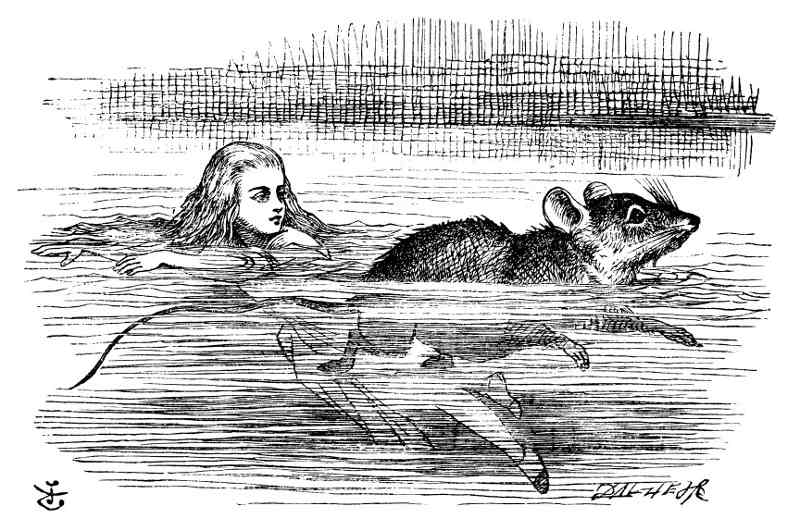
The first case comes when Alice has cried her pool of tears and finds herself, now much smaller, swimming in the pool alongside a mouse. Here she starts by saying “Où est ma chatte?” which isn’t translated in the book, presumably because the target audience would be learning French, but which we can gather regards her cat. (The translation is ‘where is my cat?’ which is a bit of an odd thing to ask in such a situation anyway but we can forgive Carroll this literary device.)
What’s interesting here is that Alice realises the offence straight away, saying, when the mouse ‘gave a sudden leap out of the water, and seemed to quiver all over with fright’ (it knows French too?) “Oh, I beg your pardon!… I quite forgot you didn’t like cats.” Of course this has a second purpose in that it informs any non-French reader as to the subject of the French sentence – so perhaps my presumption of lessons is incorrect or Carroll is simply aware of the wider, highly varied audience – but the fact of inappropriate conversation and the act of causing offence, as well as how to deal with it swiftly, is accomplished here.
Why then, in chapter three, does Carroll return to inappropriate versus appropriate and leave Alice oblivious as to the effect cat-talk has on the birds (and the mouse who has remained in her presence after a brief run-down of why cat-talk is offensive)? It’s fair to say that Carroll might be thinking it’s a good subject to look at further, to cover in depth. And, having introduced it and stated why it’s a problem, Alice’s oblivious in chapter three might be easily spotted by the attentive reader who would have a chance to feel good, triumphant, at working out the problem themselves. I reckon it’s a bit of both and I have to say as aunt to a keen learner, I love the author for it. It’s a wonderful bookish interaction that has the potential to really engage a child.
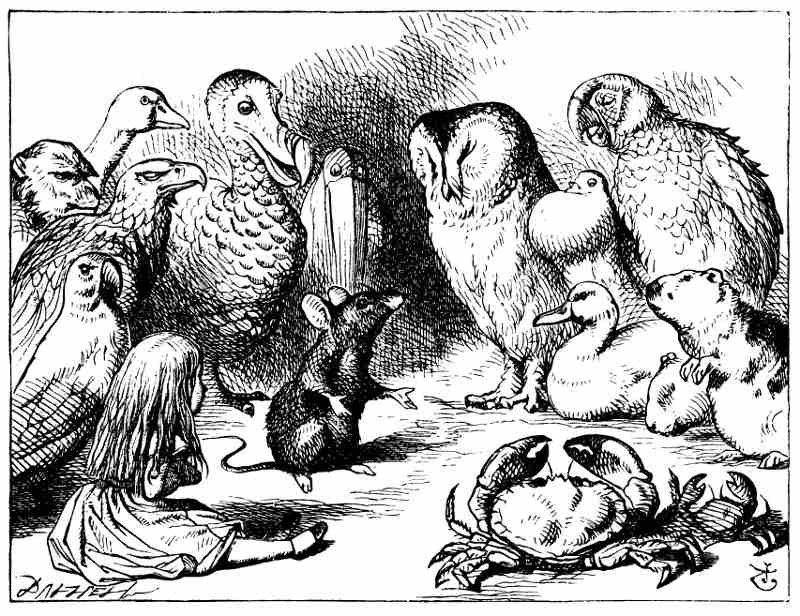
Anyway, in chapter three, Alice tells the animals – the birds and mouse – how lovely her cat is and they all ruffle their fur and feathers and make to leave. Alice is confused by this because, to paraphrase, if they could only meet Dinah, the cat, she’s sure they’d love her. This time she completely misses that instinctual lasting conflict, as it were, between birds and cats. (Thinking about this, if we consider that in some cases the situation between cats and birds reverses so that the cat is the prey, we could, although it’s obvious Carroll is considering only the most usual situation of cats as the predators, say it’s just an overall conflict. Yes, I’m now in thinking too much mode…)
In this, the second instance of this lesson, Carroll keeps Alice repeating the general notion of Dinah’s loveliness, perhaps to make the lesson stand out and be stronger, and to illustrate the extreme obliviousness that might make a child laugh and note that Alice is so silly. If he told you about it that first time when Alice said beg pardon, here he’s not saying anything at all, has effectively left it all up to the reader to work out.
Interesting is the fact that in the first instance, of just the mouse, the animal returns a couple of times throughout the uncomfortable dialogue, whereas in the second instance of birds and mouse, everybody leaves. Perhaps this is a show of people giving a second chance but only so much, that people will indeed leave completely if you don’t cotton on to what you’re saying and don’t apologise; it’s also a device, the mouse teaching Alice whilst showing discomfort. And of course in that first instance, Alice redeems herself.
None of this is included in the Disney animation, which makes a lot of sense because really it’s quite dull as far as the more bizarre and fantastical parts of the story go and it’s likely the film-makers considered the lesson wouldn’t work so well on screen. It is very much a teaching moment than a good story moment (and quite a relief to get past when you’re an adult reading it for the first time!) but for its merit, it’s very much worth reading the book rather than defaulting to the film.
The teaching of inappropriate and appropriate conversation in the book was the biggest takeaway for me, partly perhaps because it’s something not well-known overall but mostly because it’s a section where Carroll’s plans and writing really shine, where you can see him really considering how he can provide a lesson and how to explain it to his target audience.
And let’s face it, we could all do with a reminder on occasion!
Have you read this book?
Books, Contexts, And Eternally Playing Catch-Up
Posted 7th November 2016
Category: Chit-Chat Genres: N/A
10 Comments
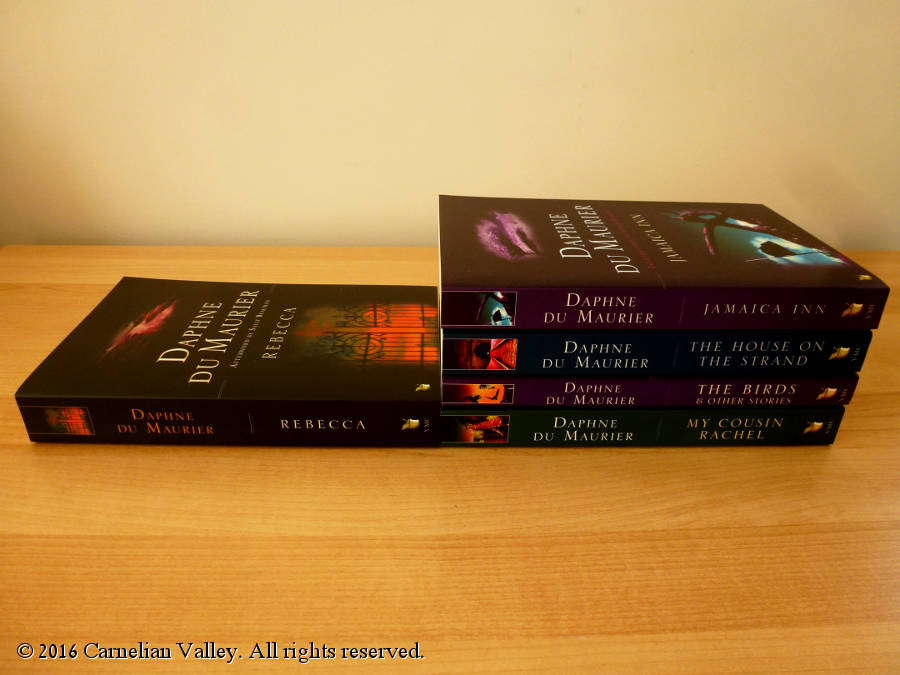
Do you ever feel you’re playing catch up, that there are so many books, particularly of the canon/very famous variety, that you have to read? And, if so, do you think you’ll ever lose the feeling of playing catch up or having not yet read the books deemed important because there are so many of them?
I do. Jack Kerouac. Sylvia Plath. Ray Bradbury. To name just a few; I don’t think I need to name the books themselves. You’ll know which I mean.
So many books out there – though there does seem a basic line between the ones that are ‘necessary’ to read and those not so necessary – the kind that you note are often referenced or used for context in conversational events, in articles, as examples that work brilliantly so long as you’ve read the book otherwise you’re often left even more confused. And then the other, perhaps biggest, problem – modern books steeped in the background or themes of a canonical work. I read Andrew Blackman’s On The Holloway Road a few years ago and I could tell it was excellent – that fact, if I may term it so, was obvious in general – but as a work that was based on Kerouac’s On The Road, I didn’t have the context to view it in those terms. Blackman’s book taught me much about Kerouac but I couldn’t shake the feeling that my experience of the Blackman should have been full of comparing, contrasting, in addition to the lesson I took away with me. I wonder how much I missed by not having read the source material.
There have been a few occasions like that. Writers like to extend the conversation about the canon, like to create new interpretations and spin-offs, and that is all great, but it will always leave a certain number of people with a distinct lack of context when they approach it. And we could argue that one should only approach such a book after having read the source material but there are so many books out there and so many references. Some books are packed with contexts from canonical works that to read all the referenced material first… you’d never get to the more modern book (and, indeed, having read the referenced works would an interpretation then seem trivial?) Others make use of works that may be heavily referenced but you know that the referenced book is not particularly well known or falls into a niche category. (This is why I included Bradbury above – his work is important but we wouldn’t necessarily utter it in the same breath as Dickens. Some would, others wouldn’t.)
It feels very good to have read a famous book. I’ve read all of Jane Austen’s books and, in big part because my school education was lacking and I had to play catch up here myself, I get a bookish sense of delight on many occasions her work is mentioned – because there was a time when I had no idea what people meant when they talked about her work. And now I do know about it and so I can laugh or agree – that ‘umm’ that sweeps over the audience – with those on stage or so forth. There’s an academic feeling to it, that I’ve read and studied and learned and now understand along with everyone else… or at least many people.
And this feeling, I believe, can occur no matter your prior education. For me it’s a mini triumph, for others a simple pleasure.
The interesting thing is that no matter your privilege – your education, the number of books in your home growing up, your parents’ view of literature – one thing is true across the board: we are all in a position where, if we deem the canon/famous books important, we are playing catch up. Everyone is and everyone will always be. Even if we only read important books we’d never read all of those we considered important unless we had a limited interpretation on what was important… and even then we’d end up missing contexts because of the importance placed on other books by others. The only thing we can do is prioritise. I prioritise in two ways. What am I interested in personally? Which books are referenced most often? Your priorities may differ.
And if we do somehow manage the impossible and read all the works? There will be little or no time to muse on interpretations or read unrelated books. Of unrelated books some people may not worry – it’s okay to eschew modern books for classics if that’s your thing – but interpretations can be fun and they extend your experience of the important book.
When I sat down to write this post I didn’t think I’d have much to say; the post was inspired by a simple line from my notes on Celia Imrie’s talk: “I feel I’m still catching up”. It turns out there’s a lot on the periphery.
I’ve asked a few questions in this post to which I’d love to hear your response; I will emphasise this one in case your time is limited: Do you think you’ll ever lose the feeling of playing catch up or having not yet read the books you deem important?
Rare Sunday Post: The Young Writer Of The Year 2016 Shortlist
Posted 6th November 2016
Category: Miscellaneous Genres: N/A
4 Comments
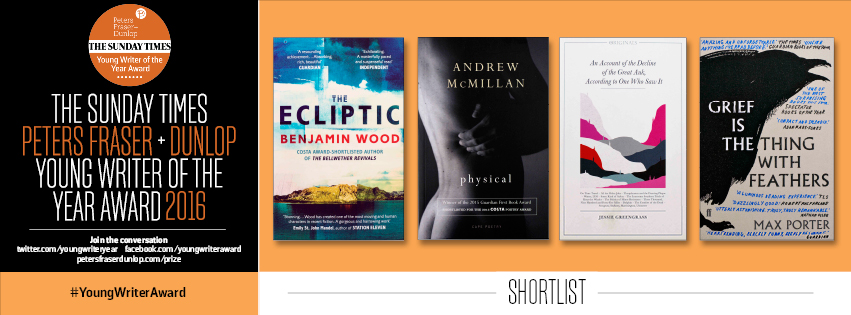
I’ve been looking forward to today because it’s hard to not talk about what you’re reading, especially when you’re enjoying it. These four books together are a lot shorter in length than last year’s list but the potential to stun is just as high. In this context word count truly doesn’t matter. So far I’ve read two and will now start to review them. I think we five bloggers are in for a very interesting conversation and I’m looking forward to seeing what the main judges think, too. The descriptions below are a mix of the official award copy we’ve been given and my own thoughts.
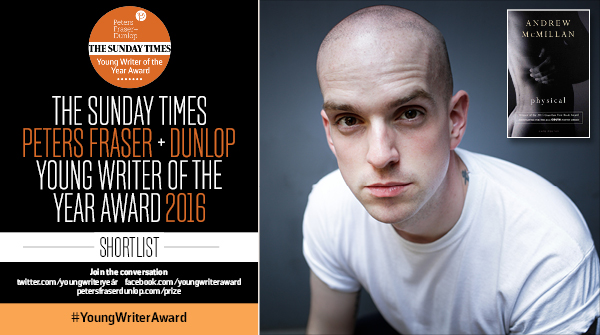
A stunning début of raw and intimate poems about masculinity and male desire. Raw and urgent, these poems are hymns to the male body – to male friendship and male love – muscular, sometimes shocking, but always deeply moving. We are witness here to an almost religious celebration of the flesh: a flesh vital with the vulnerability of love and loss, to desire and its departure. In an extraordinary blend of McMillan’s own colloquial Yorkshire rhythms with a sinewy, metaphysical music and Thom Gunn’s torque and speed – ‘your kiss was deep enough to stand in’ – the poems in this first collection confront what it is to be a man and interrogate the very idea of masculinity. This is poetry where every instance of human connection, from the casual encounter to the intimate relationship, becomes redeemable and revelatory.
Andrew McMillan was born in South Yorkshire in 1988. This, his début collection, was published in 2015 by Jonathan Cape and was the first poetry collection to win the Guardian First Book Award. It also won a Somerset Maugham Award, an Eric Gregory Award, the Fenton Aldeburgh Prize for Best First Collection and a 2015 Northern Writers Award. It was shortlisted for numerous others including the International Dylan Thomas Prize and the Costa Poetry Award. He currently lectures at Liverpool John Moores University and lives in Manchester.
One of the two I’ve read already – poetry collection; short – and there are some mind-blowing lines in it. McMillan has a special style, double meanings split across lines, that have a big impact on the whole.

A rich and immersive story of love, obsession, creativity and disintegration. On a forested island off the coast of Istanbul stands Portmantle, a gated refuge for beleaguered artists. There, a curious assembly of painters, architects, writers and musicians strive to restore their faded talents. Elspeth ‘Knell’ Conroy is a celebrated painter who has lost faith in her ability and fled the dizzying art scene of 1960s London. On the island, she spends her nights locked in her blacked-out studio, testing a strange new pigment for her elusive masterpiece. But when a disaffected teenager named Fullerton arrives at the refuge, he disrupts its established routines. He is plagued by a recurring nightmare that steers him into danger, and Knell is left to pick apart the chilling mystery. Where did the boy come from, what is ‘The Ecliptic’, and how does it relate to their abandoned lives in England?
Benjamin Wood was born in 1981 and grew up in North West England. He holds an MFA in Creative Writing from the University of British Columbia, Canada, which he attended with the support of a Commonwealth Scholarship. In 2012, Benjamin’s first novel The Bellwether Revivals was published. It was shortlisted for the Costa First Novel Award, the Commonwealth Book Prize and le Prix du Roman Fnac, and has gone on to become a bestseller.
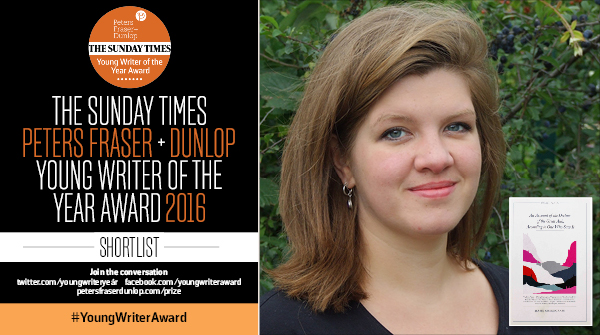
Jessie Greengrass: An Account Of The Decline Of The Great Auk, According To One Who Saw It
A highly original collection of stories from a startling new voice. The twelve stories range over centuries and across the world. There are stories about those who are lonely, or estranged, or out of time. There are hauntings, both literal and metaphorical; and acts of cruelty and neglect but also of penance. Some stories concern themselves with the present, and the mundane circumstances in which people find themselves, some stories concern themselves with the past.
Jessie Greengrass was born in 1982. She studied philosophy in Cambridge and London, where she now lives with her partner and child. Her shortlisted title won the Edge Hill Short Story Prize 2016.
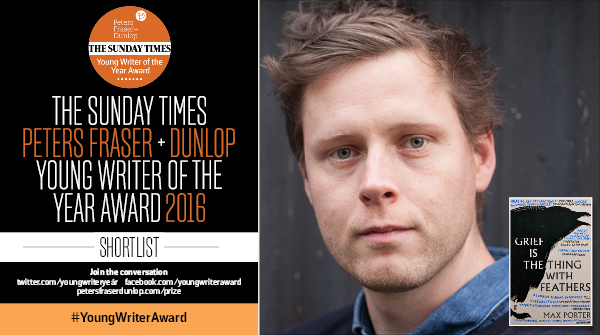
Max Porter: Grief Is The Thing With Feathers
About the book: Once upon a time there was a crow, a fairly famous Crow, who wanted nothing more than to care for a pair of motherless children. In a London flat, two young boys face the unbearable sadness of their mother’s sudden death. Their father, a Ted Hughes scholar and scruffy romantic, imagines a future of well-meaning visitors and emptiness. In this moment of despair they are visited by Crow – antagonist, trickster, healer, babysitter. This sentimental bird is drawn to the grieving family and threatens to stay until they no longer need him. This extraordinary début, full of unexpected humour and emotional truth, marks the arrival of a thrilling and significant new talent.
Max Porter was born in 1981 and works in publishing. He lives in South London with his wife and children. This is his first book.
The second book I read; it’s incredibly experimental and there’s a fair amount going on but it all links up. Some knowledge of Ted Hughes’ work and the various debates regarding his relationship with Sylvia Plath is good to have prior to starting – a brief bit of Wikipedia reading should suffice. I’d heard a lot about Porter previously – he was at the Curious Arts Festival in July (I didn’t get to listen to him but there’s a photograph somewhere) and many have spoken of him since.
With two more books to read I can’t yet make a prediction – neither personal nor overall vote can be estimated – but if Greengrass’s and Wood’s books are anywhere near the same literary quality as McMillan and Porter, which is very likely, it’s going to be close.
Have you read any of the shortlisted books and what do you think of the selection?
Louisa Young – The Heroes’ Welcome
Posted 4th November 2016
Category: Reviews Genres: 2010s, Angst, Commentary, Domestic, Historical, Psychological, Social
2 Comments

We’ll meet again.
Publisher: Borough Press (HarperCollins)
Pages: 322
Type: Fiction
Age: Adult
ISBN: 978-0-007-36147-2
First Published: 22nd May 2014
Date Reviewed: 16th August 2016
Rating: 3.5/5
Riley returned from WWI a changed man, half his jaw missing. Surgery made up for some of it; Nadine still wants to marry him though her family worry about his prospects – it doesn’t seem to matter to employers that he served his country when he’s disfigured and thus deemed a discomforting presence. Riley’s worried about how Nadine will view him and in turn Nadine is worried about Riley’s depression; she doesn’t care that his looks have changed. Then there’s Peter and Julia – Peter served with Riley and came back physically unharmed but the war has taken its toll on his mind. Julia, in an attempt to reach him, experimented with cosmetics and has damaged her skin. Will either couple return to how they were?
The Heroes’ Welcome is the sequel to Young’s previous book, My Dear, I Wanted To Tell You. This fact is not noted; fortunately the book works as a standalone or at least it seems to – readers of the first book say it does matter, that you need to read them in order. The Heroes’ Welcome is a fair look at disability in the context of the war, it just doesn’t have much of a plot or character development going on.
On that word, ‘fair’, it’s fair to say the book goes a good way towards showing social issues and personal rehabilitation but doesn’t go quite as far as one might hope. It shows PTSD and the effects of the disorder on families – one of those topics that doesn’t get looked at much – but the main bulk of the development in this way is confined to a few pages. Young knew about the hospitals and healing through the work of her aunt (I discovered this after having read the book) which means that when the subject is concentrated it’s special. In those few pages is a wonderful overview of what you’re already starting to understand, the juxtaposition of society saying, ‘welcome back and thank you for your service!’ and ‘I’m not sure you can do this work and anyway you’ll scare people – no job for you’. It both harks back to the post-war days and illustrates what is unfortunately still the case today.
The writing is pretty good. It flows well and in the main rings true, however there are some anachronisms – ‘epically’, ‘those ones’, and the rather odd ‘losable’, for example. Young slots a first person thought narrative into the third person narration which makes the text choppy at times. Phrasing can be vague.
Young was inspired by the work of another writer who used Homer in conjunction with the events of WWI, showing how related the ancient text is to the later war. It’s interesting but the sense of fascination and seeming originality in Young’s book is marred by this fact of copying – something only divulged in the afterword, after you’ve finished it. And if you haven’t read Homer or don’t know the stories well, it may be a problem. It may be best to read Homer or to get your knowledge of The Iliad down to pat first… which given the nature and length of that text…
In sum, The Heroes’ Welcome sports nice language, good ideas, and isn’t a bad read, but there’s not much going on and for all the promise in the veterans’ stories, the book is lacking in substance. The ending is a bit of a rushed, convenient, job. The book would work best as further reading, say if you’ve completed Anna Hope’s Wake and want something that looks at the war in a similar light. It’s not, as the quotation on the cover says, the book to read about the war if you’re only ever going to read a single one.
Related Books

October 2016 Reading Round-Up
Posted 2nd November 2016
Category: Round-Ups Genres: N/A
3 Comments
Last time I said it was likely I would read more books in October than I had in September. And I did. I’m rather happy about that. I know on Twitter I’ve been saying I had 10 books to read – I did, just that I had a little more time than I’d thought for some of them and managed to finish some in September, so there isn’t 10 here. Anyway, this month has been one of if not the busiest, mentally, of my life. A ton of promotion for the first In Conversation event – as you may now know there will indeed be a second; we’ve Elizabeth Fremantle joining us in Southampton on 24th November – and a whole lot of reading. I feel like there was a reading slump involved at some point but this was one of those times where I absolutely had to read so it happened.
The Books
Non-Fiction

Dan Richards: The Beechwood Airship Interviews – Whilst studying for his MA, Dan decides to create a decorative zeppelin for his student union bar and as he starts the process he considers the relationship between artist and their space which leads him to interview various well-known people. A great book that defies categorisation.
Fiction
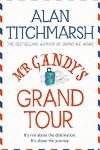
Alan Titchmarsh: Mr Gandy’s Grand Tour – When his wife dies, Tim decides to go on a few months’ long trip to continental Europe to take the sort of journey he’d always wanted to go on in his youth. There are a lot of devices and some repetition, but this is a lovely book full of summer. (My non-British readers may be interested to know that Titchmarsh is first and foremost a household name here due to his career as a TV gardener. His show was one of, if not the first, reality makeover series on our televisions.)

Jo Bartlett: Somebody Else’s Boy – When his wife dies in an accident at the theatre where she worked, Jack decides to move to the coastal town they both liked and in doing so he meets drama teacher, Nancy. Predictable in that good comfort-read way but a bit tell-rather-than-show.

Kate Walker: Indebted To Moreno – Rose left Nairo’s squat a decade ago, thinking he was a drug dealer, and when he shows up at her bridal store as a rich customer the real story starts to unravel. Including a sensitive look at anorexia, this is a pretty fair book.
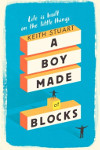
Keith Stuart: A Boy Made Of Blocks – Alex has found relating to and dealing with his autistic son difficult and as the family reaches breaking point, young Sam discovers the video game, Minecraft, which Alex starts to find may be key to healing the rifts. A superb story with keen writing and a lot of heart, this book can be considered semi-autobiographical (the author is in the same position as main character, Alex) and is a lot of fun.
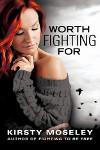
Kirsty Moseley: Worth Fighting For – When Ellie’s parents are involved in a car crash she leaves her new home in Britain to return to America and the boy who broke up with her three years before. Not a bad book but suffers from an overly oblivious heroine and a bit of info-dump.
Looking just at the books here, both The Beechwood Airship Interviews and A Boy Made Of Blocks were a joy to read. Stuart’s book finds me in a new situation: I’m aware that some of the references to Minecraft are not factually correct (which is odd when he’s a gamer by trade) but it’s such a wonderful book with an important message and lessons that I want to make it one of my ‘best of 2016′ books despite that. I’ll probably be thinking on it for a while longer. The Richards might make the list too, but I think one bent rule is enough for one year (to have two of Richards’ books would set a precedent).
Quotation Report
Getting beer in stock either for the babysitter or the kids is absolutely fine when you’re absolutely desperate for time away with your wife, or, at least, so thinks Matt from A Boy Made Of Blocks.
November’s looking pretty busy too!
How was your October?


