Duane W Roller – Cleopatra
Posted 26th January 2012
Category: Reviews Genres: 2010s, Biography, Domestic, History, Political
1 Comment
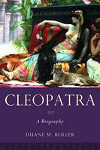
The propaganda presenting her as a seductress spread during her downfall, so are we in the 21st century victim of ancient history’s machinations?
Publisher: Oxford University Press
Pages: 156
Type: Non-Fiction
Age: Adult
ISBN: 978-0-1953-65535
First Published: 2010
Date Reviewed: 21st January 2012
Rating: 4/5
Roller gives us a biography of Cleopatra formed solely of information gathered from primary sources, in an attempt to give a true picture of the queen.
This is a very academic text, the sort that is useful for quoting in essays. As Roller presents only the information available to us from primary sources there isn’t all that much to record (indeed the page count is a reflection of this – don’t assume it’s a case of little effort), but the upshot is that you know the vast majority of the book is factual. What speculation there is is based on different interpretations by historians, and problematic passages in the ancient sources. Roller discusses why and how sources are likely to be biased or unbiased.
She was said to take an almost sensuous pleasure in learning and scholarship, an intriguing variant on her best-known alleged attribute.
Roller’s goal is, in fact, twofold. One is to present the story of Cleopatra as shown through the ancient sources available. The second is to debunk the “myth” of Cleopatra as a seductress, by showing what she was really like. The first he does brilliantly, in fact an element of the book that might otherwise be considered an issue – the lack of information for some parts of the queen’s life – is accounted for simply by Roller’s admission that there is no information to be had. It is very sobering and rather refreshing to read a book dedicated to providing the facts. Indeed the only speculation Roller provides is speculation based on biased sources, which is interesting, and sometimes quite fun, to read.
However the second goal is, ironically, not as well met. Roller’s goal is to dispel the myth of the seductress, but through the content he examines, both those written by her admirers and those biased against her, one can’t help but see a queen who was, yes, very intelligent and a good politician, but who also knew how to use the charms available to her as a female to get what she wanted.
And, in the case of the legendary carpet episode, Roller says quite firmly that Cleopatra did not enter Caesar’s presence in a bed sack, yet later on speaks of it as a great possibility, including precedents of its having happened before.
From page 7:
She did not approach Caesar wrapped in a carpet.
From page 61:
There is a certain credibility… because a name is provided… On the other hand, it is almost a demeaning way for the queen of Egypt to appear before the consul of the Roman Republic… Yet the bedsack device may have been common at the time…
While Roller’s determination to portray the truth is admirable, saying one thing without leniency and then saying something later that makes it possible, however great or small a possibility, isn’t very good.
There is a lot of information that isn’t about Cleopatra so much as her court, but considering the scant source material available to Roller, this is excusable, and it aids Roller in showing us who she was when the source material is silent.
Anyone interested in reading this book, which would form a very good basis for further study, should note that the appendices after the last chapter are well worth the read. One wonders why they were not included in the main text, especially as the last chapter ends without a proper conclusion.
There are flaws in this biography, and you are likely to feel slightly under whelmed by the lack of knowledge, but as factual history books go, Cleopatra isn’t bad at all.
Related Books
None yet.
Aimee Bender – The Particular Sadness Of Lemon Cake
Posted 23rd January 2012
Category: Reviews Genres: 2010s, Angst, Domestic, Magical Realism, Paranormal
Comments Off on Aimee Bender – The Particular Sadness Of Lemon Cake
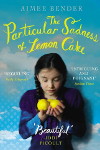
Some books really take the biscuit – and do wonders with it.
Publisher: Windmill (Random House)
Pages: 322
Type: Fiction
Age: Adult
ISBN: 978-0-099-53826-4
First Published: 2010
Date Reviewed: 22nd January 2012
Rating: 4/5
Rose has always loved her mother’s cakes, but one day she finds the enjoyment ruined – as she eats, her mother’s feelings somehow swamp her and the reality of what the woman’s life is like is distressing. In a short time she learns that this is now the case with every food, finding that eating anything at all handmade results in her discovering the feelings and thoughts of every single person who has aided in the creation of the food. She will learn a lot about her family in the process, but it will affect her life ever more.
The Particular Sadness Of Lemon Cake is a very strange book. At once depressing and intriguing, the latter for its paranormal element, it is a book that doesn’t really fit into any genres.
The reader should know that by picking up the book they are enveloping themselves in hours or days, depending on reading speed, of upset – indeed this reviewer had judged that this book was going to leave her an emotional wreck, and she read it on a dull Sunday when there was no studying to do and no reason for her to need to feel positive. It proved to be a good decision.
The story is told in the first person, and Bender’s style of writing is curiously interesting. She writes dialogue without quotations and the text itself falls somewhere between a child’s and an adult’s as she speaks as nine year old Rose. It can be hard to get used to, but as Rose gets older the mix of styles makes more sense and looses its oddness to be something very enjoyable and refreshing.
This theme of a paranormal gift could have gone horribly wrong, and let’s not forget that in fiction such as this – quite “literary” and not featuring vampires – there tends to be an emphasis on the realistic. The basic summary and Rose’s gift may not seem too fantastical for such fiction, but Bender later takes it further into realms that straddle the fence between the very imaginative and the horrifying. Yet Bender’s story is so readable and well thought out, that the weirdness doesn’t matter, and instead what matters are the feelings of Rose. It’s a sort of acceptance where you step beyond reality to embrace Rose’s world unconsciously, meaning that although you can pinpoint the fantasy, it doesn’t effect you in a way that makes it unbelievable – although there is one element that is difficult to accept and that requires an interpretation in order to read without mirth (for it could be said that in a way the book is more metaphor than literal). Simply put, the reader can emphasise with Rose, truly putting themselves in her shoes in every way. Although that doesn’t mean that Rose is a good character to read about, indeed some of her more real-life choices are quite disappointing.
The book is bogged down by depression, family issues, communication problems, and anxiety. It is one of those works where you can give it as high a rating as you want, but still have trouble saying whether you actually enjoyed it. The domestic situation it presents is one that is very real to some families – the reader is likely to know of a real-life situation similar, be it close to them or through stories in the news. As someone who grew up in a dysfunctional family, although she cannot say it was the same as Rose’s, this reviewer can report that some of the success in the reader’s mind is very likely to depend on how much they can relate to the situation. And the story is a good representation of how issues are passed on down the generations – Rose’s grandmother has problems loving others, and it’s a similar sort of issue that has passed down to Rose and her brother. The family in the book is of a dysfunctional nature that aligns with an inability to communicate.
Rose’s brother is cause for discussion that can’t happen in a review, many times you wonder what happened and why, but piecing everything together an explanation can be found in his relationship to his mother and the way she made him feel. Her actions and his do seem to align, albeit in a peculiar way. You can also see where he feels trapped, although the feeling of wanting to be alone is not explained. In fact, the lack of explanation in most cases plays a big reason why this book did not receive a higher rating.
Bender does provide stark contrasts throughout to demonstrate where the family has gone wrong and how problems, especially for Rose, could be solved. She presents the minor and secondary characters as a ray of hope, and shows the way in which relations between Rose and those people deteriorate. Hindsight may be a wonderful thing, yet one senses that Rose’s situation is so bad that she might never experience it. But even if Rose cannot see her way out at times, the positive nature of the minor characters is like a beacon when you’re reading and helps lift the mood enough to allow you to read on.
A lot has been said by others on the themes of coping with your life. While this was not the focus of my reading (I concentrated on the communication issues and negative family situation) it fits in with elements I picked up on, such as Rose’s determination to keep an old stool her father had made for her mother – Rose’s hope being to retain some of the love and presence of regular marriage between her parents. Indeed the way that Rose’s choices are disappointing collides with this topic of coping in the way that the only way Rose can live is to keep things the way they are, even at the expense of her happiness. She recognises hope and difference in her relationships with her friends and her first love, but actively pulls back from them. While not really explained, it is easy to see Rose as a guardian of her own feelings, as well as being so stuck in emotional poverty that she is too scared to try alternative ways of living. It becomes a case of a girl who is very astute at knowing how others feel, not really knowing what she wants herself. And in the poor choices she makes for her life, for surely they are poor choices, one can see how she’s become so used to her life that she doesn’t want to leave it.
The Particular Sadness Of Lemon Cake is difficult to discuss as words elude a thorough description just as they are not a part of the gifts presented. It is most certainly recommended with the advice to look beyond the text at what words cannot say.
Related Books



Elizabeth Chadwick – The Wild Hunt
Posted 13th January 2012
Category: Reviews Genres: 1990s, Domestic, Historical, Political, Romance, Social
Comments Off on Elizabeth Chadwick – The Wild Hunt
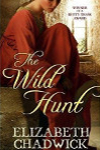
Two Normans may be able to work out their relationship given time, but add Wales to the mix along with a lot of angry kin and life is unlikely to go smoothly.
Publisher: Sphere (Little Brown)
Pages: 341
Type: Fiction
Age: Adult
ISBN: 978-0-7515-4026-0
First Published: 1990
Date Reviewed: 12th December 2011
Rating: 5/5
Please note that this is a review of the updated version of the book, which, it seems, was published in 2008.
When Guyon attempts to gain his uncle’s lands through supplication to the king, he is granted them – on the condition that he marries a particular girl. Judith is the sole heir to her father’s domain and the king wants to be sure that there will not be a war over it. In marrying Judith, Guy gives up his mistress for a fifteen-year-old girl. Judith is terrified of marriage, having witnessed the violence of her father towards her mother and the slap of his hand to herself. But that isn’t the only issue Guyon will have to deal with – the king may have ordered the marriage to aid relations, but Judith’s extended family aren’t about to let the lands pass to another.
In this, Chadwick’s very first novel, we see all the talent that she has continued to wield to this day, only here it is targeted towards absolute fiction. Whereas in her later novels Chadwick focuses on real people in history, here she creates the main characters from scratch and makes use of history for secondary characters. And her weavings in and out between the factual and fictional are flawless. She references many real events and has Guyon and Judith join them, and looks too to legends, such as that concerning William II’s sexuality.
The book is drenched in the issues that arose from the Norman conquest of the British Isles, there are insults between the Welsh and the Normans – and Chadwick makes the story of Guyon’s ex-mistress a part of this by having her and her family mock his Norman wife – as well as touching on the murder of William II and the rise to power of his son Henry. In the latter case she puts forward a comical version of why the eldest son was unable to inherit the throne, which aligns, in its treatment, with fact.
Something that is important to mention is that although Chadwick creates her own characters from their historical bases, for example she creates the character of Henry I, one never feels that she is turning history on its head. A quick bit of research on the reader’s part proves that Chadwick has thought through her book and written it in accordance with real life.
Although the book is character-driven, the world building is, to use an old word given new life in our modern age, epic. It is so easy to be engrossed in it all that you can forget where you are in the present day. Neither does it take long to get into the story. As the story is based in battles and family feuds there is little time to get to know the common people but there is enough on the workings of settlements to keep the budding historian interested.
And while Chadwick is a modern author and often uses elements that are more acceptable to a modern audience, there is never a case of changing history to suit today’s principles and political correctness. An example of this would be Chadwick’s description of her heroine as a fast learner and able fighter – while not by any means reflective of medieval society at large it is nonetheless easy to believe that some women would have been, and evidence backs this up.
Talking of the heroine, both the main characters are winners. They have chemistry enough to explode any science lab and are not perfect while being totally likeable. As said, Chadwick does not step back from looking at things from the medieval mind set, the marriage is important to both Judith and Guyon, but as Guyon waits for Judith to mature and be ready to accept him in the bedroom, things become difficult. In regards to this issue of Judith’s acceptance, Chadwick spends time detailing effects that are still relevant.
And, as in any Chadwick novel, when they end up in bed there are no holds barred. There are racy scenes, there are curtains drawn in front of the reader, and the innuendo is well written. Chadwick masters all of these scenes brilliantly and even when there isn’t a pressing reason for one, for example when both characters are completely comfortable with each other, they serve to inch the relationship further.
The Wild Hunt is a feast for anyone interested in this period of history. Chadwick’s writing is just something else and her passion emanates from the pages. Whether you are new to her work or a returning admirer, The Wild Hunt is as good a place as any to start.
Related Books


Glynis Ridley – The Discovery Of Jeanne Baret
Posted 10th January 2012
Category: Reviews Genres: 2010s, Adventure, Biography, History, Science, Social
1 Comment
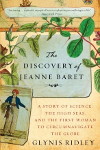
Women in the 1700s weren’t supposed to join expeditions, but rules are made to be broken.
Publisher: Broadway (Random House)
Pages: 249
Type: Non-Fiction
Age: Adult
ISBN: 9780307463531
First Published: 2010
Date Reviewed: 5th January 2012
Rating: 4/5
In eighteenth century France, a poor herbalist was able to change her life by, firstly, becoming the lover of Commerson, a prominent botanist, and secondly by following him onto a ship that would take them around the world in order to gain knowledge of the new lands being discovered. To join the ship, Jeanne had to pose as a man and this led to both happiness at being able to see what few before had seen, and utter wretchedness as she strove to keep her identity concealed. Ridley presents Jeanne’s story, or at least as much as is known, introducing readers to the woman that science forgot.
Here we have perhaps the only book that details Jeanne, and while it cannot always be reliable – for reasons that will be discussed in due course and doesn’t necessarily equate to a bad thing – the information it provides is of great value and interest. Indeed you need not have a passion for social history or even science in order to enjoy it as most of it revolves around the voyage and there is a lot about the finding of new lands, meaning that there is something here for many. And it means that although Ridley rarely sways from her main subject, when she does it is fascinating in its own right.
There is plenty to devour on maritime activity, and all the hilarity that the mixture of hardened scurvy-ridden sailors sharing space with curly-wigged nobility brings. A good basic knowledge of plant collecting is here too as well as information about the initial meetings between Europe and the Americas. Ridley grants the reader insight into both sides of the story, including primary source material from the French and the thoughts of the native populations in, for example, Tahiti. And reading about the way the French, in their insecure position as travellers by sea, treated the islanders, is often a nice respite from all the information we have about the atrocious treatment that happened after colonisation.
As the theme is of a woman going round the globe at a time when women were nothing, there are a lot of mentions of gender differences as seen from Ridley’s perspective. As a woman herself, Ridley tends to give the full view, which is always interesting. Depending on the gender and opinions of the reader they may find her harsh, correct, or completely brilliant.
Copus asked his [male] guests if any man could identify the herb. None could, and all agreed the tasty addition to the salad must be some newly introduced exotic. Calling in the kitchen maid to see what she might say on the matter, Copus watched the surprise on his guests’ faces as the woman announced the “unidentifiable” herb to be parsley.
[…]
Ordinary women know what plants look like in the field and in the kitchen, while supposedly educated male scientists know only what they are told.
[…]
In an age of crude woodcut illustrations that only served to obscure identification… even the best [reference books] were inadequate as field guides.
In fact the reader is very much included by Ridley as she employs an intriguing interactivity – describing how a person might find a place today, meaning how the place has changed. By doing this she inevitably draws parallels, which give you pause for thought.
Ridley makes use of evidence and generally tells you where her information comes from, despite a lack of footnotes. However sometimes what she says, or, moreover, her point of argument, is difficult to follow because it becomes mixed in with everything else. It is understandable that when a person writes on a subject they know well, they are not going to explain everything because it may appear to them obvious, but there are a few places where more detail would have been of great benefit. There are also many many mentions of how far, or rather how not far at all, peasants would travel from their homes during their lifetime. This is an issue by itself, but it’s also an issue when the author concludes that Jeanne would have met Commerson when she was away from home and he also. Unfortunately it sounds just as romantised as the ideas of others that Ridley dismisses.
Yet this is where we come to the major point. There is a great deal of speculation in the book. And although Ridley is generally good at saying what is factual and what is not, there are times when it’s not obvious. Now there are two schools of thought here. One is that it is bad to spend a book speculating. However two is that if there is little evidence surrounding a person but an author feels the need to introduce them to the world, then speculation can be forgiven. It’s not as though Ridley is talking about, say, Louis XIV, of whom there is lots of information – she is talking about someone who is interesting for being the first woman to travel the globe but, for reasons of gender equality as well as there simply being no records, remains someone whom we can never know all that much about unless new evidence comes to light. As Ridley is not suggesting she has new evidence, indeed Ridley’s goal is transparent – that of an informer – the speculation must be viewed more favourably and seen as a positive rather than a hindrance.
The work Ridley has done could spawn a new burst of research, thus hopefully less reason for probabilities, and indeed in the afterword Ridley says that since publication a plant has been named after Baret at last.
It is up to the reader, of course, to come to their own conclusions. It’s far from an easy book to continue at times as the content often sounds archaic for the behaviours of humans back then, but the vast amount of information is worth its weight in gold (which is a lot more than can be said for the results of the expedition).
Ridley has done Baret a great service and if further research proves that some declarations are false then so be it – Ridley has propelled Baret back where she should be.
I received this book for review from Crown Publishers, Random House.
Related Books
Taylor Stevens – The Informationist
Posted 20th December 2011
Category: Reviews Genres: 2010s, Domestic, Thriller
Comments Off on Taylor Stevens – The Informationist

The kick-arse chick takes on the bad guys, but it’s a lot more complicated than it has ever seemed.
Publisher: Broadway (Random House)
Pages: 307
Type: Fiction
Age: Adult
ISBN: 978-0-307-71710-8
First Published: 2011
Date Reviewed: 9th December 2011
Rating: 4/5
Richard Burbank’s daughter is missing and for years he’s had people looking for her unsuccessfully. His employee Miles suggests they seek the services of Munroe, a woman Miles knows will be able to find the girl. Munroe thinks differently to others and has extensive knowledge they lack. In order to find Emily, Munroe must confront her past, as well as work out why Emily’s disappearance is so mysterious.
The Informationist is a book that for a long time appears to be very average before turning on you and showing you what it’s really made of. Indeed the climax is drawn out at several chapters long. The average nature of the majority of the book doesn’t just conceal its ending (and whether or not the reason for the character’s search is predictable or not matters not one bit) but it hides all the extra twists, plot points, and mysteries that Stevens will employ just when you think you’ve worked it all out.
Stevens doesn’t stray from portraying some gruesome situations, and while the book may first come across as a standard kick-arse chick story, the situations in it make it very much a book for adults.
Stevens’s main character, who for the sake of this review will be called Munroe, is an androgynous undercover woman trained to win and to kill. She is constantly strong throughout for reasons Stevens details well. Even when the plot changes track for a short while and allows us to see that Munroe hasn’t been quite as successful in putting away emotions as she would claim (though this is hinted from the start) she doesn’t let the present run away with her and remembers her goal.
It’s difficult to talk about the other characters without spoiling the story a little, but suffice to say that there comes a point when Munroe isn’t working alone and it’s an exciting read, despite the fact that Munroe thinks she’s better working alone. And the author never promises anything – you never know if there will be a happy ending or if things will resolve.
That Stevens has knowledge of her chosen settings – in the main Africa – is apparent. And while the book may be about getting away from the continent she provides the balance and includes positive views when she can. That the book centres on people who live there, most of them happily enough, makes up for most of the negativity that the pages needed to present for its story to work.
There are some things that could have been done better, for example sometimes the way the characters reach an understanding of what has happened isn’t explained very well and it can be confusing as to why they’ve chosen to take a particular “route”. And there are one or two occasions where things simply don’t add up, like telling someone the air-con, if turned on, will make too much noise and draw attention, and then that person going and doing something that would make a lot more noise than the air-con.
The negatives are there but it’s not hard to say that this book is worth a read. Anyone looking for something that will surprise, shock, educate, and leave them panting for breath by the end should most certainly look it up.
I received this book for review from Crown Publishers, Random House.
Related Books