




Elizabeth Chadwick – The Marsh King’s Daughter
Posted 3rd March 2012
Category: Reviews Genres: 1990s, Domestic, Historical, Romance, Social
1 Comment

For richer, for poorer, whether worked for or stolen.
Publisher: Sphere (Little Brown)
Pages: 406
Type: Fiction
Age: Adult
ISBN: 978-0-7515-3940-0
First Published: 1999
Date Reviewed: 22nd February 2012
Rating: 4.5/5
Miriel had never seen eye to eye with her parents and, being unable to deal with her as both his daughter and the object of his lust, her step-father throws her into a convent. But Miriel won’t be staying – this she decides immediately. On finding a wounded man and bringing him to the convent, she comes up with a plan. Nicholas, for his part, is on the run from his captors, and upon leaving the convent goes in search of the treasure he had taken and hidden. When he sees Miriel following he agrees to guard her passage – but just as he didn’t bet on falling for her, he also didn’t bet on her running off with the money.
The Marsh King’s Daughter contains a very different story to other books by Chadwick you may have read. Set in the midst of bustling towns and featuring a cold ancient convent and merchant trips across the sea, it is quite the world away from tales of castles and battles for land. Indeed the book sports a somewhat nautical narrative that provides a good if brief background to medieval shipping.
There is a lot of content about commerce, with plenty of looks at the economy at large and the day-to-day workings of production and trade. This is not only a boon for the story, it also sets further background context for the era that Chadwick favours.
The author likes a brave hero, one who is strong and has morals that fit our present day, yet is undoubtedly a historical person. Nicholas is the subject this time and while he is not as spotlight stealing as Miriel – neither, for that matter, as stubborn – he nevertheless is someone to root for. Miriel is stubborn, as said, sometimes a little too much, but then she is always aware of the discomfort of her position as a female business owner. The characters are delightful and hateful in turn, and as always Chadwick has created memorable personalities. Some of them even truly existed.
The setting and subjects in the book make it perhaps more detailed than others, but it allows for a study into gender roles in the Middle Ages, and shows what could happen when they were turned on their head.
The romance is complex. It’s a case of wondering what could have been while making up for time. So of course memories surface, and there is a sort of anti-romance in the marriage Miriel makes. Miriel’s husband is another good blend of medieval and modern only in his case Chadwick makes things not as positive. Possession is nine tenths of the law.
The book is good in the way that it can command interest, however towards the end it’s easy to wonder why it is still going, even if the inevitable ending is yet to come. There is a lot of angst that is heartbreaking but it fits the story and characters. Miriel is a trooper but her decisions can be hard to comprehend for their foolhardiness. Though sometimes it is the decision of others that are hard to swallow and the reader is presented with the tough lives lead before equality and healthcare.
The Marsh King’s Daughter succeeds in creating a detailed vision of the trading business and of illustrating the way people at the lower to middle section of society communicated and treated one another. And it delves into piratical realms often forgotten about. Miriel may not allow the crown out of her sight, but Chadwick can at least add a feather to her cap.
Related Books




Eowyn Ivey – The Snow Child
Posted 27th February 2012
Category: Reviews Genres: 2010s, Domestic, Fantasy, Historical, Magical Realism, Spiritual
1 Comment
Days will be merry and bright if each Christmas is white.
Publisher: Headline Review
Pages: 404
Type: Fiction
Age: Adult
ISBN: 978-0-7753-8052-7
First Published: 1st February 2012
Date Reviewed: 27th February 2011
Rating: 5/5
Mabel and Jack moved to Alaska when Mabel suggested they could do with a new life. Having lost their child at birth, Mabel has never quite recovered and the solitary life of 1918 Alaska appealed to her greatly. A gulf is between the couple and Jack cannot understand how Mabel is still so affected. During their struggle to make it in Alaska they create a snow girl; the next day they see a child in the woods. Their world is suddenly filled with a happiness they never dreamed of but there is always the question of how long it will last.
The Snow Child is a sweeping story, encompassing many questions about how we connect with and treat each other. The setting allows the magic to be explored in a way that most anyone can identify with, while allowing Alaska to keep its reality, the author herself being from the state. Although the location never changes, the ride through the character’s lives can often make it feel as though you have been on a long journey. Though of course that is in many ways the point.
Albeit that The Snow Child rests firmly in what is termed “magical realism”, Ivey plays with her reader, coming back and forth with the idea that in fact everything is perfectly true, before throwing at them a snowball filled with thoughts to the contrary. Before the girl, Faina, entered their lives, Mabel and Jack’s relationship was uneasy at best. Faina’s entrance is the catalyst by which everything starts to change, because suddenly there is a child for them to look after, the gulf between them bridged.
And it is through Faina that Ivey shows us change over time. Jack was always more content with life than Mabel was, but the introduction of the girl causes him to move towards a feeling of fatherhood, one that is rather possessive. Mabel, on the other hand, sort of takes a reverse route, beginning by feeling desolate and depressed and ending as Jack begun, more accepting and open. In addition to this, the reader can see a parallel in the personalities and life of the couple’s neighbours, who come to feature strongly in the book.
Possession is a big theme of the book, with Jack and Mabel taking turns at being worried for Faina and wanting her to fit the mould of a child they have created in their minds. Ivey puts forward the idea that Faina might disappear if Mabel enforces her views of education and a stable home life, suggesting that one cannot direct the life of another, as Mabel cannot force a child of nature to be a child of the modern western world. As for Jack, his possessiveness comes to the fore when Faina makes strong choices of her own, choices that bring her properly into their world. Ivey demonstrates that while such possessiveness, especially on Mabel’s part, is due both to the sudden realisation that they have a child, and to the love they have for Faina, it can do untold damage where it is not held in check.
But the bigger theme is relationships. It takes Faina’s arrival for Mabel and Jack to remember who they were, both as individuals and as a couple, and there is a poignant moment when all three are skating on ice and Faina suggests they keep skating past the limits they had set themselves for safety. In this there is the idea that while they are happy, Jack and Mabel will not let themselves fly free, always remaining on solid ground, and Ivey demonstrates that while that is often seen as a good thing, there are times when one should let themselves go. And the reader is left to wonder what might have happened had Mabel and Jack agreed with Faina, and had literally skated past their boundaries.
What is interesting about The Snow Child is that for so long it is simply a nice story – a look at domestic relations – with only the smallest of magical pieces, and the reader may wonder what is happening in the sense that it can seem that nothing much is. The change in mood, pace, and magic comes swiftly – Ivey sets the major points in a section all on their own, and it’s rather like a latch being opened. From content and comfortable little story the book moves to extreme emotions and a much grander tale, from which there is no way back. Perhaps the most intriguing thing is that from this point it is likely the reader will be able to discern what will happen, and far from being a negative aspect, as it would be in other books, this is what propels you on. Like Mabel and Jack, you may have been happy enough with Faina coming and going before, but now you want to truly put her in the spotlight and find out who she is. Again, Ivey shows us that wanting all the knowledge may be part of the problem.
The choices Faina makes, and how she relates to the changes are pause for thought, as they illustrate both how human and, at the same time, how unreal, she is. And surely the final catalyst in her life is a nail in the coffin of the current flow of events and way of life. It is here that another theme, love, is shown most obviously. However it is up to the reader to decide whom exactly Faina loves, or indeed, if she does love or whether it is something else entirely that effects her actions.
But in doing what she does, Faina provides Mabel and Jack with what they always wanted and in that sense the story comes full circle. Who Faina is, was, and will be, why she came, if she had a purpose or if that is something we have come to believe, are all questions that Ivey leaves to the imagination. Ivey will control your thoughts throughout the novel – pushing you towards the realistic, the magical, the deluded, whenever she wants – but the questions themselves go unanswered. The lack of quotation marks during dialogue that includes Faina is cause itself to take a step back. Each reader will come to their own conclusion based on experience, beliefs, desires, and this brings a spiritual aspect to the book.
And that is what makes the book so compelling, and Ivey’s tale so wonderful, that while it is based on a fairytale that was given an explanation, Ivey has twisted it and drawn her own ending, inserting important musings along the way.
Ivey shows that while we may like to think that we can solve problems by rational thinking and talking things through, there is an element in all of us that benefits from the unknown and the magical, or spiritual, or whatever you want to call it. And she shows that maybe what we think we need isn’t it exactly.
The Snow Child is a brilliantly crafted story of learning to live and love. And the best news is that no matter whether winter or summer, real or not, it will always be around to delight and enthral.
I received this book for review from Waterstones.
Related Books


Shannon Stacey – Undeniably Yours
Posted 10th February 2012
Category: Reviews Genres: 2010s, Domestic, Romance
1 Comment

Not as undeniably yours as the other books in the series are likely to be.
Publisher: Carina Press (Harlequin)
Pages: 204
Type: Fiction
Age: Adult
ISBN: 978-1-4268-9072-7
First Published: 2010
Date Reviewed: 30th January 2012
Rating: 2.5/5
Kevin Kowalski met Beth when he chucked her boss out of his bar, costing the woman her job. When they meet again – Kevin and Beth that is – the inevitable happens. But then inevitable takes a hike when Beth gets pregnant despite all precautions. Kevin wants to give a relationship a chance, but Beth’s unwilling.
Sadly, Undeniably Yours does not have a patch on the other two books in this series, in fact it’s rather like the rebellious middle child who doesn’t fit in with the rest of the family. Whereas Exclusively Yours and the later Yours To Keep are fun-filled family-orientated romances that stir the heart and take you on a journey with the Kowalskis, Undeniably Yours sits by itself in the corner pushing all the chances for fun away. And that’s quite the literal description.
Beth was nomadic before falling pregnant, and while her viewpoint of losing her freedom is understandable, the way she keeps Kevin at arms length is not. Kevin is overbearing in the way that he tries to help Beth but the reasons Beth gives for shutting him out are just silly. She is afraid they might break up if they got together, and doesn’t consider the possibility that it might actually work out.
Beth doesn’t think this once, she spends the entire book repeating her thoughts over and over. There is also the fact that suddenly, from being so inviting in Exclusively Yours, the Kowalski family are difficult to read about. Here they come across as overbearing, like Kevin, never leaving Beth to work things out for herself. And in regards to Beth’s own parents, one minute she’s missing them, the next she’s remembering why she kept herself away from them, yet when the time comes for the reader to meet them they seem incredibly accommodating. There may be some truth in the idea that Beth may have read them wrongly, but it still doesn’t add up.
The set up was good, but Undeniably Yours is a world away from the other books. The focus is all on the pregnancy, or rather all on Beth’s repetitious mind, and barring the interludes for Paulie’s story (which is a welcome respite) there is nothing else. Even when the other Kowalskis are there they aren’t there for long.
If you’re okay with the idea of a plot about a silly woman pushing the father of her baby away while happily living a few steps away and spending time at home with his family – and nothing else – you might find it alright. But anyone who has read and thoroughly enjoyed other Kowalski books should note that this is nothing like Stacey’s standard Kowalski fare.
I received this book for review from Carina Press.
Related Books


David Starkey – Henry: Virtuous Prince
Posted 4th February 2012
Category: Reviews Genres: 2000s, Biography, History
2 Comments

Aiming at the goal rather than the sidelines is the best way to go.
Publisher: Harper Perennial (Harper Collins)
Pages: 370
Type: Non-Fiction
Age: Adult
ISBN: 978-0-007-24772-1
First Published: 2008
Date Reviewed: 29th December 2011
Rating: 3/5
Starkey presents to his readers the youthful Henry VIII – a man totally at odds with the tyrant he would become – in the first part of a process to show us the two very different people who came to be one king.
Starkey is a very learned man, and he quite obviously knows Henry VIII like the back of his hand. He has a talent for humour and his research is of great worth. The problem is that he has written a book the contents of which are more suited to a speculative essay. The way he has come up with elements that are ideas is no good for a book that is supposed to be factual. It is fascinating, granted, but the work is by and large pure speculation. Starkey does not base many of his ideas on evidence – which is a must when writing history – and when he does reference the work of someone else the details of the source are not thorough.
There are far too many probablys, maybes, likelys – so instead of a good account of Henry’s youth we have a lot of guesswork. And anybody can write a book on their ideas, especially if, like Starkey, they don’t feel the need to provide some sort of evidence.
Similarly, like with Philippa Gregory’s The Other Boleyn Girl, there will be many people not already well read about Henry VIII (or, in Gregory’s case, Anne Boleyn) and they will likely consider Starkey’s work true without question. While Starkey may not be vicious towards his subject, unlike Gregory, it just does not bode well. And there is the rather awkward subtle inclusion of the fact that he supports the idea of Richard III killing the princes in the tower and presents these opinions as facts.
But the more pressing thing about this book is that it does not follow in the path set out in the introduction. In the introduction Starkey says that the book is solely about Henry and that any references to other people will only be employed if they serve the purpose of explaining further the character of the second Tudor monarch. Yet the vast majority of the book chronicles the lives and ancestry of Henry VII and Henry VIII’s friends, in a way that does not link back enough to the development of the man himself. Small passages provide ideas, but they are strictly ideas as has already been discussed, and it would seem that Starkey forgot, very soon into the proceedings, that his book was supposed to be about Henry VIII. Indeed this book would be more appropriately titled Henry VIII And His Court. To use a word made infamous by Starkey, he probably got put off by Alison Weir having already written such a title.
Starkey needs to remember that he cannot simply write whatever he wants. He has a duty to both his subjects and readers, and while in regards to the former his speculations may have been accepted with mirth, for the latter that duty has been forsaken for indulgence.
And considering that readers cannot provide indulgences, and neither could Henry’s Papacy-hating Anglican church, Starkey should think again before pursuing his next inquiry with the same tactic.
Related Books


Charlaine Harris – Living Dead In Dallas
Posted 30th January 2012
Category: Reviews Genres: 2000s, Comedy, LGBT, Paranormal, Romance, Social
Comments Off on Charlaine Harris – Living Dead In Dallas
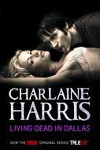
Attempting to make those who live in darkness see the light.
Publisher: Gollancz (Orion Books)
Pages: 279
Type: Fiction
Age: Adult
ISBN: 978-0-575-08938-9
First Published: 2002
Date Reviewed: 26th January 2012
Rating: 4/5
Considering she had agreed to work for Eric, it was unlikely that the vampires were going to leave her alone with her 19th Century boyfriend, living life as before. First Sookie discovers her co-worker’s dead body in Andy Bellefleur’s car, and then Eric calls her up about a mystery he’s signed her up for. Sookie’s telepathic power is the one needed in order to find out where the missing person is. It may also help her find out what happened to LaFayette.
If the first book in the series, Dead Until Dark, was a funny but gruesome and truly adult novel that was a good read, Living Dead In Dallas takes it up a level. There is perhaps more sexual content in this one, and more blood and guts, and it’s not always an attractive read, but Harris is now in the prime position to introduce her readers to what she really wants to say.
It’s rather interesting in fact that a comical book about vampires could have such a message, but it works, and Harris comes up trumps, able to not only deliver the message but to illustrate how seemingly contrasting lifestyles can be blended into one. This wouldn’t make sense in any other situation.
“Andy let a black queer sleep in his car?” This was Holly, who was the blunt straightforward one.
“What happened to him?” This was Danielle, who was the smarter of the two.
Harris portrays quite a lot of sexual orientation differences and gender bending, and in her world it is the norm because what has now taken over as the big taboo is the recognition of the undead being on earth. Instead of picking on sexuality, people have turned their distaste to vampires. This doesn’t mean of course that everything else has been defined as natural, but in this world, vampires are the brunt of prejudice. To use the simplest case of this change in society, one minor character tells how her parents would’ve preferred her to date an African American rather than a vampire.
But of course unlike groups generally prescribed discrimination, there is at least a true danger in the vampires. While they have been accepted into mainstream society, the vampires do not always behave well and this is a constant issue between the heroine and her boyfriend. While their relationship certainly pertains to Harris’s fantasy world, she does touch on things that relate to connections in the real world. And while Harris’s goal does seem to be to revel in her paranormal genre, and to provide black humour as well as lighter laughs, there is the sense that she wants to get her teeth into our actual world. Yes, that pun was definitely intended.
To be sure, as with Dead Until Dark and undoubtedly every other book in this series, Living Dead In Dallas may require a suspension of a lot of principles. These characters will have sex, a lot, and it’s not always vanilla.
Sookie is proving to be a very strong character. Whilst not fitting the mould of your standard strong heroine, she proves that one can be different and still be just as effective. And she remains strong through tough situations, when characters in other books would be given a sudden personality changes and made into weaklings.
Albeit at different speeds, the major characters are being developed. Sookie, as narrator, has already told the reader a lot about herself, so in most cases her development is in learning how to use her power. But her relationship with Bill, as discussed, provides times for new thoughts to enter her always-busy head. Bill himself is developed in drips and dabs (intended again) but it is given a lot of time when it happens. In regards to Sam’s ability, there are some revelations there too.
Living Dead In Dallas is proof that there can be balance found in the world of paranormal fiction, between books with flimsy females and books with out and out horror. And Harris demonstrates that if done right, there can be a place for humour too.
Related Books


