




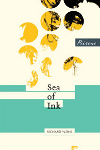
Richard Weihe – Sea Of Ink
Posted 8th October 2012
Category: Reviews Genres: 2000s, Art, Biography, Historical, Philosophy, Spiritual, Translation
2 Comments
Describing the self without words.
Publisher: Peirene Press
Pages: 100
Type: Fiction
Age: Adult
ISBN: 978-0-9562840-8-2
First Published: 2003
Date Reviewed: 1st October 2012
Rating: 4/5
Original language: German
Original title: Meer der Tusche (Sea of Ink)
Translated by: Jamie Bulloch
Bada Shanren was born in luxury but chose to abandon said luxury for the robes of a monk. Inspired by his father and taught by the abbot he begins to paint, learning about himself and the world in a unique way as he does so.
A mixture of fact and fiction, Weihe’s chaptered novella spans almost an entire life in a very short time. Whilst the background is given to the reader as a non-fiction account, and non-fiction it is – the story of the Manchu conquest of China – the rest is a mostly imaginary tale of Shanren’s life. For what Weihe includes in his narrative is the sort of content you do not find in biographies: detailed thoughts and a tale that is as artistic in its written style as it is in its subject.
And there is a large amount of detail in this book; indeed just like art, it is varied, some details existing as part of the narrative, others being more about structure of subtext. A great deal consists of a subtle philosophy – sentences, ideas – often not discussed and simply just put out there, so to speak. And on the other hand there is, for example, a difference in the written style of the military non-fictional section compared to the fiction – the non-fiction reading rather like a set of bullet points without the bullet points themselves, and the fiction flowing more like the water that plays such a big part in Shanren’s life. If the non-fiction feels stilted, the fiction is liquid prose and beautiful.
The philosophy concerns art, first and foremost, but is inevitably linked to life in general. Often poetic, it draws from a pool that seems a blend of regular worldly philosophy and classical Chinese sayings, the result being highly interesting.
For me as a painter the value of the mountain is not in its size, but in the possibility of mastering it with the paintbrush. When you look at a mountain you are seeing a piece of nature. But when you paint a mountain it becomes a mountain. You do not paint its size, you imply it.
What is particularly intriguing about Shanren, at least in the way Weihe presents him, is the link between the self and the way the painter continually changes his name. Weihe himself, in the afterword, speaks of the artwork being a representation of the painter. Whilst it may not always be the case, there often seems a match of one style or atmosphere to the paintings and the name Shanren goes by at the time. He changes his name to suit the place he is at in his journey to master technique, his art, and the answers to his abbot’s questions.
As an additional point the reader may find the parallel between Shanren’s life and the life of Siddhartha Gautama, The Buddha, rather poignant. Like The Buddha, Shanren has an epiphany of sorts and decides to leave his wife and son in order to live simply with a spiritual aim. And like The Buddha – although Shanren does in fact seek a new wife after he realises his diversion from the path set by his ancestors – he comes to a spiritual awakening. The two figures shared a basic understanding of the world through Shanren’s following of the way of life created by The Buddha.
To read Sea Of Ink is to have a history lesson, art lesson, and language lesson at once. Jamie Bulloch’s translation seems at one with the original text, a good substitute where the original cannot be read. Weihe has included a lot of information and yet when reading it does not feel at all so. And the additions of the paintings themselves is a boon that allows Weihe to describe the method of painting in a way that means the reader can literally follow the brush. This written technique may at times feel overused, but it is an intriguing concept nonetheless.
If you are guided by human feelings you will easily lose your way, a wise saying went, but if you are guided by nature you will rarely go wrong.
Sea Of Ink, about art in its many forms, transcends the usual notions of appeal; it is far from restricted to those who have an interest in its most obvious aspects.
Sea Of Ink was originally written in Swiss German, and was translated into English by Jamie Bulloch.
I received this book for review from Peirene Press.
Related Books
None yet
Hélène Grémillon – The Confidant
Posted 3rd October 2012
Category: Reviews Genres: 2010s, Angst, Domestic, Historical, Political, Social, Translation
5 Comments

What happens when no one is telling the truth about how they feel?
Publisher: Gallic Books
Pages: 253
Type: Fiction
Age: Adult
ISBN: 978-1-908313-29-4
First Published: 12th September 2012
Date Reviewed: 30th September 2012
Rating: 4.5/5
Original language: French
Original title: Le Confident (The Confidant)
Translated by: Alison Anderson
Upon the death of her mother, editor Camille starts receiving letters from a sender who only gives his first name. Believing the letters to be a clever method of mailing a novel, Camille does not realise for a while that the correspondence relates to her own life. The story of lovers split by outside events and other people, of babies conceived for questionable reasons, and of the hatred of everyone for everyone else, does not register as real until Camille finds proof of its relevance. The meaning of the words is catastrophic, and it seems the sender is the only one who knew the truth. Until now.
The Confidant, translated from the French by Alison Anderson, is a story about how selfishness, and misplaced belief and love, can become so twisted around each other that they leave truth to be confined to the mind – never spoken, with dire consequences. Set against the backdrop of the German invasion of France during World War 2, the factual history included weaves its way into the narrative to create situations that further destroy the humanity of the characters.
And like all stories with a similar narrative – in the way that it feels, the atmosphere, the confusion – it may be difficult to enjoy the book in the usual sense. In regards to the characters, it is difficult to be impressed by a group consisting of a sexual pervert, an obsessed and allegedly dangerous childless woman, and a younger woman who appears to lie to everyone. These aspects take a while to become apparent, but they may be difficult to comprehend when they do. What is interesting, however, is the way one may question their opinion of Camille as the book continues.
The book is told using a series of letters – all sent by Louis but formed of both his words and the words of others – as well as the thoughts of Camille as she comes to the end of each instalment of the story. The formatting is a little unorthodox, the use of a typeface generally spurned by the publishing industry, but it has the interesting affect of not only ensuring the reader knows who they are listening to but of actually adding to the atmosphere; Camille, is incoherent at times, her world a confusion to herself. Indeed the first couple of pages are so peculiar in their written style that you could easily believe Anderson’s translation poor, were it not for the elegance of the rest of the book.
The book is actually rather short, due to both page count and the easy-to-read nature of the text. But Grémillon makes the most of what she has – everything included is important, there are no “filler” events and there is no feeling that the book would have been better served by additions. The narrative gets right into the action, Camille provides a brief but sufficient background, and whilst Louis rushes on occasion it is not a drawback. It is a very welcome style in a world where books continue unnecessarily.
One ought not to feel disappointed by the predictability of the tale, indeed if you read the blurb you will know a lot, and the reason is that Grémillon wishes to explore her topics with a reader who will know, confidently, what she is talking about.
And if the most obvious theme is cause and affect, then the major theme is surrogacy (this comes to light as the major theme in part due to the acknowledgements in the back of the book). Being infertile in the 1930s and 1940s was of course nothing like it is today with all the advancements we have made both technologically and socially. Grémillon shows how society placed such a role in the expected life of a woman, and how it could affect those women who did not live up to the standard set. Due to the narrative structure, and the way in which the author divulges the characters’ beliefs and thoughts, the suggested routes to happiness are laid bare, often with the consequence of creating burdensome personalities. Grémillon portrays the historical infertile woman in the extreme – which creates some of the gross horror in the book – as well as discussing surrogacy in more simple terms. And to a great extent her discussion is relevant today, highlighting the issues that can surround a woman who agrees to carry a child for another without the experience of knowing how such an occasion will make them feel.
It is impossible to retain the same opinions one had at the beginning of the novel once the end has been reached, such is the fine decision Grémillon made to explain the story from different angles. The book does require diligent attention but it rewards with clarity and confirmation. And in addition it also provides a basic knowledge of the lives of the French in German-occupied Paris, which describes in subtext, if not always via direct experience (of the characters), the martial law of the time.
When I try to understand the reasons behind the whole tragedy, I always come to the same conclusion: if Annie had not been passionate about painting, none of this would ever have happened. I am as certain of this as are those who maintain that if Hitler had not failed his entrance exam to art school the world would have been a better place.
It may not be easy to like what happens in The Confidant but that is not the point and Grémillon is not worried if you feel that way. What matters is the subject at hand, the details imparted, and in that the book has surely succeeded in its conquest.
The Confidant was originally written in French, and was translated into English by Alison Anderson.
I received this book for review from ED Public Relations.
Related Books

Robin Shulman – Eat The City
Posted 28th September 2012
Category: Reviews Genres: 2010s, Domestic, Food, History, Social
6 Comments

Are you sure farming is rural?
Publisher: Crown (Random House)
Pages: 301
Type: Non-Fiction
Age: Adult
ISBN: 978-0-307-71905-8
First Published: 2012
Date Reviewed: 17th September 2012
Rating: 4/5
Shulman presents the often deceptively small groups of people who defy the notion of modern urbanisation to grow and produce their own food in the heart of New York City. Covering both traditional gardening and industrial manufacture, Shulman illustrates how history has moved from one extreme to the other and back again, showing that whilst such production may seem shocking to those who live unknowingly amongst it, it is actually part of how New York City first came into being.
Eat The City is a rather in-depth look at those who produce food, both en masse and in small quantities. It spans a range of tastes and traditions, including both solids and liquids. Each food in question is given its own section as Shulman recounts visits to the individuals who make it and refers back to historical records to detail how things used to be done. But far from the historical parts being all about the economic and culinary history, Shulman also looks into family history to explain how those she visits and interviews are culturally linked to the foods they produce.
And for the most part such a method of storytelling works well; the present flows into the past and back again and one feels that they know the individuals assessed as well as Shulman herself. Indeed it is only when right in the midst of the book that the method feels a little overused and you start to wonder whether more time ought to have been spent on the present, regardless of the fact that Shulman aptly describes the manufacturing and growing process. Yet this is more a case of retaining interest than writing style as the book requires the history – it is simply that having the book split into sections and the same method of writing being employed each time becomes wearing. For this reason the book can favour a dip-in approach so that the report doesn’t become heavy. The presence of the history fits Shulman’s aim – present-day is incredibly intriguing, but the context and reasoning even more so.
There is a good mix of vegetables and animals accounted for. The first half of the book favours natural, unaltered, produce, with the second half full of industrial manufacture and traditional methods that have been tainted by modernity, for example fishing. Shulman’s section on fishing is a particularly favourable addition because the entirety of it highlights the dangers of the practise. Whilst you are shown that it is possible to farm organically and safely in the city, fishing has inevitably been literally tainted by the chemicals that are dumped into the surrounding waters. For an overall subject that presents hardship and hard work but with resounding success, the section on fishing is difficult to read because of the knowledge Shulman brings to the table. And it is all the more harrowing given that whilst many poor people are fishing for mercury-filled fish, there are others who have the money to eat well but are unknowingly feeding themselves and their family poison.
Shulman brings the era of Atlantic slavery into the section on sugar, detailing not just the history but how the work has been passed down so that even now the successors of the African slaves grow cane. The difference being, of course, that their gardens are the result of choice. This is just one instance of immigration adding to the workings of the city, as detailed too are the Arab Jewish wines and Caribbean vegetable growers. Shulman’s book is a fantastic look at how a city is shaped by everyone who lives there, be they natives, invaders, or otherwise, and how it is impossible to separate such cultures when everything has become mixed together to become one mass society and way of life.
It must be said that the book is not apologetic. If the beginning sections invite the interest of vegetarians then the latter ones will put them off, and there are interviews on both sides of the GM debate. There are inclusions from newspaper articles on political decisions and overturning when the common man did not meet the specifications of those on high, as well as the disagreements within neighbours of those who wanted land for food and those who opposed it. And there is the ever-imposing divide between man and machine, the foodie and the real estate company, as well as the man and the Industrial Revolution. Because food production, even today, is considered backwards when urbanisation is forwards.
There is not really much to be said in disagreement to the way the book has been written. To be sure there are too many lists, wherein Shulman provides all the different elements of a particular system and the number of commas is at least a dozen over several lines, and there is the instance of a misquotation of Apollo 17 moon walker Eugene Cernan as having said “man oh Manischewitz” when he simply said “Manischewitz”, but these are meticulous points.
If ever there was an interesting tale to be told about a place that appears to be the height of urbanity, then this is it. For the European who can only view the city via Friends, the film The Devil Wears Prada, and Google’s Streetview, New York is perhaps the ultimate in urban business areas with a few residential neighbours thrown in. Indeed whilst what Shulman says may shock the average American citizen (and that in itself is a supposition) the impact will likely be greater on the onlooker.
Eat The City is a unique and inspiring exploration of an idyllic way of life, both surviving and being newly imported into a place that is not assumed to be appropriate for it. It does this whilst including a host of people who are from different walks of life and who have different goals. The traditionalist, the hobbyist, the entrepreneur and the capitalist – Shulman brings them all together as one movement: the everyday citizen, be he rich or poor, who just wants to have a hand in the way his food is produced and bring back production to a local level.
I received this book for review from the Crown Publishing Group.
Related Books

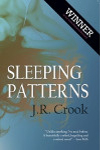
J R Crook – Sleeping Patterns
Posted 24th September 2012
Category: Reviews Genres: 2010s, Domestic, Experimental, Psychological, Romance
7 Comments
Wherever the story ends…
Publisher: Legend Press
Pages: 106
Type: Fiction
Age: Adult
ISBN: 978-1-908775-52-8
First Published: 2012
Date Reviewed: 19th September 2012
Rating: 5/5
Annelie Strandli (Grethe to her friends) presents to the reader a fictional story written by her friend, who is dead. Annelie is herself included in the story, a story of a girl who meets a boy, which in turn contains another story. It seems she took a while to work it all out, but might the reader understand it quicker? The basic plot is that Annelie meets Berry and Annelie wants to read Berry’s work, and he in turn is unhappy that she has a boyfriend.
Many novels have been called unique and powerful, and described as containing incredible depths. If such a number of novels is categorised as a group then Crook’s short work is destined to join it. And yet it can’t, because what Crook has written here is truly different; it is the structure of the plot, the layers of meaning that aren’t contained in the pages and that must be experienced afterwards, that are so individual. What is especially intriguing about the relationship between the text, the reader, and what is implied rather than spoken, is the way in which you can spend a long time, whilst reading, wondering whether or not you will be able to work it out, and a lot more time wondering if for all the reading you have done in the past you might be completely stupid. This being before you work it out. Was such a thing considered by Crook? This in itself is pause for thought because either way the conclusion yields more discussion, of both the text and what the overall purpose is.
Indeed if the summary of the plot, if plot is the word, sounds intriguing, then the structure is all the more so. The reader must start at the dedication page; whereas it is fine to bypass dedication pages in general, in this case to bypass would be to make a mistake. This is because the dedication tells you that Crook is dead, however he is not – it is he who sent this reviewer a copy of the book. And due to the many layers of story, if Crook is not dead and there are already a good few layers of repetition already, then the possibilities are endless and the book may even have a higher level than the reader themselves – in other words the reader may in fact be yet another layer of the story, who knows? Once you’re past the dedication page there is one other element of intrigue and then you start reading the story itself – starting at chapter 5. You don’t need to worry about getting chronological order wrong however, it’s easy enough to keep up. And whilst you could read the chapters in order, there is no bonus to doing so, you might even miss something.
There is a story within a story within a story, possibly with another story before all of that. The reader ought to find it out for themselves. The most inner story, however, is appealing in the way that it is written; Crook is a very good writer yet suddenly this inner story has sections where the plot is written very simply, almost dull in places, juxtaposed with other sections that are more highbrow. Luckily for the reader, apart from the subtext the book is very easy to follow.
The story – whichever story that is – has a romantic basis, subtle so that it will appeal to all, whilst having emotion pouring from it. And the story – this time the obvious one of Crook being the writer of the book – transcends fiction, making the author fictitious as a character himself and Annelie, presented by Crook as fictional, real.
There is a connection between all the stories. At the heart of everything, the author presents himself in the story (the one Annelie presents) as a fly-on-the-wall. But is he? And if Annelie is supposedly real is this non-fiction of sorts? Are we looking into real lives or fictional ones? And why is the author written as dead? We can take what Berry says as fact, but of the rest there is no knowing.
These are questions you will ask yourself, and whilst this reviewer has answers gathered from reading Sleeping Patterns, they could always be wrong and other readers will likely have other questions in addition.
It is impossible to explain this book further without giving the entirety away. Sleeping Patterns requires all of your attention but it will give as good as it gets. If you are looking to be awed and inspired, to be challenged intellectually, and to find love in a different way, this is the one.
I received this book for review from the author.
Related Books
K Hollan Van Zandt – Written In The Ashes
Posted 17th September 2012
Category: Reviews Genres: 2010s, Fantasy, Historical, Romance, Social, Spiritual
6 Comments
Burning libraries in the name of Christ.
Publisher: (self-published)
Pages: 393
Type: Fiction
Age: Adult
ISBN: 978-1-4525-3513-5
First Published: 2011
Date Reviewed: 13th September 2012
Rating: 3/5
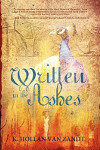
Written In The Ashes is the story of one girl’s journey from slave to potential saviour of the right to religious freedom, and the way the events of society culminated in the burning of the Great Library of Alexandria. At once combining the regular workings of ancient Egyptian life and a somewhat epic adventure, the book is the first in a series.
Unfortunately the beginning section of the book does not express the above. The first part of Written In The Ashes is badly written; there is unnecessary melodrama and plot points are left hanging when they require resolution. The melodrama comes in the form of the main character, Hannah, being unreasonably gallant – she throws caution to the wind many times without thinking about the consequences. An example of a plot point left hanging is when Tarek gets bitten right to the bone and then proceeds to help Hannah, who has sprained an ankle during a show of gallantry, get home, carrying her weight by himself. When they get home Hannah is looked after and stays in bed recovering for weeks, whilst Tarek… well nothing happens, you never hear of his mortal wound again. By all accounts, in an unsanitary society Tarek should be dead.
There is a significant amount of info-dumping about locations and ideas that are not needed. The author describes things that don’t matter, such as telling us that while Hannah was speaking her hair escaped her hair-tie; one can presume from the context that Van Zandt wanted to insert a romantic atmosphere into the scene but without continuation it is superfluous. There is constant repetition of the word “so” that has no meaning, as well the device of “an angel” you’ve never been introduced to, who is doing something, be it smiling, being irritated, and so forth. In the second section Van Zandt finally introduces the reader to the concept, at which time you realise the idea itself is a good one, it’s just a pity it was poorly handled.
So we come to this second section of the book and we do this specifically because suddenly that change in section does everything for the story. The writing style is wonderfully different, plot holes are no longer employed, and the characters come into their own. The story takes on a brilliant mythical religious atmosphere and invites the fantasy genre to stake a claim in its contents. The adventure suggested in the summaries begins and everything here after is much better than the initial first section of the book. It is incredibly easy to get lost in the tale and forget all that came before.
For the most part, the third section continues the goodness of the second, but there are a couple of bad aspects to it, in particular the jump in time. The second section ends with the characters in a rather vulnerable position, and then the narrative suddenly jumps ahead by three years. If this was due to factual events happening that Van Zandt had to subscribe to, it is understandable, but due to the narrative of her fictional characters it does not work – and whilst Van Zandt shows that a threat is still there and must be dealt with hastily, it appears in the backs of the characters’ minds. It would have been better had Van Zandt taken artistic liberty with the historical facts and moved events forward, especially as to all intents and purposes it seems the characters forgot all about their friend for three years for no reason.
Yet whilst it needs editing and duplicate actions removed, on the whole Written In The Ashes isn’t a bad book. Indeed although the violence is strong it fits the period, and there is the element of early Christianity included that is so rarely spoken of elsewhere. Van Zandt really looks into the Parabolani, the so-called Christians (in other words people who believed themselves Christians but behaved as anything but) who took to persecuting anyone who would not convert. The situation was the complete reverse of the Biblical stories of Rome against Christianity and whilst Van Zandt may have created some of the episodes that happen, it is merely the extra details that are fictional. Thus the book is important because in a western world where every other sort of persecution has been publicised, little is taught of this situation. And it gives the library’s female academic, Hypathia, an expanded, if fictional, story, bringing to light both the success and plight of women.
It is unfortunate that the book lacks an air of completion (away from the slight cliff-hanger ending as this is the first book in a series) but there is a deal of goodness here and it would appear that Van Zandt has the potential to be a great storyteller.
Written In The Ashes is a fair look at society and religion in era of the ancients. It will invite research and thoughts to be overturned, though it may be difficult at times to get there.
I received this book for review from the author.
Related Books
None yet.


