





Paulo Coelho – Manuscript Found In Accra
Posted 8th May 2013
Category: Reviews Genres: 2010s, Philosophy, Translation
9 Comments

Questions and answers in a straight forward format.
Publisher: Knopf (Random House)
Pages: 188
Type: Fiction
Age: Adult
ISBN: 978-0-385-34983-3
First Published: 2010
Date Reviewed: 29th April 2013
Rating: 4.5/5
Original language: Portuguese
Original title: Manuscrito Encontrado em Accra (Manuscript Found in Accra)
Translated by: Margaret Jull Costa
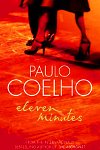
Coelho presents one of the ‘lost manuscripts’ – a fictional take on a real situation – and divulges its contents. As a town prepares to be attacked, a philosopher answers questions from the worried residents.
Coelho’s books are based in spiritual, philosophical content. In Manuscript Found In Accra he takes this a step further, styling the book as a question and answer session, keeping the text concise and devoid of superfluous detail, and borrowing from scripture. Indeed enough here is borrowed from scripture to make you wonder whether this book was produced too quickly, yet it fits the theme to have it included as Coelho writes the manuscript as one akin to the books of the Bible.
It is a very short book with little plot, but this means, as said, that there is nothing more than what needs to be said. Coelho’s never suggests he isn’t out to change minds, and the teachings are a good mix of common sense and thoughts that people tend to reach after a lot of thinking. The book is akin to Plato in style, and reads just like the ancient philosopher himself.
As there isn’t a plot besides the general setting of a town on the brink of extinction, it is possible to describe the questions without ruining the book. The prospective reader will find the following themes, amongst others: defeat being a bad thing, solitude, how to live happily, and love. The themes are more detailed than this list can suggest, though they work as general answers.
It could be said that this is a lazy offering from Coelho: short, sparse, lots of empty space on the page. It could be said that in essence it is more of the same from him. But those looking for a book of wisdom to be dipped into will likely appreciate this. And that is the take-away here – it is similar to the rest of Coelho’s work, but it still has its place on shelves.
I received this book for review from Crown Publishers.
Related Books
Jeanne Ray – Julie And Romeo
Posted 3rd May 2013
Category: Reviews Genres: 2000s, Domestic, Romance
9 Comments

It is the east, and Juliet is the sun… and too much sun can wilt the flowers in the shop and cause the family to go out of business.
Publisher: Broadway (Random House)
Pages: 226
Type: Fiction
Age: Adult
ISBN: 978-0-307-98672-6
First Published: 2000
Date Reviewed: 12th April 2013
Rating: 4/5
Florist families Cacciamani and Roseman have been rivals for three generations, causing havoc to each other’s businesses. But when 60-year-old divorced Julie meets widowed Romeo, sparks fly and they quickly fall in love. They might be able to see each other behind their families’ backs for a time but it’s unlikely to work, especially when it didn’t work for Julie and Romeo’s children. Can the mature version of the fight do any better, and just what is behind the feud, because to tell you the truth, Julie and Romeo have no idea.
Julie And Romeo was the début of Ray, the mother of Ann Patchett, and the book has recently been updated and thus reprinted. It’s a fun relatively short story that brings the older generation into the spotlight in a way that makes it appealing for all ages.
The story itself is rather predictable and light, but it might be those very qualities that make it difficult to put down. Although it doesn’t match the Shakespeare play entirely (time period and ages aside) there is enough of it to make it a fair retelling and the diverges make for a happier tale. There is a comfortable aspect to the story, you know it’s going to be humorous with no extreme hatred, and whilst there may not be much action, the book is exactly what it says ‘on the tin’.
Undoubtedly it’s the ages of the main characters that are the draw and reason d’etre here. Ray has shined a light on an age group largely neglected by the media. She does point this out literally a couple of times, but the book as a whole is devoid of preaching – Ray’s way of promoting her message is to show just why the age-group is not to be forgotten. She demonstrates how at heart everyone is the same, how love doesn’t change just because you’re older, and the result is a book that can be enjoyed by all.
The characters themselves are generally well developed. Ray has allotted a fair amount of page time to each of the families, allowing for the shortness of the book as a whole. The only issue is that Julie, the narrator, is too giving at times, even to her cheating ex-husband. She requires answers but lets people get away with not answering them (from the start of the book she wants to know why the families are feuding but doesn’t put her foot down when people brush her off).
There is also a problem in that flower orders are cancelled by the opposing party, which isn’t particularly realistic, as after the first time a business would have plans in place with the delivery services to ensure it didn’t happen again and to uphold security. Not everyone in the book is as docile as Julie – it would have happened.
But the couple of issues do not effect the book too much. Julie And Romeo successfully proves that romance in literature need not be limited to the young, and it does this whilst being utterly inclusive, funny, and just charming.
I received this book for review from Crown Publishers.
Related Books
None yet
F Scott Fitzgerald – The Great Gatsby
Posted 29th April 2013
Category: Reviews Genres: 1920s, Commentary, Domestic, Drama, Social
13 Comments
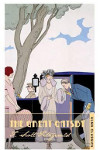
The okay Gatsby. The great writer.
Publisher: N/A (I read the version by Alma Books)
Pages: N/A
Type: Fiction
Age: Adult
ISBN: N/A
First Published: 1925
Date Reviewed: 17th April 2013
Rating: 4.5/5
When Nick Carraway moves home, he finds his neighbour to be the host of many all-night parties. Having met his (Nick’s) cousin and her friend, he is encouraged to join the friend, Jordan, in attending one of them, and finally meets his allusive neighbour. What he doesn’t know is that his new acquaintances are familiar with each other.
The Great Gatsby is a novel of money and aiming high for innocent reasons. It’s relatively short with enough characters to get the messages across but not too many that you lose track of them, and at once both lives up to its reputation and falls short of it.
The story itself is basic – written before, written since, without much to recommend it. Gatsby himself isn’t as great as described, but then that could be the point, and therefore the statement at the beginning of this review refers primarily to the book as a whole. It is therefore in the writing that the success of the book can be found. Fitzgerald’s writing style is literary, political, satirical, and spot on for the time. Indeed so woven into the era his book is, it can seem dated today in ways that many classics aren’t – references to political events that have not stood the test of time (in other words are not particularly well known today) inevitably mean that whilst the sentiment may be obvious, in order to fully appreciate what Fitzgerald is saying some research may need to be conducted. For this reason a version of the novel with notes included is recommended.
Whilst Fitzgerald was reported to be nonchalant about the title of the book, the name undoubtedly fits well in both a potentially sarcastic manner and in the feelings of the crowds of people who supposedly know Gatsby himself. Gatsby is both a well-developed character in his own right, and a representative of all those who try their best to make something of themselves for whatever reason.
None of the characters are particularly likeable except, perhaps, Nick, who is simply a bystander who becomes exploited whilst trying to do the right thing. Here there are innocent aims, together with snobbery, material wealth above all else, and a distinct lack of care for anyone.
Fitzgerald portrays the romances in an intriguing way. He uses the word ‘love’ many times, but whilst reading it may be hard for the reader not to wonder where this referenced love is. Certainly there is love of money, as a particularly poignant line imparts, but of romantic love there is little. If Nick is to be believed, then the love was mostly in the past, and perhaps it’s the money itself that causes the physical separations, in terms of the space between two people on a sofa, for example. Yet there is an interesting contrast in the book between those who separated because of money, and those who have come together despite it, even if those who transcend money do not truly transcend it. And the subtext that money makes the world go round – money causes separation, which causes poor choices, which causes situational conflicts between characters, which causes a look to someone of less money – is ironic and exploited to great effect.
The story is average – it is the message that is to be taken away; the warnings for those who dream without considering the reality, the alerts to the fact that some people are not genuine or will move on if their pretentious needs are not met. These messages are presented in books often, so it is Fitzgerald’s writing that makes the book one of those you ought to read.
On many levels it’s the fact that it’s anything but great that makes The Great Gatsby worthy of your time.
Related Books

Beth Hoffman – Saving CeeCee Honeycutt
Posted 24th April 2013
Category: Reviews Genres: 2010s, Angst, Domestic, Historical, Political, Social, Spiritual
9 Comments
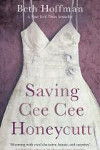
A little goes a long way.
Publisher: Abacus (Little, Brown)
Pages: 311
Type: Fiction
Age: Adult
ISBN: 978-1-408-70371-7
First Published: 12th January 2010
Date Reviewed: 1st April 2013
Rating: 5/5
CeeCee Honeycutt is the only person who cares about her mentally ill mother; her father is always away, and CeeCee has no friends except the kind elderly lady next-door. When Mrs. Honeycutt is killed in an accident, CeeCee’s neglectful father hands her over to her great aunt. Will it be worse in Savannah, the home her mother longed to return to, or will CeeCee find the regular life she’s always wanted?
Saving CeeCee Honeycutt is the gripping début by Hoffman that combines a young person’s thoughts with an adult readership to interesting and, let it be said, successful, effect. Drawing on history with all the discrimination it involved, Hoffman introduces the reader to the world of a girl on the cusp of her teenage years, who has struggled to find her place in a town where she is guilty by proxy.
Important to discuss first is the text and structure. Hoffman has produced a very special work. As previously stated, Saving CeeCee Honeycutt is gripping, yet on the surface that is something that shouldn’t be so. Hoffman’s book is slow, and there is not much action. The climaxes are minor and from the start it is obvious that there will be no great reveal. And yet yes, it is absolutely gripping. What Hoffman has achieved is that feat so beloved of many readers of literary fiction – whilst little happens in reality, this slowness allows for a great amount of detail. Hoffman’s 12 year old CeeCee is believable and partly for that reason, that the author allocated so much time to character development. The pages turn themselves and even in times of conflict, a certain calm pervades the text that suits the pace of life portrayed here. You can enjoy the proceedings without that nagging sense of wanting to get to the end of the book to discover the conclusion.
Talking of CeeCee, the prospective reader might wonder whether the thoughts and life of a 12 year old in 1960s America would be interesting enough to the mature target audience. Inevitably opinions will be divided, but Hoffman has ensured that her character is well-read, thoughtful, and mature beyond her years in many ways. CeeCee makes bad decisions of the kind any 12 year old might when they do not understand repercussions, but these choices and the way Hoffman otherwise presents the character mean that instead of being off-putting, the reader can empathise with her, will her to see the poor decision for what it is.
As said, CeeCee is far from perfect. Indeed there is a section where the previously grounded child, having grown up witnessing hatred and loneliness, takes it upon herself to inflict pain on another. It could be said that this was a bad move on Hoffman’s part and out of character for CeeCee, and yet it’s not at all easy to just accept that thought and move on. Besides the obvious element of understandable immaturity, Hoffman demonstrates how even the kindest person can turn down the wrong path sometimes, and, most importantly, she shows how CeeCee’s overwhelming love and gratitude for someone can translate as an urge to get back at the one who hurt her friend.
The history in this book is mostly subtle, though there are times when it is explored in detail. Hoffman doesn’t shy away from using the damning words and descriptions employed in the 1960s, using her characters to remind her readers of the prejudice towards Africans and, of course, the mockery of the mentally ill. Hoffman shows how despite emancipation, Africans were viewed with scorn, used as scapegoats in a world that believed an account based on whether or not you were of the right colour.
This history and the usage of it pervades the dialogues – in a way Oletta, the cook, is stereotypical. However there is this undercurrent of fact, Hoffman clearly wants to use all the appropriate and available aspects to really teach her readers what life was like, to make them feel as though the story is real and they are a part of it – because whilst it’s fiction there are many truths woven into it. What is of course wonderful, if predictable, is how the major white characters themselves treat African Americans, and how they are a part of the drive towards modernity. Their natures are explanations, and allow the author to portray the many different attitudes.
To be sure, in order to enjoy this book one needs to be happy with the idea of a young narrator, no matter how mature that narrator is. CeeCee can be a little too precious, and is headstrong in times of trouble – but then how many children are truly angels? Saving CeeCee Honeycutt is low on plot but bursting with character development and detail. And given that the plot is secondary, that is a fine thing indeed. If the idea of lazy but satisfying sunny days in a historical Savannah, mixed with some hard-hitting facts, is at all intriguing to you, then you are sure to love this book.
Related Books
John Elder Robison – Raising Cubby
Posted 19th April 2013
Category: Reviews Genres: 2010s, Commentary, Law, Memoir, Political, Social
7 Comments

Inaccessibility has never been so accessible.
Publisher: Crown (Random House)
Pages: 354
Type: Non-Fiction
Age: Adult
ISBN: 978-0-307-88484-8
First Published: 15th January 2013
Date Reviewed: 10th April 2013
Rating: 5/5
Robison recounts his time as a parent with Asperger’s, bringing up a child from birth to the teenage years. Involving stories of entrepreneurship, life when society doesn’t always understand you, and court cases when people make mountains out of molehills, Robison’s book is about himself as much as it is his son’s progression and the possibility that Cubby (Jack) might have Asperger’s, too.
Raising Cubby is a wonderful book that is successful as much for what it doesn’t say than for what it does. Robison takes the approach of organising his book by topic rather than by life stage, meaning that you read a lot more about Jack than you might have if the story had been completely linear. And whilst Robison has much to impart about Autism, he does it in a way that invites the reader into the fold. The book seems fresh, and it is, because you have the first-hand experience rather than an account by someone who knows someone with a condition, as is so often the case.
Robison balances serious statements with a lot of easy humour. His book is in the vein of that new phrase, ‘literary non-fiction’, where the story flows as well as any novel. It is an account, but it feels as though he is talking directly to you at times, and his humour invites a certain intimacy – you will finish this book feeling as though you’ve known the people in it for years.
This leads us onto the next point, because this affability and invitation seems at odds with what Robison describes of himself and of Autism in general. Taken at face value, as he says, those on the autistic spectrum can seem rude and anti-social. So the accessibility of his book knocks that notion out of the water. Which is brilliant, really, as it further backs up the truth of the matter, which, as Robison says, is that those on the spectrum wish to have friends, but happen to be oblivious to the way they come across to others.
The last point in the previous paragraph does not in turn relate to the writing in the book, however. Robison speaks naturally and has a good command of language, you would expect an English degree to be amongst his accolades. This in itself may surprise some readers, and by itself makes the book stand out as one that would be an invaluable source to schools and any organisations that struggle to understand those on the spectrum. But in addition, Robison writes honestly, he never censors himself – in other words he includes decisions he’s made that might sound strange to many, without any hint of apology or explanation. He clarifies the first few times, so that you will be able to tell where his Asperger’s has played a part in decisions, but otherwise there is nothing. Therefore when things sound odd there are no excuses – this is Robison, this is an example of Asperger’s, and as a reader you just get used to it. Robison explains the logic to some decisions so that you come to understand his mindset, but the overall approach means that not only will the uninformed reader come away knowing a lot more about Autism than they would any book by unaffected ‘experts’ but readers with autism will likely be able to relate to it, too, especially since there is no time for patronisation or misplaced sympathy. Raising Cubby is very much a book for anyone.
Due to the inclination for obsessive interests, readers who love the following topics will find in this book fodder for them: the upkeep and alteration of musical instruments, repairing and refurbishing cars, building homes, and chemistry. There is enough information about trading card games to appeal to those who may have had trouble leaving them behind with childhood. It’s not that the book is lengthy with masses of information, it’s the way that information is incorporated throughout. Robison is a geek, and the reader can rest assured that they can join him without any of the eye-rolling or sighs that often accompany responses when an attempt is made to discuss a beloved subject in person.
…the Commonwealth of Massachusetts had also charged him with one count of “possessing explosives with the intent to harm people or property”. I guess that was their backstop – if they couldn’t prove he harmed people or destroyed property, they wanted to prove he meant to.
The book is striking for many reasons, but one reason is far removed from the others. As Cubby, a child genius with no understanding for how others would view him, experimented with chemistry, the law inevitably arrived at the door. This episode gives Robison the opportunity to call into question the vast chasm that is rules made for the typical person coming up against people for whom they cannot work. Robison shows how naivety and disability are exploited for gain by others, and how the rules need to be changed. The account of Cubby’s trial inevitably calls to mind the case of Gary Mackinnon, a British man with Autism who hacked into the Pentagon computers to find evidence of aliens. Robison’s account may not refer to it, but the two events run neatly in line. Things are not black and white, especially when disability is involved.
Robison may have an epilogue that hopes for changes in the court system, further progression for acceptance, and education in society of those who do not match the expectations of society, but the strength of his book surely lies most in the overall approach and content. Raising Cubby is a brilliant book for general reading, but there is no doubt that the best future for it would be in the consumption by those who deal with people on the spectrum on a constant basis and who as yet lack the information necessary to both help their charges excel, and excel as teachers themselves.
I received this book for review from Crown Publishers.
Related Books
None yet


