Andrew Blackman – A Virtual Love
Posted 15th April 2013
Category: Reviews Genres: 2010s, Commentary, Political, Social
4 Comments

Both literally and metaphorically tangled.
Publisher: Legend Press
Pages: 234
Type: Fiction
Age: Adult
ISBN: 978-1-909039-45-2
First Published: 1st April 2013
Date Reviewed: 7th April 2013
Rating: 5/5
When Jeff joins his activist friend, Marcus, at a protest, he ends up giving his name to a woman who mistakenly believes he is a famous political blogger. Interested in Marie, Jeff keeps up a pretence, saying he goes to an office to blog when he’s really at a 9-5, and moving conversation away from ‘his’ blog by saying he doesn’t want to talk about work at home. But how long can it last?
A Virtual Love is a particularly ‘current’ work that looks at a great many themes via the main premise. Narrated by everyone but the main character, the book studies issues such as old age, the affects of loneliness, and, of course, the power (or in some cases destruction) wielded through technology.
What is apparent from the start is that this book isn’t going to contain your standard narration. Many novels use multiple narrators, but Blackman presents a particular sort of second-person. Every word in the book is addressed to Jeff, but it’s apparent that Jeff is not there to hear it. The atmosphere offers up solutions such as a witness statement, or revengeful letter, the very fact of Jeff’s absence being much like the fluidity of personality on the web that Blackman examines. And as each person presents a different version of Jeff to the one previously, at least in most cases, it opens the discussion to reality. Jeff has many profiles online, but of course in real life there are differences, too.
The range of narrators inevitably means that a further reference to personality can be made. The narrators are all unique enough that it doesn’t matter in the least that on occasion Blackman takes his time before formally identifying, for the reader, whose account they are currently reading. Each character has their own voice and is strongly situated in their own contexts and backgrounds; the style of writing differs per chapter. This can be quite a shock when you’ve settled into the routine days of Jeff’s grandfather, only to turn the page to the swearing and prejudice of Jeff’s friend.
That said, the text does of course retain throughout the same basic features that signify Blackman’s own voice. Short sentences lead to a slower pace of narration, at delectable odds with the speed of broadband and the way thoughts are soon lost under the deluge of newer thoughts. And whilst the premise may be of interest in our modern times, somewhat ironically up-to-the-minute, it is perhaps the issues behind this that will remain with you in the long-term. Rather fitting, really.
And the issues are big, ranging from the moment to the eternal. Blackman studies old age and the way there is that gap of understanding between the generations. A certain thread explores the lack of understanding between the current older generation’s relative slowness when compared to today’s instant world. Blackman looks at political issues and key figures, at work-life balance and work places in general – indeed some chapters can feel monotonous until you realise that’s the point. And unsurprisingly there is love, and the identity of those who bask in the glory of others. Computer topics such as hacking and maintaining a web presence obviously play a part in the book. And there are the scary details that are always in the background – how does one react when identities are stolen, how easy is it to lose yourself in that manner, and how should we be presenting ourselves online in the first place?
Amidst all this you would expect no lasting humour, but there is some to break away from what you discover is an accurate description of most people’s lives. And you want to break away because reading the words unmasks just how boring routine can be.
There are a couple of points to contend with. Marie refers to herself as a blogger, mostly at the start, but appears to forget to write once she starts her relationship with Jeff. And one must wonder that for all the successful lying from Jeff, she would not have noticed, for example, that he had a suspect Twitter account (Marcus discusses their relationship there, openly). But then given Marie’s infatuation with the man she believes is her hero, and some words later on that suggest that Marie’s purity of intentions are in fact not at all in the ‘right’ place, these are not as important a couple of problems as they might have been. Undoubtedly there is that factor of unreliability with the narrators. The ending may also prove unexpected – what you may expect is not necessarily what Blackman wished to look into. In fact if he had it might have detracted from, and thus devalued, everything he had wanted to say.
A Virtual Love does not expose Internet issues in the world – those have been studied and discussed many times already. What it does do is look at the issues from a specific viewpoint, the very narrowness of its scope leading to unique observations that are important, ones that are often forgotten and deemed as minor. It won’t keep you up at night flipping pages for intrigue, because as the reader you know what’s been going on, but it will keep you flipping pages for what it does include. This is a book that is so relevant right now that you might be surprised at how quickly you finish it, its accessibility spanning many levels. You might not like the characters – who could? – but you might just like this book. A lot.
I know the author as a fellow book blogger.
Related Books


Speaking to Andrew Blackman about On The Holloway Road, and A Virtual Love (spoilers included)
Charlie Place and Andrew Blackman discuss life on the road, following in Jack Kerouac’s footsteps, offline and online identity, writing an entire book about a character but never giving them a voice, current climate change activism, and withholding – for very good reason – the endings your readers expect.
If you’re unable to use the media player above, this page has various other options for listening.
Jessa Russo – Ever
Posted 10th April 2013
Category: Reviews Genres: 2010s, Angst, Paranormal, Romance
4 Comments

Where ’til death do us part’ isn’t a valid concept.
Publisher: Curiosity Quills Press
Pages: 231
Type: Fiction
Age: Young Adult
ISBN: 978-1-62007-089-5
First Published: 12th September 2012
Date Reviewed: 4th April 2013
Rating: 3.5/5
The car accident that killed Frankie left Ever unscathed, but it’s now two years since Frankie’s death and for Ever, who was secretly in love with him, his presence as a ghost has meant that she’s been unable to move on. When a new neighbour moves into the house next door, Ever is at once struck by him, and he appears to be interested in her too. But her best friend lingers, telling Ever that Toby isn’t the right guy for her.
Ever is the début novel of Russo, the start of a series, and it shows a great deal of promise for the series as a whole. Russo is a competent writer, she knows her target audience well, and she tends to take care of those pesky elements – questions – that are so often left by the wayside. Indeed where questions are concerned Russo cleverly makes you think she’s going to leave you thinking she’s forgotten, before letting you know the answer. It’s a method that may not please everyone, but it successfully enables her to take a look at both the important aspects of her story, and the more light-hearted fun ones.
This leads us on to the main character. If the name sounds odd, it’s worth noting that it’s a acronym for the character’s full name and ends up working well enough. Ever will likely cause a divide in opinion, as her nature changes as the book continues. At the start she is a good narrator with a strong voice. Her feelings for Frankie naturally take centre stage a lot of the time and there is a great amount of pondering about Frankie’s place in her life – however given that Frankie never passed on this makes sense. It may seem annoying, but in the context of her life, Ever’s inability to let go is understandable. She makes a break for Toby, however it is a literal break, and the attraction is instant.
Later on, as situations become clearer and secrets are revealed there is a tendency for Ever to lose track of what’s important, for example she’ll say that working out an answer is important – and it is, very – but will then say she needs coffee first. Her state of mind here could offer a theory, but it is difficult not to think that given the new situation, one would know what to do in order of importance, especially as the important questions are of the kind that own an impulsive argument.
The other characters being described by Ever, they inevitably seem more focused. Almost all of them aim to aid her with clarity. The character likely to gain the most interest of the reader, perhaps more so than Ever, is of course Frankie.
Using Frankie as a point for further discussion (we’ll go back to him in a minute) the structure of the book is incredibly interesting for its freshness. Russo doesn’t spend much time detailing the accident (indeed it only gets a flashback) and neither does she talk at length about the overall set-up. Frankie has been there two years, Ever hasn’t got over him, and the entire household can see him. Russo states the necessary basics and moves on. There is no info-dumping; the only details Russo ever discusses at length are there to help you understand the characters better. This means that apart from Ever’s thoughts and worries, the plot stays on the topic at hand.
Of Frankie himself, then, it is very much a case of show rather than tell, and it’s left to the reader to work out why he has remained on earth (this is easy enough to work out so that you’re able to carry on with the story straight away). The rest of the characters provide ample backup but there are a couple of stereotypes that again are likely to divide opinion (Ever herself somewhat conforms to a stereotype). There is a bit of oddness to the parents seeming to want Ever to remain in love with Frankie, so she won’t meet boys, but then not wishing the ghost to be in her bedroom, and it would have been nice to know how everyone felt about Frankie’s presence. But these are quibbles. Less of a quibble is Frankie’s family – the reader may wonder how after his death his dad would have been okay with leaving when everyone knew Frankie’s ghost was next door.
So Russo is a competent writer, but there are a couple of aspects that do not blend in. There are a lot of emphasised words and phrases, and while some are satisfactory others bump at the pacing, slowing it down. And there are phrases that have unfortunately been made infamous by a certain recent best-seller. This means that whilst the usage of them is fair enough, wrapped up in Ever’s uncertainty and worries they bring to mind someone else; and Ever is far from that person.
The interesting thing about the structure of the book is that you’ll find many of the questions you have that are not answered become irrelevant. Some thoughts you might have are not addressed because Russo doesn’t need to address them. She could have, but then you’d be left with a lot of superfluous answers, and if anything that would have detracted from the story.
The romance takes the form of a triangle (this isn’t a spoiler as it begins in the first chapter). With a ghost involved this was always going to be different, and Russo has time to explore the feelings of guilt that come with trying to move on after a death. It doesn’t matter that Frankie is still there, if anything it makes it all the more poignant. Where intimacy is involved, Russo is adept at including all the worries and desires of a young person and the way she proceeds with this line of the story is laudable. Incidentally if you think you know where it’s going, who Ever will choose, it seems Russo isn’t anywhere near wrapping it up, but there is a difference here to the usual styles of keeping triangles moving. Some readers may find the limited time between sexually-charged encounters to be uncomfortable, others will likely be okay with them.
With Ever you have to be prepared for a book that is going to throw you straight into the action. You have to be comfortable with Russo taking her time, and you do have to be okay with the idea that it might take Ever some time to become strong again. With this character it’s not as easy as saying she should pull herself together, but so far if there’s something you’ve thought of, be it a wish for the story progression or character development, if this book is anything to go by, Russo’s already onto it. Ever rises and falls, delights and confuses, but it is a gripping story with enough uniqueness amongst its use of trends to make it a worthy addition to the paranormal Young Adult literature that’s been on the shelves for a while.
I received this book for review from the author.
Related Books
None yet
Anna Belfrage – Like Chaff In The Wind
Posted 27th March 2013
Category: Reviews Genres: 2010s, Domestic, Fantasy, Historical, Political, Romance, Social
4 Comments
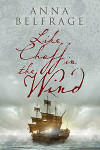
Over the sea, once from the sky.
Publisher: (self-published)
Pages: 367
Type: Fiction
Age: Adult
ISBN: 978-1-78088-470-7
First Published: 17th December 2012
Date Reviewed: 26th March 2013
Rating: 3.5/5
So Alex chose to remain with her 1600s husband. But the tensions between Matthew and his brother Luke have not weakened – Matthew finds himself abducted and aboard a ship bound for the new world. As a slave with no rights it will be up to Alex to save him; and of course amongst this there is always the future, the time of Alex’s birth, and those she left there.
Like Chaff In The Wind is the second book in the Graham series, and, it must be said, a strong step up from the previous book. Belfrage has expanded on her topic, filling it with events and complexities that make it more gripping than A Rip In The Veil, and whilst there are still issues there’s the suggestion that any further books will continue to build on these new strengths.
One of the biggest reasons this novel succeeds is Mrs Gordon, who provides a nice balance to the main two, being less impulsive, a winner of hearts for good reason, and realistic. Indeed the character development in this book is much better overall; although Alex and Matthew are of course the same people, the reader gets a lot more information about them. It is thus a lot easier to appreciate them.
Where A Rip In The Veil spent little time in the 21st century, Like Chaff In The Wind hands the period a good portion of space. Belfrage answers questions and allows the ‘younger’ family to become important in their own right. And just when you think she might let it peter out again she dives straight back into the fantasy to produce a plot point that is welcome, fitting, and appealing. Speaking of time, more characters get to hear of Alex’s background, which inevitably makes matters more interesting and fun.
This writing, too, is better, however here we come to the negative aspects. The book suffers from many of the problems the previous book did. The characters still end questions with “no?”, when it doesn’t fit their overall usage of English, and there is a vast amount of editing and grammatical errors that detract from the story. There is also a lack of spacing between some scenes, meaning that you may need to pause for a moment so that the sudden jump in situations doesn’t feel so wrong (because with adequate spacing it wouldn’t, normally).
The plot is strong on the whole, but it does follow the basic pattern of violence, argument, sex. Again there is a lot of violence and a lot of sex, and again one must try to suspend beliefs in the way this 21st century British woman acts in a society of male domination. This copious violence and sex take precedent; the reader will have to decide whether the family feud, considering the years covered in the book, isn’t going on a bit too long given the back and forth of the vengeance.
But overall, Like Chaff In The Wind is a major progression. The characters are memorable, the time travel is exciting, and the good use of history is continued. There are problems but its hard to say that the book isn’t enjoyable. If the reader deems it possible to start with the second book that is perhaps recommended, but either way you might find here a story to love.
I received this book for review from the author for Historical Fiction Virtual Author Tours.
Related Books
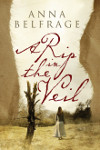

Anna Belfrage – A Rip In The Veil
Posted 22nd March 2013
Category: Reviews Genres: 2010s, Domestic, Fantasy, Historical, Political, Romance, Social
8 Comments
Don’t forget your toothbrush.
Publisher: (self-published)
Pages: 370
Type: Fiction
Age: Adult
ISBN: 978-1-780-88242-0
First Published: 1st August 2012
Date Reviewed: 20th March 2013
Rating: 3/5
Alex was pulled back in time, and all she was doing was heading to a presentation. Landing in the countryside, the 1600s version of where she was when her car stopped, she meets Matthew. Matthew is on the run from jail and agrees to help Alex, intrigued by her looks and story. Alex has family in the 21st Century, but there’s something about Matthew, and soon, despite the hardships that await her in Stuart Scotland, she might start to wonder whether the idea of returning is the opposite of what she wants.
A Rip In The Veil is a time travel novel with a twist. Here we have a woman who has fallen back in time to land in the Scottish Commonwealth, meeting a man who is on the run, and later trying to discover what happened to her mother.
Belfrage has done a good job of using her characters and plot to detail the time periods and their differences. Where others might info-dump she has Alex tell Matthew about what will happen in his own lifetime in order to help him understand what is happening. Belfrage has created a character that knows enough of history that means she doesn’t freak out when events occur – she does worry, because anyone would in the situations – but she has the knowledge and modern methods of, for example, fighting, to last the day.
The issue is that the characters aren’t developed enough. They are stereotypical and it would be difficult to describe them well if you were asked by an interested party. Alex is a career woman, has a child she didn’t want, knows some history, and has a multi-cultural background, but beyond that there is little to say. And the case with Matthew is similar.
This would actually be okay if the plot was not full of holes – because it’s obvious that Belfrage wanted a plot-driven book and there is nothing wrong with that. But there are major issues with the plot, such as Alex, someone who is otherwise very aware of how unhygienic 1600s Scotland is (she is always wishing for a toothbrush, understandably) beginning a sexual relationship with Matthew without any mention of STDs or contraception. One can assume that Matthew may have only been with one other woman before, but the way Belfrage presents Alex leaves no room for unprotected sex. And there is a lot of sex and lust in this book. Indeed there is also the issue of Alex saying how much she loves John, back in the 21st Century, whilst she lusts after Matthew. That can happen, but in this case it does not add up.
And for all her knowledge, Alex isn’t good at accepting the differences that come with being in Matthew’s era. She rallies against some occurrences, as would any woman from a modern western society, but some of her arguments, considering the way she is otherwise, sound at best impolite. And when you’ve a career woman not finding a problem with the relative boredom of a woman’s lot in the 1600s, it doesn’t come across well. Neither does the agreement to burn and give up the possessions that have accompanied her in time travelling. But that’s the issue; Belfrage is very good 50% of the time detailing time differences in regards to characters, and completely forgetful the other 50%. She’ll constantly highlight changes, and then has Alex tell Matthew she thinks she pregnant a few weeks before she suddenly realises she’s pregnant, for example.
The writing is okay, and Belfrage is able to use both old styles of speaking and, of course, modern day slang. However there is this odd element employed where every character tends to end questions with “no?”, as though using broken English. It works for the truly foreign characters, but is out of place and distracting otherwise.
The mystery of Alex’s mother is compelling, even if the sections on the men involved are less so. The violence is extreme and repetitive but it doesn’t stop the story moving forward. But reading the book, it can be difficult not to feel like the premise and various ideas were not taken advantage of. A lot more time could have been spent on Alex’s thoughts of home, especially as she is presented as so modern, and after the initial set up has been established, the characters in the 21st century are abandoned where they could have provided a good balance and more intrigue.
A Rip In The Veil has a great premise and a lot of unique ideas, and for all the issues it is difficult not to want to keep reading. But it must be noted by the prospective reader that threads are left hanging and the unrealistic can take precedent (besides the concept of time travel). It is the start of a series, so there is the possibility that Belfrage may fill in these holes later on.
I received this book for review from the author.
Related Books
Anne O’Brien – The Forbidden Queen
Posted 20th March 2013
Category: Reviews Genres: 2010s, Angst, Historical, Political, Romance, Social
7 Comments

The prelude of the Tudor dynasty.
Publisher: Mira (Harlequin)
Pages: 607
Type: Fiction
Age: Adult
ISBN: 978-1-848-45215-2
First Published: 1st March 2013
Date Reviewed: 8th March 2013
Rating: 3.5/5
Katherine of Valois, neglected by her parents, is chosen to become the wife of England’s Henry V, bringing the claim to the French throne with her. But Henry is focused on wars and the young Queen’s infatuation does nothing to interest him. At the King’s death, Katherine is not expected to remarry, but that means little when you’re 21 and have never known love.
The Forbidden Queen is O’Brien’s endeavour to bring into the spotlight the grandmother of Henry VII and illustrate the plights of medieval queenship. Drawing both on factual evidence and speculation, she crafts a tale to suit both fans of history and readers looking for romance.
Katherine herself can be a rather annoying and ignorant character, but it is difficult to fault her for a long time due to the background context O’Brien has written (the childhood neglect has neither been confirmed or dismissed by historians so O’Brien’s usage is fair). Considered by themselves, Katherine’s actions are childish, not thought through, and fully of naivety. They are the sorts of actions that readers of strong female characters deplore. However, given Katherine’s childhood – the lack, no, complete absence, of parental care, the punishments and particular upbringing – whilst she may irritate there is a sound reason for it. Indeed O’Brien doesn’t simply list the elements of the childhood and then move on, she provides the details necessary for the reader to understand Katherine’s continuing desperation for love and all the anxiety and bad choices that go along without.
But there comes a limit to how much of the same will work in one book. Over the course of the novel Katherine makes the same mistakes time and time again, quite literally repeating herself. Some have factual basis, but most do not, and whilst the romantic choices are based on speculation that has been passed down through the ages, it was up to O’Brien to fill in the gaps with events that are interesting rather than more of the same. It feels at times as though you’re reading the book a second time, and a lot of it could have been cut out without loosing anything important. The repetition of Katherine and all the mistakes do start to become difficult to understand as the book continues. Despite the background context it is difficult to believe that after a decade of life in England and at court, the Queen would not have learned a thing or two.
Katherine’s inner thoughts are highlighted in italics but she repeatedly ignores the voice of reason and does not understand others’ concerns. She is relentlessly anxious in her repetitive thoughts – angst is the element of the day – and as the book is told in the first person the reader is never given an opportunity to see things from another point of view. This means that whilst there are wars going on, and undoubtedly issues in England due to her son not yet attaining his majority, you do not hear about it, even though it would have surely been in her mind.
Yet because you are stuck in Katherine’s head, there is ample opportunity to get a feel for how it must have been for those who were wronged, and how laws and politics could affect even the most powerful, or in this case simply highest, of women. Locked as she is in her weakness, Katherine rarely puts her heart into rebellion, easily giving up, but through her continual isolation it is possible to draw a picture of what it must have been like for the many other women who suffered similarly. In this way the book will prove interesting to those who feel dowager queens have been forgotten by literature.
And it must be said that Katherine’s utter ignorance creates the perfect situation to educate the reader about society and court expectations for foreign brides. There is also the difference, even if not great, between a mother’s teaching and expectations compared to how the future husband expected his wife to behave. O’Brien demonstrates how a lot of the marital and sexual distances in history might have been shortened had women been brought up to be bold.
The romances in the book enable O’Brien to explore how politics ruled over emotions and how nobles suffered for their riches. They are viewed from the diplomatic angle Katherine must see, except on those occasions when passions triumph over regulations. Understandably the men in the book are secondary characters, even when they are Katherine’s lovers, and O’Brien has moulded them to suit her story.
Liberties are taken but not to extremes, basic anxiety is backed up by context, and the examination into the affects of a mad father and (speculated) debauched mother is undertaken with aplomb.
The Forbidden Queen is admirable for its desire to bring Katherine to the fore, and it’s not a bad book on the whole. But without a solid focus or interesting developments, there isn’t much to recommend Katherine, herself, to memory. If you are looking for romance, however, you may have come to the right place, and the inclusions of well-loved elements will likely keep you reading.
I received this book for review from ED Public Relations.
Related Books