




Tom Kizzia – Pilgrim’s Wilderness
Posted 8th November 2013
Category: Reviews Genres: 2010s, Angst, Domestic, Law, Political, Psychological, Social, Theological
2 Comments
When God is no longer that man in the sky but the father of a family that has no choice but to follow him.
Publisher: Crown Publishing (Random House)
Pages: 296
Type: Non-Fiction
Age: Adult
ISBN: 978-0-307-58782-4
First Published: 16th July 2013
Date Reviewed: 30th October 2013
Rating: 4/5
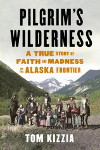
Tom Kizzia recounts the story of the ‘Pilgrim’ family who appeared at first to be naïve wannabe pioneers in rural Alaska, but later proved to be problematic to the National Park Service, the local residents of McCarthy, and a group of people with a horrific secret.
Pilgrim’s Wilderness is the generally well-paced and well-written tale of a family that was not all what they seemed to be. Including tales of what came before McCarthy, and his own then-present reporting of the Pilgrims for the newspapers, Kizzia creates a strong and shocking story, reminding you that appearances can be deceptive.
Kizzia’s approach to the work is one of the biggest, if not the biggest, recommendations for it. Kizzia’s approach is both biased and highly objective. And whereas a bias can often detract from unpersonal non-fiction, here it is necessarily apt. The actions of Bob Hale (‘Papa Pilgrim’) warrant an incredible and understandable bias against him, and it is to Kizzia’s credit that he, the writer, stays away from slandering. Kizzia could not help but be biased, it would be intolerable any other way, and it is interesting that it may take the reader a while to realise why.
This is because for a long while the issues are all to do with land ownership and the way many dislike governmental take overs of land in the name of preservation. Kizzia is fair here, telling the reader why the Pilgrims had a good claim, and why the National Park Service had a right to feel irritated. He includes the various thoughts of the long-term residents of McCarthy. But the reader who is still on this section, if they haven’t realised where the Pilgrim’s tale is headed, may see Kizzia’s bias as unfair – it will all depend on which side of the debate (parkland or private property) they fall. Kizzia includes, one can assume, the whole debate, but he is bias towards the National Park Service whilst giving the Pilgrims’ opinions plenty of time.
Depending on how much prior information the reader has, it may only be after other details of the Pilgrims’ lives begin trickling into the narrative that Kizzia’s viewpoint can be truly appreciated. Providing all sides and quoting everyone when your story has a darkness to follow is admirable, and for all Papa Pilgrim and others’ thoughts on Kizzia’s reporting, he has strayed from the traditional picture of the entertainment-creating out-for-himself journalist.
Quotations are another element that should be noted. Kizzia’s book is full of the words of others; his sources are identified, his commentary backed up, and his views of people as objective as possible when possible. Crucially, he includes the words of the Pilgrim children, and rather than just telling the reader that they changed, he often writes in a way that almost hands the narrative over to them. It is obvious from the specifics of the writing style that Kizzia went straight to the primary sources whenever he could.
By now it will come as no surprise to say that the darkness in the tale is one of abuse. Whilst Papa Pilgrim based his life and rulings, in his mind, on a literal reading of the Bible, this was a man who acted in every way but the way his God wanted. Kizzia does not gloss over facts.
Referring once more to Kizzia’s style, the author has made a brilliant contrast, showing that whilst the Pilgrims did not live a truly Christian life (at least not so long as their father was controlling them) there are other families of similar appearance who do. When the Pilgrim children finally saw freedom it was in the form of a family who were not so different. The Buckinghams wore (and presumably still wear) the same sorts of clothes, share the same deference to gender roles, put God first, live in a cabin, and promote the virtuous way of life – but they are as different to Papa Pilgrim and his views as chalk and cheese. It is perhaps surprising to hear that the Pilgrim children did not escape their father to be introduced to the mainstream way of life but simply to a positive version of their own, and yet it feels very appropriate. These children were so far from twenty-first century life with its television, video gaming, sexual liberation, and shopping, that there is no saying how they would have faired, but the Buckinghams’ similar (but true) focus on God enabled them to stay true to who they had become. In any other book, the Buckinghams may have been regarded as a worry, given the Pilgrims’ background, but Kizzia shows that just because people do not meet expectations, that they share a visual similarity to problematic cases, it does not mean they are the same.
There are but a few places where Kizzia’s work is brought below masterpiece level. There is a lot of superfluous information in the book, of other people’s pasts and of Alaska, that could have been edited out to keep the pace of the narrative going – especially when those people play only a bit-part. There is a constant switch back and forth between eras of the Pilgrim family’s movements that becomes confusing to follow. And there is the unfortunate story of Kizzia’s wife who died from cancer. Sally’s life is of course important to discuss, but the tale of a law-abiding beloved wife who died of cancer included in the story of a lying, cheating, sexual and domestic abuser who raped his children and had no connection to Sally, is out of place. A memoir would be wonderful.
But, as suggested by this review, the work is, as a whole, an excellent one. Kizzia has given a long-lasting voice (as opposed to disposable daily news) to the children and wife of Bob Hale, as well as a voice to McCarthy. His handling of the subject matter and his approach to it are superb and it is safe to say that this book is one that won’t leave you any time soon.
Pilgrim’s Wilderness suggests reflection, asks for empathy, and relates triumph in the face of adversity. It is a difficult book to read, but it is a story that begs to be heard.
I received this book for review from Crown Publishers.
Related Books
None yet.
Michael Palin – Around The World In 80 Days
Posted 4th November 2013
Category: Reviews Genres: 1980s, Adventure, Comedy, Travel
5 Comments

Easy – until you rule out aeroplanes.
Publisher: Orion (Phoenix)
Pages: 241
Type: Non-Fiction
Age: Adult
ISBN: 978-075-38232-48
First Published: 1989 (this edition with extra content, 2010)
Date Reviewed: 28th October 2013
Rating: 4/5
Star of Monty Python, Michael Palin, was challenged by the BBC to undertake a journey around the world, imitating Phileas Fogg – to follow Fogg’s example, Palin forgoes aeroplanes for slow sea voyages and train rides and he tries to get from the Reform Club in London, to the same club once again (which he’s not allowed to enter), travelling through the Middle East, Asia, and North America.
Around The World In 80 Days is a rather brief (this detailed later) account of Palin’s journey, a book published to accompany the TV series the journey was primarily created for. It’s safe to say you can read the book without having seen the series, though of course your overall experience would be enhanced by making time for both.
The most obvious element that needs to be commented on, considering the bulk of the content was written and concerns the late 1980s, is that the book is understandably dated. Writing in the then-present, Palin carries in his Walkman, ship crews watch films on VHS, and a lot of the country-specific references are now irrelevant or historic-sounding. There isn’t a laptop in sight.
Yet as long as you keep this in mind, the book isn’t old enough to pose any issues. Perhaps the very young reader, who wasn’t born before the Internet, might have trouble catching every reference, but for the most part it isn’t hard. Indeed the book offers the chance to relax in an age where technology wasn’t yet persistent and journeys were more hazardous.
It’s worth noting that the new edition contains Palin’s mini follow-up trip twenty years after the 80 days. It’s written in the same style, details the landscape changes Palin notices, and recounts the reunion with the ship’s crew he was sad to leave those twenty years previous. It’s not a big addition, but it makes the new version of the book the better option nowadays. This said, the book does not end with a grand finale. Palin makes his trip and that’s it. Given the reason for the journey – to attempt Fogg’s mission in reality – there is little think about afterwards.
There is a lot of cultural information in the book, and a lot of it is ageless. So too the historical information. Through Palin’s words it is easy to see how his journey differs in emotion and thought to Fogg’s – Fogg simply travelled without wishing to see the countries he went through, Palin makes a point of using any spare time to talk to people and try local food and wares. He goes clothes shopping in Japan, rides a camel, becomes an extra in a film – for Palin the list goes on and on; one almost feels sorry for Fogg’s belief in western superiority, fictional character or not.
There is a great deal of humour in the book. A lot of it is very British but of the kind that is accessible to anyone. For example, a running theme is Sheffield United Football Club. Palin doesn’t say so outright, but it’s obvious that one of the things he wants to stay updated on is news about his favourite team. There are references to other Monty Python members, and jokes about the many ‘Michael’ incidences on his journey – the camel and its owner being called Michael (a sales pitch it would seem), Palin being called Michael Jackson (as the latter is/was more well-known), and so on. There are also lots of jokes about the different idiosyncrasies and ideas Palin comes across, which may at first seem wrong – but Palin soon starts joking about Britain, too.
Truly this is a book in which the highlights are the comedy and Palin’s focus on getting to know the countries themselves (rather than only the tourist attractions). The book has a lot of information about sea vessels and trains – understandably none on cars or planes – and will therefore appeal to transport enthusiasts too.
This is where we come to the mention of the book being ‘brief’ – there is detail, but only in parts. The book is often written as though bullet points wouldn’t be amiss, and the style is in no way literary. Palin jumps from one day to another, and whilst this could be a reason for suggesting the TV series is paramount to appreciation, it’s more the case that the style is the inevitable effect of the book being a product of Palin’s diary. Indeed if you didn’t know this prior to reading it, you would soon realise, as the amount of detail that is there is more than most people would be able to remember off the bat.
Briefness aside, it’s admirable of Palin that he wrote about every day, come rain or shine, happiness, headache, or sickness.
To sum it up, Palin’s book is relatively short, but it’s sweet. It’s necessarily primarily concerned with transport but this shouldn’t put off those looking for culture. And it’s a whole lot of fun. There are plenty of photographs included – you don’t feel ‘outside’ – and that it is now dated may just be part of its charm. Those with wander lust will love it (note that it may lead to tickets purchased), those who love the slower pace of life will enjoy its use of the sea and the way of the crews as they take their time, and those looking for reports of the culinary kind will find what they seek. With a lot to recommend it to a lot of different people, Around The World In 80 Days is one set of days you’ll want to be escaping to.
I received this book for review from Titan Travel.
Update on 29th March 2016: I see the question, ‘which feature of michael palin’s “around the world in 80 days” best shows that it is a primary source?’ a lot in my stats so I’ll answer it. Palin’s book is in the form of a diary; the book is a published version of the diary he kept whilst on his travels. Diaries are considered primary sources therefore the diary format of the book shows best that it is a primary source. (If we wanted to look into it further we could suggest the book is also bordering on being a secondary source because it’s in part a commentary of Vernes’ original book both through its detailing of the differences and the very fact Palin is following in Phileas Fogg’s fictional footsteps.)
Related Books
None yet.
Melissa Marr and Tim Pratt (ed.) – Rags & Bones
Posted 28th October 2013
Category: Reviews Genres: 2010s, Fantasy, Horror, Paranormal, Science Fiction, Short Story Collections
6 Comments
Building from the foundations.
Publisher: Headline (Hachette)
Pages: 365
Type: Fiction
Age: Adult
ISBN: 978-1-4722-1052-4
First Published: 22nd October 2013
Date Reviewed: 25th October 2013
Rating: 5/5
A baker’s dozen of creators, including Marr, Pratt, and one artist, have teamed together to produce a collection of short stories based on others’ works.
Rags & Bones is an anthology that retells several stories – all with some sort of fantasy, paranormal, and/or horror base – to create one solid and undeniably excellent book.
It’s interesting to note that the title of the collection comes from its concept. Marr and Pratt wished for stories that were the result of existing tales rewritten it to the effect that the meaning was still there, and perhaps certain elements (for example Neil Gaiman’s The Sleeper’s Spindle is very much Sleeping Beauty) – but were still original works. As the editors put it: “boil those stories down to the rags and bones, and make something new from their fundamental essences”.
And it works. Whilst the stories may indeed at times be easy to place within their context, at others it is more difficult. Certainly it is to the collective’s advantage that the stories chosen for reworking are not all timeless classics. There are lesser known works amongst them which means that there is a lot of ‘new’ for the reader, as well as ‘old’ – it is unlikely that any one reader will know of every story represented.
The stories themselves are compelling and the writers chosen are all rather famous. The horror in the tales is often understated and of the grim, psychological sort rather than the gore and violence sort. And the range of settings and times is vast. Sometimes it is difficult to ascertain when or where a story is set. This adds to the tales rather than detracts.
So each story bares a message. Carrie Ryan’s brilliant That The Machine May Progress Eternally takes on E M Forster and weaves a foreboding tale of a child of a post-apocalyptic earth falling into the technological underworld where humans with no reason to move about study history from the safety of their kingdom. Neil Gaiman’s The Sleeping Spindle borrows from Hans Christian Anderson and switches elements around to create a humorous version of an already chilling children’s story. Melissa Marr herself channels Kate Chopin and writes of selkies, a mer-woman imprisoned by a well-meaning but abusive human, in a study of both the selkie myth itself and the wider context of inequality. And then there is the exceptional When First We Were Gods by Rick Yancey, the longest story in the book, a purely sci-fi retelling of The Birth-Mark by Nathaniel Hawthorne that focuses on a specific sort of human immortality, looking at what is lost when forever is achieved. Woven into the collection are Charles Vess’s illustrations, artistic retellings of older tales and poems. The addition of Vess’s work is a reprieve of sorts, a nice method of segmentation, that is provided just as much time for explanation as the written works. (Each contributor explains their inspiration and why they chose it following their story.)
The works highlighted above are those chosen by the reviewer – there are plenty more and each one is just as worthy as the rest. There are no average stories in the collection, the sensational quality is consistent throughout. And whilst the messages and meanings may differ from one to the next, the overall ideas of knowledge, of thinking before you act, of human agency in general.
On the face of it, Rags & Bones is a mixture of oft-scary genres, but it is so much more. Real horror comes in patches, slowly, and timeless fantasies tend to have a dark base. You don’t read this book, become frightened and miss a night’s sleep. You will sleep at night. What these stories do is creep into your consciousness and make you aware of very real ideas and possibilities, as well as things that already happen. And this is regardless of whether the story is of a believable future or of vampires and zombies.
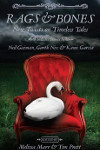
The gorgeous cover art will stay with you, the collective of popular and talented talented writers will stay with you, and the concept of wishes coming with a price, like Rumplestiltskin’s promise, will stay with you and haunt you for a good while.
There are ways to scare, there are ways to inform, and then there is Rags & Bones.
I received this book for review from Headline.
Related Books

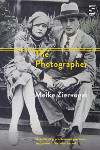
Meike Ziervogel – Magda
Posted 23rd October 2013
Category: Reviews Genres: 2010s, Angst, Domestic, Historical, Political
5 Comments
Behind the decision.
Publisher: Salt
Pages: 113
Type: Fiction
Age: Adult
ISBN: 978-1-907-77340-2
First Published: 1st March 2013
Date Reviewed: 22nd October 2013
Rating: 5/5
Ziervogel provides a fictionalised account of the last days of Magda Goebbels – wife of Joseph – and her family, giving a voice to those history left out and illustrating the sort of thoughts that could have led to the action Magda took.
Magda is a short and exceptional book that offers a bridge to the historical gap and a poignant look into the feelings of the Goebbels children. Blending well fiction and fact, Ziervogel’s book is an emotional ride with a swiftness that makes the story all the more difficult to read.
This swiftness is an interesting one and bares detailing. Whilst this is Ziervogel’s first book, her background as a publisher has brought a vast amount of specialised experience into the creation of it. Magda is short, but it is far from lacking. Indeed the book never once looses its focus; there is no superfluous content whatsoever. Of course the language can take a few words, as literary fiction is want to do, but the structure, plotting, and the execution (pardon the use of this word) of the story is top notch. What Ziervogel has done is remove everything but the one event she wishes to talk about, exploring other occasions only when an explanation of the characters is required. It is true that this means prior knowledge of Magda and her final days is needed for the reader to fully understand, but it is only the basics that are needed. The lack of historical information we have besides the fact of the end makes this a book that can be read with little context.
Ziervogel has given the children of the Goebbels a voice. She has altered the ages a little, in particular of the eldest child, Helga, but the reasoning for this is obvious. In making Helga older, Ziervogel has afforded the maturity needed of a minor to understand enough of what is going on to have an impact on the reader – without enough understanding for Helga to escape it. Of course the children did not escape, so a fictional escape would not do – and it is easy enough to believe that even at her true twelve years of age, Helga may have had some understanding regardless. Much of the book is told through Helga’s diary, and this brings us to the next point.
Ziervogel’s characterisation is excellent. The characters feel as true as they were and as much as we might say that the actual history would cause this story to be plot-driven, Ziervogel has made a case for the people themselves. Inevitably this all means that rather than thinking about Hitler, the Nazis, and their hatred, the reader is given an insight similar to that provoked by Markus Zusak’s The Book Thief – although Magda is about the very leaders of Germany rather than Zusak’s innocent citizens, Ziervogel reminds you that there were still true innocents involved even high up. Was Magda innocent? Perhaps. Perhaps not. Statements are made about her drive for wealthy happiness. But the children were far too young to be seen as anything other than innocent, unknowing victims of their parents’ choices. This is what the use of a diary for Helga creates; Ziervogel is not suggesting the reader should have a lot of sympathy for Magda – it is the children she weaves the emotions around.
However this acknowledgement of Magda is of course important. It is easy enough to see why Magda did what she did on a literal level, but otherwise we know nothing. Besides Helga’s diary, there are sections told by Magda’s mother to relate her childhood, and her childhood is also provided as a short of flashback by Magda herself. This is where the book is necessarily less concise.
Ziervogel doesn’t have answers – no one does. There were few witnesses and the event revolved around secrecy. But what the author does have is fair speculation for what might have gone on in the heads of those involved, and a feeling that we should consider the others who did not have a choice.
Magda is by its very nature a difficult read, but, as much as one can say so considering the subject, it is a stunning one.
Related Books




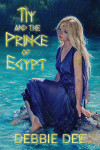
Debbie Dee – Tiy And The Prince Of Egypt
Posted 18th October 2013
Category: Reviews Genres: 2010s, Adventure, Domestic, Historical, Political, Romance, Social
2 Comments
A fine story to introduce readers to ancient Egypt.
Publisher: (self-published)
Pages: 275
Type: Fiction
Age: Teen/YA
ISBN: 978-1-49230-609-2
First Published: 27th September 2013
Date Reviewed: 16th October 2013
Rating: 4/5
Twelve-year-old Tiy went to the bank of the Nile with her parents to watch the Royal barge as it sailed past, but when her curiosity wasn’t sated by the far off sight, she ran further downriver for a better glimpse. Hot on her tail was a sandstorm. As the prince and his friends leave the barge to play, Tiy has a choice to make – use her knowledge to save them and potentially harm herself, or leave them to their fate. She chooses to save them and her act of selflessness will be rewarded in ways she would never have imagined.
Tiy And The Prince Of Egypt is a story to fill in a gap history forgot. In writing her tale, Dee has relied on the history she was able to find (this is suggested in the author note) and constructed a story for young readers from what was left out. The target audience means that the book is by nature quite simple, lacking in detail, and often convenient.
And that is the way it should be. For the older reader, who must be referred to as this reviewer is one, the book may prove an incredibly easy read, but it would be impossible not to say that Dee has written something that is likely to open up the world of ancient history to her young audience. From the features of the story, one couldn’t recommend this to young children unless they were advanced for their age, but for the slightly older reader the book should prove appealing.
Just as she did in The Last Witch, Dee doesn’t coddle her reader. The violence of history, such as punishment for treason, is included as it surely would have been in the day – discussed as simply as if it were a question of who wanted coffee, and carried out without further thought.
It is this, along with the romance in the book, that sets it up as an older child’s read. There is no sex in the book, but there are scenes that might invite questions. The romance is drawn out and full of all the hearts and flowers. The theme of love envelopes the entire story; the characters are seventeen by the end of the tale.
There is not all that much action in the book, a lot of the time is spent on Tiy’s thoughts and day to day life with Amenhotep, but what action there is is thrilling. And whilst Tiy can be foolish and unthinking, she is generally a strong person.
What brings the book down a few notches are the errors and uses of modern day language. Perhaps many readers will not notice the language, but the keen historian will. The errors are of course a bigger draw back here than they might have been otherwise due to the target audience.
Besides the errors, the book is a fine story that will delight any reader looking for boys, adventure, royal status and to be a little awed. It is as much a fantasy as a regular story as much of what happens would never happen in real life, but reality wouldn’t be as appealing.
Tiy And The Prince Of Egypt blends a good dose of history with fun fiction and the sort of fantasy you look for.
I received this book for review from Sage’s Blog Tours.
Related Books


