





Eloisa James – An Affair Before Christmas
Posted 11th December 2013
Category: Reviews Genres: 2000s, Comedy, Domestic, Historical, Romance, Social
1 Comment

An affair to remember, because it is between a husband and his wife.
Publisher: Avon (HarperCollins)
Pages: 386
Type: Fiction
Age: Adult
ISBN: 978-0-061-24554-1
First Published: 2007
Date Reviewed: 20th November 2013
Rating: 4/5
Poppy and the Duke of Fletcher have been married for four years. They started their wedded life in love, and they may still be in love, but the marriage has gone sour. Does Poppy love him? – Fletcher does not know. Certainly she hates having to be intimate with him. With Poppy’s mother ruling her daughter’s head, and a society that expects a man to be unfaithful, it’s going to be a difficult journey if there is to be no divorce.
An Affair Before Christmas is the second book in James’s hilarious duchess series that sees the continuation of the many couples’ lives in the background whilst focusing on the Duke and Duchess of Fletcher.
James’s characters are, once again, magnificent. It is true that these Georgian nobles might indeed scandalise even the most scandalous of real-life Georgians, but it is rather obvious from the start that James’s work isn’t your standard historical romance. The ladies and gentlemen do everything you ‘expect’ them to do, and then go and behave particularly ahead of their time in a way that isn’t quite unbelievable, but is certainly a whole lot more entertaining than reality. Once in a while the entire plot will get a little too silly, but again, that is half the fun. Make no mistake – the covers may suggest a lot of sex and nudity, and that’s really quite correct, but it is far from the main takeaway of the book.
Whereas Roberta of Desperate Duchesses had her own mind but was rather naïve, Poppy’s naivety is similar yet vastly different. In Poppy there is a budding scientist just waiting to be allowed into university, which of course will never happen; a woman who if she can just separate her mother’s thoughts from her own, will be quite the popular person. She may be silly, but she’s endearing all the same.
The Duke of Fletcher isn’t far behind, indeed he is only slightly less well drawn than Poppy simply because as a man in a male-led society he already has an advantage. The cautious reader will love Fletch, the handsome duke who could have anyone he chooses but is not interested in being unfaithful, and the way his success in his career is aided by Poppy, even though she actually has little knowledge, is particularly appealing for the modern reader. Make no mistake – James writes for the modern reader, no matter how obvious that may sound.
The writing is great, and befitting of the time, if not quite historical. There are a few errors, modern American terms that could be categorised as certain English dialects but not ones that are relevant to the characters, but they are used more often in the narration rather than in dialogue.
The themes are both historical and eternal – it is less likely today that a woman would know nothing of the pleasures to be had during sex, but it is all too common for communication to break down in a marriage. Poppy’s mother is both the Georgian matriarch would believes a woman should obey her husband, and an example of the eternal stereotype of the interfering mother-in-law. All these clauses come together to form the bulk of the content.
However the themes do take their toll on the narrative. The romance in this book, the active love between the characters (as opposed to the feelings themselves), does not start until the book is nearing its end. The miscommunication is there throughout, and Poppy’s first (bad) ideas of how to deal with her husband dominate the book, leaving very little time for the couple once they come to realise what went wrong. Of course it is lovely (and predictable, which is why this reviewer isn’t worried about spoilers) that the book ends with the happy couple, but when so much time later on is taken up by the secondary characters it is hard not to wonder why the book was marketed as Poppy and Fletch’s story. This ultimately means that sex ends up taking what’s left of that short space of time which, while expected, does mean the resolution is even shorter. That said, given the reason for the estrangement, perhaps it makes sense – it’s just that it doesn’t particularly make for a great story structure.
Beyond the mother’s rule, which, yes, does seem strange given the four years, there is as aspect of Poppy’s lack of desire that may irritate the reader, and the pun here is most definitely intended – Poppy suffers an allergy that renders a lot of her lack silly. But it does depend on the reader. If you can believe the miscommunication would extend to Poppy’s silence over it you may be okay, likewise if you view James’s decision as one concerned with comedic value. Otherwise it may just render the book too over the top, the pun here not intended, to continue.
It should be noted that whilst Christmas is specified on the cover, the book isn’t confined to the holiday season. While it may seem better when read beside a tree, there is enough of the story based in summer to make it an option at any time of year. The book could be read as a standalone, but the reader will appreciate it much more if it’s read in sequence.
An Affair Before Christmas isn’t quite as strong as the first book, but it is well worth the read. The characterisation is brilliant, the comedy is laugh-out-loud, and it’s good to have the same background setting written about from another angle. The secondary stories mean that you’re looking forward to the next book very early on, which in this case isn’t a bad thing.
Related Books


Natalie Whipple – Transparent
Posted 6th December 2013
Category: Reviews Genres: 2010s, Domestic, Fantasy, Social
1 Comment

Where the super-powerful wishes she were normal.
Publisher: Hot Key Books (Bonnier Publishing)
Pages: 272
Type: Fiction
Age: Young Adult
ISBN: 978-1-471-40076-6
First Published: 21st May 2013
Date Reviewed: 1st December 2013
Rating: 1.5/5
Fiona is invisible. Like many people whose ancestors decided to take a drug to stop the possible affects of attacks during the Cold War, she has a super ability, only she can’t turn it off. Sick of being at the beck and call of her father, a crime lord with the ability to charm women into doing whatever he wants, she runs away with her mother and starts to create a new life. But this has happened before, and the new life followed by a return. Can she stop her mother going back to her father this time?
Transparent is an example of an interesting premise badly executed.
The biggest issue is that the book rests on Fiona’s attempt to run away from her father. The issue should be obvious whether you’ve read the book or not – a girl who is invisible should have no problems running away. She may be visible whilst wearing clothes but she’s worn nothing often enough that the reader can’t so much as consider the idea that Fiona has an objection to being naked.
Hot on the heels of this is the fact that Fiona has never seen her reflection but never talks about makeup. The character talks to her friend about dyes being absorbed into her skin after a while (the reader may wonder how this failed given that the dye presumably showed Fiona’s skin for a time) and about how water shows a brief outline. Whilst make-up wouldn’t be perfect – it wouldn’t show her eyes or hair, for example – there is no reason to presume it wouldn’t work. Women wear foundation all the time, it lasts for a while and you can always reapply it. And aside from this, has Fiona never thought to feel her face, to visualise how it must look based on how it feels?
Following this is repulsiveness. Fiona spits on her friend to show the girl how even that is invisible, and whilst Bea encourages the spitting, this doesn’t deter from the fact that it’s rather disgusting, especially given that Fiona creates a big ‘loogie’ for the spitting. (Incidentally there are a couple of words like this that are likely to require an urban dictionary search for most people.) Fiona places small items in her mouth to hide them – the USB sticks she steals, for example – and it’s difficult not to think of how many germs and bacteria she has exposed herself to, especially given that as an invisible girl no doctor would ever be able to give her an injection or operate. To round it off there is a scene in which Fiona picks up a random bottle in a park and fills it with water for later use. She admits it’s disgusting but that doesn’t really do the situation justice.
Whipple’s knowledge of Catholicism is very shaky. She makes Bea’s family fundamental Catholics and uses this as the reason Bea has four siblings – Bea says that as fundamental Catholics her parents don’t use birth control. The problem with this is that in reality the Catholic church accepts natural family planning1 and when practised correctly the method has a high success rate2. In addition to this Bea’s family’s view of the Sabbath is Jewish, not Catholic3 (Bea is not allowed to go swimming for pleasure on Sunday).
Lastly, the writing and inconsistencies. Fiona is always ‘telling’, never ‘showing’. She looks at hands she can’t see, waves at people, and says her brother enjoys watching her cry. She goes to a school in her new town without considering that as someone everyone would notice for not being able to see them, word about her location would get back to her father. The inconsistencies are numerous, the world-building practically non-existent, and the style leaves a lot to be desired in general.
Transparent has a good premise behind it, but doesn’t use it. Fiona rushes back and forth so much that it’s confusing, she expects love and attention but shows nothing of these qualities herself, she treats her weak mother poorly even though she repeats the details about her father’s charm ability, and when the very foundation of the book isn’t credible it’s hard not to wonder if your time wouldn’t be better spent with another.
1 Religion And Birth Control, Wikipedia, accessed 2nd December 2013. See also Birth Control, Concerned Catholics, 2010. Note that some Catholics believe in the idea purely as a method for spacing children, others that Natural Family Planning is a form of acceptable contraception – neither way has been accounted for in the book.
2 Fertility Awareness, Wikipedia, accessed 2nd December 2013.
3 Sabbath In Christianity, Wikipedia, accessed 2nd December 2013.
Related Books
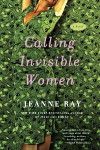
Vincent Lam – The Headmaster’s Wager
Posted 29th November 2013
Category: Reviews Genres: 2010s, Domestic, Historical, Political, Social
1 Comment

Ignorance is bliss until it isn’t.
Publisher: Hogarth (Random House)
Pages: 421
Type: Fiction
Age: Adult
ISBN: 978-0-307-98648-1
First Published: 14th August 2012
Date Reviewed: 26th November 2013
Rating: 4/5
It’s the 1960s and Percival Chen, a Chinaman, is living in Vietnam. He’s the founder of a successful language school but dislikes his adoptive country, remaining loyal to his homeland. As Vietnam turns to war and his son, Dai Jai’s, obedience to him leads to trouble, Percival sends his only child back to China where he will surely flourish. He is Chinese, he will be better off there. But Percival is ignorant of Mao’s Communism, of the darker side of debts as he continues to gamble, of how his continual bribes are seen by others, and as war and a changing Vietnam move ever closer his luck will not stay with him forever.
The Headmaster’s Wager is a fine book that shows off the goodness of tradition, the trouble of following tradition when it is no longer of use, and the awful war of Vietnam. Both frustrating and important, it illustrates how such a clash can be devastating.
First and foremost it would be prudent to discuss the frustrating aspect – Percival. Percival isn’t an anti-hero but he is certainly a character who is impossible to like. He is ignorant by choice, does not listen or care for reason, is impossibly dedicated to money beyond all else, and never really learns his lesson. That is something you should know before you begin the book as Percival is the main character and even the most important other characters are secondary. Percival gets away with a lot and ruins many lives, and he doesn’t even gain anything from it. Whilst the ending will not be explained here, it is unlikely to satisfy many people’s hopes for the character, especially given the meeting between Percival and violent rebel leaders.
If you can get past Percival’s lack of practising what he preaches, an epic historical account awaits you. Lam’s knowledge is evident as is his research and his story is both stunning for its detail and awful for its horror – and, of course, more horrific given his choice to spotlight such a careless person. The book spans from just as the Vietnam war was beginning up to its end as the north took over and renamed Saigon to Ho Chi Minh, so whilst a lot of time is understandably spent delving into Percival’s red packets and bedding women, there is still a lot of historical fact to be had. And Lam shows the plight of women – the female characters in this book do their best to teach Percival of the politics but at the end of the day they are dependent on the will of men to take them to safety.
This will is displayed openly for all to see. Escaping was easy for the Americans as they had interested parties back home, but when it came to the men’s Vietnamese lovers and mixed-race children, many promises were made but few kept. The poor are constantly studied – Lam includes an abominable scene in which starving children are put to death – and whilst China is not the focus for anyone but Percival and Dai Jai’s other relatives, Lam comments on the sad and ironic plight of the rich as Mao took over. Of the fate awaiting mixed-race children, the author is blunt.
Naturally the book includes a study, though minor, of the affect on the east of the conquering west. Percival’s English language school presents the biggest opportunity here, and its place in the story also highlights the way the staunchly patriotic Pervcival became a suspect due to his lack of cooperation when it was decided that every school should teach Vietnamese. This book is about Vietnam, but the perspective is that of the foreigner from start to finish. The Vietnamese get a small look in, but Lam’s study is one of the affects of the war on foreigners – Percival, the Americans, the mixed-race. Thus Lam gives a voice to sections of communities that are often forgotten or less noticed by reports, and by studying foreigners in Vietnam he is in many ways studying foreigners in other times and wars too.
The book is literary with few non-English phrases used. Those that are used are added naturally and the reader won’t be left wondering about meanings. The lack of languages other than English is far from convenient – it fits the plot and characters. Percival prefers English over Vietnamese, only knows so much of the second language, and everyone converses with what he would consider the superior English language. Then there is the fact that foreigners of various countries were going to understand each other better in English. In terms of the writing style it is easy to follow, including times where the narrative is heavy, which makes it a good choice for those wanting history without feeling daunted by the style of prose that often accompanies the subject. Lam’s medical background shows through a little too strongly at times – needles are injected into the ‘intravenous’ in every instance meaning that the author suddenly makes too much of an appearance in the book – and there are a few very modern western phrases that don’t suit the setting, but otherwise it is very good.
The Headmaster’s Wager is a fine book, it is simply the person of Percival that makes it seem to be not as good as it is, because whilst not everyone learns from their mistakes, Percival’s result in events that are so horrific it is hard not to feel that he got the equivalent of a mother’s telling off followed by a chocolate bar for pretending to be sorry. However, given that his inaction allows Lam to further explore the atrocities of the war, maybe thinking of the character is irrelevant.
I received this book for review from Random House.
Related Books

Rainbow Rowell – Eleanor & Park
Posted 18th November 2013
Category: Reviews Genres: 2010s, Angst, Domestic, Romance, Social
7 Comments

So take these broken wings, and learn to fly again, learn to live so free…1
Publisher: Orion Books
Pages: 325
Type: Fiction
Age: Adult
ISBN: 978-1-409-12054-4
First Published: 12th April 2012
Date Reviewed: 11th November 2013
Rating: 5/5
Everyone has their own seat on the bus, in fact Park has two as no one sits beside him. When the new girl – large and dressed in strange clothes – walks down the aisle, mockery is rife and the available seats are suddenly taken by backpacks. As the mockery continues, Park offers the girl the seat next to his and that is that. Only it isn’t. Eleanor isn’t quite as different to him as he first thought.
Eleanor & Park is a rather special book that deals with age-old school problems, domestic issues and self-worth, all woven into a beautifully-told love story. Set in the 1980s it offers the reader a chance to settle back into a life where keeping in touch wasn’t as simple as email and music was sold on cassette. There is some humour – there are Eleanor’s brilliant comebacks that would leave glittering princesses in an Austen-esque flutter, and there is some deep consideration.
The beauty is that the book itself doesn’t claim to be special. The plot sounds nice but usual; school romances have been done before. Even the themes aren’t particularly unique. Yet both as a whole and separated into parts, Rowell’s book is delightful. The storytelling is lovely – the emotion and subtext even better. The themes are studied to perfection. And the characterisation is out of this world.
Actually, the characters are completely in this world, and that is what is so brilliant about them. Rowell has access to the same dictionary as everyone else who writes in the English language yet her characters are more realistic than most. If Eleanor and Park showed up at your door, 1980s clothing aside you would not be shocked at all. The pair feel as though they belong in reality, that they are far more than the result of an author’s imagination.
Park is half-Korean just because and there is no massive history provided apart from the understandable dwelling on parents. Eleanor is fat, a description more likely to come from her rather than anyone else, just because. Their situations of course have reasoning to them, but baring that Rowell is content to let them just be.
Eleanor’s size is a subject frequently returned to. The reader will notice that she sounds large for a good while, and then once they are seeing her through Park’s eyes and his parents’ eyes rather than Eleanor’s, that perhaps she’s not as large as they had come to believe. Whether Eleanor is large or not is not the question – it is the character’s perspective of herself that is important. Eleanor isn’t worried about her style of dress (besides the fact her clothing is all from Goodwill), nor does she care about her hair – the two things that concern everyone else. Instead she portrays the many disbeliefs and lack of self worth that many young people face, those that are magnified when love is involved. Park’s life is a dream compared to Eleanor’s but it’s not all sunny days and happiness. He has his own inner turmoil to deal with, an identity issue and protective parents.
The book is told in the third person and it jumps back and forth from Park to Eleanor’s point of view. Rowell switches constantly during chapters, ensuring that you hear about each situation from both characters. This inevitably means that the narration is reliable in its own way and that no feelings are left behind. The switches become less prevalent during times when the couple are happily together, in a sort of textual imagery that shows how thoughts can be divided and people misunderstanding of each other when not together. A reinforcement of the idea of separation, of sorts, is in form of the necessary white-space that accompanies the switches.
Rowell’s style may not please everyone. There are many ellipses, emphasised words, and of course there are the references to the 1980s that younger readers may miss. There is also a lot about the then-present culture of the time, mainly in terms of music, that suits the reader who knows the era well. But the eternal stories of first love, of school, and the issues, means that these are not likely to cause major impediment to anyone.
There are some big domestic issues in the book that take a while to become obvious. Some may work the biggest out relatively quickly, others may require the answer. All the issues are difficult; Rowell has chosen to deal with them without delving into angst. This may mean that at times it doesn’t feel as true as it is, but that is surely a point in itself – when issues do not fit the socially-defined descriptions, they can be missed. What is actually the case is that Eleanor is simply used to it and has become a strong person.
Eleanor & Park is an extraordinary story of a love where the two people are similar but their situations very different. It will pull you in, spit you out, and churn you around with the rest of the washing in the machine that Eleanor’s family may or may not possess.
Whatever it will or won’t do it will definitely leave you a changed reader.
1 From Mr Mister’s Broken Wings.
Related Books
None yet.
Tanya Byrne – Follow Me Down
Posted 13th November 2013
Category: Reviews Genres: 2010s, Mystery, Social
4 Comments
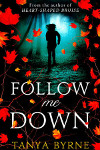
Down in the woods where everyone goes…
Publisher: Headline (Hachette)
Pages: 454
Type: Fiction
Age: Young Adult
ISBN: 978-0-755-39307-7
First Published: 9th May 2013
Date Reviewed: 7th November 2013
Rating: 4/5
Adamma started school at Crofton College in England when her father, a Nigerian ambassador, moved country once again. More familiar with the US, Adamma is somewhat surprised by the reality of the British boarding school, but she finds a friend in Scarlett, a girl who is obviously not prim and proper but not necessarily bad either. The village in which the College is situated is dinky and quiet, but where there are many young people there is surely to be an issue someday.
Follow Me Down is a mystery that twists and turns, ties itself in knots deliberately, and uses red herrings to the extent you wish other mysteries would whether or not you work it out early on. Told via two time instances – the before and after, that descend towards the two mystery threads simultaneously – the story is a quick read whilst sporting a lot of suspense.
Let’s deal with the mysteries first. Byrne has made a valiant effort to stop the reader from truly working them out, in particular the later of the two, and it must be sad that even if you do work them out, it’s quite likely you will still doubt yourself. Byrne’s use of twists and the structure that affords a lot of ambiguity are two of the highlights of the book and worthy of inclusion in the ‘reasons you should read this book’ stakes. Some may find the twists and red herrings annoying, and it must be said that the ending is just as ambiguous as the overall structure – there is an ending but a lot is left unsaid.
But it’s easy to say that the author’s intention may not have been to shock or surprise as much as to study social conventions and ever-present issues. The ‘initial’ heart of the mystery, a possible rape, whilst surrounded by the ‘thriller’ threads, is studied as though it might form the basis of an essay. The book delves into the reasoning victims can be wary of telling the police what happened, it casts a light on the concept of linking clothing and drunkenness with fault, and it also shows how the perception of other women can be an issue where instead there should be support. This spotlight doesn’t run the entirety of the book, but it does cause you to wonder whether your approach to the story and your belief that it’s a ‘simple’ mystery to be enjoyed, is correct.
Going back to the ‘reasons you should read this book’, perhaps the most compelling aspect of Byrne’s creation is her handling of culture and contrasts. The origins and cultural influences of the characters mean that Follow Me Down is a true blend, and Byrne makes every effort to get it right. Adamma is from Nigeria but has spent a lot of time in the US – her narration, when she speaks of herself, is naturally peppered with American terms as well as the understandable various comparisons between England and the States. Her American terminology and nature is matched by her Nigerian roots – she often speaks to her mother in Igbo, for example. This is matched by the British characters – when Adamma relates their conversations they always use the British terms for everything. This approach is a delight in a world where a lack of correct dialect is rife, and it means that the parts of Adamma’s nature – her Nigerian birth, her American schooling, her English Sixth Form years – are each given equal baring. As a study in diversity with characters being ‘different’ just because, it is excellent.
There are some flaws in the plan – there are strange turns of phrase and ways of describing actions, for example Adamma lifts her eyelashes instead of opening her eyes, and these seem stylistic choices rather than dialect ones. There is some repetition and curious uses of emphasis. There are occasions where people don’t speak as you’d expect them to – using very colloquial language where they otherwise use an ‘older’ style, for example – and this can be jarring. Yet as a whole the writing is simply different, not bad, and just something to get used to.
It would be fair to say that if you’re going to find Follow Me Down difficult, it’s likely going to be dissatisfaction with the ending. As Byrne ceases use of red herrings and the answer is allowed out into the open, it may not be as clear as you feel it ought to be. It will be obvious what’s happened, in a literal sense, but it may seem as though Byrne is still trying to hold things back. This isn’t a book for people who like stories neatly tied at the end.
Follow Me Down is in many ways abstract. It is ambiguous and written in a style very much its own. But it also packs quite a punch long before the mysteries are resolved and is a shining example of cultural differences in one place done well. It is a quick read whilst not being particularly fast-paced, it explores the thin line between love and hate, and it makes a very good attempt (and is successful in many ways) at confounding the reader.
The best way to conclude is to say this book is like Marmite. You’ll either love it or hate it, but even if you hate the story you will likely love other aspects of it.
I received this book for review from Headline.
Related Books
None yet.


