





Matthew D Lieberman – Social
Posted 17th January 2014
Category: Reviews Genres: 2010s, Psychological, Science, Social
6 Comments

We were not made to be alone, not even for a short while.
Publisher: Crown (Random House)
Pages: 305
Type: Non-Fiction
Age: Adult
ISBN: 978-0-307-88909-6
First Published: 1st January 2013
Date Reviewed: 7th January 2014
Rating: 2.5/5
Looking at various regions of the brain, Lieberman tells the reader how each section revolves around sociability and how we evolved to be social creatures.
Social sports an interesting topic that is unfortunately marred by a lack of reasoning and a lot of bizarre and poorly thought out propositions. On the surface the book presents itself as the antithesis of Susan Cain’s Quiet and will therefore likely attract those readers who enjoyed Cain’s work. However where Cain was mostly objective, Lieberman is incredibly biased.
The book is structured so that different brain regions are examined one after the other with statements about evolution, information about relevant experiments, and short resolutions created by Lieberman, scattered throughout each chapter. The book ends with Lieberman’s most ‘pressing’ resolutions for society in general. It’s not a bad set-up, per se, but it does mean that the book is monotonous and that for the reader who is not intimately aware of the brain regions it will likely be all too easy to become confused by what is what, given the inevitable similarity between acronyms and names that seems apparent when you know little.
Whilst the book begins with promise and the author writes with due attention and care, the content soon devolves into the simple explanation that everything is the way it is because of evolution, and the author’s views of anyone who doesn’t fit the box he has constructed drench the book with a bias that by the end of the work displays more than a hint of intolerance.
There are areas of the book in which it’s usual to find issues in texts, for example there are too many references to the author’s particular country. In this case there is too much Americanisation, which means that some examples of pop culture, used to explain concepts, are likely to be lost on many readers and therefore these readers won’t be able to understand the point being made through them. Sometimes the examples Lieberman chooses are those that are known worldwide, but otherwise the choices are so specific that there may even be some American readers not familiar with them, and due to this it is a particular problem.
The book is incredibly repetitive. Experiments are detailed only to be detailed again a few chapters later, referred to in the chapter after that, and detailed once again further on. Regarding these experiments and researches, Lieberman is inconsistent. He always names the scientists involved but doesn’t always afford the reader the information of who the person is – what field they are in, what university they work for and so forth. Having the names is of course necessary for citation but for the reader having the names without any further information is meaningless.
Looking into the experiments, the cautious reader should note that nowhere in the book is it mentioned that experimenting on animals is considered by some to be immoral. This is the case in other similar works, such as Lynne McTaggart’s The Bond, which was more graphic than Social, but in Lieberman’s book the point is particularly worth noting, not just because of the topic (thinking about others as was the likewise ironic topic of McTaggart’s book) but because of the way Lieberman gives information as to why humans are not experimented on in the same way. For example, consider this extract:
For obvious reasons we do not conduct experiments with humans that involve giving people morphine after they have been rejected, excluded, or cheated on.
The irony here is that this statement appears right after a paragraph about puppies being given morphine after being forcibly separated from their parents.
As an aside, if you find yourself distressed by this story, [about rats having emotional neurons being removed, thereby meaning that they start shunning their young] it probably means your own dACC is intact.
When you consider that you are more likely to be distressed by this story simply because the experiment happened, the author’s statement is artless to say the least.
The downside to studying rodents is that we can’t measure their experiences or even verify that they have them. The upside is that more invasive studies can be conducted to examine how individual septal neurons respond or how surgical removal of the septal area alters behaviour.
In the same way as the above extracts, this is said without any thoughts of wrongdoing or an acknowledge that to many people the ‘upside’ is seen as a downside.
The issue with the experimentation is that everyone knows it takes place and that it is of course going to be included in works involving science, but given the subject of this book and the way it is presented as a work on something that is of general interest, some sort of deliberation or debate (given that very idea of being social and caring for others) ought to have been included.
There is a major focus on autism that isn’t apparent from the book cover or summary that bares commenting on because of Lieberman’s approach. Lieberman, as becomes plain the further you read, is fixated on the idea of the social, of us being social creatures and, especially towards the end of the book, he shows how overtaken he is by this idea to the exclusion of all else. It should come as no surprise then that, when it comes to autism, denigration is the mode of the day. As autism is related to a lack of ‘normal’ social skills, it is easy to see where Lieberman’s issues lie.
The author says that if empathy is the peak of the social mind, autism is sadly one of its low points, showing no positivity whatsoever. Lieberman wonders if when he took drugs he ‘didn’t seem a bit autistic that day’ – does he also say, upon finding his fridge devoid of chocolate, that he knows what it must be like to be a child starving in Africa?
It’s important to note that, strictly speaking, this description is far more accurate than the normally developing child’s… Although the description from the child with autism is more accurate [reviewer’s note: it is completely accurate] it is far less useful. It doesn’t give us the kind of insight we all crave into the psychological drama that unfolded.
This comes after an image of shapes on a page, which is what the autistic child described. There is no drama to unfold, there is no usefulness in the normal child’s description of the shapes bullying each other because that would give you a false idea of what the image shows. What the children questioned do intimate is the possible difference in imagination and storytelling between ‘normal’ children and autistic children.
The denigration of autism is very odd, especially when you consider that a person with autism is as likely as anyone else to be interested in reading this book. And whilst Lieberman may make some good statements that are unfortunate but true, his attitude mars them. It is also interesting to consider that the fact autistic people have ‘problems’ with social skills implies that Lieberman’s theory of the social mind could actually be wrong, for who is to say what is truly normal?
Further denigration is conferred on introverts (whose qualities also beg the question of whether Lieberman’s theory holds any water):
Being smart and motivated, without being able to connect with others in the lab just won’t cut it. I’ve had a couple of students in the lab over the years who never really integrated socially with the rest of the team, and they often struggled. They could leverage their own intelligence and hard work, but they were less able to access the intelligence and expertise sitting in the next office over. From this perspective, social connection is a resource in the same way that intelligence and the Internet are resources. They facilitate getting done what needs doing.
It would not be wrong to say that Lieberman does not understand introverts. It is also apparent why, at least in part, the students referred to in the extract struggled – a lack of support and understanding of your students is going to affect their progress because they are likely to pick up on it.
The assumption that productivity is about smart people working hard on their own has been masking the fact that individual intelligence may only be optimised when it is enhanced through social connections in the group.
This is where we see Social as the antithesis of Quiet. In the latter work, Cain says introverts need their own time and space. But whereas Cain is respectful of extroverts, Lieberman is not respectful of introverts. Furthering this difference, Lieberman states that only those with good social skills should be leaders in the workplace, neglecting to consider the negative impact that this would have if the leaders were not also of good intelligence. He also states that ‘the greatest ideas almost always require teamwork to bring them to fruition’, saving himself by saying ‘almost’ but still showing his lack of research and overall knowledge of the present day that suggests that people can be just as successful working by themselves.
Lieberman suggests a vastly different education system which betrays his age. He says that history classes should teach the whys and the social effects – they do. Perhaps they did not when Lieberman was a boy, but as they do now this section is irrelevant. The author suggests that English lessons should be scrapped in favour of ‘communication classes’. This would be problematic given that such classes are not viable alternatives – language (if we assume he is referring to language rather than literature) is not quite the same as communication – both are indeed about society and communication but there are differences. There is also the fact that the world remains in accordance with, for better or worse, the idea that those who can read and write have power and more opportunities to get ahead in the world.
Lieberman says:
Why would bullying, which typically takes place outside the classroom, affect performance in the classroom?
This is one of the first times where the author’s lack of knowledge really starts to become an issue. To suggest that victims of bullying should just leave their issues at the door displays a complete misunderstanding of what bullying is and how it affects a person. Lieberman somehow does not know that bullying can affect someone’s overall well-being and, furthering that, he should know that bullying isn’t restricted to school corridors and is more often than not just as bad in the classrooms where bullies torment children behind the backs of clueless teachers.
Lieberman suggests cutting back on school lessons that are forgotten so that more time can be spent on the important ones. This is a good idea in theory, but the way Lieberman speaks of it he is in favour of removing the sorts of classes that inspire lifelong interests and passions. Algebra may be boring for many people, but without it would the mathematicians our world needs have been inspired to become mathematicians?
The author is in favour of letting older children learn lessons to then teach them to younger children. A fantastic idea, but how long would it be until the novelty wore off, and would children pay attention to a lesson essentially learned twice when they already find a lesson taught once boring?
It is this lack of knowledge and understanding of children, of people, ironically, that ends the book. Lieberman turns to preaching. The subtext is evident – Lieberman’s way of life, the way his residential area revolves, is superior and ought to be introduced worldwide. He suggests that apartment blocks have socialising areas and appointed people to curate social lives – “Throughout our childhoods and young adulthoods, our social lives are curated by others. Couldn’t we find a way to replicate that in our adult communities as well? Why don’t we have someone on each apartment floor designated to create social activities?” The author does not seem to think that maybe having had their lives curated as children, most people would prefer to control their adult social lives themselves. He does not account for those who just want to live their lives, who don’t want to be social all the time – which, it could be argued, accounts for most people. He suggests closing streets at the weekends for social events without thinking about how this would disrupt traffic, how it would result in noise, how many people prefer to just relax at home.
The author even takes on the individuals who run companies, complaining at the way they focus their efforts ‘incorrectly’. He suggests that most employees would take recognition over more money, which doesn’t sound so bad – until he ruins the sentiment entirely by saying that the profits from the savings the company would make would therefore be able to enter the company coffers and so the company would benefit. Recognition is a ‘free’ and ‘infinite’ resource – which, when used in place of pay rises, would ultimately make a boss a measly employer.
Lieberman does have some interesting things to say, for example that botox disabling a person’s ability to mimic expressions means that the person will be worse at recognising emotions in others. He says that “society values our self-control more than it values our quality of life”, a very sobering thought, and he in no way suggests that the book is all his own work, always attributing research to those responsible. But at the end of the day it is hard to believe that Lieberman didn’t decide to live away from society for several years to write this book, losing touch with everyone in the process.
Ill-informed, rose-tinted, repetitive, and lacking in tact, Social may have a few ideas and statements to astound, but by and large it does not come anywhere near the convincing argument, of humanity being social, that it declares.
I received this book for review from Random House.
Related Books


Shannon Stacey – All He Ever Needed
Posted 10th January 2014
Category: Reviews Genres: 2010s, Angst, Domestic, Romance
2 Comments

The One you don’t need to drop anything for – except the building you’ve been contracted to demolish, of course.
Publisher: Carina Press (Harlequin)
Pages: 177
Type: Fiction
Age: Adult
ISBN: 978-1-426-89433-6
First Published: 10th September 2012
Date Reviewed: 20th June 2013
Rating: 5/5
With his brother running the family’s lodge and his home town, Whitford, being rife with gossip, Mitch prefers to stay away, making full use of the travel his demolition business requires. His meetings with women are strictly no-strings and he’s spent time with many of the women in Whitford, leaving before any attachment can form. Now back to help broken-legged Josh, the arrangement with new-girl Paige is the same as any other. Paige has a business too, and no intention of leaving her adoptive town, but that won’t necessarily make it easier to leave once the couple realise they’ve more than just sexual chemistry.
All He Ever Needed is the first book to deal with the boys in Maine, and the fourth book in the Kowalski series overall. The family aspect is different to the other three, given the lack of children and the fact the siblings don’t live near each other, but this is made up for somewhat by the sheer number of secondary characters that form the backdrop of Whitford. The character development is fantastic, each person in the lives of Mitch and Paige is detailed well enough that the reader can feel as though they live in the town themselves.
This is not a story of giving up what you like in order to be with another, indeed the no-strings arrangement itself is to save Mitch and Paige from the hassle of working out which elements of their lives to leave by the wayside. Both characters are ambitious in their own right – both have built their own businesses almost from scratch, and whilst there are no plans for any leaps financially, both like what they’ve made. Stacey never suggests that either should give up their dreams, beyond the odd understandable moment of wistfulness, and the reader is likely to be satisfied with the resolution at the end.
The chemistry is fine. The characters may not commend themselves to memory quite as much as, say, Sean and Emma (Sean and Emma having a particularly comic arrangement) but it works, and Stacey makes a strong enough case for their being together. The sex may be the initial reason for the match but there aren’t too many scenes with it included; the overall set-up of the family dominates the book, as is expected by now.
The book lacks the secondary romance that a few of the others have, concentrating on Mitch and Paige and taking the odd glance at other people just to keep the town dynamic. A few premises are created, which the reader will later find were the planning stages for future books.
The only blemish is, perhaps, the way the characters remain steadfast. This may sound the reverse of the above paragraph that lauds ambition, but it is the repetition rather than the fact that is more the issue. For example much of Paige’s decision to swear off men has been influenced by her flighty mother’s numerous going-after-him relationships, but once love enters the equation Paige’s continuing self-imposed rule seems a little redundant as you know what the ultimate conclusion will be. Nevertheless it is a far cry from ruining the book and is but, as said, a blemish.
All He Ever Needed may feel very different to the previous books, but with good reason. The change of setting was necessary for Stacey to introduce these cousins that were often mentioned in the previous trilogy, and the sentiment is still the same. These Kowalskis are certainly a different part of the family, but there is enough similarity to appeal to fans of Joe, Kevin, and Sean.
All He Ever Needed is all you ever wanted in the continuing saga of the Kowalski family.
Related Books



Elizabeth Chadwick – The Summer Queen
Posted 8th January 2014
Category: Reviews Genres: 2010s, Domestic, Historical, Political, Romance, Social
3 Comments
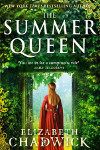
Struggling for independence in a man’s world.
Publisher: Sphere (Little Brown)
Pages: 467
Type: Fiction
Age: Adult
ISBN: 978-1-84744-545-2
First Published: 20th June 2013
Date Reviewed: 16th December 2013
Rating: 5/5
When Eleanor’s (of Aquitaine, and referred to as Alienor in the book and for the remainder of this review) father dies, the thirteen-year-old marries Louis of France to become queen so that lands can be bound together. It begins as a happy marriage but Alienor’s independence is curbed by the relationship and Louis is not the husband she hoped for. Strong-willed and now Queen of France, Alienor will not become the docile wife she is expected to be, nor will she allow Louis to rule her family’s land. But it will be a long fight to gain what she sees as her right.
The first book in a fictional trilogy about Eleanor, The Summer Queen is of almost epic proportions and spans from Alienor’s childhood to the beginning of her time as Queen of England. Blending fact with fiction (the latter to both fill in gaps and study possibilities) the book is a wonderful journey for the reader even when it is a trying journey for the queen.
There is a lot of content in this book, indeed Chadwick has packed this first section with the same quantity of information you might expect to be in a whole trilogy or at least the first two books. It is therefore safe to say that if you are thinking of reading this book you must be prepared for the long ride. Whilst Chadwick does skip over months, sometimes years, of Alienor’s life, as is her style, it is fair to suggest that this was actually necessary given both the length and nature of Alienor’s life.
Is it worth it? Most definitely. Chadwick is on top form; her characters are written brilliantly, there is a lot of attention to detail and (presuming you enjoy reading about the period) the only dull moments are aptly those moments that Eleanor herself is not enjoying. By including Alienor’s teenage years the author shows how the woman became powerful (in mind and thought), which means that there is all the more time spent on gender expectations too. And it means that Alienor is written as far from infallible meaning that she feels as realistic as she would have been.
Realistic also are the other characters. Even of the ‘negative’ influences in Alienor’s life Chadwick is fair. Louis, who causes a lot of pain, is still portrayed in a good light, which means that the reader can see exactly how monarchs could be manipulated and their good name destroyed by the ambitions of others. Chadwick never strays from this, and so even when Louis is at his worse you can still see where his actions stem from. Even if you can’t quite forgive Louis, because he could have been stronger and resisted some ‘advice’, the book may make you question just how reliable our sources really are.
As acknowledged in the afterword, Chadwick has made use of ‘what ifs’. One such question that has never been answered, the speculation over whether Alienor had an affair or, at the very least, feelings, for one of her countryman, is employed here. The resolution that Chadwick writes may seem convenient but at the same time it is understandable. When you consider the fact that this is an author who likes facts beyond all else, the brief foray into fiction that is neatly tied up so that it is almost detached from the factual content is something to be read without contention.
However it is this relationship that causes the one ‘major’ (in quotes because it is the biggest but far from being off-putting overall) issue of the text – the author’s repeated references to the subtext of Alienor and her lover’s letters and gestures. They touch, it is intimate to them but no one else would notice, they speak, there is a hidden meaning in their words that no one else would notice.
Beyond this there is little to find fault with. One can only wonder how much research must have gone into this book and there is so much information included – shown, not told – that you may finish the book feeling as though you’ve had the most interesting history lesson. The Queen does not stay in France, her progress and journeys are documented at length so that you are provided a brief introduction to various eastern European monarchs and customs.
The Summer Queen is a story of an independently-minded woman learning how to exert that independence when society is against her. It is a story of a woman who defied convention, and a story of partnerships and how equality could lead to good things even when the world did not believe in the notion.
The Summer Queen is as magnificent as any of Alienor’s sumptuous gowns and will delight those who enjoy reading about the medieval period.
Related Books





Charles Dickens – A Christmas Carol
Posted 20th December 2013
Category: Reviews Genres: 1840s, Philosophy, Social, Spiritual
4 Comments

Before it’s too late… (Incidentally, before it’s too late to post this review!)
Publisher: Various
Pages: N/A
Type: Fiction
Age: Adult
ISBN: N/A (Vintage’s is 978-0-099-52973-6
First Published: 1843
Date Reviewed: 15th December 2013
Rating: 5/5
Please note that this novella is often published with the inclusion of other stories by Dickens. The edition I read was Vintage Classics, which includes The Chimes and The Haunted Man, but this review only deals with A Christmas Carol.
It’s Christmas Eve and, the same as every year, Mr Scrooge isn’t interested. Hating Christmas and preferring money to people, he declines his nephew’s invitation to Christmas dinner, tells his clerk he can have the day off but to be in earlier on Boxing Day, and leaves work to spend the evening on his own in his dingy suite. But his evening is far from quiet. He is visited by the ghost of his deceased business partner who tells him he will be visited by three spirits and that he has to change his ways before it is too late.
A Christmas Carol is a riveting story that far surpasses, as you might suppose, any of the film adaptations and abridged versions that have been created since.
As most people know the story it is probably best to comment on the book with this in mind and say that the writing itself is a real treat, the book is very funny, and there is the inclusion of the author himself in the story that is simply worth knowing about. This inclusion is mostly to show how Scrooge could change, though there is a particular statement which, in our present day, comes across as from the grave and thus rather spooky.
Unlike, for example, Great Expectations, A Christmas Carol is not jammed-packed full of words. The text flows beautifully and the pages pass quickly and easily. The story is not at all spoiled by prior knowledge of the work – if you like the story but do not read the book it must be said that you are missing out.
Although society in general isn’t a theme of the book, the modern reader can learn a lot about Dickens’ time. Whilst Scrooge’s tale may be somewhat escapist, you can read through the lines, read through Dickens’s descriptions, to find out a lot about life and, of course, Christmas.
A short story with a firm message, A Christmas Carol is an excellent novella. And the fact that it is from this story that the greeting ‘Merry Christmas’ entered general use makes it more than perfect to read this book during the holiday in which it is set.
Related Books


Julie Kagawa – The Iron Knight
Posted 16th December 2013
Category: Reviews Genres: 2010s, Angst, Fantasy, Philosophy
2 Comments

The quest to be her knight in shining (iron) armour.
Publisher: Mira Ink (Harlequin)
Pages: 352
Type: Fiction
Age: Young Adult
ISBN: 978-1-848-45060-8
First Published: 25th October 2011
Date Reviewed: 6th December 2013
Rating: 3.5/5
To be with Meghan, the new queen of the Iron Kingdom, Ash needs to become human. His traditional faery self will never stand being in the kingdom for long and now he has made an oath to Meghan he cannot break it. There must be a way to gain a soul, and together with Grimalkin, Puck, and the Big Bad Wolf, he is determined to discover the way. He might discover someone, too.
The Iron Knight is the fourth book in The Iron Fey series that is technically a spin-off as the series was satisfactorily completed by The Iron Queen. As a spin-off from a different viewpoint it will likely interest some fans and irritate others.
And it must be said that although the reader already knew that Ash wanted to find a way to be with Meghan, there is a lot in this book that could be considered clutching at straws. There is very much the sense that this book was written to keep the series going when it didn’t need to be, and there are some elements that bare questioning besides the basic reason d’etre.
This may be considered a spoiler but at the same time it must be discussed because of the way it changes everything you have read and believed previously: Kagawa has chosen to bring back a character who had died before the series begun. The reason is obvious – it creates angst, conflict – but it is undeniably unnecessary. And due to the events that occur, the emotions renewed, it ultimately means that the reader may feel short-changed by Ash and Meghan’s relationship; Kagawa, whether deliberately or not, makes a great case for Ash not being with Meghan. Furthering this the end of the book ensures that he pretty much has his cake and eats it – but not in a way that shows immortality, rather it confirms the supposed suggestion that Ash should not be with Meghan. It sets up a situation that no partner wishes their beloved was in, and means that the reader will likely close the book wondering how long Meghan would put up with it if she were a real person.
It must be said that if you’ve found Puck’s constant chatter and stupidity to be annoying previously, this book is not for you. In times of great anguish there is Puck being sarcastic, in times of death there is Puck being disrespectful, and so on. Puck is a constant source of ‘pulling you out’ of the story.
A great deal of the book is reigned by the above three points. But although they continue from beginning to end there comes a point where they are of no consequence.
Kagawa’s skill undeniably lies in the themes she creates, the studies and messages she proposes, no matter whether she follows through on them or not. (A previous example may be found in my discussion post about the use of technology in the series.) In The Iron Knight, this skill is shown in the author’s study of what it means to be human. This section of the book is fantastic – it is thought-provoking, heart-wrenching, and grounding, at the highest level. In order to gain the right to become human it is inevitable that Ash must contempt the meaning of mortality and humanity, indeed if he hadn’t the book wouldn’t have had a leg to stand on for the concepts the reader would want to bestow on Ash. This part of the book is lengthy, Kagawa details so much but not necessarily in the way you would expect. She ‘shows’ in every way, and explores the little things so easy to forget. It of course has the additional effect of making you feel sorry for what Ash will lose before you remember that you yourself will be going through the same, being what Ash wants to be; thus the book has an extra sobering effect. True to form, despite the extremely real impact this part of the book has on the reader, it is still fantastical. In fact this section is more magical and fairy-like than the rest of the book.
Once you’ve been through this section it is difficult not to feel that the rest has been worth it. It may not be in literal terms, but if this section was the swan song of the series then it would practically be a suite.
The ending does lessen the effect a bit. On one hand you could say that Ash’s eventual fate is a peace-offering, on the other hand it can be considered an opportunity wasted. Undoubtedly the overall atmosphere and tone of the series suits the ending Kagawa has written, but many readers affected by the study may feel as though an ending that suited the study would have had a profoundly moving conclusion.
In brief, The Iron Knight is unnecessary as a sequel, and the ‘revived’ character may dampen readers’ feelings in general. However as a study the book is excellent. This is a story that truly has something for everyone however each person must be willing to journey through that which they consider a trial to reach it, and it may not be considered enough of a reward to do so.
And as much as that may be a little off-putting it is irrefutably apt as it is exactly what the characters must do on their quest.
Related Books


