




Andrew Blackman – On The Holloway Road
Posted 11th October 2013
Category: Reviews Genres: 2000s, Commentary, Law, Philosophy, Political, Social, Spiritual
5 Comments

A trip for freedom.
Publisher: Legend Press
Pages: 202
Type: Fiction
Age: Adult
ISBN: 978-1-90655-808-2
First Published: 2009
Date Reviewed: 7th October 2013
Rating: 5/5
Jack lives a monotonous life. He wakes up in his mother’s house, tries to continue writing his novel, fails, goes out every now and then, rinse and repeat. One evening he decides to eat a dreary kebab in a dreary shop but his meal is interrupted by Neil Blake, a man of a similar age who has led a more colourful, slightly illegal life. Whisked away by Neil’s friendly nature, Jack finds himself at pubs and parties. Then Neil suggests a trip to Scotland.
On The Holloway Road is a clever and well written book, inspired by Kerouac’s On The Road, that deals with the themes of life and freedom. Written in hindsight from Jack’s perspective, the story is slow, aptly lazy in its pace at times, and a little satirical.
The characters are complete opposites, and not supposed to be liked particularly. Neil is impulsive, he dislikes any limitations placed upon him by outsiders, and he is full of charm, but he can be thoughtless and selfish. Indeed he would laugh at being told to think about repercussions – the reader is likely to think ahead and question Neil’s decisions, and it is exactly that action that Neil would denounce. Neil lives in the moment, lives for freedom, has experienced the other side of the coin and sees its flaws. In comparison, Jack has little will, in fact what will he does have is a side effect of his spending time with Neil. Jack is content in his monotony, his typical life that fits neatly into the slot, and though he isn’t happy he won’t do anything to change that.
Jack’s overall dullness is a major reason the book is slow. Rather than an error on the part of the author, the pace is a decided upon element that shows you just how different Jack and Neil are. Neil’s dialogues are fast paced and full of words, as Jack says, but it is the difference in nature that allows the reader to see where Jack’s safe life might be too safe, whilst of course showing that Neil falls a bit too much towards the other extreme. The book is very much a character study as well as a different take on Kerouac.
It is character-driven, and it is plot-driven, yet at the same time it would be difficult to say that there is a plot as such. The plot is vastly in the realm of the book’s themes. Blackman has crafted a commentary, a very sharp commentary that strikes at the heart of current political, social, and law elements that protect/hinder (depending on the way you see it) the people of the United Kingdom. Through Neil and Jack, Blackman shows the limits of the people’s freedom, the limits imposed by the government and councils. There are many scenes where Jack finally lets go a little, Jack the good lawful if boring citizen, and is rewarded by a penalty of the exact type the duo are trying to escape. As an example, a trip to a country park costs them £100 in car parking fines when they get back to the car and notice the fine details of the parking space.
Freedom here is woven into the larger political context. The story shows the differences between someone who is institutionalised, or just used to, the way of the land, and another who isn’t. And of course what is interesting as well as understandable is the way it’s the person who has been to jail that wants to be free, especially as it is a freedom in lifestyle that Neil wishes for (in other words Neil isn’t wanting the ability to go and kill someone). It’s the case that everywhere they go, Neil says they are or should be free. The government soon tells them they aren’t.
Leaving my Figaro marooned in the grass, I walked forward to get a better look. Warnings were being shouted through a megaphone. Acts of Parliament were being invoked. Arrests were being promised. The appearance of fairness, of reason. Disperse now. A chance to avoid arrest.
And if reason failed, as it surely would, then violence would be justified. Protocol would have been followed. The blows of the batons would have legal sanction, while any retaliatory violence would be grounds for prosecution.
Jack is no one without Neil, and indeed it comes as no surprise to understand, through Jack’s words, that he relies on Neil to ‘live’. It’s one of those things you know instinctively, and it just takes Jack’s words to cement it. And as for Neil, it seems that freedom he wants is nowhere – no matter restrictions or not, you get the sense he will always be against something. In this way the ending is very appropriate, the particular ending for him says a lot about the character and what Blackman is trying to say.
To refer to the inspiration, Kerouac’s On The Road is used both behind the scenes, so to speak, and in the story as an element in itself. Jack and Neil listen to the audio book whilst travelling; it is almost a double usage of the work, between the tape cassette and Blackman’s references to it as the author. It forms a lot of the philosophy and quotations are borrowed and reworked so that they fit in with Neil and Jack.
As the book reaches its ending, another clever aspect becomes apparent. The way it is written, the way the story is referenced, makes it seem possible that it could be about Blackman, that it could be about anyone. Twisted into the last chapters is the final resolution – the answer to what happens after the book concludes, there is even a hint as to what happens a lot further down the line. If only Jack takes the chance.
It seems he did, or perhaps he hired Blackman to do it for him as the author clearly knows more than Jack, just as Neil does. Blackman is almost the unbiased third party, the person in the middle of the two.
On The Holloway Road is superb. It is likely to appeal most to British readers, as they will be able to relate to the political details well, but the references to Kerouac and the commentary will interest readers of other nations too. And the theme of freedom is universal as are likely some of the civil elements.
I know the author as a fellow book blogger.
Related Books

Speaking to Andrew Blackman about On The Holloway Road, and A Virtual Love (spoilers included)
Charlie Place and Andrew Blackman discuss life on the road, following in Jack Kerouac’s footsteps, offline and online identity, writing an entire book about a character but never giving them a voice, current climate change activism, and withholding – for very good reason – the endings your readers expect.
If you’re unable to use the media player above, this page has various other options for listening.
Bee Ridgway – The River Of No Return
Posted 7th October 2013
Category: Reviews Genres: 2010s, Comedy, Fantasy, Historical, Romance, Social
5 Comments
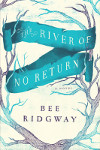
Forward to the past. (Reverse that and you’ll see the inspiration.)
Publisher: Michael Joseph (Penguin)
Pages: 546
Type: Fiction
Age: Adult
ISBN: 978-0-718-176-983
First Published: 28th March 2013
Date Reviewed: 26th September 2013
Rating: 4/5
As Nick was about to die, attacked in battle in the 1800s, he disappeared. He reappeared, alive, in the 21st Century, found by a group calling themselves the Guild. The Guild promises Nick $2million a year and sends him to South America for training where there are fellow surprised time travellers from every decade. The Guild teaches their members how to live in 2013 and then sends them off to use their education. That was fine with Nick, millions of dollars and a free reign sounded – and was – great for ten years, but now the Guild want him to return to headquarters and forget every rule they taught him. The Guild’s enemies are getting stronger, and Nick has a part to play in stopping them.
The River Of No Return is an imaginative and rather funny book that deals with a particular sort of time travel, the sort where you’re not going to meet different versions of yourself and where history isn’t to be changed unless the world is about to end.
The story is contained to a few people and only a couple of different times, meaning that the narration is pretty straight forward. This may mean disappointment for some readers, as other times are referred to and it’s safe to say where time travel is concerned the future is a magnet to our interests, but there appears to be a sequel in the works. In fact it’s worth commenting on the ending of the book. Ridgway creates a crafty ending the likes of which means the story could definitely do with a sequel, but if none were written she’s left you enough information for you to construct a conclusion.
She reminded him of modern women. The way she stood so confidently, the way she met his eye like an equal, the way she spoke unblushingly of the sex she was not having with her cousin.
It takes a good while for the humour to show itself. Indeed the cover and first several chapters do not in any way suggest that the book will be humorous. When it enters it is laugh out loud and rather clever, although there are occasions where it could be considered too much.
So to the affects of time travel on the characters. Nick, the nobleman, fits right into life in the 21st century. So changed is he, so happy with his new era, that his return inevitably results in plenty of thoughts about women, equality, voting, and so forth. And Ridgway creates the ideal romantic partner for him. Yes, it may seem convenient and unrealistic that Julia, the 1800 woman who may or may not be a time-manipulator (unknowingly), is ahead of her era, but Ridgway sets the foundation of the relationship in the days before Nick’s jump, so that it is more a simple case of two like-minded people getting together. Nick may not have been as modern in his youth as he obviously is in adulthood, but the flashbacks portray enough ambivalence to his situation ‘back then’ and enough remembrance of the younger Julia to suggest that, traveller or not, the pair would have got together.
“Demand you back? You’re a full-grown woman. You can do as you choose…” Even before the words were out of his mouth, Nick realized that the sentence he had just spoken only made sense after two centuries of struggle that had yet to happen.
The affects of the 21st century form a lot of the comedy. Like other ‘jumpers’, Nick is trained to be a modern man, with all the knowledge of beyond 1800s history and pop culture that that entails. In preparation to jump back again, to the 1800s, he has to re-train himself in the art of being a nobleman. Modern phrases and cultural references inevitably slip out whilst back in the past, and it happens a lot, but Ridgway’s particular usage of the theme stops it becoming annoying. As said above, the humour as a whole can become too much, but this takes a while to happen if indeed it does at all for the individual reader.
However it must be said that Nick does forget a crucial part of his 21st century life – sex in 2013 involves a foil packet, sex in 1815 involves no discussion of Nick’s new knowledge and it is left out of the book completely. Although this is only one instance of forgetfulness, the potential impact of such spontaneity, which Nick would ‘now’ know about, ought to have been addressed. His partner may be a virgin, but Nick isn’t and his nature suggests he would consider STDs. And as Ridgway has created no space for a pregnancy in her novel, regardless of the fact that a pregnancy is neither here nor there unless the author includes one, Nick would have surely thought of it, and likely his 1800s partner, too.
Julia has courage and guts, but she’s not superwoman. She is the realistic, if such a word can be used, result of a woman from a good, happy background, with a fantastical talent she cannot understand.
The book spends time on the concept and storytelling device of good versus evil, but Ridgway twists it to suit the people she has created. Unless things change drastically in any sequels, this isn’t going to be, and isn’t here, your typical science fiction save-the-world-from-the-bad-guys series. And it’s undeniably refreshing.
The book dips a bit towards the end, becoming, if not predictable, rather convenient. The reader may work the secrets out beforehand, but either way it does have the possibility of changing your thoughts as to whether or not you’d like to read further books about this world. It creates an expectation of an epic continuation but may seem too drastic a change, as such, to some readers. In many ways the sudden unveiling of answers and new plot points is a pity.
But overall The River Of No Return will delight. It will bring embarrassment to anyone who worries about laughing over a book in public, which should be considered a positive factor, and sate the appetites of those who love time travel novels but are a little worn. The River Of No Return is long, but then so is history. And if the title has you in mind of Marilyn Monroe, never fear – that is exactly what happened to Ridgway, too.
Related Books
Lucienne Boyce – To The Fair Land
Posted 4th October 2013
Category: Reviews Genres: 2010s, Adventure, Domestic, Historical, Social
1 Comment
Mysterious writers and women at sea.
Publisher: SilverWood Books
Pages: 321
Type: Fiction
Age: Adult
ISBN: 978-1-78132-017-4
First Published: 2012
Date Reviewed: 3rd October 2013
Rating: 3.5/5
Ben, a struggling writer in the late 1700s, joins other struggling writers for dinners at the house of a London publisher – a publisher he and his fellow diners hope to find favour with. When a book about a voyage to a new land is published anonymously, Ben jumps at the chance to discover the author’s identity and find that illusive favour. He believes he has a head’s start, having met a woman at the theatre who dismissed the tale of Cook’s voyage, but it’s not going to be that easy.
To The Fair Land is a sometimes rushed but informative story that includes the details of the fictional naval voyage along with its narrative of Ben’s search. Told from various viewpoints and including the female travellers that history would prefer we forgot, it offers a look at society in general too.
This look at society is in a way puzzling at times. The puzzle comes in the form of the main character, Ben, who does very little to recommend himself to the reader. Mainly he is simply an impulsive, thoughtless man, who is, although not particularly inviting, fair enough as a character – but there is a side to him that is incredibly historical, and however apt this may be it does make reading the book difficult. It will largely depend on the reader’s individual take on Boyce’s reasoning for Ben’s nature as to whether or not they are happy to read about him. Ben is prejudiced against women. He brushes off their opinions even when it is obvious these opinions are of importance, and goes as far as calling a calm, good, woman a hyena. This prejudice is not explained by Boyce and therein lies the issue – is this a commentary? Is this a device to show the reader the treatment of women in the era? Or is it just the way the character was written? The issue with Ben is of course that this is a book written in the 21st century for 21st century readers, and readers in our current time expect more detail and reasoning behind such views, whether commentary or otherwise.
For the most part the book reads as rushed, often to the point of confusion. In addition to Ben’s nature, there is rarely ample reasoning for certain turns in the plot. The lack of these things creates a situation where people seem fickle when they are surely not, and it can difficult to really feel for the characters.
In general the book could have done with more information on the characters (there is some info-dumping about minor characters) – Boyce has spent a great deal of time on the history so the potential was there for the characters. The history is fascinating, however. The information about the navy, the thinking behind the voyages, and the inclusion of other ships that set sale with women on board (there is a nod to Jeanne Baret, for example), is well presented. And, albeit somewhat fictional, the story-within-the-story of the exploration of the ‘fair land’ is engrossing.
The book employs changes in viewpoints during chapters which have the potential to throw the reader off course, though as they read, in many ways, as a compilation of reports and opinions, they would likely work if provided their own sections. On the subject of paragraphs, there are some editing errors in the book that require a mention because they are of the mixing up names and places sort.
Yet there is one character who has been written superbly. Sarah, in her ‘present’ form but most especially during the section which tells of her past, is a wonderful – if discomforting – character and very memorable. Indeed the addition of Sarah brings the question of Ben’s place as a device for commentary into the fore. If Sarah is so wonderfully written, then it does suggest that Boyce had a plan with Ben.
The writing itself is readable. Rushed narrative or not, the words flow quickly. And the account of the voyage is given slowly with much attention to detail. It is difficult not to get lost in the paradise Boyce imagines. The best part of this section is that it goes on for a very long while, and, due to the era in which it is set, there is a lot of harmony between the cultures that come together, making it a nice reprieve from the cruel white supremacy that soon followed.
Lastly, it should be noted that there is a certain sort of relationship in the book that may cause some discomfort, however Boyce has her cast of characters deal with it in a way you would expect of the era and situation.
To The Fair Land has its bad points and its good points. It may not work for everyone, and some readers may feel the scales tip in favour of the negative, but overall this is an aptly fair début.
I received this book for review from the author following correspondence with the publisher.
Related Books
Sherry Thomas – Private Arrangements
Posted 25th September 2013
Category: Reviews Genres: 2000s, Domestic, Historical, Romance
2 Comments
To have and to hold – at arm’s length.
Publisher: Bantam (Random House)
Pages: 351
Type: Fiction
Age: Adult
ISBN: 978-0-440-34431-8
First Published: 2008
Date Reviewed: 11th February 2013
Rating: 4.5/5
Camden and Gigi, married for ten years, have been living separately since the day after their wedding due to a betrayal on Gigi’s part. Now Gigi wants a divorce so she can marry her latest beau. It’s not going to be that easy. Camden doesn’t want to lose her, and at the end of the day was her betrayal so bad?
Private Arrangements was Thomas’s début. Whilst it may not be perfect, what a début it was (please excuse the usage of present and past tense here). The unconventional storyline – the infidelity of the characters – may divide opinion, but it cannot be said that this does not create originality in a genre that is already predictable due to its very theme.
The storyline is strong. It works in part because there is no infidelity within the confines of the book itself. Neither character has remained chaste throughout the separation, but when they are reunited there are no other physical relationships. Gigi puts off sexual relations with her lover for the duration of what is to be Camden’s yearlong time limit to get her pregnant with an heir. This on-page lack of extramarital sex may not be sufficient for every reader, but to those who are comfortable with the set-up of a marriage that is a marriage in name only, it will likely prove fair enough.
The characters are particularly well developed. Whilst neither could be called affable, they are strong people (to an extent) who know who they are, what they want, and take the necessary steps to get it. Gigi is the strong woman of wealth who has compassion for all, and Camden, whilst an alpha hero, has a sensitive side.
The chemistry is something special. The characters are a good fit and both their meetings and sexual relations are believable. Though in this there is cause for contention. It could easily be argued that some, if not most, of the sex is non-consensual – Gigi agrees to the plan of getting pregnant, but Camden’s solo decisions to suddenly ‘take’ her can seem rather selfish and arrogant. And whilst Gigi takes precautions (yes, this, because she’s not so sure about having children), Camden’s overruling of it is difficult to read, even if there is some thread of understanding in it.
There is also the issue of angst. This book is a fine recommendation for those who like hardships and, well, angst, in their reading, but as the story continues it can become difficult to take character decisions and assertions seriously. To put it simply, having a character continuously going against blatantly correct decisions just becomes silly. It is a reflection of stubbornness and some readers may enjoy it, but it doesn’t quite fit the rest of the book, making the characters weaker than they were. Then again, it could be said that their passion for each other has weakened their resolve.
The plot is proffered as a duel storyline with a secondary plot to boot. Flashbacks throughout keep you informed as to those first few weeks of the metaphorical honeymoon period and the literal but wretched honeymoon period, as well as everything you need to know about the ten year gap. It works well, meaning that when the present-day (1893) incarnations of the characters are in focus, their stubbornness is somewhat offset. It does mean you don’t know as much about the “now” but it is not a bad thing, per se.
The secondary plot line consists of Gigi’s mother’s attempt to find a new husband for her daughter. It may not be original, but if you enjoy reading about Austen’s Mrs Bennett, you’ll likely enjoy Victoria Rowland. It can detract from Camden and Gigi, but it is strong enough to keep you reading.
Lastly a special mention must be made regarding the writing. This is the sort of romance book that would likely appeal to typically non-romance readers. The writing is eloquent, almost historical itself, and it’s undeniably beautiful. Even language pertaining to things not considered beautiful, actions during intercourse, are written with taste.
Private Arrangements may not appeal to everyone for its story, but seen simply as a book rather than for its genre, it cannot be said that it isn’t good. Indeed it incorporates a great many elements considered crucial to a good novel and manages to break convention whilst not alienating the reader. It’s just as well the privacy of Camden and Gigi was breached else we’d be lacking a brilliant work.
Related Books
Mary Stewart – Stormy Petrel
Posted 20th September 2013
Category: Reviews Genres: 1990s, Domestic, Mystery, Social
8 Comments
Of strangers and birds.
Publisher: Hodder
Pages: 143
Type: Fiction
Age: Adult
ISBN: 978-1-444-71507-1
First Published: 1991
Date Reviewed: 20th September 2013
Rating: 3.5/5
Rose, a tutor at Cambridge, wanted a holiday somewhere quiet so that she could work on her writing. Coming across an advert for a metaphorical ivory tower, she made her way up to a Scottish island. It’s peaceful, there are few residents, and the cottage is two miles walk from the village. Perfect. Until someone unlocks the back door and says that it’s their home.
Stormy Petrel is a novel that is as quiet as its heroine would have liked, whilst sporting a mini mystery. A blend of cosy mystery and straight forward travel, the book is perhaps at its best in its descriptions of Moila, the imaginary island in the Hebrides.
Because the descriptions have the ability to sweep you away. Stewarts’ creation is fantastic, and in many ways it’s a pity that Moila does not exist, even if similar places do in reality. The writing is soft, almost dreamy, and incredibly readable. The edition this reviewer read was full of editing mistakes but given the time between the first publication and our current day it is difficult to become too ‘taken’ by it.
It must be said that there is little action in the book. This is suggested by the overall set up, the length of the novel, and Stewarts’ writing style, but it is easy to let yourself get carried away – and one shouldn’t. The book lies firmly in the realm of the comfort read and provides a leisurely way to spend an afternoon. The mystery is fair enough but it does not last the length of the book, nor is it particularly satisfying.
The book is most suited to those with a love of the outdoors and nature. It will also please those who enjoy books about writers. Rose discusses her writing a lot and also delves into the process; this book presents a fantasy for anyone who enjoys writing in any way.
The outdoors is almost a character in itself. It is not personified (as some authors like to create characters from nature, houses, and so forth) but it plays perhaps the biggest role in the book. The wildlife is important, and the midges are there constantly (initially this seems over the top, but Stewart has a plan).
The major issue with the book is the use of convenience. Whilst Rose does speak of convenience in novels, the way Stewart goes on to use it as the author takes the element too far. Instead of being simply sweet, the continual use can become irritating. The lack of mystery in a book that initially promises it is not such a bad thing, but the convenience difficult to read.
Stormy Petrel is a comfy novel that is perfect for a rainy day complete with blankets and a hot cup of tea. It may be set in summer, but the weather and the setting suit a dreary autumn day well. Just don’t become too invested in the story.
Related Books


