





Naomi Hamill – How To Be A Kosovan Bride
Posted 11th August 2017
Category: Reviews Genres: 2010s, Political, Social
Comments Off on Naomi Hamill – How To Be A Kosovan Bride
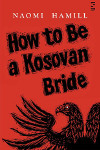
Tradition, modernity, politics, and folklore.
Publisher: Salt
Pages: 212
Type: Fiction
Age: Adult
ISBN: 978-1-784-63095-9
First Published: 15th August 2017
Date Reviewed: 11th August 2017
Rating: 4.5/5
A young woman begins the traditional process of leaving her family’s home for that of her inlaws; she may stay with her new family or she may return home. Her life plays out against a backdrop of a country at war, and the beginnings of a new nation.
How To Be A Kosovan Bride looks at the cultural traditions surrounding life in post-war Kosovo, bringing in stories of refugees and a few folklore-esque tales, too. Told by someone who goes to the country each year, it offers a particular perspective.
There are two threads in this book. In the first, Hamill balances tradition in all its trappings of dignity and honour, with the very modern. There’s a peppering of humour here and there but by and large this is a look at the clash between tradition and modernity, of being a traditional bride and a modern university student with all the cultural and, in the context of university, political, elements behind it.
To do all this, the author takes the wedding day as her starting point, a bride both excited and reluctant – unsure if this is the right thing to do – and then splits her story in two from wedding night onwards. The bride becomes plural, two people, as Hamill looks at two possible lives, one girl ‘passing’ her virginity test and the other ‘failing’ it (though she is in fact a virgin); one girl becomes the traditional Kosovan wife, the other, having been ‘returned’ on day one by her in-laws, deciding to pursue a university degree. For the most part this results in two narratives that are very, very different, and Hamill’s ‘Kosovan Wife’, as the character is called, does not find much happiness, so the narrative leans towards modernity, but there does come a point where both girls have a ‘grass is greener’ moment and wonder whether another life would’ve been a better choice.
Through the Kosovan Wife, Hamill is able to look further into culture, but it’s during the Returned Girl’s sections that the narrative comes into its own, where the author looks at the way the university entrance exam must be passed with flying colours in all subjects and how schools get around this issue where it concerns pupils having particular skills in particular subjects. The book as a whole is full of politics and it packs an almighty punch for its relatively small number of pages and white space. The second thread of the book, vignettes, stories, of the war – people fleeing, children killed, men walked to their death, liberation by people that aren’t all good – are absolutely harrowing; Hamill is completely blunt and in the acknowledgements of the book she thanks various Kosovan acquaintances for their stories that she used as a jumping point for her fiction, underlining the reality behind it all.
Finally there are a couple of faux-folktales dotted about, one spanning several chapters, adding a bit of magical realism to the book, rounding out the text so that it has information about history and the arts as well as the political element. This is where Hamill’s love for the country is shown best, her writing here being fictional but aligning to folklore well.
Of the writing, that second person, it’s difficult to say… if you hate the method, you may grit your teeth at this book, but because the author has made a point of often tamping it down, you may find it easy enough to get on with. There are only a handful of chapters that directly specify a ‘you’ – admittedly it’s not obvious who this ‘you’ is, whether the reader or a character and if the latter which – and the style matches the various stories told. It adds to the sense of oral history, folklore, and stories of war.
How To Be A Kosovan Bride is a good look at a country in conflict and the people on the wrong side of it, as well as a country still coming into its own. It is hard-hitting and very political but the humour and shortness of it balances this out. You’ll likely want to research the facts alongside your reading, especially if your knowledge is limited, as the book has a sense of a basic knowledge base behind it. It’s very much worth doing so.
I received this book for review.
Related Books
None yet
Speaking to Naomi Hamill about How To Be A Kosovan Bride (spoilers included)
Tune in as Charlie Place and Naomi Hamill discuss post-war Kosovo, using a narrative method that divides opinion, and researching Albanian folklore.
If you’re unable to use the media player above, this page has various other options for listening.
Jennifer Donnelly – Revolution
Posted 4th August 2017
Category: Reviews Genres: 2010s, Angst, Historical, Political, Psychological
Comments Off on Jennifer Donnelly – Revolution

‘Let them eat cake’ did not happen here.
Publisher: Bloomsbury
Pages: 470
Type: Fiction
Age: Young Adult
ISBN: 978-1-408-80152-9
First Published: 12th October 2010
Date Reviewed: 30th April 2017
Rating: 2.5/5
Andi’s little brother, Truman, died unexpectedly a couple of years ago, and Andi is struggling to come to terms with it; it happened under her watch. Failing school and with a poor outlook on university, her father tells her she must join him on a work trip to Paris. She doesn’t want to go but Paris was the home of a historical musician she loves and her father’s friends are converting an old museum into a house; the building is full of artefacts from another time, including the diary of a girl living in 1700s Paris.
Revolution is a semi dual plot line book that looks at the horrors of the French Revolution starting from before the time of the fall of Bastille; it connects a young travelling servant’s life with a contemporary person in a not dissimilar position, one grieving her brother, the other trying to look out for a young prince. The book has a lot of promise – history in tandem with the present; the possibility of time travel that is somewhat realised – but is unfortunately plagued by very lazy writing.
Andi does not read as real. Her status in society – high – is not explored enough for you to believe it. The way she speaks does not correspond to her age. Donnelly has inserted a lot of strange non-words that heighten this – ‘parslied carrots’ – and employs the likes of the unnecessary ‘shake my head no’. Were it contained to Andi’s narrative, the laziness would not be so bad, but the 1700s Alexandrine speaks the same way, anachronisms running riot, the two girls sounding one and the same – in a literal way rather than symbolically. You could say Andi is translating it, but it still doesn’t ring true.
The information on the Revolution is the redeeming factor – this book has it in spades. The musician of Andi’s thesis may not be real (in our world) but everything surrounding him and his time is. The underground tunnels. The morbid death parties. The author’s research seeps through the pages.
In regards to the sort of time travel, it’s worth knowing that Andi is always under the influence of pills – she overdoses often – and whilst this doesn’t excuse her awful behaviour, it’s enough to wonder if she would have been such an uncaring person before. (Neither character is likeable.) The time travel concerns Andi, solely. Alexandrine’s part in the novel is limited to her diary. The diary is a bit far-fetched, with Andi reading it everywhere, including the artefacts section of a library, and not being asked about it. Her restringing of a guitar from two centuries ago using modern strings without research… thankfully this is fiction!
If you want information about the underground mausoleums in Paris, it’s worth dipping in and out of the pages, but otherwise it’s one to pass by.
Related Books
None yet
Charlotte Perkins Gilman – Herland
Posted 26th July 2017
Category: Reviews Genres: 1910s, Commentary, Philosophy, Science Fiction, Social
Comments Off on Charlotte Perkins Gilman – Herland

This is a difficult book to write about!
Publisher: Various
Pages: N/A
Type: Fiction
Age: Adult
ISBN: N/A
First Published: 1915
Date Reviewed: 12th February 2017
Rating: N/A (Historical value is significant but it’s not the best book out there)
Van and his friends are exploring new regions and during their travels they are told of a land bereft of men. Highly intrigued, they make for that country for different reasons. Terry thinks he’ll conquer the ladies, Jeff thinks it all sounds marvellous, and Van is simply interested. It might not turn out as they expect, particularly for Terry.
Herland is a science fiction utopia novella – a sociological text – that looks at what might happen if men were not around. Understandably based around early 20th century American society – and a lot of academia – there is much to recommend it today both in terms of the history of feminism and eternally relevant concepts. There is also a lot to be said for reading it in our modern day where, in our further cultural and scientific progress, some of the concepts are more poignant and relevant than they were in Gilman’s day.
Herland asks many questions under the umbrella subject of womanhood. What is a woman? What is femininity and how much is nature versus nurture? How much should motherhood (back then almost an inevitability) impact upon a woman’s life?
Gilman’s narrator is a man, Van, and he is joined by two others. In the trio, the author makes use of different personalities in order to be able to fully explore her ideas in the context of her fictional world as well as to pull it apart both in favour of it and not so. Van is somewhere on the middle of a scale; he’s critical of both his friends who in turn represent viewpoints at the extremes, one of them loving Herland a lot. Jeff doesn’t take long to align himself with the country, indeed he is presented, once the trio get there, as a major ally of it. Gilman, through narrator Van, questions the wisdom of falling completely for the female-only society, always leaning towards equality for both genders. Jeff takes Herland in his stride and as the novel continues you can see Gilman’s questions – is Jeff’s a complete submission, his almost ‘mummy’s boy’ approach a good one?
Then there’s Terry. Granted, Terry goes through a cycle of changes that’s in favour of Gilman’s ideas – which I’ll get to in a moment – but on the whole in Terry you have a ‘man’s man’ who thinks all the women will love him and submit to him. Gilman wants you to see that both Terry’s and Jeff’s views are problematic – Van, too – to various extents.
Terry’s change, from ‘man’s world’ to a bit more ‘woman’s and man’s world’ is never completed – Gilman does make him more amenable for a time but it’s in her continued decision to not change him completely (she shatters his good progression to major effect) that you can see her thought that equality is best – and in fact Gilman uses him to show the increasing realisation that women can do just as good a job in traditionally male work. It’s a slow development but there is a distinctive span of time between Terry’s reckoning that the female-only country will be ‘savage’ and his statement in which he terms the people ‘highly civilised ladies’.
On the question of what femininity is, there is much. Gilman builds it up, as she does her exploration of ‘people’, speaking of Terry’s description of ‘real women’ (those in his society) and using character development to say the following through Van:
This led me very promptly to the conviction that those ‘feminine charms’ we are so fond of are not feminine at all, but mere reflected masculinity – developed to please us because they had to please us, and in no way essential to the real fulfilment of their great process.
Gilman looks at the differences between Herland women and American women, the way Herland’s are the equivalent of American men. She doesn’t go too far into the idea that Terry, Jeff, and Van should do the housework, too, but the point is made: a woman doesn’t have to conform to societal expectations to be a woman.
Where Gilman looks most critically at her creation is on the subject of motherhood. She uses the real world expectation in her fictional one, taking it to the extreme so that becoming a mother is the absolute be all and end all of life, it’s just that they happen to live full lives otherwise. (She has by this stage built up your imagination of the world enough that you can see the patriarchy and western concept of manhood aligning perfectly with this taken-to-the-extreme concept of motherhood.)
The country revolves around motherhood. It’s the highest, best thing, a woman – a person – can live for; it’s a religion. It’s both a clever criticism of the west and a criticism of itself:
“The only thing they can think of about a man is Fatherhood!” said Terry in high scorn. “Fatherhood! As if a man was always wanting to be a father!”
Motherhood is where the novella meets its biggest present day opposition. The basic history of the land is science fiction – it might even disappoint you because Gilman takes a giant definite leap towards fantasy, away from real world concepts. Herland women started experiencing immaculate conceptions and this reproduction produces only females. The contention today is in the continual effect of that propagation (because it’s now natural) – in order to not become overwhelmed by overpopulation, the highest people in Herland decreed that some women must ‘suppress the urge’ to reproduce and leave it to a select number of chosen women. Some women are so favoured they have more than one child.
The criticism itself comes in where Gilman places what we would now call a cheeky child outside of the circle of those chosen to later be mothers. If you combine this concept with Herland’s success at eradicating disease, illness, harm, it’s not the happiest picture, despite that this eradication of suffering is for the benefit of everyone in the land.
(The interesting thing about the views of children, in general, displayed here is Gilman’s view of how the west treats them: ‘no Herland children ever met the overbearing rudeness we so commonly show to children’.)
So disability and mental illness become suspect, too. Gilman does not speak of it outright – the illnesses she mentions read as cold and flu – but it creates unease, particularly in the context of today. It’s much like the situation surrounding Bertha Mason in Jane Eyre – you have to consider where prejudice as we view it meets what were average societal thoughts back then and come to your own conclusion.
Gilman says little directly about race. Terry calls the people who reside next to Herland ‘savages’ but given his character in general, in the context of the book it’s hard to say that this is Gilman’s view. Gilman’s Herland could be ethnically mixed; again it’s down to the reader. (I will note here that the question of the author’s views on race are answered in the next book. Since I wouldn’t recommend reading the next book I’d propose you read essays about her instead.)
Herland is an enjoyable read on an entertainment level, at least in terms of being entertained by history and barriers being broken, but it’s not something to read to escape daily life. It demands you think – that is it’s very purpose – and it’s a book you’d be hard pressed not to take a thousand notes on. It has its faults, it has its dated aspects, but it is a triumph in terms of progressive thinking. The only thing really amiss is the ending – the book finishes almost mid movement, but there’s a sequel that continues where the flying machine takes off.
Related Books


Tove Jansson – Letters From Klara
Posted 19th July 2017
Category: Reviews Genres: 1990s, Short Story Collections, Spiritual, Translation
Comments Off on Tove Jansson – Letters From Klara
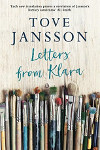
To quote Moominland Midwinter: ‘One has to discover everything for oneself. And get over it all alone.’
Publisher: Sort Of Books
Pages: 129
Type: Fiction
Age: Adult
ISBN: 978-1-908-74561-3
First Published: 1991; 1st June 2017 in English
Date Reviewed: 19th July 2017
Rating: 4/5
Original language: Swedish
Original title: Brev Från Klara Och Andra Berättelser (Letters From Klara And Other Stories)
Translated by: Thomas Teal
Letters From Klara is a collection of short stories that are very subtle in their points. The creator of Moomins, Jansson is quoted as saying, “I love the short story concentrated and united around a single idea. There must be nothing unnecessary in it. One must be able to hold the tale enclosed in one’s hand”, and she stays true to form in this collection. What this means is that some of the stories may strike the reader as missing something – Jansson holding on so much to minimalism that it can be difficult to see exactly what she wants to say, but there are others that are profound. Those more average in their storytelling still make for a good read.
There are thirteen stories here and most are confined to a handful of pages. Standouts include the title story, entirely epistolary, in which a person’s first letter (so far as the story is concerned) sets out how someone else should become less critical and then goes on to show that perhaps it’s the letter writer’s own traits, projected; another is The Train Trip, wherein a man who very much admired an old classmate meets him and discovers his admiration pails in comparison; and Party Games in which a group of what we might now call ‘frenemies’ in school meet up again as adults, having changed little. A variety of themes, as subtle, often, as the overall reasons for the stories, rounds it off well – who one is, one’s place in the family (often too burdensome!) and other groups and communities, how one relates to others.
Something not covered in the stories listed above is the oft-used theme of art. An artist herself – in fact Jansson saw the art as more important – a few of the stories look at different types of artist, and the different reasons, ways, and places for drawing and painting. An isolated, prison-like place where a young adult nevertheless cannot escape the idea of home; a classroom of budding artists where one person stands out for seeming to misunderstand the concept of friendship and closeness, later revealed to be part of something else about him.
As a translation the book reads well, in fact it’s difficult to note anything particular about it simply because Teal has done such a good job. He’s kept it steeped in time and place and the tone and word choices, feels very right, an echo of many English-language counterparts, if you will, dialect from a few decades ago and matching the phrasing of an older generation.
This is a book to read at a pace that feels comfortable to you – there’s the feeling that Jansson, whilst of course having a reason to write and a desire for you to know certain things, has left the reading experience itself open to choice.
Letters From Klara shows off Jansson’s ability beyond children’s literature, just as deserving of accolades.
I received this book for review.
Related Books
None yet
Zoë Duncan – The Shifting Pools
Posted 14th July 2017
Category: Reviews Genres: 2010s, Magical Realism, Psychological, Spiritual
Comments Off on Zoë Duncan – The Shifting Pools
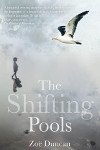
What you see will be.
Publisher: Lightning Books (Eye Books)
Pages: 346
Type: Fiction
Age: Adult
ISBN: 978-1-785-63036-1
First Published: 6th July 2017
Date Reviewed: 14th July 2017
Rating: 4.5/5
Eve’s family lived in a country that was torn by war; in childhood Eve lost them all and suffered further trauma. She moved to England where her well-meaning aunt never stopped trying to cover up any news of the war and never referred to the family. Now in her adult years, Eve is yet to confront her memories and her grief continues as strongly as ever. Her dreams are nightmares and she’s not living anywhere near her potential, but her imagination believes it’s time to heal.
The Shifting Pools is an incredibly moving novel about grief and learning to live despite it. Using many different styles of storytelling, referencing, and ideas, Duncan has created something very different and very special.
This is a slow-moving book. The pace echoes the way utter loss, grief, can take over a life, and Duncan never moves the narrative away from it. Every detail is examined, every thought spoken, in the way it naturally occurs in life, Duncan doing away with the very notion that being repetitive in fiction is bad – she shows well how it is important to delve into grief and give it the time it needs.
One of the first things of note is Duncan’s writing – it’s wonderful. It keeps the pacing constant, it stays steady during tense changes, and it brings something very beautiful to the work. It’s not difficult to fly through this book, despite the subject, and the writing and Duncan’s overall handling of the situation is why. And there is a lot of wisdom here that anyone who has lost someone or been in an awful situation will be able to relate to.
The style of the text as a whole is intriguing. Sections about Eve’s childhood are narrated in the third person. The first person is used for everything else: the ‘present’ as Eve lives through her days and details her thoughts; the vignettes of dreams dotted throughout the book, that explore Eve’s mental state in various imagined situations; the sections in war-torn Enanti, the fantasy world that may or may not be real. And then there are several well-known and not so well-known poems, generally a single verse of each, spread throughout, included in the text as vignettes in their own right. It’s almost of collage, a multi-media project, full of different ideas and voices, and works very well. The term ‘fractured narrative’ comes to mind.
The Shifting Pools uses nature, drawing comparisons between it and the themes of the story, and using its beauty as a way to help Eve. Of note is the character’s name, which, after you have spotted potential influences of other texts and concepts (including Narnia and The NeverEnding Story) does bring forth the question of Eve’s faith. Is there a comparison to be drawn between Eve and the Eden of the Bible? Of Heaven? Quite possibly.
Eve is always at war with herself; as much is said in one of the sections. Her dreams concern various war or battle or prison situations. Of the war that tore apart her family, little is said. Duncan never tells you which war – if any, in reality – she refers to, though there are glimpses of a couple of possibilities; it’s more the basic idea of war that is important.
Reading this book is something of a honour, and a surreal experience. It feels fantastical from the very first page and the amount of research, knowledge, and detail Duncan has included is excellent. She unapologetically runs straight past the border between what we are told is the ‘right’ amount of time and energy to spend grieving to show that the idea of a ‘right’ time never works. This said you can see the thought that’s gone in to getting it right in terms of the reading experience, empathy, and not repeating what has been said unless to view it differently – something that wouldn’t work in many cases but does here.
The only thing that may work against the book is the amount of time spent on the journey in Enanti. It depends on your enjoyment of the fantasy world being included alongside the real world, how much you’re invested in that genre, and how much you personally feels it all relates.
The Shifting Pools is a fantastic reading experience, full of care, love, and, ultimately, hope.
I received this book for review.
Related Books
Speaking to Zoë Duncan about The Shifting Pools (spoilers included)
Charlie and Zoë Duncan discuss coping with and healing from war trauma in reality and fiction, the use and power of dreams, employing various styles and formats, and how fascinating reader interpretations can be.
If you’re unable to use the media player above, this page has various other options for listening.


