





Rory Gleeson – Rockadoon Shore
Posted 12th July 2017
Category: Reviews Genres: 2010s, Angst, Commentary, Psychological
Comments Off on Rory Gleeson – Rockadoon Shore

If we took a holiday… it would be so nice.
Publisher: John Murray (Hachette)
Pages: 291
Type: Fiction
Age: Adult
ISBN: 978-1-473-63407-7
First Published: 12th January 2017
Date Reviewed: 12th July 2017
Rating: 3/5
A group of friends go away to a house in a remote part of Ireland for a weekend break. There have been tensions for a while but despite Cath’s best wishes, confining them all to a small space and adding in drink and drugs just makes things worse. The friends start to split off, fights begin, and from where local resident, Malachy sits with his view of the house, it looks like things will get awry rather soon.
Rockadoon Shore is a fairly short, focussed book, that looks at the sudden breakdown of a friendship group composed of very differing people. Told in third person through the various characters’ viewpoints, it’s a look at an average situation with more thought than tends to happen in reality.
There are six friends and one outsider (or, in the context of location, insider), and Gleeson casts the spotlight on each of them in turn, always continuing the narrative of the whole rather than reiterating it from different perceptions, but he does pause sometimes to look back when decisions in the group have had a lasting effect on any particular person. Whilst this style makes the book move slowly – though with its three-day focus confined to a house it was always going to be like this – it’s one of the defining aspects and when the plot – what there is, as the story is character-driven – drifts, it can be the reason to keep reading.
Part of this style’s reason for being is the characterisation. Whilst obviously devices and slight stereotypes – in many ways this book is like an episode of a soap opera – Gleeson’s characters have been developed to a fair extent. For the author, meanings are most important, personalities a little less so. This creates an interesting situation, particularly in the case of the women, where you have characters being written in a way that echoes the stereotype of men writing about women and then other times that echoes women writing about women. Due to Gleeson’s general idea to study the breakdown of friendship, this style, the switching of gender gazes, if you will, seems intentional. It allows for more reality, for ultimately broken stereotypes, to show that people aren’t all one way or another. It’s more obvious with the female characters – at least from this reviewer’s standpoint – but it does happen with the men, too.
The writing itself is okay; difficult is the decision to use dashes instead of quotation marks. It could well be, indeed, it seems to be sometimes, that the confusion as to who is talking at any one time is deliberate because it often doesn’t matter who’s saying what, but that does not necessarily put paid to reader frustration. There are grammatical and tense errors but they may well be intended.
The character of Malachy is a bit redundant. He goes through some realisations but as he does not really affect the group of friends beyond a plot device, you can skip his chapters without issue. His personal drama at the end is difficult to care about.
Of that plot device, the ending, which is more a metaphor for fissure than anything else, it must be repeated that there’s not much plot. As much as the book does an excellent job of reflecting current life, there’s little to take away with you. Rockadoon Shore isn’t a bad book or a good book, it just is.
This book was one of several available at a showcase I attended.
Related Books
None yet.
F Scott Fitzgerald – Tender Is The Night
Posted 5th July 2017
Category: Reviews Genres: 1930s, Angst, Autobiography, Drama
3 Comments

And confused is the book.
Publisher: Various (I read Alma Books’ edition)
Pages: N/A
Type: Fiction
Age: Adult
ISBN: 978-1-847-49259-3
First Published: April 1934
Date Reviewed: 23rd June 2017
Rating: 1.5/5
When young film star Rosemary Hoyt holidays in France, she is attracted to the group of Americans on the beach, two in particular. Dick and Nicole Diver are wealthy residents who appear to have it together; Rosemary swiftly becomes infatuated with Dick and the two begin an emotional and somewhat physical affair. Dick and Nicole’s marriage had a rocky beginning, Dick’s own problems are causing wider issues, but Rosemary’s not on holiday for very long.
The publication of Tender Is The Night followed The Great Gatsby by a space of nine years. Received to mixed response on publication, Fitzgerald kept changing the chapter order throughout his life, his belief that it was his best work never fading. There are two ‘main’ versions of this book – the first, the one I’m reviewing today, is the original with the story told in flashbacks, and the second, released posthumously, a completion of Fitzgerald’s chronological altering that is currently not in the publishing industry. There are rumoured to be 17 versions in total and the book was first drafted with the genders switched.
Dealing with the idea that Fitzgerald thought this his best work, it’s surprisingly understandable. Taking into account the fact the book is highly autobiographical, it’s not hard to see a certain genius in the way the author observes what were essentially his own problems. While it’s included in the novel in an oft-subtle way (more on that in a bit), Fitzgerald gives a frank portrayal of the way drink can affect relationships and life in general, looking at himself openly and discussing rather than debating the problems. He leads Dick to alcoholic destruction at the same time it happened in his own life (though in Fitzgerald’s case, the result was dire). In terms of the author’s marriage to Zelda Sayre, it is looked into in the context of mental illness; it is revealed in the second ‘book’ that Nicole and Dick met in what we would now see as awkward, inappropriate circumstances, where Dick was Nicole’s doctor. Fitzgerald was never his wife’s doctor – he was no medic – but the position he puts Dick in allows him to deal with the situation from a new angle as well as his own angle as husband.
This is what is excellent about the book, this blunt and personal look at alcoholism, depression, extra-marital relationships, mental illness, that very much relate to Fitzgerald’s own life, if fictionalised enough to not be an autobiography.
But perhaps it is all this that is the reason the book is a mess. Beyond the use of metaphor – the specific nods to his own life – the book falls flat. The story is a muddle of chapters that for the most part could be placed in any order and be no more or less confusing than before. Besides the very obvious storylines of Rosemary meeting Dick, of the hospital, and of – so long as you know the details – Fitzgerald and Sayre’s life, everything else is murky. It’s hard to say exactly what the book is about beyond these three elements, and they don’t constitute much of a plot.
This has a lot to do with the writing. The book is full of devices, and random people pop in and out of the story without leaving any sort of mark on the page – perhaps they are figments of Dick’s increasingly cloudy mind but it seems more a choice made by the author as there are never any discussions of these pop-ins later on. Dialogue presents a particular problem wherein someone will talk and then they’ll appear to speak again for the next line of dialogue that by rights and format should be spoken by someone else. Very little is clear and the plot jumps here, there, everywhere.
Talking of the subtlety of Fitzgerald’s inclusion of drinking, the narrative, when told in third-person from Dick’s perspective, muddies the waters of what people in the novel are thinking. Mostly, things happen to Dick and you’re not in the know. You’re as baffled as Dick might be at any given moment (this is different to the general unclear nature of the text). It’s in the dialogue, conversations with others, that the drinking and the social effects of it are confronted. Rather clever, but due to it being steeped twice in that murky pool, the effect on the literary aspect of the novel is not as profound as it could have been.
There are glimpses of interest. One chapter ends in a blood bath that you might expect to signal a mystery element to the story, but it’s never looked at again. Similarly the chapter in which Rosemary finds a dead body in her hotel room and Dick quietly removes it; in context with the reported fight between Dick’s friend and a ‘Negro’ (the word is used in context with the era rather than a pointer towards racism) this seems to usher in the great possibility of a discussion on race… but then nothing happens. The event simply drops out of the narrative.
The confusion takes a break at the start of ‘book two’ or, depending on who you ask, from page 100 onwards. (Around page 100 – of any edition, it seems – is the place quoted by most people at which the novel starts to become better.) Book two opens on Nicole’s time in hospital and the beginnings of her relationship with Dick and is much more straight forward and utterly linear.
There are a few good things about Tender Is The Night, particularly from an academic angle, but they are slight. If you’re really into the idea of reading everything Fitzgerald wrote you’ll likely want to read this book regardless of the reviews, but everyone else would be much better off spending their time with another. It might be a Fitzgerald and it might be called a classic, but it’s difficult to say it’s worthy of either designation.
Related Books
Marie-Sabine Roger – Get Well Soon
Posted 30th June 2017
Category: Reviews Genres: 2010s, Comedy, Spiritual, Translation
Comments Off on Marie-Sabine Roger – Get Well Soon

Doc, Grumpy, and perhaps one day, Happy.
Publisher: Pushkin Press
Pages: 213
Type: Fiction
Age: Adult
ISBN: 978-1-782-27216-8
First Published: March 2012; 29th June 2017 in English
Date Reviewed: 27th June 2017
Rating: 4/5
Original language: French
Original title: Bon Rétablissemnent (Good Recovery)
Translated by: Frank Wynne
Jean-Pierre is in hospital; dragged out of the Seine, no one as yet knows what happened, least of all Jean-Pierre himself, but whatever it was, his health has been set back and he needs to recuperate. Being in hospital isn’t great – the food’s very bland, it’s noisy, and no one ever closes the door to his room, but more to the point there’s an irritating 14-year-old girl, seemingly over-fed, who thinks she’s entitled to his laptop. There’s the young man who saved him with whom Jean-Pierre is having trouble communicating; thank god – even if you don’t believe in him – for the policeman who has taken a liking to him and visits all the time, even if that’s strange. At some point they’re going to have to find out what happened and hopefully Jean-Pierre will be allowed to get out of bed and get away from it all.
Get Well Soon is a fairly fun, short, novel. Completely character-driven, it’s a book that combines thought with the idea of a quick an easy read, a fairly literary book that will interest those who might not have time at present to invest into literary fiction.
This is a book about a slight mental and emotional journey. Jean-Pierre is a grumpy old sod – a description that suits his own word choices – grumpy enough you’d think he was older than he is, and Roger’s aim is to fully acknowledge this and allow it to continue whilst slowly introducing the character’s better qualities and a gentle change of heart. Her characterisation means you start out disliking him intensely before liking him a bit more and then becoming content with feeling somewhere in between.
There is a lot to like about the author’s way with words in regards to characterisation. Building a character slowly, with full attention paid to how the reader experiences it all seems to be, if this book and last year’s translation of the excellent Soft In The Head is anything to go by, Roger’s focus. However in the case of Jean-Pierre Fabre here, it’s perhaps too slow, to the effect that you feel something has been missed; there was potentially more of a change going on in Roger’s imagination of the character than has been marked down on the page. This is where ‘no plot’ and ‘slight journey’ comes in – this is a book full of gentle humour and heart but whilst reading Jean-Pierre’s musings on his life is fun, there isn’t much to them.
But let’s look at the humour – it graces most every page. Roger can be brusque, and never shies from presenting a person steeped in their own social and age-related context. Jean-Pierre meets enough of a stereotype for Roger to explain the basics quickly and then move on to the details. The cheeky jokes. The descriptions. The thinking behind Jean-Pierre’s actions, and the thinking done for thoughts’ sake. The process of a sort of everyday prejudice that starts to untangle itself as Jean-Pierre sees how things aren’t as they appear, or that for all that something may sound unpleasant, perhaps uncouth, there are reasons to be considered. It is the dissection of social constructs together with the humour, that make this book. It’s very much one small person’s considerations that won’t change him on a general level, but it’s a good read.
The translation is good – albeit that Wynne is aided by the French names and the references to French locations, Wynne’s choices ensure you never forget this is a French book. As such you won’t forget it’s a translation but that’s no matter as Wynne has let Rogers’ words shine through.
There is a bit to think about and much to enjoy; Get Well Soon is a quiet book, a nice example of Rogers’ writing ability. You likely won’t remember the character but you will remember the author’s technique.
I received this book for review.
Related Books

Joanna Hickson – The Agincourt Bride
Posted 23rd June 2017
Category: Reviews Genres: 2010s, Angst, Domestic, Historical, Political
2 Comments
Metaphorical swings and roundabouts.
Publisher: Harper (HarperCollins)
Pages: 406
Type: Fiction
Age: Adult
ISBN: 978-0-007-44697-1
First Published: 3rd January 2013
Date Reviewed: 20th June 2017
Rating: 3.5/5
Mette entered Princess Catherine of Valois’s household when she miscarried her own baby and took the job of wet nurse. Now, many years later, she looks back at her time with Catherine as she became the princess’s friend and confident through years of childhood neglect, the back and forth of negotiations with the English King Henry V for Catherine’s hand, and the surrounding issues of civil war.
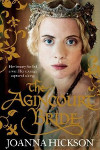
The Agincourt Bride is the first in a duo of books about Catherine de Valois. Focused on the princess who, during this retelling, becomes Queen of England, the book sports a lot more politics than the cover might have you believe.
Hickson combines the overall atmosphere of historical romance, but not romance itself, with the social and political discussions and wars of the day. Catherine’s marriage to England’s Henry V was something that started to come into being since her early double digit years, a part of the agreements that were decided between the ‘guardians’ of the French crown – the Queen and the Duke of Burgundy, who effectively took over proceedings due to the King’s failing mental health – and the English monarchy. What this amounts to is a lot of good political detail of events that relate in some way to Catherine. Due to the female point of view there is no opportunity for Hickson to detail the war in the first person – in particular, of course, Agincourt – but she brings in messengers to relay what happened. The author balances it well, towing the line neatly between cluing you in and including too much research, effectively providing you with a fair run down of the battle and how it went down.
To look at the narrative, it could be said that a book told from Catherine’s point of view would have been better. As a narrator, Mette has her moments of goodness but she is a bit of a bumbler and overly enthusiastic. Catherine is rendered somewhat distant to the reader so you have to be okay with this idea (you get to read several letters written by the princess, dotted about the narrative, that aid your comprehension of her thoughts, but it’s not a narrative in itself). However Catherine has been well-written and presented. She stands out boldly and Hickson is always careful, rightly having her overshadow Mette.
But if Catherine had been the narrator you would have missed a lot of the content that Hickson wanted to explore. The most obvious element is that of a report, a chronicle, that by Mette’s presenting the story you get to hear a lot more about Catherine, albeit from afar, than you would otherwise. (Mette does end up in a lot of convenient places, Catherine promoting her and taking her everywhere with her, which helps the author tell the story, however there are sections that are missed when Mette cannot accompany the princess.) The presentation from someone older is good, particularly in the case of Hickson’s exploration of the potential child abuse Catherine and her siblings suffered from their mother and the Duke of Burgundy. The current thought is that there was no abuse but in years gone by it has been a prominent suggestion that the children were neglected. Hickson uses this idea in her book, effectively covering two bases at once – the fact that abuse was treated very differently in older times and thus there is a need to explore it, and the way our mindset has changed over time; the author looks at attitudes both then and now, subtly including – for of course it is never stated by our medieval narrator – what appeals to us today in terms of discussion, study, and general discourse of morality. Mette’s narration, beginning just before her introduction to newborn Catherine, allows for a mature assessment of the possibility of abuse, and if history so far is anything to go by, we know that thoughts do chop and change so Hickson’s research may well be of use in this way later on.
There is sexual abuse in this book that many readers may find difficult on both a literary and historical level. Its inclusion asks that you stray from the usual narrative of royalty in the period and it would be difficult to point to specific value in terms of the story.
This is a book well set in its time. It takes a while to get somewhere in terms of plot because it is hampered by historical indecision, the person at the heart of the story bound by limitations and others’ decisions. It is a book that shows how little power women had in the 1400s, how much they would take when they could to good effect, but how it could be for little or nought. Hickson has made Catherine strong in spirit and her personality is winsome, so whilst you know there’s only so far she will be able to carry the story herself before someone with power comes in and decides to change her fate because they didn’t win a battle and she’s the prize they’re dangling, you’ll find some happy moments wherein she’s able to carefully manipulate a situation through all she’s learned.
Very much about Agincourt in terms of the plot’s time scale, The Agincourt Bride is a book that sets the stage for the next but is a story in its own right, shining light on the woman who in time would be at the heart of the beginnings of the Tudor dynasty. And whilst Mette is not the strongest character she does provides a good, solid story of politics and historical possibilities, Hickson’s use of research blending beautifully with the overall story.
Related Books

Tom Malmquist – In Every Moment We Are Still Alive
Posted 26th May 2017
Category: Reviews Genres: 2010s, Angst, Domestic, Memoir, Spiritual
1 Comment
Sudden changes.
Publisher: Sceptre (Hodder)
Pages: 277
Type: Non-Fiction
Age: Adult
ISBN: 978-1-473-64000-9
First Published: August 2015; 1st June 2017 in English
Date Reviewed: 25th May 2017
Rating: 4/5
Original language: Swedish
Original title: I Varje Ögonblick Är Vi Fortfarande Vid Liv (In Every Moment We Are Still Alive)
Translated by: Henning Koch
When poet Tom Malmquist’s fiancée became very ill late in her pregnancy, the couple thought it was flu. But when her breathing starts to become affected, Karin is taken to the ward. In the horror of the idea of loosing his lover, Tom must get to grips with the idea that he will be bringing up his daughter on his own.
In Every Moment We Are Still Alive is a sobering memoir told in a rush of words that communicates the effect of the events on a person’s mental state. I have termed it non-fiction but it’s also considered fiction – the events are real but the style of writing, beyond the words themselves, means the book is somewhere between the two.
Looking at the words and the style together, Malmquist has opted for stream of consciousness and a sort of distancing. In view of the communication of his mental state, both the lack of full stops and the lack of quotation marks mean that you, the reader, are inundated with the information Malmquist received in the same way he received it, putting you in his shoes. Sometimes it’s fairly easy to see what is happening – fairly, not completely – and other times it’s almost impossible but in this book your incomprehension is paramount to your understanding of the way Malmquist is feeling. It is frustrating to read on a literary level, especially considering the text never stops rushing towards you, but it plays its part – it might seem to be a book with a lot of telling but actually, it’s all about showing.
The length of the book is part of this display of showing, too; it’s fairly short – just like the few weeks that pass – but feeling longer than that – again just like the few weeks that pass. In terms of the action of reading it’s a swift one, easily read in a few hours, but it will feel longer.
Karin is going to miss so much, Livia was a black-and-white ultrasound photo, Karin only knew her something that moved inside her.
One can’t really review the story itself; suffice to say it’s told very well and Malmquist often looks back on his life with Karin. There are no clear time changes so sometimes it’s difficult to work out when a scene slots into the timeline but that doesn’t take much away from the overall experience.
Something that must be touched on, however, is the bureaucracy Malmquist details. Because the author was not married and because Karin was too ill and everyone too busy to so much as think about any paperwork, despite the obviousness of the author’s paternity he has to go through Tax lines – yes, makes no sense – in regards to his baby daughter. He has to call Social Services and courts and various other places to try and change her surname to his, to get reports, all that sort of stuff; you don’t get to hear the result, how it ends up, but suffice to say Malmquist now has custody of his daughter, however, according to what is written in the book, he has to check in often until she reaches her majority. The author’s writing style, that deluge of information, further shows just how bizarre the whole thing is. And this all happens whilst he’s reeling from the death, making it even worse. As far as the book goes, Malmquist’s examination and peeling back the layers for all to see, is brilliant.
This is a difficult book in many ways, and a bit more so when you know you’re dealing with a translation. The translation is okay but there are some grammatical choices and turns of phrase that are so English (language) it’s hard to forget you’re reading a translation. But the heart of the story, or, rather, hearts – that communication and fight for parental rights – is very good and well worth your time.
There have been books that have dealt with similar topics before, but In Every Moment We Are Still Alive puts you in the author’s head in a very different and meaningful way.
I received this book for review.
Related Books
None yet.


