




Sherry Thomas – The Luckiest Lady In London
Posted 9th March 2018
Category: Reviews Genres: 2010s, Domestic, Historical, Romance
Comments Off on Sherry Thomas – The Luckiest Lady In London

Lucky, but well matched.
Publisher: Berkley Romance (Penguin)
Pages: 276
Type: Fiction
Age: Adult
ISBN: 978-0-425-26888-9
First Published: 5th November 2013
Date Reviewed: 5th March 2018
Rating: 4/5
Felix doesn’t trust people. Neglected as a child by his mother, and having to watch his parents’ loveless marriage progress ever further into bitterness, he never lets an affair become serious. Meanwhile family rich but cash poor Louisa is looking for a husband amongst the wealthy; she’s got a few siblings, one with epilepsy, and a mother to look after; if Louisa likes her husband then all well and good but it’s not important. When Felix suggests she become his mistress with the promise of life-long provision she’s tempted but believes she can do better.
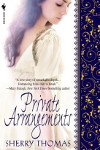
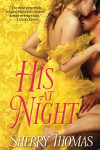
The Luckiest Lady In London is a novel that shares its society and a couple of characters with Thomas’ previous book, Private Arrangements. It’s a deftly-plotted story that shows the author’s expertise in writing what her readers want.
The romance is very well done. Thomas has created a couple that are well suited and the relationship is believable. She looks into the ways they are suited in terms of interests – quite a few pages are devoted to astronomy, telescopes, and there’s a fair amount of information to learn about the practices and scientific beliefs of the period.
But the strongest element of this book and what sets it above many others is the way Thomas deals with the requirement for conflict in a story. The defining conflict, apparent early on, is not the be all and end all of the work; Thomas uses it but keeps it realistic and reigned in – never once does it outstay its welcome. Thomas gives a clear nod to what is wrong and then the characters get on with solving the problem.
And they are good characters. Obviously there’s the fantasy of the poor historical woman gaining the hand of the wealthiest man in society, but Thomas makes it work. There is solid reasoning in everything. The story is undemanding and an easy read with a good chunk of value. The writing, as always with Thomas, is top notch.
The Luckiest Lady In London isn’t standout in the way one usually thinks of that category but it’s a good read.
Related Books
Solomon Northup – Twelve Years A Slave
Posted 1st March 2018
Category: Reviews Genres: 1850s, History, Memoir, Political
3 Comments
Whilst I’ve formatted this post as I do my reviews, this isn’t quite a review, more an information post.
Publisher: N/A
Pages: N/A
Type: Non-Fiction
Age: Adult
ISBN: N/A (Collins is 978-0-007-58042-2)
First Published: 1853
Date Reviewed: 27th February 2018
Rating: 5/5
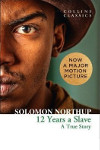
Twelve Years A Slave is Solomon Northup’s account of his time as a slave in Southern states America, the Bayou Boeuf to be exact. It was used by the abolition movement though not necessarily written for it1; like so many others, Northup was forced into slavery and his story has a specific background – he was one of a number of Northern states freemen who were kidnapped and sold into bondage.
Every sentence in this book has been thought through. Debate has surrounded who exactly wrote this book – whilst unarguably Northup’s account, there are a few possibilities due to the presence (most definitely in the preface) of an ‘editor’, one David Wilson. There’s the possibility Wilson took Northup’s story and wrote it up, which seems most likely, reading around the subject [see end note]; the possibility it is completely Northup’s work; the possibility that it’s a bit of both. These possibilities are apparent upon reading the preface and then subsequent work and situating the book in its political and social context; in the same way the work of other former slaves – such as Olaudah Equiano who wrote 60 years prior to Northup – seeks to reassure the reader that there are good white people out there, including some masters, so too does Northup.
The book is as harrowing as you’d expect though a lot may well have been left out; you get a report of horrors but there were surely more details. Included also are the good days, the few days of leisure in which Northup expresses the normality of his fellow slaves, demonstrating further how inhumane slavery is, how everyone is the same.
Northup drops out of history ten years after this publication – we know that he was often a speaker at abolition events but the records then start to become ambiguous. Someone saw him at someone’s house once – that sort of thing. History believes he was kidnapped back into slavery or simply died of natural causes. You can’t but hope it was the latter possibility and that it happened in due course rather than soon after Northup was freed. The first doesn’t bare thinking about.
As Northup himself did, so too did the book fall into obscurity2. It’s quite possible that, with slavery abolished, Northup’s book was deemed to have served its purpose and was dually forgotten. It was rediscovered in the 1960s.
Certainly you have to be prepared to read between the lines on occasion and this is one of those few books that would be difficult to read out of context. It’s an incredibly important book.
If you’re interested in finding out more about the authorship, David Fiske’s article on the book is an interesting read. It says that Wilson was not an abolitionist – which would suggest a less political motive on that man’s part, and goes further into general reasoning and the way the book was written.
Footnotes
1 Lieblich (2015) says the book “…achieved a remarkable degree of success as an abolitionist indictment against slavery […] In the wake of newspaper reports of his rescue from slavery, Henry Northup (a white attorney and lifelong friend from New York whose family had once owned Solomon’s father), Solomon Northup, and David Wilson collaborated and published his story within the first few months of his return to the North. Henry Northup gave Wilson an incentive to publish the book as quickly as possible in the wake of news reports of Solomon’s rescue. The attorney rightfully figured that information from the book would quickly reach readers who could, and who eventually did, identify the kidnappers.”
2 More information can be found on Wikipedia.
Online References
Lieblich, Mollie (2015), The Cultural Significance of Solomon Northup’s Twelve Years a Slave, US History Scene, accessed 1st March 2018.
Related Books
Edith Wharton – The Age Of Innocence
Posted 23rd February 2018
Category: Reviews Genres: 1920s, Angst, Domestic, Drama, Social
3 Comments

Everything is awesome (caveat: when you’re part of the team)1.
Publisher: N/A
Pages: N/A
Type: Fiction
Age: Adult
ISBN: (Vintage’s is 978-0-099-51128-1)
First Published: 1920
Date Reviewed: 23rd February 2018
Rating: 5/5
1870s New York and young Newland Archer is excited at the prospect of marrying May Welland, looking forward to making their engagement official. But as he watches the opera in his club box, he spies a newcomer with his fiancée’s family; May’s cousin Countess Ellen Olenska has separated from her European husband and has come to stay in America. Ellen is rather different to the rest, her European ways at odds with New York society and everyone hopes she’ll reunite with her husband… everyone except Newland who is strangely attracted to her.
The Age Of Innocence is a marvellous novel with a highly ironic title. Set at a time of change, it looks at the way a society that does not favour the arts, or anything even one step away from their etiquette and mores, responds when they are confronted with a person who is slightly associated with it.
Wharton speaks of a society she was a member of and uses Newland to examine it as well. There is a lot of characterisation in the book but most of it is by rights and by design set aside for Newland. As the main character (the book is written in the third person) Wharton spends most of her time in his head. Her relative lack of characterisation of the other characters, barring Madame Olenska, is almost a theme in itself, with the society members effectively rendered as stereotypes as befitting Newland’s opinions of them, which, let’s just say, aren’t always correct (and can be frustrating at times). It’s an interesting sort of character-driven novel – there’s actually more plot than characterisation aside from Newland yet it remains character-driven.
In many ways everyone is a device for Wharton but none more so than the unsuspecting Newland who is used by Wharton to look at the perceived lack of female agency in society, as well as his own thoughts as to teaching his wife what he deems appropriate for her to know.
His own exclamation: “Women should be free – as free as we are,” struck to the root of a problem that it was agreed in his world to regard as non-existent. “Nice” women, however wronged, would never claim the kind of freedom he meant, and generous-minded men like himself were therefore – in the heat of arguement – the more chivalrously ready to concede it to them.
The young man was sincerely but placidly in love. He delighted in the radiant good looks of his bethrothed, in her health, her horsemanship, her grace and quickness at games, and the shy interest in books and ideas that she was beginning to develop under his guidence. (She had advanced far enough to join him in ridiculing the Idyls of the King, but not to feel the beauty of Ulysses and the Lotus Eaters.)… But when he had gone the brief round of her he returned discouraged by the thought that all this frankness and innocence were only an artificial product.
So the story is very clever. It’s a man’s world – is it? (You might expect a woman writer in those years to question that – Wharton and Kate Chopin would have got on well – but Wharton’s craftiness will have you wondering what’s on the next page constantly and she is a master of red herrings, nay, pre red herrings.) The author gives a lot of time to Ellen Olenska, ensuring that the woman shines in characterisation away from her role as Newland’s social interest, and allows a second interpretation to take hold in Ellen’s story. The execution of the story is flawless and the ending an absolute triumph.
At once a simple story with little embellishment, The Age Of Innocence is well worth the fairly short investment of time it requires, both for enjoyment and because it’s a worthy classic. You will not regret reading this book.
1 The main line of The Lego Movie theme song seemed too appropriate not to use, however irrelevant it is otherwise.
Related Books
None yet
Jessie Greengrass – Sight
Posted 22nd February 2018
Category: Reviews Genres: 2010s, History, Psychological, Spiritual
Comments Off on Jessie Greengrass – Sight

Acknowledgement and the desire to know more.
Publisher: John Murray (Hachette)
Pages: 193
Type: Fiction
Age: Adult
ISBN: 978-1-473-65237-8
First Published: 22nd February 2018
Date Reviewed: 21st February 2018
Rating: 5/5
Our narrator looks back at the part of her life when she was considering whether to have a child, and then the subsequent pregnancy. She interweaves into this story another, of her grief at her mother’s death, as well as the discomfort she felt staying with her grandmother, and the history surrounding the discovery of X-Rays, Freud, and the work of early doctors.
Sight is a sensational novel about one woman’s journey to parenthood and the worry of being good enough; it’s also about longing and grief, and the self.
Greengrass is a master of subtlety and letting the story unfold at its own pace. Never worrying about speed, the tale is very slow but a wonder to read, the writing calling to mind novels from decades, even hundreds, of years ago, that same sense of the narrator sitting by the window at their desk writing, that is most prominent in film adaptations, here in full bloom. To be sure it is a page turner but it’s of that lovely lazy afternoon kind, the book being the perfect companion for a cup of tea and a chair on the lawn as the sun shines overhead. (The writing is similar in its subtly to the author’s short story collection, An Account Of The Decline Of The Great Auk, According To One Who Saw It, though the length of Sight allows the author to take her way of executing ideas further than she could in the short stories.)
Yes, that sounds rather at odds with the content of the story – the narrator’s anxiety and grief, the constant struggles she has to work through that her writing of them seems to help but not necessarily conquer. (It’s a somewhat open-ended work, very much a character study that nevertheless sports a conclusion.) And with all the chopping and changing of narrative – one moment in the present day, the next in the past, the next describing history – it can take a little while to find your bearings. But when you find your way (not too far into the novel, it must be said) there is a lot of literary enjoyment to be had.
In writing about Freud and Rontgen and other historical people – which is a factual aspect of the novel – Greengrass has used a particular type of showing. The cause of the narrator’s anxieties and doubtless depression is shown in what she teaches the reader about Rontgen and Freud – she knows about Freud because her grandmother was a psychoanalyst and she knows about Rontgen because she read up on him. These in turn, particularly the information about Freud as related to her grandmother and upbringing, help the reader to understand her nervousness about having a child, the way her mother’s passing affected her and so on. It becomes apparent that whilst, in a sense, the information about historical people reads as an info-dump, irrelevant to the narrator herself, those very facts are things that were not only something to become perhaps obsessed by as a way of working out her grandmother and her own life, but also a way of coping; in the narration of Freud and Anna, the narrator lives wildly through others without perhaps realising it.
Whilst there is no direct historical story in relation to the death of the narrator’s mother, the literary result is much the same.
Taking character further in terms of Greengrass’s subtlety, to the concept of characterisation itself, this is another factor worth looking at. The novel is very much about the narrator, in many ways everyone else mentioned is but a device, and Greengrass engages with this every so often. There’s the place wherein the narrator looks at Johannes’ role in the proceedings to good effect. As the narrator acknowledges – more so points out in terms of social roles – the way Johannes is but on the periphery of the pregnancy – not essential, a bit-player who can stay in the waiting room whilst the pregnancy unfurls, makes him irrelevant to what’s going on. This mixes in with the overall feeling that the narrator is the person to listen to – the others are not so important; whilst they may have affected her, it’s now the narrator’s time to shine.
Sight is fascinating. The narrator comes to a greater knowledge of herself but the knowledge the reader gains about her is the most important thing, and that effect makes the novel what it is. It’s both difficult in terms of content and wonderful in terms of its execution, a very self-contained and meticulously planned tale that is very effective and moving without any sort of pointing to itself to tell you so. An average person with a sad story that, when you look at it, shows just how much depth there is to every one of us and how our childhoods have a colossal effect on who we become, no matter how it pans out.
I received this book for review.
Related Books

J Courtney Sullivan – The Engagements
Posted 31st January 2018
Category: Reviews Genres: 2010s, Historical, LGBT, Social
Comments Off on J Courtney Sullivan – The Engagements

Diamonds are forever.
Publisher: Virago (Little, Brown)
Pages: 515
Type: Fiction
Age: Adult
ISBN: 978-1-844-08937-6
First Published: 11th June 2013
Date Reviewed: 31st January 2018
Rating: 3/5
Copywriter Frances Gerety creates the famous DeBeers slogan, ‘A diamond is forever’, and the company sees a massive hike in sales of engagement rings. A couple of decades later, Evelyn and Gerald are preparing for the unwanted visit of their son – Evelyn does not want him splitting up the family. Another decade and James laments his failed career as a musician as he works as an EMT (paramedic), saving lives. Later still, Delphine jumps ship when a younger man comes on the scene, leaving her husband and their antique shop. And in recent years, happily unmarried Kate tries to stay calm in the face of her dysfunctional family as they prepare for the wedding of cousin Jeff.
The Engagements is a multi-plotline novel with five narratives loosely based on the theme of rings.
Most of the stories in this book are pretty bog standard, nice enough to read but not compelling, however the story of Frances Gerety and the accompanying general information about DeBeers and diamond mining is fascinating. It’s not apparent until a little while into the book, but Sullivan takes time to explore every aspect of the industry; whilst most of this time is spent on the way diamonds have been advertised, the author also looks into the relations between the American company and the countries from which the diamonds are taken; she looks at the way the engagement ring is acquired – bought or passed down the generations; she looks at those who have decided not to marry or fall into any of the associated trappings. And whilst the narratives are average (though the stories are far more about relationships in general than engagements), the use of five stories over the course of several decades allows Sullivan to inform you of the way things have changed over the years.
This all sounds great, and it is, but after a while the stories take their toll. The problem here is that the book is simply too long. There is a great amount of info-dumping – after a couple of rounds of it you start to see the warning signs for when a block of irreverent text is on the way; Sullivan will introduce a minor character and give you a lengthy back story or provide a history of a main character you don’t need. The book is to a large extent a series of flashbacks. And it’s not at all aided by the writing. General sentence structure, grammar, older characters speaking as though they are much younger; often the writing is clunky enough that it’s difficult to work out in which country a character is living.
You’d be forgiven for wondering throughout the book why Sullivan has collected these particular narratives together. They bear no relation to each other apart from the loose engagement ring connection – in big part loose because of the sheer numbers of people who can relate to it. Towards the end, the reasoning for these tales becomes clear as Sullivan forms a circle of relation but it’s rather forced, almost a deus ex machina situation. Tying them all together has the effect of showing you what Sullivan may have been trying to do the entire time – spoilers ahead and for the rest of this paragraph because it needs to be said to be explained: show the passing of a single ring down the ages. This concept as used in the book is actually fascinating due to its execution – Sullivan shows the different ways people go about acquiring their rings and the way the diamond industry exploits people whether they have the money or not. It starts as an heirloom, becomes stolen by someone who hasn’t the money to buy a big ring, gets given to this person’s prospective daughter-in-law by his wife who never liked the big diamond, gets left in a taxi by the prospective daughter-in-law when she leaves her relationship, and is lastly bought from a collector/jeweler by a same-sex couple. Through the use of a single ring, Sullivan makes her way through socioeconomic issues and changes in culture. It’s great; it’s just that it’s a bit too late in the proceedings to be able to say that the prior 500 odd pages were all worth it.
The Engagements offers insight into the creation of a monopoly and the politics surrounding it – DeBeers is of course a real-life company and whilst we haven’t lots of information on Frances Gerety, she did indeed write the slogan; and the book offers a great look at the effects of the industry on reality. But it is a big investment for something with relatively little pay off. Rather like, some would say, engagement rings themselves.
Related Books
None yet


