


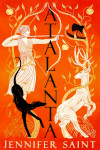


September 2016 Reading Round-Up
Posted 3rd October 2016
Category: Round-Ups Genres: N/A
5 Comments
Given what I said last week, it will come as no surprise that I haven’t read much this month! By the middle of September I had an immediate must-be-read-very-soon pile of ten books, mostly review copies, and had abandoned 3 books that had already been languishing on the ‘current’ list. I’ll pick them back up in due course; one of them is Helen Oyeyemi’s What Is Not Yours Is Not Yours which I was rather enjoying, it’s just that I couldn’t pay it the attention it requires. In regards to the list of ten I’m currently at 3 down, 1 on the go, the 1 being Dan Richards’ The Beechwood Airship Interviews, which needs finishing if we’re to have a more varied conversation. It’s just the sort of book you want when you’ve a deadline – funny and very unique. I’ve still a fair amount to do in regards to promotion so I’m happy several of the ten books are pretty short.
The Books
Non-Fiction
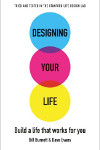
Bill Burnett and Dave Evans: Designing Your Life – A handbook for improving your career prospects and life in general based on the writers’ successful Stanford University course. Rather good.
Fiction
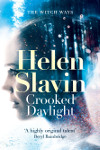
Helen Slavin: Crooked Daylight – After the death of their grandmother, three sisters put her cottage up for rent and strange things start to occur. A paranormal-magical realism tale; okay in itself, very promising as a start to a trilogy.
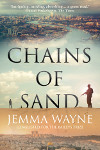
Jemma Wayne: Chains Of Sand – An Iraqi Jew hopes to leave Israeli whilst a British Jew yearns to live in Israel. A good premise.

Linda Stift: The Empress And The Cake – A young woman is asked to share half a cake with a lady wearing 1800s fashion; though she wishes not to, she accepts. Super.
My favourite this month was The Empress And The Cake, a bizarre, fab, book that’s just something else entirely. I also enjoyed Designing Your Life more than I’d imagined I would – no low expectations by any means but as I will be saying in my review, it’s the bookish equivalent of that situation where someone says ‘bear with me…’ and you wish you were somewhere else before they get to their point and you discover it was all worth it.
Quotation Report
None this time.
In theory, considering my introduction to this post, I will have a lot of books on October’s list.
What did you read in September?
The Effect Of The Cover On Your Reading Experience
Posted 28th September 2016
Category: Chit-Chat Genres: N/A
8 Comments

We all know that ‘don’t judge a book by its cover’ rarely works, but today I want to look further into the effects of this, what it means in actuality.
This post has been brewing in my mind for a while because the action behind it is something that’s often happening but not always noticeable, subconscious – the way a book’s cover informs and affects your reading of the book, particularly, I think, in the case of hardbacks where you can see the edges of the flaps.
It was Sunjeev Sahota’s The Year Of The Runaways that first alerted me to this concept. The book is rather depressing, it’s depressing in its content and I personally found it not too great a book, but I wondered how much the cover of it – the yellow and burnt orange, the autumnal leaves, the murky brown background – was affecting the overall atmosphere of it for me. Because I don’t expect Sahota had the cover, designed later by someone else, in mind whilst he wrote the book.
Certainly the colours and the slight wishy-washy nature of the brownness fit the content but did it not make the book seem even more dark and dirty than it was? A fitting visual but somehow depressing on a literary enjoyment level – it wasn’t the concept or theme of the book that made it a long read for me and there was something else going on other than the plotting issues (those did make it long).
I wonder if I’d have enjoyed the reading experience more if mine had been the lighter coloured paperback edition.
This leads me to colour choice. Colour choice can have a big affect though with modernity has come jazzy covers and with jazzy covers more expression (compared to standard old works, for example, where the books look mature but not very appealing). Colour is pretty subjective – one’s ‘reminds me of the ocean and I love sailing’ might be another’s ‘my old school uniform, yuck!’ I think the way people often like to shelve their books by colour shows a bit of this interest we have in them.
(I got to thinking about colour and the notion to write this post when reading Sara Taylor’s latest, The Lauras. It sports a fun, map-filled, cover that also evokes scrapbook paper sets and pin boards but the resounding colour of it, blue, well, it corresponds to a road trip to me, the shade of blue, the way I can see Florida and the ocean in it. If it had been brown, to use the Sahota example, would I have found it more sophisticated than fun?)
Another thing I’ve been thinking about is associated with this – the way colour is part and parcel of your reading experience can mean that if you read the book again using another edition, whilst the story is obviously the same you are having a new experience of it, physically. Your current age may be a factor, but I reckon if you read a book twice over, once then a second time immediately following the first, with two different editions, those two times would seem different. The second may even seem wrong. In this way font choice also holds sway.
I’ll have to look into those last two factors in greater detail sometime.
Have you found this connection between reading and book cover in your own experiences? What colours draw you in?
Exciting Announcement!
Posted 26th September 2016
Category: The Worm Hole Genres: N/A
10 Comments
I have been eagerly counting down the days to this announcement. A sense of unexplained positivity may have been apparent in some of my recent posts.
It started with an idea last September that slowly took shape over the course of the following few months. Then came the day I looked at the A2 page littered with notes and realised it was time. I’ve spent the last 6 months planning up a storm – finding a venue, booking an author, advertising.
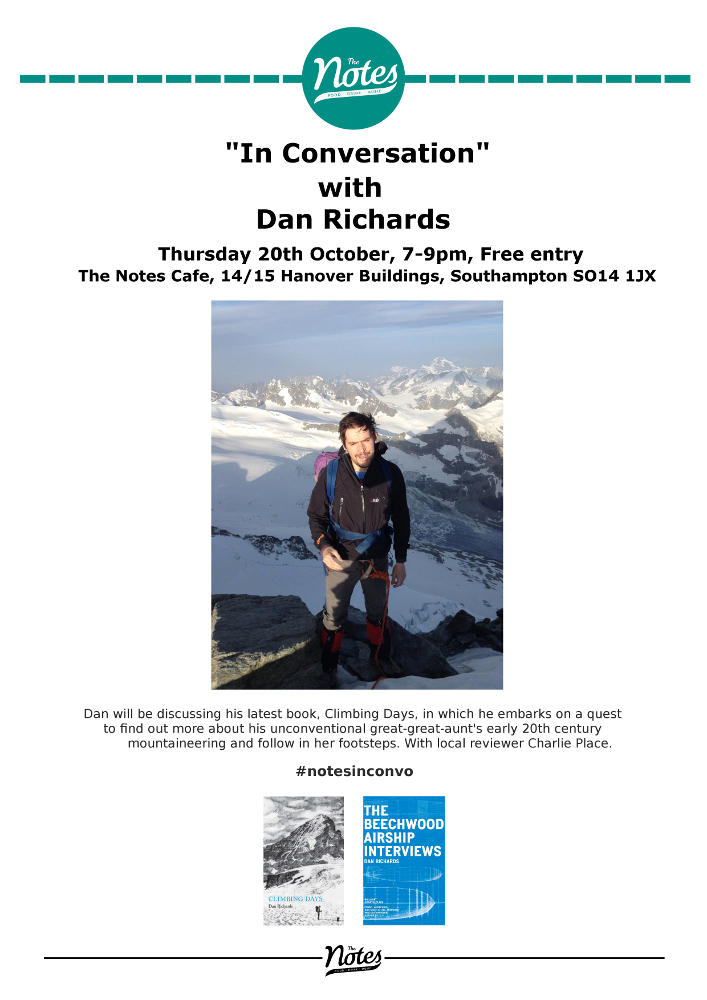
This is to say that on Thursday 20th October I will be hosting a literary event, between 7-9pm, in Southampton. Dan Richards is the author and we’ll be discussing his awesome Climbing Days, a book full of history, humour, adventure, independent women, and great writing. Books will be on sale, both Climbing Days and Dan’s previous work, The Beechwood Airship Interviews, which will also get a mention in the conversation.
For the venue, The Notes Café, a wonderful independent eatery/coffee shop in the city centre. Primarily musical, as of late they have started open mic poetry nights and are keen on the idea of pursuing the literary route further. It’s a business I’m very excited to work with. Their decaf is super, their jacket potatoes quite honestly some of the best.
If you could spread the word in any way: tweets, posts, telling friends and family who live nearby, I would be extremely grateful. The event Facebook page is here. Hashtag: #notesinconvo If you’re able to join us on the night, fantastic! Do let me know.
I know I haven’t been a very good blog commenter recently – you now know the reason. It’s been a crazy few months but also a very fulfilling few months.
When You Are Given A Book You Already Own
Posted 21st September 2016
Category: Chit-Chat Genres: N/A
8 Comments

I’ve spoken before about having multiple copies of books (and will always remember Jeanne’s comment about how she and her husband gave away any duplicates they had when they set up home) and I’ve spoken about that gift-giving situation where there’s discomfort if you ask if the person’s read the book yet. Today I’m combining the two topics.
There have only been a few times in my life where I’ve been given a book I already own and almost all those occasions have involved people thinking about what I’d like and simply not knowing I already had the book they chose for me. The gifting presents a question: what should you do – give away the new copy, give away the old copy, or keep both? The last is usually a bit much but I’ve a story about that in a moment (this is besides the research copy/reading copy I mentioned in my multiple copies post). I’m personally not fond of the idea of saying, ‘thanks, but I already own this,’ as it’s asking for hurt feelings – whatever you choose to do, between the choices of giving away a copy or keeping both, you’re going to end up with an item that the person will presumably spot on your shelves and positive assumptions should be made.
My most recent story, then, the one mentioned above, is one I’ll always remember. I once read a book series in order and didn’t read any other books in between volumes. I mainly read them in the living room, a common room. That Christmas, I received, from someone who didn’t live with us but was often around, the next book that came after the one I’d just finished. But I already had a copy of this book waiting for me, just not in a common room.
The thing is, this present showed me how much effort the person had gone to in choosing me a suitable present. We had briefly spoken books but not about the series; they had obviously noted not just what I was reading but which was the next book in the running order. In terms of effort and thought, it is the best present I’ve ever received and the person was more acquaintance than friend. Both copies were the same but then they weren’t – one was just a book on my shelf, the other was a thoughtful gift. That the person passed away shortly afterwards made that copy all the more special to me and so I have kept both my own previous copy, which I use as my flick-through, and the one they gave me which will be kept for sentimental reasons and because I will in due course pass it on to one of their relatives.
Another story: a friend who, during my ‘Lisa Jewell phase’, when I was just re-entering the world of books as my post-school hatred started to wane and I was following her career in earnest, bought me Jewell’s latest. I’d already read it as I lapped up every new release within the first week of publication, but the gift showed a lot of thought. I passed this copy on.
There is a time and a place for multiples and things you wouldn’t normally keep. There are also times to pass a book on.
Have you any book present stories you’d like to share?
Zelda Fitzgerald In Midnight In Paris
Posted 14th September 2016
Category: Further Thoughts Genres: N/A
3 Comments

Screen shot from Midnight In Paris, copyright © 2011 Warner Brothers.
I want to explore the interpretation and portrayal of Zelda in Midnight In Paris, played by Alison Pill. (I’ve previously written about the film as a whole here.) I like comparing interpretation to reality and film adaptations are in my head at the moment as I’m writing about them for a future post. Midnight In Paris, being book-led, is one that’s often in mind. This will be a bit of a ‘facts’ post.
Zelda, together with husband Scott, was an emblem of the Jazz Age. The pair are still celebrated for it, as Scott’s books have remained in print and Zelda’s work is becoming more recognised. We’re also, now, writing about her and studying her. The Zelda and Scott of the film are sociable; it’s obvious they have many friends and are part of many circles.
Zelda disliked Ernest Hemingway – Hemingway blamed her for Scott’s declining literary output. (How much we can say about this is difficult but we know they enjoyed a busy social life.) In the film, Zelda introduces Gil to Hemingway and whilst she’s perfectly polite there’s a slight coldness, an indifference. She stays for a few minutes and then wants to head out. So we’re not told about any problems between her and Hemingway but that under-the-surface atmosphere gently simmers. It’s more a suggestion – and would you notice it if you didn’t already know about her life? – but she’s not partying with him, and he seems okay, if not particularly enthused, with the idea of talking to Gil. The film’s portrayal here is one of gentle showing. The rift isn’t something to focus on.
Zelda and Scott’s marriage was plagued by drinking, affairs, and recriminations. Zelda has been portrayed in history as the victim of an overbearing husband. Diagnosed with Schizophrenia, she was increasingly confined to clinics. The film doesn’t look at any overbearing but it does look at the drinking. Zelda gets very merry and towards the end becomes suicidal. We can assume the suicide aspect here is included to show the progression of her life within that short time frame, but it does introduce us to the affairs and arguments because film Zelda, drunk, is wanting to throw herself in the river because Scott’s been seen with another woman. If anything, in the film, Zelda is shown to be overbearing; it’s not obvious that she’s mentally ill, more that she’s in anguish over her husband’s infidelity. Her fairly neutral behaviour early on isn’t linked properly because of the film’s focus on Gil.
As a child, Zelda was spoiled by her mother. Her father was strict and remote. The family was prominent, southern. Zelda liked the outdoors and enjoyed ballet. She didn’t enjoy academics so much – she was bright but didn’t like lessons. The film puts an emphasise on her regional background, her heavy accent, and there is a nod to her education when she speaks of her own work. She vastly prefers parties, it seems.
As she got older, Zelda drank, smoked, and spent time with boys. She was a leader amongst her peers, gaining an appetite for attention, for flouting social norms. Her ruin was prevented by her father’s reputation. All said, she was in a lucky situation and very privileged. What we get from the film in this case is her privilege in the literary circle; she knows many people and, if the real Zelda was like film Zelda, she was happy to share her network. Again, most of what we can tell of Zelda from the film is shown in the characterisation, direction, and in the actor’s bearing.
I was intrigued to find the interpretation of Zelda in Midnight In Paris to be pretty accurate as far as our – admittedly lacking – knowledge is concerned. (I’ll always remember my history tutor telling us to view media and documentaries made for mass consumption, when looking for evidence and opinions, but to be sceptical of the details when we didn’t know otherwise.) Midnight In Paris gets it right. The main limitation is that a film is far shorter than a life so film Zelda does a lot more things in a shorter time. The film shows the dynamics of her relationship with Scott and we could always say the film shows later stages – how problems had started to turn into troubles.
From the film we get someone who could be irrational but also intelligent, well-connected, and friendly. The film deals with the problems openly but remains respectful. You get a good picture of who the real person was.
Which portrayals of real people have you found to be quite or particularly accurate?
References
Wikipedia’s article on Zelda Fitzgerald, accessed May 2016


