





Latest Acquisitions (June – August 2016)
Posted 9th September 2016
Category: Acquisitions Genres: N/A
4 Comments


Augusto Di Angelis: The Mystery Of The Three Orchids – 1940s Italian crime fiction. From the publisher.
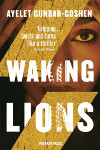
Ayelet Gundar-Goshen: Waking Lions – Very excited about this one, having loved One Night, Markovitch.
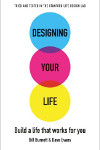
Bill Burnett and Dave Evans: Designing Your Life – I had heard great things about the events these authors have been at and when I received this book I read a chapter at random and it does indeed seem very good. I’ll be reviewing it later this month.
Dan Richards: The Beechwood Airship Interviews – The author decides to build an airship and interviews various famous people (including Dame Judi Dench) about their artistic lives. If it’s anything like Climbing Days it’ll be excellent.
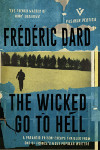
Frédéric Dard: The Wicked Go To Hell – The second Dard to be published by Pushkin Press. The first was pretty great and very original.
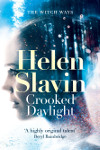

Helen Slavin: Crooked Daylight – The first in a new fantasy series about the daughters of a witch. Scheduled for later this month.
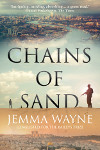
Jemma Wayne: Chains Of Sand – Wayne’s first book was longlisted for the Bailey’s Prize and the Not The Booker Prize, and this has been shortlisted for that second prize. I’m rather excited – the first paragraph, which I read for another round of first line analyses, is excellent in itself.
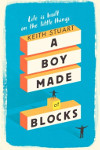
Keith Stuart: A Boy Made Of Blocks – This is a novel inspired by the author’s experience raising a child with autism; the author’s Games Editor for The Guardian and has written about the positive impact Minecraft has had on his son and their communication with him. Very excited to read this.
Linda Stift: The Empress And The Cake – An Austrian psycho-thriller, the latest Peirene and the last in their fairy-tale series. You’re pretty much guaranteed a great read when it’s Peirene.
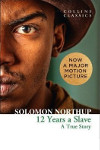
Solomon Northup: Twelve Years A Slave – It’s time, enough said.
Pick one of your recent acquisitions/borrowed books – what made you choose it?
Analyses Of First Lines #2
Posted 7th September 2016
Category: Close Reading Genres: N/A
3 Comments
I was reading Jemma Wayne’s latest, marvelling at the first paragraph. I wanted to study it, to tweet it, though I knew that was impossible. Then I remembered I’d previously written a post regarding first lines and the response had been positive.
I rounded up all books currently in my midst – current reads, books just finished, books I’d been circling in that ‘I want to read this but it scares me’ manner – and got to work. This post’s shorter than the previous, which I’m hoping is more a reflection of prior experience doing rather than a lack of imagination. Please excuse the wonky placement of the book covers.
Let’s start with the book that got me thinking. Here’s the first line of Chains Of Sand:
The house is on top of me.
I love this. It’s original and could mean a number of things. There’s the literal idea – apocalyptic novel? The figurative – is it a heavy weight, a sense of burden, a return to an abusive situation? Or is it the more mundane – the house sits on a hill and I’m in it? I have to break away from convention and look at the next lines:
Under me. Around me. Darkness is everywhere. Like a coffin. I am not scared. I am used to darkness. In Gaza, when blackouts come as often as they do, you have to get used to it.
So it’s all of those meanings – literal, figurative, mundane. The mundane is true but there’s a foreboding heaviness, a real, true, burden, and then there’s the setting. Gaza. Blackout. It’s a powerful beginning. It sometimes seems to me the importance of the first line has changed, that it’s now the first page that’s important; Wayne has stuck to tradition. That first line sucks you in, you want to know what’s going on, and she rewards you for continuing. Even if it’s an instant reward the pay-off is such that you want to keep turning the pages.
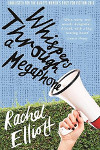
The next book shares the house and hiding idea but it’s very different in every other way. Here’s the opening of Rachel Elliot’s Whispers Through A Megaphone:
Miriam Delaney sits at her kitchen table and watches the radio.
Now this doesn’t seem too interesting. It sets the scene somewhat but isn’t compelling because you can’t tell it’s relevant. Is Miriam listening to war news, is she old, is this the set-up to the plot? As it turns out, the everyday nature is very relevant as is the usage of ‘watches’ rather than ‘listens’, but it’s only over the next few pages that it becomes clear we’re reading about an agoraphobic. What we do get from it is a name, and that Miriam’s surname is included suggests it’s going to be a style Elliot uses. There may be many Delaneys.
Lewis Carroll’s Alice from Alice’s Adventures In Wonderland would find Miriam very dull:
Alice was beginning to get very tired of sitting by her sister on the bank, and of having nothing to do: once or twice she had peeped into the book her sister was reading, but it had no pictures or conversations in it, “and what is the use of a book,” thought Alice, “without pictures or conversations?”

We know how it goes so it’s hard to say how much we’re truly assuming and how much is deeply ingrained within us, but is it fair to say we can assume from this line that this will be a story about a great experience (if not an adventure)? If a book starts with an assertion of boredom then we know said boredom is about to disappear. And this Alice is trying to become interested in her sister’s book but it’s just not happening – this may not be a book about a book lover, not because Alice doesn’t like reading but because it appears there are no fun books in the vicinity. If we look at Alice’s statement we realise the book her sister is reading is likely a bog standard chapter book – no pictures or conversations, though ‘conversations’ is up for debate, admittedly. From this we can assume the sister is older or mature for her age, and Alice is stuck, bored, sitting beside her. We can therefore guess Alice’s relative age and in this context her opinion of chapter books makes sense – who liked the idea of chapter books at a young age? She’s bored, tired of it all, likely she’s about to try and run off or suggest doing something else. Whatever it is, something is about to happen.
We get so much from this one line, even if it does go on. (In my edition it constitutes the entire first page along with a drawing of the white rabbit. This may well be a construction – is every edition’s first page set up like that? And should we be looking into the image at the same time as the first line? If so, then we know it’s going to be a fantasy, bizarre, and that something is going to happen involving a rabbit with a pocket watch.)
Speaking of adventures, here’s Dan Richards’ Climbing Days:
I wake early and set out into the shining day with the sun still low behind Pen yr ole wen – Head of the White Slope – which looks a perfect pyramid from the hostel door, a child’s drawing of a mountain.

Richards does a fair few things in his first line: he sets the time of day, the starting location, the intention of the chapter. He includes a visual description of the mountain – ‘a child’s drawing’ – and some alliteration. There’s a translation and the sense that he doesn’t live nearby. It may be a long sentence but it makes reference to a lot of the suggested contents, history aside. You’re going to get description, nice writing, a personal journey, a good wad of information.
We return to houses for Susanna Kearsley’s Mariana:
I first saw the house in the summer of my fifth birthday.

A book with a house – does this line make you think of Rebecca as it does me? The person starts the same way as Du Maurier’s unnamed heroine, talking about a house in the past tense. We can assume the house will play a big role in the story and it’s likely Kearsley will continue detailing it from here-on in – the house has been in the character’s life since early childhood.
If you’re looking for an epic, you could do worse than Tahmima Anam’s The Bones Of Grace:
I saw you today, Elijah.

This is to do with some sort of regret or longing, it must be. The sighting happened today and that ‘today’ suggests it doesn’t happen much. Consider how different it would have been with quotation marks – a dialogue, a quick sighting of someone known in the present. Can we infer from the line that we’re going to be in for the long haul? A potentially long memory session? The book is written in the form of a letter – is this apparent, too? It’s going to be a slow piece of writing, that’s for sure.
Lastly, here’s Sara Taylor’s The Lauras:
I could hear them arguing, the way they argued nearly every night now, their voices pitched low and rasping in that way that meant they thought they were being too quiet to wake me up.

This arguing has been happening for some time. The parents are at odds, perhaps on the brink of divorce or separation, but they don’t want their child to have to hear it. We could say they perhaps believe strongly that children should not be put in the middle. But this character, who we can guess is quite young, knows a lot about it anyway. We’re thrown right into the story, into the commotion. Taylor’s not waiting around.
We get a sense of the author’s writing style; we can tell she’s descriptive – ‘pitched low and rasping’ – and favours a steady, slow, pace.
There’s something wonderful, involving, about looking at text in this detail. There’s so much to take and it’s a reasonable idea – I often think it’d be nice to do it more often, for extended sections of books, but that would be too much, best left to literature classes. It’s another way to interact with a book, to spend more quality time over it, to keep it in mind longer than the average read-review-done process takes.
Which first lines have wowed you lately?
August 2016 Reading Round-Up
Posted 2nd September 2016
Category: Round-Ups Genres: N/A
6 Comments
This month has been busy. And good. And sunny and hot despite the constant ‘it’s going to be heavy rain and thunder’ from the weather reports – they do like to be stereotypical. I learned that you can order macchiatos at Costa even if they aren’t listed on the menu, and wrote lots of emails. I also watched the Carey Mulligan version of Far From The Madding Crowd, which I have to refer to as such because it was her role in it that got me reading the book after so many years of saying it wasn’t going to happen. Watching the film spawned at least two blog posts – two written, one other still in the idea phase. I also watched Disney’s live-action Cinderella for the second time, which in this case means I spent half the time getting all philosophical about the way we’re changing what we focus on in the story, meaning a couple of rewinds were in order for the person watching it with me. Oops. There may be a post in there, too.
The Books
Non-Fiction
Dan Richards: Climbing Days – Discovering his great-great-aunt was a mountaineer, Richards sets out to learn more and follow in her literal footsteps. Utterly superb.
Fiction

Colette Dartford: Learning To Speak American – A few years after the death of their child, Duncan and Lola’s relationship is still in pieces and Duncan hopes that a house in America might make Lola happier again. Okay.
Lewis Carroll: Alice’s Adventures In Wonderland – Alice falls down a rabbit hole and finds herself in a bizarre world. I don’t think it’s possible to say this is a bad book.
Rachel Elliot: Whispers Through A Megaphone – Miriam hasn’t left the house for three years but she’s finally ready to put a bad experience behind her and conquer the voice of her mother that resides in her head; Ralph has had enough of his home life and decides it’s time to leave. Very good.
Sara Taylor: The Lauras – Ma whisks Alex off for a road trip to track down a series of people who used to be in her life, all the while Alex is struggling through the teenage years and figuring out identity. Amazing.
My favourite this month was Climbing Days, The Lauras very close behind it. I found Alice’s Adventures In Wonderland to be a little different than I expected, though that was in part due to the way I was thinking of the 1950s, forgetting it was written in the Victorian period.
Quotation Report
If you wish for people to not visit, take a leaf from Dan Richards’ relative and wear a hat whilst in the house so you can say you’re off out… though it might not work in our present day so much.
September is likely to be even more busy. I’m not ready to let the summer go, or, rather, I don’t mind that so much as I wish the evenings would remain bright, but I can see myself getting more done without that constant feeling I’m missing out when I’m stuck working indoors.
What was your favourite book this month?
Would We Get Into Slumps If All Books Were Excellent?
Posted 29th August 2016
Category: Chit-Chat Genres: N/A
5 Comments

This photograph was taken by Anna Loverus (no longer on Flickr).
It’s something you don’t think will happen if you’re only reading good books and abandon those you’re not enjoying – you think you won’t fall into a slump.
At least that was my belief when I was going through a good reading period. Not every book was top notch but none were bad; at worst they were good enough.
I paused in my reading when I was at Hay – I took a single book with me, a lengthy one, intending to finish it because I’d made a date for the review. And I was enjoying it, the lowest star likely from me was 4. Because it was hard to find the time when I was being drawn to Twitter and had filled my days with events, it wasn’t really a slump, it was a time issue, but in the exercise of it it was rather like a slump.
I think we can get into slumps if all we’re reading are good books, super-duper books, even. In this case it’s because, ironically, our reading would be lacking variety – we surely need a mix of good and not so to fully appreciate literature and appreciate excellent books. Those of us who write about reading would have less space for critique and gushing can get dull. Even if we didn’t have slumps, we’d need varied books if we were to be good, informed, readers. Without the bad, life would be boring, we’d have fewer conversations, debates. And we need variety to help us improve, to help us recognise what works and what doesn’t. We might scorn bad books, but we need them.
This all said it’s not something we need to worry about happening – it’d be pretty impossible to actually achieve because you never know until you’re into a book whether you’ll truly like it. Even if you abandon a book you’ve still experienced a bit of it.
I’m getting off topic, so: do you get into slumps when you’re in a good book period? What do you think would happen if great was all you knew?
Review Copies, Owned Copies, And Balance
Posted 24th August 2016
Category: Chit-Chat Genres: N/A
13 Comments

Sorting through my posts a while back, organising my editorial calendar, I noticed how many reviews I hadn’t posted lately, and also, that of those I had posted, there were many for books I’d been sent. On average I’d posted fewer than one review a week, very different to my pre-calendar days, though that was in part due to an abundance of other writing topics. Less pleasing to me was the number of reviews of sent books versus those owned or borrowed – about 70% sent.
That percentage was something I could work with. It had just been a case that I’d had a lot of review copies lately and read them one after the other. I did have reviews for owned books but those were scheduled later on due to publishing dates as well as my preference to ‘first come first serve’ my reviews. I started wondering if this was okay, if having many sent book reviews in a month was okay. It kind of had to be at that point but I made a mental note not to do it again.
Do you think/feel there’s a balance that should be struck between review copies and owned books? This is a question requiring personal answers, particularly because bloggers all blog in their own ways. Some only review books publishers send them, others only older books, some library books, and that’s their ‘thing’, but what’s your personal preference as a blog reader? For me in terms of my blog it’s 50/50 but timing does play a part.
Your thoughts?


