




Next Stop Procrastination #9
Posted 19th August 2016
Category: Next Stop Procrastination Genres: N/A
4 Comments

Today we’ve someone else’s article about Daphne Du Maurier’s jealousy because I’m definitely writing too much on that topic – and this one I’ve found is very interesting; we’ve a brief piece about Irving Bacheller’s work which I found whilst researching my discovery post; and some great stuff from The Toast which Mallory Ortberg has sadly stopped updating but is leaving online for further perusal. I’m liking this current format, fewer posts, more links in them. What do you think?
Ever wondered about the woman Daphne Du Maurier was jealous of?
About three of the houses Daphne Du Maurier used as inspiration.
A photographer writes about finding a rare edition of Irving Bacheller’s most famous book.
Google search tricks you may not know about.
Questions and answers with Ursula Le Guin.
Yay to a female scientist on Scottish banknotes, says York University, let’s have more.
Author Nicola Cornick discusses the historical Bluestockings literary group.
Lesser known old coming-of-age novels.
A hand-painted feature film about Van Gogh’s paintings.
In defence of literary conflict.
What makes a book a classic? asks children’s’ publisher Scholastic.
Out with the newer and in with the older: An abandoned Walmart is (or was at the time – I’ve included this for interest rather than breaking news) America’s biggest library.
On the rise of literary tourism.
Baffled by all the lights and darks? Here’s a guide to coffee roasts.
When a girl’s fiancé dumped her a month before the wedding she couldn’t cancel the reception so she threw a party for homeless women and children instead.
I wrote the accent: a black writer on urban romance.
A literary pilgrimage to the Jane Austen Centre.
We often look at our shelves and feel bad about all the unread books but here’s a thought: unread books are more valuable to our lives than read ones. There’s this article, too.
Any links you’d like to share with us?
What Affect Does Hitchcock’s Changing Of The Ending Of Rebecca Have On The Story?
Posted 15th August 2016
Category: Further Thoughts Genres: N/A
2 Comments
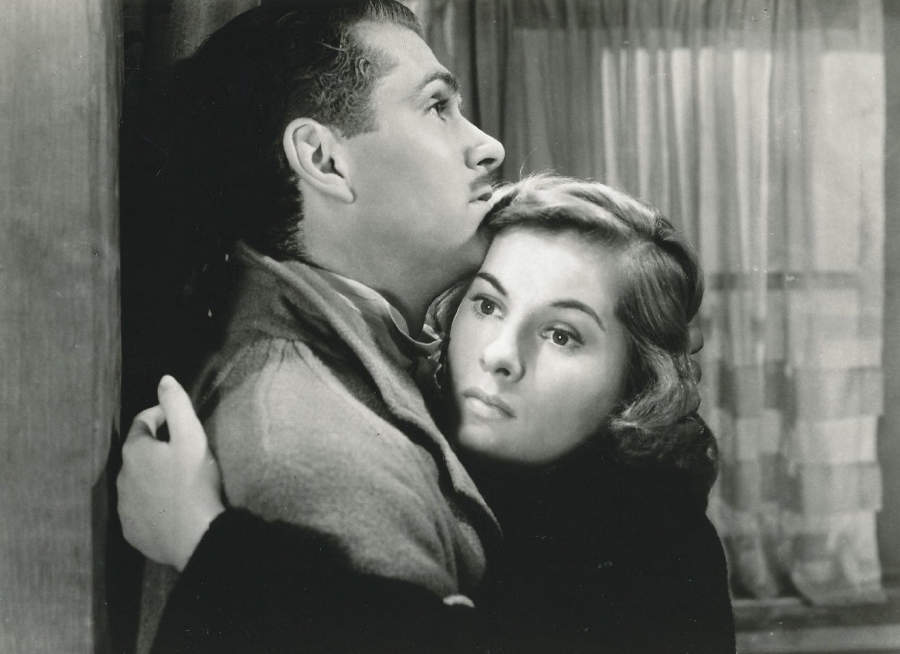
Screen shot from Rebecca, copyright © 1940 Selznick International Pictures.
You can rest assured this will be the last post on this book here for a long time, if not forever.
In the film adaptation of Daphne Du Maurier’s book, Max does not kill Rebecca. He talks to the heroine in the boat house but doesn’t say he did it. This difference to the book was made because at the time films could not show a criminal getting away with the crime.
You’d be forgiven for not noticing the difference, I think – this sounds weird when you consider I’m all for adaptation fidelity – but what Hitchcock does is make his film as near as possible to the original as he could.
I want to look at the affect this change has on the story. Crucially, in not having Max kill Rebecca, the film does not make him in any sense a bad person, it preserves his good name entirely. Whilst it could be said that Max, in the book, in killing Rebecca is no better than her, is worse than her, the same can’t be said for Lawrence Olivier’s Max. Of course we don’t necessarily see ‘book’ Max as bad – Du Maurier presents a man deeply upset, ashamed, and if we view Rebecca as horrible a person as Du Maurier wants us to then we can say Max killed Rebecca without really thinking it through, that he was not fully competent at the time due to what Rebecca had done. And the element of jealousy makes Max not seem so bad a person. That jealousy is very pervasive, Du Maurier good at manipulation.
To get rid of the kill as Hitchcock does is to preserve Max’s name and as only the heroine, in the book, knew of the killing, we can say it is to preserve his name for us, the readers and watchers.
As far as the film goes with its difference, Max comes across as better than Rebecca. He’s clean, done nothing wrong. He’s a proper good guy, more of a hero than book Max could ever be.
What the change does, though, away from this, is that it affects the sense of jealousy and the sense of revenge in the story. Yes, it could be considered a good thing because of what I’ve said above, but in toning it down it diffuses the pressure behind the idea that Du Maurier wanted something done to Rebecca to make up for the problems. Given what we know of the real life background – Du Maurier’s jealousy of her husband’s first fiancée – we can see a want for something to happen, for Du Maurier to want to do something to change things and the way she feels. Max killing Rebecca is over the top but, given artistic license, it works. In a way, when considering the book, and the film’s change, it changes our thoughts of Du Maurier, too.
Considering Du Maurier’s worry that her book had caused Jan Ricardo’s death we could assume the film change was welcomed by her.
In a way, the change seems a small thing, especially as it doesn’t change the general outcome, but when you think it over, it does do something to the way we perceive Max and perhaps the way we view the book’s themes, too.
Overwhelmed By Possibility And That Literary ‘Buzz’
Posted 12th August 2016
Category: Chit-Chat Genres: N/A
4 Comments
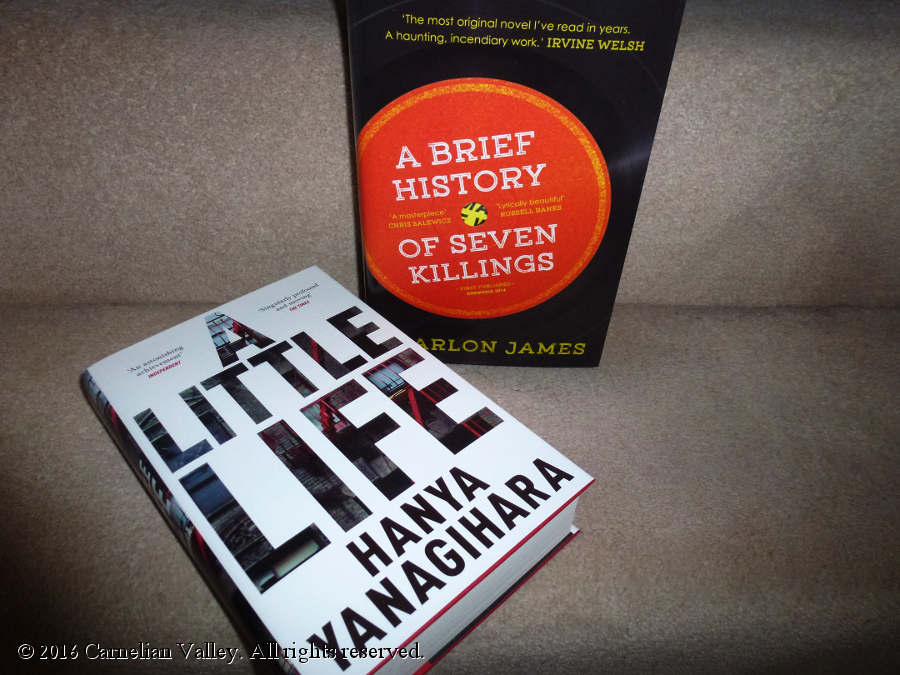
Do you ever get so excited by all the possibilities of reading – the numbers, the different countries and translations, the stories and the eras – that you don’t get any reading done at all? I do. It’s happened as I wrote this.
It’s in a similar vein but not the same as being overwhelmed by choice. It’s more about literary pleasure, that buzz you get from reading, than any pile. In this case, I was about to read Bird In A Cage. Browsing through the first pages, I noted it was published in 1961 – another older book! I noted it was a French book – translation!
And it wasn’t that I couldn’t start the book – I could – but some sort of procrastination set upon me. I felt daunted.
This… thing mostly happens when I’ve been leading up to reading the book in question, when I’ve been working my way through the pile and have had the title move towards me until it’s next. In this particular case it was a short book, so I recognise also the possibility I was daunted because I’d only just finished reading and reviewing a book that needed a lot of brain power and with this next, short, book, that time would arrive again swiftly.
I sometimes think that the feeling of excitement and possibility that comes before you start a book, and the accompanying feeling of fulfilment at another book finished that you can now talk about – that in between time books – is much better than the sort of limbo you’re in when in the midst of reading a book. I love the process of reading immensely but there’s a sort of pausing of time when you’re reading, time that starts up again when you’ve finished. Talking about books is a big thing to me, as I know it is to you, and only so much of that can happen during the reading – anything that can be said is always going to be subject to change.
Do you ever feel overwhelmed?
Starting With The ‘Right’ Book
Posted 5th August 2016
Category: Chit-Chat Genres: N/A
10 Comments

Do you ever have occasions where there’s a book you feel you should be starting with, when it comes to your first book of a particular author, and if you get another book of theirs instead you just can’t get past that feeling?
There have been times when I’ve had a deep-rooted feeling I should be starting with a certain book but then, for whatever reason (the bookshop didn’t have it and I was impatient, for example), I get another… and then I can’t start it because it’s not the ‘right’ book. Even if other readers say it’s an excellent choice. When or if I push past the feeling, I often end up disliking it. More and more I find myself just putting the second choice to the side until I get the one I really wanted; experience has taught me it’s generally best to wait.
I think personal intuition in this regard is something to trust. If, for whatever reason, a particular title has grabbed you, as long as the book isn’t difficult to get you should follow it. I often find it’s easier to finish a book I’ve read for this reason even if I end up not liking it, than it is to finish another I read in lieu of it.
Two situations got me thinking about this – the first you may well know: I questioned with which book I should begin my journey into Haruki Murakami’s work, despite very much feeling I ought to opt for Norwegian Wood. I don’t know why it’s that one – it turns out it’s not the cover (the cover’s been changed and I’m still interested). Perhaps it’s the word ‘wood’, that makes me think of nature and the countryside and beauty? All I know is I looked at Kafka On The Shore and though I could tell it was excellent, it just wasn’t happening. (This is apart from my thought that I should read Kafka himself, first, so I had any relevant context behind me.)
I picked Norwegian Wood… though I haven’t read it yet. I’m a bit daunted. It’ll happen soon.
The second situation is recent – Ben Okri’s reading at Hay was fantastic. I’d like to read his work but he’s written a lot more than I’d have guessed. In this case I asked for recommendations but that was before I looked for synopses. When I looked, it was In Arcadia all the way and when I saw it wasn’t available at that time I decided to wait. I wouldn’t be drawn to his Man Booker winner.
This is all in the same vein as that question of timing and being in the mood for certain books. I tend to say that if you can match timing and moods, awesome, but you can’t live your reading life like that constantly. This, though, this ‘correct’, personally-relevant introduction to an author? I think it’s important to get right.
When was the last time you ‘knew’ you should be starting with a certain book but read another instead?
July 2016 Reading Round-Up
Posted 1st August 2016
Category: Round-Ups Genres: N/A
4 Comments
I read a good amount this month. As you’ll know from last week’s post, and perhaps also Twitter, I was quite busy the last several days of the month so I haven’t yet finished Climbing Days but whenever I have had time I’ve been reading many pages, thanks mostly to the engrossing nature of it.
All books are works of fiction.
The Books
Ashley Stokes (ed.): The End – A collection of short stories inspired by artworks that recreate the old film ‘the end’ frames. Some great fiction here.

Jonathan Ames: You Were Never Really Here – An ex-security agent continues his work for other people and takes on the task of finding the kidnapped daughter of a politician. A novelette; fast-paced, no filler content, couple of hours of reading at most, but the story doesn’t really end.

Louisa Young: The Heroes’ Welcome – Two men who suffered injuries in the war (one mental one physical) return home to their wife and girlfriend who have been affected by proxy. Could’ve been better.
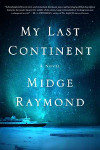
Midge Raymond: My Last Continent – A cruise ship is heading a little too much towards Antarctica and Deb knows that lover Keller may be on board. A good book about a titanic-like shipwreck with lots of information about Antarctica and what we need to do to save it.

Olumide Popoola and Annie Holmes: breach – A collection of short stories inspired by the current refugee camp in Calais. Timely.

Rick Yancey: The 5th Wave – Humans are being wiped out by aliens that are yet to land – or have they already? Strictly okay – I chose to read this because I loved Yancey’s short story in Rags & Bones but it fell very short of expectations.
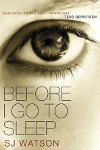
S J Watson: Before I Go To Sleep – A woman wakes up one morning confused by the stranger in bed beside her, the age of her reflection in the mirror, and an acute sense of disorientation. So good.
My favourite would have to be Before I Go To Sleep; fast-paced until near the end wherein the only reason it’s slow is because you’ve exhausted the possibilities and thus are at that time simply waiting to find out which one it is. I’m not sure I’ll watch the film – I read they changed a lot, is that true? – but I’ll be reading S J Watson’s Second Life at some point. breach was another stand out, though in fact the only book I didn’t enjoy so much was The 5th Wave; I’d hoped it’d be so much more than it was and thought it was a standalone. I won’t be continuing the series in a hurry.
Quotation Report
None this time.
Last month of summer; sad, but I’m hoping to see more of my nephew and enjoy the last sunny evenings.
How has your summer been so far, or, if you’re in the southern hemisphere, how is winter treating you?


