

Kate Atkinson – Life After Life
Posted 19th June 2013
Category: Reviews Genres: 2010s, Angst, Domestic, Fantasy, Historical, Political, Social
6 Comments

Over and over again.
Publisher: Doubleday (Random House)
Pages: 465
Type: Fiction
Age: Adult
ISBN: 978-0-385-61867-0
First Published: 14th March 2013
Date Reviewed: 30th May 2013
Rating: 4/5
Dying just after her birth, Ursula gets the chance to live again, and when she dies a little later in this second life, she is reincarnated a third time. Living many variations, covering many possibilities, Ursula slowly learns from the mistakes previously made.
Life After Life is a book that goes round in literal circles and has no end. Unlike similar though more specific stories – that of the film Groundhog Day and the Young Adult novel Before I Fall – Life After Life makes little note of the actual process, leading readers to work out the majority for themselves. This is both a positive and negative.
The only way, for most of the book, that the reader can know for certain why what happens happens, is through the book’s blurb. The book is structured so that Ursula constantly goes back in time, leaving out the sections she got ‘right’. It therefore does become difficult, on occasion, to know which version of events you’re reading at a particular time when there are multiple possibilities.
Atkinson deals with the deaths and rebirths in a swift manner, sometimes so swift the occasion doesn’t even get a full sentence. It is darkness and then birth, with very little wondering on what is happening and exactly why. If one considers other books that deal with a similar idea then one can assume Ursula has to get her life perfect in order to move on. Ursula makes a great many of the same mistakes each time, which adds to the confusion, and due to the way that the supposed goal is not reached, it does become difficult not to wonder whether Atkinson had any big plan for Ursula other than as a tool to present different periods and issues.
It may be, of course, that the structure of the book suggests that Ursula may never get it ‘right’ and that there are many more aspects to her life than the reader is privy to.
The book is understandably repetitious, and perhaps most interesting during times when Ursula experiences her so-thought deja vu. There is a lot of repetition about Ursula’s role as a warden during the blitz – it feels particularly repetitious but given that that was life, it is a fair shock about the reality of war, the gruesome details rarely displayed so much in other works.
This brings us on to the grittiness of the book. As well as the obvious idea, present from the start, that Atkinson wants to explore what might have happened had Hitler not existed or had been killed early on, there is also a great deal of feminism and sexism to be studied. There is one life in particular where Atkinson exposes the reader’s possible bias – you’ve been presented with a certain view of the family, got to know them, and then Atkinson provides a very different tale. This tale will likely colour the rest of your reading, quite rightly, and it packs quite a punch.
Because Atkinson highlights the way sexual education, when kept hidden from girls (her focus of course being early 20th century) can have dire effects. She shows how even after such effects girls still were not informed, and she displays the awful hatred of a parent who hasn’t bothered to teach her child anything but will curse them when a terrible event happens. This is perhaps far worse, in the context of the book, than the blitz. Atkinson successfully makes you love, makes you hate, and then she provides that necessary triumph of adversary in the next life that is so sorely needed. Her handling of every issue in the book is masterful, and due to Ursula’s constant reincarnation it allows for a particular modernity to grace the book. Being given many chances enables Ursula to be, if not a feminist, then pretty near one, and similarly she becomes a supporter or dissenter of other ideas, too. Having the hindsight everyone craves makes her, obviously, knowledgeable.
So then to the characters. Ursula is of course difficult to write about as her development is very different to your average person. She is likeable most of the time, and the rest of the time hard to understand. Given her vast experience, and the way it seems she needs to live correctly, it would be hard for her to be bad, though she does often make the same bad choices again and again. A lot of the other characters change depending on the life Ursula is currently living. There is a general focus on Teddy and Ursula’s other siblings, as well as many different versions of Izzie, who is another focus for issues.
In a book like this it’s difficult to find plot holes besides the end of the book, but given the way Atkinson rarely refers to the other lives a few things do feel amiss, for example at one time Ursula has a baby – assuming Ursula has a goal to work towards and there is thus some kind of Heaven or Nirvana in the future, where would the baby be every other time? All the other major and secondary characters are accounted for. And what exactly is the reasoning behind Ursula’s reincarnation? The blurb may suggest it, but considering that one ought to be able to read a book without the blurb, the book feels unfinished. Of course, again, that may be the point.
Life After Life is good, but it is repetitious in a way it needn’t have been, there is a great deal left unsaid, and the suggestion of intrigue at the beginning is nowhere to be found. Not explaining everything may work aesthetically, but it can leave you with a lot to think about and no way of being able to suppose correctly. At the same time the details are compelling and given the sheer number of lives, you do not end the book feeling dismayed that you’ll no longer know about the characters, because you’ve read so much about them already and truly do know them inside out, having had the opportunity to witness every part of their natures.
Ursula likely won’t mind if you like it or not. She’s already on to the next life.
Related Books


Jeannie Lin – The Sword Dancer
Posted 31st May 2013
Category: Reviews Genres: 2010s, Angst, Historical, Political, Romance, Social
4 Comments
Capturing a thief, hunting down memories.
Publisher: Harlequin
Pages: 275
Type: Fiction
Age: Adult
ISBN: 978-0-373-29742-9
First Published: 21st May 2013
Date Reviewed: 30th April 2013
Rating: 4/5
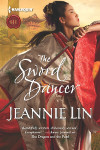
Finally in a position to discover what happened to her family, Li Feng makes use of performance troops to develop her skills further. In the process she ends up with a group of thieves and therefore finds herself followed and caught by thief-catcher Han. Li Feng escapes and Han catches her again, but this won’t be a simple game of cat and mouse when love is involved.
The Sword Dancer is in part a wuxia novel; the book rests firmly in the suspense/action subcategory, giving the book an extra plot thread and meaning that the heroine is pretty strong both physically and mentally.
Li Feng had already been through a myriad of experiences before this particular crime and Han’s interest. Her background, the lost family, has led to a lot of her desire to learn how to protect herself as well as to be cautious and never exploited. This can be related to her non-belief in her relationship with Han, a more descriptive reason for how they work as a couple. Li Feng gives in against her nature only when it’s appropriate, never changing her mind simply because she likes Han. Han has his background too, but there is a little more in the book about Li Feng’s and the difference makes for a fine balance, allowing Lin to look into social and domestic issues without any distractions. The issues never take over the plot, nor the plot the issues. Everything fits together well. As for Han? He has had an easier life, certainly, but his feelings of inferiority have marked him as a person and his desire to do well could be said to form some of the basis for the book.
And so the only way Li Feng’s strength is hindered is by her constant belief that a relationship with Han is impossible. Whilst it makes sense – a law-abider and criminal being together would be difficult – as it’s inevitable the book is going to end happily, it does feel redundant, even if it’s understandable. Nevertheless the romantic scenes are well written, the crimes just as much a focus, and Lin has plotted her book to perfection. In addition, it cannot be said that Li Feng’s reluctance isn’t a good contrast to her strength, or that the reluctance doesn’t fit well with her trials as a person without a family.
Instead of having lots of dialogue or simply detailing a scene, Lin breaks up conversations with information about a character’s background, politics, or a character’s thoughts, rather than having the characters reveal it themselves. What you learn about the characters tends to come from the pen rather than their voices; it’s the sort of writing that might divide opinion. However Lin has spent a lot of the time developing everything – the story, the romance, the characters – and the elements are fascinating. Even plot points that seem convenient are not a negative here because of the way Lin deals with her setting. It is more a case that you feel the book would have not suffered if descriptions of backgrounds had been removed.
The book is a winner when it comes to accessibility. Chinese words are included without the constant translations (those that can make usage superfluous) that can be found in other books, and Lin has chosen a theme and made it her own. The scale of the crimes are perfect for the book – not too big, not too small, and detailed well. There is enough happiness and well-intentioned corruption to keep you reading.
If you’re looking for history, chemistry, and adventure, you’ll find it here by the bucketful, though some descriptions may prove to be less successful.
I received this book for review from the author.
Related Books
None yet
Sadie Jones – The Uninvited Guests
Posted 27th May 2013
Category: Reviews Genres: 2010s, Comedy, Domestic, Historical, Paranormal, Social
7 Comments

Sense And Sensibility And Sea Monsters and… you know the deal.
Publisher: Vintage (Random House)
Pages: 354
Type: Fiction
Age: Adult
ISBN: 978-0-099-56369-3
First Published: 1st January 2012
Date Reviewed: 21st April 2013
Rating: 5/5
It’s Emerald’s birthday, and as her step-father leaves to go to a meeting to discuss the family’s ability to keep their house, everyone is getting ready for the dinner party. Charlotte is in a whirl and not sure about her daughter’s friends, Clovis is being his usual self, and Smudge is unwell and thinking about the charcoal drawings on her wall. But an unexpected call from the railway changes everything, as the family find themselves having to make allowances for a crowd of people left waiting after a train accident. It’s a weird group of people, and it gets stranger still when an old acquaintance of Charlotte’s arrives as another passenger of the train.
The Uninvited Guests is a peculiar book that turns the notion of literary fiction on its head. Not at all what you’d expect from Jones, the book is somewhat of a parody, yet retains its literary feel throughout.
Jones’s writing is as good as it has been since her début. History is still the period of the day, The Uninvited Guests appearing to take place around the early twentieth century, but there is also a great amount of humour in the book. Either Jones has taken a chance or she wishes to show that literary fiction need not be so separate from genre fiction.
The action takes place over the course of 24 hours, with the majority of the book contained to the evening. A lot happens; it can be hard to remember it is still the same day. What fills the book and keeps it from ever being dull is the number of characters and their development. Apart from the ‘guests’, who are generally observed as a whole group rather than given time individually, the characters are all related in some way and each is distinctive – as detailed to some degree by the summary above. They all have their own stories and goals within the main one assigned to them as a unit, and this means that Jones switches back and forth between them when they’re separated. Jones’s usage of solo plots works here because of the nature of the characters, for example Charlotte is quite the snob and a bit lazy so she stays in her room, and Smudge is the oft-forgotten child and therefore spends a lot of time alone.
Owing to the period and the idea of the sudden burden of people, an aspect of the book lies in the family’s principles. The social status of the passengers compared to the family, the aims and aspirations of Charlotte, the wishes for a good birthday, and the general feeling of unwelcome arrivals, forms the basis of the book and is a big part of why it takes so long for the characters to work out what the reader knew all along (because in this book the reader is purposefully ahead of the game). It is a big part of the hilarity, too, and, somewhat uncomfortably, also the way Jones demonstrates neglect – for example the family literally forget little Smudge, which is what leads to her mishaps.
The dialogue is understandably steeped in its time and the writing is as good as Jones’s previous novels. The humour is both pure comedy and a sort of silliness. Sometimes Jones goes too far – as the book reaches its conclusion it could be said that the humour becomes a sort of private joke, rather over the top and unnecessary – and so it may shock readers who were thinking it might be more serious (despite the quotations and descriptions the book’s cover does not aptly indicate the nature of the contents). Thankfully the silliness resolves itself in the end – as much as possible given the plot.
Perhaps the best way to describe the book is to say that the characters would really like this to be character-driven, but Jones has decided that it is plot-driven. Indeed there is a constant push by the characters to forget the crowd of passengers and enjoy their evening.
There are lessons for the characters, and there is such development of them as to make you feel sorry to close the book, but really this story has no specific purpose. The Uninvited Guests is a novel that exists just because – it’s a laugh a minute but of no lasting value as literature. However that seems to be the point. As long as you’re okay with the idea of literary fiction being gatecrashed by paranormal dystopian stories – which is itself another possibility for the feelings of these ‘poor’ literary characters – and you’re willing to switch the angst-ridden beauty of Jones for frivolity, then you will likely love this book.
Jones’s latest – jolly good fun old chap.
Related Books
Maryanne O’Hara – Cascade
Posted 22nd May 2013
Category: Reviews Genres: 2010s, Domestic, Historical, Political, Romance, Social
10 Comments
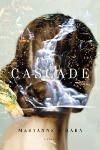
When everything happens at once.
Publisher: Penguin
Pages: 353
Type: Fiction
Age: Adult
ISBN: 978-0-1431-2351-4
First Published: 16th August 2012
Date Reviewed: 21st May 2013
Rating: 4.5/5
In the 1930s Dez married Asa as life became difficult. When her father dies he leaves the family’s beloved playhouse to Asa, with the intent that its care be passed on to any children of the union. But the town, Cascade, is under threat by the state who need to create a reservoir for the health of residents of Boston, and Dez is unhappy with Asa as it is. She dreams of a career in art that will never happen in Cascade, and as Jacob continues to be a scant part of her life, she wonders about the possibilities for more.
Cascade is a complex novel; on the surface it is straight-forward, the story of an unsatisfied woman and the imminent demise of Cascade, but as it continues it becomes obvious that there is a lot more to it. Indeed it takes a long time to truly pick up the pace, appearing for a good while to be a somewhat laid-back story about an event that is surely horrific for those involved; the persistent reader will be well rewarded for continuing with it.
Because as much as the word ‘cascade’ refers to the town – its name and the literal cascades of water situated nearby – this book is also about the cascade of feelings, isolation, and hopelessness that happens when everything that borders on white lies and secrecy, explode at once. In Dez you have a character who is difficult to like in her entirety. There is an overwhelming sense of her being used by others, and of being unable to stretch her wings, yet there is also some true selfishness there at times. Most of what Dez chooses to do, the mistakes she makes, even the good choices, have understandable reasoning behind them, but a few do not.
This does not mean that Dez is not a good character, however. She is indecisive throughout the book, but as a character she is wonderful. O’Hara rarely takes the easy route – just as it seems you can predict what will happen, the events work in Dez’s favour (or not) but as much as O’Hara wants to help Dez, she doesn’t let her off every time. O’Hara’s narrative for Dez means that you get that real sense of worry as O’Hara makes her character go through the misfortunes of life, and Dez’s wishes are very modern, meaning that the reader can confidently root for her without worrying about feeling disconnected by the time period. In Dez, O’Hara has created reality. You could create a book group discussion out of Dez’s life, question whether O’Hara even liked the character.
This leads us to the book itself. Moving on from the slow start and quickening pace later on, Cascade is one of those magical works that pulls you in so much you don’t even realise you are reading. There is no fairytale, no wonderment, and yet the book itself is a wonder. The secondary characters are written just as truly as Dez. You get the harsh reality of Asa’s pain contrasted with what seems at times a violent nature, but throughout your time with him its obvious O’Hara is telling you to look deeper, to really see Asa, and not assign stereotypes or even the fact of his fictional nature on how you view him. O’Hara wants to make her people exist, and whilst this may be true of all authors, it is particularly obvious in Cascade.
Being that the book takes place during a time when personal freedom was becoming important, but that it is entrenched in tradition and a small town, there are a few moral questions up for debate. As discussed above, O’Hara doesn’t make it easy for her characters, and therefore no matter which side of the debate, or just the view, you might fall on, she makes it easy to feel comfortable with what is being discussed, opening conversation and successfully managing to not leave anyone out despite the fact that sooner or later her characters must of course make decisions.
Truly this is a book that is as much, if not more, about a person rather than a town. If you approach the book hoping that it will be full of protests and violence you will be disappointed. O’Hara’s aim with the town is to look at the process rather than the overall affect. Affect is reserved for the characters.
There is a lot about art in this book – Dez’s passion, the art world, descriptions of Dez’s paintings and the creation of them. Due to O’Hara’s fictionalisation and overall decisions regarding which story elements get page time, the art shouldn’t be a problem for anyone who isn’t as passionate as Dez. What may cause a problem, however, is the extent to which Anna Karenina is detailed. If you haven’t read the classic and don’t want it spoiled, you can easily skip Dez’s visit to the cinema without missing anything important to O’Hara’s book itself. Tolstoy’s book is used as a reference later on, but simply by knowing that Dez was interested in the film should be enough for you to understand these later references.
Cascade is a myriad of ideas and details, focused on one woman, but encompassing much more, just in smaller doses. It will delight anyone looking for a heroine who may not be strong but is successful, and will leave you thinking on its topics long after you’ve finished.
I received this book for review from Historical Virtual Fiction Author Tours.
Related Books
None yet
Beth Hoffman – Saving CeeCee Honeycutt
Posted 24th April 2013
Category: Reviews Genres: 2010s, Angst, Domestic, Historical, Political, Social, Spiritual
9 Comments
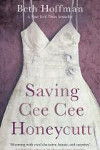
A little goes a long way.
Publisher: Abacus (Little, Brown)
Pages: 311
Type: Fiction
Age: Adult
ISBN: 978-1-408-70371-7
First Published: 12th January 2010
Date Reviewed: 1st April 2013
Rating: 5/5
CeeCee Honeycutt is the only person who cares about her mentally ill mother; her father is always away, and CeeCee has no friends except the kind elderly lady next-door. When Mrs. Honeycutt is killed in an accident, CeeCee’s neglectful father hands her over to her great aunt. Will it be worse in Savannah, the home her mother longed to return to, or will CeeCee find the regular life she’s always wanted?
Saving CeeCee Honeycutt is the gripping début by Hoffman that combines a young person’s thoughts with an adult readership to interesting and, let it be said, successful, effect. Drawing on history with all the discrimination it involved, Hoffman introduces the reader to the world of a girl on the cusp of her teenage years, who has struggled to find her place in a town where she is guilty by proxy.
Important to discuss first is the text and structure. Hoffman has produced a very special work. As previously stated, Saving CeeCee Honeycutt is gripping, yet on the surface that is something that shouldn’t be so. Hoffman’s book is slow, and there is not much action. The climaxes are minor and from the start it is obvious that there will be no great reveal. And yet yes, it is absolutely gripping. What Hoffman has achieved is that feat so beloved of many readers of literary fiction – whilst little happens in reality, this slowness allows for a great amount of detail. Hoffman’s 12 year old CeeCee is believable and partly for that reason, that the author allocated so much time to character development. The pages turn themselves and even in times of conflict, a certain calm pervades the text that suits the pace of life portrayed here. You can enjoy the proceedings without that nagging sense of wanting to get to the end of the book to discover the conclusion.
Talking of CeeCee, the prospective reader might wonder whether the thoughts and life of a 12 year old in 1960s America would be interesting enough to the mature target audience. Inevitably opinions will be divided, but Hoffman has ensured that her character is well-read, thoughtful, and mature beyond her years in many ways. CeeCee makes bad decisions of the kind any 12 year old might when they do not understand repercussions, but these choices and the way Hoffman otherwise presents the character mean that instead of being off-putting, the reader can empathise with her, will her to see the poor decision for what it is.
As said, CeeCee is far from perfect. Indeed there is a section where the previously grounded child, having grown up witnessing hatred and loneliness, takes it upon herself to inflict pain on another. It could be said that this was a bad move on Hoffman’s part and out of character for CeeCee, and yet it’s not at all easy to just accept that thought and move on. Besides the obvious element of understandable immaturity, Hoffman demonstrates how even the kindest person can turn down the wrong path sometimes, and, most importantly, she shows how CeeCee’s overwhelming love and gratitude for someone can translate as an urge to get back at the one who hurt her friend.
The history in this book is mostly subtle, though there are times when it is explored in detail. Hoffman doesn’t shy away from using the damning words and descriptions employed in the 1960s, using her characters to remind her readers of the prejudice towards Africans and, of course, the mockery of the mentally ill. Hoffman shows how despite emancipation, Africans were viewed with scorn, used as scapegoats in a world that believed an account based on whether or not you were of the right colour.
This history and the usage of it pervades the dialogues – in a way Oletta, the cook, is stereotypical. However there is this undercurrent of fact, Hoffman clearly wants to use all the appropriate and available aspects to really teach her readers what life was like, to make them feel as though the story is real and they are a part of it – because whilst it’s fiction there are many truths woven into it. What is of course wonderful, if predictable, is how the major white characters themselves treat African Americans, and how they are a part of the drive towards modernity. Their natures are explanations, and allow the author to portray the many different attitudes.
To be sure, in order to enjoy this book one needs to be happy with the idea of a young narrator, no matter how mature that narrator is. CeeCee can be a little too precious, and is headstrong in times of trouble – but then how many children are truly angels? Saving CeeCee Honeycutt is low on plot but bursting with character development and detail. And given that the plot is secondary, that is a fine thing indeed. If the idea of lazy but satisfying sunny days in a historical Savannah, mixed with some hard-hitting facts, is at all intriguing to you, then you are sure to love this book.
Related Books