





Emily Brontë – Wuthering Heights
Posted 8th December 2010
Category: Reviews Genres: 1840s, Angst, Domestic
2 Comments

Has fiction ever seen such a wretched anti-hero?
Publisher: (Numerous, but I’d wager Vintage would be a good one)
Pages: N/A
Type: Fiction
Age: Adult
ISBN: N/A
First Published: 1847
Date Reviewed: 3rd December 2010
Rating: 4/5
The general idea is that Wuthering Heights is a fantastic romance, but dig a little deeper and you’ll find that it’s a terrible story of hate and obsession. This was my discovery upon opting to read Emily’s work, having remembered how much the Laurence Oliver movie adaptation focused on romance. To say I had no clue would be an understatement.
The Earnshaws lived a good life until the father brought Heathcliff home. Cathy Earnshaw and Heathcliff become incredibly close, but Cathy’s violent nature and Heathcliff’s hate of her brother provoke revenge when Mr Earnshaw dies. Power will shift back and forth and when Cathy chooses wealth over love Heathcliff’s nature degrades itself further. It won’t just be the Earnshaws who suffer his bitterness.
The story is in a narration of two layers, you have the reason for the story being narrated, Mr Lockwood who recently rented the old Linton property (Linton being the wealthy family Cathy married into), and Ellen, or Nelly, his housekeeper who is the one to tell the tale. In a way this set-up is odd, as Lockwood has nothing to do with the family, and is a rather rude person himself – at times it seems he wouldn’t make such a bad companion for Heathcliff – but it does allow for the story to move beyond the lives of the couple.
This is where defining the novel becomes difficult. Emily’s writing is good and generally easy to read. The technical side is alluring and for this reason it’s a brilliant piece of work. But then comes the story, which is painful to the extent of making you wonder what was going on in the author’s head. How do you rate a novel containing such extremes? In giving the book the rating I have, I’ve examined more factors than I usually do on other occasions because lauding the book as literary critics do is impossible, but shunning it is also equally impossible. The only thing I can really say is that this is a classic for the writing’s sake but there is nothing else to give it the clout.
I suppose I should list “romance” as one of the genres of this book, but I’m afraid I don’t see any romance in it. Not even violent love relationships. I don’t believe Heathcliff has a romantic bone in his body and any other relationships aren’t explored enough to warrant it.
To refer to the “generally” good writing of Emily, it becomes most intolerable when Joseph is speaking. Yes it can be helpful to have the dialogue of a person with an accent written in that accent, but when the person becomes incoherent due to the inability of letters to successfully dictate their words it’s surely more a hindrance. Perhaps more so than Heathcliff, the bane of this book is the amount of space given to Joseph, whole paragraphs in what is essentially a severe case of broken English. The structure of it means that after a few words you might be starting to gain an understanding of how Joseph speaks, but then you’re thrown by words appearing to be in an entirely different accent. For the most part I guessed Joseph was from Yorkshire, but sometimes he sounded like a Londoner.
Cathy and Heathcliff are made for each other, even if Heathcliff is truly violent and Cathy’s violence more childish. There are no words to describe just how awful Heathcliff is, and, as I wrote in my diary, even if he isn’t literally a devil, he is surely more evil than Lord Voldermort of Harry Potter, than Sauron of The Lord Of The Rings, and so on. The reason I say this is because Emily has detailed him so meticulously and we are given no motives for why he is like he is, Cathy’s rejection aside. Suffice to say all the other characters, with perhaps the exception of Joseph and Linton (don’t get me started on him), are good to read about. Although Emily does attempt to make you feel for Heathcliff, when Hindley is treating him badly, you never can because, to use a childish phrase, Heathcliff started it. As a reader you hope the other characters would have a bit more courage and emotional strength, the constant thought is why don’t they just leave? The only answer I can come to is that their helplessness stems from their culture and time period.
There are some particularly horrid scenes in which Emily pushes the emotional boundaries a little too far, but one thing that can be said is that it’s difficult to get used to the violence no matter how many of Heathcliff’s “episodes” you witness.
“Tell your master … I’ve sometimes relented, from pure lack of invention, in my experiments on what she could endure, and still creep shamefully cringing back! But tell him also, to set his fraternal and magisterial heart at ease, that I keep strictly within the limits of the law…”
The location of the story is apt, a dark and often dreary moor that Emily uses liberally in place of standard pathetic fallacy. The setting does of course make reading the story more difficult as the characters not only spend most of their time at home – and what time they do spend away you only hear reports of – but they spend it in the same few rooms.
When I approached Wuthering Heights, I brought, along with all my incorrect assumptions, the hope that Emily would bring me a joy similar to that of her sister Charlotte. But as much as I loved Emily’s writing style I’m not sure I’ll want to read Wuthering Heights again because of Heathcliff. An anti-hero with no legitimate reasons for acting so poorly is not someone I want to read about twice.
Wuthering Heights is a hideous creation created spectacularly. It is definitely worth the read to experience Emily’s writing but the story pales in comparison to Jane Eyre. Never hold any hope for the story turning positive, because baring a small redemption it’s content is nothing but malicious.
Related Books



Kelly Hunter – Exposed: Misbehaving With The Magnate
Posted 21st November 2010
Category: Reviews Genres: 2000s, Domestic, Romance, Social
1 Comment

I know, I know, I know. I’ve thrown away my – hopefully good – taste in books and settled for a trashy novel. I’m no longer a Mills & Boon virgin.
Publisher: Mills & Boon
Pages: 138
ISBN: 978-1-408-90710-8
First Published: 2009
Date Reviewed: 4th November 2010
Rating: 2.5/5
When I was a young teenager, and asked an adult about Mills & Boon, a publisher I’d heard of, the response was less than positive. I was told that they produced the worst books, riddled with sex, and were completely pointless. I took it to heart, but ever since I’ve been meaning to rebel, because the opinion had been so awful I just had to see what was so bad, and having a laugh at a cheesy book sounded a fun idea.
So when I found out that Mills & Boon were providing free ebook downloads of some of their titles I acted the wanton lass and downloaded them all so that I’d have a number of novels to choose from. I wanted the most sex-laden book possible without breaking the barrier into full-on erotica. Downloading was good, because no way in heck was I going to walk up to a counter in a bookshop with a seedy-looking book in tow.
Out of the 12 I chose to read Hunter’s book, lured by the bright cover image (different to the one shown in this review). It sounded the least dodgy and relatively cheese-free. The plot was thus:
Gabrielle left France unwillingly when she was caught kissing her mother’s boss’s son (the heir to his family’s castle and wine industry). Her mother, the housekeeper, believed Gabrielle’s association with a man of a far higher social class unbecoming. But now Gabrielle is back, and she never had managed to get over her feelings for Luc. It’s quite possible that he never got over her either.
I was very surprised that it took so long to get to the sex. There I was expecting it soon and expecting it rampant and instead by page 50 Hunter was still trundling along detailing vineyards and the wine business. I went to make a coffee. Whether this is usual for the genre I have no idea, but I did start to wonder if this would be any “worse” than an Elizabeth Chadwick novel, where the sex is passionate but the history equally important. When the sex did finally arrive it was steamy, and actually not all that different to a regular fiction book. There was little to cringe at and the basis of the relationship was an all-consuming and true love.
Which brings me to the writing; it was quite good. Again I was surprised, and very happy to find no spelling mistakes whatsoever, which is more than can be said for most mainstream fiction. The plot was well developed and there was plenty of information about what goes on backstage in the wine industry (and no, I’m not meaning sex).
There were a good few issues covered; one that was explored in detail was the relationship between Gabrielle and her mother. The social standing of the people didn’t make me feel separated from the story; it was simply that they just happened to have money. The characters were solid and although there wasn’t sufficient time to really get to know who they were, the details were ample enough.
So yes, I’ve been shocked at my foray into this genre, but I’m aware that my previous opinions gained from hearsay may have been too harsh anyway. Maybe I didn’t really know what Mills & Boon were about.
The cover of my copy was scandalous but in fact this is a story of people who could never love anyone else the way they love each other. I wouldn’t recommend it as something you should make a point of reading, but if you happen to come across it and have nothing else to do I’d say it’s not such a terrible use of time.
Related Books
None yet
Maria McCann – The Wilding
Posted 4th November 2010
Category: Reviews Genres: 2010s, Domestic, Historical, Social
6 Comments
Most likely your unremarkable life is full of the remarkable.
Publisher: Faber
Pages: 333
Type: Fiction
Age: Adult
ISBN: 978-0-571-35187-2
First Published: 4th February 2010
Date Reviewed: 1st November 2010
Rating: 4.5/5
In 1672, Jonathan Dymond’s routine – living with his parents, making cider for the neighbours in autumn – comes to a halt upon the death of his uncle Robin. His father is upset that he didn’t make it to the deathbed in time and Jonathan is harrowed by a dream in which the ghost of his uncle accosts him along the road. Jonathan wants answers and it just so happens that, his aunt having an orchard herself, she might have a place for him; he goes under the guise of cider maker. There’s a strange servant at aunt Harriet’s, a girl who is very forward. And then one day she disappears. Something’s up, and it’s more than simply his father’s upset and his aunt’s formidability. Jonathan’s found a mystery to solve and by God will he solve it, no matter what happens to him.
When I picked up The Wilding I was expecting a story that would trundle along like a wooden cart, and for the most part this is indeed what happens. What is so unique about the book is that McCann involves a mystery to solve but doesn’t make it all that compelling until later on, instead she focuses more on life at the time and social issues. This may sound off-putting but it enables the story to rest gently over a number of genres and thus exhibit appeal to readers of many persuasions.
For the characters, The Wilding is unlike any other story I’ve ever read of this time period. There are differences in class and wealth but there are no extreme riches, or poverty without any sort of redemption. Everything happens within a radius of several miles and most journeys are made for cider.
“I marvelled at the shamelessness with which she turned thanks inside out. She was not a vagrant for nothing: here was one who could beg an apple peel and end by carrying away the tree.”
Tamar is a wonderful character. She has been so well created and written by McCann that she is real beyond any other character I have come across. For the first time in my life (that I can remember) I have been able to form a character head to toe in my imagination without resorting to an actress or someone from my own life. My Tamar is true flesh and blood, a real person with movable features, except that she resides solely in my head. And yet McCann’s writing doesn’t seem, when you’re reading it, to possess any special quality – but my inability to create a face has waned, at least for now. I may see Jonathan as a faceless narrator (which is the usual way I see characters) and Aunt Harriet as Pam Ferris (a result, I believe, of having watched the TV adaptation of Jane Eyre recently) But I’m glad to have one fully-fledged character in my head at last.
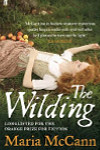
And the best bit of that? My Tamar has not in any way been influenced by the girl on the book’s cover. Except for the red hair, of course.
To move away from my cooing, Jonathan Dymond, the narrator, has been perfectly created – being not so much the subject but certainly the reason, he is provided with a lot of emotion and is always rethinking issues while allowing the focus to be on the other characters. He’s an average working class citizen of the day, with a very interesting family.
McCann deals with a number of issues that have eternal relevance; these she discusses quickly and skilfully. As an example, she touches on prostitution, saying that being with so many men for such a reason as money a woman can become deadened to emotions during sex and unconcerned about the man afterward. This may sound bad, but it’s something that the narrator must talk about during the book and you have remember that the woman in question is young and ignorant in ways.
The text is mainly modern but McCann sometimes writes in the way people of the time would’ve spoken. The modern language, made more realistic by the social standing of the characters makes the narrative easy to follow. One of the initial secrets is no hardship to work out dozens of pages before it’s revealed, but this was quite possibly something McCann meant to happen for reasons that you will understand when you read it.
As the book revolves around a family, the emphasis is on them and their daily lives rather than any key moments in history. A few events, and some fictional yet all too possible ideas, are looked into but briefly. This isn’t a book for learning about the period so much as a book for those who want to live it themselves.
Because on the face of it, McCann’s writing is nothing special, I’m wondering if she enlisted Joan’s help in making it come across as enthralling. If nothing else she definitely stole an amulet from the thorns at the front of the cave. The Wilding will let you breathe for a long time before it takes your breath away. But once it does, you might not get it back.
Related Books
None yet
Rosy Thornton – The Tapestry Of Love
Posted 26th September 2010
Category: Reviews Genres: 2010s, Domestic
Comments Off on Rosy Thornton – The Tapestry Of Love
Moving to the mountains may be the idea for someone seeking lone time but it’s not necessarily the case that that time will remain.
Publisher: Headline Review (Hodder)
Pages: 339
ISBN: 978-0-7553-4556-4
First Published: 2010
Date Reviewed: 22nd September 2010
Rating: 3.5/5
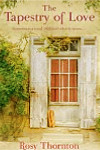
I’d been wanting to read The Tapestry Of Love ever since I first saw the cover; the photo was beautiful and the historian in me was captivated by the word “tapestry”. So when I received an email from the author, offering it to me for review, I could only say yes.
After several years as a divorcee, Catherine decides to up sticks and move to an almost deserted area of France, buying a house complete with orchards and beehives. She comes to love the area and it’s people and makes use of her skills in sewing and tapestry to aid the homes of those around her. But a few events may later give her cause to rethink her life and work out what she really wants.
I generally have a really hard time getting into stories from the first page, and even though it happens a lot – that I’m disconnected for a few turns of the leaves – I’ve never got used to it and let it be. So I was happy when, upon opening Thornton’s book, the first sentence wasn’t just good, but very good.
Thornton begins her tale with “Never in her life had Catherine Parkstone imagined so many sheep”, which provides so much information straight away; we have the main character’s name, and a good sense of her location. We also have reason to read on. The story is split into three parts and Thornton uses this event of moving sheep again, in the second part, to illustrate the change in Catherine’s mind, how she’s adapting to her new lifestyle.
And it’s in writing that Thornton excels. She has chosen a relaxing story for which she can concentrate more on that often recounted point “don’t tell, show” and goes into meticulous detail about Catherine’s location so that it’s impossible not to be able to imagine it perfectly. The book is slow moving, the kind of slowness that enables you to feel you can really spend your time on it and take it all in. It demands your attention when describing but otherwise you’re very much permitted to pull up a chair to the table of Patrick Castagnol and nibble at the cheese provided with homemade wine. Because of the book’s setting and Catherine’s employment there is also a lot to learn for someone unknowable in arable farming (such as myself) and likewise much enjoyment for those who perhaps spend their own time working the land.
Not exactly surprising, considering the book’s title, there is a lot of information here about tapestry. Being more of a knitter than a sewer I must admit that for me sometimes the details became too much but for another they would be a delight.
There is a big difference between the scenes outside and the scenes taking place at one of Catherine’s neighbours’ houses. It is outside where the descriptions take president – the information about weather, the growing of the crops, the time to reflect by oneself. Inside it is all about dialogue, social interaction. This means that you are likely to prefer one lot of scenes to the other but because both are given equal time this is never a problem.
Something which took me a while to realise is why there were so many descriptions, because in places I did find the book easy to put down. I realised that it is where Catherine is on her own that she is reflecting on her surroundings and although that might be obvious it occurred to me that when I am alone I will often do the same, thinking the same things as I did the last time I was alone, looking out the window to judge the way the clouds are moving. Catherine’s thinking and Thornton’s descriptions serve to show how one has time to think about things like this when alone and even more so in a place where life is less busy. Looking at it from where I live I had to remember to change my mindset and remember how life is slower in the countryside.
And so when Catherine is invited to dinner the descriptions give way to dialogue. The host of secondary characters are great to read about, there is a similarity between them due to livelihood but each bring their own personality to the story. When Catherine’s family turn up on the pages there is that complete difference shown between rural life and city chaos and I can’t but wonder how much Thornton has brought her own experiences into the book because she writes it all so well.
Love, you say? Indeed, there is love in this book and it runs subtly throughout the story for the most part, but it’s discernible to the reader.
In writing The Tapestry Of Love, Thornton has presented the perfect story for a rural dweller and a challenge of sorts for a citizen of the city being that the latter must leave their faster-paced life at the cover of the book and take off their shoes before entering. It is a really rural book that will appeal to anyone seeking a getaway without the air-travel price tag, and a way of becoming completely absorbed in an idyll.
Beware if you’ve been considering escaping to the country. This book will give you ideas aplenty.
I received this book for review from the author.
Related Books
None yet
Julie Buxbaum – After You
Posted 8th September 2010
Category: Reviews Genres: 2000s, Domestic
1 Comment

Life can get ahead of you and it can take a shocking event to make you realise how precious things are before you lose them and yourself.
Publisher: Bantam Books (Random House)
Pages: 399
Type: Fiction
Age: Adult
ISBN: 978-0-55381-884-0
First Published: 2009
Date Reviewed: 2nd September 2010
Rating: 2.5/5
When Ellie hears that her best friend Lucy has been killed she immediately flies to the UK to be with Sophie, the daughter left behind. Ellie introduces Sophie to The Secret Garden and together they read the book for therapy. But Ellie makes no plans to go back home and as the days wear on her husband begins to question her reasons for staying. It seems that through Lucy’s death and Ellie’s upheaval the issues that were haunting Ellie, unwittingly, have been dragged to the surface. She now realises where things need to change, but the question is how to go about it?
The idea for the book is simple and although not utterly compelling it’s a good enough reason to read. However I had a major issue with this book that really spoilt it for me so I’d like to discuss that first.
Buxbaum makes her character a commentator of British life and the assumptions made I personally found rather offensive. Had these assumptions and slurs been few it would have been easy to overlook but there were many many references to “Brits” and “Britain” throughout the book and 90% of them dealt with it’s people. The tragedy of Lucy’s death is placed behind a myriad of subtle and not-so-subtle prejudiced remarks. What started as a humorous look at difference turned into a slander match, which is especially odd when you consider that Americans and Brits aren’t so different.
An example, one of the worst, is the statement that British children are not demonstrative of love. I’m sorry, but this is rubbish and I can see no possibility but this being Buxbaum’s own opinion.
Unfortunately it took a lot of digging for me to unearth the goodness from where it had got lost under the remarks.
A well-used topic in the book is another book itself – Ellie and Sophie read their way through Frances Hodgson Burnett’s The Secret Garden, and the story overlaps with their life and with the themes in After You itself. Here I’ll quote from the quotation included from The Secret Garden:
To let a sad thought or a bad one get into your mind is as dangerous as letting a scarlet fever germ get into your body. If you let it stay there after it has got in you may never get over it as long as you live.
The above has been used by Buxbaum to illustrate one of the themes in After You – Ellie’s loss a few years before the book started has been allowed to fester and grow out of control so much so that it impacted her marriage to dire effect. The quotation from The Secret Garden comes right at the time when Ellie is starting to realise exactly how her life has become the sad event it has and when she’s realising that if she’d stopped it things would be different.
The biggest theme of the book is questioning what you have; is it enough, is it good enough for you, do you need more? Buxbaum never talks about “you don’t know what you had until you lose it”, though this could be applied, rather she talks about living contented and not letting difficulties ruin things that aren’t related to them. One of the characters in the book says that they failed the test, and it is then that the concept comes into play – something that should have brought joy brought instead sorrow, but it didn’t stop there, it brought sorrow to a place where it was not untitled to go.
It is evident where Ellie’s problems stem from, and the reader knows this long before she does. In many books this structure is frustrating but here it is warranted. It allows you to sympathize and cheer for Ellie, to really understand how someone can be affected by what she went through, and allows for character growth.
Buxbaum loves her metaphors and hiding themes and ideas within cleverly designed sentences. She doesn’t make it hard to discover what she’s really talking about which, on the face of it that may be considered a bad thing, but in the case of this book and it’s style it’s perfectly fine. The very end sentence of the story is one such example where words relating to a current activity are clearly a metaphor for the bigger picture.
Not unlike Katherine Webb in The Legacy, Buxbaum likes to comment on the human condition and society. (The following quotation has been edited so that spoilers are not included):
“We had lost the potential of…not a real…, another universal thought shared but not said aloud by those who hadn’t lost a thing.”
There are things in life that are difficult to get over, no matter how hard you try, and it’s very important that it is done, within reason, in one’s own time. In this particular case the whole concept of just getting up in the morning and working through it didn’t work, just as in real life.
We want what we don’t have, and in trying to get what we don’t have we lose and forget what we do have. So says Buxbaum in the middle of the book and this sums up a big section of After You wonderfully.
Buxbaum has taken an everlasting issue and applied to it very real and equally everlasting problems of life. She asks that those who have had trouble understanding before take time to try and understand now and asks everyone else to look at their lives and consider what they have. Away from the offensiveness of the book the story is a very worthy read and one which has given me a fair few things to mull over.
What happens after? After everything, when the world goes quiet again – what are you left with? Ellie now knows, do you?
I received this book for review from Transworld Publishing, Random House.
Related Books


