

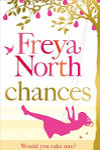
Freya North – Love Rules
Posted 16th May 2010
Category: Reviews Genres: 2000s, Chick-Lit, Domestic
Comments Off on Freya North – Love Rules
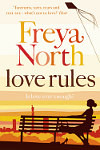
…And then you sit down to some Chick-Lit for some light relief – and find it to be anything but.
Publisher: Harper Collins
Pages: 422
Type: Fiction
Age: Adult
ISBN: 978-0-00-718036-3
First Published: 2005
Date Reviewed: 26th March 2010
Rating: 3/5
Just to make it clear: the title refers to rules, policies. It isn’t a statement akin to “love’s awesome!”
Thea believes in true love conquering all, knights storming castles to rescue the princess, and also – perhaps wrongly as she later considers alternatives – sparks from the start defining which men are the ones worth going for. Alice doesn’t mind love, in fact she likes it very much but tends to get diverted by the physical and has never chosen the right man. As Thea meets a man who sweeps her off her feet Alice plans to marry her best friend, the antithesis of the men she’s dated. But as both continue their lives they find that simple choices may not be so simple in reality and that they’ll have to re-assess their ideas once more.
Love Rules appears to promise a dose of easy summer reading, just what you’d expect from a book of its genre, and for a while this is the case – in fact the book is so easy to read at times it’s dull. Admittedly it can’t be said that Chick-Lit is as riveting a genre as some, but there is generally a plot that evokes interest and the want to know what happens. The vast majority of Love Rules sadly requires you to question whether you can be bothered because it just saunters along like main characters Thea and Saul around the streets of London. However this may well be a clever device used by North to further explain the latter quarter of the book. Be sure that the book does not stay boring, it turns it’s back on the Chick-Lit genre to provide hard-hitting and oft difficult to read material. North convincingly lures us into thinking that the lives of her characters are ordinary – and then crashes down on us with the idea that it’s ordinary life that can often have the problems. We always assume that it’s busy lives, unstable families, and the like that have problems – that’s natural, right? But North shows that “ordinary” can be a cover up for darker elements. In a way she’s saying, “watch out for ordinary” and you can understand her cautions – you never expect things out of the ordinary when things are ordinary to begin with.
North confuses us adeptly – is Alice wrong in her thoughts, shouldn’t her husband be around more? This has the effect of subtly skimming over Thea – her story is nice, it doesn’t require thought. There are a few things that don’t add up, but unlike Marian Keyes’s This Charming Man you can’t even say that they’re hinted at – they are, but it’s less than a hint, it’s more a fifth of a hint. Later, once the crux of the story is in full throws North turns her attention directly to the reader, to you. She asks you, as though you’re discussing the book together, what should happen, what we should feel, who is wrong, who is right, are we really sure about that, but isn’t it…? She does this just before launching into the book’s conclusion, in a way that explains, without actually saying, that there are many conclusions to come to. Hers is just one of them. As the reader you start to question yourself, no matter what opinion you’ve come to. I would take a guess as to what the majority of readers would feel should happen and say that in that respect it is an easy read. North wants to approach the boundary but she knows not to alienate her audience and so moves carefully, giving you something to think about but not letting you get too disheartened – while yet not appeasing completely. This all sounds very confusing but in fact it’s a stroke of genius on her part.
As said, the book becomes very difficult to read near the end and although the ending is good it’s not the happy ending you’re likely expecting. Beyond the issues raised there is a lot of upset to contend with and a lot of thoughts to digest. There’s also the addition of the other side of the story, although the other side itself isn’t so represented the associations of it are brought to the fore and evaluated. The characters may not change their minds but they debate on the issues and while people may challenge this and say it’s a good step but not enough it’s enough for the book.
Writing-wise the book is average. North has employed an interchangeable style; for the most part the book is in the third person but it sometimes moves to first and every so often to present tense as a fly-on-the-wall. When a change in tense happens during a chapter, which becomes more often as the plot takes off it’s mask, a re-read of the first few sentences is necessary to adapt to that change. North obviously likes the individuality it provides but for the reader it’s an irritation. Also of an irritation is the constant use of the word “effervescent”. Indeed it’s a fine word, but it’s obvious and memorable when big words are repeated and there are plenty of synonyms available. In the case of the chapters they could have been better defined, whole chunks of the book go by without a proper break.
As someone who is supposed to supply details that will help you decide if this is a book for you I apologise for being so vague. I can’t tell you any more because it would render the book spoiled and I feel that this is alright.
Love Rules takes love and what it means and causes and dissects it. It is not a valuable read, per se, but it is a good look on morality not usually so observed in the genre (and that’s forgetting the issue itself and concentrating on time and effort given). Pick it up if you will, we decide our own boundaries.
Related Books

Marian Keyes – This Charming Man
Posted 4th April 2010
Category: Reviews Genres: 2000s, Chick-Lit, Domestic
Comments Off on Marian Keyes – This Charming Man
Marian Keyes is ahead of the game. One thinks Chick-Lit and her name comes up. She has made that name for herself over the years with regular releases and generous helpings of her irrepressible Irish humour. Her books are the ultimate in modern women’s holiday reading.
Publisher: Penguin
Pages: 885
Type: Fiction
Age: Adult
ISBN: 978-0-141-02675-6
First Published: 2008
Date Reviewed: 10th May 2009
Rating: 4/5
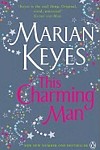
Copies of This Charming Man are currently sitting on shelves in every book store and supermarket in the UK; it’s star-struck and ironically charming cover self-assured in it’s ability to catch the eyes of passers by. The grey background of the otherwise glossy cover speaks volumes, though they are best reserved for an epilogue wherein the plot cannot be spoiled.
I admit I had serious troubles in finishing my last attempt at a Keyes novel, Angels, which seemed to go nowhere and had as much interesting content as a bottle of flat lemonade, but something made me want to give the woman a second chance and the knocked down price was tempting.
The plot revolves around three women (the blurb says four but the fourth gets little airplay) trying to make head and tails of the sudden marriage of one Paddy de Courcy, a politician with an impeccable record. Each have had more than their fair share of history with the man and the book studies them as they move from pain to happiness.
There’s Lola, Paddy’s girlfriend, a stylist with Molichino hair – purple, to use a non-Prada-fan’s word. There’s Grace, a journalist, and there’s Grace’s sister Marnie who fifteen years on is still not over Paddy and has let her anguish rule her life. The book focuses on each of them, chapter by chapter, sometimes running parallel and at other times giving details about one character for one period of time. Lola just wants to get her life back together, Grace wants to frame Paddy for the hurt he’s caused her family, and Marnie is still waiting in hope that he’ll come back to her while she drinks and loses her children and husband.
On the face of it the book is very stereotypical of the genre, an easy read that is as predictable as it is un-stimulating, and it takes a good half or so of the story for this to change. What starts out as a light gushy read turns into a rather sinister exploration of domestic violence and at times it’s quite frightening. The first displays of this come at the end of the first chapter but it’s like a sub-plot, almost a completely different story that bares no relation to the main one. But as the book continues and connections between each character start to form the reason for the notes become clear. It’s a cleverly planned device that creeps up on you before you realise what’s happened.
The chapters have all been given individual treatment depending on which character is in focus. Lola’s take the form of diary entries and are quite sparse in punctuation and grammar. This can come as a shock at first and will prove an irritation if one is looking for an emotive read as the emotions are lost in the errors; but all entries are dated in detail and it appears Keyes has put a lot of effort into making sure she never re-uses a particular time of day. Grace’s chapters are narrated by the author and written in full as are Marnie’s, however whereas Grace’s are typical narratives Marnie’s are drenched in repetitive sentences and thoughts as she becomes ever more a slave to the drink.
As expected for a book revolving around domestic and sexual violence, sex is referred to many times, though a good amount of that time is reserved for innuendo of a far more innocent if explicit nature. There is also plenty of swearing and racial humour, the latter being written in such a way as to subtly condemn racism. There is little in the way of “big words”, any book lover looking for a masterpiece will not find it in this release.
The biggest drawback of the book is sadly part of Keyes’ writing style. It often drags for short periods of time during which a closing of it and finding something else to do strikes as preferable. Thankfully as the story hits crunch time the narrative speeds up considerably. The other drawback, in a way, is the page number and the reasons for why it appears so long. The font is big, there is a lot of dialogue, constantly going back and forth in short blips between characters, and many breaks in parts. If structured like a regular novel the book would lose a good third or so of its thickness.
But away from these negatives stands a solid look at society today and many of the issues facing it. Keyes demonstrates a large amount of awareness for the world and a heart full of passion for it. The book forces you to really think about things that you may not want to or feel comfortable with and that is it’s biggest success. By wrapping her novel in a coat of Chick-Lit silk Keyes has brought those issues to the forefront of her fan’s minds while still holding up on her promise of an escapist fantasy.
It’s pleasurable, it’s fun, it’s fearfully realistic – and it’s all in one package.
Related Books