




The Wellcome Book Prize Blogger’s Brunch
Posted 6th April 2016
Category: Events Genres: N/A
3 Comments

Saturday I attended the event this post is named for; a lovely few hours of food, drink, and conversation. As a couple of the authors mentioned (I was sat in a rocking chair just to the side of them) I took a lot of notes, so hopefully I can do justice to my scribblings. This will be a long post.
(My photographs are very poor quality. If you’d like a good look at how the event was set up, Natalie’s post shows it well.)
First I’d like to tell you about the prize itself. Started in 2009 (a previous one came before it), the Wellcome Trust awards £30,000 annually to one author of a book with a medical theme. It’s a broad description, medicine – if we take this year’s shortlist as an example, it includes works about addiction, mental illness, the effects of coma and eventual death on relatives, and autism. It’s a far-reaching concept that allows for much expression and difference and it’s yielded some fantastic winners and nominees. The Wellcome Trust itself was founded in 1936; it’s ‘a global charitable foundation dedicated to improving health by supporting bright minds in science, the humanities and social sciences, and public engagement’.
This year the judges are Joan Bakewell, Frances Balkwill, Damian Barr, Tessa Hadley, and Sathnam Sanghera. The shortlist is as follows:
Amy Liptrot’s The Outrun: a memoir of Liptrot’s journey from alcohol addiction to sobriety which took her back home to the Orkney islands.
Alex Pheby’s Playthings: historical fiction about Judge Daniel Paul Schreber who had Schizophrenia and wrote a memoir in the hope he’d be allowed out of an asylum.
Cathy Rentzenbrink’s The Last Act Of Love: a memoir of the author’s journey associated with her brother’s car accident and resulting coma and the hard decision, years later, to let him go.
Sarah Moss’s Signs For Lost Children: historical fiction about a female doctor in the late 1800s.
Steve Silberman’s Neurotribes: Non-fiction about autism and the positive side to it.
Suzanne O’Sullivan’s It’s all In Your Head: a book about psychosomatic illness – O’Sullivan is a doctor of Neurology.
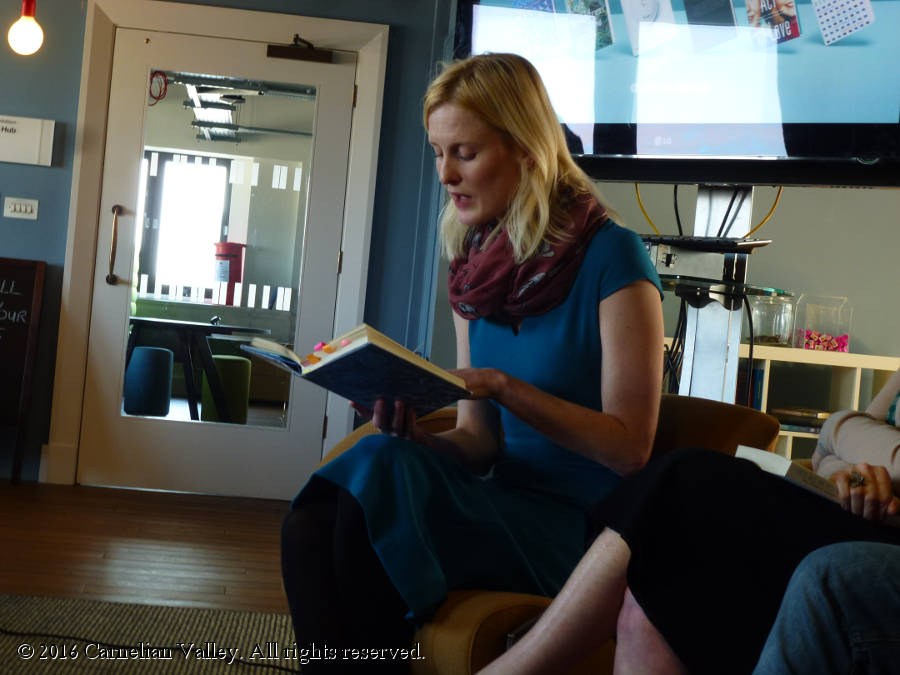
At the event were Liptrot, O’Sullivan, Pheby, and Rentzenbrink, and I’ll be eschewing my usual mode of referring to the author by surname only in this post; it just feels right. Simon Savidge, of Savidge Reads, chaired. We began with readings and a general summary from each author.
Amy wanted her book to be more about her life post-addiction than about the addiction itself. She wanted to pick through this phase wherein she found a new lifestyle. She wrote about a great deal of what was going on but said she decided not to write about the writing part of her days because it would be too meta.
Due to her relocation to the Orkneys from London, she found herself learning a lot about the great outdoors with the result that her book became as much about nature as about her rehabilitation. She said that before she had never really been into nature, wasn’t a ‘nature geek’, but her life in Orkney moved her towards being one. She lived in a pink house provided by the RSPB, taking walks and writing every day. She noted that what she’s written about is effectively a fantasy life; she appreciated the chance to bring people to the islands. At present she’s learning about woodcutting and said she hopes to carve her own gravestone!
Suzanne chose not to read from her book, the subject matter meaning she wanted to spend more time telling us about it. She wrote about people who are judged for their disabilities – disabilities that have no cause of reason for being. Whilst judgement happens to disabled people in general, in this specific case it’s due to psychosomatic illness. Suzanne wrote about her experience of working with her patients and her perspective is positive – her reason for writing is that not much is being done about psychosomatic illness, there are no facilities to help suffers which means that people will visit their doctor only to leave without advice. Because no one has any to give. Suzanne described one patient who said she was blind – and she had a carer – but tests inferred nothing was wrong. It was only once the woman’s psychological and emotional health was worked on that her vision returned.
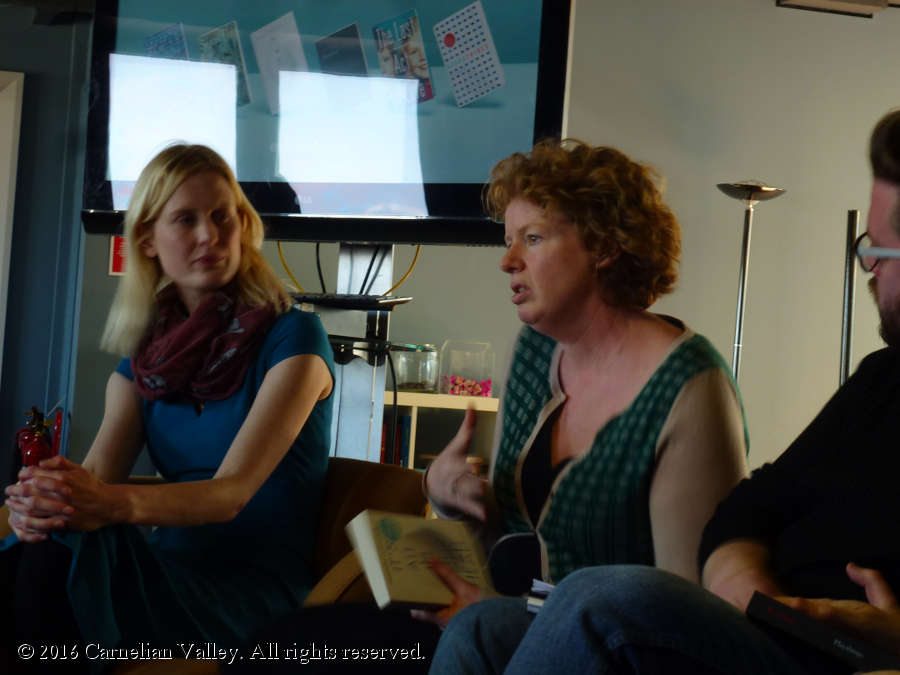
One third of all doctor visits are due to psychosomatic illness. It’s a standard part of a doctor’s everyday work but it’s treated as a non-illness and that’s why there are no resources. It’s akin to the ‘hysteria’ reported in days of old, when people were not taken seriously over things we now know are real and serious. If it’s diagnosed early enough it can be cured but this doesn’t happen for most people. Suzanne wants to change the idea it’s a lesser disease.
Of his book, Alex said there are lots of different readings to be had because it’s about a complicated person – a man who believed God would die if he himself was not cured. Judge Schreber wrote one of the most famous mental health memoirs; it showed how people can make irrational plans and be accepted but if those considered mad make irrational plans they’re not accepted. In the beginning, said Alex, the plan was to write a fictional continuation of the memoir but the fictional side took over. Alex’s book deals with how tied we are to the world and how it would be if we were untied, how we’re all in a state of mental ill-health and how is we don’t have the space and the support, we’ll be in trouble. That slippery slope.
After saying he’d like to see our interpretations of the book, Alex told us what it was he wanted to see if we caught. I can only speak for myself but my prior interest in the book only increased when he told us as it’s both something I’ve been reading about, studying, and something that is only now starting to really be discussed. We don’t talk about this thing in our world and we need to. I’ve asked Alex if he’ll write a guest post. I won’t go into it here because I’m both ill-equipped and conscious it’s the sort of thing readers might want to find out by themselves.
Cathy never wanted to tell her story and didn’t want to own it. She finds it difficult to start talking about it. She wanted to write comedy books and in that vein had us all laughing when she reiterated advice she gives as a bookseller to writers – don’t include religion at the start because it’ll put people off; don’t be a woman because it’s hard to get somewhere. Her book starts with religion and she’s a woman.
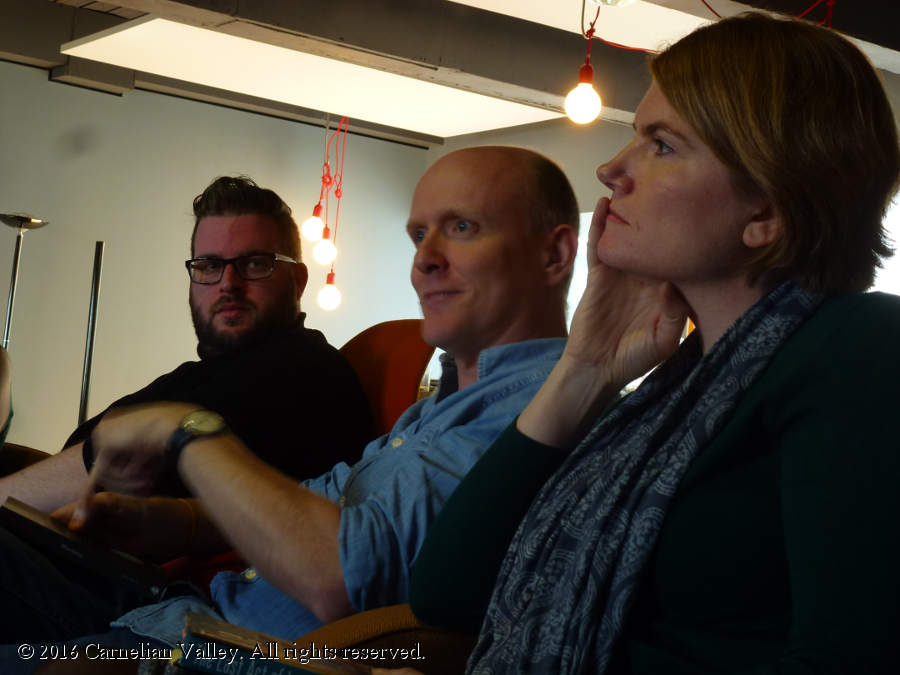
Whenever Cathy started a (comedy) book she would get as far as chapter 8 or so until the story of her brother started creeping in. It took a friend telling her she could write it and put it in a drawer for her to do it and she came to realise the drawer wasn’t the right destination.
Do the authors think about readers? “The longer I can keep the reader out of things, the better,” said Alex – he needed to do so in order to write what needed to be written. Suzanne didn’t think about readers, focusing on her patients because her cause specified a need to give them respect. For Amy the reality of readers has only recently hit her. For Cathy it was the thought of readers that later kept her going.
On the point of responsibility towards those who fill the pages, Suzanne said people are desperate to have their stories told, that her patients would have preferred she were even more honest. Amy had to deal with the conflict between talking about her recovering and that second A in Alcoholic’s Anonymous. “Most interesting is the people you leave out,” said Cathy, who referred to those who had been surprised she’d not included them in her tale – by writing you’re saying ‘this is how it was’ and she’d gone by nothing but the truth, just not all of it.
It was a great morning and I would like to thank Alice and those at Wellcome, particularly Zoe, for inviting me. It was lovely to meet Natalie and see Annabel, Sakura, and Jackie again.
Have you read any of the six books? What books have you read recently that include something medical?
Sixth Birthday
Posted 4th April 2016
Category: The Worm Hole Genres: N/A
11 Comments

It’s that time again: today The Worm Hole is six years old. In the past year I’ve posted 146 posts, 44 reviews, started up a ‘reading life’ feature, and suffered my first (noticeable, at least) spam attack.
There are 838 posts on this site. By a wide margin the most-read post this past year was When TV Deviates More Than Usual: Comparing ITV’s Mr Selfridge And Lindy Woodhead’s Book. I wrote it after I’d watched the first two series and read the biography that inspired said series; I’d been surprised by how different the portrayal is on screen. It seems a lot of people have wondered about the reality, too, and I suppose they will until they stop making the show.
Thank you all for reading and being a part of this blog.
March 2016 Reading Round-Up
Posted 1st April 2016
Category: Round-Ups Genres: N/A
4 Comments
This month I stepped up my blogging – I’m now working with an editorial calendar after years of thinking one wouldn’t help me; I’m feeling more confident in my theme work, which is something I often used to think would never happen; I’m seeing five ‘pigeon holes’ for posting, because they aren’t quite categories, that are helping me focus on quality – discussion, review, theme, history, general/other reading. Basically, for all the extra description I’ve just used, I’m doing what everyone else already does, it’s just taken me six years to get there. Better late than never. Anyway, I’ve had an enjoyable reading month, diverse in a few of the ways I’m aiming for this year, and here is what I read:
All books are works of fiction.
The Books
Ben Fergusson: The Spring Of Kasper Meier – In Germany, in the years following World War II, a man is approached by a woman he’s never seen who is looking for a pilot and appears to be working for someone dangerous. If the atmosphere of the last 50 pages had been incorporated from the start this would’ve been a good book; there’s not much to it and no thrill.

Elizabeth Chadwick: Shields Of Pride – A mercenary is offered the wife of the man whose death he sort of caused and must work to keep her and her son safe as rebels are after their money. It’s okay but far from her later books.
Elizabeth Gaskell: Cranford – A narrator recounts the relative highs and lows she experiences when visiting Cranford, a Victorian town in which most residents are women and no one is particularly well off. It’s a good enough read as long as you’re okay with the idea of nothing much happening.

Sarah Ladipo Manyika: Like A Mule Bringing Ice Cream To The Sun – When 74-year-old literature professor Morayo falls in her apartment she has to learn to adjust to the changes age has brought with it, including possible memory loss, but whilst she may live alone she finds friends aplenty to help her. I can’t do the book justice in one sentence but suffice to say it’s very good, on a par with Elizabeth Is Missing in approach and the main character talks books a lot.
I would say my favourite was the Manyika. Certainly it’s the one I gave the highest rating to, but I did enjoy the social history and immersion in the Chadwick. The Gaskell was quite fun and I’ve written three posts on it since finishing (I’ll separate them, don’t worry) but it’s true that 178 pages took me two weeks and prior to that I’d attempted to read it late February. At this point I’m not sure Gaskell is for me as far as reading enjoyment is concerned though I am fond of the way she goes about her commentary. I’m glad to have finished the Fergusson; I’d been reading it since November so it’s both a relief because I wasn’t enjoying it and a minor to-do list completed as it was the last of the four books I had to read from the Young Writer Of The Year award.
Quotation Report
Do not tell Deborah of Cranford that women are equal to men because she will not listen – she believes women are superior. And if you join Joseclin and Linnet’s household, from Shields Of Pride, you will find yourself playing medieval football with a pig’s bladder and it will be messy.
Usual statement incoming – I can’t believe it’s April already. Easter was incredibly early this year so I’m kind of still looking forward to it… at least the reading version of looking forward to it will come to fruition.
How was your Easter and/or how was your March?
Sarah Ladipo Manyika – Like A Mule Bringing Ice Cream To The Sun
Posted 30th March 2016
Category: Reviews Genres: 2010s, Books About Books, Spiritual
3 Comments
Slow and steady wins the race, but what if you’ve got a purposefully fast car?
Publisher: Cassava Republic Press
Pages: 178
Type: Fiction
Age: Adult
ISBN: 978-1-911-11504-5
First Published: 1st April 2016
Date Reviewed: 14th March 2015
Rating: 4.5/5
Morayo is a book-loving English Literature Professor. Originally from Nigeria, her life has taken her around the world before she finds her place in San Francisco – she thinks often of returning to Africa but feels it wouldn’t be right. At 75 years old she’s retired and loves spending time reading, darting around in her Porche, visiting friends at their coffee shops, and walking about the city. But recently she’s had letters from the DMV about incidents she thinks are minor, and on the same day she gets another of the letters calling her for a test, she falls over.
Like A Mule Bringing Ice Cream To The Sun is a beautifully written novella about the changes that come with age and the process towards acceptance when things become difficult. It looks mainly at Morayo but her acquaintances and the strangers she meets during the book are also given time.
It’s a lovely work. In a way similar to Emma Healey’s approach towards the later years in Elizabeth Is Missing, Manyika deals with her subject gently but effectively. She presents Morayo as someone who may or may not be losing her memory – you’re in the same boat as the character herself as to whether you know if it’s happening or not – and someone who has yet to realise that perhaps she needs more help. A very independent person, Morayo is confused about the sudden need for a wheelchair, for example, and does not adhere to the idea that her car must be sold, at least she’d like one more ride first. We have more ‘confusion’ to deal with upon meeting characters like Dawud, a man who seems to patronise Morayo, this older woman who will look through his flowers, rarely buying though she ‘was one of those that preferred the organic place down the street’.
To a slightly lesser degree than independence is included a study of Morayo’s sexuality. She may be old but she looks at pleasure with fondness, remembering moments from her life, relationships, and writing about her feelings. Rather than the stereotype of the older angry neighbour rapping on doors, Morayo listens to the rhythmic knocks on the walls with interest. Age and sexuality is viewed neutrally, Manyika simply saying that it happens rather than discussing it, reminding us it’s normal and that sexual pleasure is not confined to the younger years.
Brought into the book by both Morayo’s presence and the inclusion of another character – an African American who visits the care home to see his wife – there is consideration of race, of living as a black person. Morayo muses on the way a person says she looks awesome in her wrappa, in her multi-coloured clothes, and that whilst it’s a nice compliment, she’d just blend into the crowd in Nigeria. Reggie, the man who visits his wife, contemplates his being married to a white woman, thinking – aside from the way she is no longer herself and that he isn’t keen on the way the staff dole her up with cosmetics when she never used so much in her competent days – about the way her children disowned her for marrying a black man. He thinks of the way he had to stop seeing a girl because her father called him a coolie.
In addition to the subjects at hand we have other stories – the story of Sunshine, who Morayo describes as Chinese but seems to be Indian (the lack of confirmation isn’t an oversight), and the conflict between housekeeping and motherhood, and the desire to work. We have the story of Dawud and his sister, Amirah.
It’s a good book. And it’s a good book about good books. Morayo’s love for reading comes into play often and Manyika knows that going into detail is best in this case:
As you will see, I no longer organize my books alphabetically, or arrange them by color of spine, which was what I used to do. Now the books are arranged according to which characters I believe ought to be talking to each other. That’s why Heart of Darkness is next to Le Regard du Roi and Wide Saragossa Sea sits directly above Jane Eyre. The latter used to sit next to each other but then I thought it best to redress the old colonial imbalance and give Rhys the upper hand – upper shelf.
There are several of those moments. There’s a sad one too, one that book lovers will sympathise with, that demonstrates the vast difference between readers and non-readers.
If there’s any downside to the book it’s that it’s perhaps too short; whilst the ending as far as Morayo is concerned is pointedly ambiguous – it suggests something bitter-sweet without confirming it – we don’t find out what happens to the other characters.
Like A Mule Bringing Ice Cream To The Sun is a novella to look out for. The content, the approach to every situation, the writing, make reading it an afternoon very well spent.
I received this book for review from the FMCM Associates.
Related Books


Jealousy In Daphne Du Maurier’s Rebecca
Posted 28th March 2016
Category: Further Thoughts Genres: N/A
3 Comments
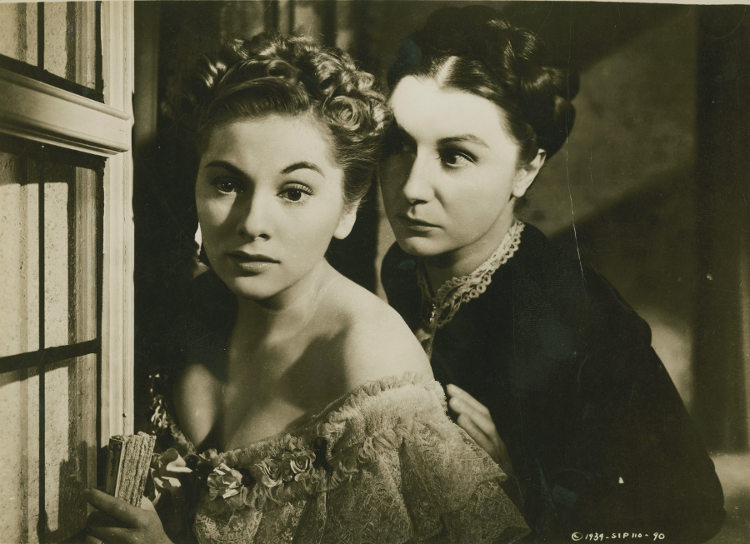
Screen shot from Rebecca, copyright © 1940 Selznick International Pictures.
Personally I’m of the opinion Daphne Du Maurier’s Rebecca is about identity however, as you may know, the author herself said that her book was a study in jealousy. It’s been said the work was influenced by the author’s jealousy of her husband’s first fiancée, Jan Ricardo – was he still attracted to her? – although Du Maurier herself said that whilst it was about jealousy, “it’s origins in her own life [were] few”1. The same source goes on to say that she had been toying with the theme for five years prior to writing. I find the apparent conflicts – between her marriage being inspiration or not – and the link to Jane Eyre, fascinating.
To me, and to many others if the plethora of articles on Du Maurier’s book are considered, jealousy is a less obvious subject. As a reader it does not loom as large when you’re watching a quiet woman living her life as a shadow (as much as that shadow suggests the possibility for jealousy) and the emphasis seems to be on finding that sense of self together with a way out of Mrs Danvers’ control and gaining Max’s love.
I wonder if perhaps the subtlety of the jealousy, as much as I presume the author might consider us all idiots for not seeing the book as she did, is part of the point. Jealousy can be sly, crafty, and if we become meta and take a page from Rebecca’s book, being crafty is something to uphold.
Was Du Maurier, in saying her book was about jealousy, being excessively open with us for effect? Did her own jealousy, that jealousy she reportedly based her book on, become enough that she wanted to set the record straight? Certainly Jan Ricardo’s suicide, which happened after publication, tied the author in knots – she wondered if her book had caused it2.
Let’s work with jealousy, then, and look at the story.
We can assume the heroine is jealous of Rebecca. Our heroine has difficulties getting Max to take notice of her and would be forgiven for thinking he adored Rebecca and simply loves or likes her, the heroine, less. ‘Perhaps he was more passionate then,’ she might think, ‘and the death affected him in a big way. It was a sudden proposal, after all.’
Our heroine sees all that went before her in the way the house is run. The rooms remain as Rebecca left them and Mrs Danvers persuades her to leave them as they are; Mrs Danvers tells the heroine every detail – how Rebecca structured her day, what her menus were – with the hint that, as the new wife, the heroine should leave everything the way it is. And as she’s not a strong person, the heroine complies, coming to live in Rebecca’s shadow. Anyone would be forgiven for feeling upset about that. The first source I used in this post says “The suspicion that [Frederick Browning, Du Maurier’s husband] remained attracted to Ricardo haunted Daphne”. Of course Du Maurier may not have said as such herself, in words, but we can suggest she shows her feelings through her heroine, who is haunted in the same manner. Rebecca’s past presence is always there just as, if the quote is true, Jan was for Du Maurier.
To the heroine, until that revelatory scene in the boat house wherein she discovers that Max never loved Rebecca but does love her – and gains a bit of a spine due to it, she no longer needs to feel jealous (was Du Maurier hoping for a grand gesture from her husband?) – Rebecca is the Other Woman.
Interestingly the heroine is the other woman herself – to Mrs Danvers. Could we attribute a sort of jealousy to Mrs Danvers’ actions? Perhaps a jealousy by proxy – if Rebecca can’t live at Manderley then no one will, those fires say. Mrs Danvers is always there in the background.
Lastly, and most obviously, we have Rebecca’s handwriting. In the book the author notes: “The name Rebecca stood out black and strong, the tall and sloping R dwarfing the other letters.” Kit Browning, Du Maurier’s son, noted in an interview that in the correspondence his mother had found between Jan and Frederick, the woman had signed her name “with this wonderful great R”3, flourishing his hand in the air to demonstrate the look of it.
I think we can consider bad feelings there for Jan Ricardo. No matter what the relationship between Jan and Frederick was really like, it could be said Du Maurier manipulated things to suit her purpose, at the very least she took her own feelings and melded them into a book.
It is in considering the author’s interest in Charlotte Brontë’s book and the influence it had on her own novel that we can add more to our theme work. We know Jane Eyre is in part about jealousy – I’ve said so myself – and we’ve extra evidence in the existence of Du Maurier’s biography of Branwell Brontë. She liked that Victorian family. Charlotte Brontë’s novel comes to a head when Mr Rochester commences a rushed wedding ceremony and Jane finds out the reason, after their nuptials are promptly cancelled by a stranger, is because he already has a wife. It’s not a stretch to align this with Max’s hurried proposal and marriage to the heroine and his status as a man on borrowed time.
Du Maurier was not faithful to her husband, nor he to her, but we can assume she respected him somewhat. She was angry when a film adaptation of an event he was part of portrayed him badly4. It’s that supposed loyalty despite problems that we see in our nameless heroine.
As for the father-daughter atmosphere in the book? Du Maurier said her work was based on her memories of Menabilly and Cornwall and her relationship with her father5. We could perhaps suggest jealousy there, too, though she has been described as her father’s favourite6.
I think with jealousy it’s a case of best intentions; there’s a disconnect, a difference, between what the author wanted to say and what she ends up saying more of instead. Still, it’s there and it’s endlessly interesting.
References
1 How Daphne Du Maurier Wrote Rebecca
2 Daphne: The Truth Behind The Story
3 Daphne Du Maurier Always Said Her Novel Was A Study In Jealousy
4 Daphne Du Maurier’s page on Wikipedia
5 Bull’s Eye For Bovarys (This article’s behind a pay wall, I found the reference on another site.)
6 The Original Gone Girl: On Daphne Du Maurier And Her Rebecca


