




Amy Liptrot – The Outrun
Posted 23rd May 2016
Category: Reviews Genres: 2010s, Angst, History, Memoir, Nature, Spiritual
3 Comments

Running to rather than from.
Publisher: Canongate
Pages: 278
Type: Non-Fiction
Age: Adult
ISBN: 978-1-782-11547-2
First Published: 31st December 2015
Date Reviewed: 25th April 2016
Rating: 4/5
Understanding she has become dependent on alcohol and that despite earlier thoughts it’s not making her feel better, rather it’s making her feel worse, Amy Liptrot enrolls at a treatment centre and then decides to move back home to Orkney from London to see if bettering her location can help her recover from her addiction. In moving back she becomes in tune with nature, enjoying all the things she’d left, helping her father on the farm, taking long coastal walks, and helping the RSPB in their research.
The Outrun is part memoir, part nature book, that Liptrot wrote whilst back in Orkney. It’s got a lovely atmosphere to it and it’s full of information both historical and natural, about addiction and the journey to sobriety with all its struggles.
The first thing you notice is that Liptrot can really write. Whilst writing was therapeutic for her in her time of upheaval, in its publication it could be said to have become therapeutic for the reader too. There’s nothing particular about it – one can’t say she uses big or small words or the work is peppered with such and such – it’s more the general feel of it. The book’s written atmosphere is shaped in part by its theme – flocks of birds, windy but beautiful days, talk of old stones and cliffs and everything of the sort the Brontës would have championed, which of course play a big role – as it is by Liptrot’s sheer raw talent. The text ebbs and flows, never gaining a momentum it could lose, and at many points you’d think you were reading an award-winning novel.
This said there’s a great deal of repetition in the book. Writing for herself, it makes sense that there would be rambling and repetition, but as a publication the book could’ve done with being a bit shorter, more linear (it’s very easy to become confused as to where you are in time). The self-absorbed feel to the book is more a case of this repetition than Liptrot’s feelings, or at least it certainly seems that way. (Some self-absorption is of course par for the course.) For this repetition the book can be easy to put down and difficult to resume.
To the subjects, then, and as said, the nature writing is lovely. In many ways this book seems more about the nature and history of Orkney than Liptrot’s addiction which, given what I’ve said about self-absorption, works in its favour, though by no means does the recovery take a back seat. Liptrot is adept at blending her personal life with the nature of Orkney; they become one and the same when she can find a way to speak in metaphors, but equally there are times when it all just seems so natural to blend them together. Liptrot’s focus is on the wildlife of the islands, specifically the birds – there is less on farming than you might expect though she does talk at length about methods and the journey from bog-standard farming to organic. (Any lamb you happen to buy from the north of Britain may well have come from Liptrot’s family farm.)
The hill is studded with craters from when it was used by the Royal Navy for target practice in the Second World War and test shells were fired from ships onto the island. The holes are filled with rainwater in the winter and range from the size of a paddling pool to that of a jacuzzi. It is said that one bomb came further south than intended and just missed a farmer’s wife but killed her cow. After the war, a sailor from one of the launch ships
could not believe their target island had been inhabited.
In focus, too, is astronomy. Perhaps inevitably given the location, Liptrot becomes a connoisseur of the night sky, speaking of stars, the planets, and also cloud formations and the Northern Lights. And then there’s the Neolithic history all over the isles: Skara Brae, a settlement of stone-built homes under the earth to protect from the harsh weather, ancient tombs, standing stones. Tragedies at sea, wherein ships crash against the cliffs, result in their own historic stories and findings. There is so much to this book, something for most people, and because of Liptrot’s determination to make her book as informative as it is personal, you learn a lot.
Lately I’ve noticed a gradual reprogramming. In the past when I was under stress, my first impulse was to drink, to get into the pub or the off-license. A house-moving day years ago once ended a month-long attempt at sobriety. Now, sometimes, I’m not just fighting against these urges but have developed new ones. Even back in the summer, set free after a frustrating day in the RSPB office, my first thought was sometimes not a pint but ‘Get in the sea’. Swimming shakes out my tension and provides refreshment and change. I am finding new priorities and pleasures for my free time. I’ve known this was possible but it takes a while for emotions to catch up with intellect. I am getting stronger.
I wanted to focus on the wider aspects before dealing with the alcohol side of the book. Liptrot details her time as an alcoholic with a fierce openness; she discusses parties and a break-up that haunts her for years, and also an attack, sexual encounters, and other incredibly personal details. There’s a picking apart of right and wrong, missteps, but never any self-pity beyond a few what ifs. This isn’t to say that any other way of speaking is wrong, it isn’t, but Liptrot’s manner means her book may interest people who might not be otherwise interested. The recovery is spoken of in detail, too, so this could be considered both a self-help aid without the negative associations often levied on self-help books, and a book with a wealth of information for those who want to know what it’s like. The book may well aid another’s recovery as well as help a person who knows someone with addiction develop more empathy and an understanding to help them assist and show support.
The Outrun is an impressive work in many ways for many reasons, its beauty slipping out from every crevice. It may lose its way textually at times but never errs in its wonder.
I received this book at the Wellcome Book Prize blogger’s brunch.
Related Books

Mavis Cheek – Dog Days
Posted 20th May 2016
Category: Reviews Genres: 1990s, Chick-Lit, Comedy, Domestic
Comments Off on Mavis Cheek – Dog Days

Separating for the kid.
Publisher: Ipso Books
Pages: 193
Type: Fiction
Age: Adult
ISBN: N/A
First Published: 1990
Date Reviewed: 4th May 2016
Rating: 4/5
Pat is leaving Gordon, buying a new home, getting a dog for her daughter who has said if they must lose Daddy she wants a dog, and starting life afresh. She should have done it years ago – she should have never married him. Love isn’t on the cards; Pat has no intentions of another relationship, she’s just looking forward to being herself again.
Dog Days is at once a light and easy-going story, and an honest look at the breakdown of a marriage, a person’s resurfacing after divorce into the person they used to be. At times very blunt, Cheek’s book is one that delves into things that are difficult to talk about whilst nevertheless remaining breezy. The Times has said ‘Mavis Cheek seems to have cracked the conundrum of how to write decent novels with popular appeal’, and that’s a good way to sum it up.
Rachel gave me my pass through life. She was, anyway, the only reason I was in this situation.
Cheek is open about the problems that can come with having children – whilst it’s obvious to the reader and to Pat herself that Rachel’s birth did not exactly change Gordon (more that it allowed her to see who he was), it was in having Rachel that Pat felt bound to her then boyfriend and so an accidental pregnancy led to her life going quite a different way than planned. Gordon was not the one for Pat – he’s stingy, having plenty of money but never treating his wife nor his daughter, and only cares about himself. He turns on the charm when he wants to manipulate his daughter to get what he wants.
But equally, as much as Cheek is honest about the affect of children and the way a person should think beforehand as to whether they truly do want to be a parent, she is open about how much happiness they can bring. Rachel doesn’t cause Pat to be exuberant, it’s more a case that Rachel’s intelligence continues to baffle her mother, in a good way, and the girl, older than her years it seems to her mother, is a good companion. Whilst Pat would not have stayed with Gordon if it weren’t for Rachel, nevertheless Rachel is obviously a good factor in Pat’s life.
More than children, Cheek just speaks of relationships. When asked by her solicitor, Pat struggles to find a tidy reason for getting a divorce; this is where Cheek’s exploration of resentment and sadness comes in. Pat can’t sum up her reason in a sentence. She can’t say she was abused, or that Gordon cheated, and so begins a long, excellent, section wherein she narrates various episodes in her life that show why she wants to leave her husband. Cheek shows how it isn’t always cut and dried, and that listing reasons doesn’t always work.
Amongst this exploration is some humour. It’s the sort of easy joviality that keeps the pace steady and the pages turning on the occasions when what you’re reading about is quite bleak. A lot of it revolves around Pat’s distaste for dogs and her slow journey towards becoming a dog person:
Eventually, with considerable effort on my part, we selected the weakest and wettest of mongrels in the pound. Rachel wanted the racy little cross between a Jack Russell and a something (a very something), but it had far too many of Gordon’s traits for my liking. Small and wiry with bright snapping eyes; a prominent, urgent profile and – I could sense – totally selfish motives behind its cocky, winning ways. I had lived with one like that for too long in its human form to burden myself with another, albeit four-legged and linked to me in animal slavery. Whereas the wet-looking mongrel had not an ounce of spunk left in it.
Brian, the dog of the title, doesn’t really do much, he’s no Scooby Do or Lassie – the title is more about the time itself, those days. Brian’s the subtle presence, there for Rachel, there for Pat once she thaws a bit towards him, and a menace once or twice when Pat’s too sure he’s the right dull dog for her.
The main thing to bare in mind is Pat’s illogical misunderstanding which spans a good few chapters. There comes a point when Pat mistakes someone for being in a relationship and it gets a bit grating because it’s blatantly obvious that they aren’t and therefore comes across as a lengthening device. Once cleared up, Pat notes it should have occurred to her, but that doesn’t atone for the frustration.
This aside, Dog Days is a funny, half-escapist, half-brutal-with-good-reason read. It’s honest, it’s realistic, and yet its status as an easy page-turning book never wavers.
I received this book for review on behalf of the publisher.
Related Books
None yet
On The Maude And Pevear & Volokhonsky Translations Of Anna Karenina
Posted 18th May 2016
Category: Chit-Chat Genres: N/A
3 Comments

I’ve mentioned before the switch I made from Louise and Aylmer Maude’s translation of Anna Karenina to Richard Pevear and Larissa Volokhonsky’s, but today I want to explain it a little in case it could help others.
I switched translations at 500 pages in. I was incredibly frustrated with the Maudes – a lot of the text didn’t make sense to me and I just didn’t find it well done. I found out many people considered Pevear and Volokhonsky’s translation to be the definitive and took the plunge, deciding to start from the beginning because it had been a while since I’d picked up the Maude and I’d forgotten too much to be able to say I’d truly read it. I definitely wouldn’t have been able to review it. I’d stuck to the Maudes for 200 pages more than I should have simply due to my preference of persevering. I knew it wasn’t Tolstoy’s fault.
I wouldn’t say Pevear and Volokhonsky’s version is as excellent as the marketing describes but it’s a lot better than the Maudes’. It’s a lot clearer, more thought through – it obviously went through more editing stages. The team also, without overdoing it, are evidently writing with the reader in mind – a reader who might not know anything about Russian literature, the period, and so on.
Something I’ve since learned that bears reflecting on if you’re trying to decide on a translation, is that the Maudes were acquainted with Tolstoy. Now I’ve learned two further things, that conflict. The first is that the couple didn’t particularly like the man. The second is that they were friends and visited him. I’m wondering if perhaps it was one of those ‘frenemy’ situations – Aylmer’s views were not Tolstoy’s, but either way, apparently Tolstoy authorised Aylmer to translate his work and liked it.
If the above linked article is right then the translation was actually just Louise’s and so there was no real team work; Pevear and Volokhonsky, on the other hand, did work as a team. The pair are married; Volokhonsky translates and Pevear checks it over, edits it. They converse on word choice and so forth. They’ve many accolades and awards and whilst there may not have been awards in the Maudes’ time, it does speak highly in Pevear and Volokhonsky’s favour.
Whilst the Maude has been around since 1918 and continuously in print, I’d recommend the newer translation unless you want a historical version. Whilst Tolstoy liked the Maudes and that’s in their favour, there was of course no way for him to read Pevear and Volokhonsky, so we’ll never know if he’d have liked that one, too.
How do you choose translations when there’s more than one?
V H Leslie – Bodies Of Water
Posted 16th May 2016
Category: Reviews Genres: 2010s, Historical, LGBT, Paranormal, Science, Social
2 Comments
Not just a siren’s call.
Publisher: Salt
Pages: 130
Type: Fiction
Age: Adult
ISBN: 978-1-784-63071-3
First Published: 15th May 2016
Date Reviewed: 3rd May 2016
Rating: 4/5
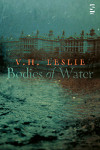
Following a sad breakup, Kirsten moves into an apartment building situated beside the Thames, which used to be a wing of a Victorian hospital. Drawn by the location, she starts to unpack but is relieved to find she’s not the sole resident of the renovated block. Then there’s Evelyn, rescuer of fallen women in the late 1800s, who has been sent by her father to a hospital for the Water Cure. She’s haunted by the loss in her life of her former lover, a woman she rescued, and hopeful that her stay can help her.
Bodies Of Water is a paranormal, gothic, novella that looks at the way water has had an effect on lives through the decades. It’s a dual plotline work that doesn’t go the way of many others, making it more unique (there are no revelations of connections between the characters).
Leslie has compiled a few concepts and it works very well. The book studies the treatment of women in the Victorian times, contrasting it slightly with the present day. The author works from the diagnosis of hysteria, that Victorian concept of a particularly feminine illness often associated with what we’d now consider the repressed sexuality of women. Leslie never says what caused Evelyn’s hysteria directly – in a way it’s up to the reader to decide – but this works in the book’s favour, allowing for more thought as much as it ushers you to concentrate on the bigger picture. Because whilst Evelyn seems fine, her stay at the hospital speaks of the wider issue.
It’s the basis behind Evelyn’s calling that Leslie wants you to focus on; Evelyn works for the Rescue Society, going out into the streets to aid prostitutes, hoping to save them from the abuse many suffer, from sexually transmitted infections. She likes the idea of bringing the women to a better, higher life, though through the chapters we see her realising that this cannot always happen – in the case of Evelyn’s lover, Milly, for example, Evelyn can’t get away from the fact she’s got Milly a set of rooms but no society to mix in, and that their relationship may be about love on her own side, but Milly may see it as just more of the same.
It’s Milly’s death that gives the study its backbone; Milly is one of many women who have taken their lives, fallen into the Thames, so that whilst Kirsten, who comes to see the paranormal in her leaky ceiling and in the drenched woman on the river bank, is more a bystander, learning about what happened at the scene abstractly, Evelyn’s direct relationship with the river allows a more poignant mode of thought. And as the Victorian character comes to understand the finer details of the hospital and suffers a setback, so her thoughts take quite a shape:
As for lust, it seemed to be the curse of every man. The Rescue Society would have no fallen women to rescue if men could only control what was between their legs. Evelyn had read in her father’s medical journals that hysterectomies and clitoridectomies were often performed to cure women of the very condition Dr Porter had diagnosed Evelyn with. They were so ready with the scalpel, these medical men, to cut and slice, yet no one had thought that castration was the logical solution to venereal disease.
A running point through the book is this plight of women to be heard and to gain freedom; Virginia Woolf’s thought of a room of one’s own is given space, her demise compared to that of the many fallen women ending their lives in the river. There are echoes of Kate Chopin’s The Awakening, too. Kirsten’s introduction to the relative reality of what’s going on is in the form of drawings of bodies being pulled out, doctor’s knives at the ready. Because how else were women to be understood?
Leslie’s study is a good one, just a little short. There is some confusion in the story that would not be there if the plot had been teased out more, given more time between revelations. Everything happens a bit too quickly and questions are left unanswered. In terms of the text there are patches of proofreading errors that are noticeable and add to the confusion on occasion.
But all in all Bodies Of Water is a solid article. It’s well-researched and it puts a different spin on a well-used format. It’s got enough of the history that intrigues many people without treading the same path. Recommended.
I received this book for review from the publisher.
Related Books
None yet
Latest Acquisitions (February – May 2016)
Posted 13th May 2016
Category: Acquisitions Genres: N/A
5 Comments
It has been a long time, by reader standards, since my last acquisitions post. Whilst I didn’t receive fiction or prose-like non-fiction for Christmas, I did receive gift cards; this post is made up of the books I spent my gift cards on, an Easter gift, and some review copies. I’m changing my format for now and it may continue; there is too much white space left in these posts.



Anna Hope: The Ballroom – It seemed everyone loved Wake and when I finally got to it myself I joined the ranks; there was no question – I was going to get this book.
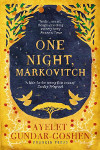
Ayelet Gundar Goshen: One Night, Markovitch – Remember when I said I’d been eyeing this one since its release and it would get me one day?
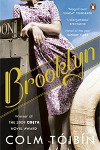
Colm Tóibín: Brooklyn – Have I got those accents right? I’ve been after this one ever since it came out; if my pile could breath a sigh of relief, it would.
Deborah Levy: Swimming Home – I was intrigued by the previous cover and it was on a shortlist or two, but then I had the chance to hear Levy speak at a Peirene Salon, about Raymond Jean’s Reader For Hire, in fact (not her own book), and her thoughts on that book impressed me so much this one became a definite want.
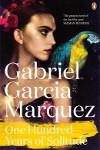
Gabriel García Márquez: One Hundred Years Of Solitude – So I went in to get Margaret Forster’s biography of Daphne Du Maurier but whilst browsing I saw this and a voice in my head just kind of said ‘it’s time’, which was weird, actually, because whilst I’m not against it, García Márquez has never been on my want-to-read-at-some-point list. Anyway, it was a strong feeling so I left the mint-condition Forster on the shelf and got this instead.
Gerri Brightwell: Dead Of Winter – From the publisher, a darkly humorous thriller set in a small town in Alaska.

Haruki Murakami: Norwegian Wood – I’ve asked for opinions before, about which Murakami to start with, and most people say another, but I just can’t shake the draw I have to this one and it’s stuck around through a cover change.
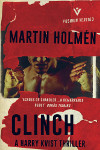
Martin Holmén: Clinch – From the publisher, this is a Scandinavian thriller that looks to rival others and has been described as ‘a remarkable début’.
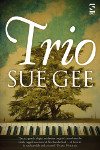
Sue Gee: Trio – Very excited about this; I’d thought of requesting it, didn’t get round to it, then found it in my mailbox anyway.
V H Leslie: Bodies Of Water – Ditto the situation with the Sue Gee.
With the gift cards I was strict and got books I’d wanted for some time. Suffice to say I’m excited.
What are the books at the top of your to be read pile?


