




Abubakar Adam Ibrahim – Season Of Crimson Blossoms
Posted 3rd June 2016
Category: Reviews Genres: 2010s, Angst, Domestic, Political, Psychological, Social, Spiritual, Theological
Comments Off on Abubakar Adam Ibrahim – Season Of Crimson Blossoms

Yes, it’s likely to fall apart.
Publisher: Cassava Republic
Pages: 339
Type: Fiction
Age: Adult
ISBN: 978-1-911-11500-7
First Published: 20th May 2016
Date Reviewed: 2nd June 2016
Rating: 4.5/5
Grandmother Hajiya Binta and drug dealer Reza meet when Reza breaks into Binta’s house. He steals her jewellery and threatens to kill her but there is a moment between them; he returns in peace. The two begin an affair that must be hidden – not only is the age gap wide, in Binta’s culture it is shameful. As Binta hides the affair from her family and Reza tries to work out the conflict between his care for her and the murders he commits for others, we also see the trauma of Binta’s niece, Fa’iza, starting to slip through the cracks in the armour she created for herself when her father and brother were killed.
Season Of Crimson Blossoms is a book that looks at a fair few things, namely the emotions and sexuality of an older woman and the life of Reza; it also delves into corruption and religious conflict.
Ibrahim is one of those writers who writes the opposite gender really well and succeeds in giving life to the various ages of his characters. In many ways his book is about the effects of culture on women in conservative Northern Nigeria and it’s a well-rounded study. He looks at the effects of violence through memories. And it’s through Fa’iza’s story that Ibrahim’s talent sparkles for the first time.
When we hear about Fa’iza, beyond her liking for romantic novellas and film stars and television, it’s in the form of a flashback. In the space of a mere few pages, Ibrahim manages to provide the sort of shock most authors spend time leading up to – he shows us the reason Fa’iza can be quiet, the horror of what she experienced as a child. As men beat down the door to the family home, Fa’iza’s father has the family run to the bathroom where they stay cramped for some minutes before they are found. It is an incredible piece of writing, as stunning as if he’d been working on it for several chapters.
This is an unrelated moment to the one above, but it’s another, even more succinct, that shows Ibrahim’s skill:
He was there when the other boys spotted a girl in tight black trousers heading up the street. Her hair – permed in Michael Jackson Thriller style – streamed behind her as she swung her hips ostentatiously.
Then the chants started.
“Biri da wando!” the boys sang, running after her. Some ran ahead and pulled down their trousers and wiggled their little backsides before the embarrassed girl. The racket drew more boys from their houses and playfields and Yaro, too, was sucked in. Women in purdah came out and stood by the front door, trying to call back their sons, but their voices were drowned in the maelstrom.
Then the pelting started.
Missiles of damp mud struck the girl on her offending trousers, the imprint of dirt standing out starkly against the black of the nylon. She started crying, cowering and shielding her head from the missiles. The racket went up several decibels. Some women ran out and tried to dissuade the boys, but they were too many. In the excitement, they did not see Zubairu, who was not much taller than the biggest boys, until he reached out and grabbed his son. Like flustered bees, the boys scattered, dodging into neighbouring houses and running down slime-covered alleys. […] She poured in some damp guinea corn from the basin beside her and when she heard the flogging start, she began pounding. The harder the boy cried out, the harder Binta pounded, her pestle thumping heavily.
There is not too much of this type of scene; there doesn’t need to be – once you’ve read a few, with the narrative alluding to other situations, you’re all set, as it were, for the rest of the book.
Binta likes Reza because he reminds her of the son she lost. Reza likes Binta because her face reminds him of the mother who was never there for him, who left him, tore his hands from her hijab as she went to leave. Their relationship, as much as it’s sexual, is their way of grieving. Binta’s loss of her son, Yaro, is compounded by the fact culture forbid her from showing him, the oldest child, any affection. She always wished she could show him she cared because as an oldest child herself she’d experienced the same thing, knew what it was like to be neglected. And so her time with Reza, though sexual, could be seen as a penance, or a making up for what she didn’t do, spending time with someone who looks like Yaro who wouldn’t be far off his age. Whilst inappropriate socially, the relationship serves an innocent, important purpose.
At first appearing to be a case of a drug ring, Reza’s narrative expands to working for corrupt leaders. You see Reza’s conflict – on one side he’s assigned people to kill to help others get further on the board. Chess is alluded to. On the other side he has Binta spending time with him and nudging him to go back to school and gain an education. He’s always working on things Binta has no idea of; his oft-repeated ‘you understand?’ at the end of dialogues packs in different concepts: it’s the way he speaks, it’s a phrase with a lot of subtext behind it that differs every time, it’s the way Reza tries to signal warnings.
Ibrahim is very open about society, culture. This is what makes the character of Binta stand out – she’s taking a chance with Reza and is being led by her sexuality, talking of being free. Her relationship with her deceased husband was not a bad one per se, but she laments not having been able to enjoy their time together as a couple. She takes a chance in the name of sex, knowing she might be found out and worrying about it, but she’s led by her desire to be happy before she becomes too old. It would be shameful if she were found out.
The relationship between men and women and the differences between how they can live their lives are given time, too. Binta has a suitor but he’s never present in their conversations, always listening to his radio, preferring to talk about politics. The reality behind Binta’s daughter’s separation from her husband is revealed slowly – is she a bit over-the-top or is there something else? But at the end of the day, as much as it may be down to either or them, Hureira’s husband can take another wife.
I believe it was E Lockhart who said that a book should deliver a series of small shocks. Ibrahim’s novel is the best example of this idea I have ever read. Whilst it may not be a constant series of shocks – if it were you’d be at risk of becoming numb to it all – the 1-3 page horrors I spoke about earlier fit this perfectly. They’re short, small. They are a big shock due to Ibrahim’s ability to create such powerful scenes in such a short space of time.
Season Of Crimson Blossoms is a book to read slowly. Not because it’s boring or because you’re going through a patchy part but because you want to appreciate it, you want to think about what you are reading and you want to savour the writing; it’s a sort of close reading, only off the page. It’s really very good.
I received this book for review from FMCM Associates.
Related Books

Speaking to Abubakar Adam Ibrahim about The Whispering Trees, and Season Of Crimson Blossoms (spoilers included)
Please note: this episode includes discussion of sexual content, and the second reading includes a sex scene.
Charlie and Abubakar Adam Ibrahim discuss Nigeria at this time, publishing a novel on a very controversial subject and reactions to it, effects of grief, and looking at cultural expectations of women as the generations change.
If you’re unable to use the media player above, this page has various other options for listening.
May 2016 Reading Round-Up
Posted 1st June 2016
Category: Round-Ups Genres: N/A
4 Comments
This month was another good reading month. I’m continuing to get better at choosing good books – I actually had a tiny slump when a book wasn’t quite so great: it was a 4 star book! I’m doing a whole lot less of that read-a-book-even-when-you-reckon-before-starting-that-you’ll-find-it-mediocre thing.
All books are works of fiction.
The Books

Alice Dunbar-Nelson: Violets And Other Tales – A collection of very short stories, poems, and a bit of non-fiction by a 1800s American female activist. Okay by itself; a promise for her future writings.
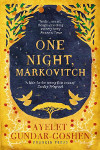
Ayelet Gundar-Goshen: One Night, Markovitch – A man with an unremarkable face and his friend with the amazing moustache decide to join men heading to Germany to save Jewish women from the Nazis and bring them home to Israel. Full of humour, this is no less a book with a lot to say. It was even better than I’d hoped.

Elnathan John: Born On A Tuesday – Dantala goes to live at a mosque, studying the Quran and working for the Imam, and doesn’t see the turbulence outside. A good book about how religious intolerance isn’t straight forward.
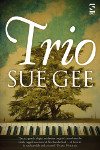
Sue Gee: Trio – A man looses his wife; during his trauma he accepts an invitation to a concert wherein he meets a group that will aid his recovery. Beautiful but the end is a pity.
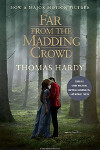
Thomas Hardy: Far From The Madding Crowd – Three men make a play for Bathsheba’s hand with varying levels of passion and her frivolous nature causes tragedy. The first half is very boring, the second absolutely fantastic.
V H Leslie: Bodies Of Water – Drawn to the river for reasons she doesn’t understand, Kirsten moves into a renovated Victorian hospital, a place that saw death. Very good book about hysteria and female ‘problems’.
I’d say One Night, Markovitch was my favourite this month; it took me a while to read it but that was my problem – the text is consistently fabulous. Trio was almost sublime, but, ironically, Gundar-Goshen’s ending literally spelled out what was wrong with Gee’s book – the Israeli author speaks of the problems with books jumping in time; her own does this but she’s made amends for it. And I was enjoying Far From The Madding Crowd very much by the end. The other three books weren’t bad, indeed they were very special – it’s hard to speak of favourites when each has entertained you.
Quotation Report
Yaacov Markovitch of One Night, Markovitch is pleasantly surprised to learn his visa-wife is a fan of agricultural literature – she’d said she’d read a great deal about Israel’s oranges. What he doesn’t realise is she’s read a four-line stanza.
Having got back from the Hay Festival, I’m ready to get back in the reading zone.
How was your May?
Should We Assume Rebecca Is Horrible?
Posted 30th May 2016
Category: Further Thoughts Genres: N/A
7 Comments
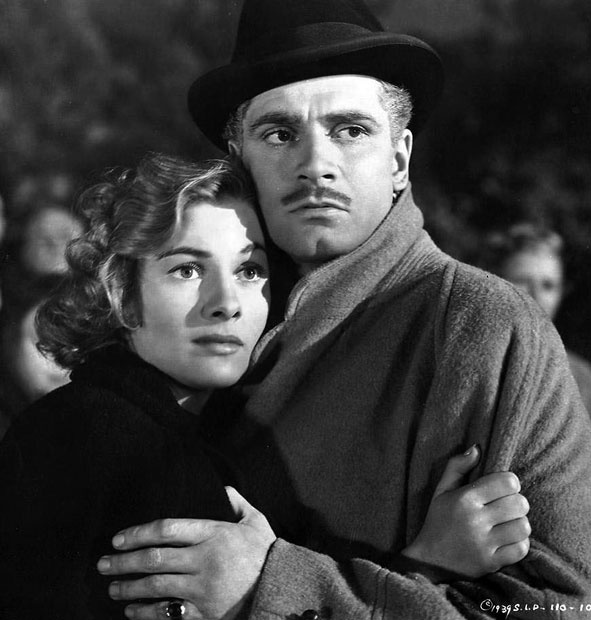
Screen shot from Rebecca, copyright © 1940 Selznick International Pictures.
When I was researching my post on jealousy in Rebecca, there was a sentence in an interview with Kit Browning, Daphne Du Maurier’s son, that gave me pause. He said that it’s only Max who gives us the idea that Rebecca was a horrible person.
It’s somewhat true; the only person (almost – more on this later) who actually says anything that could make us think badly of her is Max, but we’d been thinking badly of her for a long while beforehand; our opinion of Rebecca is shaped by the heroine’s feelings and our thoughts of Mrs Danvers. And it’s wrong, really. Rebecca isn’t Mrs Danvers and the heroine had nothing to do with the first wife.
It’s the haunted atmosphere that first forms in us an opinion. As much as we can’t attribute the heroine’s feelings to Rebecca herself, at minimum we feel she haunts the place. And haunting is seen as a negative thing thus we feel worried, even if we don’t notice we do. We get glimpses of who Rebecca was: a person supposedly good at running a house, at playing host, at fancy dress, and these glimpses affect our opinion of her.
It’s Mrs Danvers who takes it up a step. Mrs Danvers’ obsession, her manipulation of the heroine, the subtle threats, the hint that throwing oneself out of the window is the right thing to do – all these seem to reflect Rebecca because whilst we don’t know for sure how Rebecca felt, we assume Mrs Danvers’ love was reciprocated. And in the absence of Rebecca herself, Mrs Danvers becomes her substitute, her stand in. That Max later says Rebecca was horrible only seems to back it up.
Should we consider Mrs Danvers’ mental state? Either she’s suffering from her loss of Rebecca so much it has caused her to become a supposed monster or she has some evil in her – that fire does not speak of a stable mind but as other stories and real life shows, a person can do something extreme because they are lost, hurt, and in need of help. Yes, this paragraph does smell of trying to make amends for bad things, like people are trying to say now that Henry VIII was bad because of this, that, and the other, but in Mrs Danvers’ case we know she was close to Rebecca.
Beatrice isn’t nasty about Rebecca, but she doesn’t seem enthralled, is instead quite blaïse and therefore we don’t really consider her thoughts once we’re further along. Jack, appearing shifty, does what Mrs Danvers does – infers a horrible person by association, though at least in this case Max’s revelation has more in it that applies directly to the person. Frank likes the heroine, does so from the start, which may signal a distaste for Rebecca – certainly the contrast between him, Max’s friend, and Mrs Danvers, Rebecca’s friend, seems a bit of a literary decision, a balancing of the scales.
But then there’s Ben, who tells the heroine Rebecca threatened to place him in an asylum if he told anyone that he’d seen her doing… well, we’re not sure, but it was something she obviously shouldn’t have been doing. The potential problem with Ben is that he’s presented as unreliable, but considering we already know about Mrs Danvers, we might consider him more reliable than the heroine herself might. We don’t know much else about Ben, so perhaps we shouldn’t believe him, but then there’s also no reason not to. Ben is a minor character, so perhaps Kit Browning forgot him, or perhaps the whole idea that Ben is unreliable, unstable, was enough to make him irrelevant in this respect – should we trust Du Maurier’s son’s omission as a sign Ben is unreliable?
As for the book itself, Du Maurier ensures we are spooked and considering she wants us to dislike Rebecca, that the book is about jealousy, we don’t really have much chance to feel differently unless we make a decision to read in a different way than we ‘should’ do, disbelieving the author herself at every turn. Rebecca’s written as controlling, promiscuous, horrible; there’s the hint that she was as nasty as Mrs Danvers – perhaps it was that her place in society meant she had cause to hide it.
Rebecca never really had a hope; Kit may be right insofar as the book’s concerned, that it’s only Max who gives us the idea, but his (Kit’s) mother wanted us to think that anyway so it could well be said Du Maurier gives us the idea herself. Just think of that ‘R’ – the text is written to make us dislike Rebecca.
Should we be thinking anything about Rebecca, characters and author aside? Society and common sense would tell us to listen to what people say but to also meet the person… at least meet her as much as we could. In worldly terms we should be thinking twice about befriending her but holding off on a final judgement. Perhaps it’s due to this conflict of advice that Du Maurier is able to grip us so well.
The commonly accepted idea is that we should read a book without letting our views of the author and our knowledge of the author’s life play a role, but in this book it’s a bit different. It’s not simply that Du Maurier’s feelings are included, as it is Charlotte Brontë’s in Villette, or the plethora of writers whose works have been panned because their views are offensive – Du Maurier’s book revolves around her thoughts in a different way that’s hard to explain. I don’t think she’d mind if we chose not to listen to the gossip she writes and to push aside any manipulation, but to like Rebecca would be to miss the point of the book.
Your thoughts?
Sue Gee – Trio
Posted 27th May 2016
Category: Reviews Genres: 2010s, Domestic, Historical, LGBT, Music, Spiritual
2 Comments
The healing powers of music.
Publisher: Salt
Pages: 308
Type: Fiction
Age: Adult
ISBN: 978-1-784-63061-4
First Published: 16th May 2016
Date Reviewed: 23rd May 2016
Rating: 4/5
Margaret dies early in the marriage; Steven is devastated but knows he must keep going. One day his colleague at school invites him to a concert and though Steven has no knowledge of music he enjoys it, and comes to enjoy the company of his colleague’s childhood friend. His loss will always be with him but in Margot and her music he sees light ahead.
Trio is a book set in the couple of years prior to the Second World War that looks at sadness, tragedy, and the way we deal with it. A beautiful work of literary fiction, it’s full of originality and sports a lovely uniqueness.
And then the gas masks came. In every classroom, throughout the lunch hour, came the struggle to fit the things on, the coughing and heaving at the rubbery smell, the helpless laughter as the trunks were waved about; the trumpeting.
‘Look at you, Hindmarsh!’
‘Look at yourself, Potts. You look prehistoric.’
‘All right, boys, that’s enough.’
Gee’s been writing for years and it shows. Her writing style is rather like a script; the author includes description in the third person but will then switch to dialogue in a way that means you hear a lot more about the situation in a sort of faux first person. Many of the descriptions of thoughts turn out similarly. It won’t be to everyone’s tastes but it is something that everyone is likely to appreciate, at the very least. It’s a literary dialogue, at once between the author and her characters – rendering them in a realistic fashion – and also between the author and the reader, both a breaking of the fourth wall and a hiding behind it. It means that every single character who speaks – every pupil in Steven’s class who gets a mention – stays in mind as though they were all main characters.
Sadness informs most every part of this book. It’s everywhere but Gee never lets it burden the text itself, meaning that whilst this book may be triggering if you’ve recently lost a loved one, it’s not a book you’ll need to avoid for long. But whilst not burdening the text, Gee never covers up, showing how sadness carries on, lingers far longer than our speaking of it shows. In this way she demonstrates how that point wherein society says ‘okay, enough moping now’ shouldn’t be taken as wholly as we often do – everyone suffers losses and it’s okay to refer to it in the future.
There are various tragedies: Steven’s loss of Margaret, a person’s ‘loss’ of the friend they are in love with (twice over in this case), the way a rebuff of affections can lead to awful conclusions. Many of the losses are connected but few are vocalised. Gee uses a bit of mystery in order to explain certain emotions – they aren’t mysteries you need to work out as it’s pretty clear who is who and what is what, it’s that the emotions need to be hidden between the characters because of a feeling of shame or worry that is down to their situation, their relation to one another, and the time in which they are living.
The book is fantastic right up until the last couple of dozen pages. Everything ebbs along and you’re ready for the inevitable start of the war and in seeing where it takes the characters and then suddenly you’re pulled forward to our present day. There is no conclusion to Steven and his friends’ stories, instead you move on to the latter years of Steven and Margot’s son, a person you’d not met. Why this was done is not clear – presumably it was so that we could learn the outcome of everyone’s lives, but this is small compensation; the information could have been provided in an epilogue or, because there’s really only one character you ‘need’ to hear about, communicated naturally at the end.
As for the musical episodes they are mainly good, if a bit overwritten. Steven’s lack of knowledge means that Gee goes into a lot of detail, romanticising the sounds and effects of music; when it’s part of the subtext it’s glorious. The trio of the title don’t quite make the book what it is – that’s Steven’s role – but they play their part; it’s more that they’re the ones through whom people are connected.
Trio is difficult to put down. It’s a gorgeous escape back in time that for all its – needed – sadness, is gripping. The end does come out of left field but the overall product is wonderful.
I received this book for review from the publisher.
Related Books
None yet
Poverty And Kindness In Cranford
Posted 25th May 2016
Category: Further Thoughts Genres: N/A
Comments Off on Poverty And Kindness In Cranford
The most striking thing to me about Cranford, in terms of themes and structure, is the poverty. The way poverty is incorporated; the background usage of it is implemented in such a way as to allow Gaskell to bring it up without bringing it up. It’s hard to explain so I’m just going to get on with it.
Poverty is at the heart of much in the town. The vast majority of people are pretty poor and they aim not to reference it directly – it’s the case that they all know about everyone else’s circumstances but for proprieties’ sake they don’t discuss it. Gaskell’s handling of this is what forms some of the humour, a feat that is both ironic and heartening.
The beginning introduces us to this idea of no one directly mentioning poverty. We have the following:
I imagine that a few of the gentlefolks of Cranford were poor, and had some difficulty in making both ends meet; but they were like the Spartans, and concealed their smart under a smiling face.
and then:
The Cranfordians had that kindly esprit de corps which made them overlook all deficiencies in success when some among them tried to conceal their poverty. When Mrs Forrester, for instance, gave a party in her baby-house of a dwelling, and the little maiden disturbed the ladies on the sofa by a request that she might get the tea-tray out from underneath, everyone took this novel proceeding as the most natural thing in the world, and talked on about household forms and ceremonies as if we all believed that our hostess had a regular servants’ hall, second table, with housekeeper and steward, instead of the one little charity-school maiden, whose short ruddy arms could never have been strong enough to carry the tray upstairs, if she had not been assisted in private by her mistress, who now sat in state, pretending not to know what cakes were sent up, though she knew, and we knew, and she knew that we knew, and we knew that she knew that we knew, she had been busy all the morning making teabread and sponge-cakes.
The tea tray incident is what sets us up for future references, Gaskell showing the ritual the town has constructed to get around the issue of poverty causing offence.
Beyond the humour, which is the most apparent thing, we have this sense of kindness that is likely part of Gaskell’s plan in relating the episode, given what we know of her personality and views, but could equally just be an added benefit of the propriety. For all Cranford can be a bit snotty, a bit too precious a place and against new male arrivals, when it comes to money everyone sticks together.
Sometimes the issue can cause a sort of comedy of errors – there are times when a person is so conscious of hiding their poverty, and the poverty of their relations, that they end up causing offence to others. There’s a particular slice of this in chapter eight wherein Mrs Jamieson, richer than the rest, forbids any sort of meeting between her Cranford friends and her sister-in-law – a Lady from Scotland. That Mrs Jamieson, someone not considered so far above the rest other than in money, should do this, strikes the characters as offensive, makes them feel inferior. They in turn snub Lady Glenmire, refusing to so much as glance at her in church.
Gaskell soon pulls back the curtains; we readers learn that the reason Mrs Jamieson refused meetings is that Lady Glenmire is poor and she, Mrs Jamieson, is, in true Cranford fashion, a little ashamed. She doesn’t want her friends to know. The ‘reveal’ isn’t commented on so much by the characters, it’s simply reported neutrally by the narrator who, as an ex-resident, we can assume is perhaps Gaskell herself; Gaskell wants to narrate but not from the distance that would be afforded if she were to write from her own perspective as an author.
It’s during all this snubbing that Gaskell shows us the upshot to the divide between servants and their mistresses – whilst there’s not a big divide due to everyone’s poverty, there’s divide enough that the women get a servant to observe Lady Glenmire for them and report back because:
Martha did not belong to a sphere of society whose observation could be an implied compliment to Lady Glenmire, and Martha had made good use of her eyes.
Because Martha’s seen as lower, she can look.
Lady Glenmire’s own poverty brings us to another factor of the theme: Captain Brown. In the Captain, a newcomer, Gaskell shows another way of dealing with poverty. To Brown, poverty is nothing to be ashamed of; he speaks of his own with ease. Gaskell, in creating this conflict of interests, adds humour to soften the ‘blow’ – the problem the residents have with Brown at this juncture, is compounded by his being a man in a women’s domain. The hint is there – ladies don’t speak of money, men do – though this isn’t to say that Gaskell is calling it a problem because she isn’t. She isn’t dividing the sexes, she’s merely using stereotypes to make humour, to get some artistic license going and exaggerate her characters.
But it does have the effect of showing that whilst there’s kindness in keeping shtum about poverty amongst those living in it, there’s no reason to be ashamed.
Poverty is seen in Mrs Forrester’s hiring of a boy to stay nights at her house in case of robberies. At first glance it’s a way of helping the boy’s family feed another mouth, but the reality is seen in what Mrs Forrester offers as payment – food and lodging. She doesn’t offer money and it’s not commented on because it doesn’t need to be at this point – we know she doesn’t offer money because she doesn’t have any. It’s less a hiring of a servant and more an agreement between neighbours.
In chapter thirteen, near the end of the novella, Miss Matty insists on exchanging a man’s worthless cheque for her own money, in a shop, on account of her being a share holder of his bank. This comes as a bit of a shock – after we’ve been told Cranford is poor, that Miss Matty has money behind her is a surprise – but it’s also full of that kindness; and the context, of the bank being in trouble, shows that Miss Matty may shortly be out of pocket. Certainly she says she’ll have to wait a few days longer to purchase the gown she’s after. Once she’s home we learn she earns £149 a year as a share holder, a substantial sum in those days, and that to lose it would drop her annual income to £13. Through this Gaskell reminds us of that kindness, once again, that everybody helping everybody factor seen in the tea tray incident and Mrs Forrester’s meals as wages.
We then come full circle, if you will, when Miss Matty’s servant, the afore-mentioned Martha, is told of the situation that has indeed happened – Miss Matty is to receive no more from the bank – and that she will no longer be employed. Martha turns the tables. The servant, by all accounts not well-off, not only defies Miss Matty to make a pudding out of her wages, she then brings in her beau and suggests Miss Matty live with them. If we in our modern era needed any more information about the straits Miss Matty is facing, apart from the thought of selling furniture and getting what we’d now call a studio apartment, Martha’s request fills us in. Martha feels so warmly for Miss Matty that she’s almost forcing her boyfriend to marry her right now so they can get a house so Miss Matty can live with them. And the boyfriend, whilst not against marriage, isn’t quite ready and isn’t really on board with talk of a lodger – it’s simply culture that would allow it to happen. In Cranford he’s but a man, after all.
We’ve the meeting of three ladies of Cranford, proposing they work in tandem with the narrator’s father (we finally get a name for our narrator!) to provide Matty a yearly income without her knowing her friends are behind it. This is heartening in itself but it’s Mrs Forrester’s later admission to the narrator, our newly ‘baptised’ Mary Smith – that she’ll have to make cut backs in her own life to do it that’s most sobering. The women will live even more cheaply themselves so their friend will not suffer so much.
This is then contrasted by the news that Mrs Jamieson is coming home to throw out Lady Glenmire because Lady Glenmire is to marry a poor doctor. Mrs Jamieson’s shame of Glenmire’s poverty continues and Gaskell shows the relative unkindness – her well-off character is not a nice person when compared to the poorer ones who help each other. That Miss Matty ultimately gets a measure of wealth back is neither here nor there.
This novella is a big statement from Gaskell. On the surface you’ve a light, fun, novella, but conscious of society as always, the author brings in some damning truths, only she uses those truths to show the goodness of fellow man. It may not be North And South, but upon further contemplation, it’s really not that far from it either.


