Kate Forsyth – Bitter Greens
Posted 15th March 2013
Category: Reviews Genres: 2010s, Angst, Fantasy, Historical, Romance, Social, Theological
10 Comments

Re-tellings can be just as just as masterful.
Publisher: Allison & Busby
Pages: 491
Type: Fiction
Age: Adult
ISBN: 978-0-7490-1362-2
First Published: 20th March 2012
Date Reviewed: 14th March 2013
Rating: 5/5
Charlotte-Rose is banished to a convent after causing one too many scandals at the court of Louis XIV. It’s a terrible punishment, but she manages to befriend an old nun who tells her the story of a girl who was kept in a tower by a witch. But the witch has her own story to tell, dark and full of despair, and Charlotte-Rose, not always in the garden with Soeur Seraphina, has much time to look back on her old life, too.
Bitter Greens is an utterly fantastic retelling of Rapunzel, blended together with the factually-based story of the woman who wrote down the version we know today. Not at all suited for children, Forsyth’s book is an incredibly dark account and far more stupendous.
The novel is a constant succession of details, complexity, and magnificence. Set in France and Italy, Forsyth doesn’t simply introduce the reader to the history, the life at court and beyond, she soaks you in it. She adeptly demonstrates the hypocrisy of a Catholic court where people had many lovers, and shows that, for all its glamour, the court was a place of extreme cruelty. Indeed the book can be hard to read at times, gritty and depressing as it is, because Forsyth never holds back, she details sexual abuse, gang rape, murder, torture – in fact given the amount of it you could be forgiven for thinking it gratuitous. Unfortunately it cannot be said that it is – whilst Forsyth’s characters, other than Charlotte-Rose and some of those at court, are fictional, the horrors surely echo real life. It has been said on many occasions, especially recently, that fairy tales are in fact dark and cruel, but it’s easy to gloss over that darkness and look at all the glitter and magic. Forsyth reminds you what is behind that glare that blinds you to the truth.
The storytelling is exceptional. Even when the story is repetitious (and given the routine life at a renaissance convent and the sheer boredom of being shut in a tower for months, that is going to happen) it manages to keep its pace. Forsyth fills the pages with such detail and intriguing thought (her characters think of everything and are strong enough to recommend them to memory) that entire chapters may pass before you realise you’re still reading about the same dull life of Rapunzel (here called Margherita).
And Forsyth weaves the magic in beautifully. For a while she almost teases you – will there be true magic or will it be more of a metaphor? – and when it does arrive it is the sort of magic that fills childhood stories, yet the book never looses its darkness or the adult atmosphere. Forsyth invites you to leave reality behind and embrace all the stories that are ‘supposed’ to be denounced upon maturity. And it is every bit as thrilling as it was as a child, only now it also includes the necessary ingredients to keep you hooked as an adult.
It should be noted that there is a lot of social and religious history in the book. Charlotte-Rose lived in a time of Inquisition, when Louis XIV decided to revoke the tolerance afforded to Protestants. It is surely to Forsyth’s good fortune that Charlotte-Rose’s story aligned with this religious persecution as it allows the purely fictional elements to be ensconced in the history, sounding as true as it could ever sound. If the vast majority of men and women under suspicion as witches were innocent, then the author examines those few that could have feasibly made magic their career. And she looks at the known wise-women who were frequented for love potions and curses as well as for abortion and medicines, using fiction to wonder at the possibility of there being true magic assigned to them.
The social history includes a lot of inequality on various levels, for example class and gender. Forsyth shows how weak the position of women was and explores the strengths and intelligence of women to a point where you might just ask yourself why these clever (and sometimes understandably manipulative) women didn’t simply turn on their men. In other words, you could use this book as a study of women’s history, because it has information and both fictionalised and factual accounts in abundance. Examined too are, of course, the convents, where women were thought to be independent. Forsyth demonstrates that this was the case, but only to a degree, due to both male dominance outside the walls and the female hierarchy and bullying inside. A convent could be freeing, but also a death sentence.
It will not surprise you to hear that general sexuality issues are explored as well, with all the prejudices and biases history has provided it.
Lest you wonder where Forsyth could have possibly fitted any characters other than cardboard cut-outs into this, given all the time taken by issues and magic, let us consider the women at the heart of the three narratives (the narratives being Charlotte-Rose, Margherita, and the witch Selena Leonelli). As you may have expected, they are written superbly well. Strong in the face of adversity, cunning and clever, and just simply captivating, for all their strife there is reason to look forward to returning to each of their stories; the book switches back and forth between the tales. Margherita might give you pause, but is it not a case of her being too young and innocent? Selena is an evil witch, but is her own story not heartbreaking? And as scandalous as Charlotte-Rose could be understood to be, is she not just a force of independence and free will?
The romances and secondary characters are all interesting. Forsyth employs few curtains – there is a lot of sex in this book – and perhaps one of the elements that is most obvious to take away with you is the thought that worse than hate is indifference. This indifference being that of Louis XIV, a man so self-absorbed that the terminal illnesses of others were considered inconveniences, things not to be allowed to interfere with the King’s wishes. Talking of men, perhaps most interesting is the way Forsyth includes many instances of men being dominated themselves, by other men. A man was an independent, able to do what he liked in a way no woman could, but add hierarchy and family into the mix and suddenly a man was a prisoner of tradition and society not so unlike all women. Not as horrific, certainly, but still a pawn in the games of influence and pride. Incidentally, of men, Forsyth’s version of Rapunzel’s prince is a brilliant example of bringing mundane reality to fairy tales.
The ending could be considered convenient until you remember that the book is purposefully fantastical by its very nature. It might be less than expected but at the same time it is far from disagreeable, and by the end of all the terror, you’ll likely welcome it.
Having used up a lot of the most laudatory words in the English language, this review is going to have to have a moment of repetition: Bitter Greens is a masterpiece. A mix of history, fantasy, romance, and, let it be said, horror, it is completely worthy of your time. If you want a final recommendation, let this be it: if you don’t want to miss the book that might end up being your favourite of the year, you’ll want to read it, and soon.
I received this book for review from Allison & Busby for Historical Fiction Virtual Author Tours.
Related Books
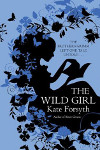

Nancy Bilyeau – The Chalice
Posted 27th February 2013
Category: Reviews Genres: 2010s, Drama, Historical, Paranormal, Political, Romance, Social, Theological
6 Comments

An attempt to end the Reformation.
Publisher: Orion Books
Pages: 427
Type: Fiction
Age: Adult
ISBN: 978-1-409-13309-4
First Published: 28th February 2013
Date Reviewed: 26th February 2013
Rating: 4/5
Joanna Stafford, ex-novice at the dissolved Dartford priory, is trying to get used to the secular life. But when her cousin visits the town and it becomes apparent that his wife wishes to continue the proceedings of the prophecy Joanna heard from Elizabeth Barton1, the novice has a choice to make. Does she refuse, and live in danger of those who wish Protestantism gone, or does she agree to work towards the deposition of the formidable Henry VIII?
The Chalice is a cleverly written novel that looks at the effects of the dissolution on those it impacted the most, and provides a semi-plausible and well-implemented reasoning for much of the happenings during the time between Jane Seymour and Anne of Cleves.
Considering the success of the book historically, it makes sense to discuss what does not work first. Whilst the secondary and “background” characters are factual, the main characters have been created by Bilyeau to varying effect. Some are mostly there to provide knowledge and opinions of the period – for example, although Brother Edmund is of importance to Joanna, his value to the reader is surely as a source of social information. Bilyeau’s creations may not always fit into the history entirely but their stories are woven into the factual events enough; it is less a case of pausing for thought, more a case of pausing for wonderment.
However Joanna herself is a complex and difficult character. She changes her mind constantly and although one can understand her hesitation and continuous worry there is something not quite right about it. One day she will adamantly be against something, the next very much for it, and she continually backs out when she’s already come too far.
Indeed whilst Joanna is a much-needed representation of the stricken Sister, she is perhaps too much an example of the stereotypical weak woman. Seeing that Joanna is supposedly well-read and strong in other ways it does cause confusion. An otherwise wise woman who suddenly decides to reveal her background whilst undercover is incomprehensible. She doesn’t think about how her actions will ruin careful planning and makes for an incredibly bad agent. Strange also is Joanna’s dislike of admirers when she constantly leads them on.
But however odd these factors are, they do not mean that Joanna is a bad character overall. As suggested she is a good source for learning about the affects of the Reformation and has been placed into the factual history with care.
All this usage of history is what sets Bilyeau’s book on a pedestal. The author never lets her own ideas come in the way of truth, and instead of pulling the reader away from it she finds the gaps where she can insert her characters so that they don’t disrupt. Bilyeau will take a snippet, for example the exact way an ambassador discovered information (which historians do not know), and pitch her characters as the sources. It is for this reason that even the most vigilant of readers, those on the lookout for liberties taken, should be able to relax. Bilyeau may not be the only author to value accuracy, but her method is rather unique and completely satisfying. She even supplies a reason for Henry VIII’s impotence in his later life – unnecessary really, but still absolutely gripping.
Whilst the premise rests on mystery and spying, the book does not move with any speed; it drifts along comfortably, taking its time. In the hands of another author this might have been a negative aspect, but Bilyeau’s focus on social history and detailing the setting mean that whilst you want to know about the intrigue, you are happy just to wait. And you can rest safe in the knowledge that Bilyeau will reveal all.
The Chalice is the book for those who love Tudor nobles but are bored with life at court (your average Tudor noble would have welcomed this book). It may be repetitive at times (everyone always says “no, no, no!”) but on the whole it is a very, very good book. Whilst officially a sequel it can be read by itself as the references to The Crown are detailed enough, and perhaps most importantly it gives a much needed voice to the victims of the changed society.
A superior novel of the dissolution and attempted restoration, The Chalice will delight readers of historical, spy, and perhaps even Christian fiction.
1 The nun, or “Holy Maid” of Kent. Barton prophesied the death of Henry VIII if he married Anne Boleyn, and was killed for it.
I received this book for review from Historical Fiction Virtual Books Tours.
Related Books


Speaking to Nancy Bilyeau about the Joanna Stafford trilogy, The Blue, and Dreamland (spoilers included)
Charlie Place and Nancy Bilyeau discuss the lifestyle of Dissolution-era nuns, using a website’s ‘contact me’ form to great success, there being more relics than there were items, using your family’s name in your work, and the grand amusement parks and luxury hotels of New York’s past.
If you’re unable to use the media player above, this page has various other options for listening.
Thomas More – Utopia
Posted 29th August 2012
Category: Reviews Genres: 1510s, Philosophy, Political, Social, Theological
Comments Off on Thomas More – Utopia

Utopia may not be Utopia, but does that matter?
Publisher: N/A (I read Penguin’s version)
Pages: N/A
Type: Fiction
Age: Adult
ISBN: N/A
First Published: 1516
Date Reviewed: 10th August 2012
Rating: 4.5/5
Please note that the version I read was translated by Paul Turner (from the original Latin).
Utopia is a work of fiction, however it does overlap with reality and depending on the edition you read the editor and/or translator may or may not have included a couple of letters that sound very much like true correspondence. The plot is simple and detail is everything: More meets his friend Peter and Peter introduces him to Raphael, a man who has lived in the New World. Raphael spends time conferring upon the friends the knowledge he has learned from the country, and discusses his convictions that life in Utopia is fairer than Europe and that Europe ought to use Utopian society and politics as an ideal to aspire to. Filled with references to Plato, the conversation is seemingly an attempt by More to preach his suggestions for a different system of government and living.
The book is quite a feat, yet whether or not the author himself knew just how much of a feat it was, and would remain to be, is a subject that would require a differing style of writing to a review; one can assume he knew something of it as Wolsey had made him publish it under the name of William Rosse1. Utopia is at once a product of its time and ahead of its era. Although some of the topics it addresses fall solely in the realm of the late medieval/early modern period, the vast majority are relevant today in a rather scary fashion. Indeed More is so accurate in his ruminations of structures that continue, even now, to be used in the (western) world, that he would be well placed were he to sit in the British House Of Commons tomorrow.
More’s book contains a lot of thoughts that successfully appeal to both a minority of people in his day – or maybe they were a majority? Who really knows what the common person thought? – and to us in our 21st century world. There are “discussions” on subjects such as capital punishment for burglary:
“We’re hanging them all over the place,” he said, “I’ve seen as many as twenty on a single gallows. And that’s what I find so odd. Considering how few of them get away with it, why are we still plagued with so many robbers?”
“What’s odd about it?” I asked – for I never hesitated to speak freely in front of the Cardinal. “This method of dealing with thieves is both unjust and socially undesirable. As a punishment it’s too severe, and as a deterrent it’s quite ineffective. Petty larceny isn’t bad enough to deserve the death penalty, and no penalty on earth will stop people from stealing, if it’s their only way of getting food. In this respect you English, like most other nations, remind me of incompetent schoolmasters, who prefer caning their pupils to teaching them. Instead of inflicting these horrible punishments, it would be far more to the point to provide everyone with some means of livelihood, so that nobody’s under the frightful necessity of becoming first a thief and then a corpse.”
Here More, through his character Raphael, speaks out against the fatal punishment meted out to thieves. More points out that a great many of the thieves apprehended are poor and that they are not in a situation where they can act upon the fact that thieves are executed. And More quite rightly suggests, although at least in the western world he can be happy that such extreme measures no longer exist even if jail applies to both, that there being no difference in punishment for a thief as for a murderer does not change the way a thief will behave; indeed a thief may as well have been a murderer in the 1500s.
And when it comes to bringing up the youth of society, More’s words are seemingly even more political than before as what he says is incredibly relevant to Britain today, as 21st century Britain struggles with crime which many link back to unemployment and few opportunities in both childhood and adulthood. More remarks:
“You allow these people to be brought up in the worst possible way, and systematically corrupted from their earliest years. Finally, when they grow up and commit the crimes that they were obviously destined to commit, ever since they were children, you start punishing them. In other words, you create thieves, and then punish them for stealing!”
If you do not help people to get out of their poor backgrounds they will have no way to get onto the career ladder, to make money legally. And, to go back to a 1500’s issue, how can stealing money equate to a death sentence? Both are against the Ten Commandments and surely murder is worse than stealing.
More doesn’t leave it there – he goes on to explain why there are these issues in the first place. What is interesting is that he speaks out against the way the church would take land for its own use and how the begging for alms by monks would effectively leave less money available for true beggars – this being interesting because More was himself a strong Catholic. One could liken his thinking to that of Erasmus, who also spoke out against the church whilst remaining one with it. Yet it is interesting how these two writers, More and Erasmus, were effectively giving a prior warning to their readers about the Reformation action that was to come, being people who remained loyal whilst others who spoke out fell out of love with Catholicism and became Protestants.
As a last look at examples of how More’s work fits so well into our world may we consider the information he provides that it is the expense of raw materials, created by a greedy government, that caused many people to be out of work?
It is interesting and ironic how some of the items More discusses were to happen so soon after publication. These are the references to the men employed by government turning against that government – this is what the New Model Army did in the 1600s, the turning point towards England becoming a republic for that short time – and the use, by a king, of ancient laws that everyone had forgotten, in order to raise money – exactly what Charles I did to fund his fight against the afore-mentioned NMA. So uncanny are these discussions, so spot-on in their warning, that it’s hard to believe that More was writing five monarchs previous when the country was, if not completely, better settled.
As to be expected in our modern society, though the book may have great relevance, it is difficult to agree with everything More is saying. Indeed there are observations made about Utopia that prove quite disagreeable, such as that the “mentally deficient” (read “mentally disabled”) ought to be laughed at whilst being looked after – because that is the right way to communicate with them if one is nursing them. This by itself is typical of views at the time, but what makes it particularly difficult to accept is that it is comes before a paragraph that urges acceptance of the physically deformed and ugly (read “physically disabled or deformed”) because such deformities are not their fault. Whilst one could perhaps surmise that the phrase “mentally deficient” is More’s way of saying “those who haven’t bothered to try to improve their intellect”, the fact is that coming straight before a statement about the physically disabled does very much suggest that More is speaking of the mentally disabled, and this is a point on which the translator of the text agrees. The only thing that truly suggests More is talking of intellect-by-choice is that he says those who are physically deformed did not choose to be so, thus possibly inferring that the mentally deficient are their opposites – because which mentally disabled person has had a choice over whether or not they are mentally disabled? It is not their fault, just as it is not a physically disabled person’s fault. However, a fact trumps all these charges to single this piece out as prejudice by More – physically disabled people were more understood; the mentally disabled, for a very long period of time, were simply viewed as mad or strange with no real studies conducted to find out what was really going on. With a physical disability, even doctors of the 1500s would have recognised a limp, a wounded arm, or an inability to move, as a medical issue.
Then there is the idea of religious tolerance. Through the fictional Raphael, More announces that Utopia is home to a variety of religions and that the citizens are free to believe in what they will – then he says that everyone goes to church and kneels before the priest. Unfortunately here, in our modern eyes, More is but confirming his own beliefs, firstly by the use of the word “church” – a Christian term – and secondly because people of differing religions should not be made (as you soon realise that Utopia is in fact more akin to an apocalyptic dictatorship than heaven) to use one priest and one all-encompassing service, at least not as their sole form of community worship. And if beliefs are allowed to be different, then the prayer More details makes no sense as it talks about a “true religion”. “More was intolerant of all dissident opinion,” wrote the historian Joanna Denny2. Whilst Denny was incredibly biased against More, it cannot be denied that More’s own words back her up.
But these negatives in no way set the modern reader back, for later on comes such comments as this one on the elderly poor:
Having taken advantage of them throughout the best years of their lives, society now forgets all the sleepless hours they’ve spent in its service, and repays them for all the vital work they’ve done, by letting them die in misery.
It seems 1500s Britain was as notorious as the 21st century version in its care of the older generation – a quick bit of research on the part of anyone not acquainted with the UK system will find that the above quotation could quite easily have been taken from a leaflet about the current non-treatment of the aged population.
So we have a book that was ahead of its time whilst being a product of its time, that is philosophical and political – almost dangerously political given that More was the friend of the oft-cited tyrant Henry VIII – and is eternally relevant. But what we don’t have, and this is intriguing given that the very word “utopia” is in our dictionaries thanks to More’s usage of it, is a particularly Utopian society. Utopia the country, for all More’s debate – albeit that More does criticise it from time to time – is in fact more deserving of the terms undemocratic, unfree, police state, and lots of other words beginning with “un” that end in a description that brings to mind strict governmental control. The Utopians have free time every day, but they live in regimental housing, eat at certain times in huge communal dining halls, have one set of clothes, and if they fall out of line at all, are punished by slavery or enforced celibacy. These falls include premarital sex (understandable given More’s religion, but surely a Utopian society would simply suggest the couple get married since they obviously have a connection) and disobedience to one’s husband – children must confess to their parents, wives to their husbands, but there is no mention of whom a husband confesses to. There is no money because the country produces enough for everyone, which sounds idyllic, until you learn that there is in fact money in the country because they collect it to pay other armies to go to war for them. Indeed their whole process of war is abhorrent, for all its notions of peace.
So Utopia is not Utopia, and even More supports this conclusion. Whether or not he intended to be ironic in this way cannot be fully known, especially as a lot of what he pronounces is so good. But surely there is a case to be made in favour of More being intentionally ironic in order to show that even the best places on earth can get it wrong in some aspects. Maybe he just wanted to create a slighter better place than England, if Turner is correct.
What, then, was More definitely trying to do here? It would not be wrong to say that he wanted to use his exalted position in court and society to try and influence people to change Britain into the way he felt it ought to be. And whilst this would have been the case for any number of individuals, one cannot help thinking that a lot of what More said would have been very good to implement. Was More in part preparing the way for the burgeoning Protestantism that was happening in Europe? This is possible but rather unlikely given that More produced a diatribe of Martin Luther’s views that, according to secondary sources, included plentiful swear words – clearly More was not as tolerant as he suggests in his fiction; yet he could still have wanted to change things somewhat. The one thing that can be said for certain is that whilst More liked Henry VIII he saw a great many things that were not particularly savoury in his friend and doubtless would have been happy had Henry read the book and introduced to his court some of the suggestions. Sadly considering that Henry would not have been amused by much of the content, and given that the monarch passed on books he was given for others to read instead of him, that was very unlikely to happen.
There is so much in Utopia to discuss, which is remarkable for such a short book. More never wastes a moment, giving only a few sentences to background set ups, and his various references to Plato, combined with the detail and constant stream of information provided, only stands to further the idea that More is attempting to emulate to a degree the great ancient philosopher’s work. Such is the content in Utopia that you are bound to find both items you agree on and items you disagree on, and plenty for debate. To ask whether it is a good book is irrelevant in the usual way – as pure fiction a plot solely of discussion is horrendous – but apply the “philosophy” label to it and suddenly you are in the correct territory.
Utopia forces you to think about the past, the present, and the future – what you like about your country and its past and how far your society has come since times long gone. Whilst it may be concentrated on Britain/Europe and contrasted with a mythical Native America, much of it can be applied to the world at large, both historically and in relation to our modern era. In terms of philosophical debate, to use an extremely bad pun, the more the better.
1 Denny, J. (2004) Anne Boleyn, Britain, Piatkus, p.102.
2 ibid., p.171.
Related Books


Subscribe to this site via email and you’ll receive 3 posts a week. If you use Gmail, you may find the posts are stored in your ‘social’ or ‘promotions’ tab.
Danielle Trussoni – Angelology
Posted 19th May 2011
Category: Reviews Genres: 2010s, Fantasy, Theological
2 Comments
The Bible speaks briefly of the Nephilim, but what if they deserved a lot more words than they were given?
Publisher: Michael Joseph (Penguin)
Pages: 452
Type: Fiction
Age: Adult
ISBN: 978-0-718-15558-2
First Published: 2010
Date Reviewed: 19th April 2011
Rating: 3/5
Evangeline has always led a routine existence; as a nun she looks after the mail and devotes her time to prayer. But all that changes when a man arrives seeking information about a past Mother Superior. Verlaine is working for a tall blond who surpasses human averages by far, someone who isn’t about to let him do his job alone.
Angelology is the first book in a new trilogy written by Trussoni that examines the possibility of evil angels walking the earth. In it she links historic events to these human-angel hybrids and creates a whole educational system for the suppression of them.
Something that I feel is important to impart to the potential reader is the amount of background information included, indeed a large chunk of the book is dedicated to an event that happened over fifty years before. In this Trussoni blends fact with fiction and some sections are extremely interesting but one can feel bogged down especially as you can’t exactly take much of the information away with you for use in everyday life.
The way in which Trussoni goes about telling her tale is at once brilliant and ridiculous. The brilliance comes in the form of such things as drawing a subtle link between the physic of the Nephilim and the dictate of the Nazis on the perfect Aryan. The ridiculous comes in the form of such things as human agents in a secret society working against Nephilim, who want to kill them, having “angel1”, and “angel2” as their car number plates.
Unfortunately it is this second element that dominates the book, and it’s not until the end that things pick up. One character obviously sees a Nephilim, sees their wings, but it isn’t until someone else tells her much later on that she realises it was a Nephilim she saw. Add to this the fact that Trussoni constantly tells us that this character is the brightest student and, well, you can see where this is going.
The characters are not particularly developed, and the sort-of main character, Evangeline, supposedly the heroine, only gets things done because she has people telling her what to do. That she is a major factor in the Angelology circle is peculiar.
There is an issue with language and the book in relation to international audiences. Trussoni talks often of Verlaine’s “wing-tips”. On doing research, I discovered that this is the American phrase for a type of shoe, but even so, it’s really not the best way she could have described them when her book is about winged creatures.
The saving grace of the story is the ending, where Trussoni finally takes the plunge and delivers some top-notch plot ideas. The pacing and variation do make up a lot for the prior 300 or so pages, but unless you are happy to stick with a very average book until the end you are likely to deem it not worth it and that would be entirely understandable.
If you want to read Angelology proceed with caution, and I would recommend having a second book to hand for times when things get silly.
Related Books

Alex Bell – The Ninth Circle
Posted 11th August 2010
Category: Reviews Genres: 2000s, Mystery, Theological, Thriller
Comments Off on Alex Bell – The Ninth Circle
Good and evil fight against each other, but sometimes it’s the middleman who is in the right.
Publisher: Gollancz (Orion Books)
Pages: 262
Type: Fiction
Age: Adult
ISBN: 978-0-575-08465-0
First Published: 2008
Date Reviewed: 15th June 2010
Rating: 5/5
Gabriel doesn’t remember how he ended up on the floor of his flat, but he’s been bleeding and there’s a significant amount of money on the kitchen table. He’s able to find out his name pretty quickly but no other information seems to exist. Should he wait for someone to come looking for him, wondering about his absence in their life? He knows that he’s in Hungary and that he speaks Hungarian but that he’s from England and speaks English as well as a possible several other languages. He seems to be a writer – an unpublished one by the look of his zealous manuscripts – and possibly a madman. For Gabriel has been having weird visions since he woke up, of flaming men, and has seen people who don’t appear to actually be there. Why is he receiving packages and whom are they from? And why was his previous self so obsessed with Hell?
The Ninth Circle is a remarkable book, and for the first time in ages my sky-high expectations were justified, ten-fold. Bell has written a novel that successfully takes a look at subjects that have been raised before, but applied them to her characters in a whole new way. The book is structured as a diary but unlike a lot of diary-structured books it’s easy to forget that it’s in the first person.
Bell has done research, and put her education to good use. She’s read up on a variety of topics, some of which aren’t even fundamental to the plot, and delivered back to the reader her findings. On her blog she herself says that she’s interested in World War II (and there is an event described in her book in great detail), and she studied Religious Studies – but baring her own interests it is clear she’s spent time on extra and useful information. This means that you come away with a lot more knowledge on things that aren’t neccersarily imperative to the story itself.
The nucleus of the novel is religion, which I’m actually not too happy about saying because for me it was a shock (a good one) and the thing that first made me start reading faster because it was so unexpected – but I know that won’t be the case for everyone and so it must be said. The Ninth Circle deals with the apocalypse, the beginnings of it that is – there are no full-scale battles – and in case you are put off by this idea I must say that this book is not Christian fiction, in fact although one may believe that Bell is a devoted Christian if you are excited by this suggestion then you will be disappointed later. Bell does not look at the topic with a religious fervour, rather she has stood watching from the sidelines. And if I have appeased those who do not want to read Christian fiction then I should also appease those who do want to read it – Bell is no Philip Pullman, she is fair in her convictions without bias. There is no reason why either camp should not enjoy this book.
Gabriel is a strange character to get used to, not so strange in himself (because you understand early on that there’s going to be a reason for all his visions and feelings) but because he edges toward one notion before seeming to go back to another. Is he a likable person? That’s hard to decide, but he’s certainly compelling and a fantastic fictional hero and narrator. The other character of particular note is Stephomi. You’ll change your mind many a time about him, but is that perhaps what he’s looking for? Because you want to believe he’s good, don’t you? It’s a relief to find out that he is, isn’t it? There is equality between characters and plot, both are as important as each other. The locations in the book are all real places in Budapest and Bell is adept at weaving eerie mists over it to make you curious and longing to visit, while simultaneously being alarmed by the idea.
Bell’s writing is of very high quality; the only thing that sticks out is her reliance on emphasised words. There are a lot of them, sometimes too many, but it does cause you to delve deeper into the presented situation overall, and once you’re a fair way through the book you get used to it, it’s just her style.
The Ninth Circle is brilliant – but do I like it, as in did I feel comfortable reading it? The thing is that you’re forced to think about things that we, as humans, generally try not to think about. Whether or not we believe in God we do in general believe that there is a distinction of sorts between right and wrong and good and bad (though Bell makes the poignant proposal that they are not so different, like heat at it’s hottest feels cold, like the phrase “two sides of the same coin”), and also, to my knowledge, we tend to believe in evil, again no matter our faith. It’s easier to be bad than good, being good takes more effort, and it’s easier to submit to the devil – this is a well known thought in religion, God needs us to work (and so does the devil, but his requests are easier). Submitting to evil brings instant reward, working hard to be good may not and often leads to pain before happiness. We know this, and it scares us, and in introducing us to the demons in an intimate way through the characters Bell is exposing us to what we fear, and that concept is something we worry about – being exposed to our fears.
I wonder if the reader feeling uncomfortable was what Bell had in mind. In fact no matter what she had in mind she’s succeeded in her goal, as I will definitely be thinking about this novel further and recommending it to everyone who talks to me about books. It’s going to stay in my head for a long time and will probably factor in any conversations I may have on religion, the future, and the apocalypse.
Read it and enjoy. Gabriel’s loss is our gain.
Related Books