




Jane Austen – Northanger Abbey
Posted 20th April 2011
Category: Reviews Genres: 1810s, Books About Books, Domestic, Social
1 Comment

In which Austen plays narrator to devastatingly good effect.
Publisher: (Numerous, but I’d wager Vintage would be a good one)
Pages: N/A
Type: Fiction
Age: Adult
ISBN: N/A
First Published: 1818
Date Reviewed: 27th March 2011
Rating: 5/5
Catherine Morland loves Gothic books, in fact she loves them so much that they can overtake reality. That she’s not well-versed in anything else is of no importance to her. As luck would have it, it may not be important to the hero either, at least in his choice of partner. But before she can meet this handsome fellow she must first travel to Bath, because that’s where he is, and must, before they can become well-known to each other, embark on a few irritating friendships.
If my summary sounds strange, it is because I have endeavoured to provide a hint of the style of the book. Austen has no qualms about letting the reader know that this is just a story, and in fact she makes it so that the story is one of the easiest narratives written. She purposefully creates a heroine who is to have little trouble in meeting the hero (she reminds you often that they are the heroine and hero) and points out where she could have made the book stereotypical and chose not to. In essence, the book is far less eventful than many but still very good – but you have to know the style of writing to understand why the contents stop it from being boring.
The book centres on the relationships between three major factions, Catherine and her brother James, John and Isabella Thorpe, and Henry and Eleanor Tilney. All three factions impact each other in various ways, both directly and through the “use” of one another. As you might expect with an Austen novel, love plays its part, as does money, and overall personal situations.
On the whole, Catherine isn’t a particularly interesting character, but Austen focuses on her quirks in order to make the story the success it is. Catherine is a sensationalist and some of the humour in the book inevitably arises from her love of Gothic novels and the value she places on the information in the real world. It’s like the thought that often crosses the mind of an admirer of The Lion, The Witch And The Wardrobe to investigate any old-fashioned wardrobes they come across; but unlike these more modern thoughts that are meant only in jest by all but children, Catherine’s thoughts that stem from her novels become a reality to her, and the chastising she gives herself for it being a fantasy is only half-hearted. That her imagination is taken advantage of several times by Tilney is to create not only humour but also a situation in which Catherine can develop as a character, as well as to make Tilney himself not only a brilliant hero but to demonstrate Austen’s own superb mind.
If Henry had been with them indeed! – but now she should not know what was picturesque when she saw it.
Catherine’s development in regards to general knowledge, which includes general social knowledge, may not be particularly detailed, but it is fun to read about and good to be able to imagine where she might be in a few years time.
The other characters are almost equally compelling. Although not as passionate and impulsive as Catherine (in Northanger Abbey I found the spin-off, of sorts, that I would have loved to see of Charlotte Brontë’s Villette, focusing on Ginerva Fanshawe) they each possess distinctly interesting qualities. Henry Tilney is sarcastic, intelligent, and, I would say, the way in which Austen divulges her thoughts to the characters; his sister is an obedient woman but unconvinced by general society. Their father is a matriarch and the Thorpe siblings hard to bear, an assuming, self-righteous, deceiving duo.
“Would he thank you, either on his own account or Miss. Thorpe’s, for supposing that her affection, or at least her good-behaviour, is only to be secured by her seeing nothing of Captain Tilney? …Is her heart constant to him [Morland] only when unsolicited by anyone else?”
Something that marvels me about this book is Austen’s detailed knowledge about relationships. I know that so many things about love and relationships only occurred to me after I had experienced them, together with the information from music, books, and movies, and here we have Austen, a woman in the Victorian era, when woman were suppressed, a woman who experienced love but not for a great length of time, discuss subjects so much better than many writers even today.
As to the theme of parental interference, Austen ends the novel leaving the reader to decide whether her work is in support of “parental tyranny” or “filial disobedience”. It’s a fitting way to end the book. That she had pointed out to the reader, several paragraphs before, that she knew that they knew how it would finish, just adds to the superior quality.
The best aspect of this book is the writing. The story is enjoyable but if it had been told in a more regular manner it would be nothing special, and that is it’s selling point.
Northanger Abbey is one of a kind, especially where Austen’s own work is concerned. If you are an admirer of her books but have not yet read it, I urge you to do so in haste.
Related Books





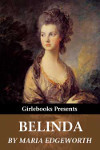
Elizabeth Chadwick – Lords Of The White Castle
Posted 14th April 2011
Category: Reviews Genres: 2000s, Historical, Political, Romance, Social
1 Comment

The lovers are married in a ceremony lasting minutes and then flee from the king. It’s the stuff fairytales are made of.
Publisher: Sphere (Little Brown)
Pages: 673
Type: Fiction
Age: Adult
ISBN: 978-0-7515-3939-4
First Published: 2000
Date Reviewed: 21st March 2011
Rating: 4.5/5
The Fitzwarin family seat was at Whittington until it was taken from them. For years Fulke’s father strove to regain it but when he died it was still in the hands of another and thus Fulke and his brothers took over the fight. Yet Whittington doesn’t remain the only thing in the young man’s mind and once he meets Maude, who he’d first come across when she was a headstrong girl of twelve, his loyalty will be split.
Something that may interest you to know, and to give you a general sense of the book, is that the man this book is based on, Fulke Fitzwarin III, is one of the possibilities for the inspiration of the legend of Robin Hood.
For the longest time I lingered on the fence between wanting to review this novel to let you know how good it is, and not wanting to review it because the idea of reviewing Chadwick’s work seems to me blasphemous. It is just so difficult to explain how amazing her creations are, and indeed the first book I read of hers, Shadows And Strongholds, has still not seen a review from me since two autumns ago when I read it.
The success of the book, above anything else, above the themes, even above the story, is the way that Chadwick makes the history accessible. The style of writing doesn’t so much invite you as envelope you without warning into the world in the book, Chadwick’s style is very much show rather than tell and the details she goes into about the domestic life mean that imaging everything is delightfully simple. Unlike many books where you can be hard pressed to create a whole picture of the scene in your mind, Chadwick’s work fills you in on everything; you hear about the different weapons, the way clothes were made, the cultural traditions such as the bedding ceremony. And as you can no doubt tell from the way I have written it, this paragraph applies just as much to her other books as it does to Lords Of The White Castle.
Because there is not much factual information to go on, and what information there is about the Fitzwarin’s cannot always be trusted, it was inevitable that Chadwick would adopt a more fictional outlook than authors who write of later periods. As someone who thrives on historical fiction that is more or less factual I have to say that it really doesn’t matter here, and dates are included which makes it easier if you later wish to research the factual elements.
The book takes a while to come into it’s own but the lead up to the romance is far from boring, the reader is provided with all the necessary background details and then some, and the characters are strong and well developed. When the romance does enter fully the narrative speeds along because of everything else that is going on. It’s thrilling. Perhaps the best aspects are the times the characters know they are assuming a stereotype and exploit it magnificently.
Fulke smiled at the apprehension in Ivo’s voice. Put his brother in the midst of a melee or ask him to charge across open ground at opposing cavalry and he would not balk. But give him the massive greenery of the Welsh mountain forests and the possibility of wild Welshmen lurking in ambush and he became as anxious as a nun in a brothel.
Humour places a substantial role, although you wouldn’t call the book a comedy. There are some great lines in the story and the metaphors tend to enlist the time period.
“You may seduce me as much as I like,” she declared with a wrinkle of her nose, “but not until we are wed.”
The sex scenes in the book often take place “behind the curtain” so to speak, but when they don’t they are hot and sensual. This doesn’t mean it is erotic fiction, and the words used are not crass, but Chadwick goes further than many romances.
The characters are strong, and Maude, the leading lady, strives to be on a par with her husband – apart from societal constraints, they are equals. There is a brilliant scene where Maude pulls out her crossbow and, after seeing her husband’s hesitation, reminds him that she is better than most men. If you’re looking for a kick-arse chick, you’ll find one here. Fulke is just as good, his dialogue is often priceless and his manner admirable, at least usually. And to bring in the Robin Hood reference I spoke of at the start, Chadwick’s story does include things that relate well to the legend. The rest of the characters are no less developed and the Fitzwarin household and their allies are a joy to read about.
Unsurprisingly Lords Of The White Castle deals with social issues, including the differences in gender. Chadwick generally lets the laws of the period hold sway but often points to times when men were happy to have their women be knowledgeable in politics. The two elements balance well and from her 20th century position she illustrates how some people were ahead of their time. Poignant is the retort made by a man to his father-in-law that if a woman can marry and run her household then she should be able to own land. It strikes as similar to many of the debates we have today regarding the placement of age restrictions, such being able to drive and be married before having the right to vote.
The only problem I had with the book was its length. It carries on for a long while after the threads are tied and although you can understand why it does, because Chadwick is wanting to present you with her version of the relationships, after the afore mentioned threads are tied there is nothing particularly interesting to keep reading for.
Lords Of The White Castle brings a piece of history that is often forgotten to life and fills in the gaps with fiction that is interesting, fun, and believable. If you are at all interested in swords and shields or if you have ever wanted to travel back in time and live in the medieval period then this book for you. And if you’re anything like me then the idea of bread and cheese becomes an incredibly viable option for dinner when hunger strikes and you have to put the book down.
Marketplaces, kings, tournaments, traditional cooking methods, and knights in shining armour coming to rescue their lovers. It’s all here.
Related Books
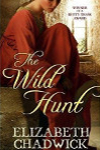


Elle Newmark – The Sandalwood Tree
Posted 8th April 2011
Category: Reviews Genres: 2010s, Domestic, Historical, LGBT, Political, Romance, Social
1 Comment
History is always changing because we are always finding out about new aspects of it.
Publisher: Atria Books (Simon & Schuster)
Pages: 357
Type: Fiction
Age: Adult
ISBN: 978-1-4165-9059-0
First Published: 17th February 2011
Date Reviewed: 31st March 2011
Rating: 5/5
It’s 1947 and American Evie has come to India with her husband and son while her husband documents the fall of British rule. Martin has changed since the Second World War and though Evie hoped the move to India would re-ignite their marriage it seems unlikely to happen. In heartache she turns to cleaning in order to gain control where it was lost and it’s here that she discovers a loose brick in their hundred-year-old house. Hidden inside the gap is a bunch of letters dated 1850’s – suddenly Evie has a purpose of her own.
Although I’ve read a lot of books recently that I enjoyed perhaps even more than The Sandalwood Tree, on no occasion have I been able to read without checking every now and then on my progress – until this book. I finished it without really noticing. The book is full to bursting with delightful contents.
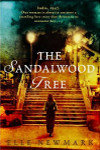
Admittedly it probably helps that I’m interested in India and its many cultures and can speak a bit of Hindi (the book contains a smattering of the language) but I’d hope that the immense richness of detail is undeniable to anyone. Newmark may to a certain point exoticise the country, this makes sense considering the time periods she writes of, but it’s the overall research and the way she describes the places that make the book what it is. The colours of the cover match the story perfectly.
The Sandalwood Tree flips back and forth between 1947 – the time of Partition – and the 1850s, when relations between the British and Indians were understandably bad. It details the events that happened during those times (although the book ends before Partition happens so it’s the lead-up that is examined) but the emphasis is on the lives of the characters and the particular social issues relevant to them. Evie, as an American, finds herself more open-minded than the Brits in her circle and so you get to see a few different points of view. Her own story becomes very much effected by the letters she reads, leading her to find India more homely and enabling her to really consider the impact her husband’s years in service have had on their marriage. Her son, Billy, is a joy in himself, being rather bold and knowledgeable and, being five years old in 1940s India, his own development as a character is particularly interesting.
The letters Evie finds become a second plot in their own right. Even though it is Evie who reads the letters and finds out about the women in them, so much time is given to the letters themselves that it’s easy to forget that. This sort of story has been done before, but because of Newmark’s writing style and the connection she makes between the women and Evie, it is fascinating. I should probably say that Evie’s story is told in the first-person, the 1850’s via the letters and a diary. The various social issues covered due to the two characters love interests make the book very compelling.
I would observe and understand India without India actually touching me.
One of the most interesting elements of the book is the way the domestic squeezes its way into the social, and vice versa.
A second conflict of cultures happens as the back-story to Martin’s plight in the form of the Germans and anyone against them. Consider the following:
He said it bothered him that German sounded so much like the Yiddish of his grandparents; then he shook his head as if he was trying to understand something.
Newmark’s point is poignant, that there was no real difference between Jews and Germans other than religions. Martin’s experiences, when put against the issues surrounding partition add another layer of thought to the book, show in both cases how society can change so quickly when a line is drawn in the middle.
The only thing I took issue with was the phrase “buttoning the curtains down” within the letters written in the 1850’s by British people. I have come to recognise the phrase “button down” through reading American literature, but it’s not something we say in Britain and thus is out of place in an old English letter. But I feel I have demonstrated my feelings overall: this book is pretty near perfect.
The Sandalwood Tree brings many different generations, cultures, religions, nationalities, domestic situations and opinions to its relatively modest 357 pages, and deals with all effectively. Whether the research is spot-on I can only say as much as I know personally, but it definitely comes across as a triumph all round.
The answer to would I recommend this book is a resounding “yes”.
I received this book for review from the author thanks to Pump Up Your Book.
Related Books
None yet
Katharine A Russell – Deed So
Posted 11th March 2011
Category: Reviews Genres: 2010s, Domestic, Historical, Social
2 Comments
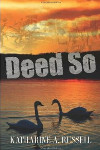
Over the tip of the iceberg but not yet on the ground of the other side…
Publisher: (self-published)
Pages: 428
Type: Fiction
Age: Young Adult
ISBN: 978-1-4537-7503-5
First Published: 2010
Date Reviewed: 8th March 2011
Rating: 3.5/5
In Haddie’s town in Maryland, America, it’s the 1960’s and African Americans are now able to live lives more equal to their European neighbours. But there is still segregation and there are low opinions of the people still called “Negroes”. It is this conflict between equality and low opinion that leads the death of an African American boy to create a furore. The town may be able to get over it but this issue isn’t their “only” problem.
I have to admit that I was skeptical when I received Deed So because discovering it was self-published and then reading the blurb that heralded it as “astonishing” and “gorgeously written” didn’t bode well in my mind. For a while I did indeed have reason to keep comparing the content to what the blurb declared true.
Unfortunately there are a mass of typing errors in the book, including a few which change the meaning of what’s written and thus have to be pondered over. The majority of the book walks along seeming to not go anywhere – although there are subplots they are wrapped up quickly enough and one can wonder where the book is truly heading. The climax is too convenient, the story gets to a point where it’s racing along like nobody’s business and the event is a good length, and then suddenly it ends in a very unsatisfactory manner.
But there is a lot of good in this book that, by the time you do reach the end, has balanced out the bad. One of these good things is that Deed So is very much one of those works where the reader can live the life through the words. Because the plot takes a long while to show it’s true colours you are able to sit back and really explore life in the 1960’s, which if you’re at all interested in historical domestic situations and were not around at the time, is a real treat. Russell does a good job with the descriptions, speaking personally I began the book not really knowing what made the 1960’s what they were – in other words my knowledge of the distinctions between culture, dress, and technology between the 1930’s and 1960’s is a little blurry – but by the end I could say that I was far more knowledgeable and able to conjure up images, albeit if they weren’t completely perfect.
If the strongest overall aspect is the invitation to the reader to immerse themselves, then so close in prominence that it could be argued just as strong, is the social aspect. On the face of it the major issue covered is directly related to the acceptance of African Americans but in fact the issue is broader than this, encompassing social relations as a whole. Whether due to fact or Russell’s creation (this I do not know) the situation provides a good introduction for further contemplation. The town sits in the middle of the two sides of debate – they have accepted blacks into their community, and talk to them as equals, but there is still some segregation upheld, and the past inequality continues to affect the choices of the community in the way that the whites are higher in society. Because Russell gives the reader this quasi-balance and you get to hear each side of the story every time, you come away much more knowledgeable than you would have if only either segregation or complete equality had been spoken of.
In referring to a broader social issue I look to the problems with class and how the family and community at home related to the return of soldiers. One of the subplots involves the complete change a boy undergoes after having been in Vietnam and how he is unable to speak out about it because of the suffocation of an uninformed community and a society unwilling to discuss the issues he has had to face. In addition to this there are also several domestic troubles.
Russell has created a cast of characters bound by family. All her characters belong to families and each family is important in the community and known by all. Yet, whether they acknowledge it or not, every single one of those families have problems of varying natures.
It would be impossible to point to a particular motive Russell may have had to write this book. Like many other writers, no matter whether they use the period to comment on a social or long-term domestic issues, Russell has created a story with her own spin that is thus at once similar yet vastly different. Each story of this nature brings different thoughts to the foreground.
As a reader I feel privileged to be able to have so many viewpoints and opinions in mind on which, if I so chose to do so, would make for a well-debated essay.
Deed So has it’s fair share of technical hitches and could have done with more polish, but it’s safe to say that it’s a pretty decent novel and informer.
I received this book for review from the author thanks to Pump Up Your Book.
Related Books
Ella Drake – Silver Bound
Posted 7th March 2011
Category: Reviews Genres: 2010s, Erotic Romance, Science Fiction, Social, Western
Comments Off on Ella Drake – Silver Bound

Sometimes you might get what you always wanted, but you’ll have to fight for it first.
Publisher: Carina Press (Harlequin)
Pages: 191
Type: Fiction
Age: Adult
ISBN: 978-1-426890-79-6 (only avaliable as an ebook)
First Published: 22nd November 2010
Date Reviewed: 20th February 2011
Rating: 3.5/5
When Jewel attempts to run away from her evil husband, taking their son with her, she’s caught and her memories are wiped. Prepared to become a sexual slave, no one thought that it would be her much-loved ex-boyfriend who would come to claim her as his, the motive being to save her.
This was pushing the boat for me. Even though I didn’t think my venture into Mills & Boon too shabby an experience, it hadn’t been what I thought it would be. I was therefore still lacking in what I’d set out to gain – experience in a genre far removed from what I usually read. The summary of Drake’s Silver Bound found it’s way to me through one of the statuses of the author’s Twitter account, and I knew without a doubt that this was it.
Silver Bound deals with a deprived subject but although Drake uses it for erotic purposes she doesn’t let the storyline sink to such levels as you may imagine. Indeed the space, western, and escape elements are just as important, and it’s obvious that time has been spent just as much on them as the romance.
What Drake does is present the situation but makes it so that the man, Guy, who claims the slave, Jewel, is a lover from her past who regrets their parting and is thus wanting to save her from her predicament. There is actually less sex than you might think because the love Guy has for Jewel does not permit him to use her to his advantage. Guy makes for a very worthy hero.
All that said I can’t really shy away from describing the sex. It’s hot, it’s in a variety of flavours, and it goes back and forth in control depending on Jewel’s recovery of memories at any given time.
Another point of interest is the growth of Jewel, the enslaved woman. Before her enslavement, upon which her memories are wiped, she is a sassy and confident woman despite her horrible situation. After her enslavement, especially when she meets Guy, she begins to regain them so that the story doesn’t remain as much about Guy’s feelings and it becomes a story of two equals. That’s not to say that Jewel’s thoughts are given no time, indeed they are included in all sections of the story.
I couldn’t write about this book and not talk about the mix of living in space and the realm of the cowboy. Silver Bound isn’t so much futuristic as it is fantasy, the people inhabit and use space stations, journey through the universe in “hoppers” and have futuristic technology – but they appear to have lived on their different planets for ever. The western aspect blends into this flawlessly, as Drake explains how the ranchers use the older ways of living – the cowboy ways – to keep their patch of land fresh. Guy can use a technologically advanced weapon, but he’ll just as often bring out the lasso.
The writing is good but there is a sense of the short story in that many times the scene switches suddenly, sometimes it’s very confusing what is happening. The book could have done with a little more development to keep the transitions between sections of the plot smooth.
I can’t say that my comfort zone in romance overall has changed, even if after the third time my boyfriend asked me what I was reading on my phone and the answer came back, sensationalised for maximum effect, “a dirty erotic novel”, he no longer blinked an eye lid, quashed further by my reminder that men have had access to porn for centuries – but having read Silver Bound I feel less daunted by the genre and see that if you choose wisely you don’t have to land yourself with something that is stereotypical or badly written.
Drake drops an original mix into the pot and shows that a combination of genres at opposite ends of the scale can be blended to good effect, even when the least of details in the blend is examined. The universe created could support a vast number of interesting stories of many types – and as a small slice from this massive universe, Silver Bound does not disappoint.
Related Books


