




Merryn Allingham – The Crystal Cage
Posted 15th October 2014
Category: Reviews Genres: 2010s, Angst, Domestic, Historical, Mystery, Paranormal, Social, Spiritual
1 Comment

Time may change, but there will always be that person in a similar situation.
Publisher: Harlequin
Pages: 234
Type: Fiction
Age: Adult
ISBN: 978-1-460-33836-0
First Published: 1st August 2014
Date Reviewed: 14th October 2014
Rating: 3.5/5
Nick won’t give up, so Grace agrees – an otherwise usual day as a property historian/gallery assistant is changed when Grace accepts the energetic Nick’s proposal that they work together on his commission to discover whether a Victorian architect designed for the Great Exhibition. Grace’s life is ruled by her partner (bed and work) Oliver, and she’s done a good job of pretending she’s happy for nine years, but Nick’s offer, whilst overwhelming, piques her interest. Little is known of Lucas Royde’s career before he became famous, but that might just be about to change.
The Crystal Cage is a dual-plot novel that studies the art world and history but later takes a long look at the expectations people have of each other, especially those less well-off (in all ways), than themselves, to good effect.
None of the characters are likeable, however whether or not they are supposed to be is not obviously stated and so it would be fair to say that if you go into the book knowing that this is the case, you are likely to finish it more content than someone who goes in expecting happiness and romance. Be not ye fooled by the name of the publisher, there is little real romance here and, given the subjects, it is all the better for it.
Lucas, for example, is assuming and takes jealousy to an extreme level. A subtle, non-violent level, but one all the same. The man who is quite obviously in lust rather than love hates his rival from the word ‘go’ with scant reason and it can be hard to feel anything for him when he puts himself in such an awkward and socially unexceptionable position with little behind it that the reader can understand. His ‘romance’ is an interesting one, however, in part because of the way the author does not include any details from the point of view of the woman. Indeed the book would have been too long if she had been given a voice and so it may simply be that she was left out for no literary reason, so to speak, but nevertheless the effect is intriguing. You don’t hear a word from Alessia except through Lucas and therefore it is easy to believe that perhaps she is less in love with him than Lucas thinks, she is certainly more desperate and less powerful than Lucas can comprehend. Their story may be sad, and it may be true as much as the fiction can be, but what is left out ensures that there is a further link in the main social theme.
This theme is of control, the expectations I have stated above. Grace became Oliver’s partner in every sense of the word, but it was/is a case of what Oliver says, goes. He was the lifeline she needed – the security, the job, perhaps even the man in a sexual sense – as long as she was at his beck and call. It is somewhat a spoiler to say this, so you may want to move on to the next paragraph if you’d rather not know too much, but the theme continues somewhat with Nick. Bounding, get-up-and-go Nick, whom Grace likens to Tigger. Whereas Oliver’s persona may have been obvious from the start, at least it would have been if Grace had been less in need, Nick allows the author to show how control can come in different forms. Similarly Alessia is controlled by her reported love for Lucas, and by her husband. It’s interesting to compare the two situations because the contemporary version may hit harder, being closer to home than the Victorian period. But of course both are equally damning.
This all sounds very good, and it is, but this theme consumes the end rather than the main section of the book. The book is overwritten. It’s wordy, flowery, and rather repetitive, with ideas being repeated mere pages after they have already been stated. There is also an element of prolonged angst to it that can be difficult to read. The insistence by Lucas that he’s in love when the reader can see that it is pure lust makes the story difficult to continue.
Nick and Grace are rude. They literally run away from people who had made time for them as soon as they, Nick and Grace, realise the person doesn’t have much information for them. They are well-matched in their lack of tact and in their attitudes to others. Lucas is jealous, as said, hateful of too many, and assumes too much.
The mystery has many, many dead ends, and these are convenient, a way to keep the story going. After a couple of these occasions wherein a search looks promising but is then fruitless, it becomes too predictable and the meetings and searches boring. Then, later, this turns 180 degrees when ideas about Royde appear out of the blue with no ‘evidence’ (for Royde is fictional) behind them. Grace makes guesses that are correct, but they are too much of an assumption without the information the reader has been privy to.
Lastly there are a few names and places that invite confusion, and areas that, other than the filler content, could have used more editing.
Yet the history itself is appealing and there is enough factual information for the interested reader to jump from it into their own research. And the ending itself is highly appropriate and rather excellent. Allingham shows all the worries and backtracking of someone in a difficult situation but writes the ending that you could say is expected. She doesn’t make sweeping changes or include roses on doorsteps – she gives you the realistic truth and has her character remain strong. And she shows that backwards can often be a step forward.
Granted the history works best for the themes of control and independence and less so for the romance. It could be argued that the book would have been better without the Victorian romance, and certainly Grace’s story of discovery is more compelling, but the theme itself makes it all worth it in the end.
The Crystal Cage as a title is exactly what it seems to be, just as relationships often are not. It takes time and yes, effort, to get there, but the book is recommended.
I received this book for review from Historical Fiction Virtual Book Tours.
Related Books
None yet
Elizabeth Chadwick – The Leopard Unleashed
Posted 29th September 2014
Category: Reviews Genres: 1990s, Domestic, Historical, Political, Romance, Social
3 Comments

A leopard can/can’t change its spots – delete as applicable.
Publisher: Sphere (Little Brown)
Pages: 376
Type: Fiction
Age: Adult
ISBN: 978-0-751-54136-6
First published: 1992
Date Reviewed: 28th September 2014
Rating: 4/5
Renard has been in Antioch for a good few years, and as those years draw to an end he meets Olwen. He’s had dancing girls before, but Olwen sets him on fire and when she tells him she’s pregnant and needs to return with him, he allows it as his betrothed at home does not interest him. But Olwen’s after power as always, and when Renard finds he does like Elene, she moves on to his rival – a man who wants Renard’s lands far more than he wants to fight in the war between Stephen and Matilda.
The Leopard Unleashed is a solid offering from Chadwick, the last of her purely fictional works (the others being The Wild Hunt and The Running Vixen) with a story that may not have you staying up all night but will definitely have you reading until the end.
The editing isn’t so good; there are the usual errors and the usual sudden leaps in time that can be disappointing, however in this case they are particularly disappointing because they come at times such as a major disagreement or where an illustration of chemistry is needed. Instead of a continuation the issues are worked out off the page with simply a sentence or two to summarise and whilst in the case of Renard and Olwen’s affair it later makes sense, other times it does not.
This said the structure of the story overall is good. This book is one in which Chadwick concludes the story at the end of the story (sometimes books are continued passed their natural conclusion) and the balance between war and romance works well. Whilst Chadwick writes excellent scenes in the bedroom that for the most part further the development of the characters, The Leopard Unleashed contains few but still manages to show the characters well. The book is shorter for it, and it could be said that the structure is better, too. The book is certainly a romance but the rivalry strong. This doesn’t mean everything is clear, however – you will need to keep your wits about you as you read, not only because there are a few names repeated but because there are a few battles fought, numerous occasions where the men are waiting for war or entrenched in war, and there are various reasons for all of them. Indeed Chadwick’s book offers the reader a good reminder that whilst the royals might have been fighting for the kingdom, and their subjects chose sides and fought with them, as always local feuds can be more important.
As always, as expected, the characters are extremely well written and development. If Chadwick wants you to feel for a character you will, and she provides enough narrative for the rivals that whilst you won’t be able to say they are particularly good people, you can see how with a simple switch of view, the story could just as well have been able them. Chadwick suggests who is good and who is bad, but reminds you that it’s not quite as simple as that when heritage, proclamations, and royalty are concerned. Also as expected, the chemistry is excellent, the dialogue fun, informative, and believable, and the historical details abundant. Being about a fictional family, you know much of the history is made up, simply woven into the factual history, but (or ‘and’, depending on your thoughts) it doesn’t matter a jot.
The book may not be thrilling as, for example, the later Lords Of The White Castle that aimed for the reader to be riding full pelt with the horses, but there is a whole lot to like in The Leopard Unleashed.
Yet despite the pace still, when unleashed, the leopard bites, and feel free to read into this statement both the expected might of war and innuendo because both are intended. It’s not going to be your favourite Chadwick, but you’re going to have a whale of a time regardless, forget the fact that there are no whales in the book.
Related Books



Taylor Stevens – The Catch
Posted 26th September 2014
Category: Reviews Genres: 2010s, Angst, Crime, Social, Thriller
1 Comment
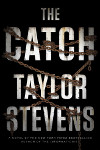
All aboard.
Publisher: Crown (Random House)
Pages: 356
Type: Fiction
Age: Adult
ISBN: 978-0-385-34893-5
First Published: 1st January 2014
Date Reviewed: 25th September 2014
Rating: 3/5
When Munroe is employed to join Leo’s team on the ship in east Africa, she quickly realises that she hasn’t been told everything about what’s going on. She’s been kept in the dark – and kept out of the payment, too. When the ship is hijacked it’s time to reveal her true colours to Leo and the crew, and time to try and find out what happened. She doesn’t care what happened to Leo, but she feels for his wife and Victor, a kind team mate, and whilst she could leave them to fate, she’ll stay to help.
The Catch is the fourth book in the Vanessa Michael Munroe series. Whilst fair, it pales in comparison to the other books, especially as the previous, The Doll, was so exceptionally good.
The story itself is okay, but there isn’t enough of it and so the narrative has been padded out with repeated details. It’s both a case of necessary filler content and lacklustre editing. Repeated phrases and info-dumps slow the pace to a halt in many places and it may prove difficult to get through a number of chapters and work out exactly what’s happening. There are a great many characters in this book.
However Michael is as good as always, straddling the fence between good and bad, her background continuing to have an affect on her. In The Catch the reader sees her weaknesses – whereas she mostly escapes unscathed, here she is wounded badly and so Stevens is able to explore her willpower further than ever. The wounds are a bit of a problem, as they fall under the repetition – Munroe spends most of the book in pain and we know about it – but it does fill in for the previous occasions. And because Stevens has always managed to have Munroe escape unscathed without it seeming convenient, it is excellent that here she’s allowed the reader to see what happens when she is harmed.
The book feels more a standalone than the others; Bradford is not here and Munroe’s dealings with Leo are new and presumably not to be continued. Certainly it seems like a spin-off of sorts, illustrating what Munroe gets up to without her ‘usual’ team. We may have known she took on similar jobs, but this goes one further.
The Catch may not sport a particularly interesting story, and it most definitely is not the first Munroe book a reader should choose, but it does give you more insight into Munroe.
I received this book for review from the publisher.
Related Books

Lisa Jewell – Before I Met You
Posted 17th September 2014
Category: Reviews Genres: 2010s, Chick-Lit, Domestic, Historical, Social
2 Comments

Before the time.
Publisher: Century (Random House)
Pages: 456
Type: Fiction
Age: Adult
ISBN: 978-1-846-05923-0
First Published: 19th July 2012
Date Reviewed: 16th September 2014
Rating: 3/5
Betty lived with and looked after her step-grandmother during her early twenties. Now its time to move on. Armed with a few clues from the awesome older woman, Betty takes on the task of tracking down the mysterious inheritor of most of Arlette’s wealth. Back in the 1920s, Arlette made a series of choices and it’s up to Betty to find out what it all means.
Before I Met You marks a step in a new direction for Jewell, ending her run of chick-lit titles and looking towards something more literary. Featuring a dual plot line and the addition of history, the novel is a fair step if not particularly successful.
Jewell seems to be aiming for a more literary style of writing. It is more literary, however it’s still similar to her chick-lit work and is thus likely to suit past readers rather than those looking for lovely language. But it does fill a gap in the market, making a case for dual plot line fiction that isn’t literary fiction.
Along with these changes are growing pains, so to speak. The editing could be better, there are research errors, and the book is far too long. The historical section being somewhat predictable means that the extra chapters (that one can assume are there to further the change in genre) are superfluous. There are also many occasions where, almost oddly, a little more ‘telling’ would’ve been excellent, as the narrative jumps, sometimes weeks into the future, wherein given the previous scenes an update would have been useful. Betty’s sudden interest in a pop star she doesn’t have any interest in signals a bit of a character hole, as do many of her other decisions.
What’s better is Arlette’s story, her journey. Although we read mostly about 21 year old Arlette, Jewell introduces the 90 year old well enough and for long enough that the jump in time here isn’t so ‘bad’. It may be that the young and old versions of the character don’t match but this makes senses and it means that instead of throwing the reader into the story of someone they will never meet except in hindsight, there is reason to read about Arlette. You even get a good idea of where it ends (this is different to the predictability, showing you how Arlette ends up later on rather than at the end of Betty’s search).
Good too is the historical information. A lot is fictional however it is akin to reality enough to be of interest. Jewell slots in a few references to the beginnings of racial tolerance and interracial relationship tolerance (though forgets sometimes other places where it would have cropped up), as well as discussions of the impact of war upon the youth at home, the way war changed perceptions and goals. The tolerance/intolerance especially is written well, being rather quiet as befits the particular situation but no less problematic. And of course Jewell deals with the difference between life on a small island and in a big capital city.
It’s safe to say that Betty’s story, away from her search, resides fully in chick-lit territory. She may not be quite the same as Jewell’s previous heroines, but she is definitely in the same boat, as are those around her. She smokes, she meets various men, she has her moments of wonder. Jewell may have taken a new road, but she wants her fans to follow her along it.
Before I Met You is a mix; a mix of genres, a mix of good and bad. The few too many plot threads, the development, and the random changes in character (Betty isn’t the only one who sees sudden personality changes) do mean it may take a while to get through the book. If you’re already a fan or looking for that non-literary dual plot line, you might want to give it a go, otherwise there’s nothing here that can’t be found to greater success elsewhere.
Related Books
None yet
Kamal Ben Hameda – Under The Tripoli Sky
Posted 3rd September 2014
Category: Reviews Genres: 2010s, Social, Spiritual, Theological, Translation
2 Comments

Time passes. Separately.
Publisher: Peirene Press
Pages: 96
Type: Fiction
Age: Adult
ISBN: 978-1-908-67016-8
First Published: 2012 in French; 2014 in English
Date Reviewed: 2nd September 2014
Rating: 4/5
Original language: French
Original title: La Compagnie des Tripolitaines (The Company of Tripolitans)
Translated by: Adriana Hunter
Hadachinou, a child in 1960s Tripoli, Libya, tells the reader about his mother and neighbours, citing with a child’s frankness the differences in gender, religion, and race.
It would be fair to say that Under The Tripoli Sky is a society-driven book. Neither character nor plot driven, even though there is time spent on Hadachinou’s development, the novella is very much a vignette rather than a ‘proper’ narrative, more ripe for study and deep thought than average enjoyment.
Hadachinou spends his days with his mother (as much as she will let him), observing her friendships and the relations and lives of others. It should be noted that although he is frank, the narrative is written in a way that suggests hindsight and so there is a maturity to his discussions of slavery and freedom as though he has since grown up. Hadachinou the majority of his time observing, meaning that time is spent solely on the issues and cultural dynamics.
There are many cultures at play, though you could place them into three categories: the original Muslim culture of Tripoli, the cultures of the Jews, Christians, and American forces discussed, and the new hybrid that arrived with the European and American people who have settled there. Most of the attention is on the Muslim culture and the way it differs from the new hybrid, and this illustrated by the family dynamics. The women gather together to discuss their dreams, their wishes, and much is said of those who don’t align with the accepted values. The woman who killed her abusive husband; the woman who has had many men. Hadachinou, who neither condemns nor agrees, tells us about the beatings and unhappiness some of the women suffer, meaning that we hear three ‘sides’ – the women’s, the women’s from Hadachinou’s observations, and the men’s, also from Hadachinou. In this case, given the focus of the book, life from the men’s perspective is not needed. The book looks at the future through a lens of equality, tradition balanced by the new.
As for race, Tripoli is multi-cultural. Hadachinou talks of those who have assimilated themselves (somewhat) into the community, people who have been slaves or whose ancestors were slaves, those of African origin. In race, the book is interesting, introducing the differences between the native Tripolitans and the story of a white Jewish woman whose community left her alone due to her relations and later pregnancy with a black American man. The Tripolitans may still regard others as different, but there is more of an emphasis on similarity. In this way the different ways cultures mix and stay apart are explored.
The writing style is very literary; the wording is superb. Kudos must be given to the translator, Adriana Hunter, but it’s not hard to see where the original text is behind the English. The book is about culture and difference, and those must come first, but of great importance is the text itself. At times it’s so lovely that you may find yourself having to read over a passage again as you end up focusing on the words rather than the message.
Under The Tripoli Sky is simple and the issues are dealt with in a nice, obvious, way, thanks to Hameda’s use of a child. Indeed Hadachinou at times sounds older than his treatment may suggest, but that does not matter so much as what is said. It’s a short read, with a lot to say, and potentially plenty to use for the reader up for a bit of research.
I received this book for review from the publisher.
Related Books
None yet


