




Emma Cline – The Girls
Posted 5th May 2017
Category: Reviews Genres: 2010s, Angst, Crime, Historical, Psychological, Social
2 Comments

The Girls (Chatto & Windus) has been shortlisted for the British Books Awards 2017. The winner will be announced 8th May.
Under the thumb.
Publisher: Chatto & Windus (Random House)
Pages: 353
Type: Fiction
Age: Adult
ISBN: 978-1-784-74044-3
First Published: 14th June 2016
Date Reviewed: 4th May 2017
Rating: 3.5/5
At 14, Evie’s life is becoming difficult. She’s got problems with her major friendship, has a crush on her friend’s brother and knows that’s a problem in itself, her father has left the family home for an apartment with his assistant, and her mother spends all her time elsewhere. Feeling the lack of love in her life, Evie is easily drawn to Suzanne and her friends, girls in well-used clothes who live on a ranch under the leadership of an older man. Evie chooses not to live with them exclusively, knowing she should go home sometimes so her mother doesn’t suspect, but the group’s influence is enough. Now, middle-aged and looking back on the time, Evie muses on the influence, her innocence and role, and the crime committed that saw the major players behind bars.
The Girls is a novel of semi-factual history, an account of a 1960s cult with a devastating end. Told from the point of an acquaintance, it is one part drugs, a manipulated idea of free love, and one part teenage anxieties and fitting in, particularly as a female.
Based on the Manson Family murders in the late 1960s, Cline’s book aligns to facts enough that her book can be considered a semi-retelling. Looking ever more closely at influence and the impact of neglect – both real and assumed – Cline’s focus on the female psych is the strongest element of the novel. Evie’s experience, enmeshed in the cult but with enough time away from it, enables Cline to study the way words, bullying, parental-filial relationships, can impact the self and the ability to be manipulated, both in general and sexually. This is of course mostly in the context of the era being studied, but Cline ensures her writing has long-term relevance, having the older Evie contemplate the experience of a young acquaintance in our present day, a girl she sees staying silent whilst her boyfriend and his friend talk, a girl who takes her clothes off to show her body when requested – though uncomfortable – in the company of both boys.
Evie’s teenage lack of self-confidence, self-worth, most terms that begin with ‘self’, is what enables her to be taken in by the group, their relative (though pretend) empathy and love for her driving her to do things that you as the reader can tell she would really rather not do – she’s always on the cusp of understanding it but lacks the forethought due to self-belief. (It should be noted this book is of a very adult nature.)
I waited to be told what was good about me. I wondered later if this was why there were so many more women than men at the ranch. All that time I had spent readying myself, the articles that taught me life was really just a waiting room until someone noticed you – the boys had spent that time becoming themselves.
The title stays true to form – whilst there are a couple of men in this book who are manipulated, it is not the same – this is a book about girls and women in the ways discussed. There are few good male characters in this book; the literal good guys Cline has painted well, but with Evie’s narrative you don’t get to see them for long and they are not given much time.
Cline’s study has much to recommend it, but beyond this the book struggles to make a mark. The writing falls somewhere between excellent and too much; on a solely literary level it’s marvellous, it’s all very poetic and descriptive but on numerous occasions it detracts from the essence of the story, Cline appearing to favour words over getting her point across. Favourite words and terms of phrase are noticeable, for example, many times something ‘stipples’ something, and every so often words are made up.
It’s literary but missing a few things – it doesn’t say anything new. The background details – the hows, whys and whens of the cult – have been left out entirely; even if the book lines up with the stereotype of cults and rests on history, the details should have been included rather than the expectation that the reader already knows the story. The historical details about the hippie life do not always ring true.
This is a book where you know the ending at the beginning – on purpose – but all the action has been left until the end meaning that you must be enjoying Evie’s musings on the lackadaisical everyday to keep going. Due to Evie’s position in the group, a lot of the lasting information is relegated to paragraphs telling you what the TV reports said, which does mean it has less of an impact than it might have otherwise, and unfortunately this low level of impact is similar throughout.
I received this book for review.
Related Books
Juan Carlos Márquez – Tangram
Posted 3rd May 2017
Category: Reviews Genres: 2010s, Social, Thriller, Translation
5 Comments

Not what you thought.
Publisher: Nevsky Books (Ediciones Nevsky)
Pages: 162
Type: Fiction
Age: Adult
ISBN: 978-8-494-59133-4
First Published: 2011; December 2016 in English
Date Reviewed: 2nd May 2017
Rating: 4/5
Original language: Spanish
Original title: Tangram
Translated by: James Womack
Two men visit an ex-actress in order to network but find themselves locked in her basement for weeks. A man looking to commit a crime finds it difficult to do so when his targets turn out to be suicidal. A group of children take to calling names in the belief that people will change if they hear the truth. These stories, together with a few others, make up the details of what could be different narratives or one whole.
Tangram is a short thriller which makes use of fractured storytelling in order to keep you thinking and surprise you at the end.
Carlos Márquez’s use of fractured narrative means that for a good while, until the story starts to cycle round and come together, it could be said you’re reading a short story collection. Stories, linked by a vague theme, suggest something far from a novel-length piece, but as it turns out, the writing and structure is absolutely key to this book, which is interesting because the necessity of the writing is apparent very early on, but more in the sense that you can appreciate it rather than anything further.
The author uses writing – first person, particular types of phrasing and cracks in the fourth wall – to dig deep into the details of his characters’ stories. The author looks at the whole, of course, but it’s almost whimsical – he places a lot of importance on the ending, on getting it right, but he’s so focussed on each character that the book darts back and forth neatly – is this a literary novel or is it genre thriller? At heart, it’s both. In view of the translation, you can see Carlos Márquez’s words underneath Womack’s text, the author’s concepts and workings remaining clear. Footnotes have been included in places where to translate in-text, so to speak, would have slowed the pace.
There is a bit of humour in the book, a thread that makes you wonder before revealing itself fully. It is slight, very slight, and fits the writing wonderfully.
The ending pulls everything together… well, almost – but almost is the point. You’ll discover (likely, at least, unless you’ve somehow figured out where it’s going and I’d guess in this case that’s not likely) that some of what you’ve read isn’t important but that it wasn’t quite a red herring. You’ll discover that some things you thought important were, and those things tend to be the things you’d later decided were probably red herrings. You’ll discover that the things you did think were red herrings were indeed red herrings and that the author included them fully hoping you’d see them as red herrings.
And the ending may come as a shock because it’s really not what everything seemed to be building up to… until you’re reading the ending and working your way backwards. It’s fair to say appearances may be deceptive and the most crafty person in this situation isn’t any of the characters but the author himself.
This isn’t a book about witnesses or suspects, rather it’s a book about people who happen or happened to be in some way affiliated with the people involved at the core of the story. Reading it is a little like playing Cluedo, only with less of an exact sense of where you’re headed; and keeping a check-list of the people you’ve met so far wouldn’t be much help because the author isn’t telling.
The page count is perfect – you wouldn’t want this any longer or shorter, partly due to the effect the details have where you wonder how much information is relevant. Best read for its technique, Tangram is an award winning book and it’s not hard to see why.
I received this book for review.
Related Books
None yet.
Harper Lee – To Kill A Mockingbird
Posted 31st March 2017
Category: Reviews Genres: 1960s, Commentary, Drama, Law, Political, Social, Spiritual
4 Comments
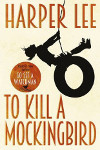
And question society.
Publisher: Arrow Books (Random House)
Pages: 307
Type: Fiction
Age: Adult
ISBN: 978-1-784-75263-7
First Published: 11th July 1960
Date Reviewed: 30th March 2017
Rating: 4.5/5
It’s the 1930s and Scout and Jem live with their father, Atticus, a lawyer in a small town in Alabama. Scout is just starting school and finding her way around things she doesn’t understand including subjects Jem seems to know a lot about. As she grows a little older she understands more about her father’s work and when Atticus is employed to defend a black man against a charge of rape, the family will have to deal with people heavily prejudiced against black people and the whites who support them, and Scout will come to learn about the variety of people in a country starting to move towards equality.
To Kill A Mockingbird is a semi-autobiographical novel inspired by Lee’s experience in a similar role to Scout, the child of a man in a similar role to Atticus. It’s a rather quiet book that makes its points with aplomb.
There are many fine elements in this book – the look at race, of course, but also the use of location in a way separate from that, the characterisation, and the general feel of it. It’s a book that if published today would likely be called literary fiction and it’s one that benefits from reading it considering a few viewpoints. How might it have been received if published in the day it was written? How would it have been received in its day? And what value does it have for us today? (That last one can be partly found in the answers to the other two questions.)
The plot meanders between strong, hard-to-put down chapters and easygoing scenes that in another book might make you wonder how much it was worth it – this is where the characterisation comes in. Lee’s strength in developing characters means that you want to keep reading and has that wonderful effect of making the characters feel real. This is of course likely due to the autobiographical element but beyond that it’s just pure talent; no matter how major or minor a character they are given what’s needed to make the book read as pure reality. Scout doesn’t understand much of what she hears, but Lee provides enough for the reader to comprehend it all. What’s lovely about Lee’s choice of narrator and narrative style is that you still get a complete picture of the other characters. There’s quite a bit of humour and a lot of love.
Lee’s look at racism and the burgeoning idea of equality is interesting. The book revolves around it but Lee never lets it take over the text itself – there’s the sense that she wants to make her point but in a way that means you get a positive experience alongside the bad, a good experience of the south of the time in both general life and the way many people supported black American rights, and in order to stay true to her narrator. The impact it may have today may not be as much as it would have been – this is where you need to consider the context in which it was written because as a look at what had been happening earlier in her life, the book is very powerful.
Lee incorporates various social circles into the story, mixing them together. Not too much – the book stays true to reality – but in ways that further support what she’s trying to do, such as Scout and brother Jem sitting with the reverend of the black church when in the court room – for Scout she’s sitting with friends, for the author it’s an extra show of support for the defence. (On that ‘not so much’ I’m thinking of the lack of time given to Tom Robinson directly – he says very little in the book, the focus there is more about how the white, privileged, people are helping him, which of course puts across the idea of tolerance in general and the way in which things had to change.) Lee’s fictional community includes people of many backgrounds and by the end a number of economic and social issues have been covered. Most of note, perhaps, is the story the children construct in regards to Boo Radley and the ultimate revelation of who he is, a well-crafted few segments that display childhood thoughts and kindness with a lot of heart.
The overall quality of the book is evident from early on, but it’s one that’s good to mull over because the more you consider it, the more you see.
I’m keeping this short – there’s only so long one can carry on in review form about a book that has been studied for years, especially when it’s their first read – but suffice to say To Kill A Mockingbird is a very good book.
Related Books
None yet.
Caroline Lea – When The Sky Fell Apart
Posted 8th March 2017
Category: Reviews Genres: 2010s, Historical, Political, Social
3 Comments
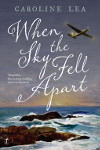
And the ground and the people too.
Publisher: Text Publishing
Pages: 363
Type: Fiction
Age: Adult
ISBN: 978-1-911-23107-3
First Published: 24th February 2017
Date Reviewed: 8th March 2017
Rating: 4.5/5
When Britain leaves the Channel Islands to fend for themselves and the Nazis order surrender or else, the people of Jersey must make their decisions – evacuate or remain? Maurice feels he has no choice at this time – his wife is too ill to travel. Edith, a healer, feels the need to stay in her homeland and tend to those who require help. Claudine has no choice – her mother will not leave. Dr Carter, an Englishman, should leave but feels similarly to Edith. As the Nazis swarm in those residents who chose to remain try to make the best of the situation whilst staying low and staying safe, but, as they know from news of France, it will be nigh on impossible.
When The Sky Fell Apart is an extremely harrowing, brutal tale of Nazi occupation, a book that offers a few laughs to keep you going but stays true to its (assumed) objective of showing just how bad the war was in places not often considered. It’s a book that is impossible to say you enjoyed but is important.
On that ‘assumed’ objective it is best to comment further – whilst this is fiction, you can see Lea’s mission throughout. This book is a very, very, well crafted, structured, tale that shows what life was like. If The Guernsey Literary And Potato Peel Pie Society showed the aftermath of life in Guernsey, then When The Sky Fell Apart looks at the occupation – yes, a different island but similar location – at the time. Indeed if you’re at all interested in the effects of World War II on the Channel Islands, you should look at both books as each provide something different.
It’s important to remember the objective when considering the elements of writing Lea has included. This book uses many devices, in particular one near the end that is very frustrating because although Lea has provided the necessary background to allude to the possibility that the character would do such a thing – to use a vague example – you want it to be different. It’s a case that in real life it may or may not have happened but Lea has chosen the possibility that it would in order to take her story where she wants it to be. The characters are manipulated but with good reason, and it’s never a sweeping change, never not believable, just frustrating.
Of this particular plot point, the good reason is that Lea wants to demonstrate just how far people might go to save themselves and implicate others. She puts in place a couple whose lives have previously literally been saved by two other characters – those saved do not have any qualms about gaining information and harming those who saved them. There is also an element of straight out hatred.
Lea never holds back on the horrors of war, delving into it enough that it’s traumatic. There are, as said, a few laughs – very much laugh out loud, in fact – that remind you of the daily life the people were still living. They aren’t quite enough to make you feel comfortable again but they do help character development – almost all Lea’s characters feel very real. The focus on this little group of people means that you may well forget that they are living on a populated island – it’s easy to picture an almost barren land (aside from the effects of occupation) – which is unfortunate but not necessarily a drawback – to focus on a larger group or the population in general would have just diluted the horrors, made individuals into numbers, an element of war that Lea comments on.
The book does not follow the path you may have expected. It remains horrific to the end – given the subject matter it’s worth saying that this book does not follow any sort of positive outcome. We all know the eventual outcome of the war and so Lea sticks firmly to the events during.
The author stays objective when detailing troops; the horrors are numerous but like authors before her – Irène Némirovsky comes to mind on this point – she includes good people, or, more specifically one person to demonstrate, who get caught up in it. In this case there is a focus on disability among the ranks.
The text itself is solid. The book is written in the third person and whilst there are narrative sections that use very modern wording, the dialogue is authentic – instead of being jarring, the book simply reminds you that it’s historical fiction. There are times when things are repeated unnecessarily – the author’s choice of metaphors in particular – that are noticeable and there are a few times when things are explained that aren’t needed, but these don’t impact the story enough to change your overall experience.
When The Sky Fell Apart is exceptional. Its lasting images, in particular, may well haunt you for a number of days. It’s one of those books that is difficult but nevertheless important. Do not go into this when you are needing to escape, don’t read it when you’re down. This book should be approached with an attitude to study, learning, rather than any sort of literary enjoyment.
But you should most definitely read it.
I received this book for review.
Related Books

Tom Connolly – Men Like Air
Posted 24th February 2017
Category: Reviews Genres: 2010s, Comedy, Domestic, Social, Spiritual
Comments Off on Tom Connolly – Men Like Air

Concrete jungle where dreams are made of.
Publisher: Myriad Editions
Pages: 373
Type: Fiction
Age: Adult
ISBN: 978-1-908-43488-3
First Published: 21st September 2016
Date Reviewed: 24th February 2017
Rating: 5/5
Finn hops on a plane from London to New York City with girlfriend Dilly, looking forward to seeing the sights but most importantly to maybe finding his older brother, Jack, who looked after him as a child. When he meets Jack, the man is coming down with the flu and Dilly decides she doesn’t want to stay in what she feels is an underwhelming place, so they move on. In due course, Finn will find himself employed at a swanky art gallery after stealing money from a location in front of it – Leo, the owner, will be impressed by his guts and the idea of having someone so unsuited to the art world in their sphere. And the man Leo used to meet for breakfast every day, brother-in-law William, will continue being content, nay, happy, with his simple routine.
Men Like Air is a book that uses stereotypes unashamedly in order to do what it wants to do. It’s all about character and is a whole lot of fun.
The book has everything you’d expect of a good novel that’s all about characters rather than plot. Even the plot, which is mostly day-to-day (in Jack’s case, for example, for a long time this book is mostly about trying to live through the flu, a level of detailing and time provided to routine illness that Connolly is obviously adamant needs to be realistic and is a welcome change from the very brief moments of illness or just being told someone is sick that happens in other books) will disappoint if you’re expecting a good one. There is a plot but the ending is quick, sudden, and not particularly satisfying outside of its prognosis for the characters. Go into this book for plot rather than characterisation and you’ll likely not enjoy it. (You can also go into it looking for patches of bookish discussion.)
In many ways, then, the book is a parody. The quick ending sports a brief flash forwards of what will happen in a way that mimics the ending of Mansfield Park – yes, two very different books that nevertheless share something specific. The time spent on the characters, making them real, is matched by the time having a laugh and doing things that remind you they are fictional. Connolly uses a lot of devices to good effect – the extreme personalities, the use of female characters as supporting roles, the use of a past year when the present would have been fine, scenes that don’t do much to push the narrative forward. One could say it’s literary fiction that bridges the gap – literary fiction that those who don’t like literary fiction will enjoy just as much as those who do, even more so, perhaps.
New York is shown as both a tourist destination and in its day-to-day life. Finn looks forward to seeing it and there is a brief sudden trip up the Empire State Building but other than that the tourism happens in bog standard restaurants and lesser internationally well-known places. And the tourism mainly consists of Finn walking around. It is in some ways a character itself, especially when it comes to William’s ruminations on the mornings and beauty of it, but more than that it’s Connolly’s admiration that shows through. Evie Wyld’s blurb on the front cover says it perfectly: “An epic love letter to New York City.”
Coming to the narration, then, it’s third person past tense and moves back and forth between the characters with often a mere single linked sentence – if you’re not on the ball you may have to backtrack when you realise the point of view has changed. It’s the sort of narrative choice that can come under fire but with all the comedy and intentional extremes it’s easy to view it as another carefully considered device. Connolly often details, briefly, the situation of strangers who pass by the characters, adding to the comedy, but ‘briefly’ is the word – it’s quick, stopping before the time you’d get bored of the idea of a detour.
This is, as the summary says, a book about male relationships, but for all the comedy, parody, and simple delight of the work, it can seem a subtle one. In many ways it’s a book about the self. Is it very ‘manly’? Yes, but as said above, whilst the women support, supporting is a device. There is often a female aspect at work, for example standing up to sexism, even whilst in the first chapters the worrier know-it-all whirlwind that is Dilly may make you want to stop reading (another feeling Connolly has created and knows when to stop – he’s quite the master of this sort of storytelling).
It is difficult to say exactly why this book is so good. It moves slowly through the days (if you ever forget that there is Jack’s continuing flu to remind you), slowly through everyday routine. You feel you’re learning something or being told something without being able to pinpoint exactly what. Things that suggest it would be boring. But it’s not. It takes time but it makes you smile, it steeps you in New York without really exploring it or detailing much about it (one assumes many of the locations – restaurants, galleries – are fictional), it allows you to laugh at it as well as with it. Throughout you can see the author considering his reader and, much like he has his characters, he’s considered many different types of reader rather than the idea of a whole.
As Wyld’s blurb continues, “…bold, absorbing and very funny.” Men Like Air is a super book that needs to be read – reviews will only ever be able to go so far in explaining it. It’s a book for mornings, for lunchtimes, for evenings. A book for weekdays and weekends. There is so much to it and whilst you may wish you could have spent longer seeing where the characters went, you won’t feel at a loss.
I received this book for review.
Related Books
None yet.


