




Andra Watkins – To Live Forever
Posted 30th July 2014
Category: Reviews Genres: 2010s, Domestic, Fantasy, Historical, Social
2 Comments

Missions, when successful, lead from purgatory to the afterlife.
Publisher: Word Hermit Press
Pages: 253
Type: Fiction
Age: Adult
ISBN: 978-0-615-93747-2
First Published: 3rd February 2014
Date Reviewed: 29th July 2014
Rating: 3/5
Meriweather Lewis (a real-life explorer) is stuck in the bar of Nowhere, world between the worlds of life and death. This is his last chance to pass over – a child in 1977 is in need of help. The girl’s mother was granted custody but her lifestyle is seedy and Emmaline wishes to escape to her father.
To Live Forever is a fair offering that blends genres as well as mixing fact with fiction, but could have done with more work.
What’s good and interesting is the blending – history (social and your bog standard), fantasy, fact, fiction, and the road trip theme. Whilst it feels strange to be reading about the afterlife of a real person from history, you can see why Watkins chose to write Lewis into it as his time as an explorer and the mystery surrounding his death fit what she wanted to say. On a related note it’s recommended that you prepare yourself for the unrealistic as besides the fantasy the book rests somewhat on dei ex machina.
And it’s nice to see a book focus on a person you don’t read about every day. To an degree, Watkins keeps his story mysterious – an intriguing balance of supposition and silence means that you will read what Watkins thinks but then wonder later if you did actually read it. Watkins may have a fully-fledged opinion, but the book is more an introduction, an invitation for you to find out more and decide for yourself.
In addition to all this the book is successful at showing rather than telling. You do get a bit of backstory now and again but Watkins has kept it to an acceptable amount and the vast majority of what you learn is through dialogue that is bereft of info-dumps.
However the book could do with another round of edits. The language the characters use does not always fit their situation – it’s easy to forget that Lewis is from history because he uses language from our modern time, indeed often the language is straight from our present day rather than the ’70s, rendering it out of place entirely. The characters who come and go are all stereotypes and leave little to recommend them, most notably a pair of conjoined twins who are always ‘dragging’ each other across the room. It is sometimes hard to remember if the story is set in the 70s or if it is set a number of years earlier, and Em doesn’t always act her age, seeming to be a lot younger or older at any given time.
There are ellipses that go on to the extent that you would think the key got stuck on the keyboard, and there are many, many commas in the wrong places. Characters ‘cut their eyes’, which turns out to be bloodless. A couple of plot holes, not so bad by themselves, are unfortunately magnified by the rest of the issues.
Perhaps most problematic, though this does depend on the individual’s view, is the Judge, the bad guy. He is the bad guy, so it makes sense that he’s cruel, but given that he thinks young Em is his wife, his remarks are particularly creepy. He surely should be a lot nicer to the host of his wife’s spirit, especially as he’s willing Em/Ann to remember him. On this note of inappropriateness, however, it should be noted that although Em’s mother’s particular win in court seems unbelievable, it’s meant to be and Watkins will explain all in due course.
The very end invokes a particular Indian folk tale. I won’t tell you which one because for some of you that would spoil the ending, but I will say that if you do know which it is, your knowledge of it may make the ending even better. There is nothing to suggest that Watkins was inspired by the tale (indeed I only know of it thanks to a Bollywood film) but it does add a layer to the ending that is interesting to consider.
To Live Forever has a good premise and will teach you a fair amount. It also sports a nice dual narration that really adds to the tale. But, pun unintended, it could have used more time.
I received this book for review from the author for Historical Fiction Virtual Book Tours.
Related Books
None yet
Ai Mi – Under The Hawthorn Tree
Posted 18th July 2014
Category: Reviews Genres: 2000s, Angst, Historical, Political, Romance, Social, Translation
3 Comments
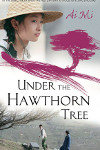
First love – a time to worry.
Publisher: Virago
Pages: 352
Type: Fiction
Age: Adult
ISBN: 978-1-844-08703-7
First Published: 2007
Date Reviewed: 18th July 2014
Rating: 3/5
Original language: Mandarin Chinese
Original title: 山楂树之恋 (Shan Zha Shu Zhi Lian – Hawthorn Tree)
Translated by: Anna Holmwood
Jingqiu’s family has been written off as the lowest of the lowest. Landowners, in the time of Mao they are hated. Jingqiu works hard to provide for her mother and sister and sees her future as one of inevitable manual labour. She would hope to return one day. On a field trip, as a writer for the new school textbooks, she meets Old Third, the so-called foster brother of her teacher’s family. He’s obviously not as poor as Jingqiu – there would be issues if they became more than friends.
Under The Hawthorn Tree is a book that starts very well and offers much to those interested in the history, but slowly descends into what is to all intents and purposes stupidity.
The stupidity can be found in Jingqiu’s choices. She is a fair enough character and works more than is healthy so that her family has money, but she declines all offers of support and legitimate ways to get around her situation. The love interest, Old Third, has much to offer and asks for nothing in return; he wishes Jingqiu out of danger. Jingqiu rejects his money and puts her life on the line working in factories that use poison and taking on heavy lifting duties that could kill her. Perhaps it is meant to be endearing, but instead it comes across as silly and selfish. It’s a miracle the character survives at all.
Some, only some, of Jingqiu’s concerns are valid. She worries about being seen with Old Third in a society that will reject her if they believe she’s lost her virginity out of wedlock. She worries about her family’s already low status. But by and large her worries don’t hold water. There are the constant musings on what people are referring to (metaphors and innuendo). Jingqiu’s innocence is believable up to a point, but it’s hard to believe that by 25 she still dismisses those happy to clarify matters and to be the only person (seemingly, at least) in her home town who has not learned anything. Personal experience doesn’t enlighten her, either. Sex itself is one of the few things that is discussed openly in the city, at least enough that everyone knows a good amount, everyone except Jingqiu.
Jingqiu’s love isn’t believable. She goes through some motions, and perhaps it is down to the lack of knowledge, but it’s hard to phantom that one day she won’t fall in love for real and relegate Old Third to a crush. Old Third loves her, that is certain, by Mi does not present the love on Jingqiu’s side very well.
The writing is hit and miss, however because we’re talking of a translation, it’s hard to say for definite whether or not the repetitive words and juvenile phrasing is down to the author or the translator’s choices. (The translator is Anna Holmwood.) It is safe to say that the translation needed editing, because you’d expect errors in the original text to have received some sort of mention, if just to clear the translator’s name.
What’s good about the book is the pace – it’s quick and easy to read – and the history. Beyond the silliness there is a lot of interesting information, and it’s localised to Jingqiu’s community. You can learn much from this first-hand account, albeit fictional, and its status as a best-seller (it was adapted for the screen, too) goes some way towards informing you about how much you should believe. Jingqiu may not be devoted to Mao but she refers to the rules and texts enough that you see how people were affected.
As an insight into the history it’s not bad, but you shouldn’t pick up Under The Hawthorn Tree expecting to be wowed. If you are, all well and good, but most likely you’ll be happy to move on.
Related Books
None yet
Helene Wecker – The Golem And The Jinni
Posted 27th June 2014
Category: Reviews Genres: 2010s, Angst, Domestic, Fantasy, Historical, Social
9 Comments

In Britain, the book is changed from ‘jinni’ to ‘djnni’, but as ‘jinni’ is more well-known and I can think of no good reason for what is so minor a change, I will be using ‘jinni’.
Who needs Aladdin?
Publisher: Blue Door (HarperCollins)
Pages: 484
Type: Fiction
Age: Adult
ISBN: 978-0-007-48017-3
First Published: 1st April 2013
Date Reviewed: 25th June 2014
Rating: 5/5
In the 1890s, Chava is created with spells and awoken on a ship bound for New York. But when her master dies she is alone and the intelligence and curiosity that were instilled in her come to the surface in ways not intended. She is found by a Rabbi who takes her in and gets her a job at a bakery. Across the city a tinsmith cleans his neighbour’s flask and awakens a jinni who has been confined to human form; from a choice of names the jinni picks Ahmad as he can no longer say his own name. Both golem and jinni must find their way, alone, and possibly with each other.
The Golem And The Jinni is a fine historical fantasy about freedom and acceptance, wrapped in delicious writing with a few notes on racial tolerance. It is one of those rare works you can truly get lost in. It’s not epic in the adventure or time-span stakes, but the term applies all the same.
Wecker’s command of language is what you would expect of an established author. The Golem And The Jinni doesn’t feel like a début, even if you could of course suggest that some of its finesse is owing to the editor. It’s hard to point to something in the specifics; it’s the entire package that is special.
The book is technically historical fantasy, more than technically, but in many ways it is more the plain historical. Chava and Ahmad are of course fantastical characters and no doubt Wecker had a great time creating them, but nevertheless their reason for being, as such, does seem to be more about the difference they can provide, the obvious contrast to the rest of the world that a simple human-only story could not. Yes, it’s possible that the characters could have been substituted with humans, but in that case the themes would not have been so successful in what they were employed to show. In a way it’s the fantastical itself that ‘makes’ the themes – the fantasy adds to the setting and language, and illustrates in a unique way the issue of freedom, of agency.
In creating a golem, Wecker can look at social mobility, individual agency, and women’s issues of the time, far better than she could have with even the most fearless of 19th century human women. Somewhere along the line a woman would have been caught up short, or heckled, derided, unless Wecker wished to make a crime novel heroine, and using a golem bypasses that problem. Of course Chava is still restricted, but it’s more a case of wanting to fit in, of having to fit in, and as she moves away from that notion so can Wecker look at things in more detail.
This isn’t to say that the lives of the period’s women is the biggest theme, because Chava, as a golem, is somewhat exempt. But it is part of the larger theme of freedom and creating your own life and destiny. Ahmad was trapped, and remains so – he longs to be free. Chava’s never known any different, but as he teaches her, you see her flourish, ironically flourishing in a role that is the antithesis of the one she is supposed to be living. In this way, Wecker also explores the concept of choice and what being unrestricted can do for a person. Furthermore, both represent constraints, Chava’s being invisible – society’s rules, not always relevant. Ahmad’s obvious and omnipresent – not society’s but due to society’s fear and the power that comes when someone exploits that fear. The golem and jinni balance each other out.
We see the lack of freedom in Sophia, a human who meets the jinni. Sophia shows us the more ‘human’ (as much as he can be) side of Ahmad, but she also provides a contrast to Chava, being a woman who wants to define her own life but is unable to, versus Chava’s reservations but ultimate prime position. The character is one of a few that illustrate the restrictions society placed on women, and the way they were treated.
There is a little of race and emigration, too, though this is in the background for the most part. That said, Chava and Ahmad’s actions explore the positives to be gained from connecting with others from outside our own cultural spheres.
It should be noted that the book isn’t solely about the mythical, that there are sections about various people, and the humans are given just as much space. These people are those particularly affected by the golem and jinni in some way – a lover, a past acquaintance, a person affected by an issue falling in the fantastical realm of the otherwise factual world. These sections allow us to observe the period and cultural relations. They allow you to witness the stark differences in fortune, placement, and sometimes, luck.
Whether or not you work out the twists shouldn’t affect your enjoyment. Talking of twists, however, the ending is very well plotted. All questions are answered, in a particularly intriguing way. They are answered simply and quickly (this is the end, after all) yet there remains a subtlety to them, something that enables them to be revealed clearly, yet in a way that doesn’t get you racing to finish the book. It’s a slow burner and you are meant to be able to enjoy each answer before moving on.
The Golem And The Jinni is, simply, a magnificent book. Beautifully written, magical both in character and temperament, and a tale that is fairly long already but one which you’ll wish was even more so, it has a lot to offer. And it keeps on giving, even though the jinni would prefer it not to.
Related Books

Jenny Barden – The Lost Duchess
Posted 4th June 2014
Category: Reviews Genres: 2010s, Historical, Political, Social, Spiritual
4 Comments

America – freedom.
Publisher: Ebury Press (Random House)
Pages: 424
Type: Fiction
Age: Adult
ISBN: 978-0-091-94924-2
First Published: 7th November 2013
Date Reviewed: 4th June 2014
Rating: 4/5
Emme was lured into a room by Lord Hertford, who raped her. Unable to tell anyone, knowing that her reputation would be shattered, and worried about her position as a lady-in-waiting to Queen Elizabeth if it was revealed, Emme sets her sights on joining a ship-full of colonists heading to the New World.
The Lost Duchess is a rather good book that is so well-written and entrenched in its history you might have to remind yourself of the differences in views between then and now to fully appreciate it.
The book is about the first voyages to America and the confrontations with the Native Americans, however given the context of Emme’s inclusion and the unfailing and careful consideration, by Barden, of Emme’s abuse, it would be impossible to write about the book without speaking of the inclusion at length.
The abuse happens at the very start of the book and it’s the catalyst for much of what happens, informing the narrative. What is good about Barden’s handling of the aftermath is the consistency. It’s a careful inclusion, so thoughtful that you may at times think that Emme will suddenly move on from it. Ultimately Emme learns to live with what has happened to her, but it isn’t forgotten by the book. It informs her feelings; it makes her actions towards the man she comes to love hot and cold. Readers are asked to understand Emme in our modern context, but lest we forget that Emme is of her time, Barden, both to show us and to simply portray the era, fills Emme’s thoughts with worries that she is ruined, that to speak will be her downfall. There is also some arrogance in Emme that could be the result of her previously semi-independent self trying to claw back who she was.
He was nothing but a knave trying to dominate her, just as every man she had ever known had tried to dominate her, and she wanted no more to do with him.
The above is about a man who never harms or does Emme any wrong. At once you see the way Emme’s mindset has changed, but it could also be read as a no-holds-barred statement of the era in general. This historically-focused, more than ‘usual’, storytelling is what makes you appreciate what Barden is saying about difference.
Leading on from Barden’s concentration on the era, nowhere in the book are there questions about the ‘right’ to use land that does not belong to England. The only place this concept arises is in the speech of a Native American chief. To our modern selves this seems crazy; Barden’s book is very realistic and isn’t about morality or lessons. Instead of being mollified by a 1500s Englishman questioning the right to invade (which, let’s face it, likely happened on a very limited basis), the reader has to do the thinking. You’re left to think about why no one brought this idea up, why Kit, who is a ‘good guy’, doesn’t respond to the chief’s very true statement, why caring Emme thinks about a future where the city of Raleigh thrives without considering anything else. Kit does discuss the irony of calling an intelligent, peaceful people, ‘savage’, but that is all. That said, there is true compassion to be found in the relationships between the English sailors and the Native Americans. (Here ‘relationship’ means both love and friendship.) These relationships are about love, about sacrifice, and show how peace could have been created had it not been for the racist leaders in the group of sailors.
There is little to speak of in terms of setbacks. Barden has written a good book, obviously conducted a lot of research, and knows the period well. She wishes to explore personality and society as well as take a look at the mystery of the initial settlers (whilst Barden provides an answer, her Author’s Note explains that the colony she has written about is lost to history). There are a couple of modern slang phrases but then the book is written in modern English, and there are a couple of scenes in which Barden wants to inform the reader of facts but goes on a little too long.
The plot is important, very important to Barden, but it should be noted that the book is much about Emme and to a lesser extent Kit, and so although the voyage and trials are there all along, they might not always be as exciting as you expected. This is definitely a book for those who like their stories character-driven.
The Lost Duchess looks at history and asks us to forget our modernity. It looks at ageless issues and respects all, and it does this whilst never being sorry for what it leaves out.
Emme is brave and it could be said that Barden is, too. The reader must fall in line if they wish to sail across the sea with them.
I received this book for review from the author for Historical Fiction Virtual Book Tours.
Related Books
None yet
Lindy Woodhead – Shopping, Seduction & Mr Selfridge
Posted 11th April 2014
Category: Reviews Genres: 2000s, Historical, Social
1 Comment
“The customer is always right,” he said.
Publisher: Profile Books
Pages: 261
Type: Non-Fiction
Age: Adult
ISBN: 978-1-781-25058-7
First Published: 1st October 2007
Date Reviewed: 3rd April 2014
Rating: 3.5/5
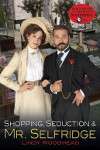
After many years at Marshall & Field in Chicago, Harry Gordon Selfridge crossed the Atlantic with his family to create a department store in London. At the cutting edge of retail, Selfridge’s was successful. As time went on Harry bought out more locations, but spent the money on women and gambling. His decisions away from retail would define his later years.
Shopping, Seduction & Mr Selfridge is a fairly short book that details Selfridge’s creation, the effects of war on an already changing society, and, of course, the social changes that came with burgeoning technology and increasing gender equality. Straight forward in its approach, the book lacks excitement and bias, but it does fall off the beaten path sometimes.
The beaten path in question is that of the subject – whilst Selfridge is Woodhead’s focus, the author does pause the narrative many times to profile a ‘bit player’ of the story, and although the title may suggest the book is about more than the American retailer, the profiling is irrelevant and filler content. People are introduced with a full background history after which it turns out their relation to Selfridge is minimum and short-lived and there are dozens and dozens of people mentioned who, in contrast, aren’t detailed at all. (These latter people aren’t often famous or known to us nowadays, which means that unless you have a background in retail or a great knowledge of the early 20th century, the names will mean little.) Those who play big roles in Selfridge’s life are detailed, understandably, but other than that you can’t help wondering if Woodhead shouldn’t have just written a shorter book.
And sadly for Selfridge, the amount of content not relevant to him means that there is simply not enough of the book dedicated to him. Perhaps Selfridge’s life was too straight forward to warrant a lengthy text, either way it does at times seem as though he has been pushed to the sidelines, a strange coincidence given what happened to him in life.
What is best about the book is surely its general style. Woodhead is largely unbiased; the book lacks opinions and is more of a report, even more so, perhaps than it is a biography. There is no particular flare to the writing which can make it dry, and there is little humour beyond the quotations and paraphrasing, but there is a lot here that will be of interest to modern historians, social historians, those who enjoy shopping, and technology enthusiasts. Woodhead includes a handle of suppositions but they are never expanded upon as opinions of the author, they are only furthered if it was a common view of the time. This is an account of what happened and little more.
And whilst it may also wander from the beaten path, the updates as to social context are informative and set the scene well. The stories of war, the gambling tables, the changing fashions that stores had to cater to, provide another dimension to the book and show just how swift modernity arrived once it had started. The changing attitudes to women both by way of clothes and the way women worked are interesting, and as Selfridge was very much in favour of women being able to shop by themselves, to go to restaurants and so forth – even if there was a personal benefit to him in sales – the theme of gender and equality is returned to many times.
The book ends abruptly; there is no epilogue. Anyone looking to known who owns Selfridge’s today or simply what happened after the initial change in management will need to research for themselves.
Shopping, Seduction & Mr Selfridge isn’t fast-paced, a book that is hard to put down, or written in your typically juicy style to match the juicy contents, but it will leave you with a good knowledge of the man, the times, and the views. Recommended most obviously to those interested in retail history, the book will find a place in the minds of a great many readers for its historical appeal.
Related Books
None yet


